




On a steeply forested hillside in Maresme, Spain, Casa 144º by Jaime Prous Architects and Pineda Monedero emerges as a singular, single-story volume that navigates the complex topography through a broken geometry and a lightweight, environmentally conscious structural logic.
A rejection of topographic imposition. Instead of adhering to the local trend of extensive earthworks and heavy concrete foundations that dominate the neighboring landscape, the architects opted for a strategy of minimal intervention. The project functions as a critique of the “continuist aesthetic” often found in Mediterranean villas, where white-washed walls frequently mask aggressive environmental modifications. Here, the house is positioned at the midpoint of the plot, maintaining a respectful distance from the natural grade to preserve the integrity of the wooded terrain.
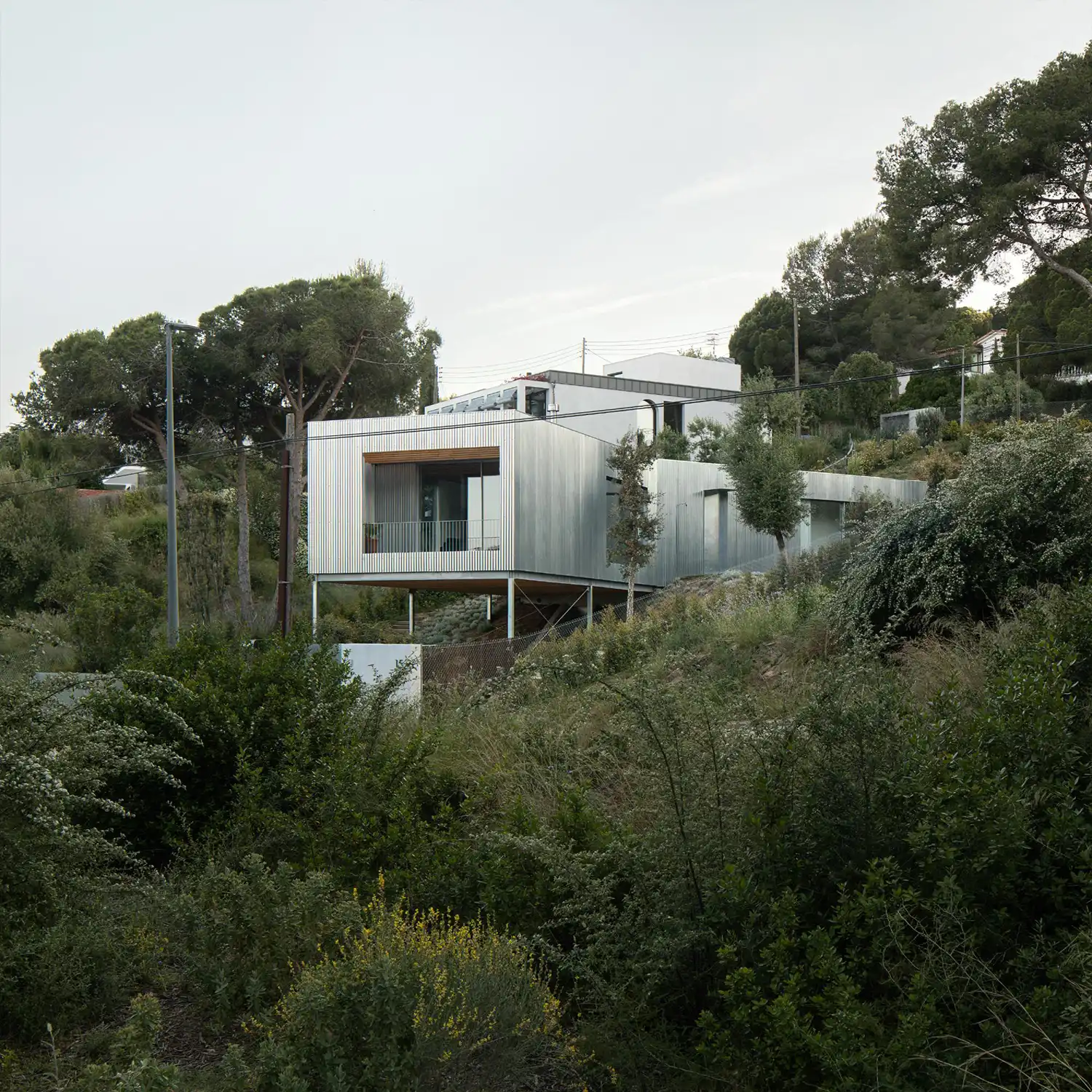
The geometry of the 144-degree angle. The plan follows a specific broken line that gives the project its name, creating a wide V-shape that allows the structure to pivot toward the most favorable mountain views. This deliberate fold in the building’s massing isn’t merely a formal gesture; it serves to orient the living spaces toward the horizon while anchoring the private quarters into the slope. The resulting cantilevered volume creates a sense of weightlessness, as if the living area is floating just above the canopy of the surrounding trees.
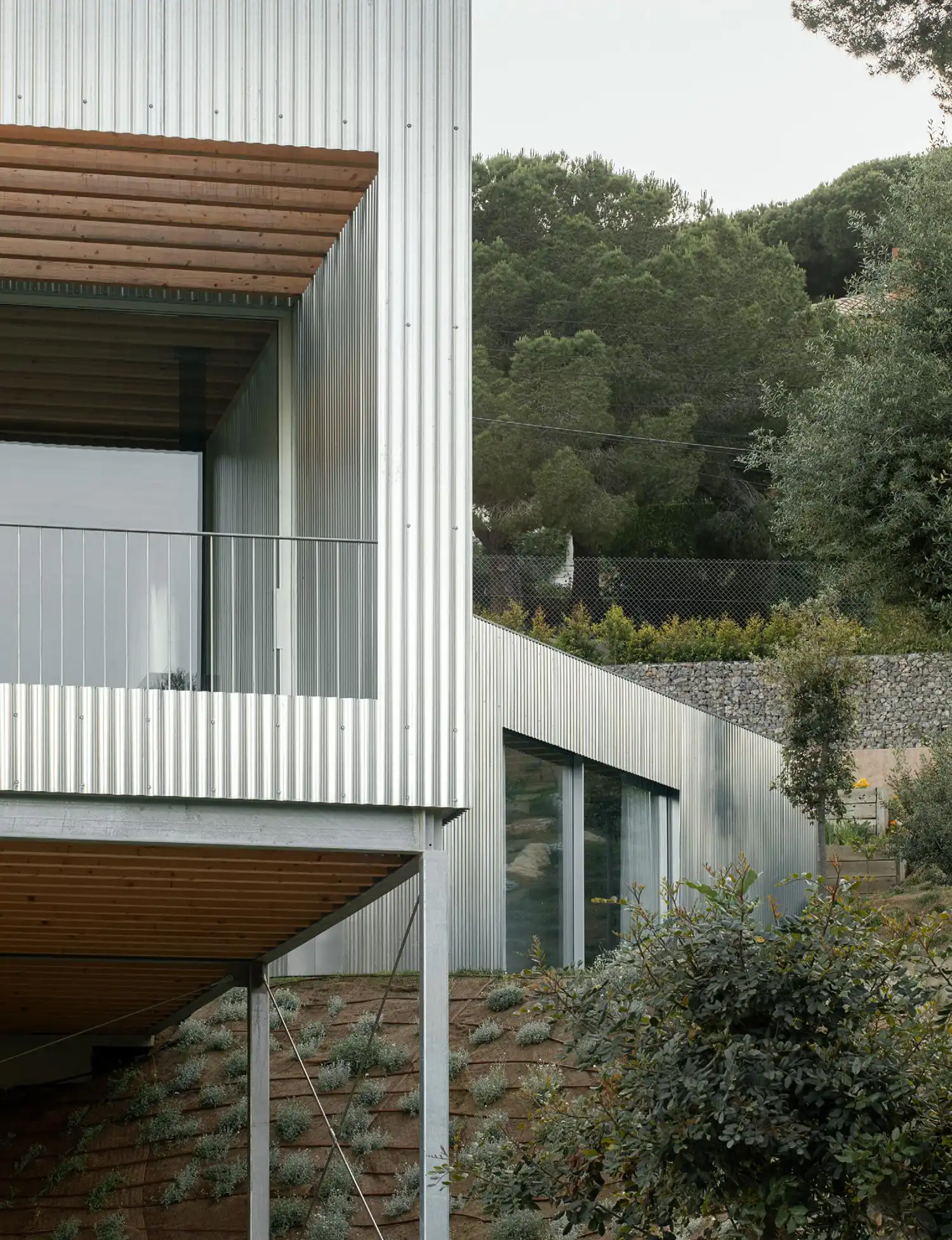
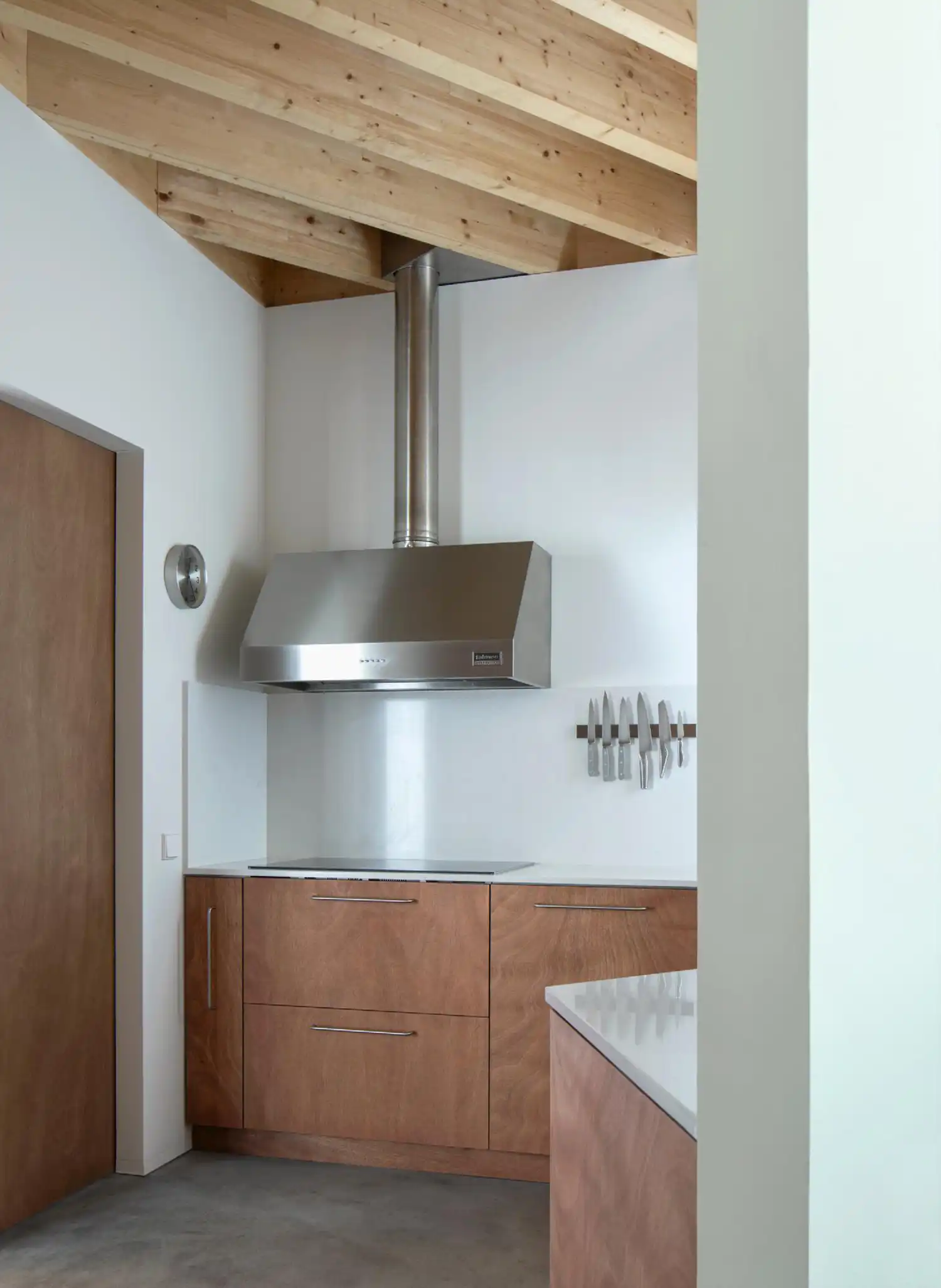
Sincerity in dry construction. The material palette is driven by a commitment to near-zero energy consumption and a transparent expression of assembly. By utilizing a prefabricated timber-frame system, the construction process minimized site impact and carbon footprint. The logic here is one of honesty; the materials are chosen for their performance and durability rather than purely for their appearance, combining the industrial resilience of steel with the organic warmth of wood.
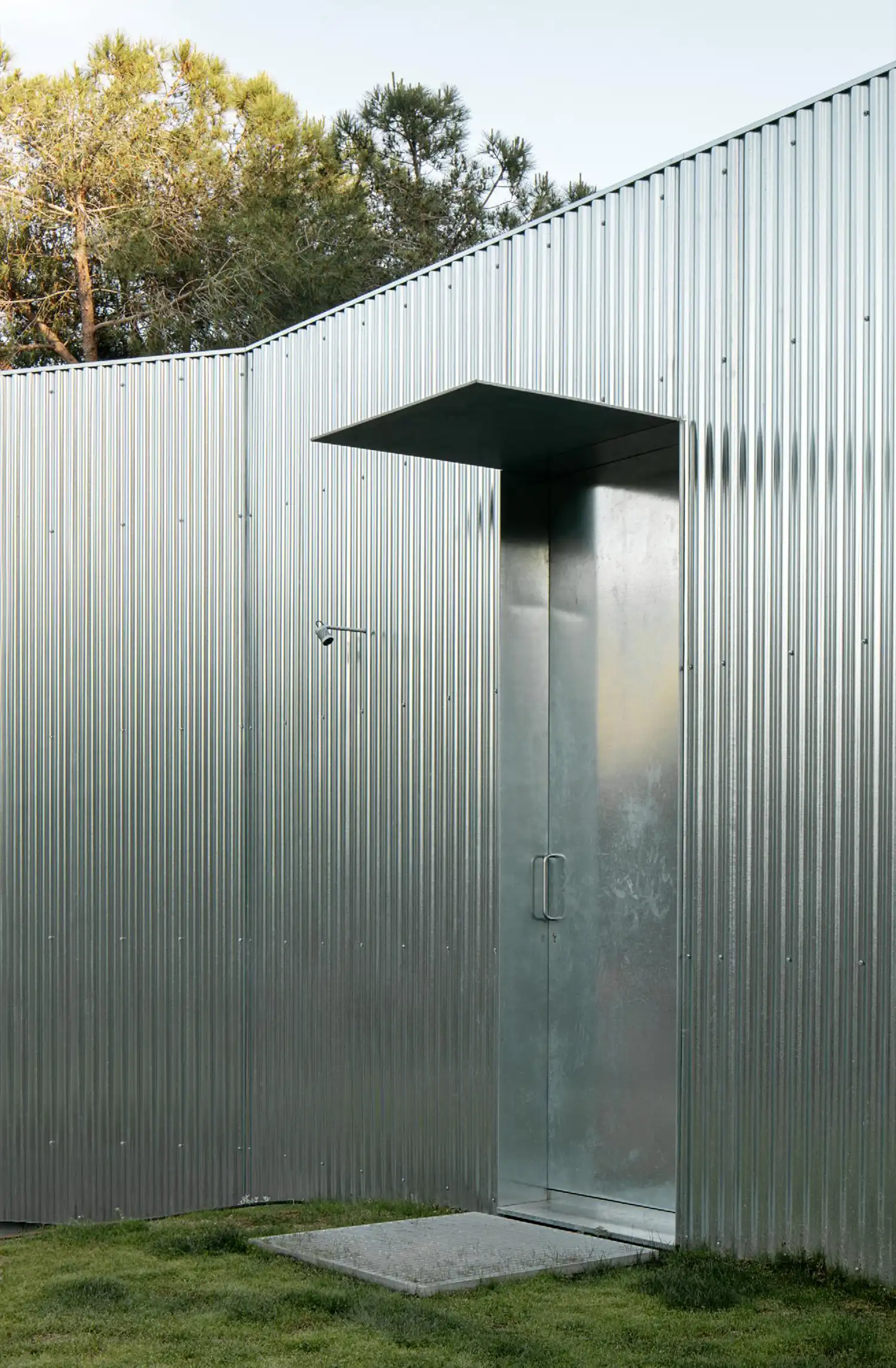
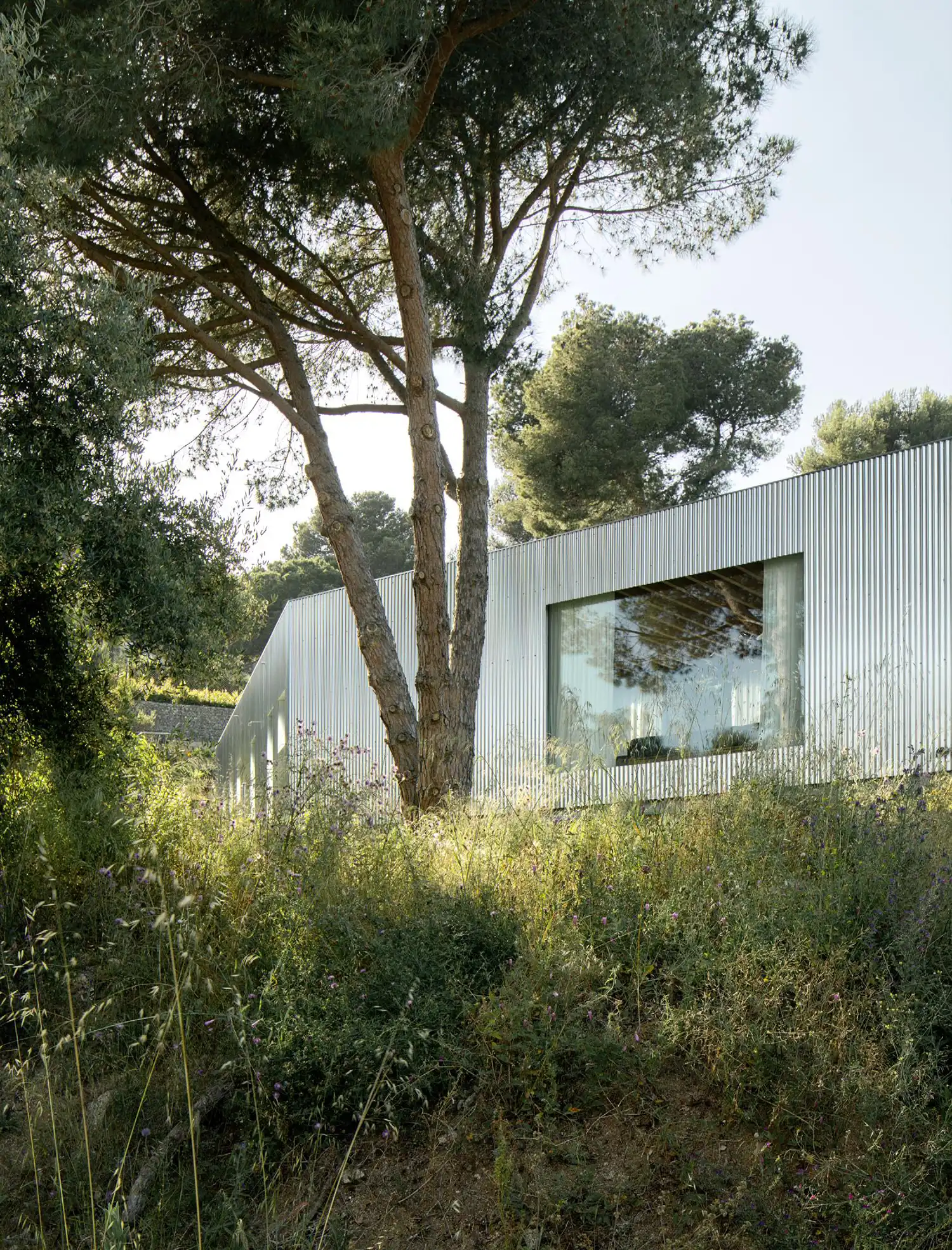
An envelope of protective steel. To shield the interior wooden structure from the elements, the architects wrapped the exterior in a skin of galvanized steel sheets. This metallic shell provides a sharp, reflective contrast to the soft greens and browns of the forest. The façade is punctuated by large, frameless openings that are cut directly into the steel envelope. From a distance, these windows appear to dematerialize the mass of the house, reflecting the sky and the trees to blur the boundary between the built environment and the atmosphere.
The structural choreography. Gravity is addressed through a hybrid system where one end of the house is embedded into the hillside, acting as a structural anchor, while the other projects outward. This daring overhang is supported by four slender galvanized steel columns, braced with X-cross ties to keep their sections as minimal as possible. This approach allows the forest floor to remain largely undisturbed, permitting natural drainage and vegetation to continue beneath the living space.
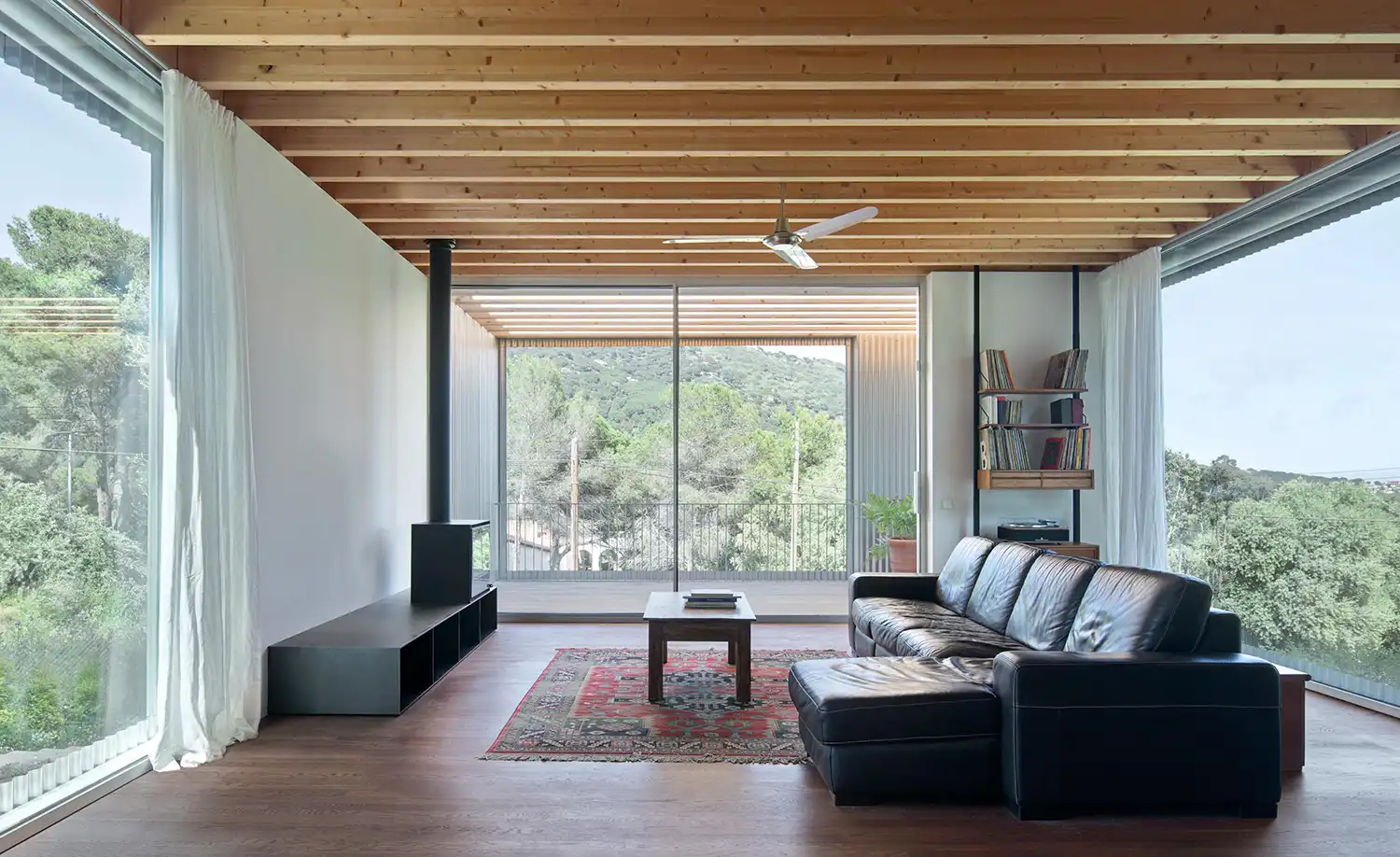
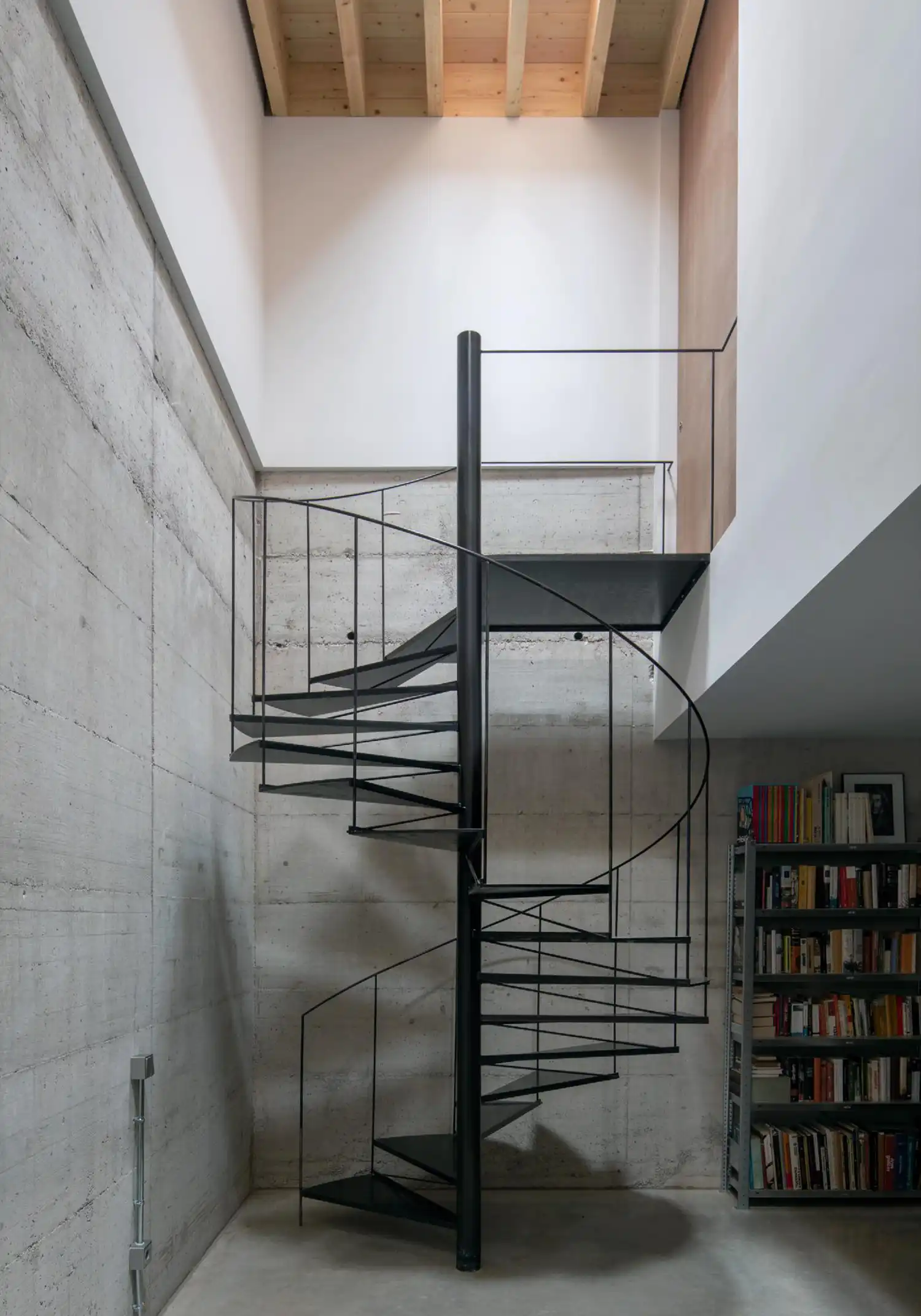
Sensory warmth and internal clarity. Moving inside, the experience shifts from the industrial coolness of the steel exterior to an intimate, tactile environment. The exposed timber structure defines the interior aesthetic, creating a rhythmic sequence of spaces that feel grounded and legible. While the living room acts as a panoramic lookout over the Maresme landscape, the opposite end of the house hides a secluded studio in the basement, which receives a soft, diffused light through a series of strategically placed skylights.
A dialogue of timber and light. This focus on structural honesty and the expressive use of wood echoes other contemporary Spanish interventions that prioritize spatial purity. While Casa 144º uses timber to negotiate a rugged exterior slope, projects like the timber-framed El Born Loft in Barcelona by Roman Izquierdo Bouldstridge demonstrate how similar material palettes can transform dense urban interiors. Both projects share a commitment to using wood not just as a finish, but as a primary tool for defining the soul of a home.
The future of Mediterranean dwelling. By prioritizing a lightweight footprint and a “dry” assembly method, Jaime Prous Architects and Pineda Monedero offer a compelling alternative to the heavy masonry traditions of the region. Casa 144º stands as a testament to the idea that a home can provide a sophisticated living experience while remaining deeply subservient to the natural landscape it inhabits. It is a work of precision that proves environmental responsibility and radical formal expression can coexist without compromise.