


A delicate balance between history and high-performance living defines the latest intervention by Architecture for London in the heart of East London. The project, a mid-19th Century mews house in Hackney, serves as a masterclass in how to expand the footprint of a heritage property without eroding its soul. While the original Georgian structure possessed an undeniable cottage-like charm, its rigid, two-up-two-down configuration was increasingly at odds with the demands of 21st-century urban life. The challenge lay in honoring the compact proportions of the past while carving out a light-filled, sustainable sanctuary for the present.
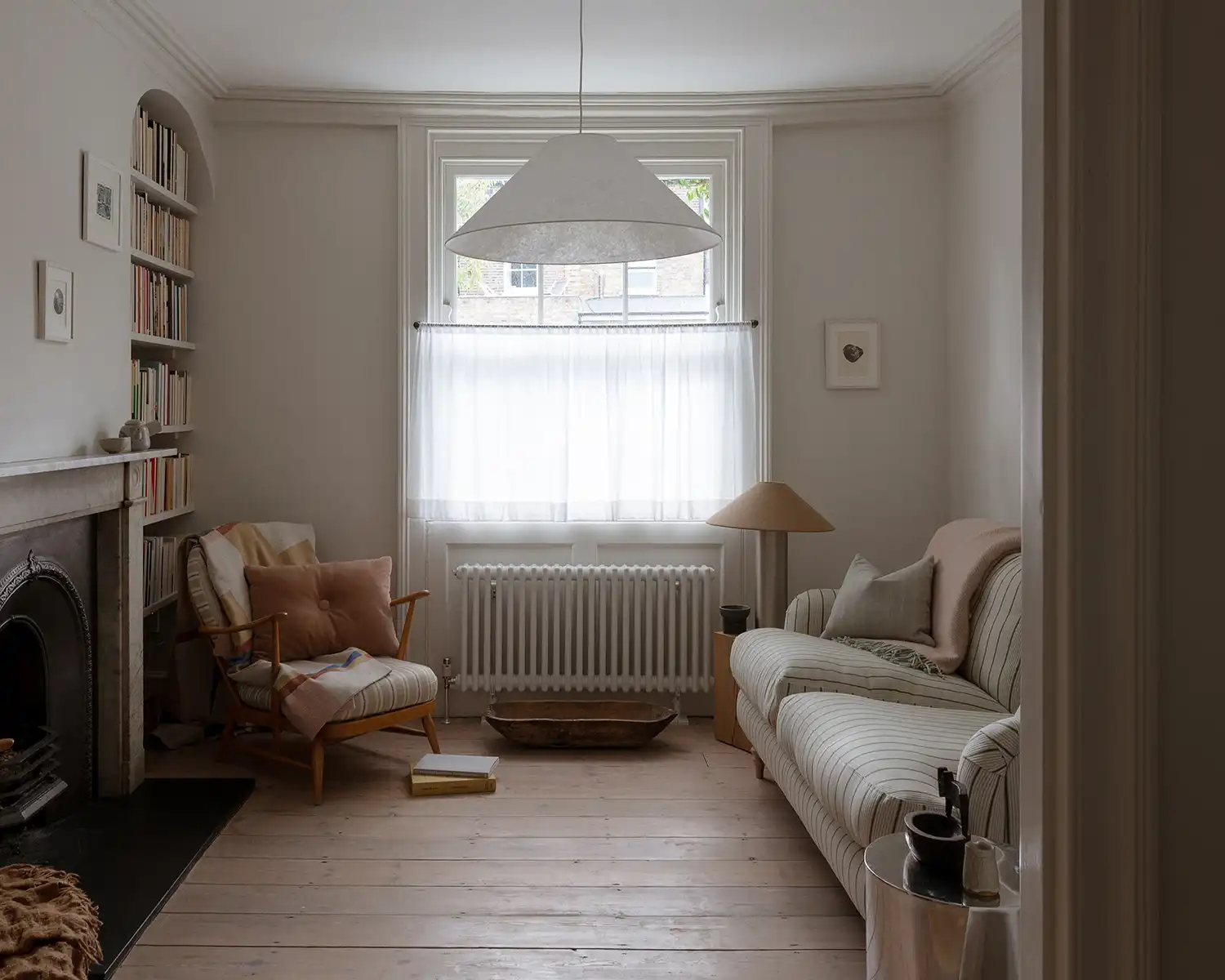
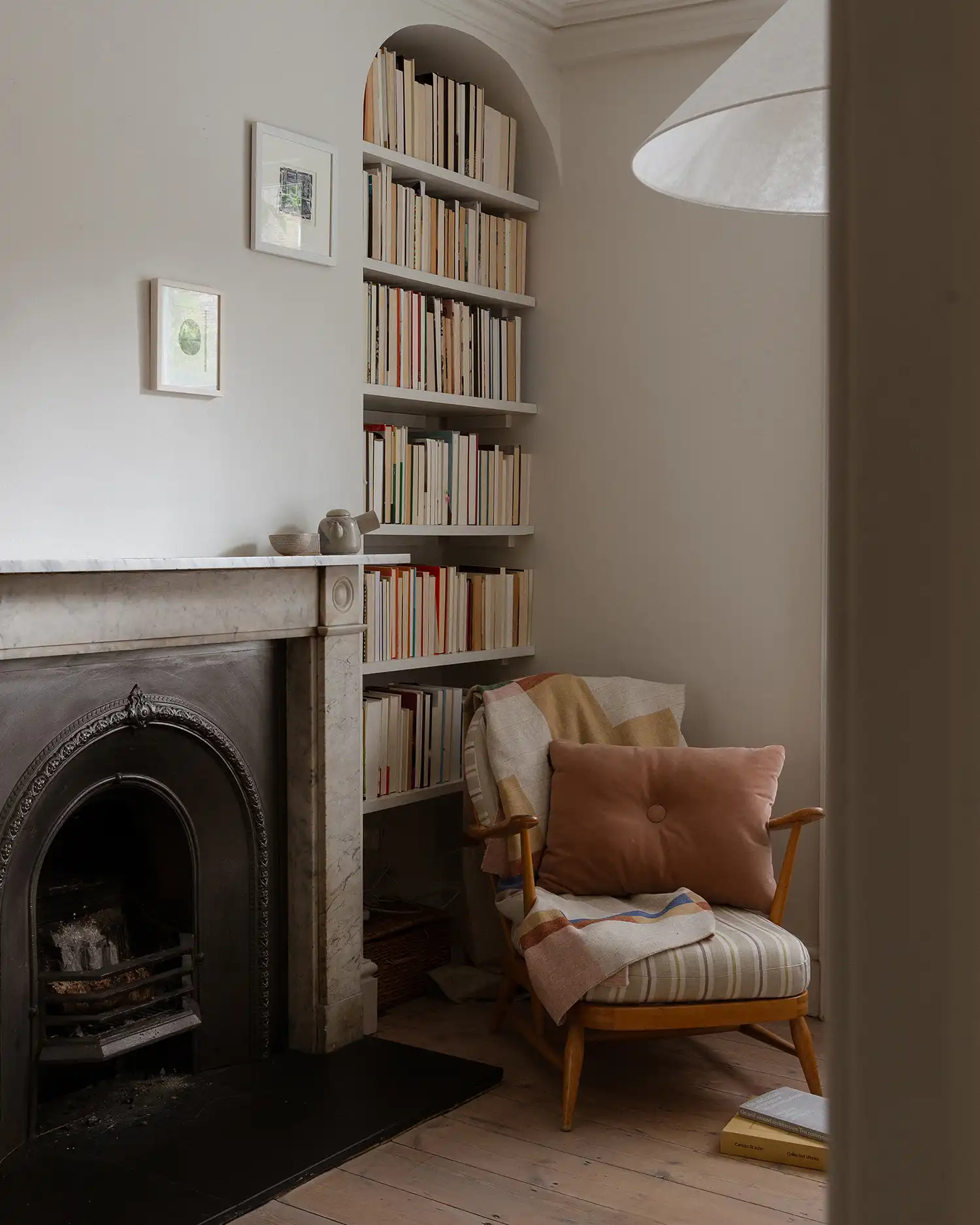
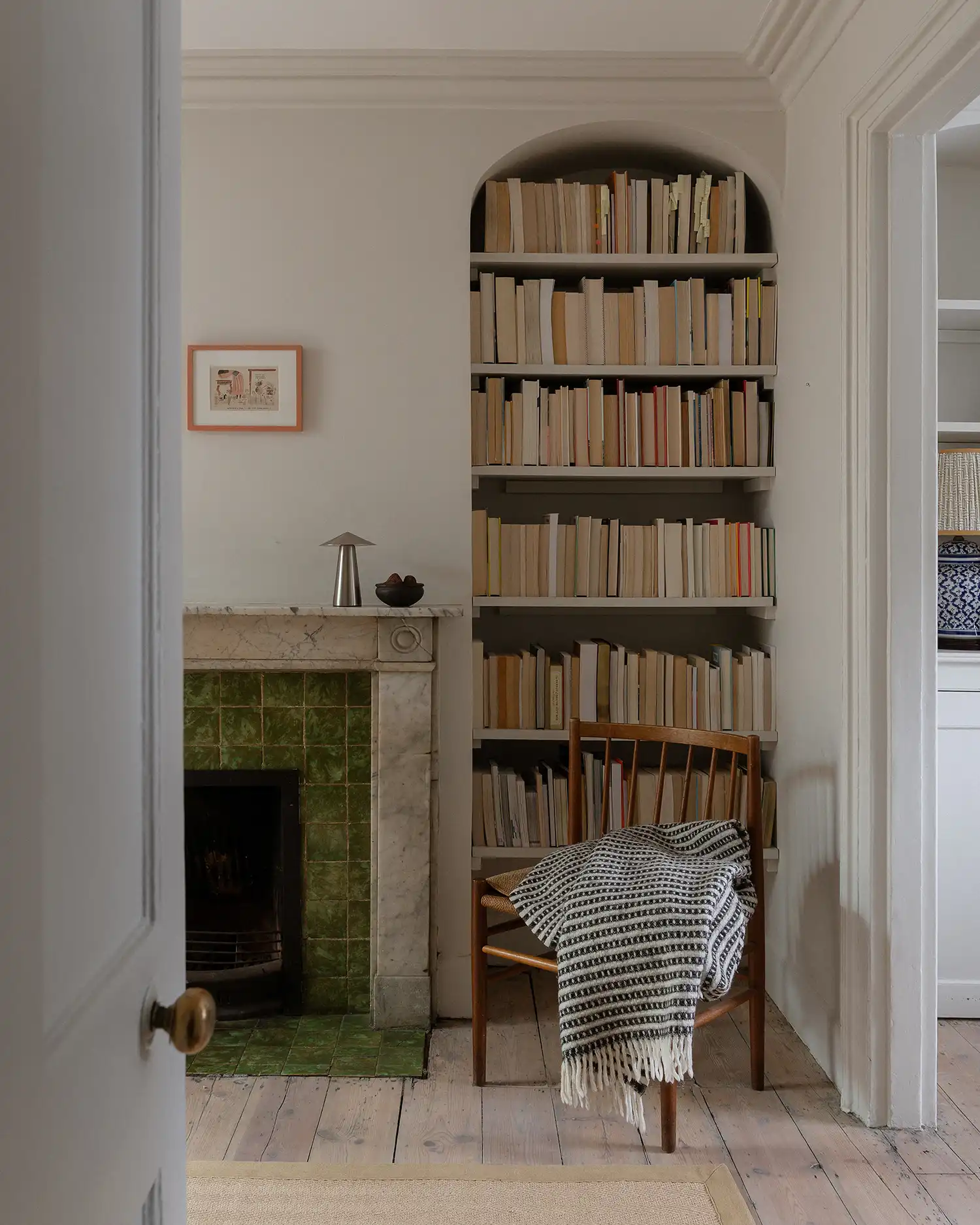
The conceptual vision centers on a “monastic-meets-modern” aesthetic, where the weight of history is lifted by a thoughtful material palette. Upon entering the ground floor reception rooms, the sensory experience is immediately calmed by the presence of original pine floorboards, now refinished with a contemporary white soap that lends a soft, velvet-like luminosity to the wood. This lightness is punctuated by the rich textures of the existing fireplaces—a visual timeline of the home’s evolution where Georgian stone surrounds meet Victorian cast iron and vibrant early 20th-century green tiling. It is a space that feels curated rather than merely renovated, inviting a slow, tactile appreciation of the home’s layered history.
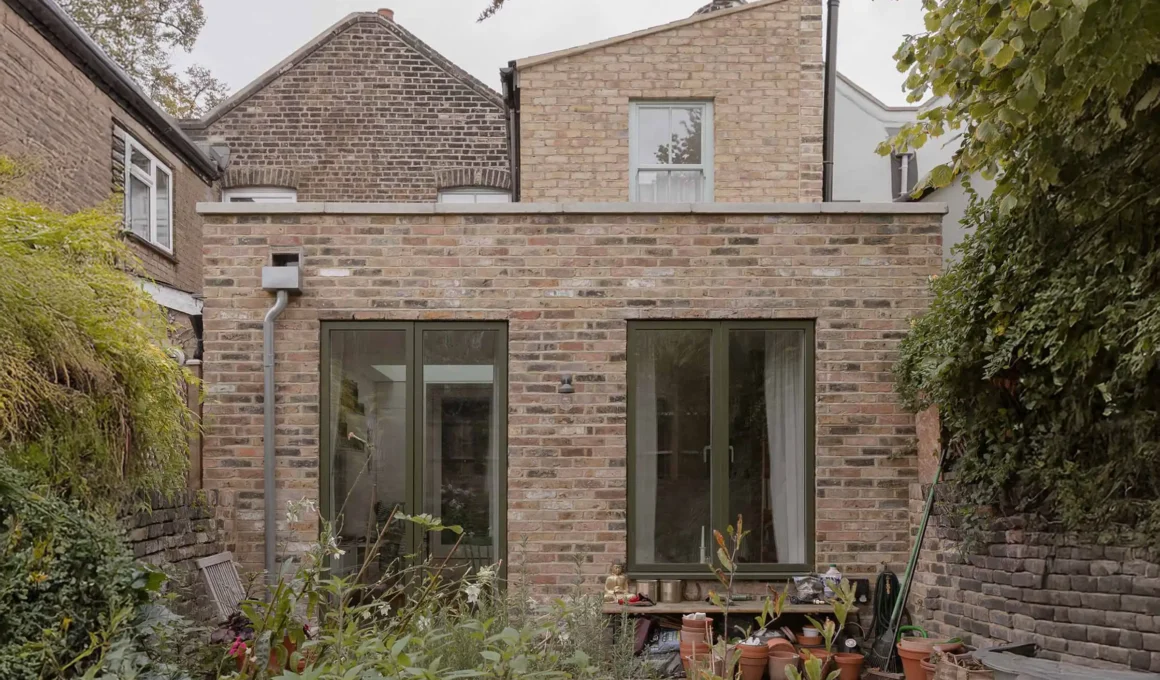
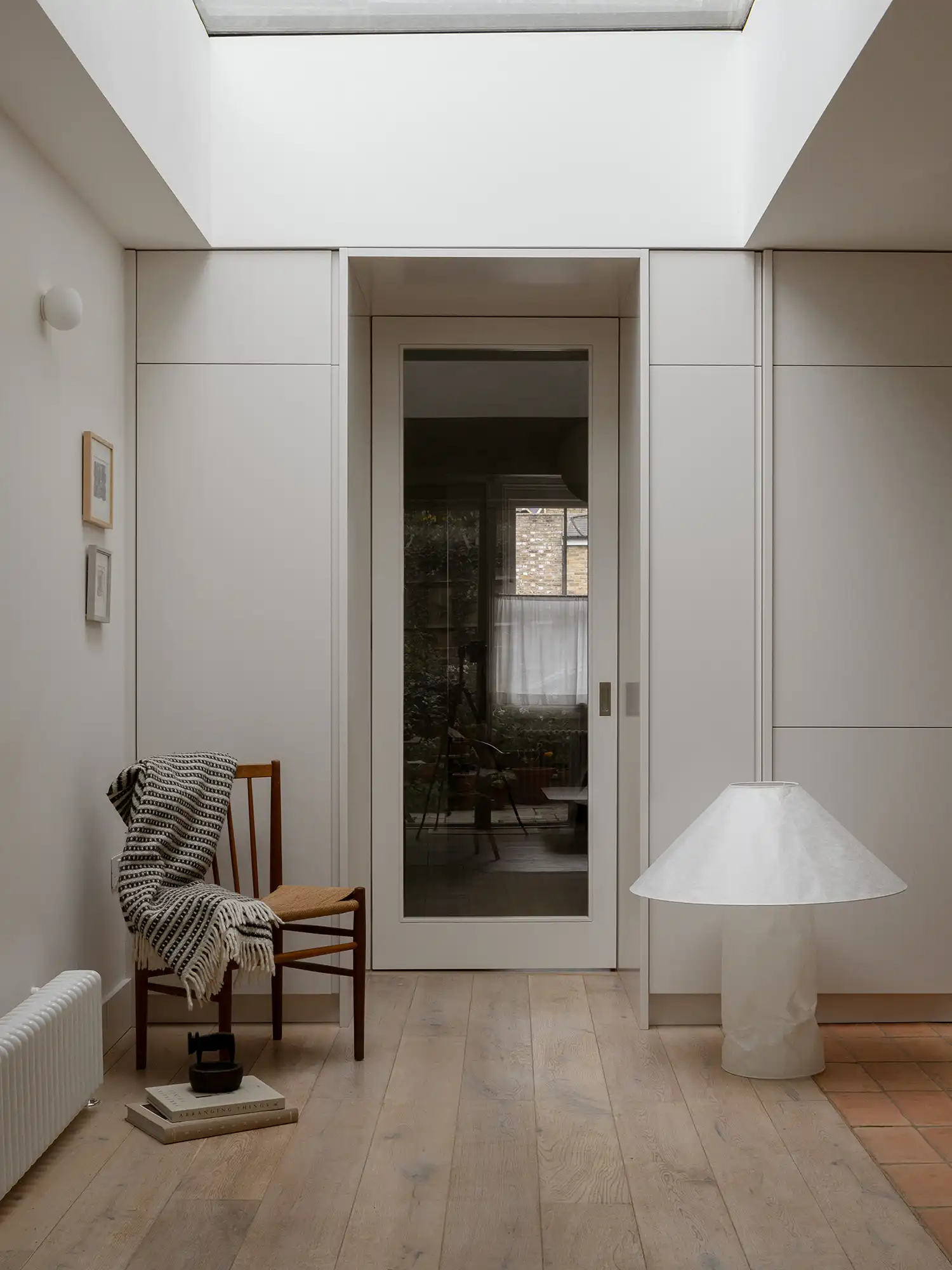
Transitioning into the new architectural volume, the design shifts from restoration to bold structural reimagining. The studio demolished a restrictive 20th-century outrigger to make way for a substantial two-storey extension that occupies the full width of the side return. This move transforms the kitchen and dining area into the home’s true social anchor. Here, the floor finishes play a pivotal role in defining zones; the warmth of engineered oak boards transitions into the earthy, grounded feel of red clay tiles. This choice of materials evokes a Mediterranean warmth, unexpectedly nestled within the dense urban fabric of Hackney.
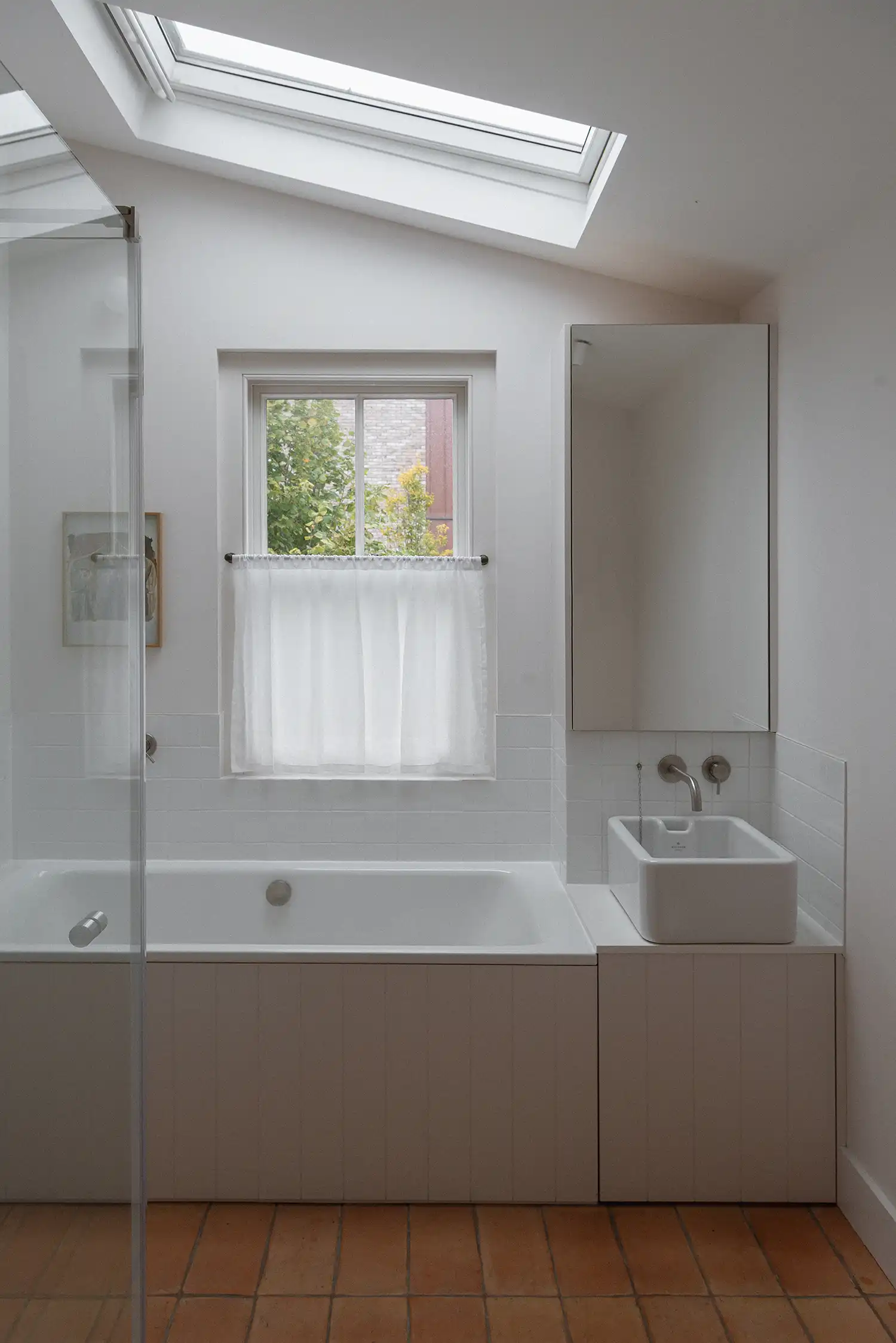
Technical rigor underpins the aesthetic choices, ensuring the house performs as well as it looks. In keeping with the studio’s commitment to low-energy design, wood fibre insulation was integrated into all extended sections, allowing the building to “breathe” while maintaining a stable thermal envelope. The new brick façade is punctuated by high-performance, triple-glazed Velfac windows and doors, which flood the interior with natural light while providing a silent acoustic barrier against the bustling London streets. It is this marriage of heritage sensitivity and environmental consciousness that distinguishes the project from a standard residential extension.
The contextual impact of the Hackney Mews House resonates far beyond its brick walls, contributing to the evolving architectural identity of the neighborhood. The project reflects a broader movement toward “deep retrofitting,” where the goal is to prolong the life of historic housing stock through sustainable densification. As the owner, Isabel, notes, the transformation has turned a once-cramped dwelling into a “real joy to live in,” proving that even the most constrained sites in East London can be unlocked through intelligent spatial planning and a reverence for material honesty.
This project reinforces the growing legacy of Architecture for London, echoing the design language found in their recent portfolio of high-end residential works across the capital. Much like the Highbury Flat, where the use of sustainable materials took center stage, or the meticulous restoration of a Georgian townhouse in Camden, the studio demonstrates a consistent mastery of light and “soft minimalism.” Whether it is the rhythmic timber details of the Victorian house extension in Hampstead or this new mews in Hackney, there is a clear thread of continuity: a refusal to compromise on thermal performance and a dedication to creating serene, human-centric spaces that respect the historic echoes of London’s architectural past.