

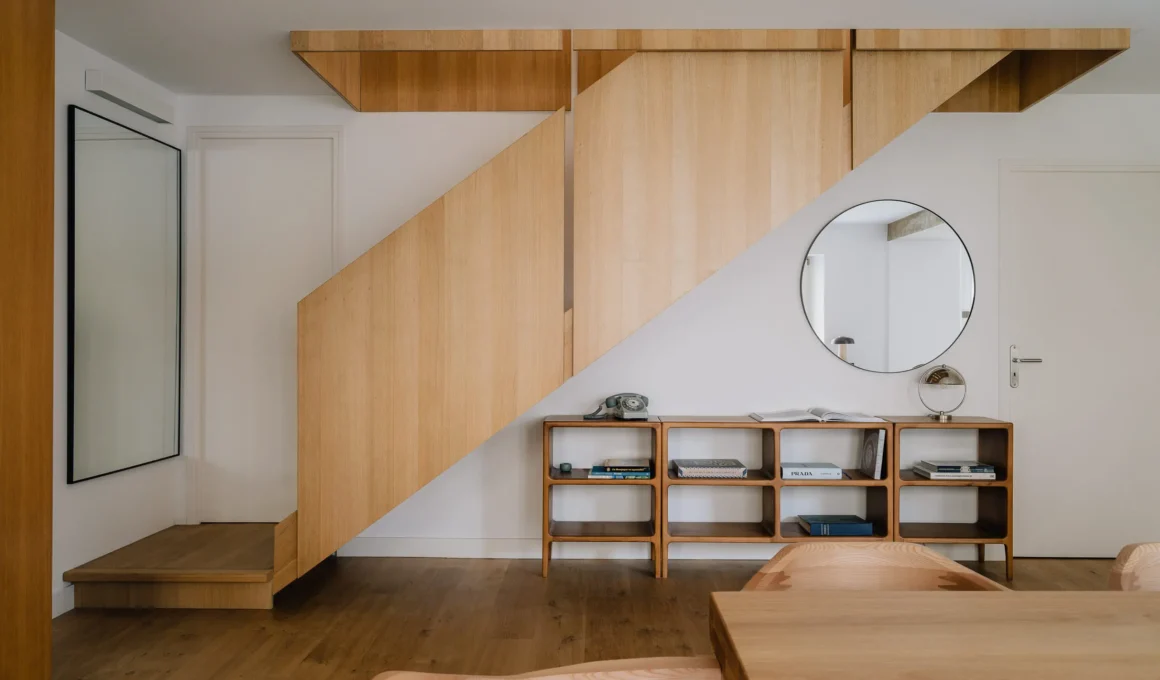
In the heart of the Burgundian village of Deux Rivières, a medieval settlement defined by the rhythmic flow of the Yonne river, Atelier FCA has completed a residential restoration that transcends mere renovation. The project, led by architect Fabrizio Fiorentino, breathes new life into a historic winemaker’s cottage, transforming it into a “house of time regained.” Designed for a Franco-Irish couple relocating from the United States, the residence serves as both a homecoming and a sanctuary of slow living, where the layers of rural history are meticulously preserved to host a modern, transnational family life.
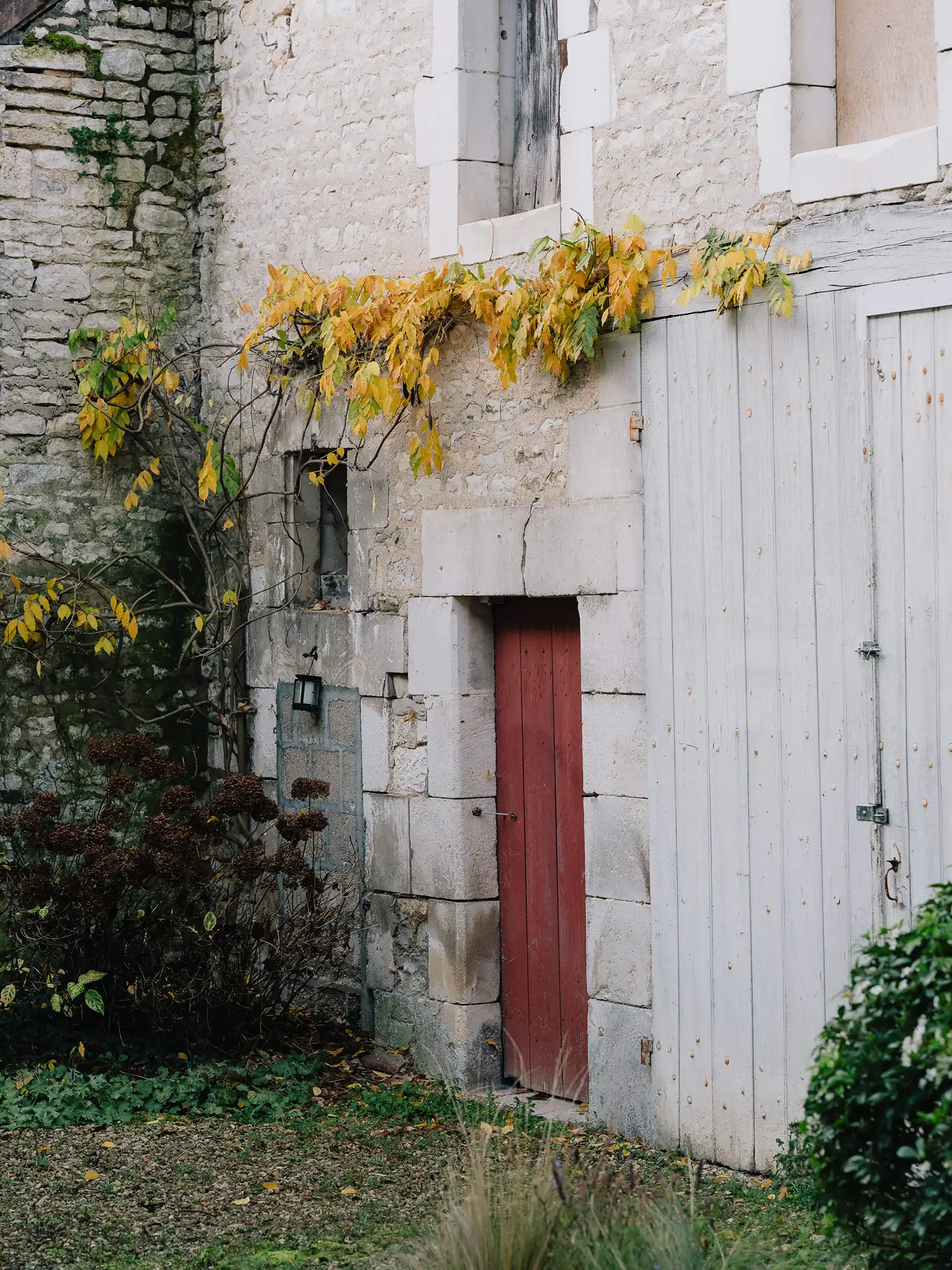
A sensitive dialogue with heritage defines the architectural approach, favoring a process of subtraction over imposition. Rather than “redesigning” the structure, Fiorentino sought to listen to the existing volumes, working within a 160-square-meter footprint that honors the local vernacular. The intervention is a study in balance; it respects the village’s flourishing ceramics tradition and medieval origins by remaining discreet. The exterior maintains its humble, textured presence, while the interior undergoes a sophisticated spatial reorganization that prioritizes open-plan living and the fluid movement of light.
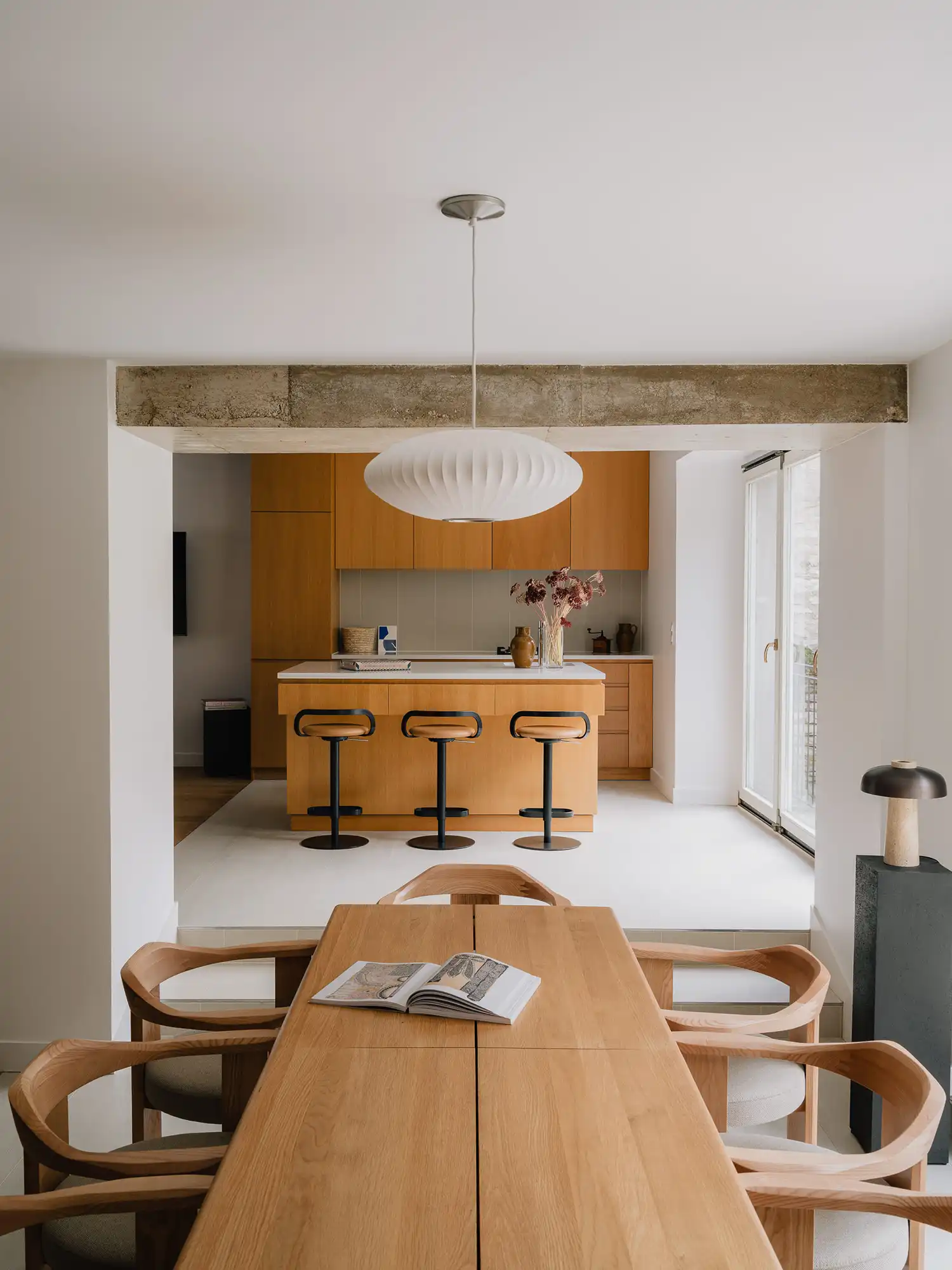
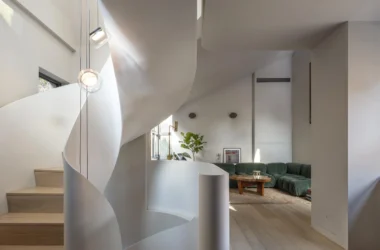
The choreography of domestic space on the ground floor centers around a monumental kitchen counter, which acts as the gravitational heart of the home. This level is articulated as a series of permeable, multifunctional zones where cooking, dining, and lounging overlap seamlessly. By keeping the private bedrooms deliberately compact, the floor plan yields maximum volume to the communal areas, encouraging a lifestyle rooted in hospitality. This philosophy mirrors the warmth found in other European restorations, such as the Itaca House in Rome, where internal layouts are reimagined to foster contemporary social dynamics within a historic shell.
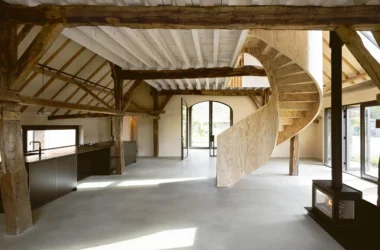
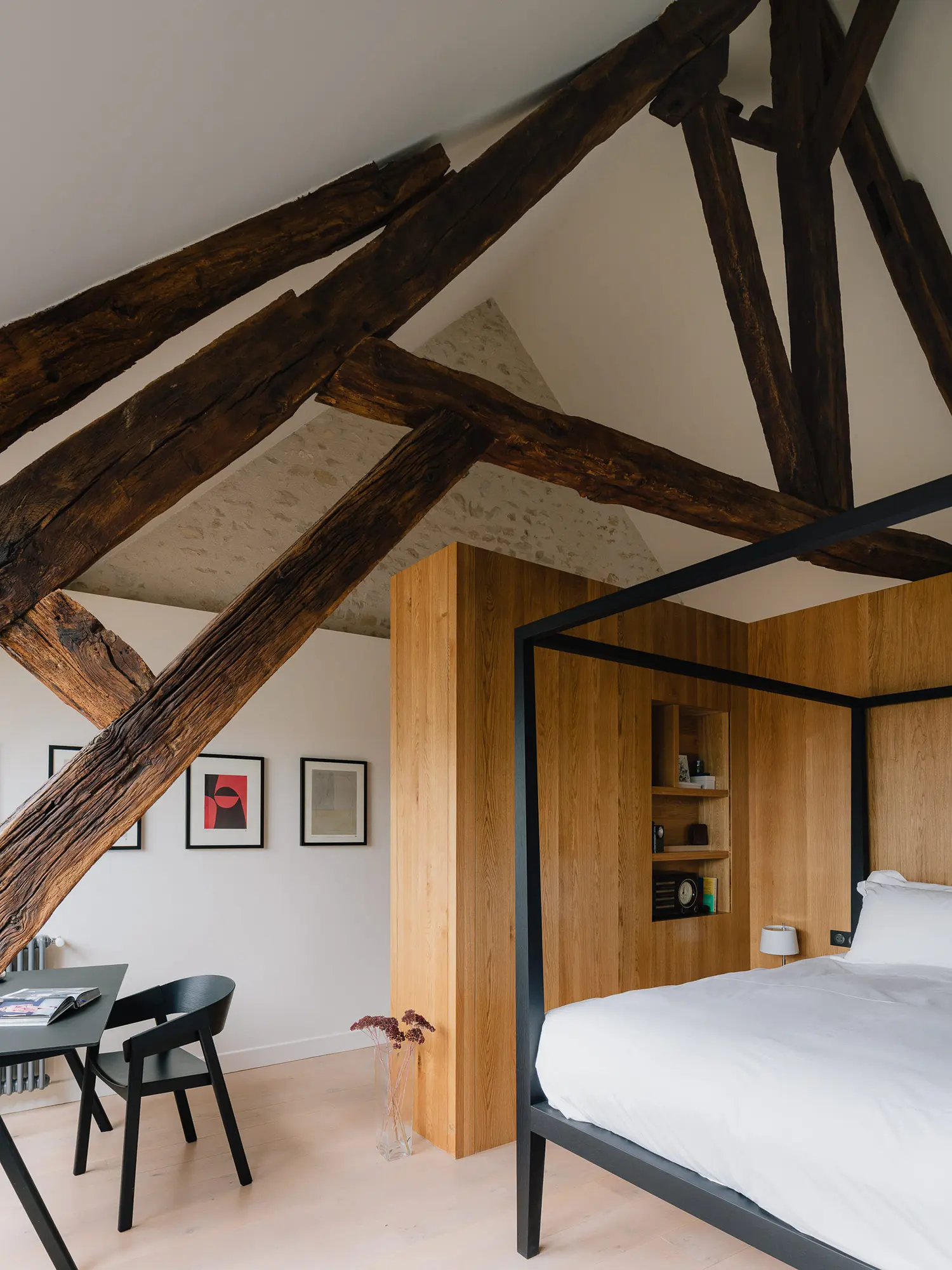
Ascending to the private quarters, the transition from the communal ground floor to the upper level reveals a dramatic shift in scale. What was once a dark, utilitarian attic used for storage has been hollowed out to expose the original wooden trusses, reaching heights of nearly six meters. The challenge lay in maintaining a sense of human-scale intimacy beneath these monumental peaks. Atelier FCA achieved this through precision bespoke carpentry and strategic viewpoints, allowing the rugged beauty of the timber beams to remain a dominant visual element while ensuring the sleeping suites feel protected and serene.
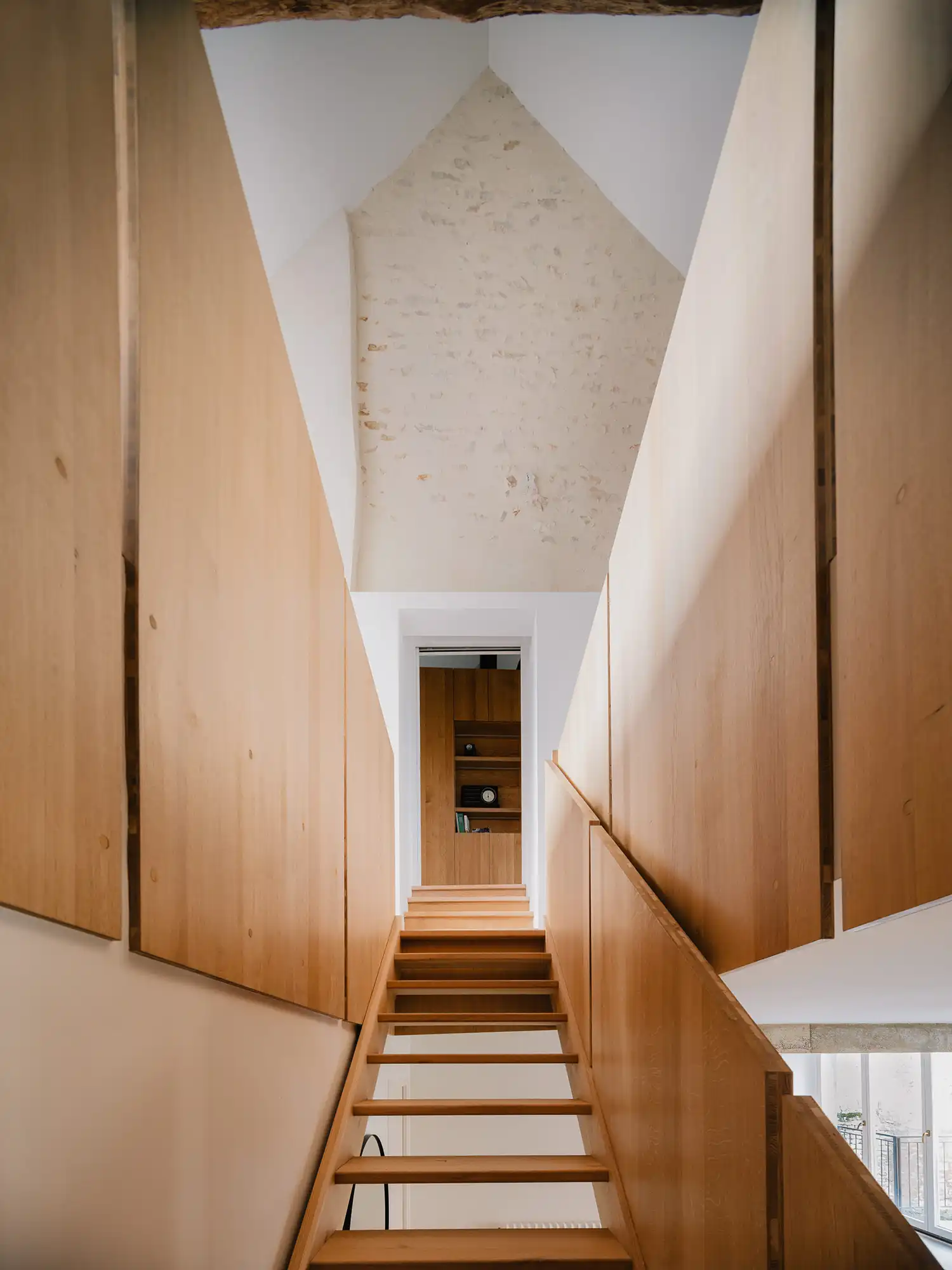
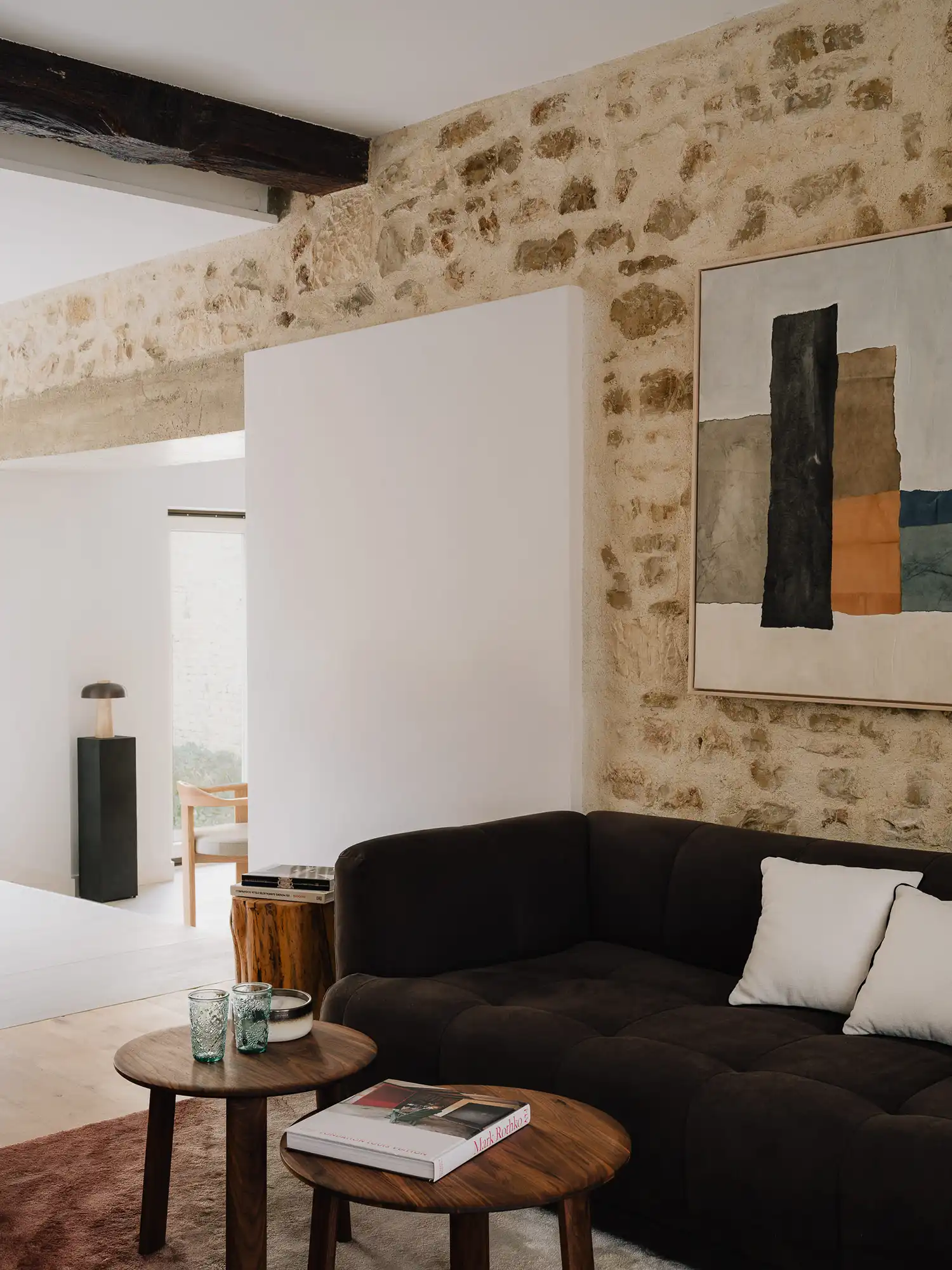
The tactile materiality of the project relies on a restrained palette of natural oak, exposed brick, and lime-washed plasters. This choice of materials anchors the house in its Burgundian context while providing a clean, contemporary canvas for the owners’ lives. The sensory experience is one of quietude; the scent of wood and the cool touch of masonry create a grounded atmosphere that feels timeless. This commitment to authentic materials and the “honest” expression of structure recalls the rigorous aesthetic of the House Cisore alpine restoration, where the dialogue between the old stone and new wood defines the soul of the home.
Looking toward a sustainable future, the restoration of the house is only the first chapter of a broader vision. With a second phase scheduled for 2026—involving the conversion of an adjacent 120-square-meter barn and the refinement of the surrounding landscape—the project continues to evolve. Through this phased approach, Atelier FCA demonstrates that adaptive reuse is not a static event but a continuous narrative. By weaving together the memory of the French countryside with a globalized contemporary sensibility, the firm has created a residence that does not just occupy space, but captures the very essence of time.