

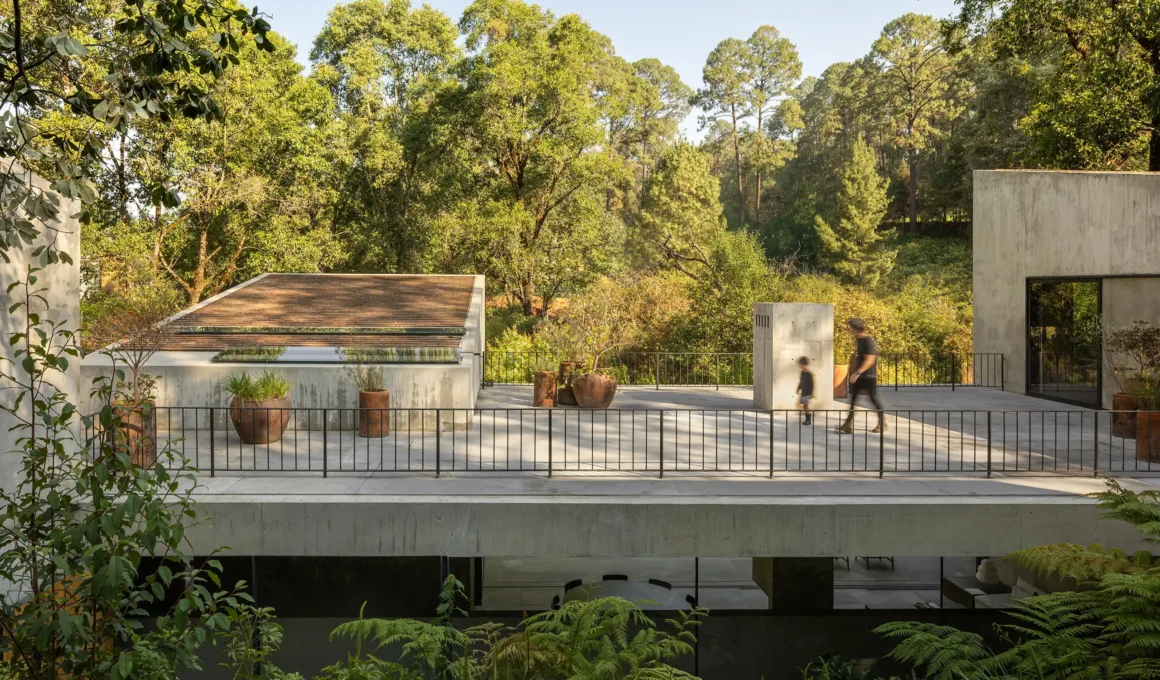
In the dense, mist-shrouded forests of Valle de Bravo, architecture often acts as a mediator between the domestic and the wild. Casa en Avándaro, the latest intervention by ESTUDIO Ignacio Urquiza and Ana Paula de Alba, occupies this threshold with a quiet, geometric precision. Set upon a steep, vegetated slope in the Estado de México, the residence does not fight the topography but rather surrenders to it, guiding rainwater toward a neighboring stream while allowing the layout of ancient pines and oaks to dictate its footprint. It is a project that prioritizes the “sensory experience” of the forest—the smell of damp earth, the sound of the nearby water, and the filtered northern light that defines the high-altitude Mexican landscape.
A dialogue of voids and volumes defines the conceptual core of the home, where four distinct solid masses are strategically placed to frame a central void. This interior garden preserves the site’s original trees, functioning as a lung for the house while capturing the southern sun to naturally temper the interiors. This approach to site integration follows a burgeoning tradition in the region; where the geometric experimentation of House 720 Degrees by Fernanda Canales sought a circular dialogue with the horizon, Casa en Avándaro opts for an interlocking system of solids that feels more grounded, almost geological in its permanence.
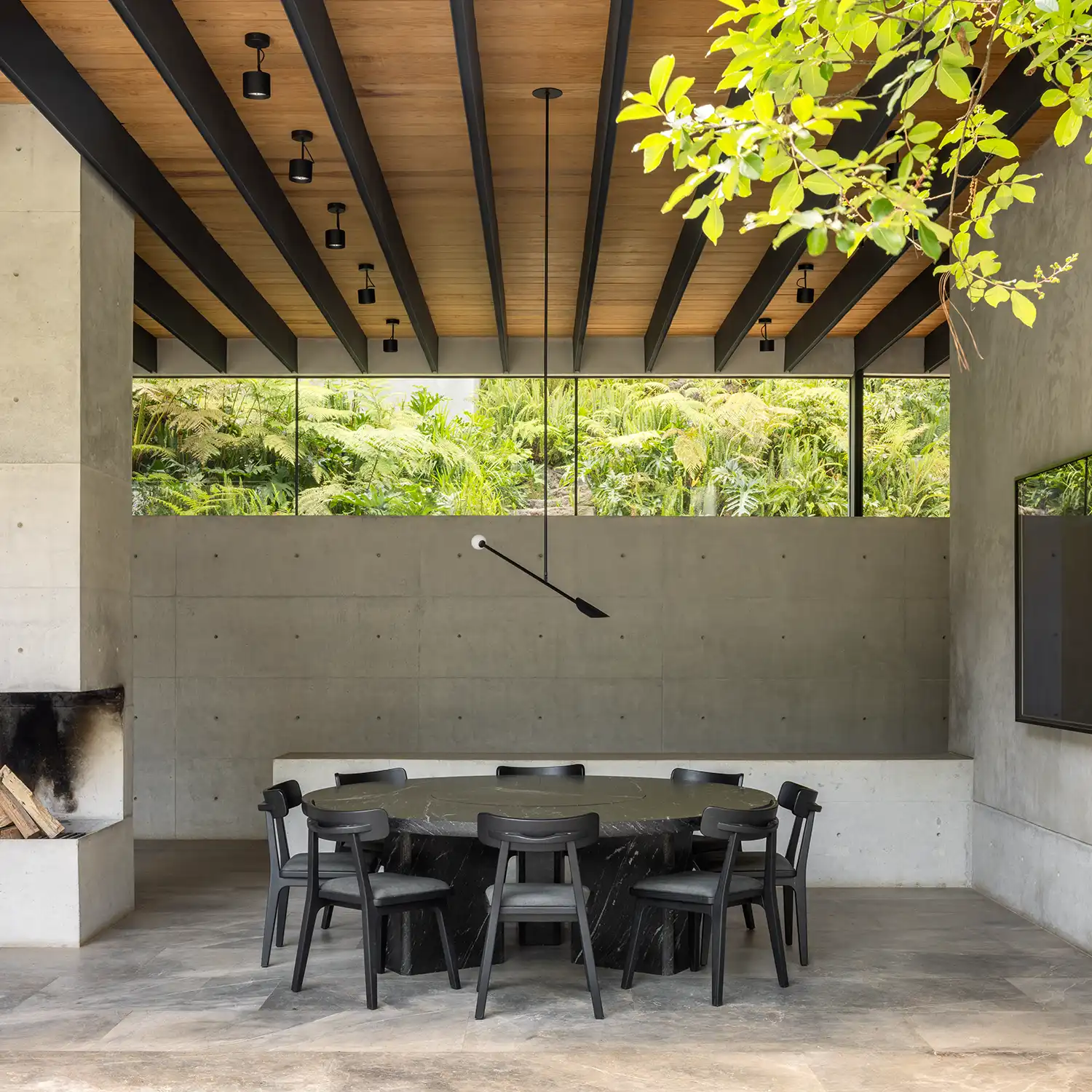
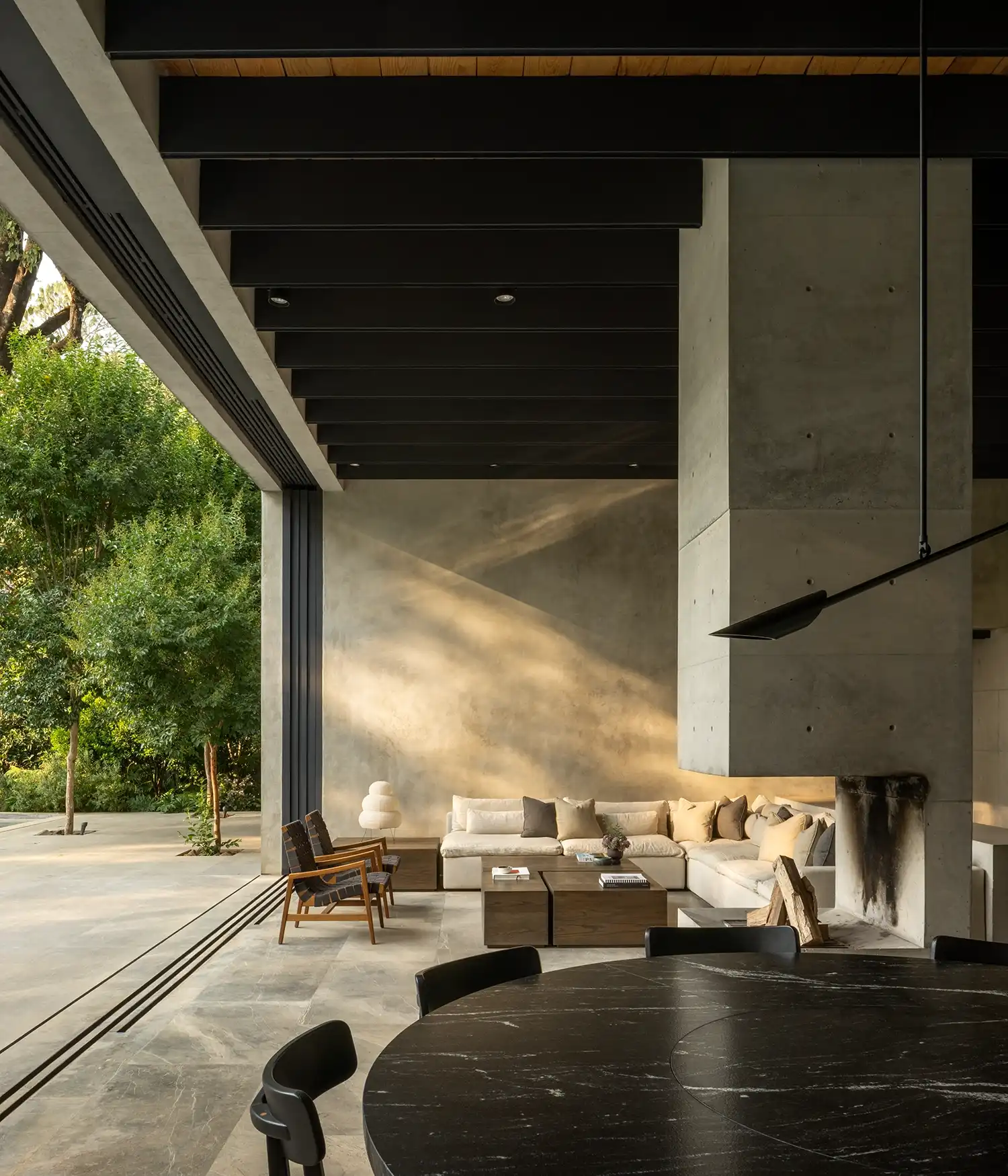
The structural choreography of the residence splits the program into two typologies: private, enclosed brick volumes and a communal, transparent heart. Three of these solid masses support a lightweight concrete slab and a series of steel beams, sheltering the main living and dining area. This public zone is encased in glass, creating a pavilion-like atmosphere that stands in stark contrast to the thick-walled sanctuaries dedicated to rest. While Perez Palacios’ Los Toronjos utilized timber and stone to create a rhythmic, structured intimacy, Urquiza and de Alba utilize the “void” as their primary material, making the forest the fourth wall of every communal room.
Technical ingenuity meets the tactile in the living area, where a monumental floor-to-ceiling window spans nearly ten meters. The four sliding glass panels are engineered to disappear entirely into the adjacent volumes, erasing the boundary between the interior and the garden. This transformation turns the dining room into a covered terrace, a crucial adaptation for the temperate climate of Avándaro. This seamlessness is reminiscent of the Wooden Annex by Pedro & Juana, which also explored how light-touch structures can extend the livability of a site. Here, however, the experience is elevated—literally—by an exposed concrete base that lifts the house to provide a thermal barrier against the forest’s humidity.
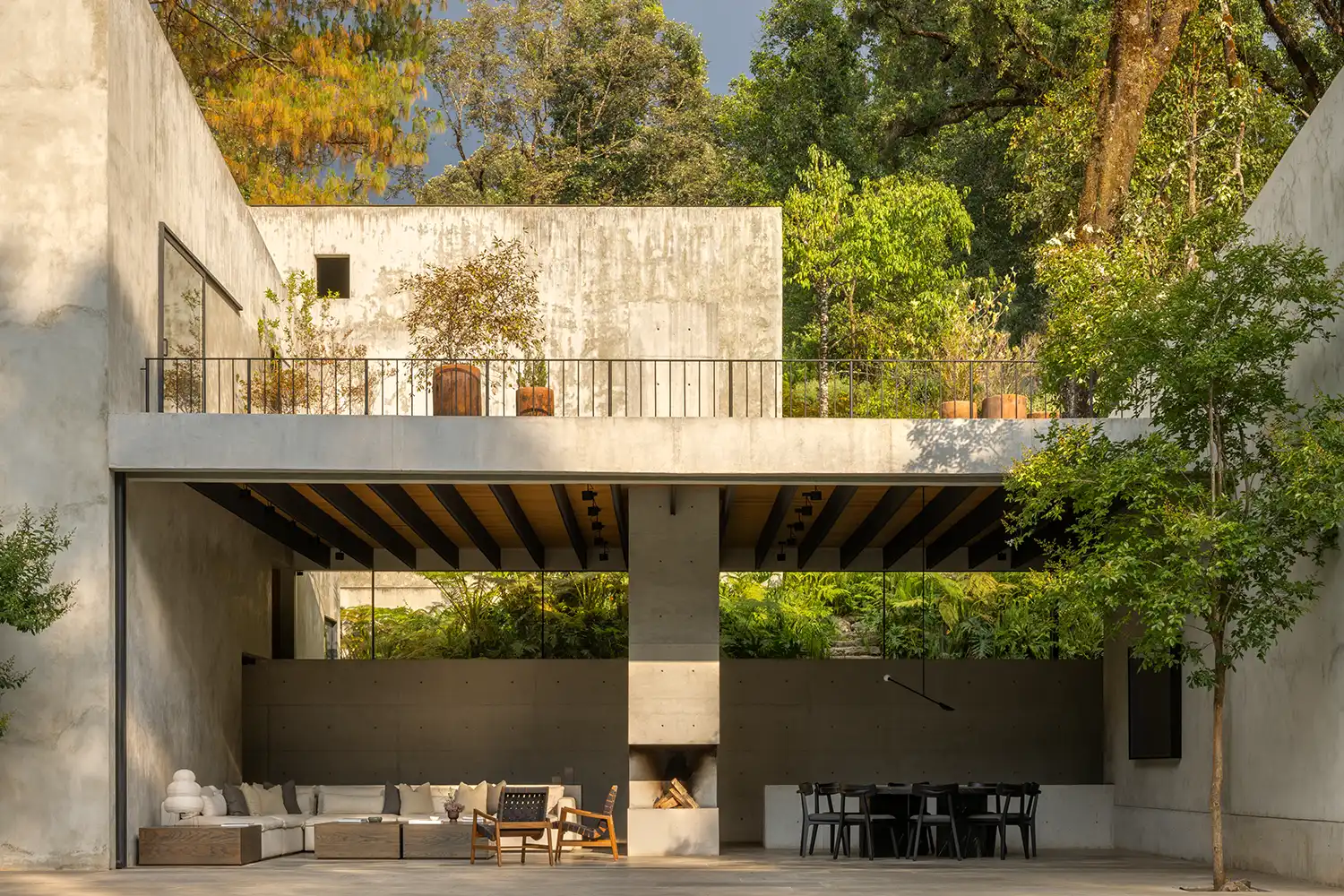
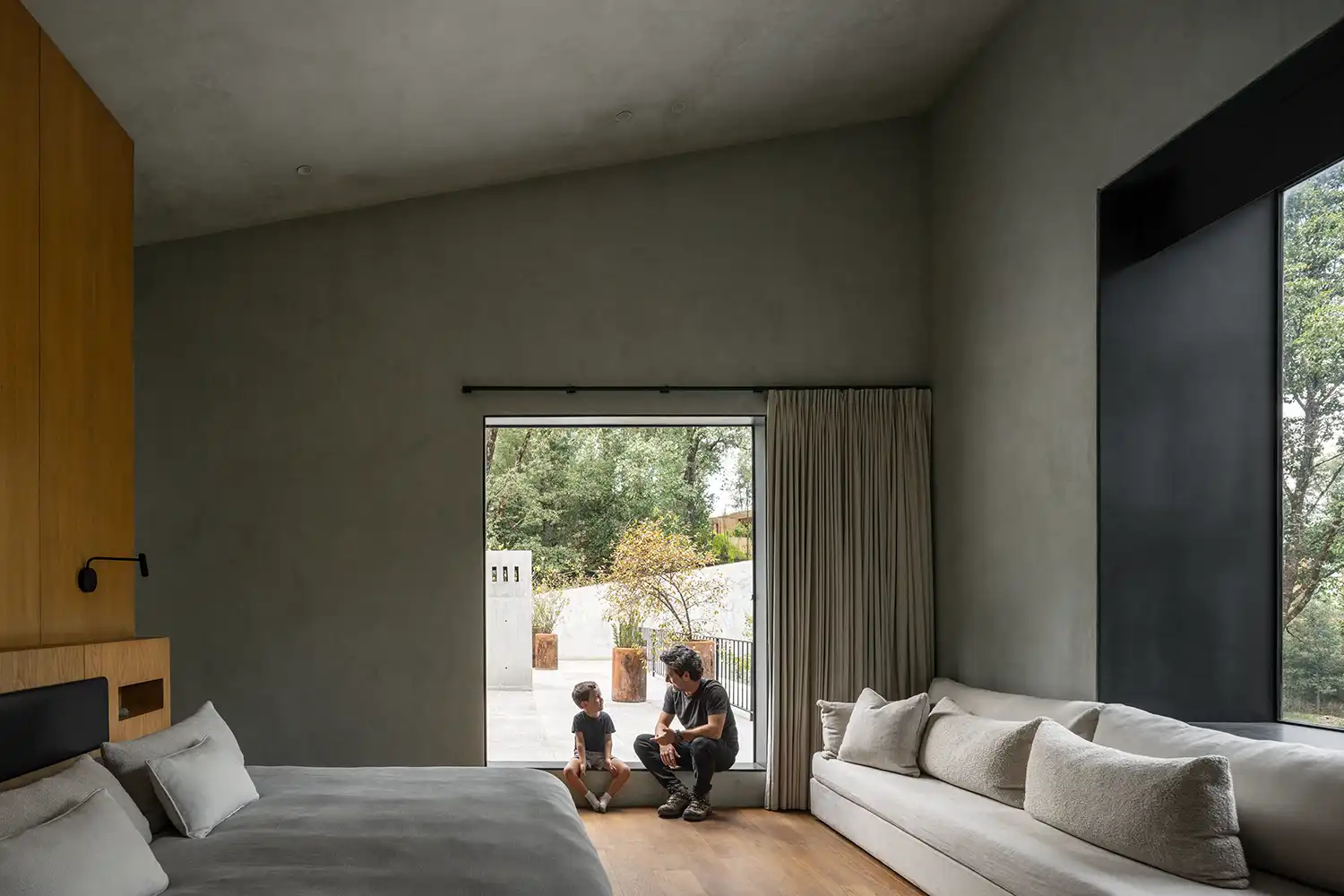
The material palette is a curated study in neutrality, designed to retreat and let the vibrant greens of the Estado de México take center stage. Inside, the designers have employed a monochromatic scheme of smooth, locally-sourced stucco, stained oak, and volcanic stone. The furniture is a blend of custom-made pieces and understated classics, emphasizing “purity of form” and tactile warmth. Cashmere, linen, and locally crafted palm weavings soften the rigors of the architecture, ensuring that the home feels like a sanctuary rather than a gallery. The pitched roofs, clad in flat clay tiles, nod to local vernacular traditions while performing the vital task of rainwater harvesting.
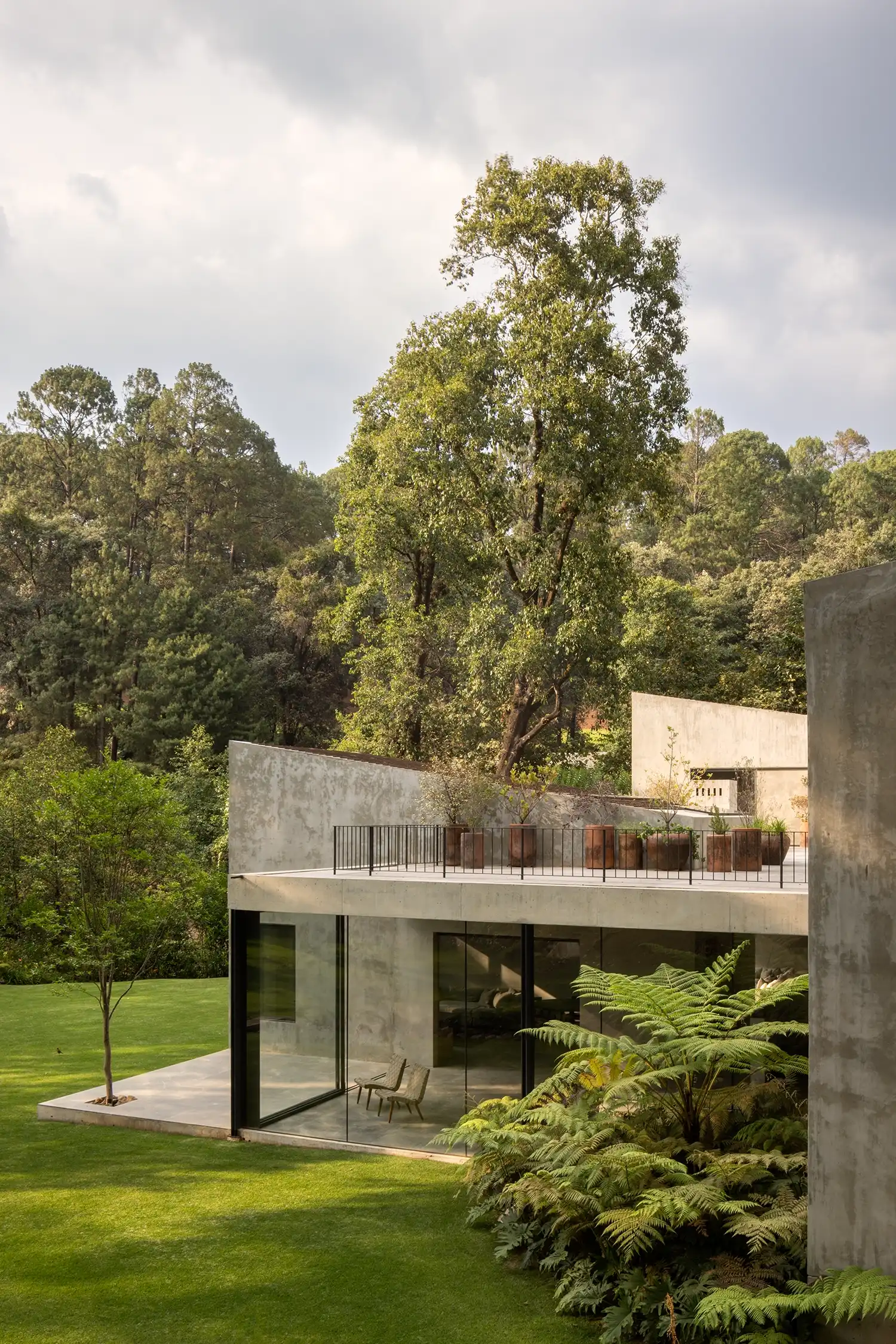
A vertical expansion of the living space occurs on the flat roof of the central structure, which serves as a private terrace accessible from the bedrooms. Standing on this elevated plane, residents are reintroduced to the forest at the level of the treetops, a vantage point that shifts the perspective from the grounded to the ethereal. The project succeeds because it does not attempt to outshine its context. Instead, through a balance of heavy masonry and ethereal transparency, Casa en Avándaro becomes a silent observer of the landscape, proving that the most sophisticated design is often the one that knows when to step back and let the environment breathe.