


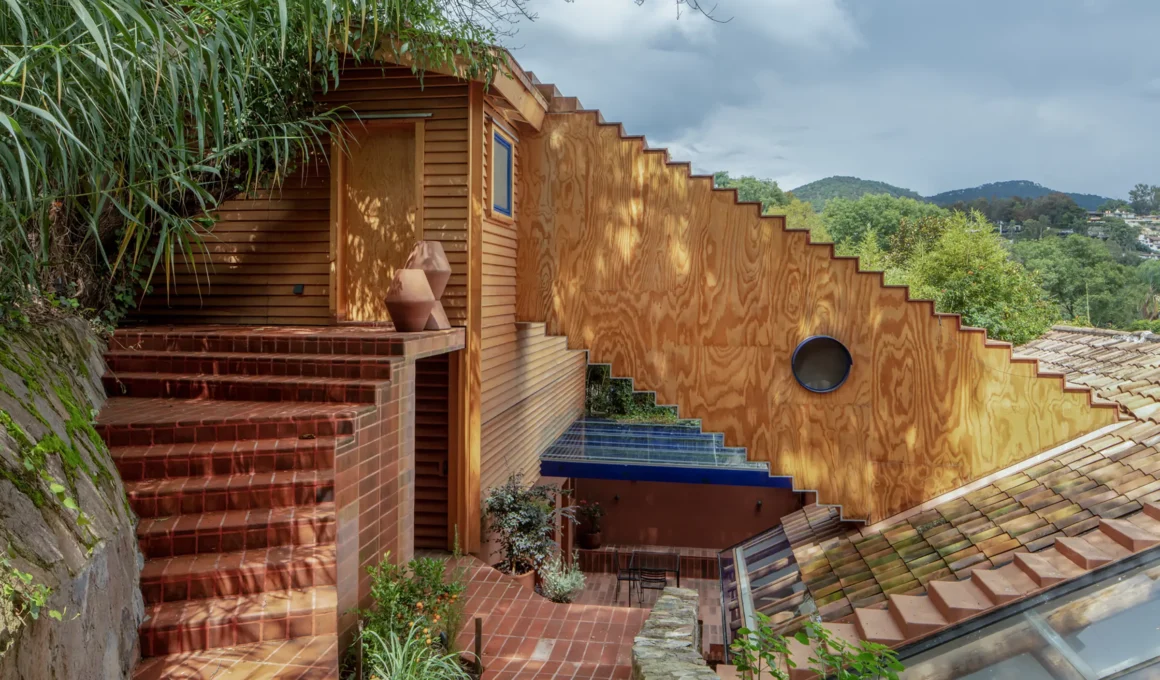
Pedro & Juana has completed a dramatic architectural extension to a lakeside dwelling in Valle de Bravo, State of Mexico, by carving a new wooden annex into the surrounding hillside and stitching it to the existing structure with a spectacular roof-piercing stair tunnel. The project, which the studio used as a testing ground for its promotion of wood construction in Mexico, re-sequences the home’s connection to its steep, verdant site.
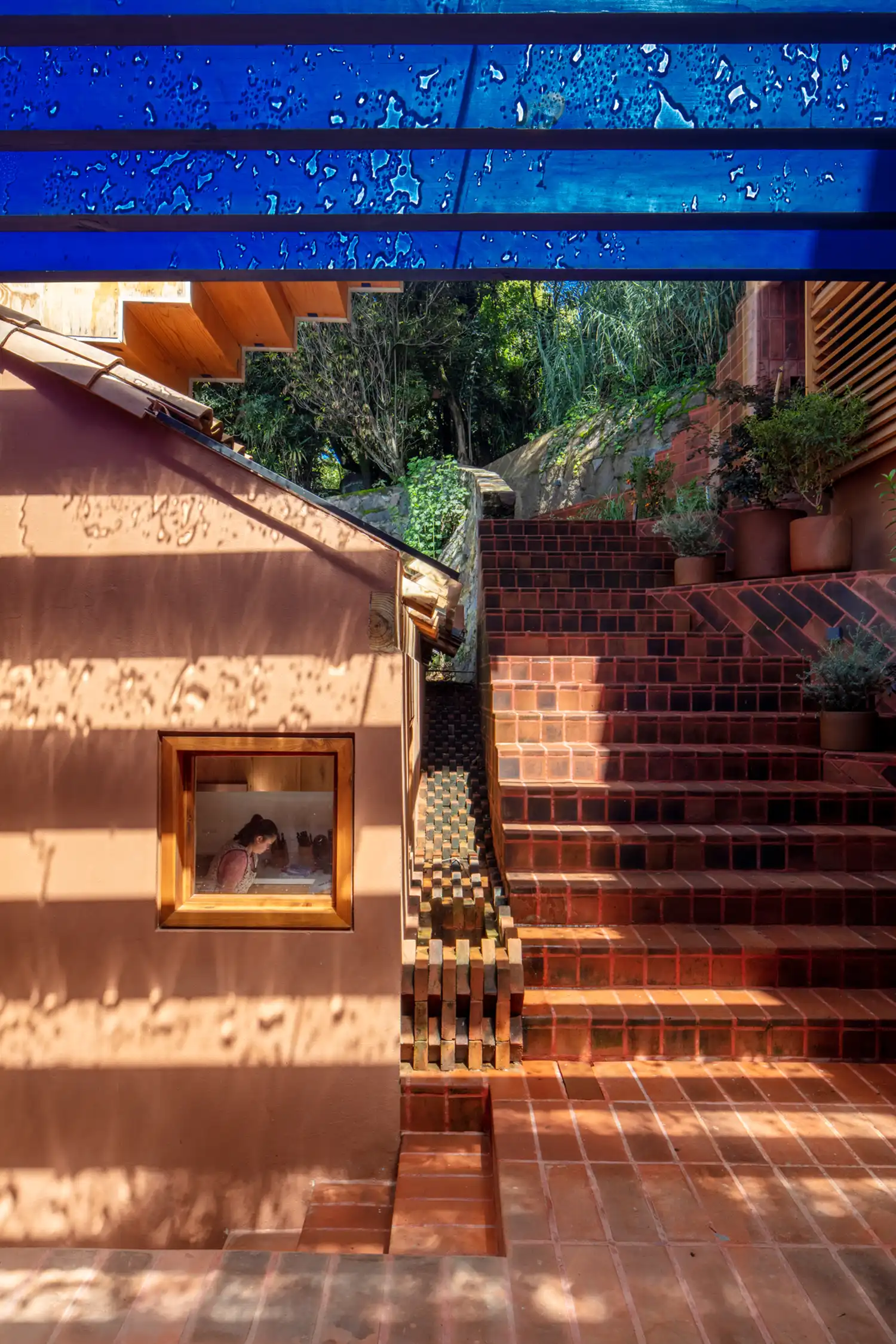
The original house, designed by José Iturbe, was sited on a natural slope rising sharply from the water’s edge. This challenging topography made staircases a defining, if purely functional, element of the home’s circulation. Pedro & Juana’s intervention elevates this necessity to the core of the design concept, introducing a decisive act in the building’s section: cutting a precise void through the original terracotta roof to create an enclosed passage.
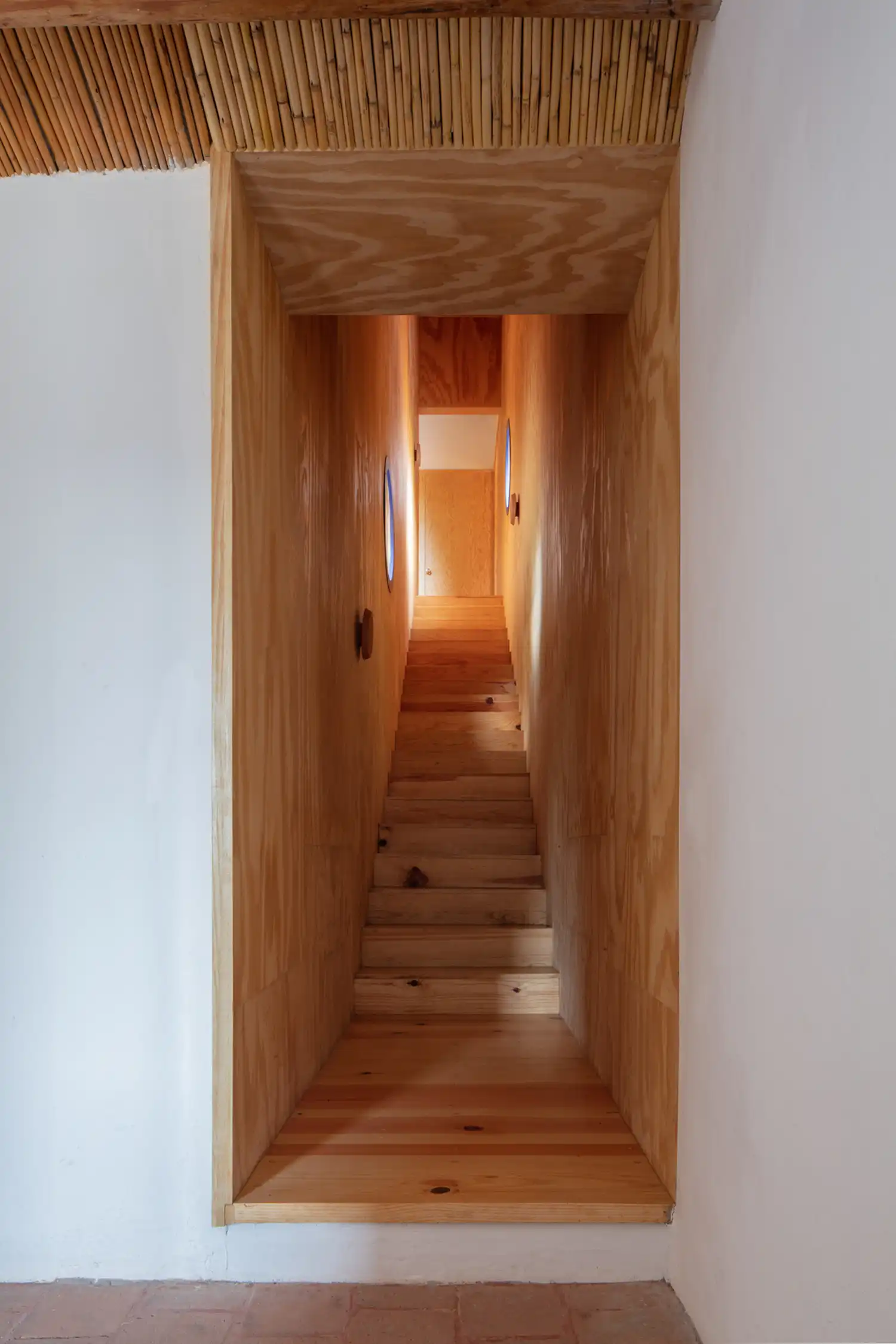
This new passageway forms a stair tunnel that prolongs the vertical journey of the house, allowing the original stair sequence to ascend and connect seamlessly to the service area below the new addition and the living spaces above. The tunnel is more than just a conduit; it consolidates movement, channels natural light deep into the home’s core, and actively draws the external landscape into the building’s internal volume, reorienting the house toward its once-overlooked vegetated rear.
The connection lands on a generous, wide brick staircase that anchors the intervention to the earth. This staircase navigates the slope, its substantial masonry mass and thermal inertia contrasting sharply with the lighter timber volume of the wooden annex above. It terminates at a covered patio space that functions as an exterior extension and overflow for the reconfigured kitchen, clarifying the use of the new social spaces.
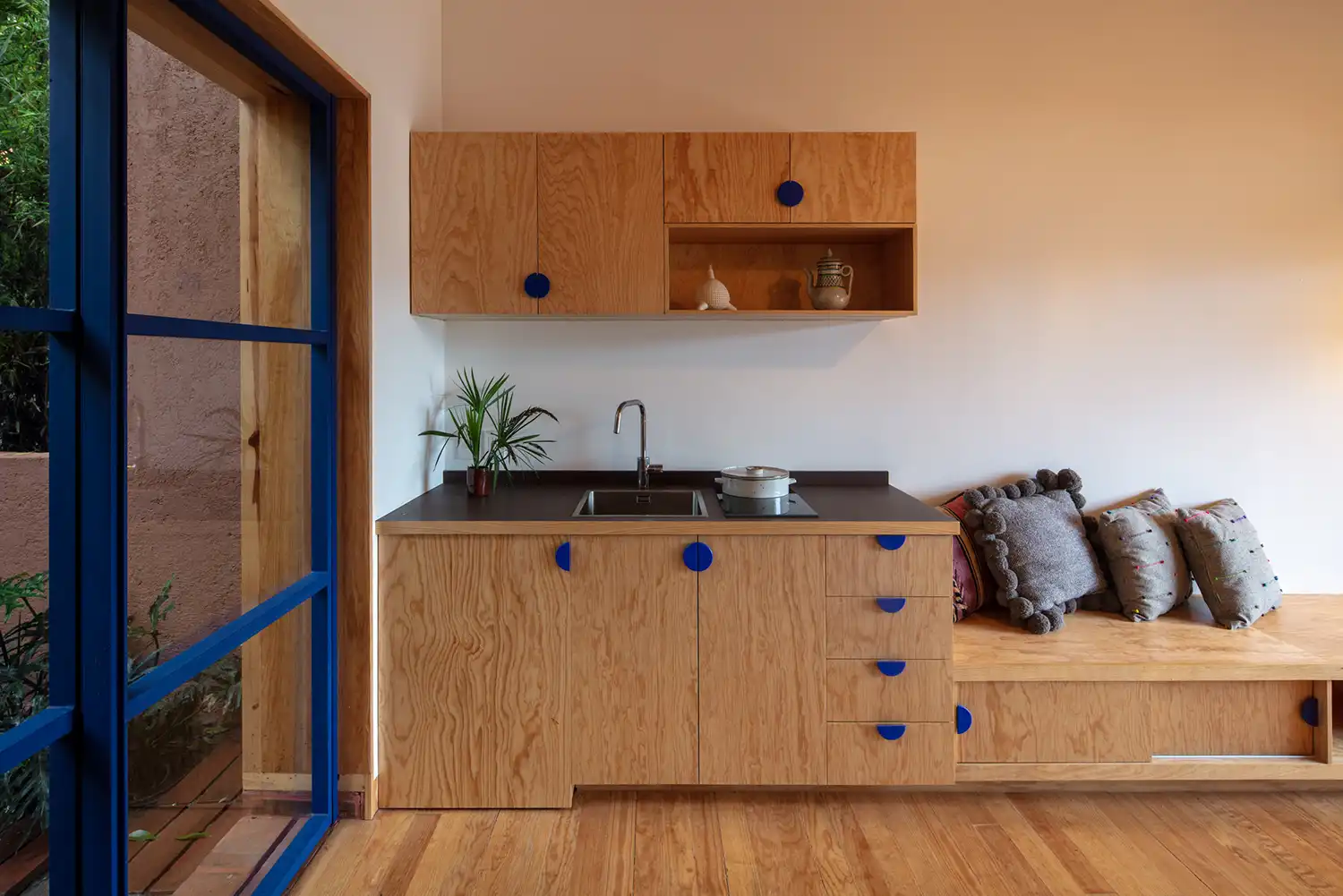
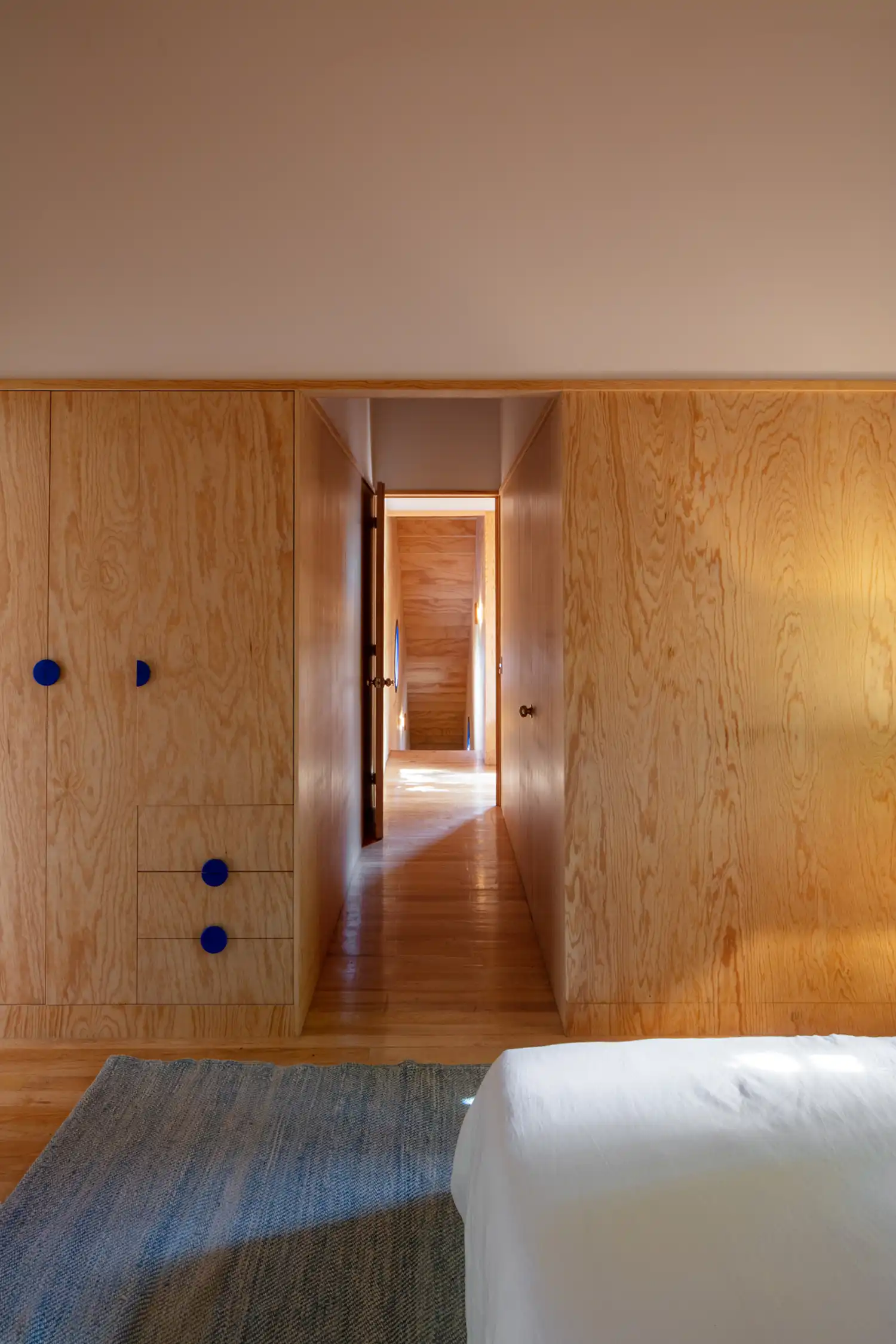
The new structure, built predominantly from kiln-dried pine in a classic stick-frame configuration, houses a compact yet adaptable program. It contains a bedroom, two bathrooms, and a versatile, flexible room designed to switch roles between a kitchen, a studio, or an additional sleeping area as the client’s needs change. This fluid approach to space is a hallmark of modern sustainable design.
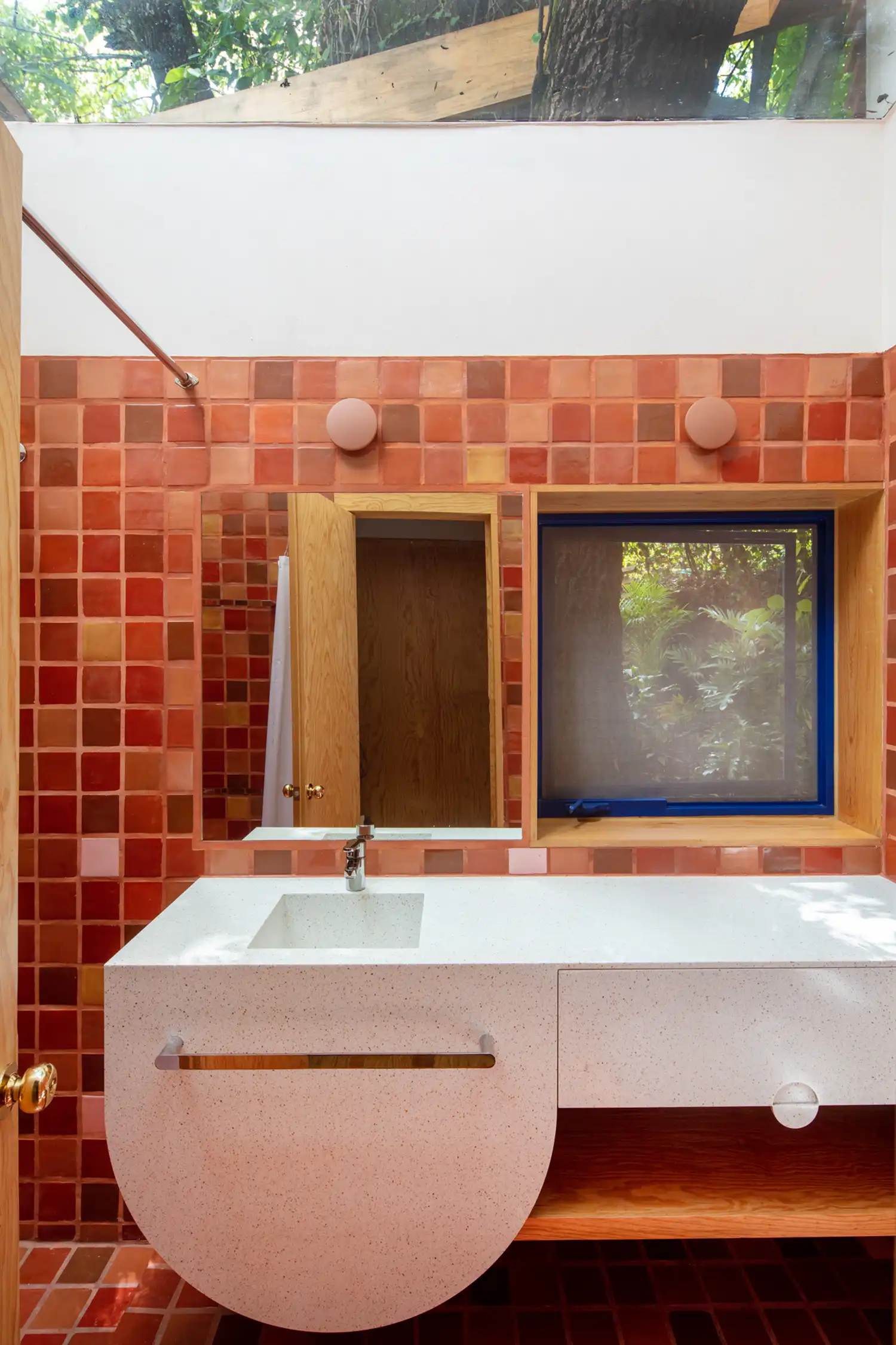
An interior patio separates and links the two principal new rooms. This intimate, open-air void acts as a small climatic moderator, providing cross-ventilation and collecting reflected light while maintaining privacy within the tight footprint.It establishes an essential gradient of thresholds, calibrating the home’s exposure to the lakeside microclimate of Valle de Bravo.
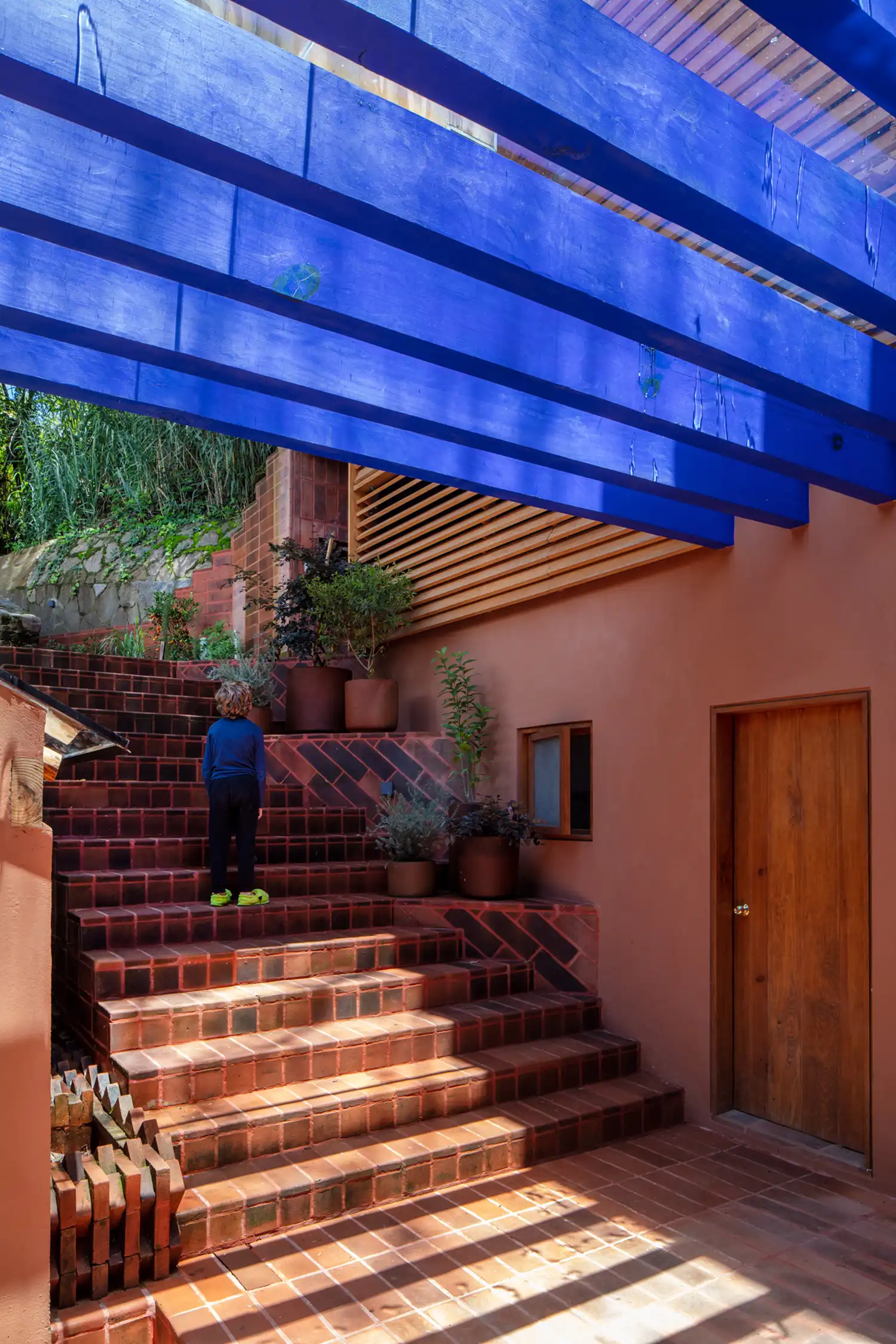
The use of wood as the primary structural and finishing material for the annex is not only a choice of warmth and acoustic quality but a political statement. The lighter timber assembly simplified construction on the steep site, limiting excavation and reducing disruption to the terrain—a key tenet of responsible Mexican architecture.
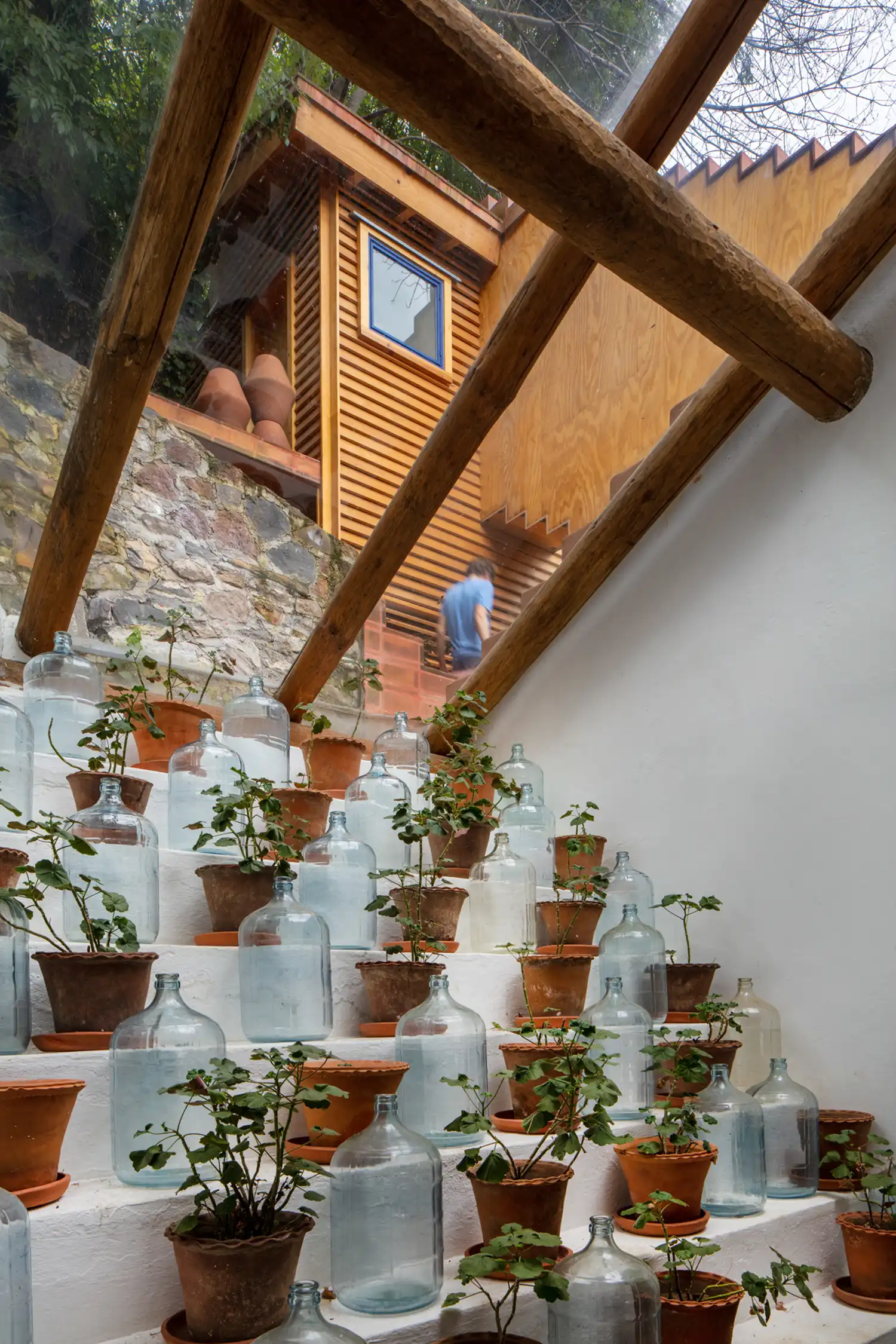
Furthermore, this choice directly supports Pedro & Juana’s own initiative, La Liga de la Madera, which actively campaigns to promote wood construction across Mexico. The Annex served as a functional laboratory to prove that designing with wood provides a more sustainable building material and a beautiful, viable alternative to the omnipresent concrete and masonry construction typical of the region. By leaving much of the pine bare, the material itself becomes the ornament, demonstrating a Loosian respect for the raw integrity of the wood.