


The renovation of the Ahof Farm in Nijkerk, Netherlands, led by cellist and interior architect Julia van Beuningen in collaboration with EeStairs, transforms a listed historic barn into a carbon-neutral residence centered around a sculptural pine plywood staircase and a rigorous selection of organic materials.
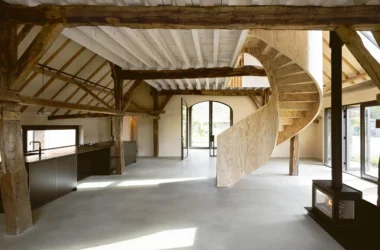
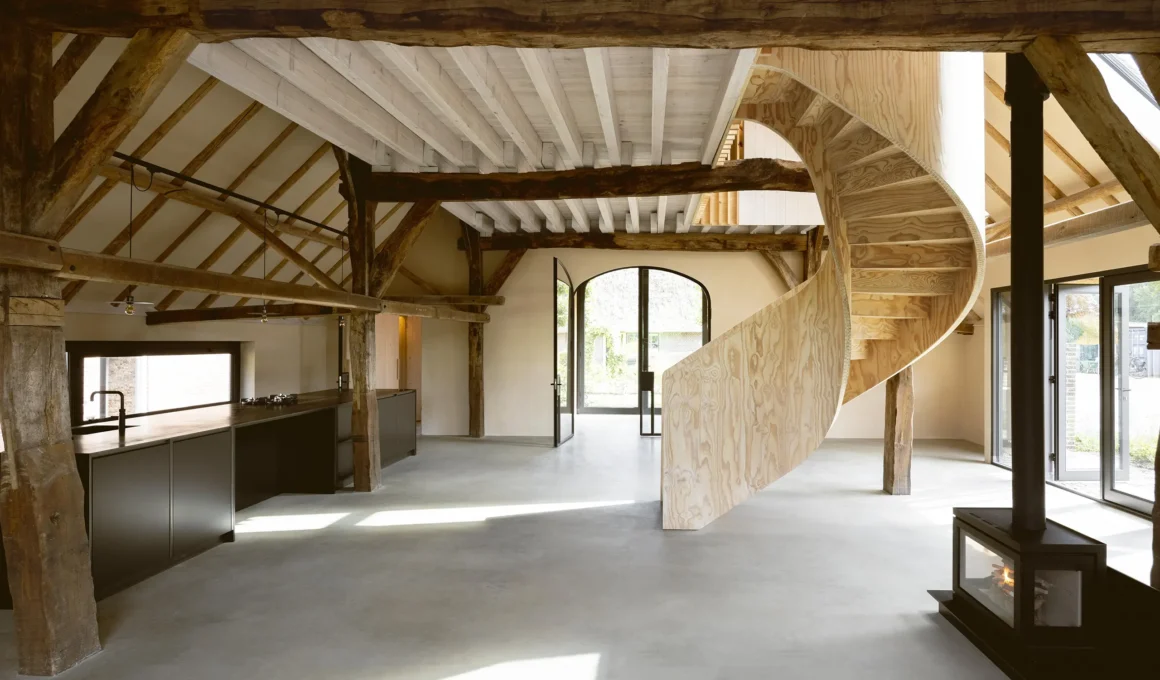
A dialogue of heritage and precision greets visitors upon entering the Ahof barn, where the scent of aged timber meets the crisp, clean lines of 21st-century craftsmanship. The interior is no longer a site of agricultural labor but a curated environment where history is treated as a living substrate. At the heart of this transformation is a spiral staircase in pine plywood, a collaboration that elevates a humble industrial material into a focal point of extraordinary geometry. The choice of plywood—rather than the marble or glass typically associated with such grand helical forms—reinforces a logic of restraint that permeates the entire project.
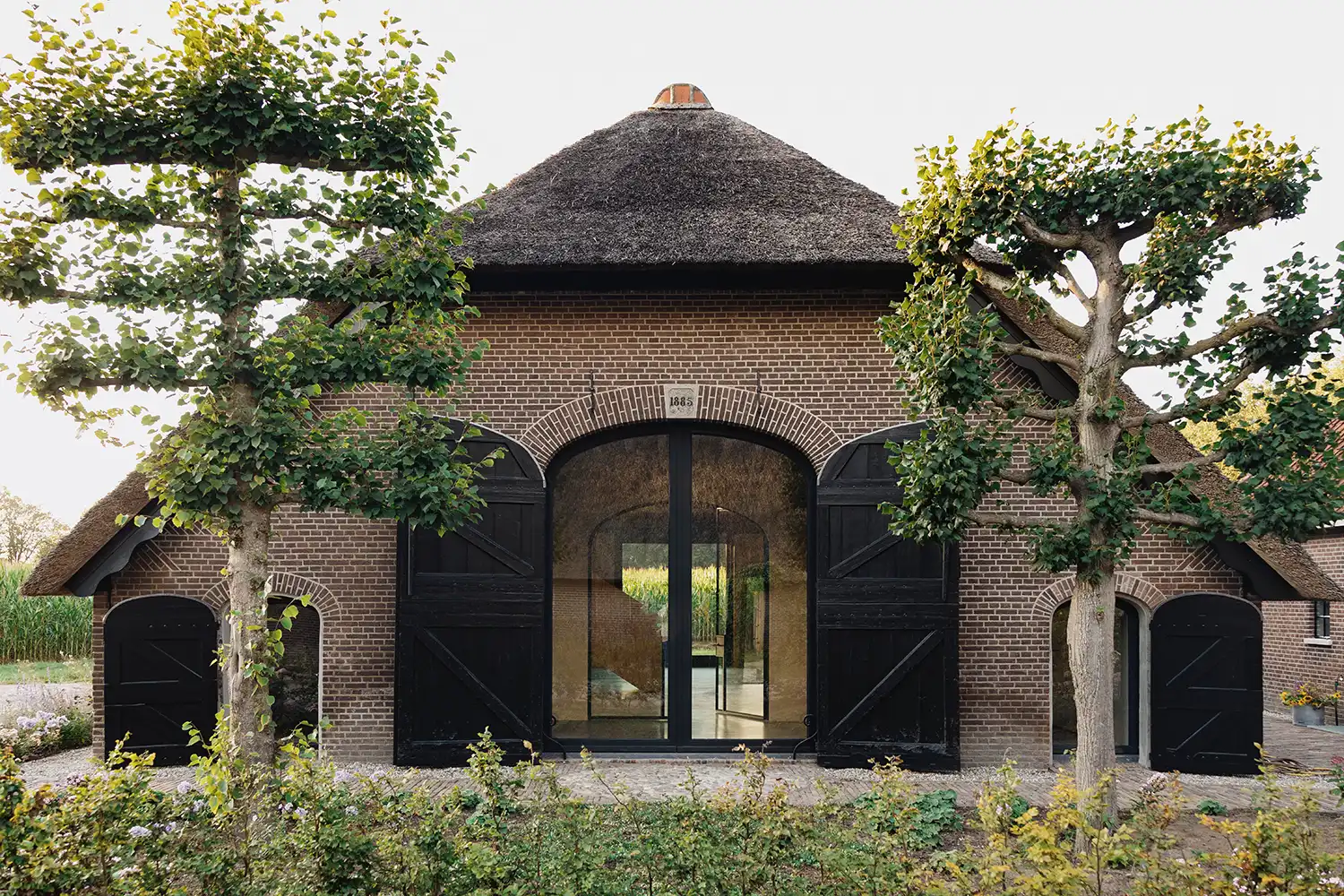
The conceptual vision for the home centers on the removal of the superfluous. By stripping back centuries of utility to reveal the original gabled roof and exposed structural beams, the designers created a void that demands high-quality intervention. There is a palpable sense of clarity achieved through the use of natural building materials such as lime plaster and flax. These elements do not merely skin the walls; they provide a breathable, tactile backdrop that absorbs light and sound, grounding the home in a quiet, rhythmic atmosphere that feels both ancient and entirely new.
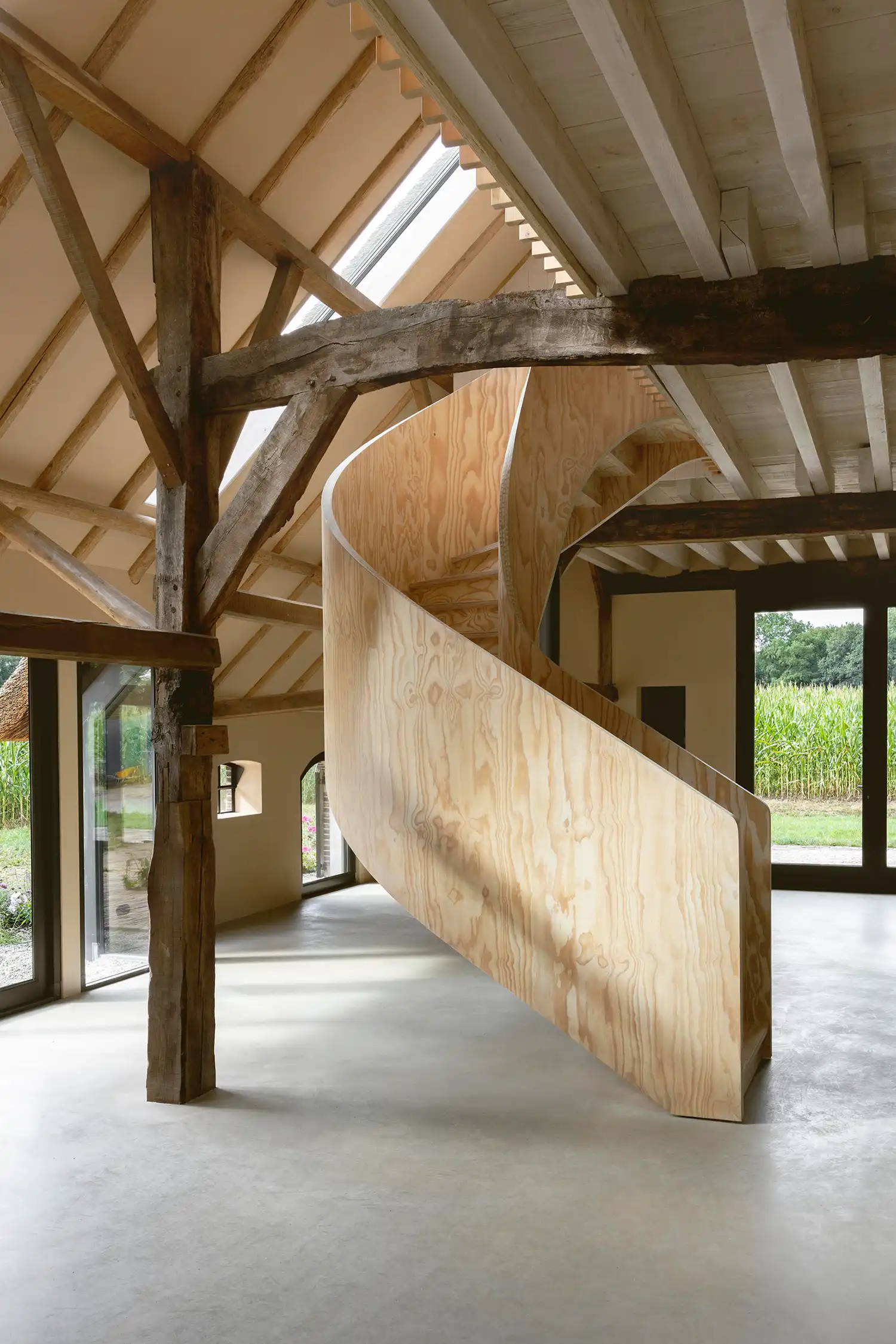
Technical mastery is expressed through the staircase’s self-supporting helical structure. Without a central column to break its sweep, the object appears to float within the volume of the barn, inviting a physical and visual ascent to the newly integrated first floor. The precision of the FSC-certified timber edges and the seamless transition between the treads and the balustrade speak to a sophisticated fabrication process. It is a rare instance where the “raw” nature of wood is disciplined by exact engineering, resulting in a functional sculpture that bridges the ground-floor polished concrete with the private quarters above.
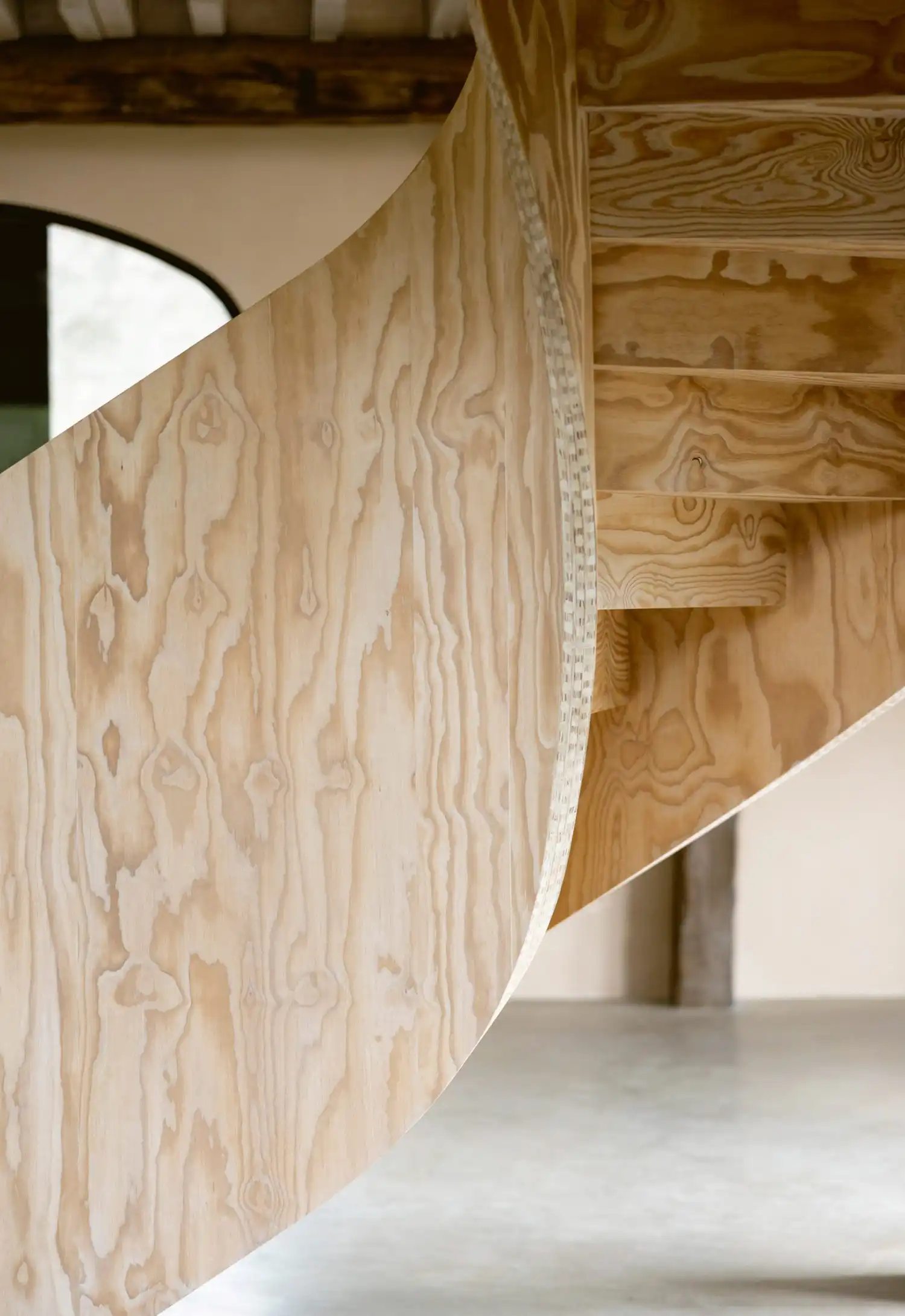
Sustainability as a structural foundation was a primary driver for the stakeholders. This is not merely a cosmetic update but a zero-consumption home that utilizes renewable energy sources to offset its entire operational footprint. The commitment to environmental ethics extends to the fabrication of the staircase itself, where EeStairs employed low-pollution adhesives and sustainable sourcing. This alignment between high-tech energy performance and low-impact material selection ensures that the barn’s new life is as resilient as the original timber frame.
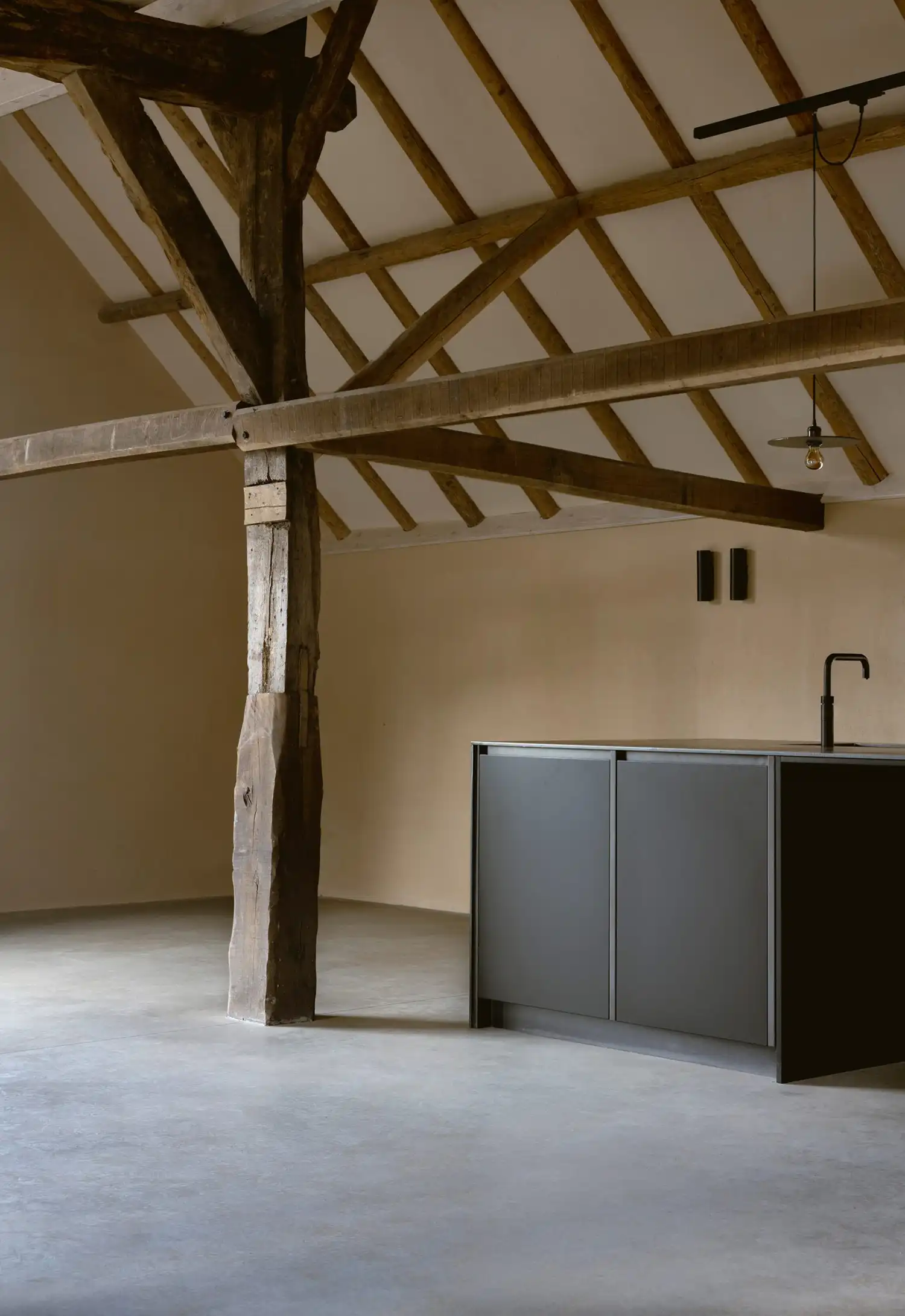
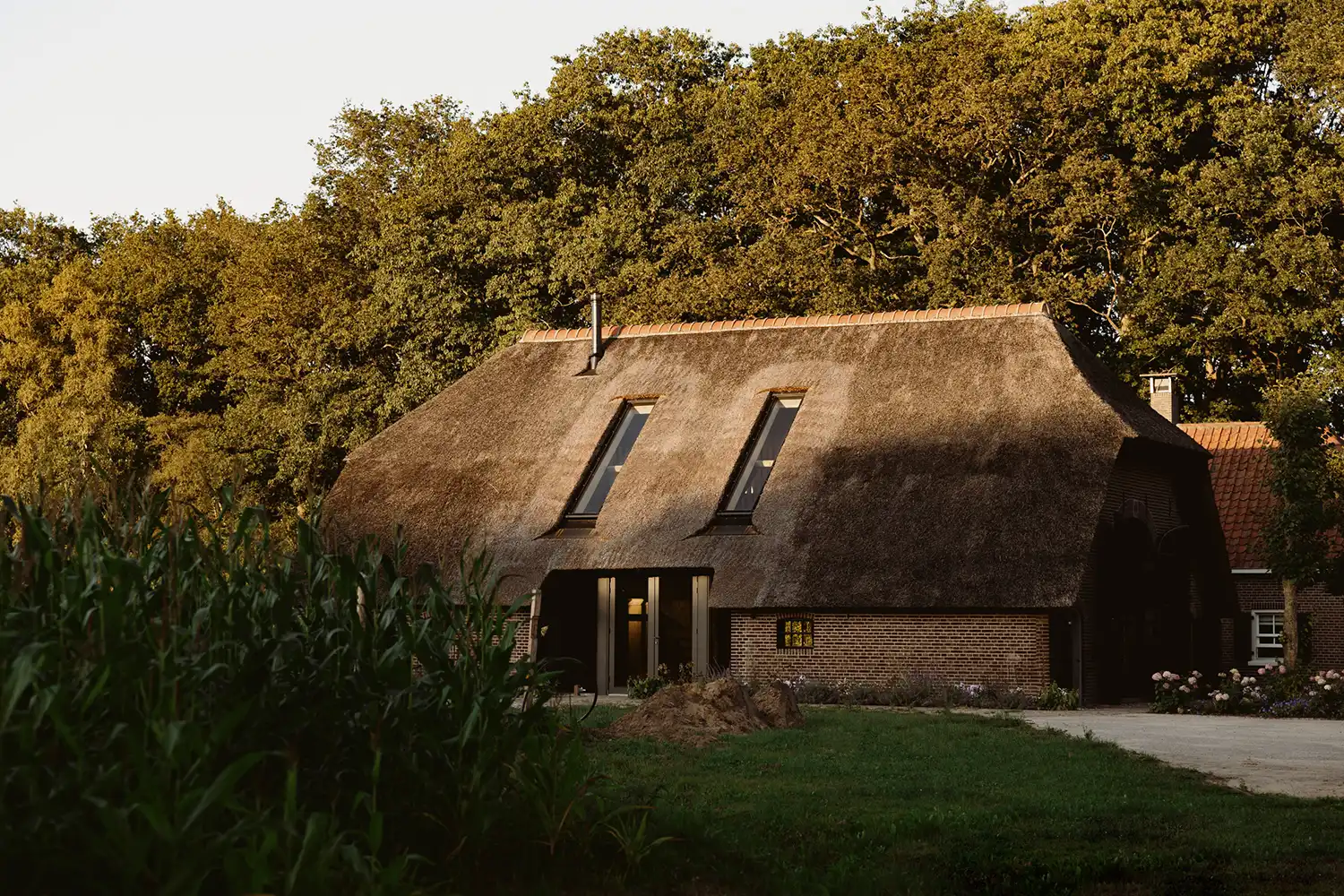
The sensory experience of the interior is defined by a careful balance of temperatures and textures. Large arched glazed doors, fitted with traditional shutters, frame the Dutch landscape and allow sunlight to wash over the silver-grey tones of the steel kitchen island. This subtle industrial note is softened by the warmth of the pine partitions, creating a domestic landscape that feels expansive yet intimate. The thatch and steep roofline remain as icons of the building’s past, while the interior functions with the efficiency of a contemporary gallery.
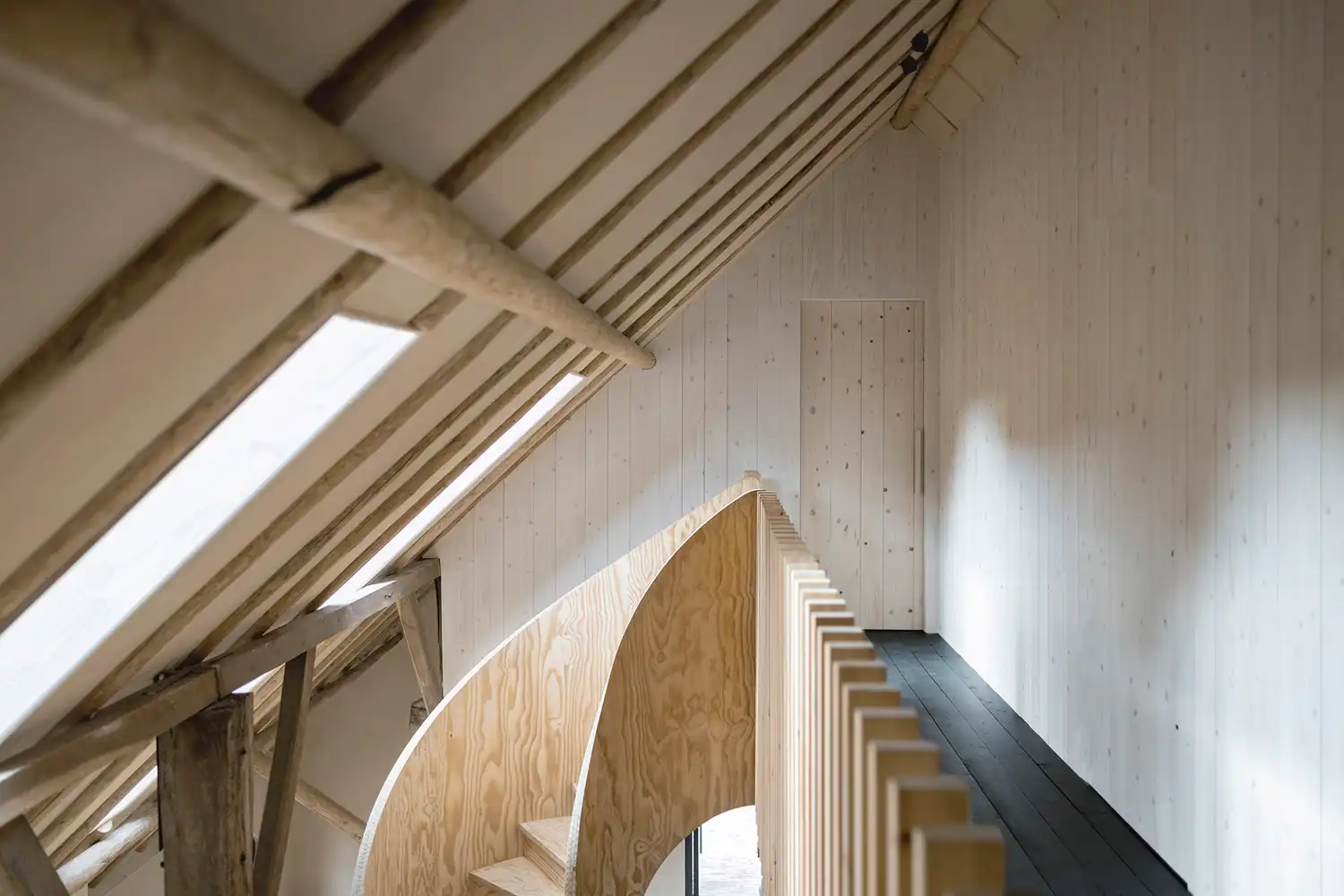
Discreet integration allowed for the addition of modern amenities without compromising the barn’s sober character. By tucking the bathrooms and bedrooms onto the inserted upper level, the ground floor remains an open, fluid space. The architectural language is one of silence; there are no unnecessary fixtures or decorative flourishes to distract from the rhythm of the exposed beams. Every new element has been placed with surgical precision, ensuring that the intervention feels like an evolution rather than an imposition.
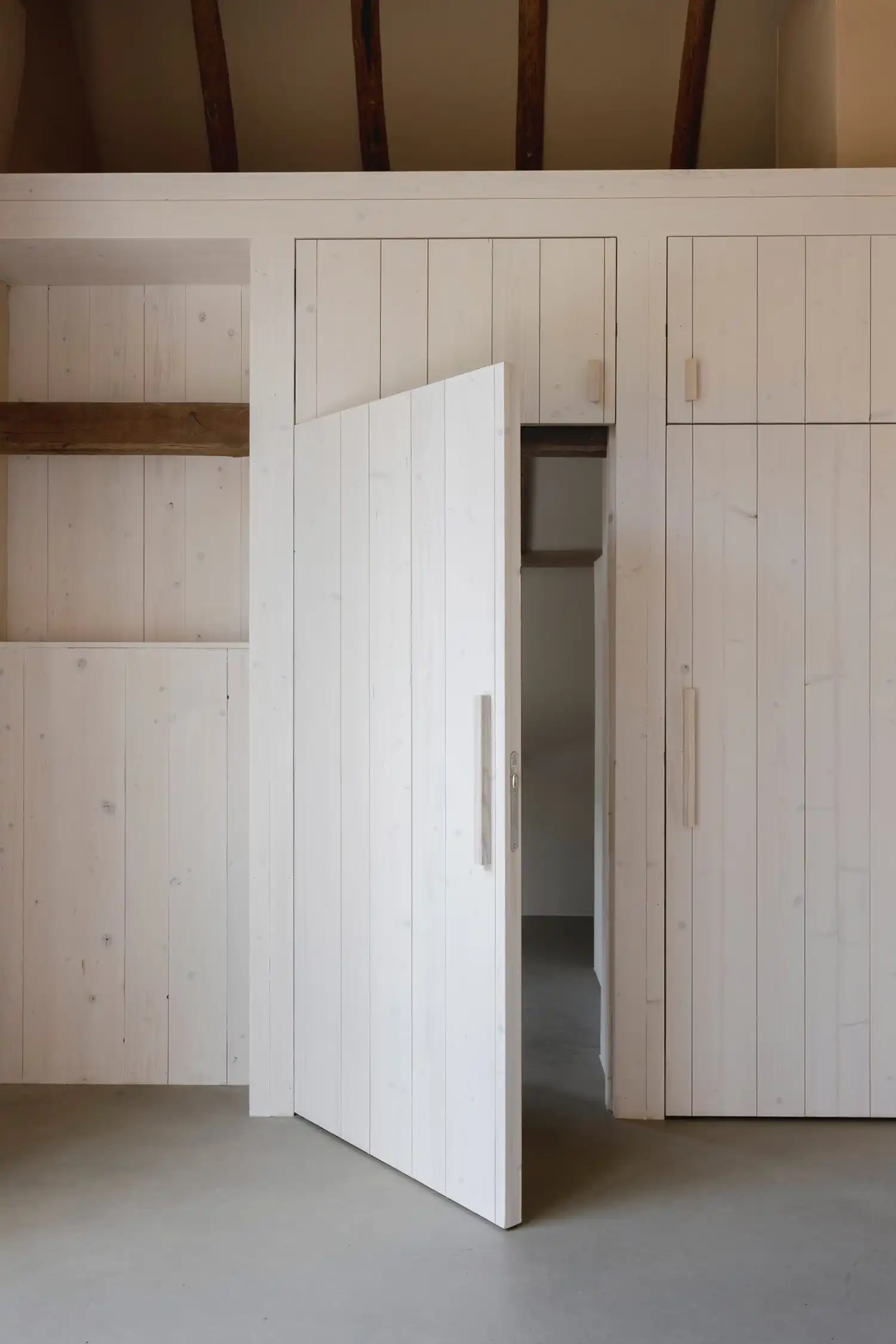
A commitment to authenticity remains the project’s guiding principle. In an era where “modernization” often means the erasure of character, Ahof Farm demonstrates that the most forward-looking approach is often one of preservation. The use of handcrafted thatch and lime-based finishes ensures that the building continues to age gracefully, patinating over time rather than wearing out. The result is a residence that feels anchored in the soil of Nijkerk, yet fully equipped for the ecological demands of the future.
The rise of adaptive reuse reflects a broader cultural shift, as seen in recent benchmarks like Worrell Yeung’s barn in Rhode Island or Studio Weave’s light-touch conversion on the Isle of Wight. These projects, much like Ahof Farm, tap into a collective nostalgia for the “solid”—a desire to anchor our lives in something enduring during an age of digital flux and global uncertainty. By transforming these agricultural relics into sophisticated dwellings, we are not just recycling space; we are finding security in the permanence of the past, proving that the most stable way forward is to build upon the foundations we already have.