


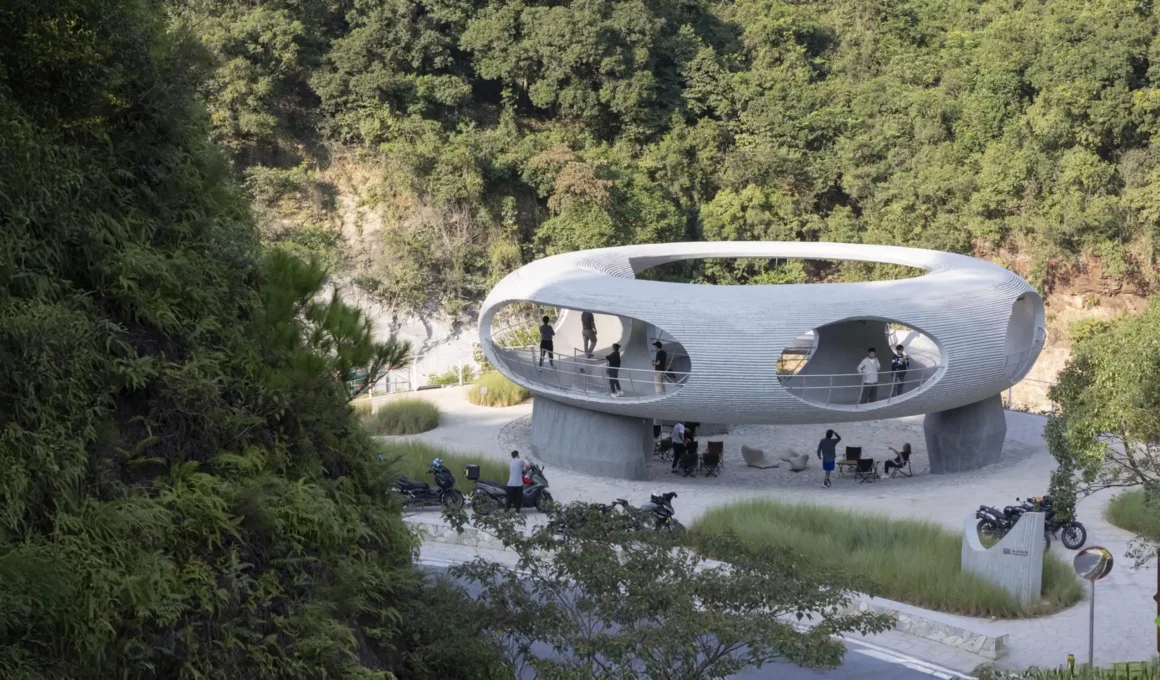
Redefining the roadside typology, HCCH Studio has unveiled “Resting Loop with Views,” a porous concrete pavilion that challenges the conventional aesthetics of the highway rest stop. Situated on a rugged stone platform at a sharp bend between a bustling motorway and a parallel river in Guangdong, China, the structure emerges like a low-flying monolith. It serves as both a functional buffer and a poetic vista point, offering a moment of pause for cycling enthusiasts and travelers navigating the scenic routes surrounding the majestic Mount Luofu. The design moves beyond mere utility, creating a “flying donut” that mediates between the mechanical speed of the road and the timeless rhythm of the natural landscape.
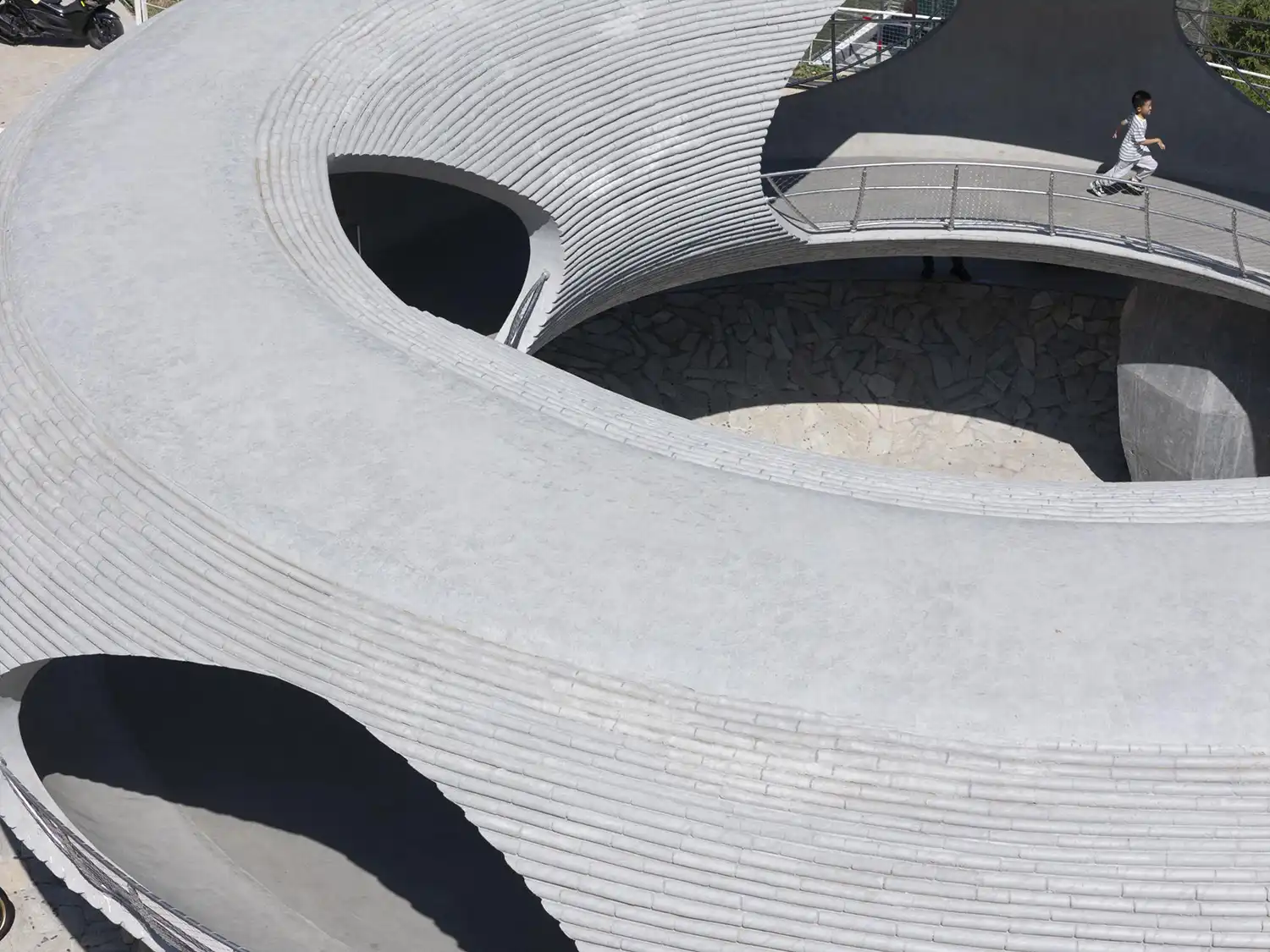
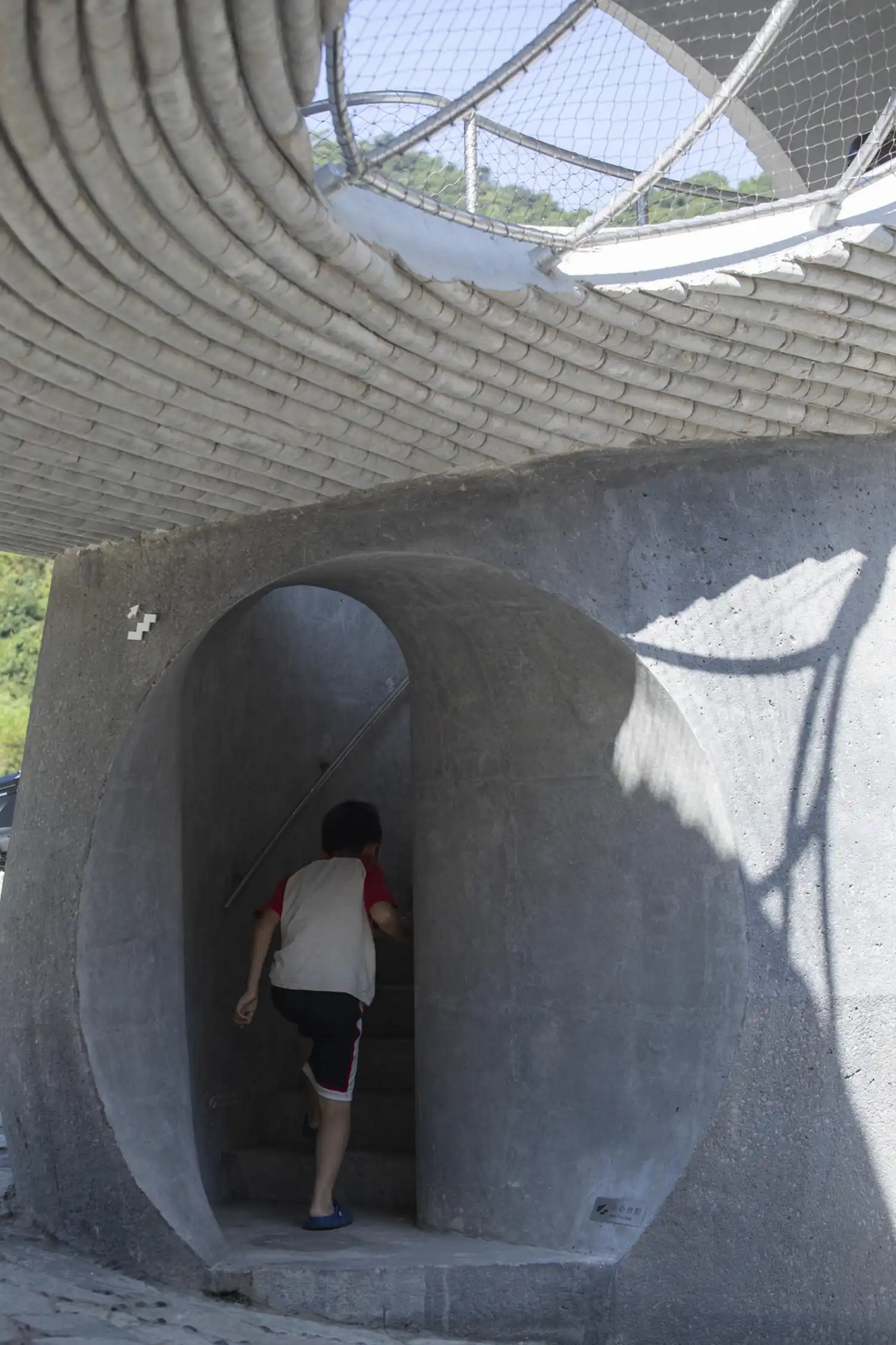
The architectural geometry of the circle acts as a catalyst for a dual-level sensory experience. The pavilion’s 16-meter diameter ring is strategically sliced by vertical planes, creating a series of overlapping oval apertures that function as curated lenses. From the upper promenade, visitors are invited into an endless loop where the horizon shifts with every step, framing views of the lush mountains and the sky. Meanwhile, the lower level transitions into an intimate, sunken plaza. This volumetric layering allows the architecture to breathe, providing a sheltered sanctuary for drinking and conversation while maintaining a visual connection to the surrounding wilderness.
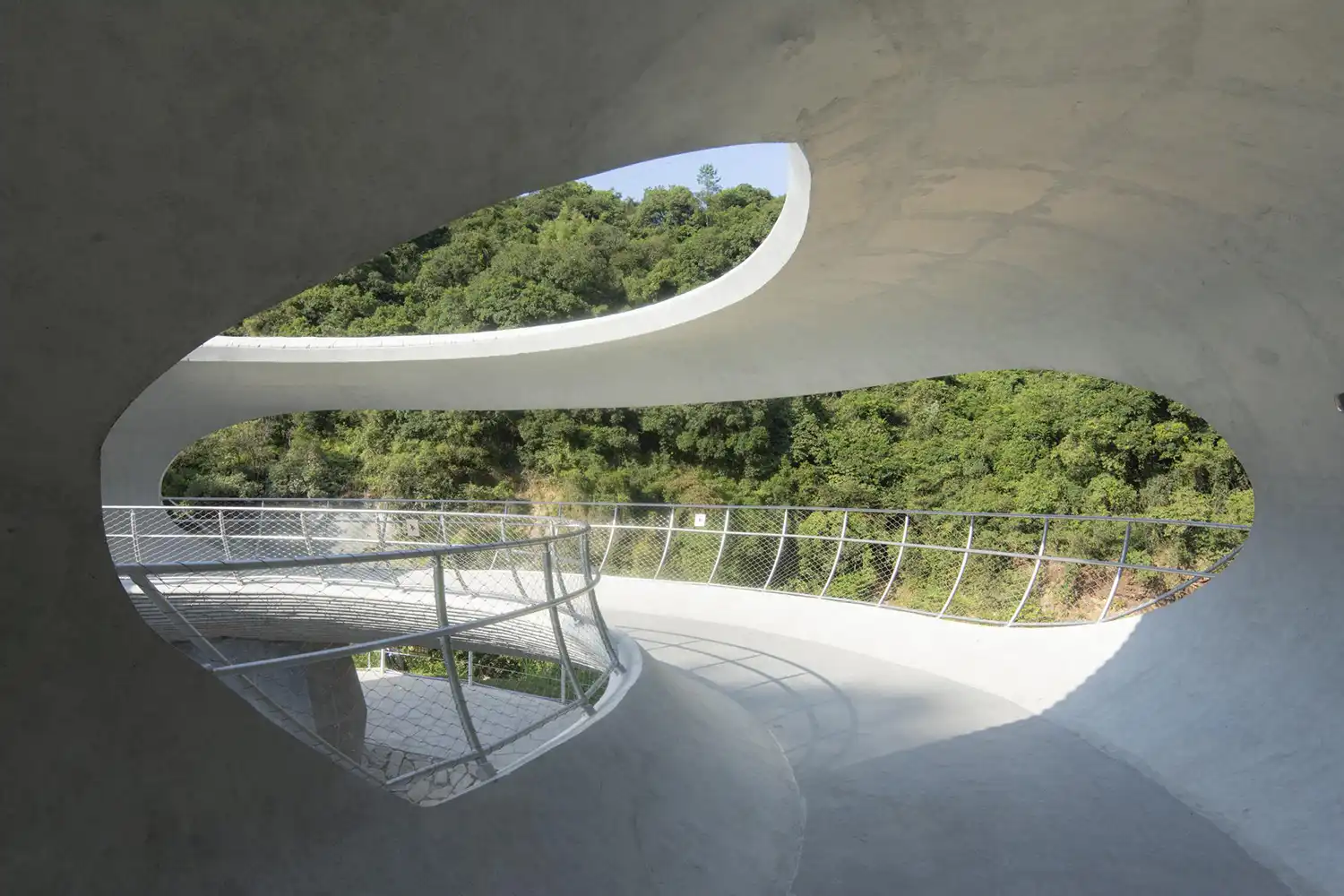
Materiality plays a pivotal role in grounding this ethereal form within its “wild” context. The exterior skin of the pavilion was cast in-situ using molds of raised-texture bamboo, leaving a rugged, tactile imprint that echoes the organic verticality of the forest. In a deliberate moment of tectonic tension, the interior surfaces are finished with a smooth, seamless treatment. This contrast is most evocative at the “ruffle-shaped” edges of the oval cutouts, where the raw, ribbed texture of the bamboo meets the abstract purity of the inner void. The result is a transcendental atmosphere that oscillates between the primitive and the futuristic.
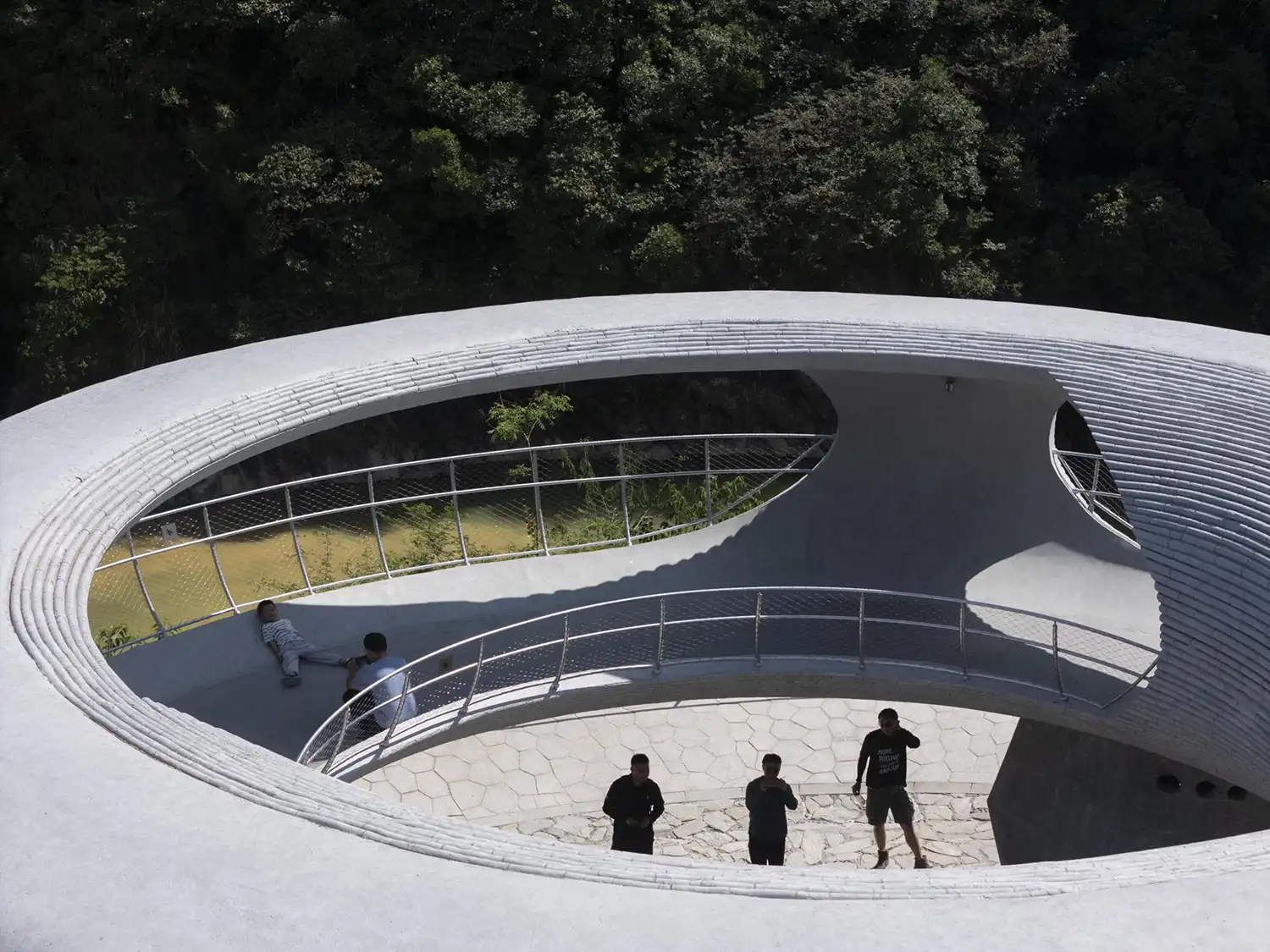
Rooted in the site’s topography, three dark, hammered concrete volumes rise from the sunken plaza to support the floating ring. These monoliths house essential services—a minimalist café, public restrooms, and storage—arranged so that their doors and windows create a series of internal “peek-a-boo” vistas. The dark finish of these structures seamlessly integrates with the stone paving and the “Social Stone” sculptural seating by Shanghai-based artist SU Chang. This integration of art and architecture transforms the rest stop into a destination, echoing the contemporary trend of elevated timber viewpoints that prioritize the observer’s relationship with the landscape through innovative structural loops.
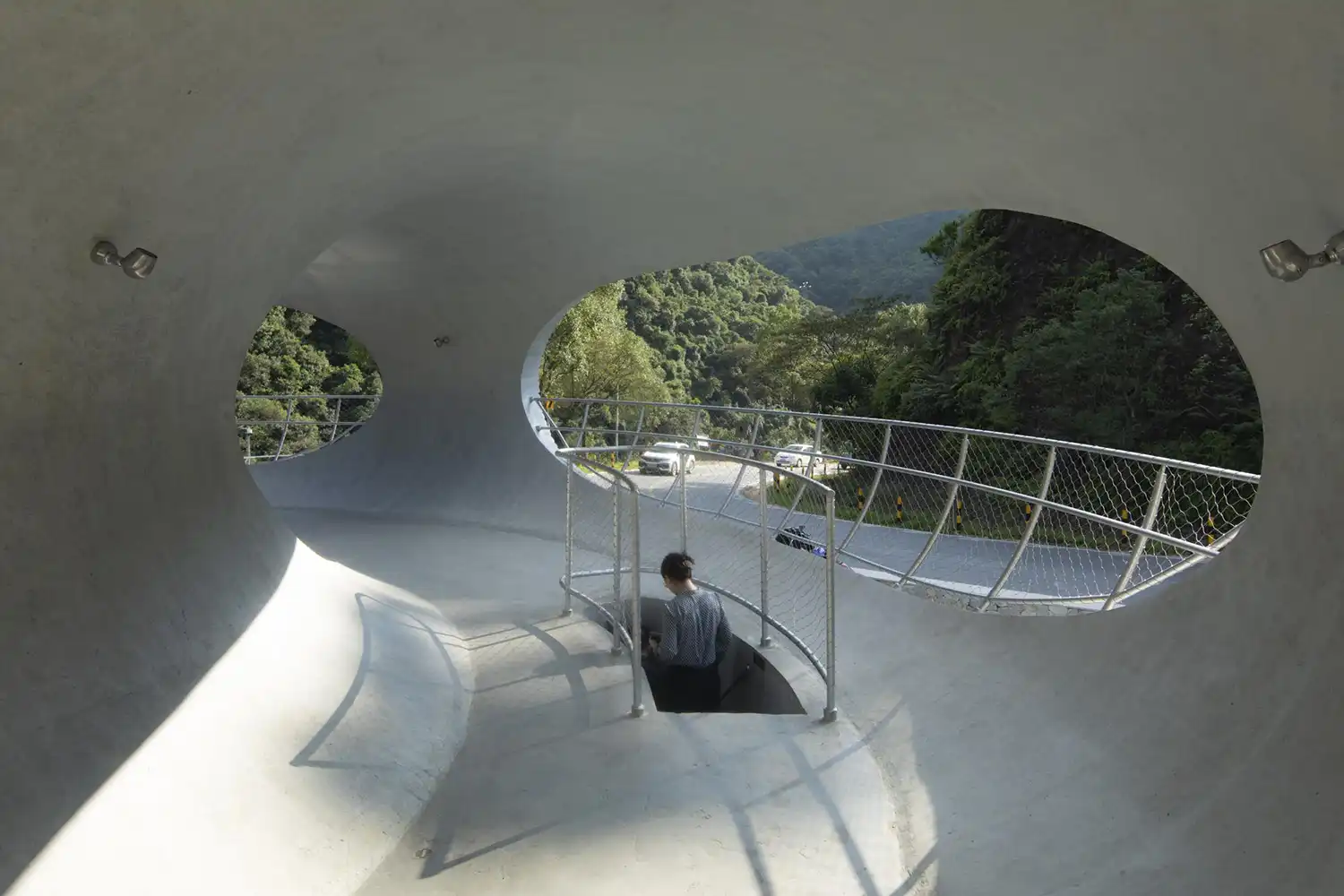
A vibrant social ecosystem has flourished within the pavilion, surpassing the architects’ initial vision of a secluded mountain retreat. While originally conceived as a space for tranquil meditation, the “Resting Loop” has become a high-energy hub for the local cycling community. The silence of the peaks is now layered with the hum of social interaction and the mechanical cadence of passing vehicles, proving that high-design can successfully activate neglected transit “buffer zones.” The structure does not hide from its proximity to the highway; instead, it embraces its role as a monumental landmark that celebrates the intersection of human mobility and environmental grandeur.
The legacy of the project lies in its ability to transform a former parking area into a sophisticated piece of infrastructure. By utilizing the donut form to frame the vastness of the Mount Luofu region, HCCH Studio has created more than a service point; they have designed a rhythmic experience of arrival and departure. The pavilion stands as a testament to the idea that even the most utilitarian program—a roadside toilet and coffee shop—can be elevated through thoughtful materiality and a rigorous exploration of form, providing a much-needed pause in our fast-paced world.