


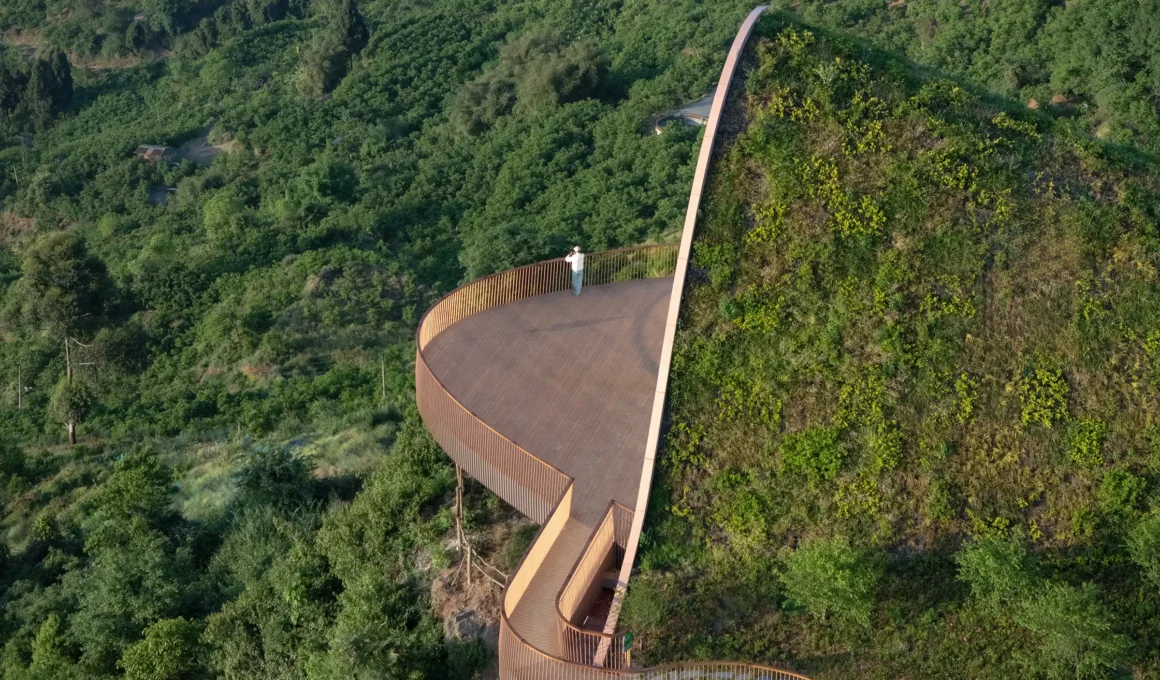
In the spectacular natural hills south of Chengdu, China, the MVRDV-designed Pujiang Platform has recently been completed, serving as both a striking visitor destination and a versatile event space. This architectural marvel, commissioned by the Pujiang County Planning and Resources Bureau , is strategically perched to take advantage of the expansive views over the growing new town of Pujiang and the majestic Qionglai Mountain range. The structure, comprising an arched, earth-covered timber pavilion , is a compelling blend of minimal environmental impact and visual prominence, intended to seamlessly integrate with nature while also standing out as a bright beacon when viewed from the plains below.
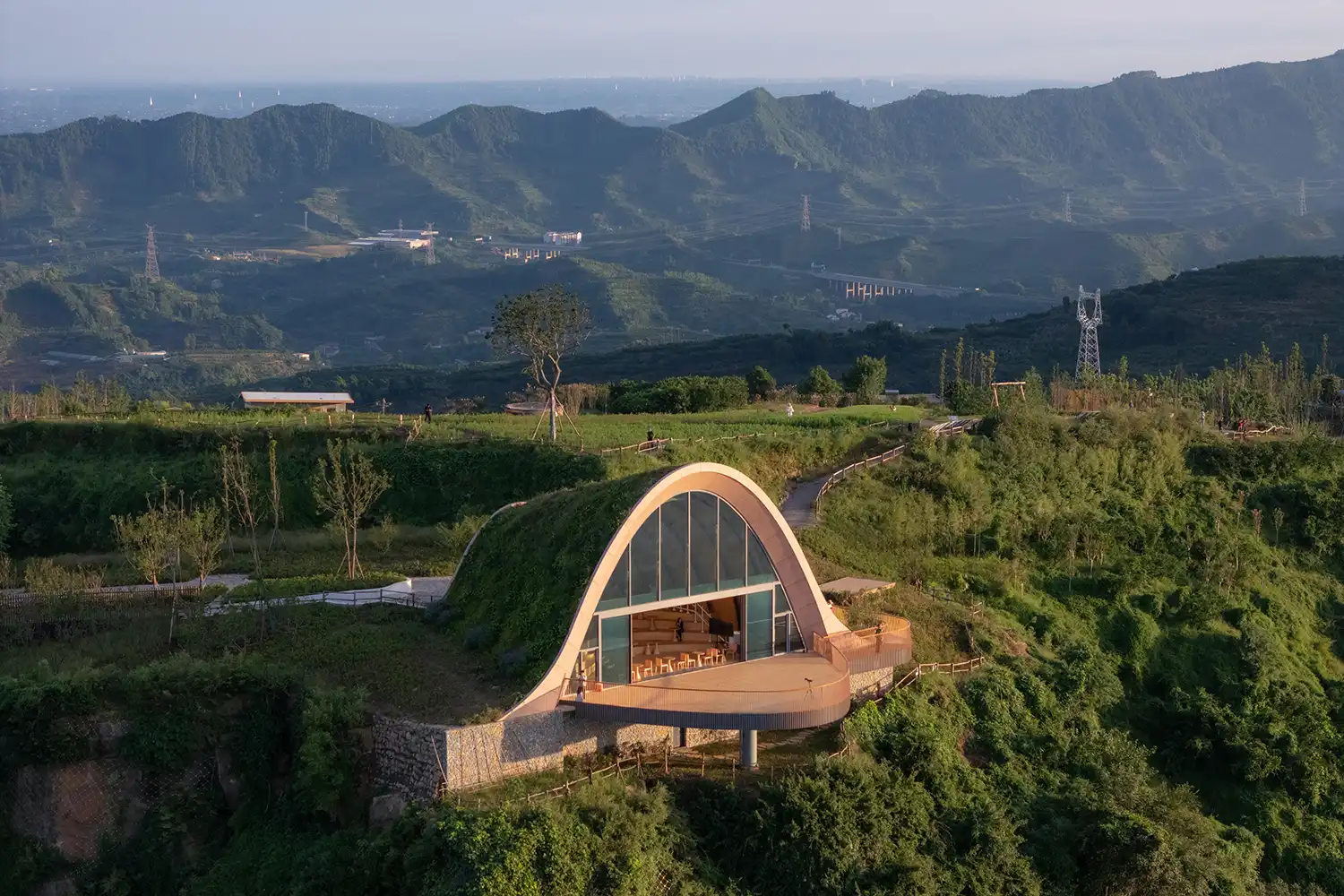
The sustainable design concept by MVRDV was inspired by a desire to reverse the environmental impact of the pre-existing viewing platform, which had flattened the top of the hill. By creating an arched pavilion covered with an earth berm , the design symbolically recreates the hill that was there before, a profound act of preserving and respecting nature, according to MVRDV founding partner Jacob van Rijs. This approach not only minimises the project’s own impact but also reflects the identity of Pujiang as an emerging sustainable town.
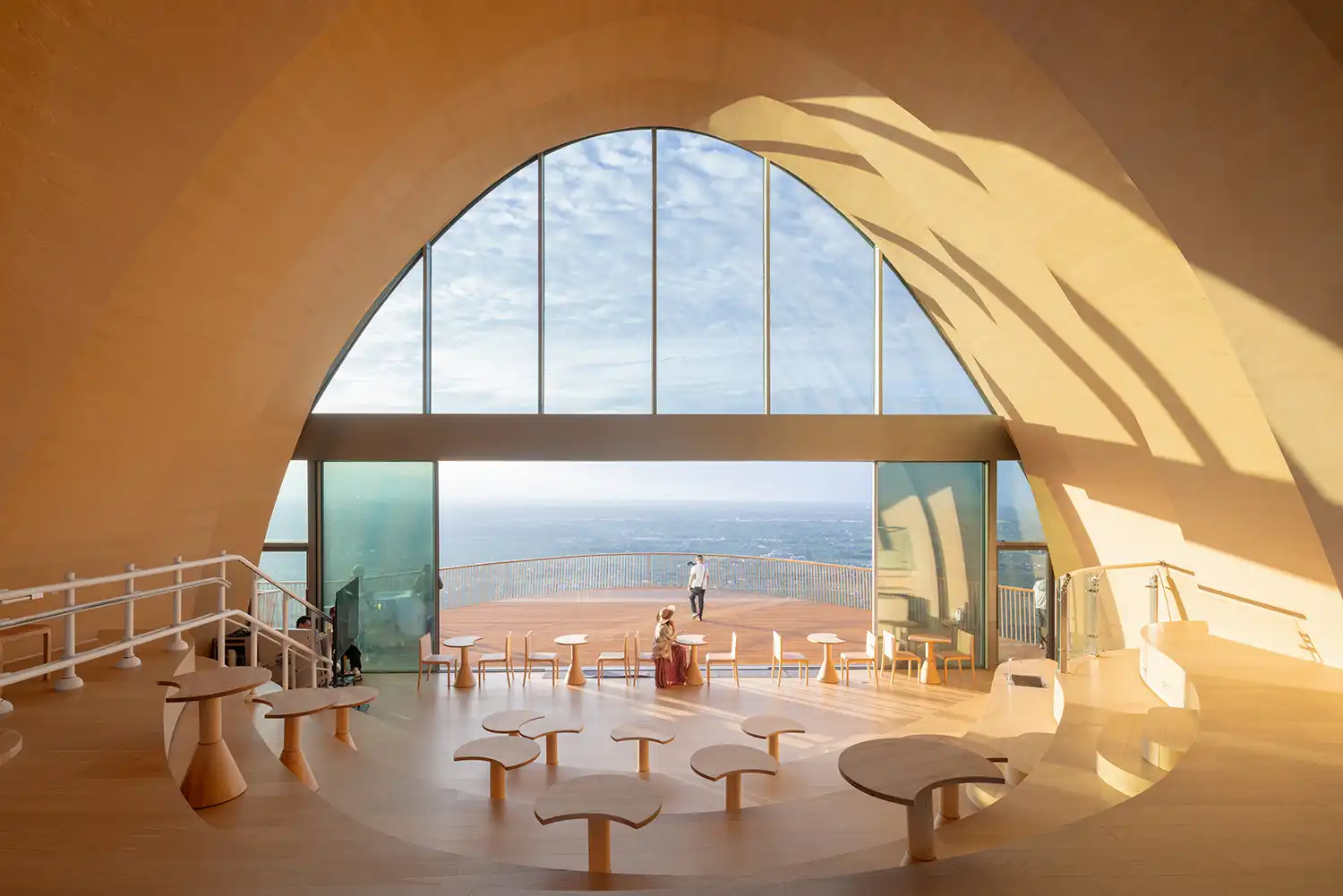
The pavilion’s construction champions the use of bio-based materials, specifically a timber structure, as a demonstration to encourage greater adoption of wood in the Chinese construction industry. Despite the material’s benefits in reducing carbon emissions, its widespread adoption in China has been slow due to industry hesitancy and regulations. This emphasis on wood structure helps keep the building’s embodied carbon emissions low.
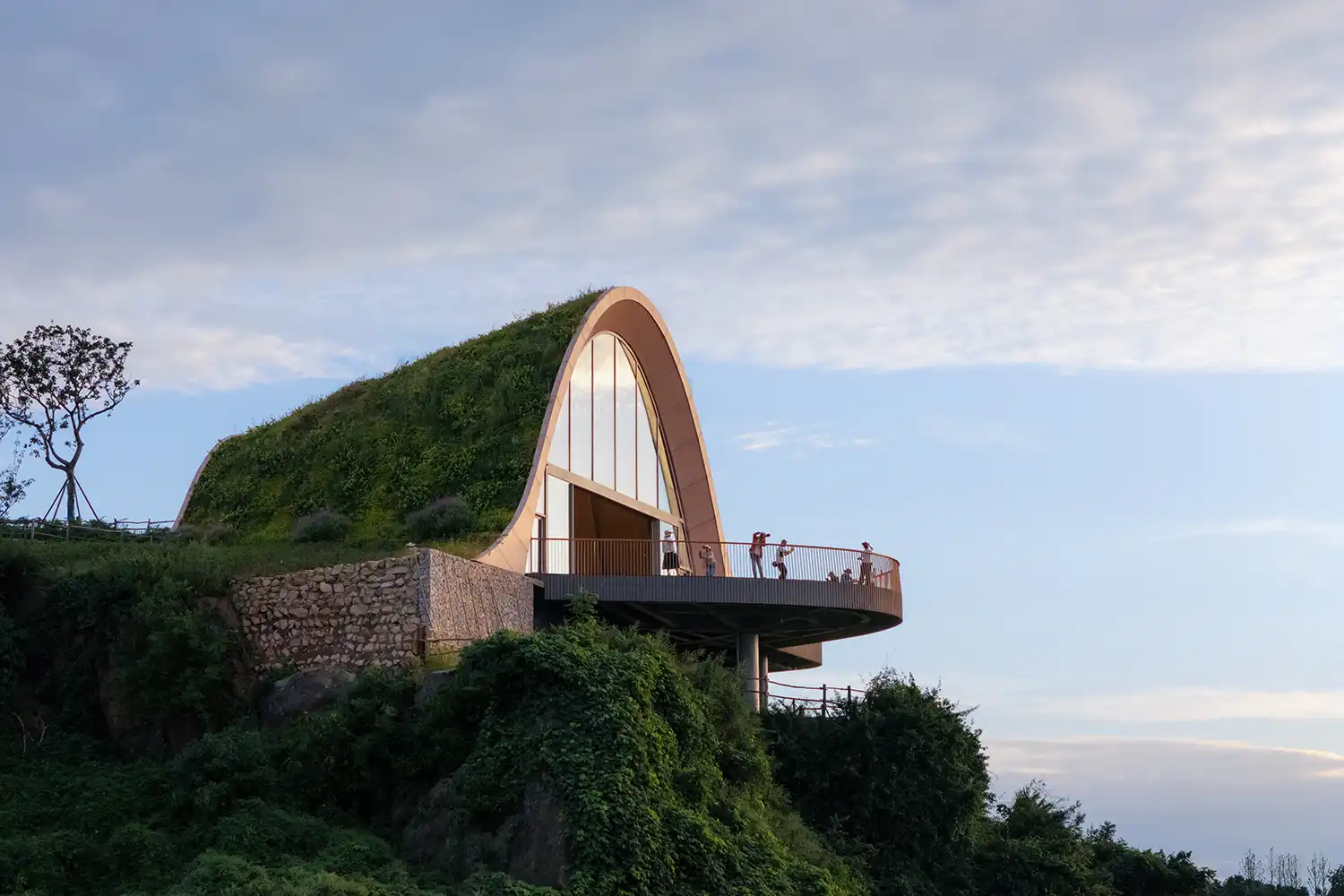
Visitors enter the Pujiang Platform through a small glass façade set into the earth berm on the southeast side. The interior features a dramatic contrast: the roof slopes upwards as the floor slopes downward, conforming to the hill’s natural gradient. This slope forms a tribune—an ideal space for presentations or simply for sitting to admire the scenery through the impressive 10-meter-tall glass façade at the northern end. This large window, facing north to minimise solar gain, opens via oversized sliding doors onto the viewing balcony, maximising the connection between the interior event space and the outside.
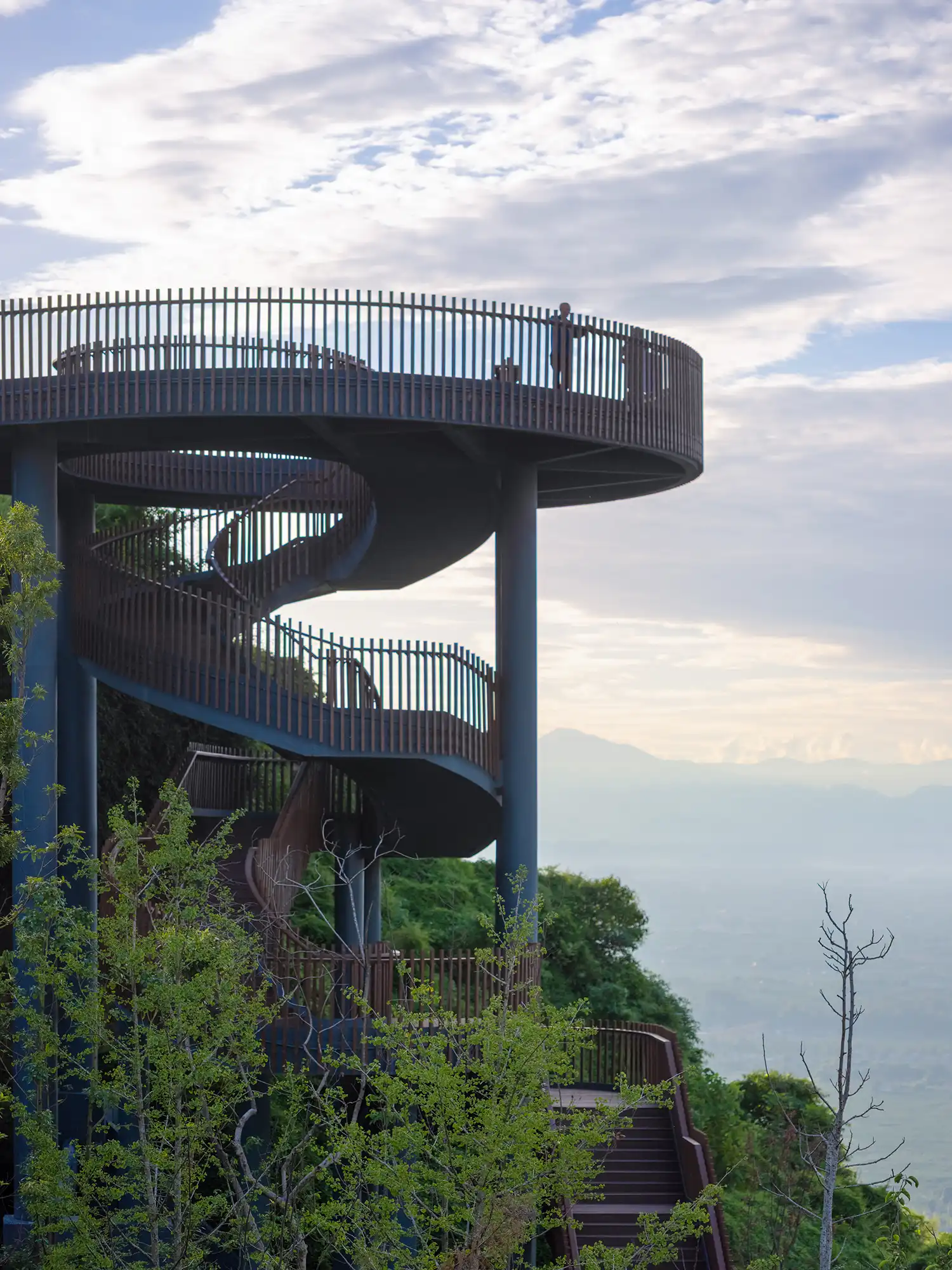
Beyond the main pavilion, the design thoughtfully enhances the site’s existing path network and features. This includes the addition of a twisting staircase structure that leads to a secondary circular viewing platform. This platform offers immersive 360-degree views of both the distant mountains and the immediate natural environment. The surrounding landscape design also focuses on enhancement, using plants that reflect the site’s current biodiversity—including on the green roof of the pavilion, which has a soil depth capable of supporting a variety of grasses, flowers, and small bushes.
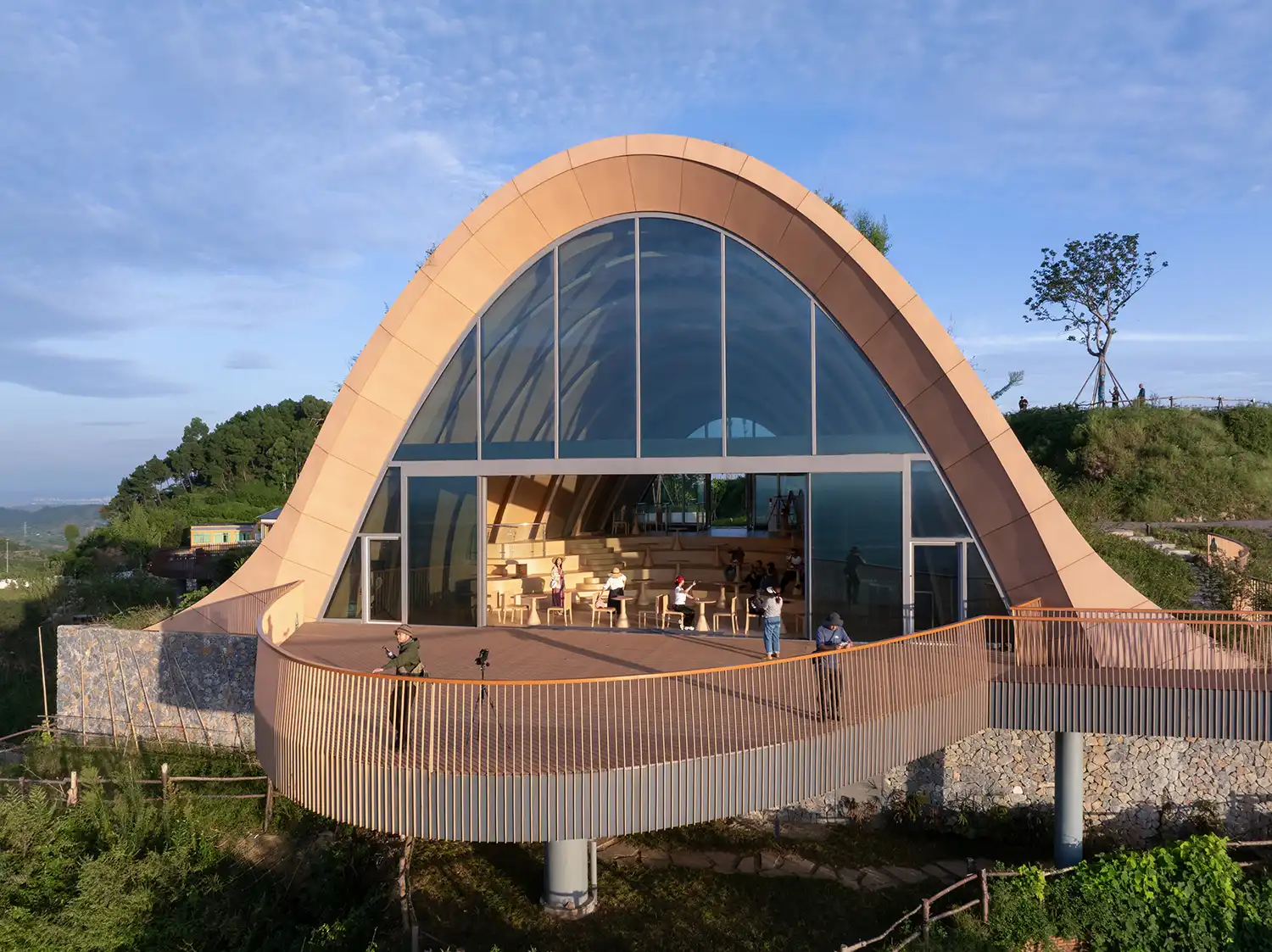
In terms of performance, the Pujiang Platform integrates various strategies to reduce operational emissions, showcasing smart green architecture. The earth berm and its greenery provide significant insulation and thermal mass, mitigating the effects of temperature changes. Furthermore, a layered ceiling design allows for natural ventilation to cool the space, and a geothermal heat pump provides a portion of the pavilion’s energy requirements. This commitment to sustainable architecture ensures the platform serves as a vital demonstration for both local residents and tourists, standing out at night when the light from its window turns it into an unmissable beacon.