


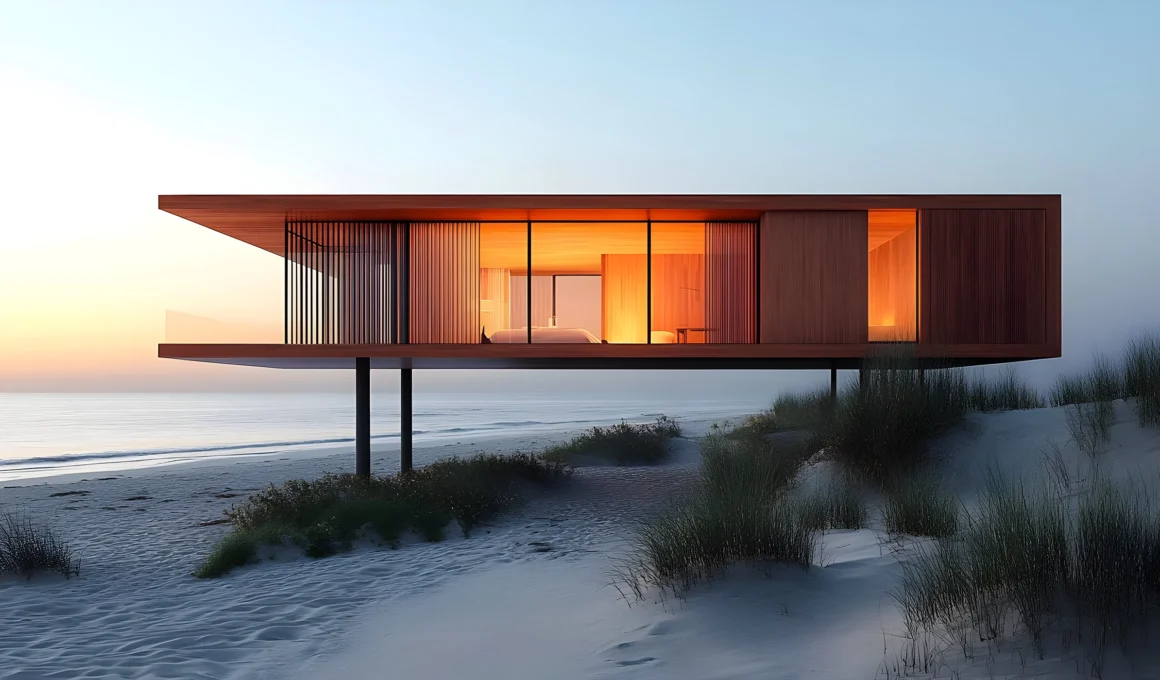
For residents of coastal communities, the threat of hurricanes is a recurring reality. As storms intensify, so does the search for resilient housing solutions. One of the most recognizable architectural features in these regions is the stilt house, a home elevated on columns or piles. But does this design truly offer effective protection against the destructive forces of a hurricane?
This article provides a detailed analysis of the effectiveness of homes on stilts in hurricane-prone areas. We will examine how this elevated construction method mitigates risks from storm surgeand flooding, assess its performance against high-velocity winds, and discuss key structural considerations. Understanding both the benefits and limitations of stilted homes is critical for current and prospective homeowners in coastal regions.
The Primary Purpose of Stilts: Combating Storm Surge
The principal advantage of a stilted home is its ability to protect against storm surge and coastal flooding, which are often the most destructive components of a hurricane. By elevating the primary living space, the design allows floodwaters to pass underneath the structure, significantly reducing the risk of water damage to the home’s interior and its contents.
How Elevation Mitigates Flood Damage
Storm surge, an abnormal rise in sea level generated by a storm’s winds, can inundate coastal areas with several feet of water. For a conventional ground-level home, this water intrusion can lead to catastrophic losses, including ruined foundations, warped structural components, electrical system failure, and widespread mold growth.
Homes built on stilts, or piles, are designed to position the first floor of living space above the predicted flood level. Federal Emergency Management Agency (FEMA) regulations and local building codes mandate a minimum Base Flood Elevation (BFE) for new construction in designated flood zones. Stilted homes are typically built so the lowest horizontal structural member is at or above this BFE, providing a crucial margin of safety.
The Role of “Breakaway Walls”
To comply with flood-resistant design standards, the enclosures below the elevated living area are often constructed with “breakaway walls.” These non-structural walls are designed to collapse under the force of surging water without compromising the integrity of the foundation or the elevated structure above. This feature prevents the build-up of hydrostatic pressure that could otherwise cause a catastrophic failure of the support columns.
Wind Resistance: A More Complex Challenge
While stilts are highly effective against flooding, their performance against a hurricane’s high-velocity winds presents a more complex engineering challenge. The elevated design exposes the structure to greater wind loads and creates unique vulnerabilities that must be addressed through robust construction practices.
Increased Wind Exposure
Elevating a home places it in a zone of higher wind speeds. Wind velocity increases with height above the ground, meaning a stilted home will experience greater force than a ground-level structure during the same storm event. This increased load places immense stress on the entire building, from the roof down to the foundation piles.
The Importance of a Continuous Load Path
For a stilted home to withstand hurricane-force winds, it must have a “continuous load path.” This is an engineering concept that ensures all parts of the structure are securely connected to transfer wind loads from the roof, through the walls, and down into the foundation.
This system is achieved through a series of metal connectors, straps, and bolts that tie the roof to the walls, the walls to the floor system, the floor to the piles, and the piles deep into the ground. A failure at any point in this chain can lead to a structural collapse. Modern building codes in hurricane-prone regions mandate these connections to ensure the home functions as a single, solid unit against wind forces.
Bracing and Pile Foundation Integrity
The pile foundation itself is a critical component of wind resistance. The columns must be adequately braced to prevent swaying or buckling under lateral wind loads. Diagonal bracingbetween piles, often forming “X” shapes, adds significant rigidity to the foundation system. The piles must also be driven deep enough into the ground to provide a secure anchor, preventing uplift or shifting during a storm.
Common Locations for Stilted Homes
Homes on stilts are a defining feature of coastal architecture in areas with high susceptibility to flooding and storm surge. Their presence is a direct response to the environmental risks of these locations.
-
The Outer Banks, North Carolina: This chain of barrier islands is extremely exposed to Atlantic hurricanes. The vast majority of homes are built on stilts as a necessary defense against frequent overwash and storm surge.
-
Florida: With the longest coastline in the contiguous United States, Florida extensively utilizes stilted construction. This is especially common on its barrier islands, such as Sanibel Island and Captiva Island on the Gulf Coast and in the Florida Keys. The design is essential for meeting stringent building codes in coastal flood zones.
-
Other Coastal Communities: Along the Gulf Coast, from Texas to Alabama, and up the Atlantic seaboard, stilted homes are prevalent in low-lying areas and on barrier islands. These regions recognize that elevation is the most reliable method for mitigating recurrent flood risk.
Final Considerations for Homeowners
A well-designed and properly constructed home on stilts can be highly effective at protecting against hurricane damage, particularly from flooding. However, it is not inherently “hurricane-proof.” The structure’s resilience is entirely dependent on its adherence to modern, stringent building codes and quality construction.
For those considering buying or building a stilted home, several factors are critical:
-
Code Compliance: Ensure the home was built or will be built to the most recent building codesfor the region, which include specific requirements for flood elevation and wind-load resistance.
-
Foundation Integrity: Have the foundation inspected by a qualified structural engineer. Look for deep-driven piles, adequate bracing, and proper connections between the piles and the home’s structure.
-
Continuous Load Path: Verify that the home has a complete continuous load path, with hurricane straps and connectors properly installed at all key joints.
-
Insurance and Maintenance: Understand that while a stilted home mitigates risk, it will still require flood insurance and windstorm insurance. Regular maintenance, including checking for corrosion on metal connectors and the overall structural integrity of the piles, is essential.
In conclusion, homes on stilts are a proven and effective architectural solution for coastal living. By elevating living spaces above floodwaters, they address the single greatest threat from most hurricanes. When combined with modern engineering practices for wind resistance, a stilted home offers a superior level of protection, making it a sound investment for life in a hurricane-prone region.