

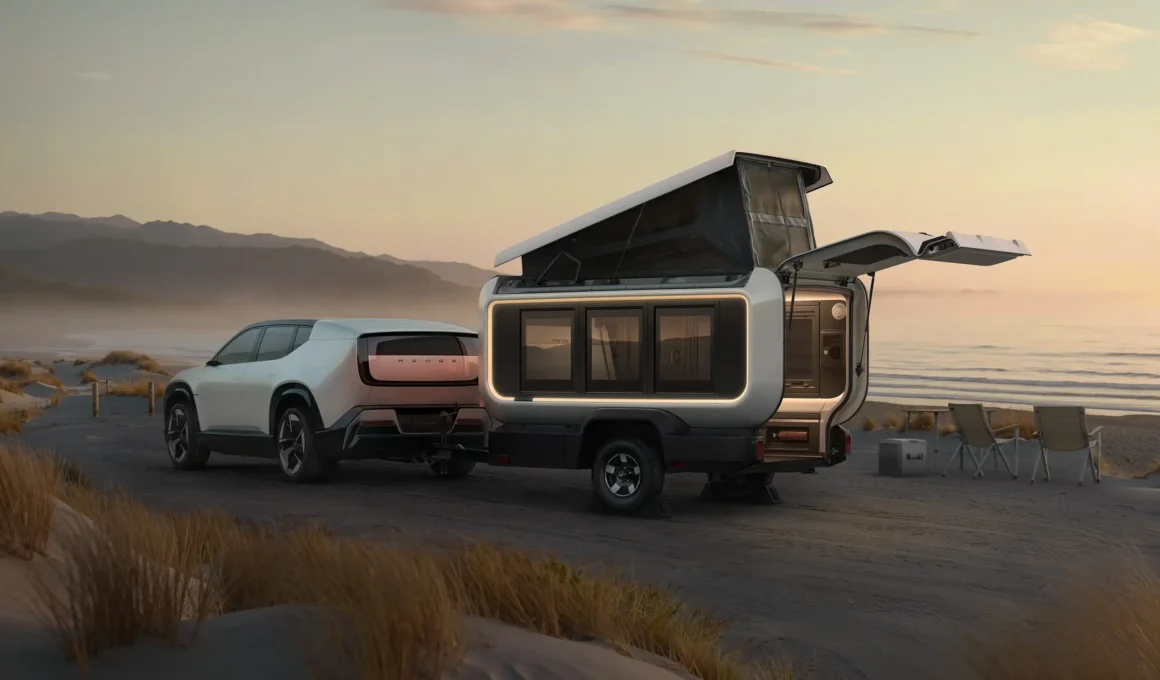
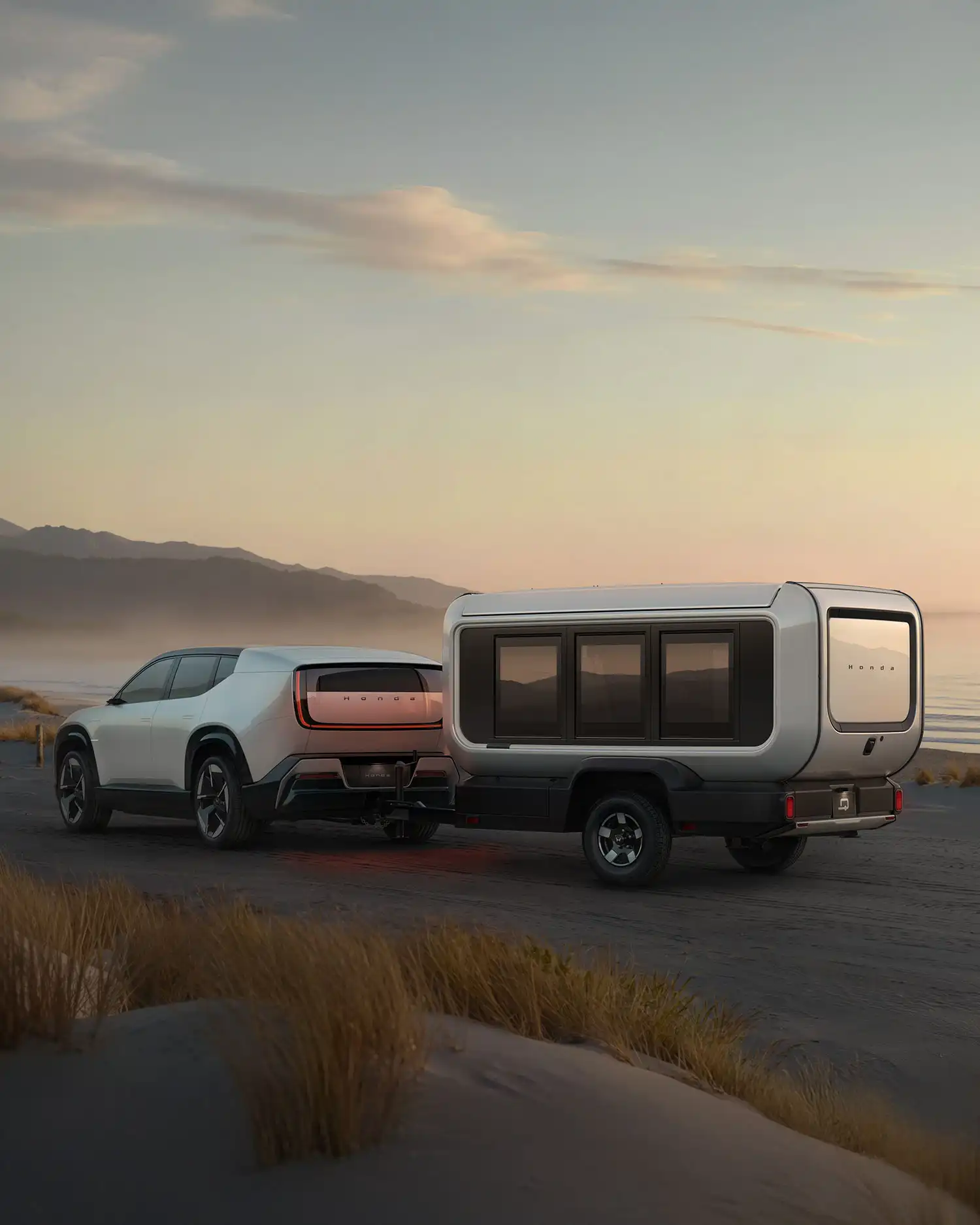
The democratization of the great outdoors has long been a pursuit of American industrial design, yet the barrier to entry often remains tethered to the scale of the towing vehicle. Breaking away from the cumbersome tradition of heavy-duty RVs, the Honda Base Station Prototype emerges as a masterclass in “Man Maximum/Machine Minimum” philosophy. Developed across Honda’s R&D centers in Los Angeles and Ohio, this lightweight towable trailer isn’t just a piece of equipment; it is a spatial intervention designed to bridge the gap between urban living and nomadic freedom. By prioritizing a compact footprint that fits within a standard residential garage, Honda is effectively lowering the threshold for adventure, allowing popular crossovers like the Honda CR-V or the electric Honda Prologue to lead the way into the wilderness.
A legacy of nomadic architecture informs this new prototype, situating it within a broader cultural shift toward mobile flexibility. At urdesign, we have long explored why trailers are so popular in the United States, noting that they represent a unique intersection of property ownership and geographic liberty. While the industry has recently seen a surge in hyper-luxury and tech-heavy concepts—such as the AI-powered expandable RVs by Pininfarina—Honda’s approach feels more grounded and accessible. It moves away from the “mansion on wheels” trope, opting instead for a modular, high-utility “base camp” that prioritizes the experience of the destination over the opulence of the vehicle itself.
The sensory experience of the interior belies the trailer’s modest exterior dimensions. Upon arrival at a campsite in the Pacific Northwest or the Appalachian Trail, the roof of the Base Station raises to reveal seven feet of standing headroom, instantly transforming a compact shell into an airy sanctuary. Five expansive windows frame the surrounding landscape, inviting natural light to wash over the clean, modernist surfaces. These aren’t merely portals; they are programmable light rings that transition from functional brightness for midnight setups to a soft, ambient glow that mimics the warmth of a hearth. The rear of the unit features a top-hinged tailgate, a clever piece of packaging that dissolves the boundary between the internal futon-style living area and the forest floor, creating a seamless indoor-outdoor flow.
Technical innovation meets sustainable autonomy in the Base Station’s off-grid capabilities. In an era where sustainability is no longer optional, Honda has integrated a standard lithium battery system and solar panels to ensure zero-emissions power. This shift toward electrification mirrors the progress seen in the Lightship electric RV, though Honda focuses on a more utilitarian and attainable price point. The modularity of the design allows users to customize their rig with external kitchens and induction cooktops, ensuring that the mechanical components never infringe upon the living volume. It is a rigorous exercise in efficiency, where every cubic inch is justified by its contribution to the user’s comfort.
Challenging the aesthetic of the traditional trailer, the Base Station Prototype shares a certain DNA with more radical, avant-garde mobile structures. Its clean lines and functionalist aesthetic evoke the spirit of the 2001 TBSIS Esch ’22 Space Station, treating a mobile unit more like an architectural installation than a mere automotive accessory. By utilizing the same innovative thinking that birthed the Motocompacto, Honda’s designers have created a product that feels less like a “camper” and more like a piece of high-end, portable infrastructure. It is a design language that speaks to a generation that values agility, aesthetic clarity, and the ability to disappear into nature without leaving a heavy carbon footprint.
The future of American camping is being redefined by these smart, adaptable volumes that respect both the vehicle and the environment. As the Honda 0-Series SUV prepares to hit the market, the Base Station Prototype stands ready as its perfect companion, signaling a move toward a more integrated ecosystem of travel. It is a reminder that good design does not require excess; rather, it requires the clever orchestration of space, light, and technology. By focusing on “democratizing” the outdoors, Honda isn’t just selling a trailer—they are providing a sophisticated, well-engineered lens through which to experience the vastness of the North American landscape.