

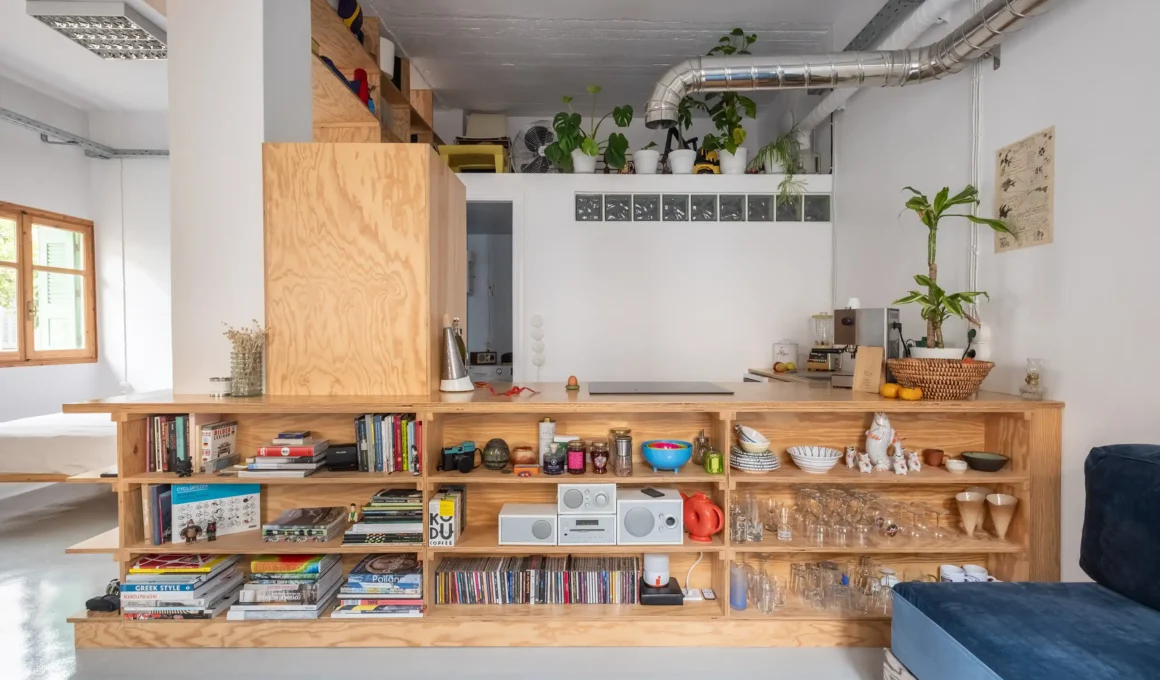
The architectural palimpsest of Chania, a city defined by its layers of Venetian, Ottoman, and Greek history, provides the backdrop for a project that is deeply personal. Architect Nikos Kouklakis has reimagined a 43-square-meter ground-floor apartment—originally built in the 1970s and later serving as his grandmother’s home—into a dual-purpose sanctuary. This renovation is not merely an exercise in spatial efficiency; it is a “showcase of the self,” a deliberate attempt to reconcile the rigidity of a residential past with the fluid requirements of a modern creative studio in Crete. By embracing what Kouklakis calls “curated chaos,” the design elevates personal artifacts to the status of architectural elements, turning everyday objects into the very fabric of the home.
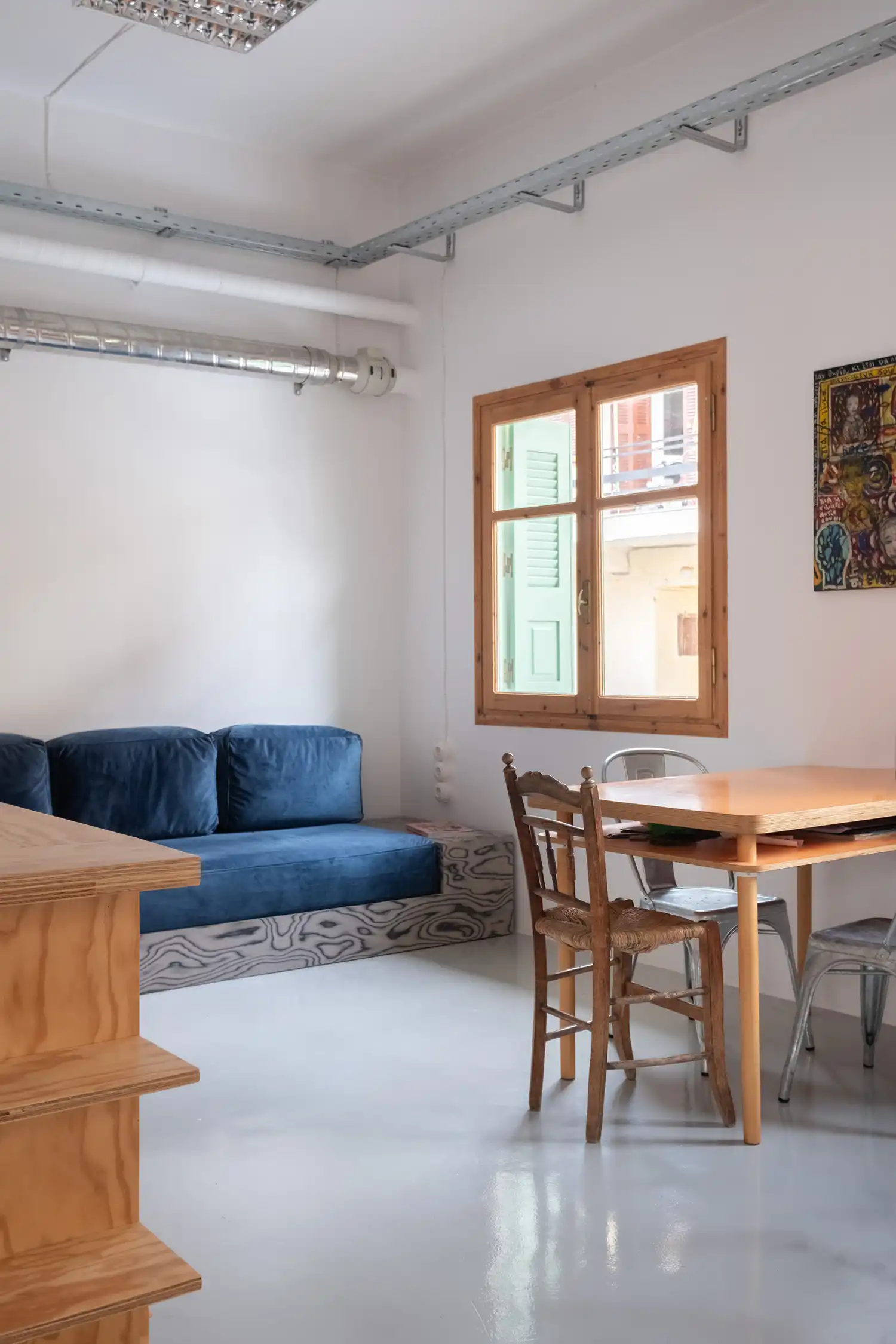
Spatial liberation through structural subtraction became the primary strategy for tackling the compact footprint. By demolishing the original bedroom walls, Kouklakis dissolved the claustrophobic boundaries typical of mid-century Greek apartments. This newfound open layout allows the Mediterranean light to permeate deep into the ground-floor volume, a challenge often faced in dense urban fabrics. The result is an interior that breathes, where the transition between the domestic and the professional is felt through light and materiality rather than physical barriers. This philosophy of self-expression through open-plan living mirrors the approach seen in the self-built timber home by Clara Crous, where the intimacy of the space is defined by the occupant’s direct relationship with the structure.
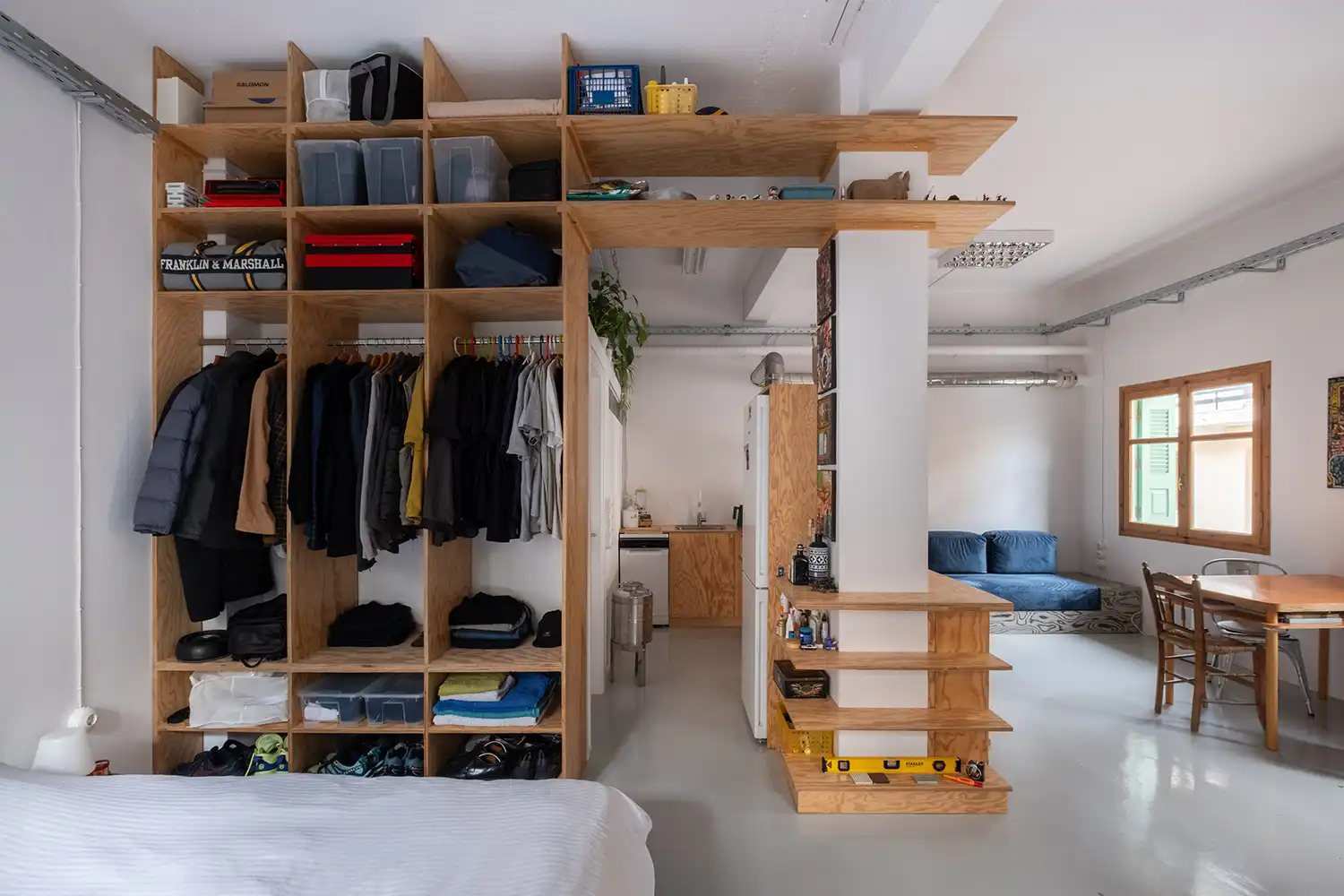
The heart of the renovation is a multifunctional pine plywood partition, a singular piece of “furniture-architecture” that orchestrates the entire apartment. This central volume is a masterwork of utility, housing the kitchen, a bookshelf, and wardrobe storage while simultaneously acting as the threshold between the service areas and the living-working zone. The choice of pine plywood introduces a warm, tactile honesty to the space, balancing the industrial grit of exposed mechanical and electrical systems. This dialogue between raw infrastructure and refined woodwork recalls the materiality of the Anchorage Road artist studio, where wood is used to soften the functional rigor of a workspace.
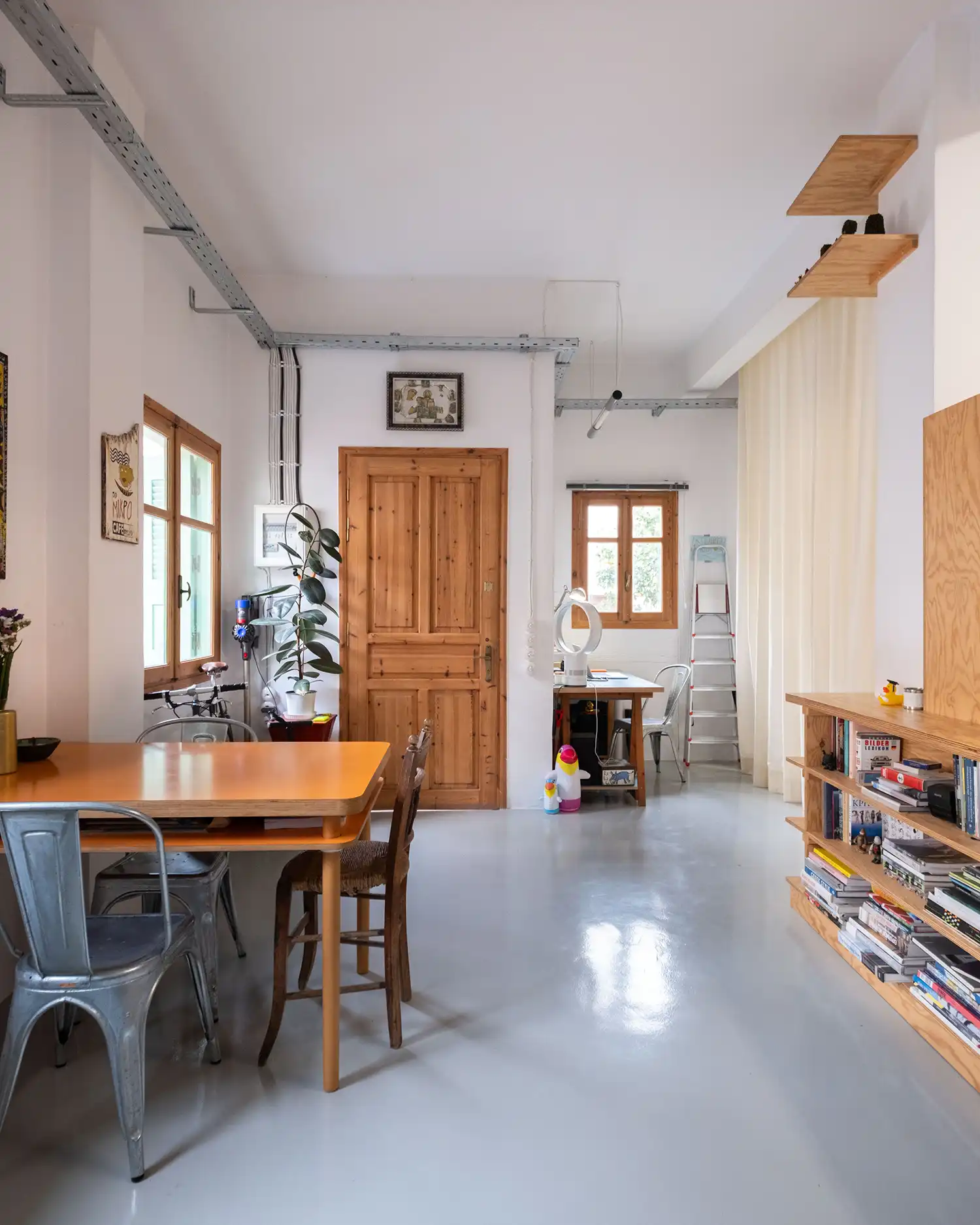
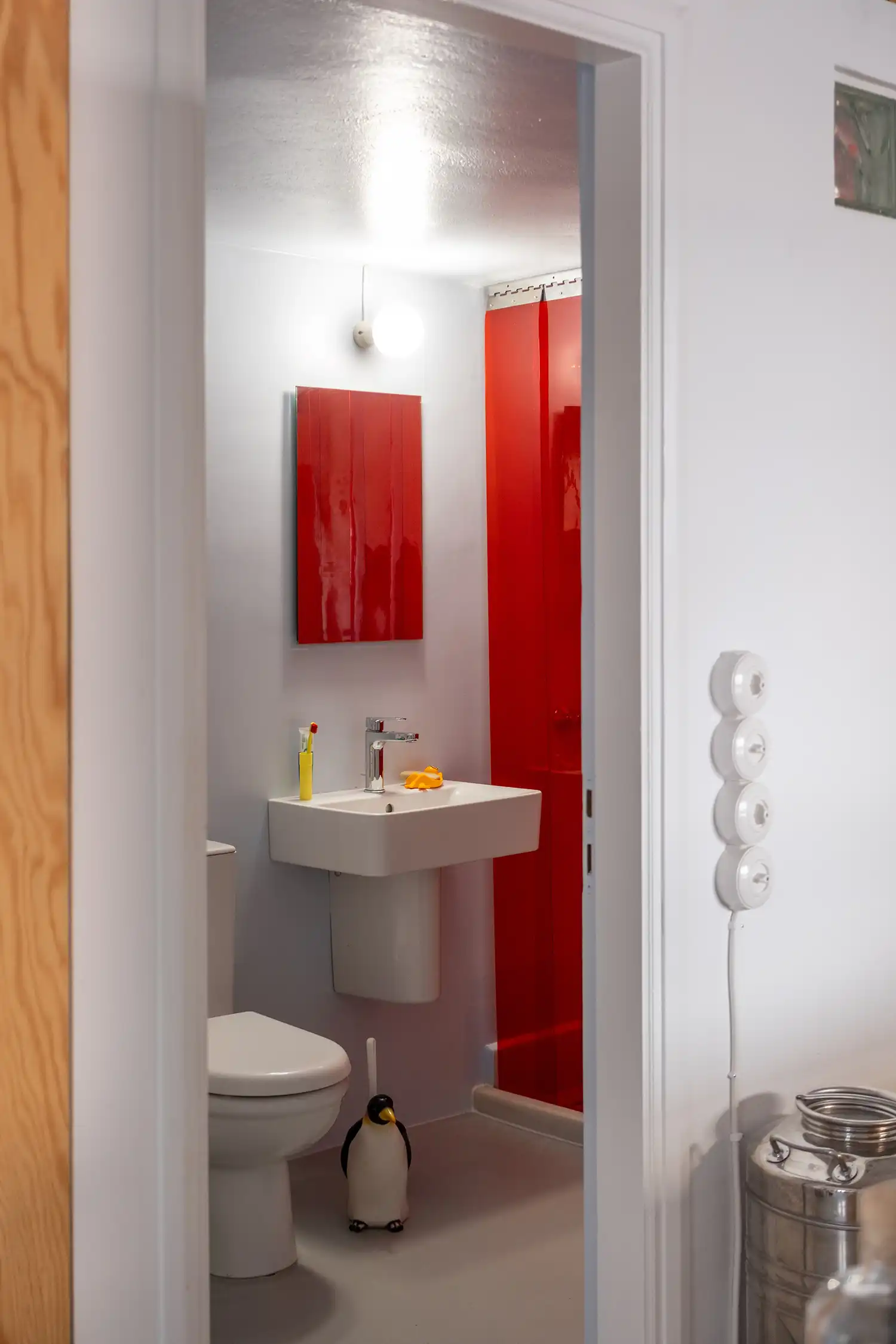
Sensory depth is achieved through a play of transparency and texture, particularly in the treatment of the bathroom and storage areas. The integration of glass bricks allows for a diffused glow to pass between rooms, maintaining privacy without sacrificing the sense of a continuous volume. This “extra feeling of openness” is further enhanced by an open storage space located above the central partition, ensuring that even the highest reaches of the 43-square-meter unit contribute to the visual narrative. Vibrant furniture pieces and a collection of curated objects break the monochromatic neutrality of the wood, injecting a sense of playfulness into the contemporary Greek interior.

The dialogue with the streetscape of Chania was handled with a sensitive, additive approach. Rather than stripping the building of its history, the exterior was refreshed with a light beige tone that reflects the coastal heat. The original 1970s window frames were preserved—a nod to the home’s heritage—and repainted in a pale green. This subtle exterior palette creates a rhythmic contrast with the warm timber interior visible through the glass, signaling a transition from the historic public realm to a highly personalized private world. It is a sophisticated exercise in urban acupuncture, where the past is not erased but rather recalibrated for a new generation.
Social connectivity defines the threshold of the home, where the entrance staircase has been transformed into a “semi-public” stage. By removing the traditional railings and cladding the steps in Kavala marble, Kouklakis has created a literal and metaphorical platform for interaction. This stoop acts as a place to linger and engage with the neighborhood, blurring the lines between the private residence and the vibrant life of the Old Town of Chania. In doing so, the project moves beyond the typical boundaries of an apartment renovation, becoming a contributor to the social fabric of the city and a testament to the power of small-scale architecture to foster community.