



Tucked away on a steep, wooded slope in Germantown, United States, the Anchorage Road Artist Studio stands as a testament to thoughtful, site-sensitive architecture. Designed by the practice Ballman Khapalova, this 680-square-foot structure serves as a painting studio and office for artist Natasha Sweeten. The primary goal was to create an economical and efficient building that seamlessly integrates with its majestic Hudson Valley surroundings.
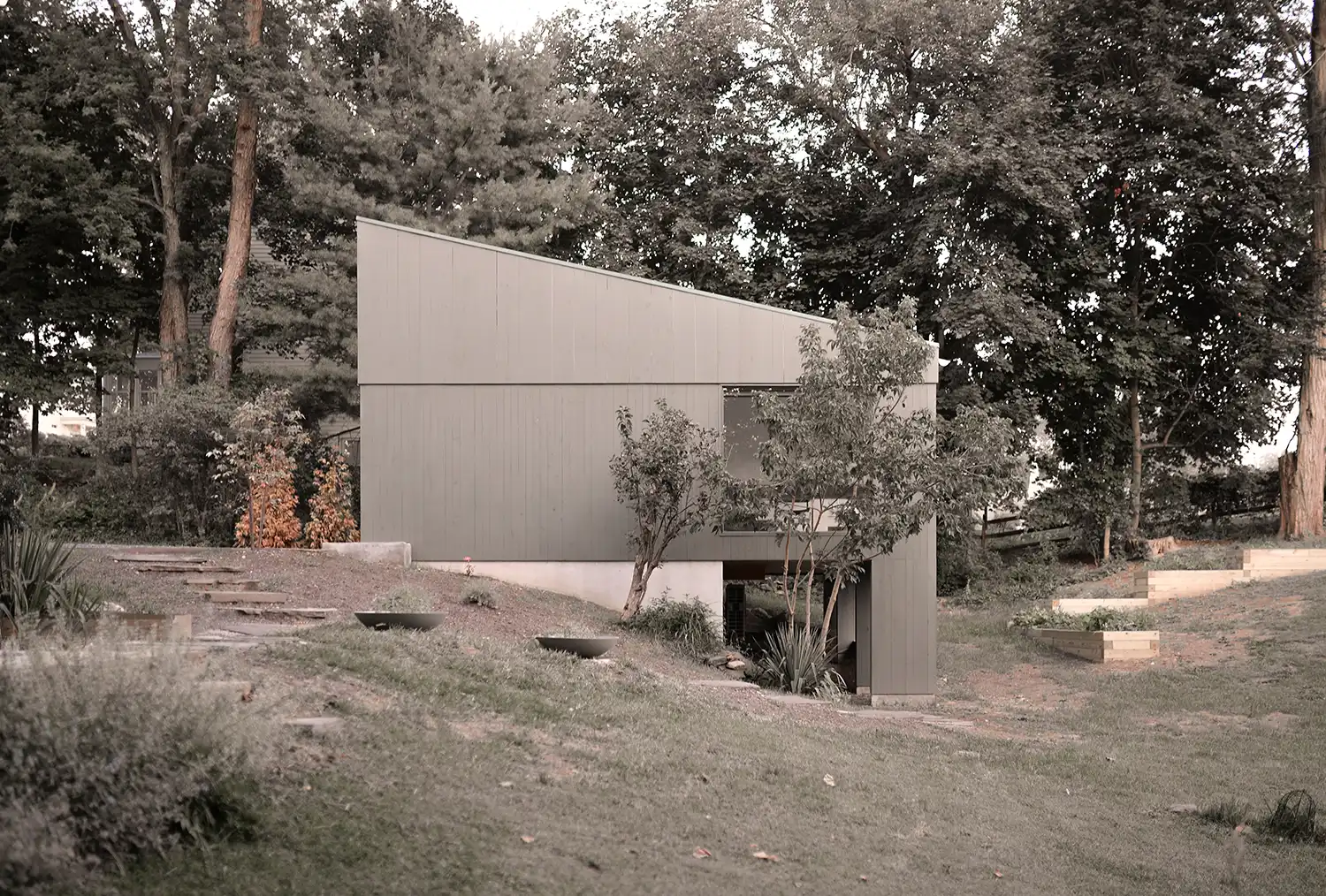
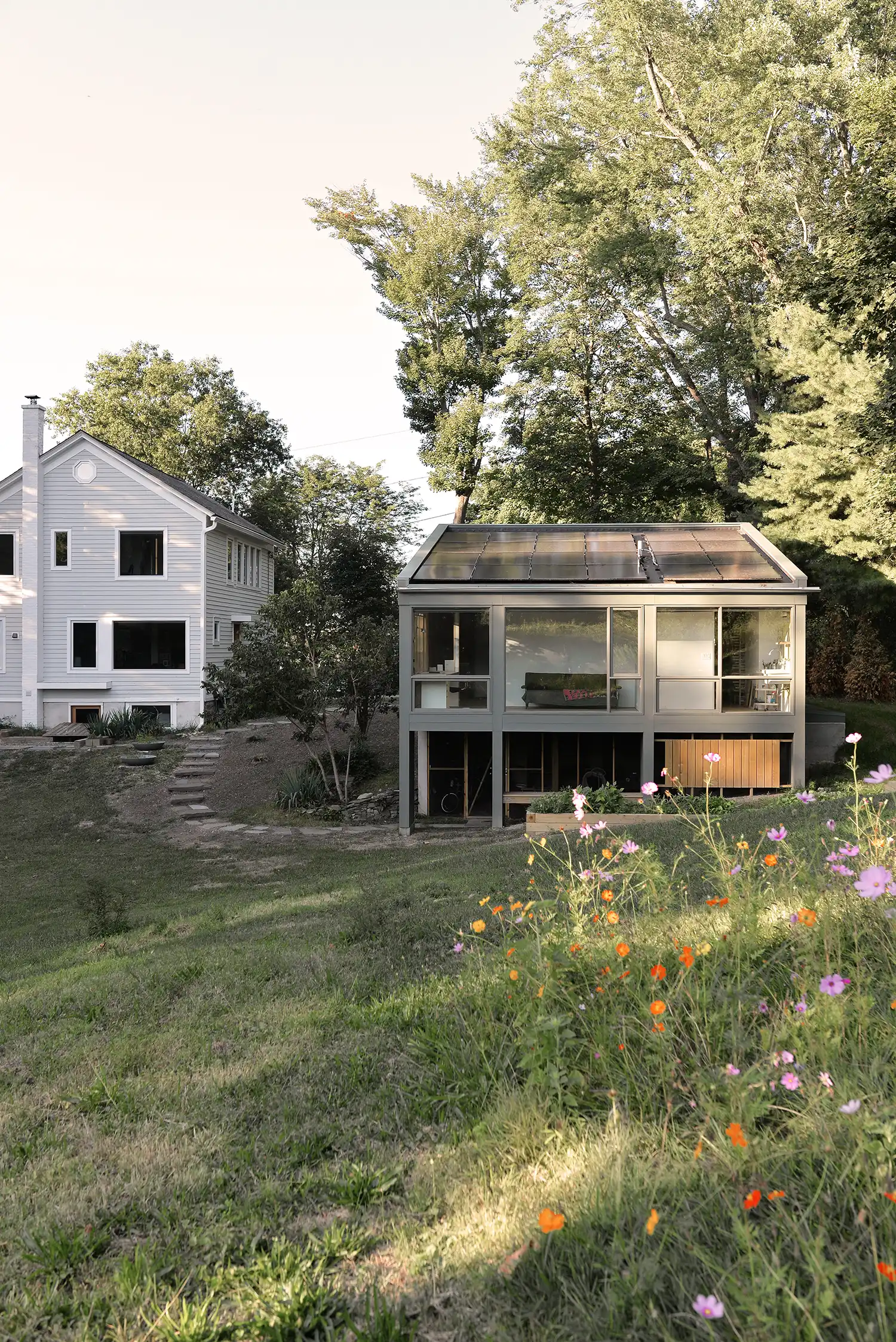
The studio’s placement next to a renovated 1800s farmhouse is strategic, forming a new entry courtyard for both buildings that is sheltered by mature trees. This arrangement establishes a sense of compound and history, grounding the new build within the existing context of the property. The relationship between the old and new structures creates a welcoming approach and a defined sense of arrival.
One of the project’s most distinctive features is its roofline, which meticulously follows the natural slope of the topography as it drops away toward the south. This design decision serves a dual purpose: it effectively conceals the building’s mass from the direction of neighboring properties, ensuring privacy, while simultaneously creating an ideal, unobstructed south-facing facade. This large, angled surface is perfectly positioned for the future installation of solar panels.
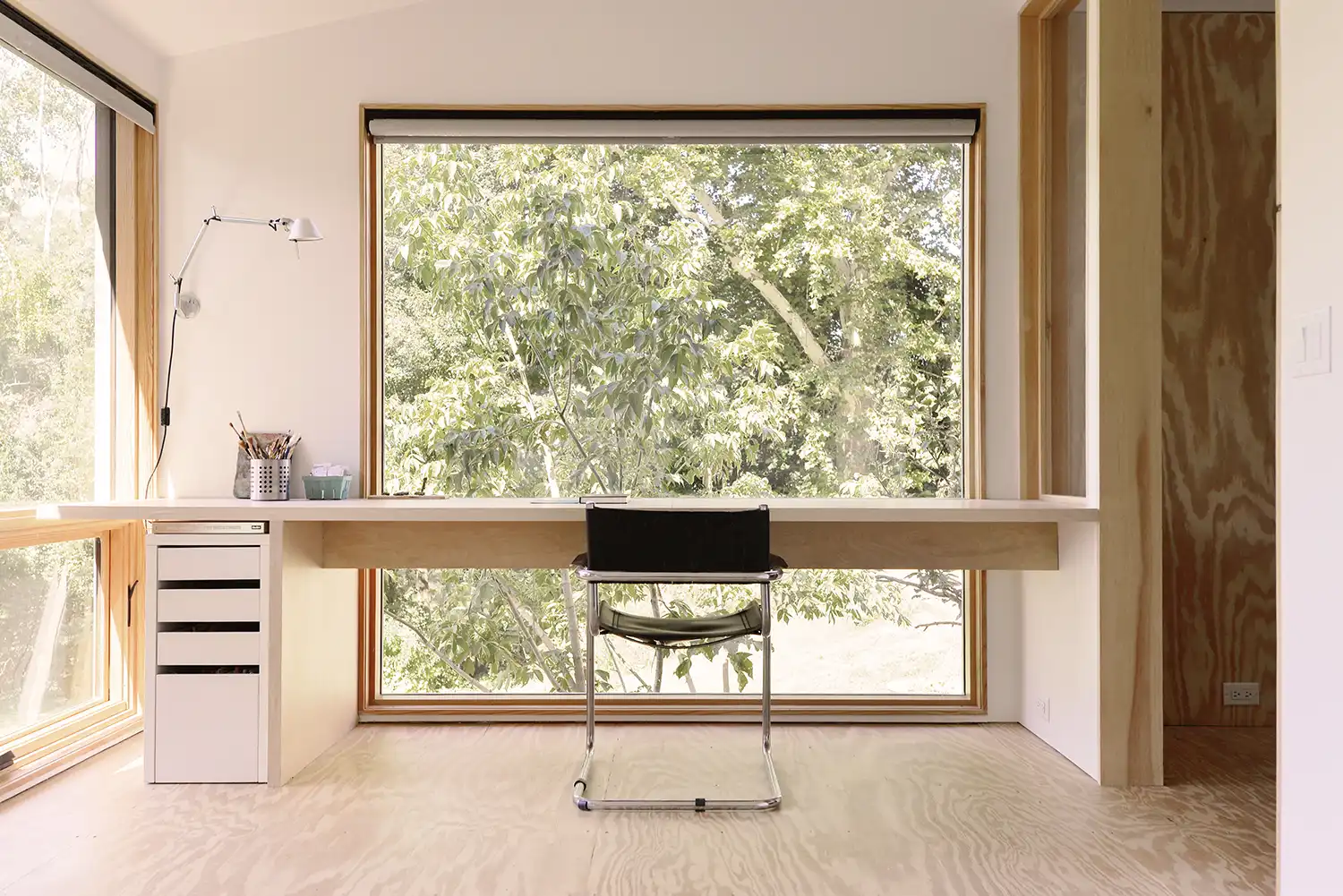
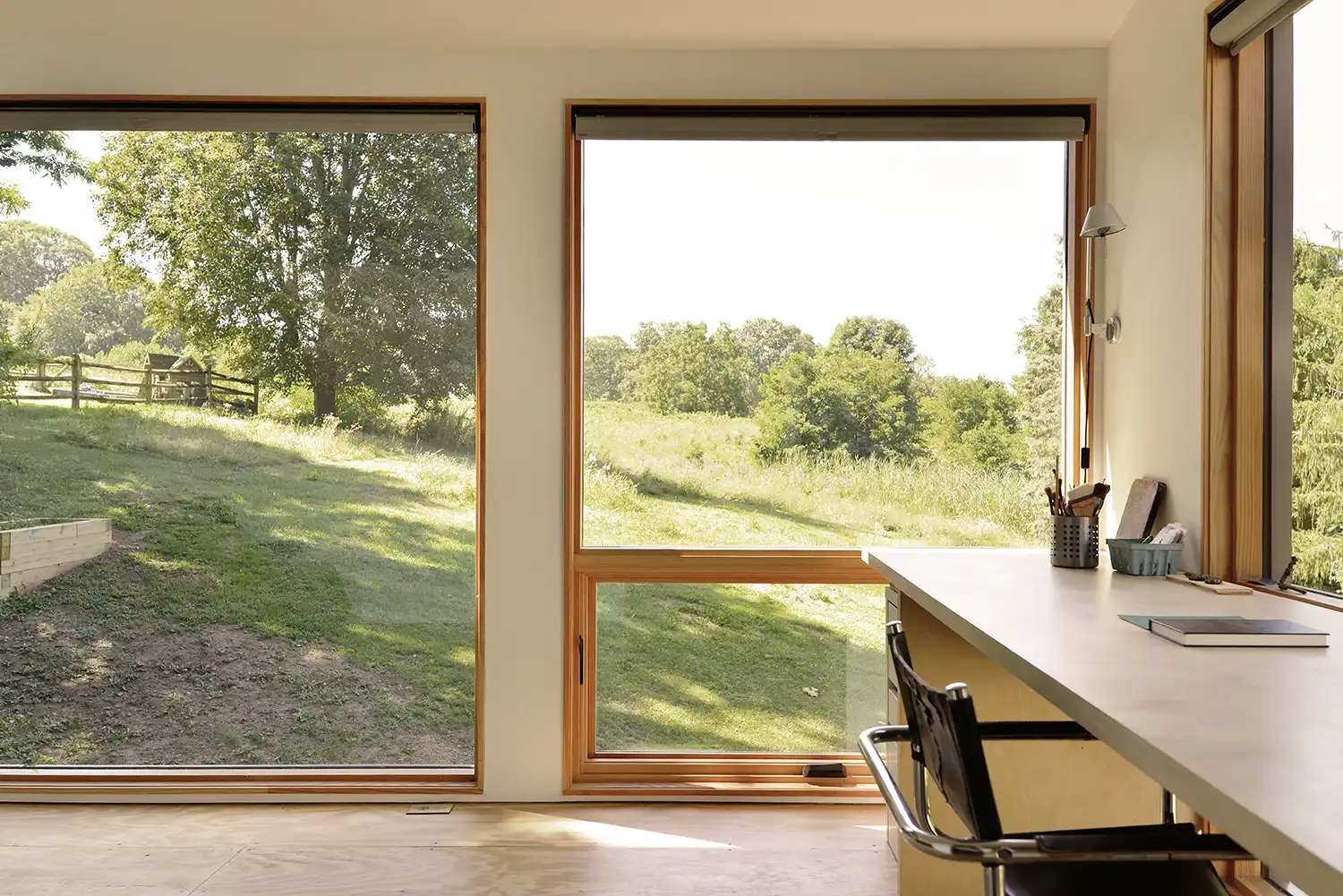
As the ground descends sharply, the building’s relationship with the land becomes dynamic. The studio floor is conceived as a continuation of the exterior courtyard, creating the sensation that the interior space begins to float within the landscape. This effect provides breathtaking, unimpeded views from the main workspace over a dramatically sloped backyard, neighboring fields, and the distant Hudson River beyond.
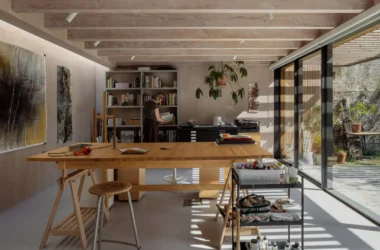
Inside, the material palette is intentionally raw and resilient, championing function and durability. The entire studio is lined with CDX plywood, used for both the floors and the walls. This economical choice results in a durable and flexible interior that can withstand the demands of an active artist’s practice, remaining unfussy and directly connected to its structural essence.
Light, the most crucial resource for any artist, is expertly managed. A north-facing clerestory window bathes the main workspace in consistent, shadow-free natural light, which is essential for the accurate perception of color in painting. This high window also ensures complete privacy from the adjacent road, making the studio an ideal private creative space that is both bright and secluded.
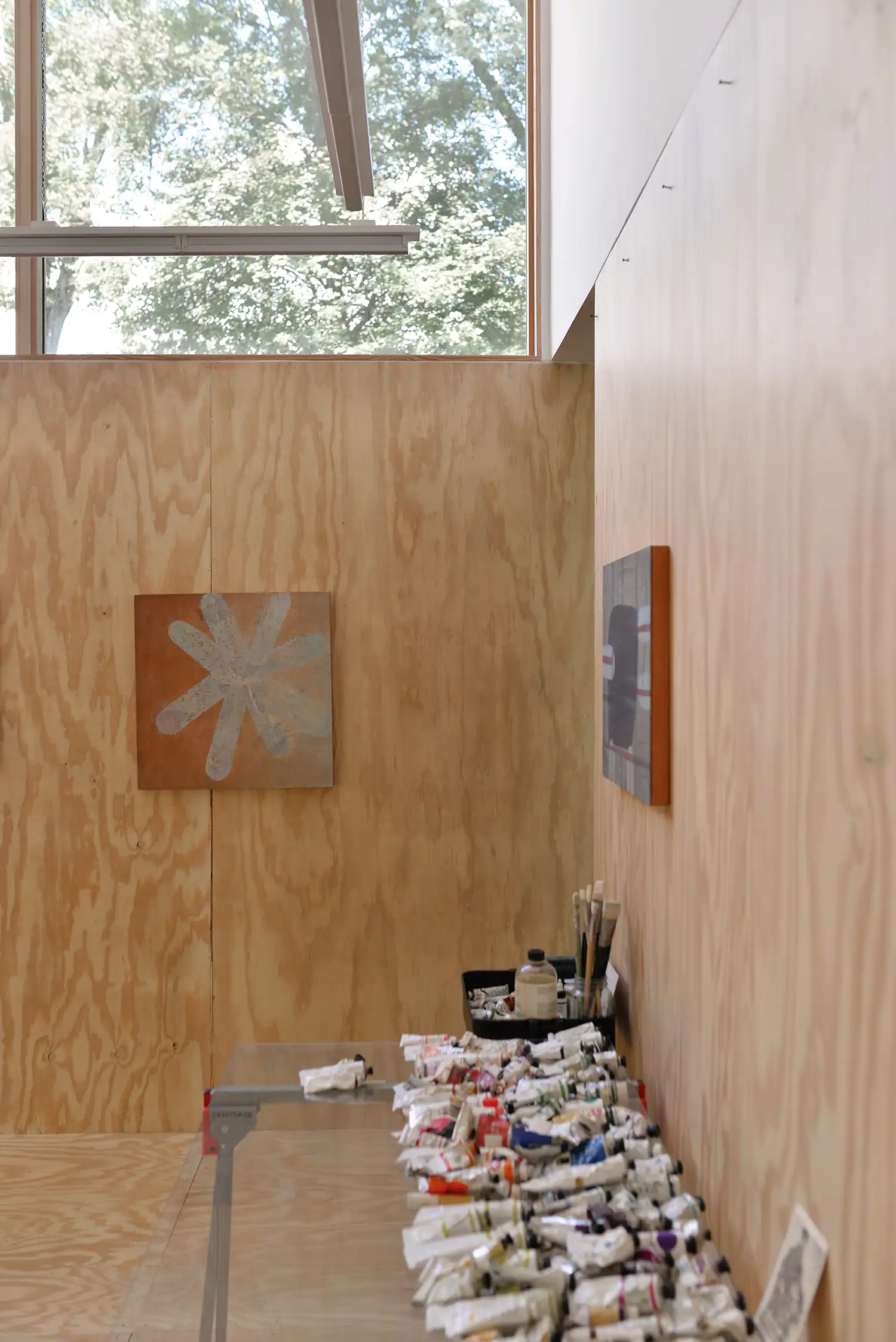
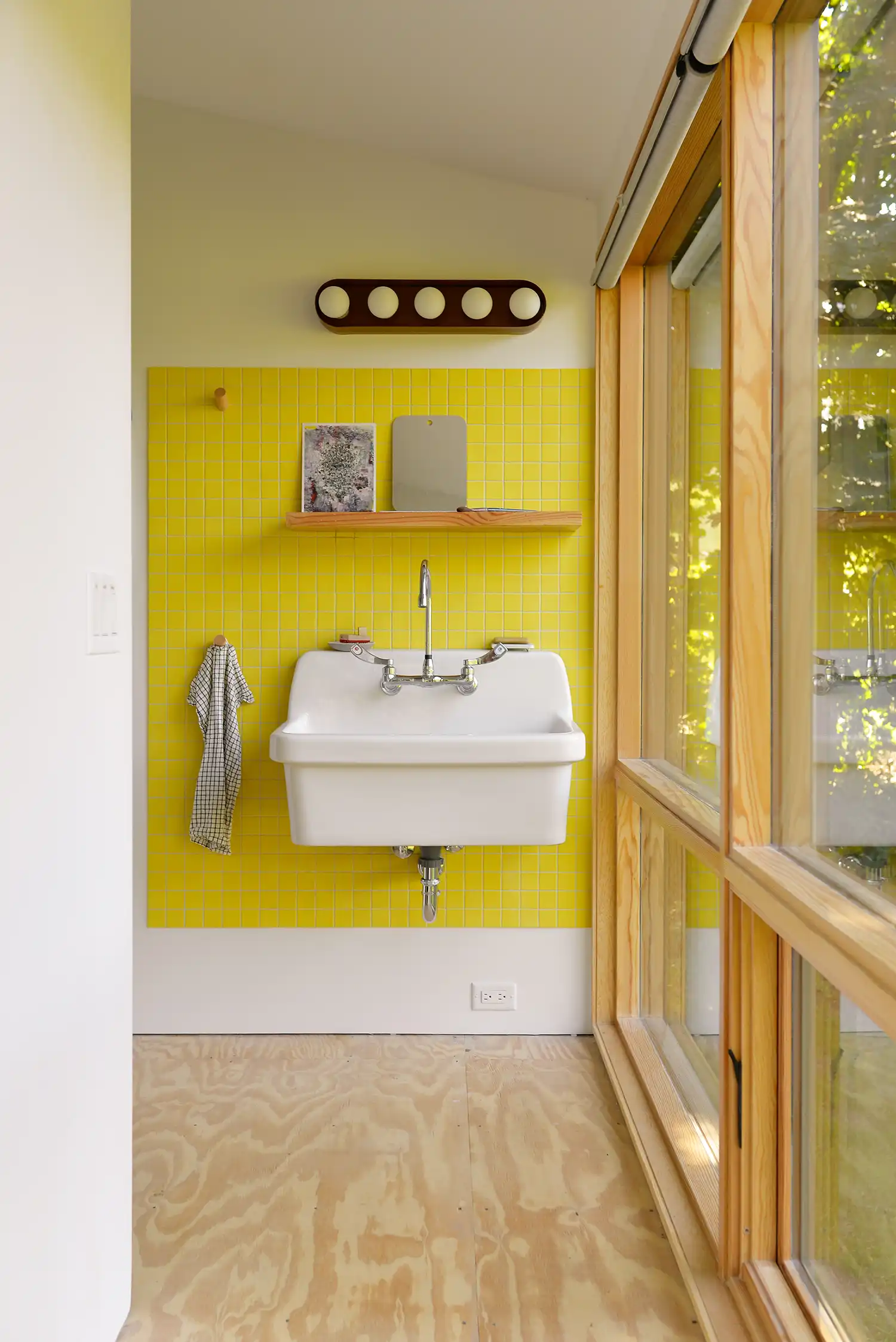
Behind the east wall of the main studio lies a cleverly organized utility zone. A double-height storage space features exposed framing that doubles as shelving for miscellaneous painting implements. This area extends into a compact bathroom with a toilet, shower, and utility sink, which are surprisingly illuminated by floor-to-ceiling windows on the south façade. The office area capitalizes on the most dramatic vista, with a sitting area and work desk that seem to hover above the landscape.
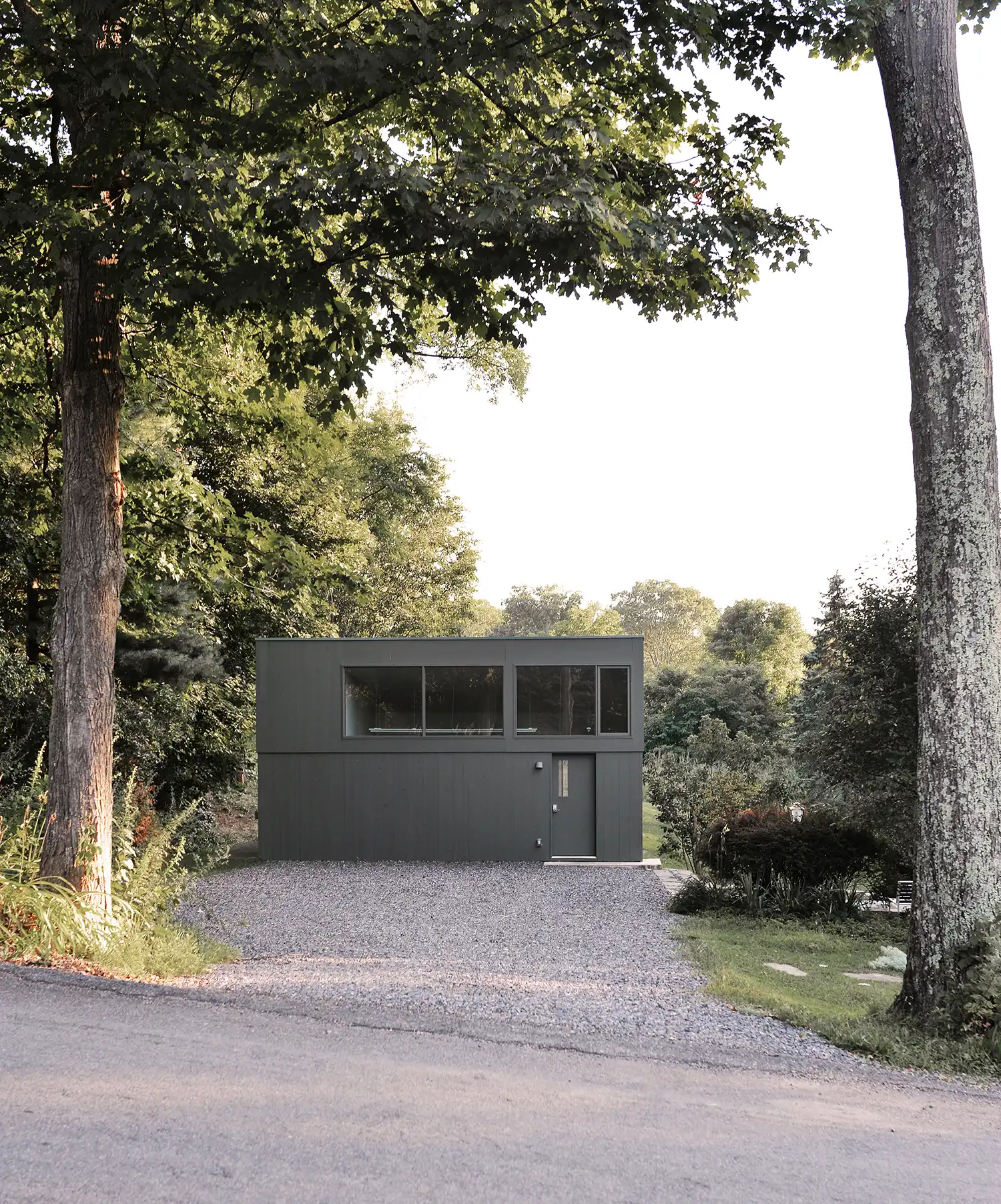
The project exemplifies sustainable pragmatism through its intelligent reuse of existing site elements. The studio was constructed on the existing foundation of a dilapidated 1950’s garage, with an old cistern repurposed to house mechanical equipment. Beneath the new structure, the space between the foundation piers is fitted with a hanging wall for tools and a bench for firewood storage. The Anchorage Road Artist Studio is ultimately a calibrated instrument for art-making, a powerful statement on building lightly and thoughtfully within a majestic natural setting.