


Nestled within the rugged topography of Los Cabos, Casa en Palmilla by ESTUDIO Ignacio Urquiza and Ana Paula de Alba emerges as a sophisticated dialogue between tectonic weight and climatic responsiveness, where a series of independent volumes are unified by expansive timber canopies to redefine the domestic experience in Baja California Sur.
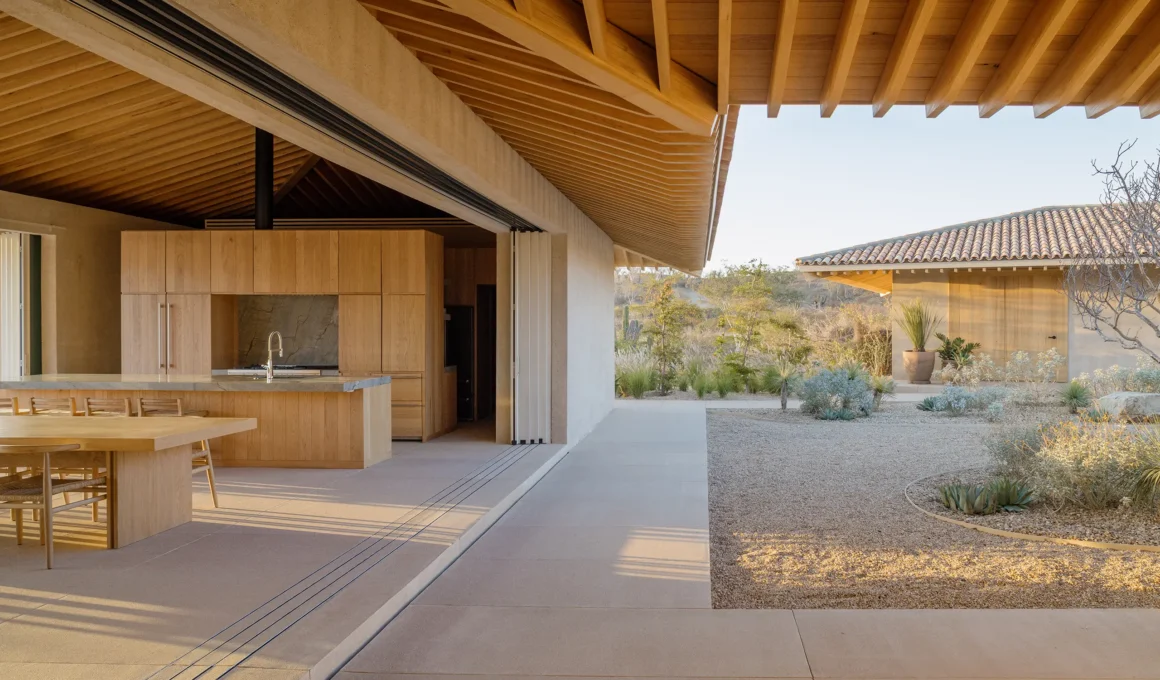
A rhythmic response to the desert sun dictates the fundamental logic of the plan. Rather than a singular, hermetic enclosure, the residence is conceived as a collection of four distinct volumes sheltered beneath two L-shaped roofs. These lightweight structures, crafted from laminated oak and clay, feature deep perimeter overhangs that extend over two meters. This deliberate structural choice serves as a passive cooling mechanism, casting long shadows that protect the glazing and ensure the textured concrete surfaces remain cool to the touch despite the intense Mexican sun.
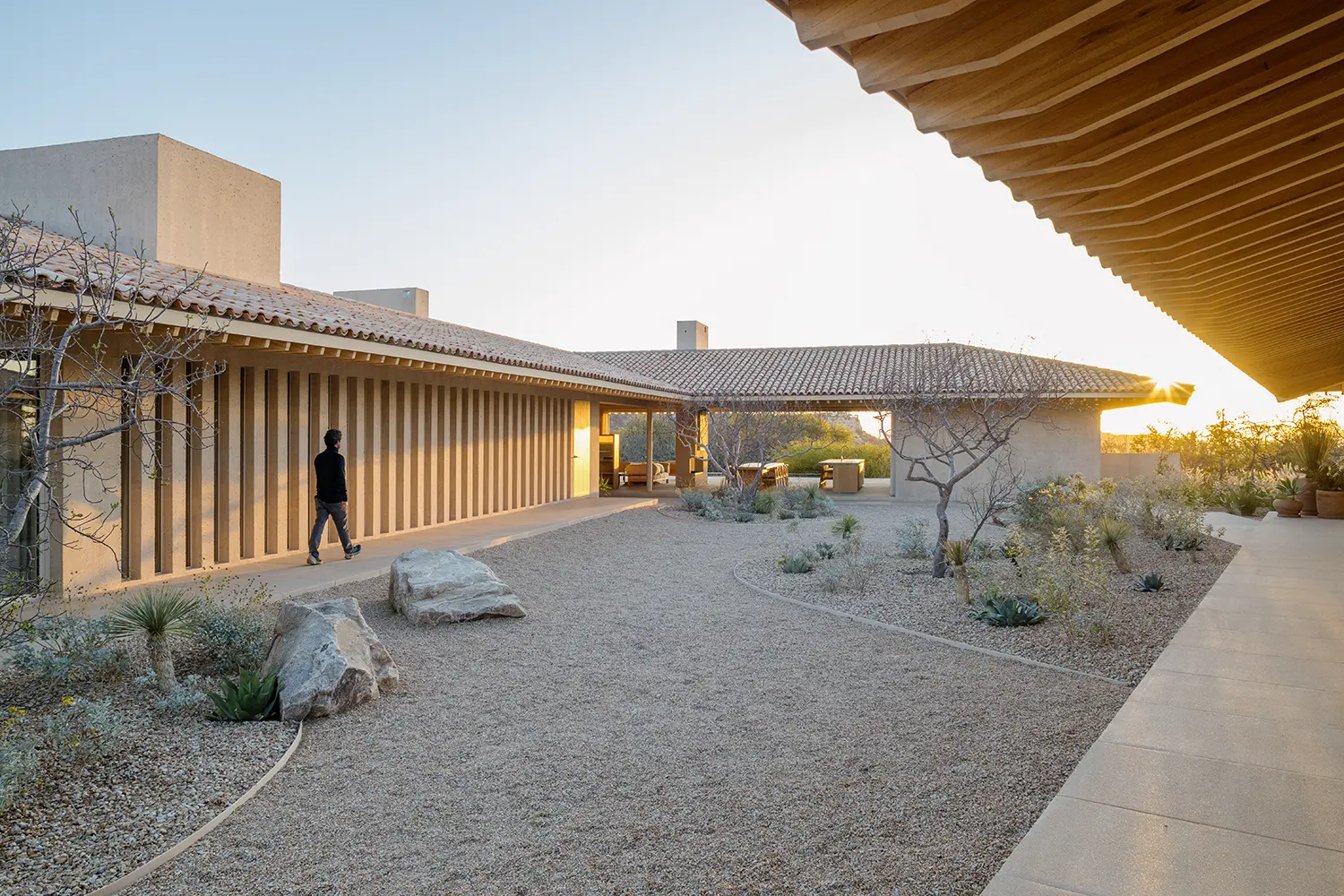
The heart of the home is defined by what is absent. A central, trapezoidal courtyard acts as the primary atmospheric anchor, a gravel-filled void that orchestrates the movement between private and social zones. This space is largely introverted, offering a sense of enclosure and stillness. To the west, the courtyard remains open to the mountains, while its southern edge is softened by a rhythmic sequence of small square apertures. These openings filter a delicate, dappled light into the main suite, providing privacy without sacrificing the essential connection to the exterior environment.
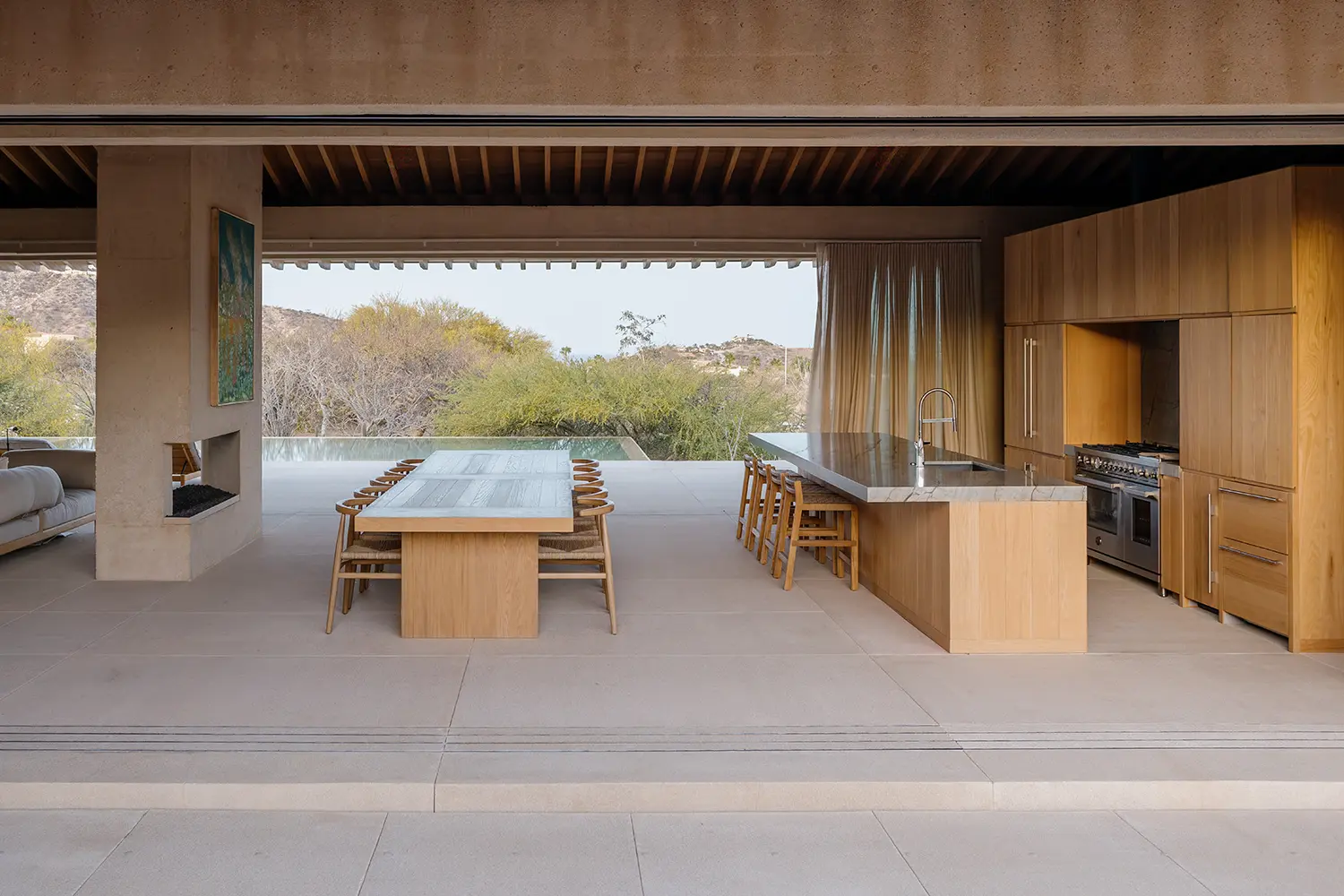
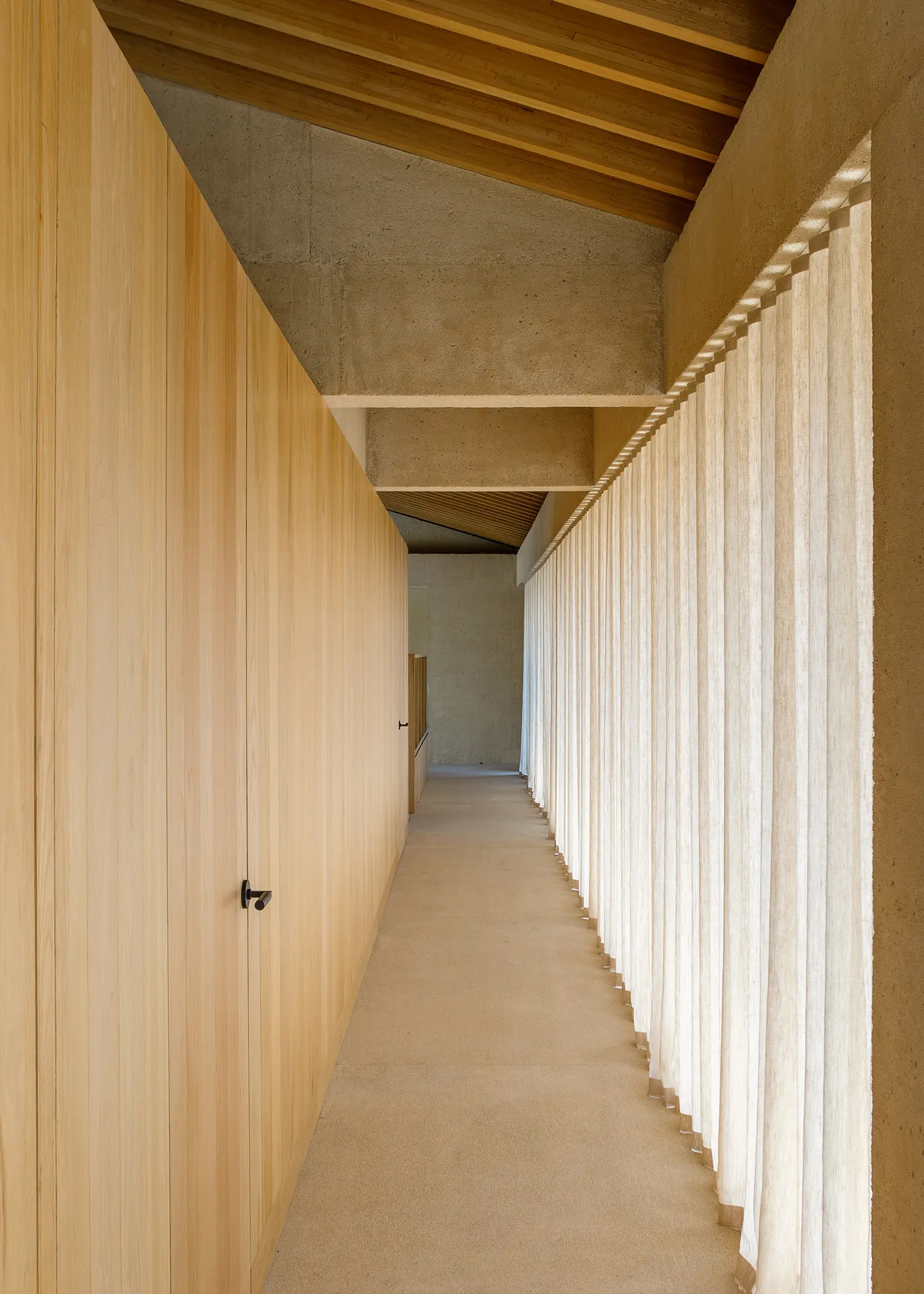
Spatial autonomy and domestic flexibility allow the project to breathe according to the needs of its inhabitants. By separating the program into two primary wings, the house can function as an intimate single-bedroom dwelling or expand to accommodate guests across three identical secondary bedrooms. In these guest quarters, a freestanding wooden element serves as a dressing area, detached from the ceiling to emphasize a sense of continuous spatial openness and to allow air to circulate freely beneath the high timber roof.
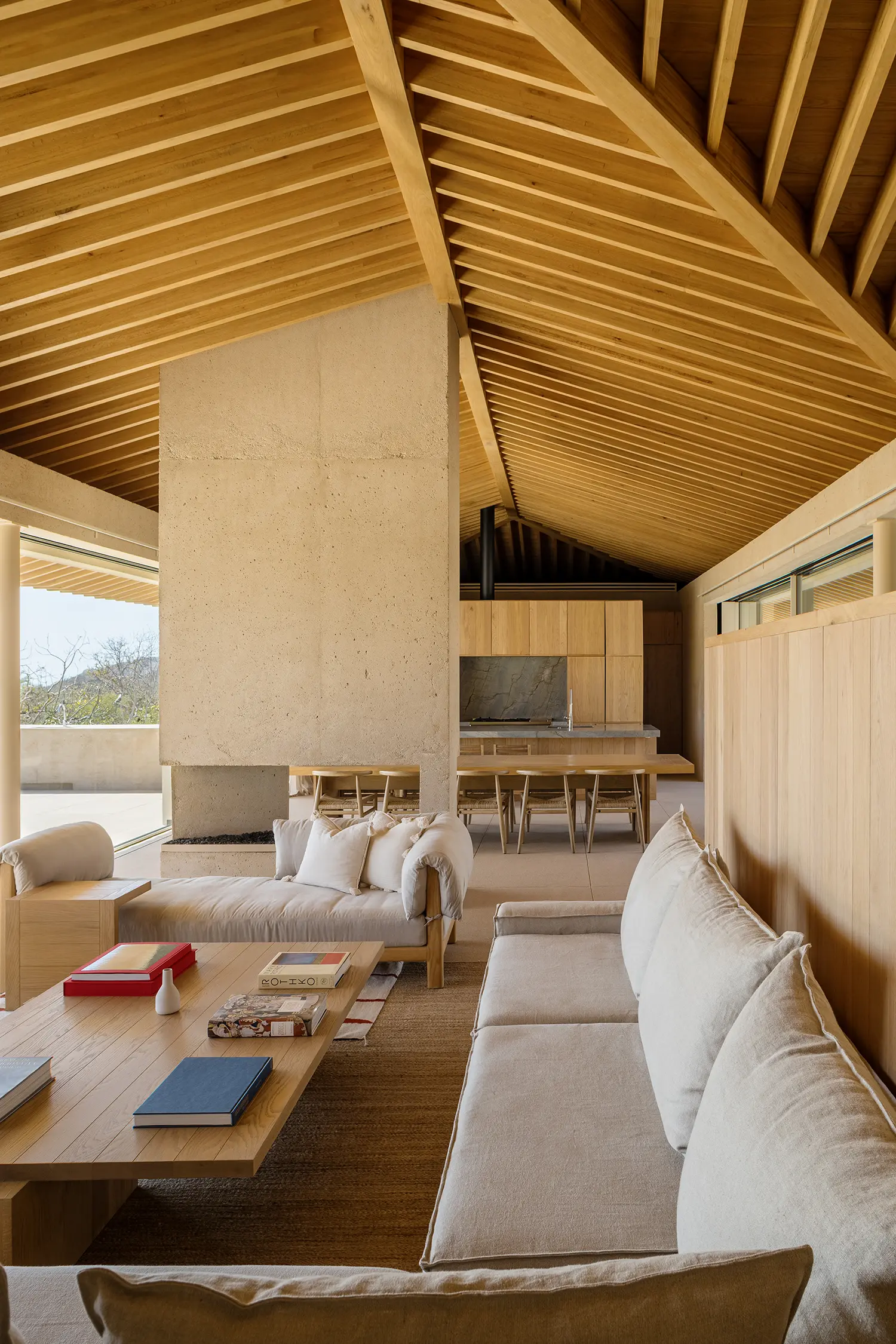
The transition to the social core reveals a volume defined by transparency and dualities. The living area, dining room, and kitchen are enclosed by two twelve-meter-long glazed façades. When these partitions are retracted, the interior is effectively erased, transforming the room into an elevated covered terrace. This transparency creates a direct visual and physical axis that links the quietude of the central courtyard with the expansive horizon of the Sea of San José, blurring the boundary between the built environment and the coastal landscape.
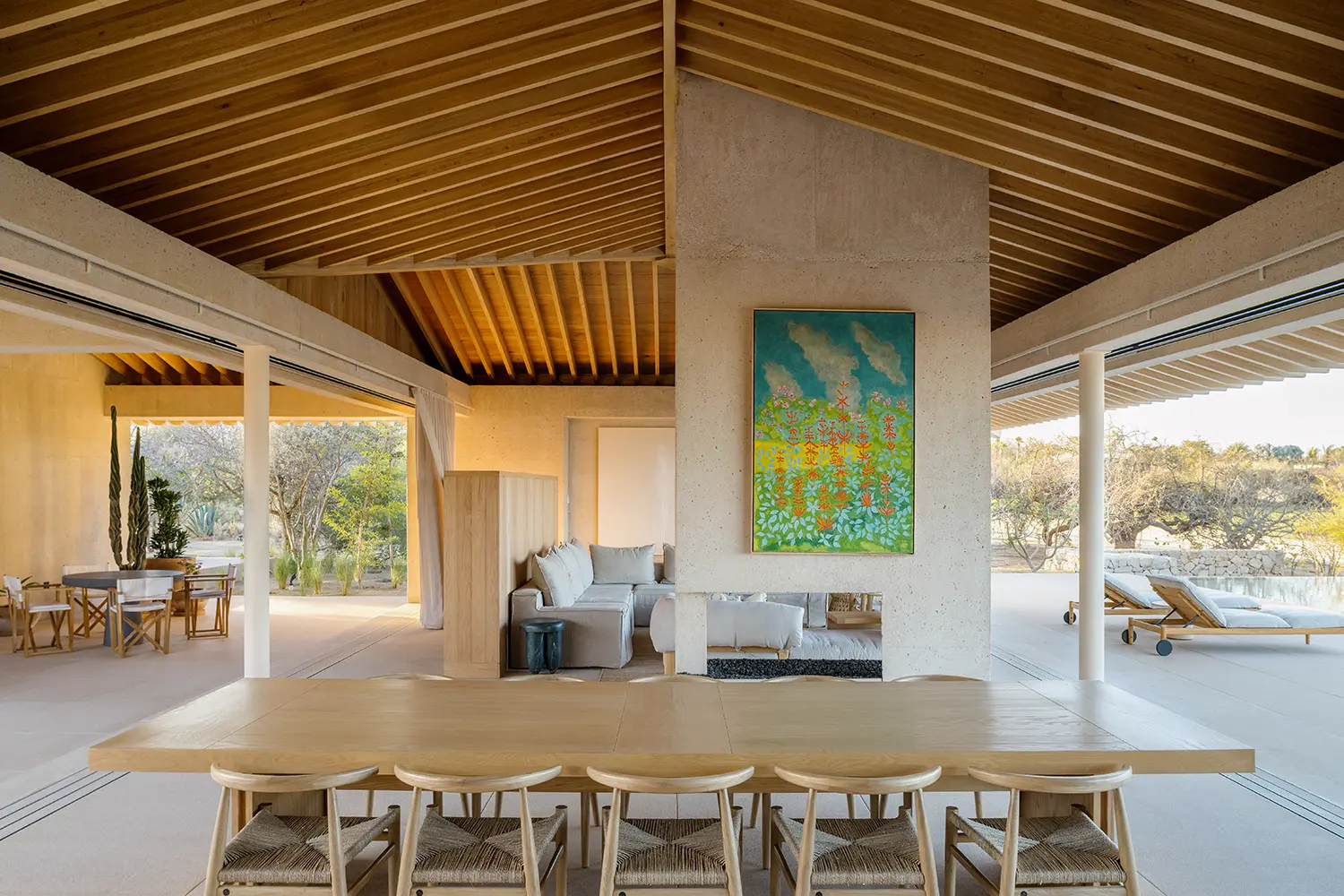
Materiality and sensory tactile qualities play a crucial role in grounding the house within its context. The palette is intentionally monochromatic—a sand-colored monolith that mirrors the surrounding earth. This mineral aesthetic is balanced by the warmth of structural oak and the curated interiors by Alejandra Usobiaga. The furniture and decoration are not merely additions but extensions of the structural narrative, utilizing natural textiles and textures that harmonize with the endemic landscape of the Los Cabos hills.
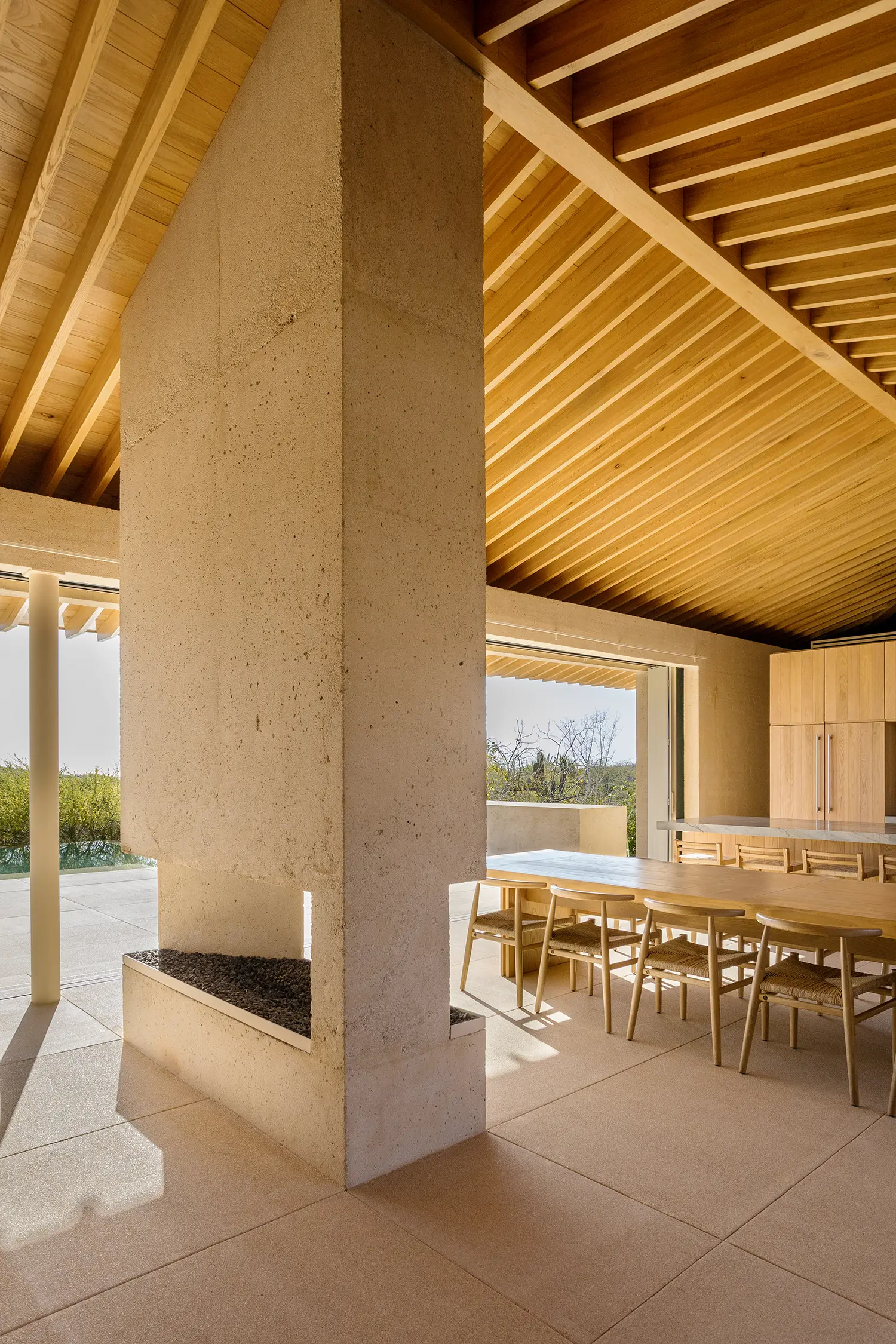
Environmental performance is woven into the technical execution of the project. The placement of each volume was determined by a rigorous study of orientation and the prevailing winds, ensuring that cross ventilation is maximized throughout the year. The heavy thermal mass of the concrete walls works in tandem with the shaded voids, creating a microclimate that reduces the reliance on mechanical cooling and emphasizes a more visceral, unmediated connection to the regional climate.
A broader movement in Mexican residential work continues to explore this intersection of minimalism and environmental empathy. The quiet, monochromatic power of Casa en Palmilla shares a spiritual kinship with other recent explorations in the region that we have recently analyzed, such as the subterranean silence of HW Studio’s Kehai Housein Morelia or the stark, light-filled geometry of Casa Tlaloc by Lopez Gonzalez. These projects, much like Fernanda Canales’ House 720 Degrees, reflect a contemporary shift away from the decorative and toward a structural honesty that respects the land it occupies.
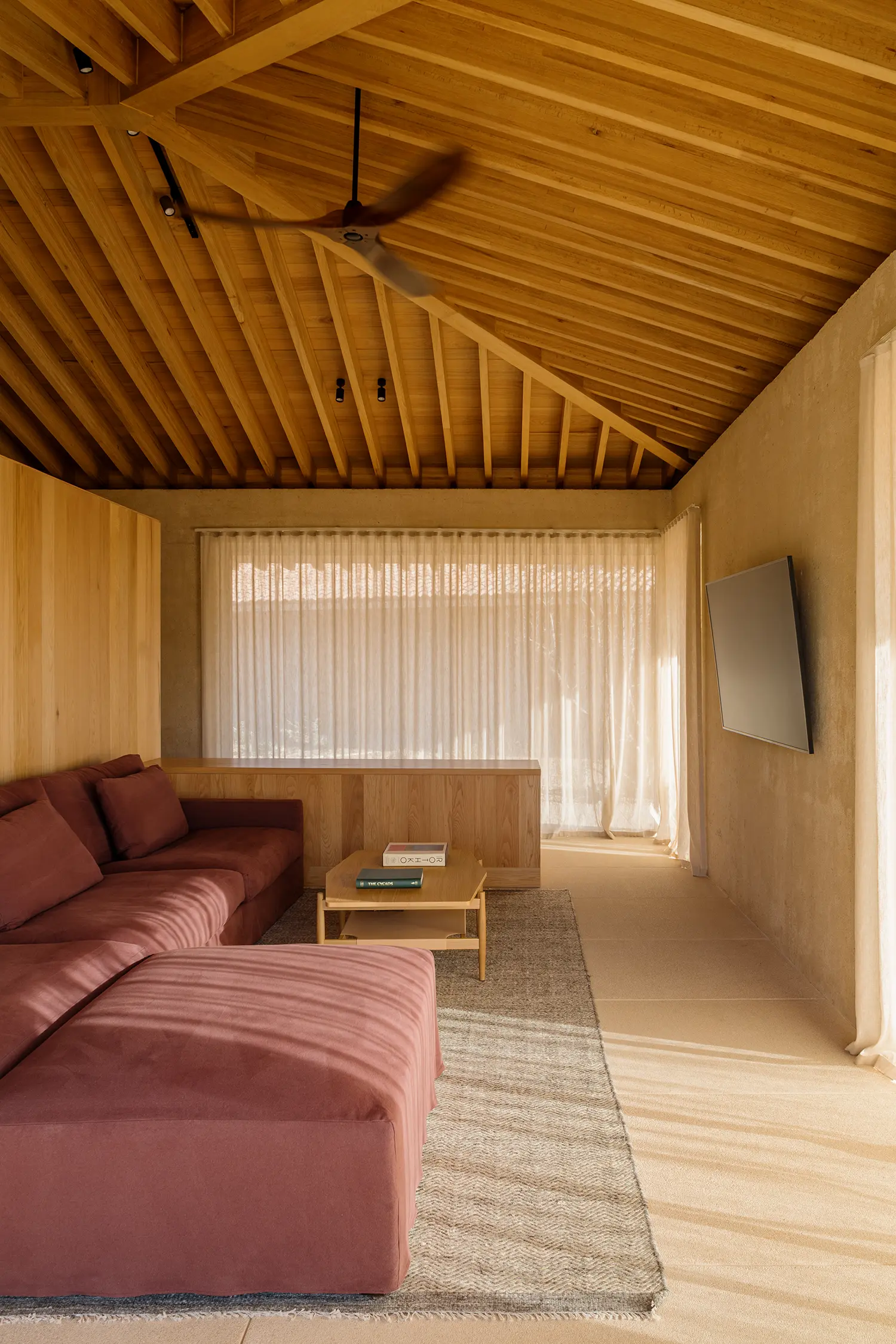
The experience of inhabiting this site is defined by the choreography of light and shadow. As the sun moves across the Baja sky, the house shifts in character, from a bright, airy pavilion to a series of shadowed retreats. It is an exercise in restraint, where the luxury lies not in ornamentation but in the quality of the air, the precision of the views, and the seamless integration of a modern lifestyle into a timeless, sun-drenched landscape.