

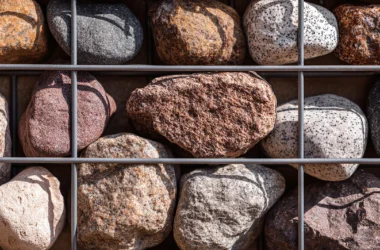

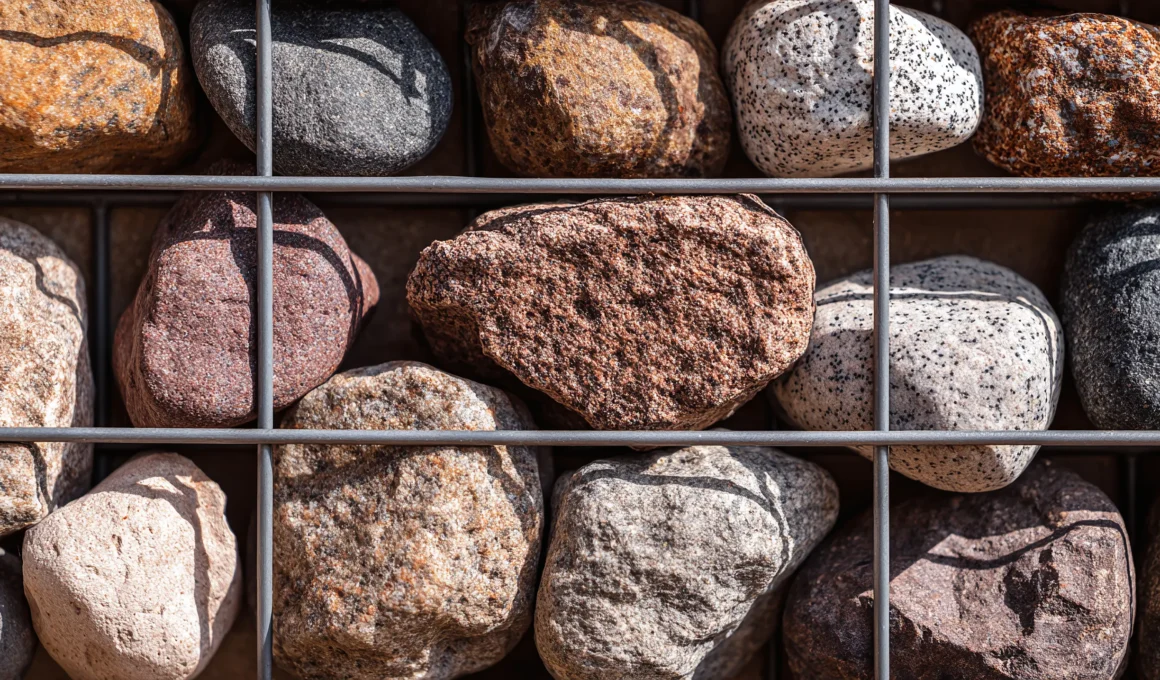
A wire cage packed with loose stone is one of the most honest materials in contemporary architecture, and for most of its working life nobody thought to look at it twice. The gabion began as pure engineering — erosion control, retaining structures, problems solved with rock and steel mesh and nothing more — carrying no design ambition and asking for none. Yet the very qualities that kept it invisible to architects for a century, its rawness, its indifference to finish, the way a gabion wall reads as landscape rather than building, are exactly what have pulled it into the center of contemporary practice, as the projects gathered here from more than a decade of Wirefence’s gabion work make clear.
What changed was not the object but the eye looking at it. As building has moved toward exposed structure, lower embodied carbon, and a real appetite for the tactile and the local, the apparent crudeness of the gabion turned into its strongest asset. It is a system that puts local stone on display, accepts almost any fill, and ages without apology — which is why gabion wall design now appears in places its inventors never imagined, from botanic gardens to gallery floors.
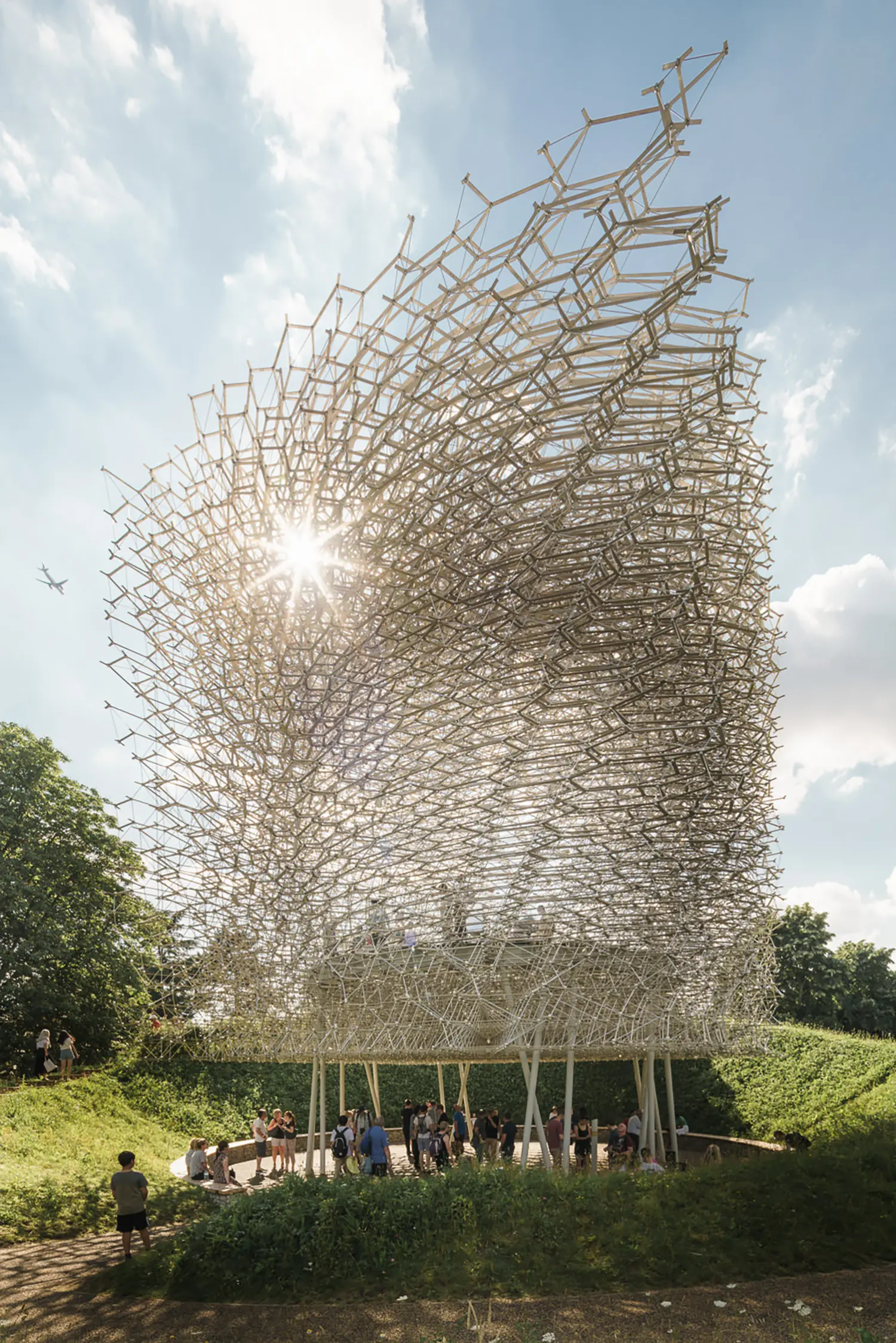
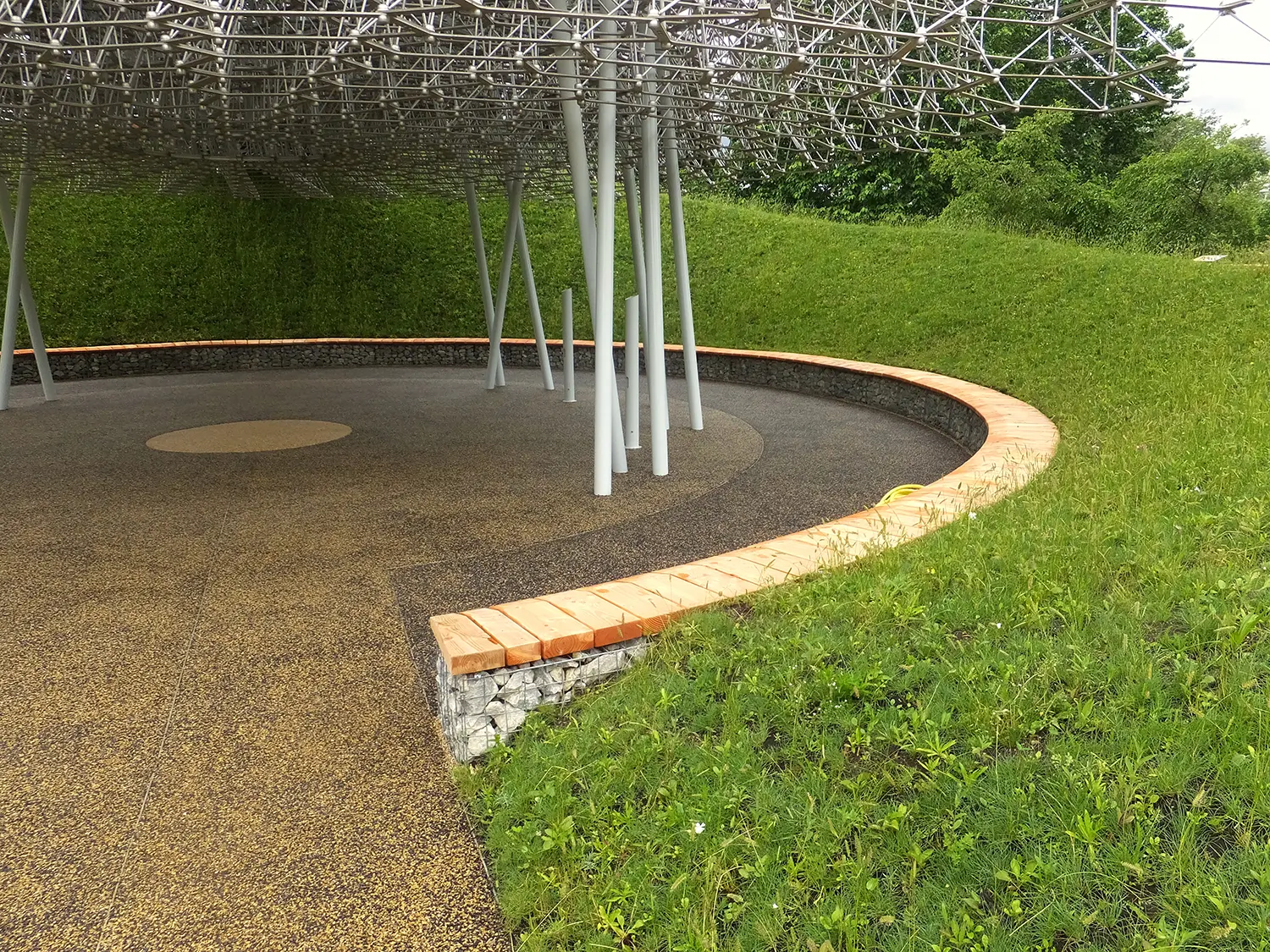
The clearest cultural anchor sits in the grounds of a botanic garden, where the material meets contemporary art. Around artist Wolfgang Buttress’s “The Hive,” a 17-meter (56-foot) immersive structure built to dramatize our dependence on pollinators, gabions form the amphitheatre and the run of gabion seating that holds visitors as they take the work in. The design move worth borrowing is the companion slope system: by laying baskets back at an angle and letting meadow grass and wildflowers root through the fill, the structure stops reading as built object and starts reading as ground. For anyone planning gabion in architecture, that is the quiet lesson here — the material is at its most powerful when it is allowed to disappear into the landscape rather than sit on top of it.
At the civic and the sacred scale, the same system draws a hard line instead. In Kuwait’s Al Shaheed Park — a public landscape of botanical gardens, museums, and a lake built to present the country’s culture — a 4-meter (13-foot) freestanding gabion wall was raised around the park’s prayer room. The detail that matters for any designer is structural: a free-standing gabion wall at that height is not held up by the baskets at all but by steel posts set, here, at 2-meter (6.5-foot) intervals against severe wind loading. The practical takeaway is that tall free-standing gabion work is really a steel-frame problem wearing a stone skin — get the post grid and the wind calculation right and the basket is just the visible surface.
As architectural skin, the gabion shifts again, this time toward the industrial. At a Nestlé Waters site in Buxton, gabion cladding gave a steel-framed building a rustic finish in natural local stone. The point a specifier needs to understand is that cladding gabions do not behave like masonry: at 7 meters (23 feet), the stone is carried by the building, not the ground, through tie-back systems and concealed horizontal steel beams that transfer its weight back to the frame. It is effectively a hung, ventilated facade made of rock — which means the design question is never “will the stone stand up” but “how is its weight returned to the structure.” It belongs to a wider move toward sustainable building materials in commercial design that prize honesty of material over applied finish.
Where it gets most architectural is on the Welsh coast, at the Pwllheli Sailing Club. Built to BREEAM environmental standards, the architectural gabion cladding there was filled with local granite and shaped to follow the building’s curves, with precise openings cut for doors and windows. Two decisions make that possible, and both are worth noting: curving and fenestrating a gabion facade means abandoning standard rectangular baskets for bespoke geometry, and holding a clean face on a curve depends on angular fill like granite, which interlocks and resists the bulging that rounded river stone would cause. This is the gabion behaving like a designed envelope — and a reminder that fill choice is a structural decision, not a cosmetic one.
The most unexpected application strips the weight out of the material altogether. The artist collective Exhibition247 has used gabion baskets as plinths to display sculpture, including in a show titled “Echoes of Presence” staged in a chapel at Brompton Cemetery in London. Their reasoning inverts everything the gabion is supposed to be, and it rewards study: empty, the cages ship flat and weigh almost nothing, so all the mass lives in the fill and arrives only on site. That single property makes a gabion structure light to transport, fast to assemble, fully demountable, and easy to store — which is why it suited a show with a punishing mount-and-strike timeline. A material associated with permanence and mass, recast as a near-invisible, demountable gabion display system.
Craft re-enters at Trent Valley Crematorium in Derby, where a post-supported wall was filled with Yorkshire stone chosen to match the architecture of the main building. The detail that separates a refined decorative gabion wall from a tipped-in one is invisible from a distance and entirely manual: the face stones are hand-positioned against the mesh so the wall would read well from both faces, not only the public side, while looser “hearting” fills the core behind them. The roughness, in other words, is a choice — and the gap between a bagged fill and a composed face is the single biggest lever a designer has over how finished the finished wall looks.
Beyond the set pieces lies the everyday register where the material may matter most — seating, gabion retaining walls, an outdoor classroom, planters. This is the gabion as ordinary design vocabulary, used wherever a project wants stone, mass, and a low-key honesty without the cost and rigidity of masonry. Set against the cultural and architectural work, it completes the picture: a single system stretching from an artist’s plinth in a Victorian cemetery to a bench in a schoolyard, asking very little and adapting to almost anything.
The lesson across all of it is that the gabion never had to become beautiful to become a design material; it only had to be understood clearly. The breadth on show — and the wider catalogue of gabion projects documented by Wirefence — makes the case that the most interesting materials in design are often the ones that were sitting in plain sight, doing honest work, waiting for the discipline to look properly.