



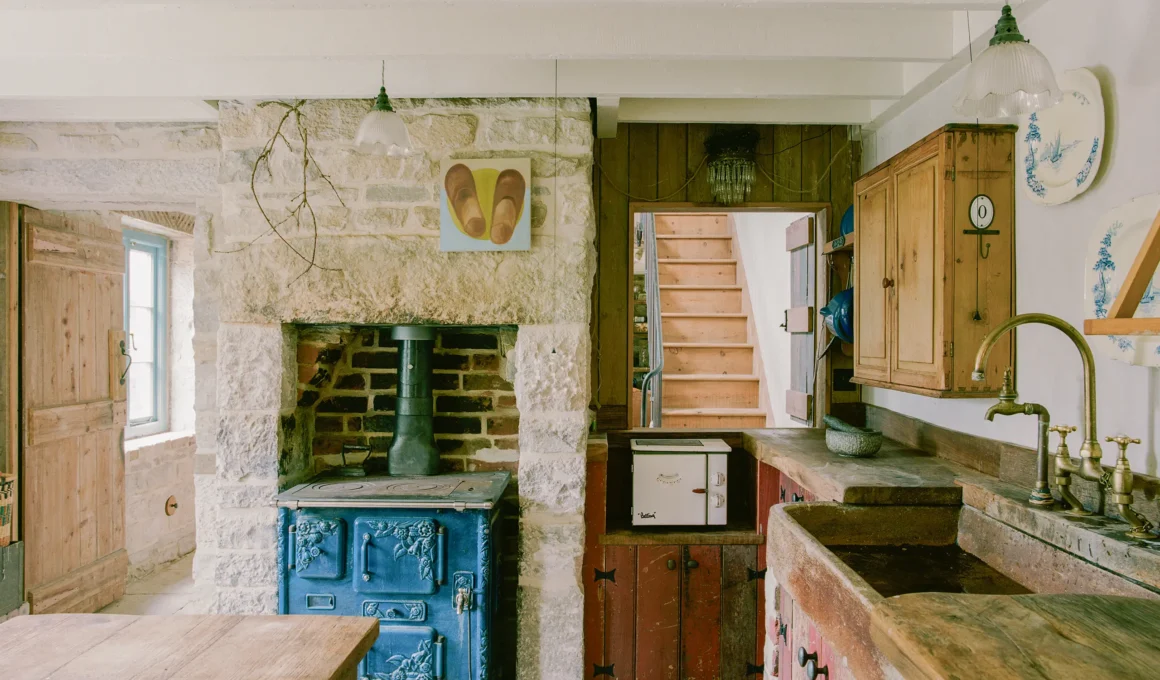
TYPE didn’t renovate two derelict quarryman’s cottages in Dorset — they audited them, treating every stone, joist, and floorboard as inventory before treating any of it as waste. Located in a small hamlet along Dorset’s Jurassic Coast, Purbeck Cottage merges two 19th-century structures into an 85-square-meter (915-square-foot) low-carbon retreat built almost entirely from what was already there. TYPE‘s radical reuse philosophy isn’t an aesthetic gesture layered on top of a conventional renovation — it’s the method that produced the building.
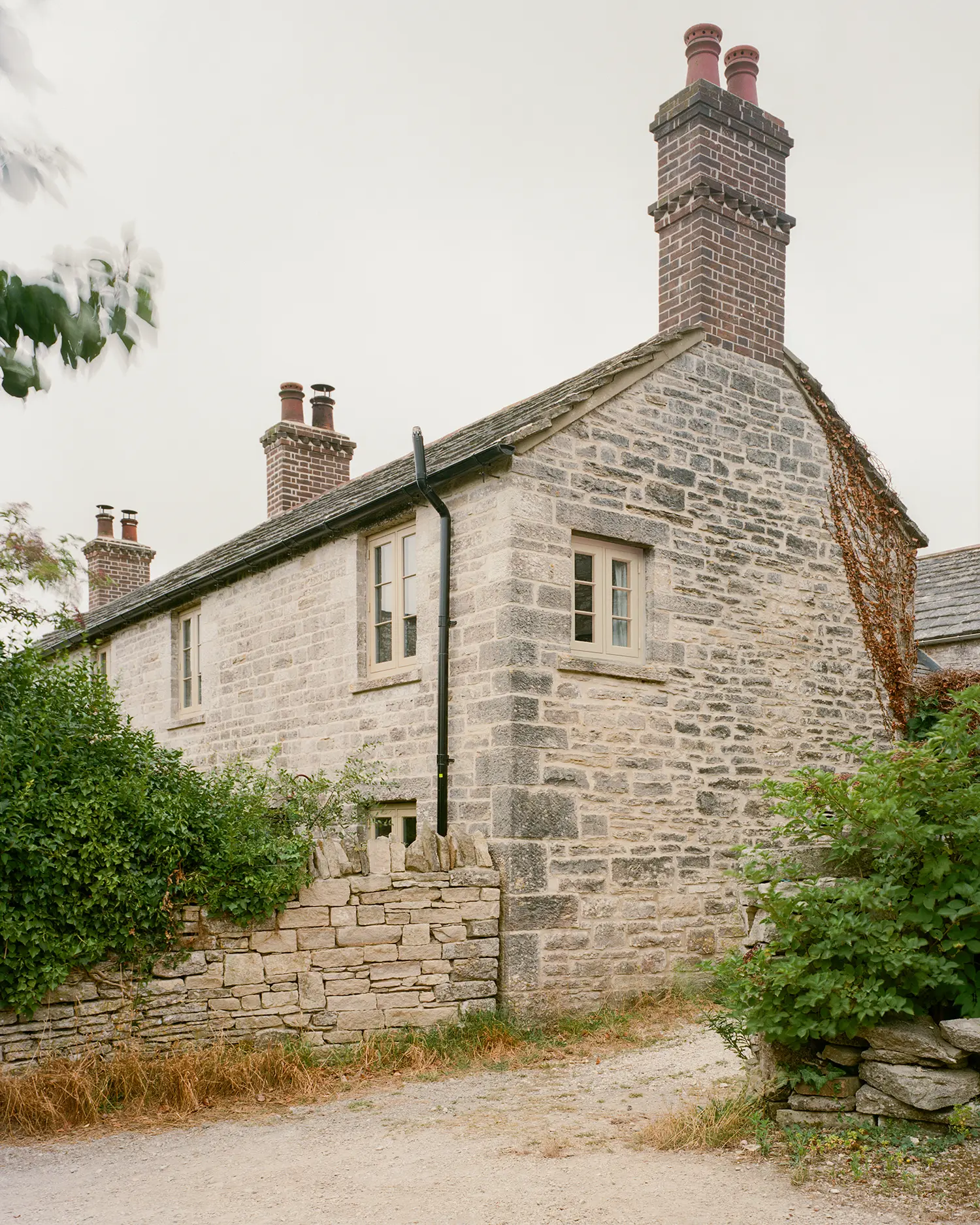
The clients’ brief was unusually specific in what it refused. Rejecting anything brand new or pristine, the couple wanted a weathered aesthetic that celebrated the character already embedded in time-worn materials, which meant TYPE’s design approach started from a constraint rather than a concept: introduce as little new material as possible, retain and reuse everything inside the cottages first, and only source from reclamation yards and salvage dealers when nothing internal would do. It’s a brief that punishes shortcuts, since every material decision has to be justified against what already exists before anything new gets approved.
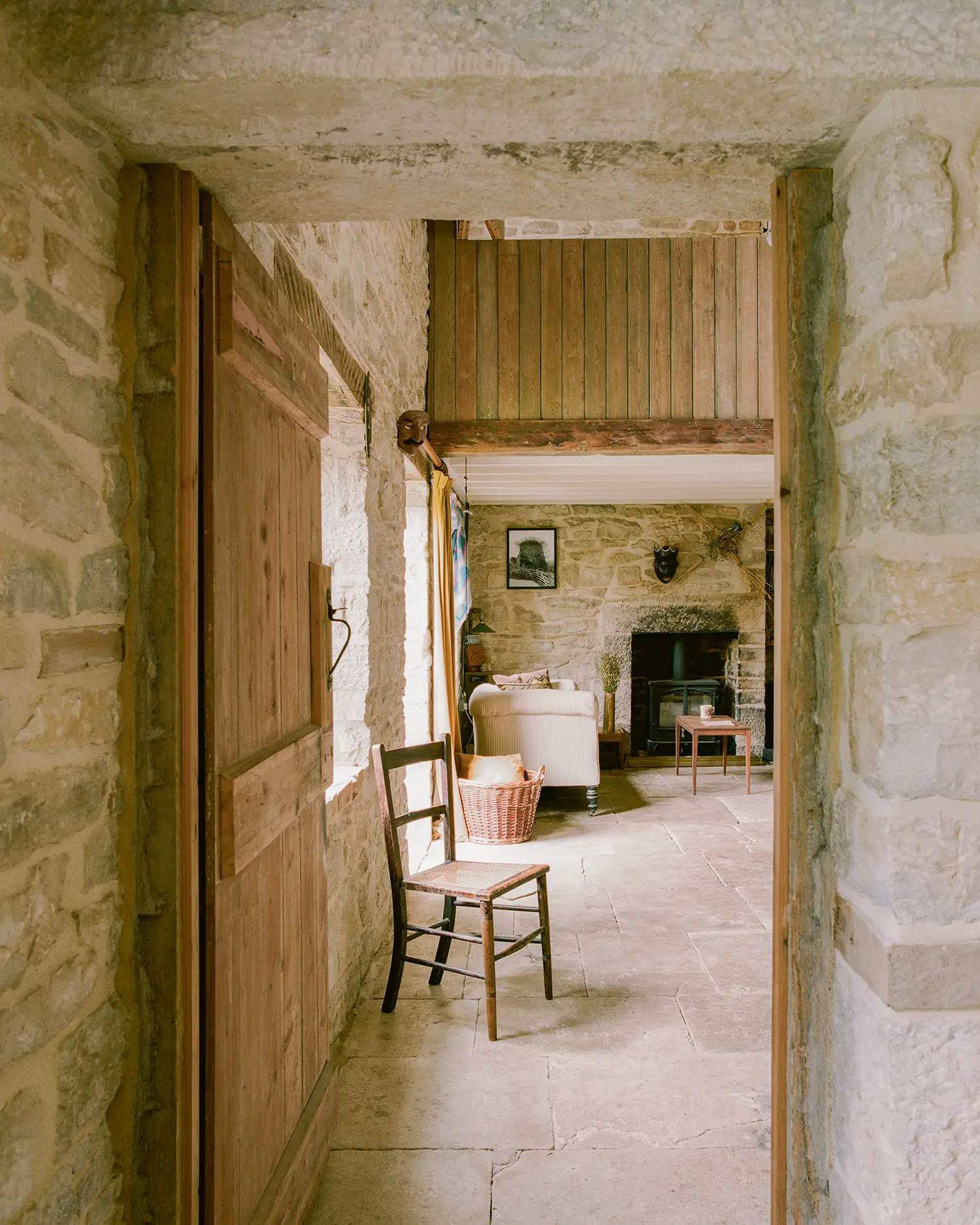
Merging the two cottages into a single home required real spatial reconfiguration, not just a connecting corridor. A previous owner had already introduced a double-height volume that broke from the cottages’ traditionally low-ceilinged rooms, and TYPE used that prior alteration as license to reposition it at the center of the plan, anchoring a bright, open-plan living and dining space that’s subtly zoned by the shift in volume above it. Exposed stone walls and floors carry that central space’s material logic through the rest of the home — a discipline of restraint shared with Studio Plys’s renovation of a cottage in Borová Lada, where existing structure similarly dictated the spatial logic rather than being worked around.
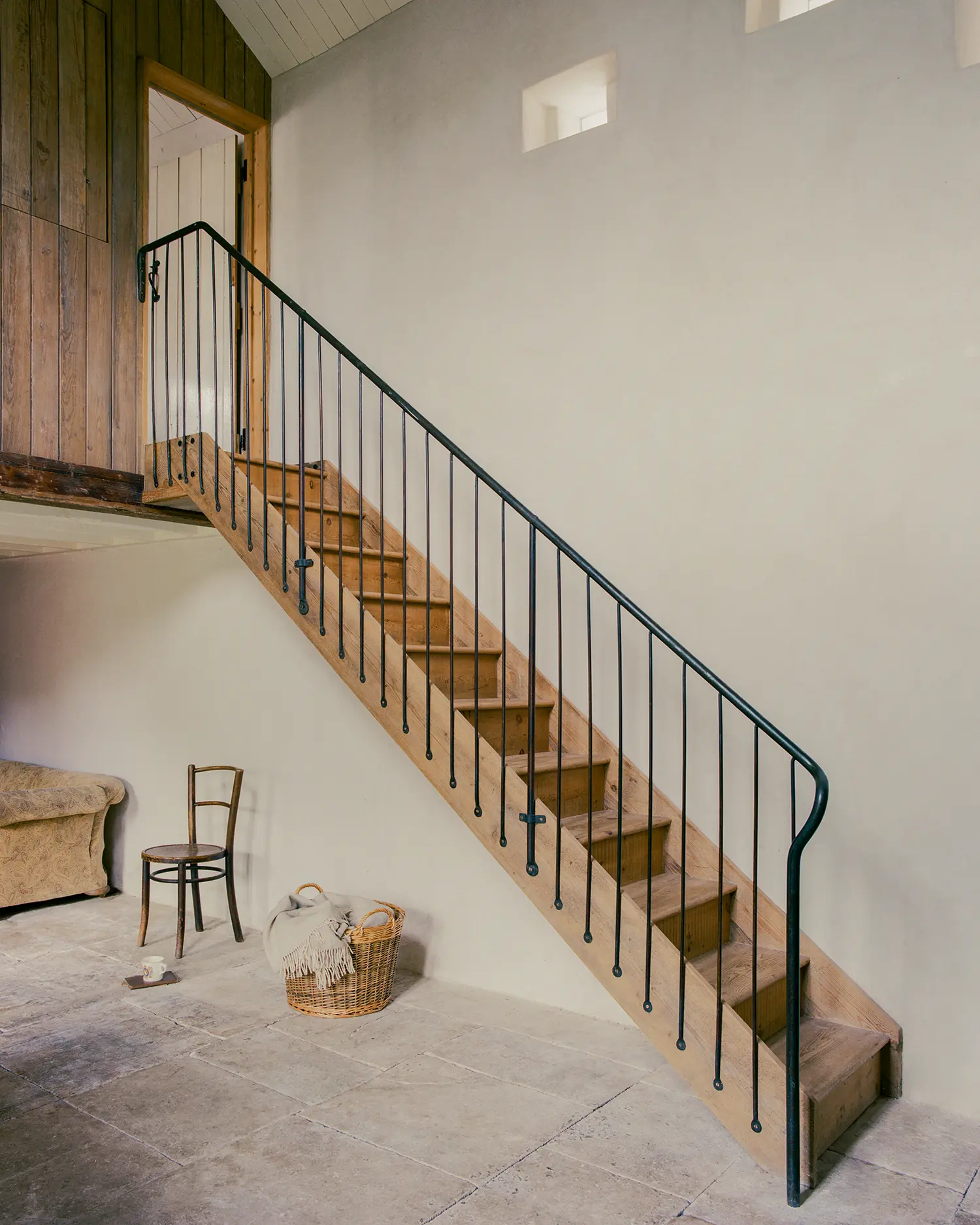
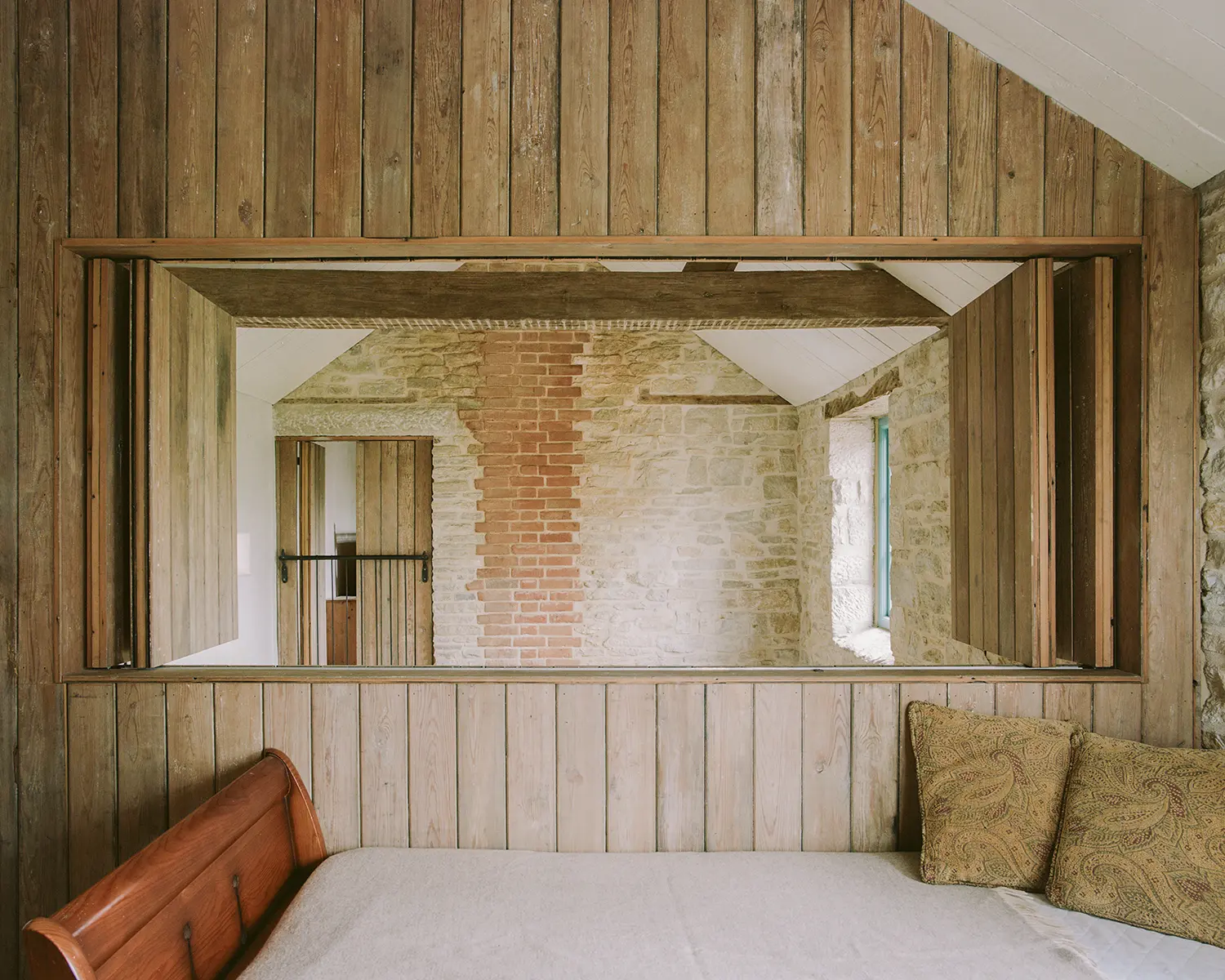
Upstairs, two sleeping areas sit at opposite ends of the home, separated by the double-height living area below and accessed by their own dedicated staircases. To the west, the principal bedroom occupies the space above the kitchen and service rooms, complete with an inward-facing Juliet balcony overlooking the central void. Across that same void, a mezzanine-style gallery forms a secluded writer’s room that doubles as a guest bedroom, connected to the rest of the house through a large internal opening fitted with bifold doors — flexible enough to close off for concentrated writing or open up for visiting guests.
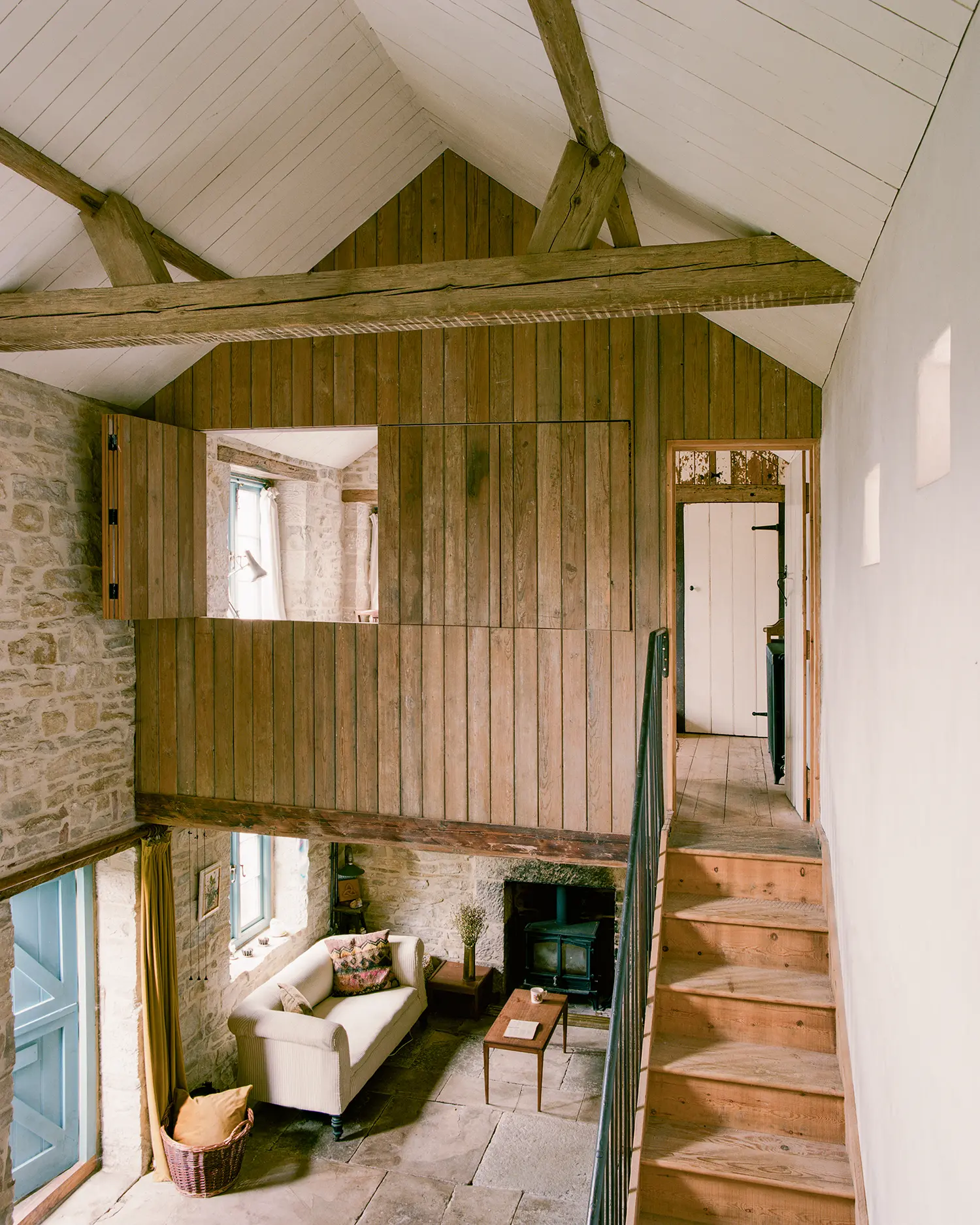
A restored butler’s window, carved into the original partition wall between the two former cottages, establishes visual connection through the narrow ground-floor plan, linking the kitchen to the living area without requiring a literal opening between the two volumes. To keep the principal spaces open within a genuinely restricted footprint, TYPE pushed bathrooms, the boiler tank, utility, and storage into a new service core along the home’s perimeter — a strategy that frees the historic plan from modern infrastructure rather than forcing infrastructure to compromise the plan.
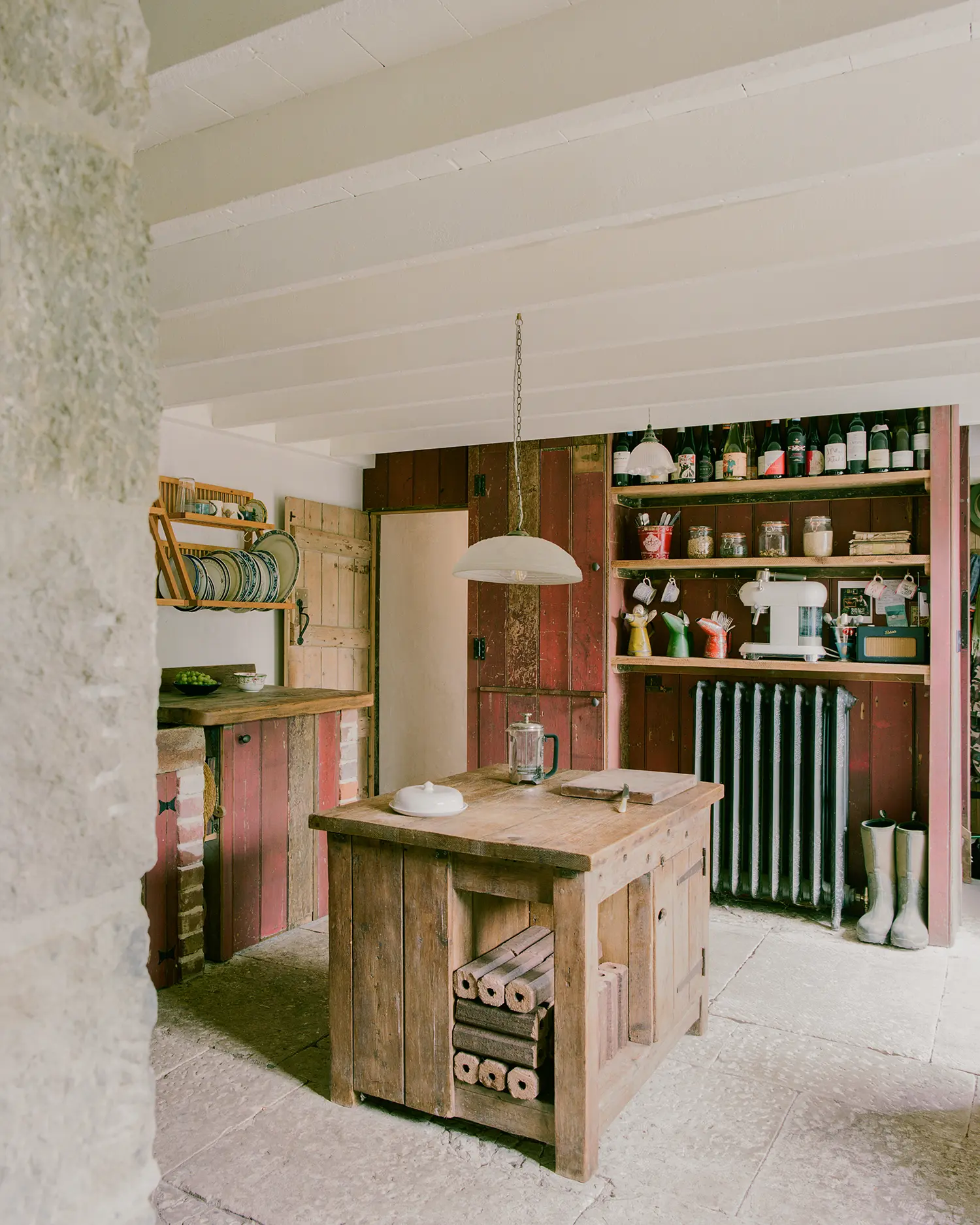
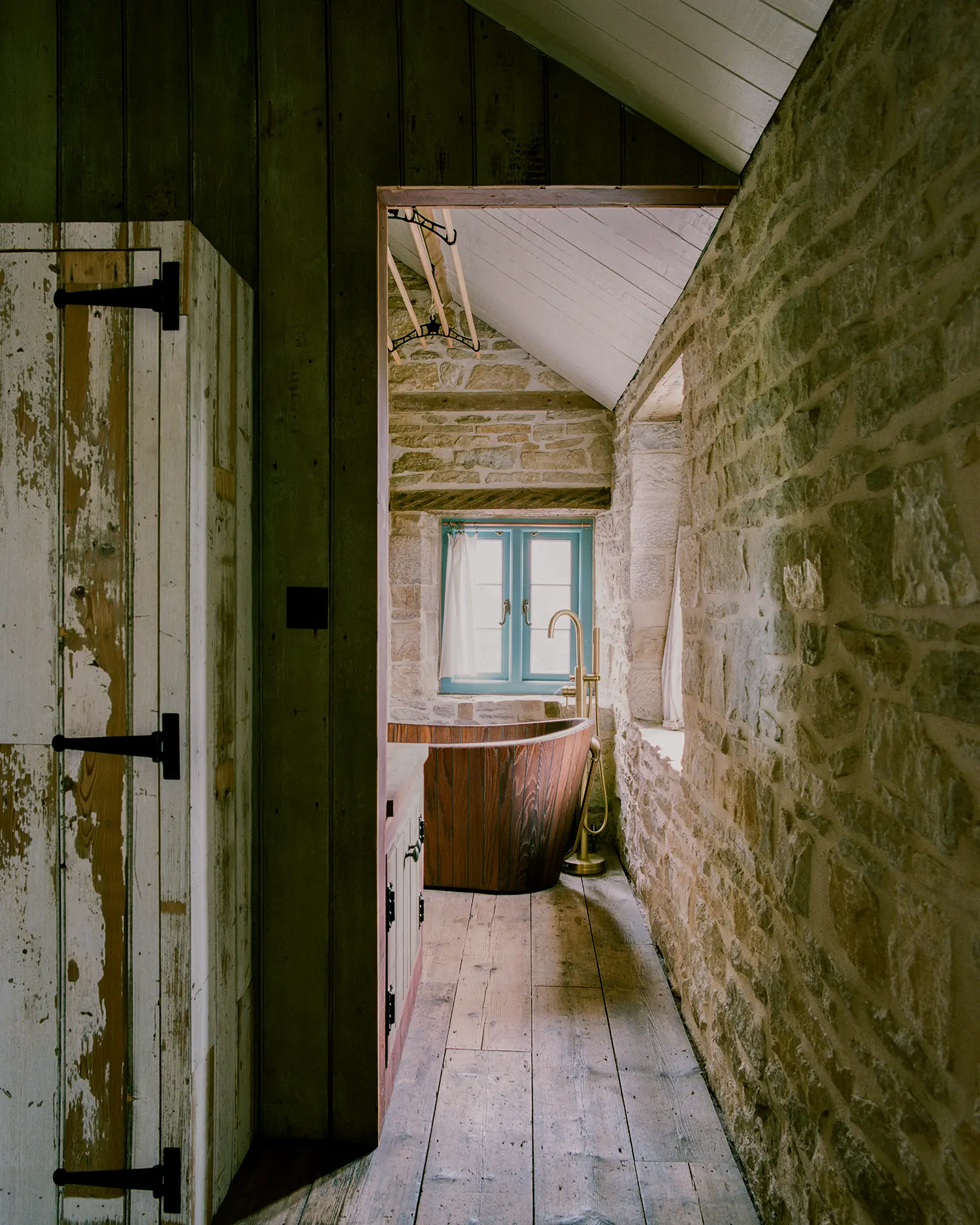
Stripping back the shell revealed dressed stone walls and battered stone floors hand-crafted by local quarrymen over a century ago, along with historic brick infills around the chimney and hearth that had been hidden inside the dressed stonework. Rather than restoring the building to a pristine museum state, TYPE left the battered stone floors visible, jackhammer scars and all — a decision that treats accidental damage from modern interventions as a legitimate layer of the building’s history rather than something requiring correction.
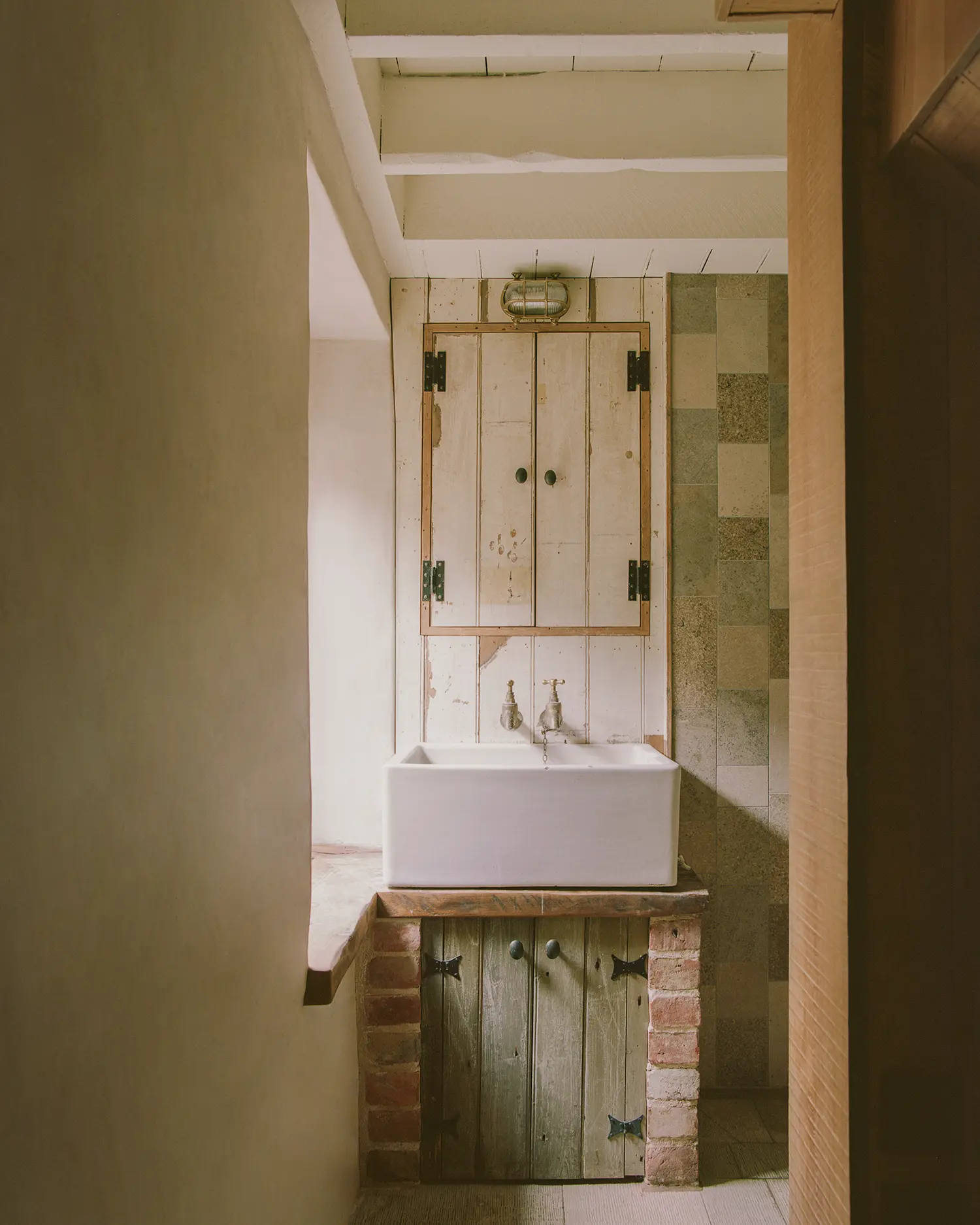
Old floor joists, too structurally compromised to be reinstated as flooring, were denailed by hand, cut to size, regraded, and reused as studwork for the new service core, while deteriorated floorboards were repurposed as ceiling cladding elsewhere in the home. Both staircases are original to the cottages, reclaimed and reconfigured with much of the original stair boarding salvaged intact — among the only genuinely new elements in the house are the hand-forged steel balustrades and handrails, made by a local blacksmith specifically to sit peaceably alongside the reclaimed fabric around them.
Two batches of salvaged timber cladding, still carrying traces of their original red and green paint, were allocated across rooms and elevations as wall paneling, doors, and shelving — including leftover offcuts repurposed as additional cladding for the kitchen shelves, the kind of detail that only emerges when a project genuinely commits to wasting nothing rather than gesturing toward sustainability. Where materials couldn’t be sourced internally, TYPE turned to reclamation yards, local suppliers, and even eBay: vintage brassware, cast-iron radiators, a salvaged French stove, and reclaimed lighting that includes a candle chandelier operated by a traditional winch and pulley system. The same instinct toward material restraint runs through Baillie Baillie’s Iorram cottage in the Scottish Highlands, another rural retreat built to read as continuous with its own history rather than reset against it.
Ogi Ristic defends the labor. “There is a tendency in the industry to default to stripping and throwing out, it’s undeniably shinier, faster and often cheaper in the short term,” says Ogi Ristic, Director at TYPE. “By beginning with what already existed, the stone, the joists, the floors, the fittings, and asking how each element could be retained, repaired or reused, the project has arrived at a quality of character that no new specification could replicate. The labour is significant, but it is exactly that labour that gives the home its depth.”
Whether radical reuse scales beyond a single, deeply committed client is the question Purbeck Cottage doesn’t fully resolve. The project proves the method can produce a genuinely characterful home rather than a compromise dressed up as virtue — but it also required a client willing to wait, a contractor willing to denail joists by hand, and a brief that explicitly rejected the speed most renovations are built around.
Purbeck Cottage by TYPE | Location: Isle of Purbeck, Dorset, UK — Year: 2024 — Key materials: Purbeck limestone, reclaimed timber, salvaged brick, hand-forged steel, lime-based plaster