



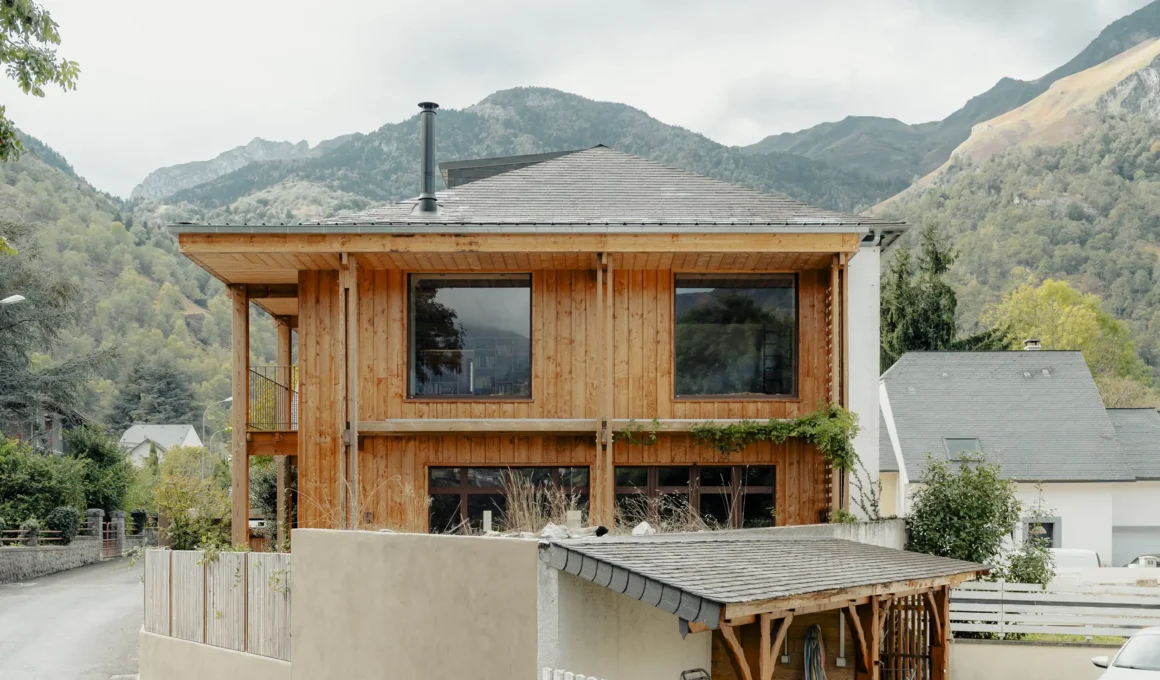
Mesnil Architectures has reimagined a nondescript former workshop in Laruns, France, transforming a fragmented structure into a unified, light-filled residence and textile studio for an artist couple that prioritizes material reuse and the rugged topography of the Ossau Valley.
The latent potential of the vernacular was hidden beneath layers of generic wall finishes and suspended ceilings. Situated at the edge of the Pyrenees, the original building presented itself as a modest, two-story block that had lost its identity through successive, utilitarian interventions. By stripping back these veneers, the architectural integrity was revealed, showcasing a robust timber frame and generous volumes that pointed toward the building’s history as a vehicle repair workshop. This process of architectural archaeology allowed the studio to move beyond a standard renovation, treating the site instead as a repository of dormant resources.
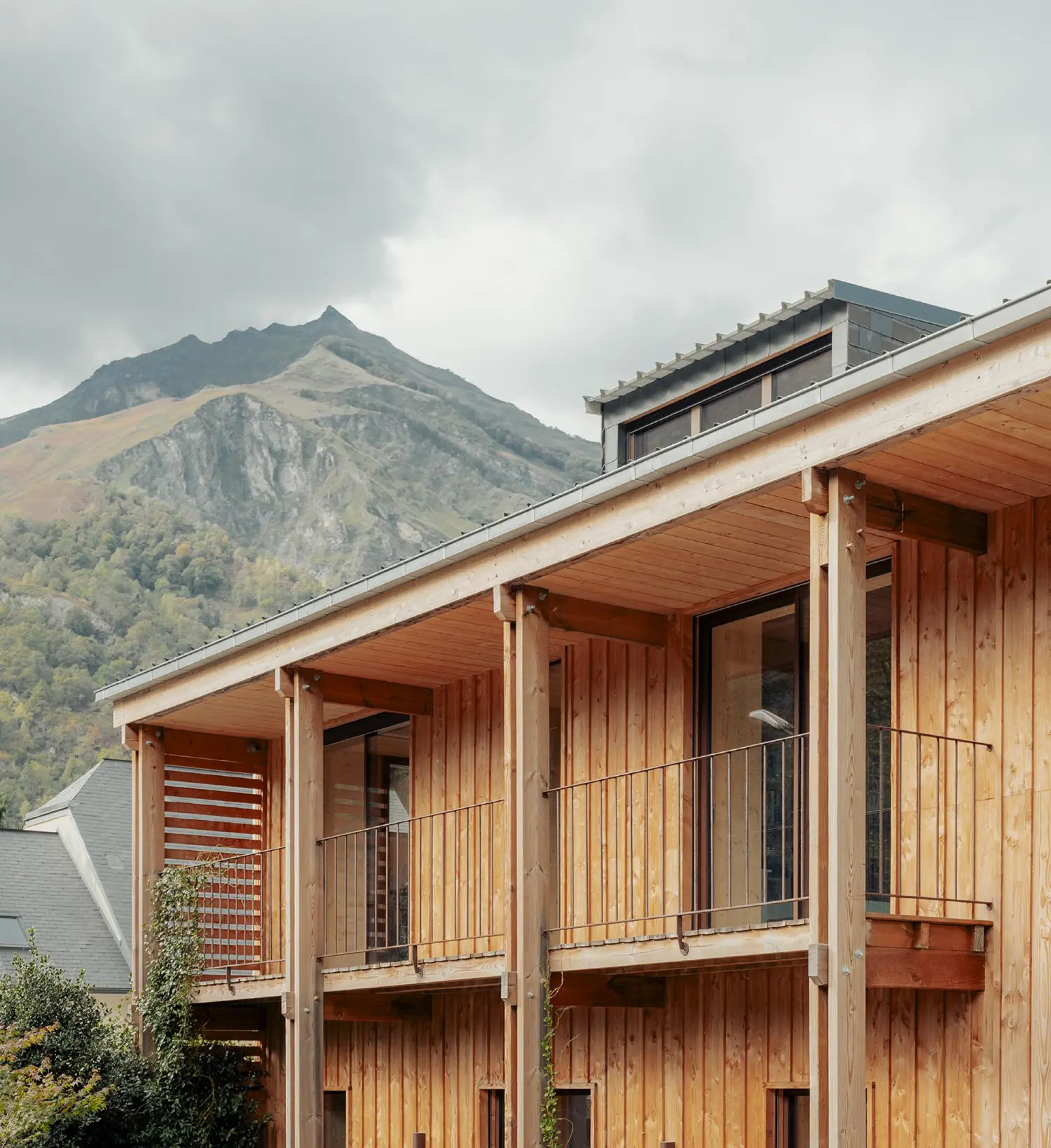
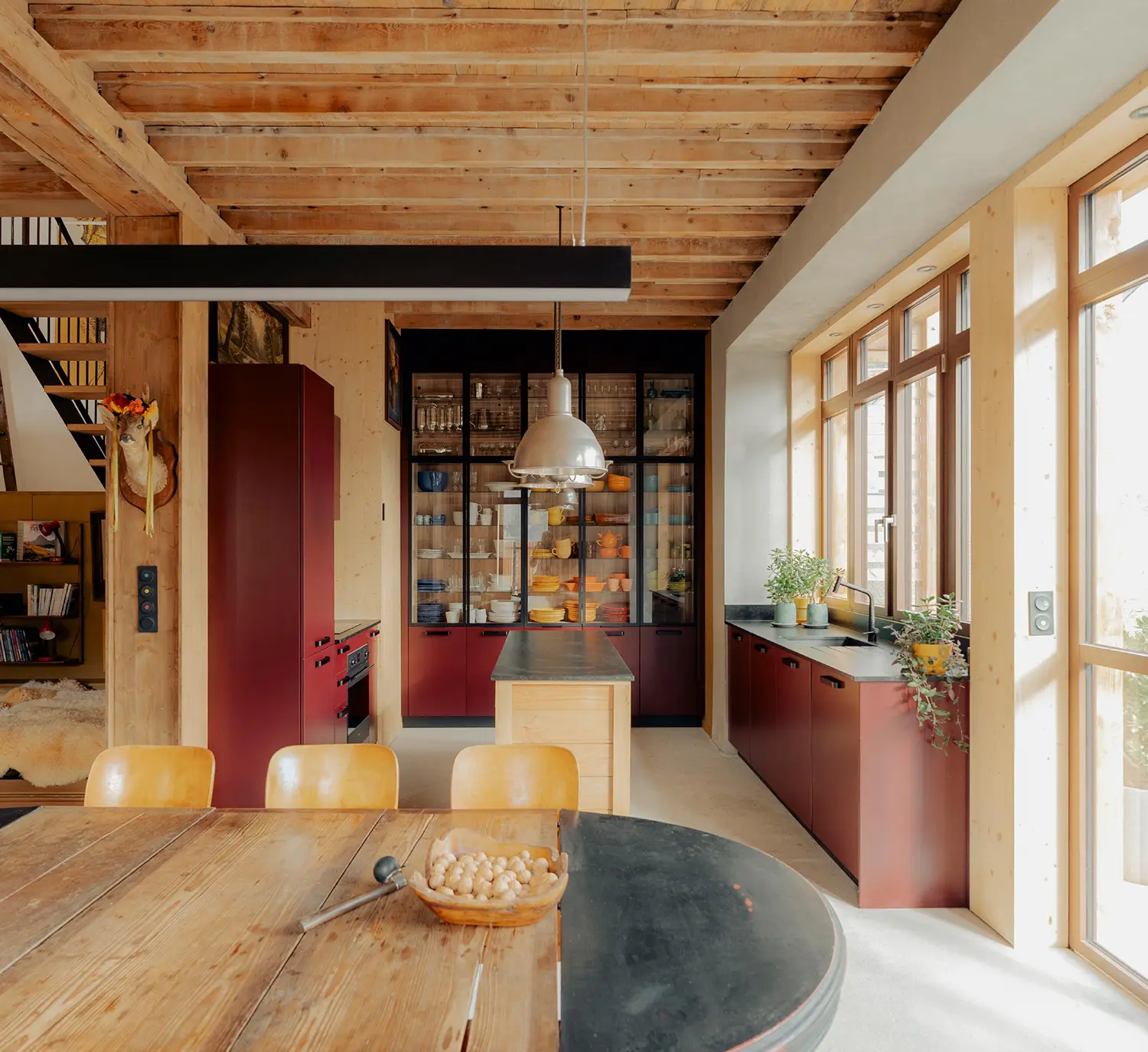
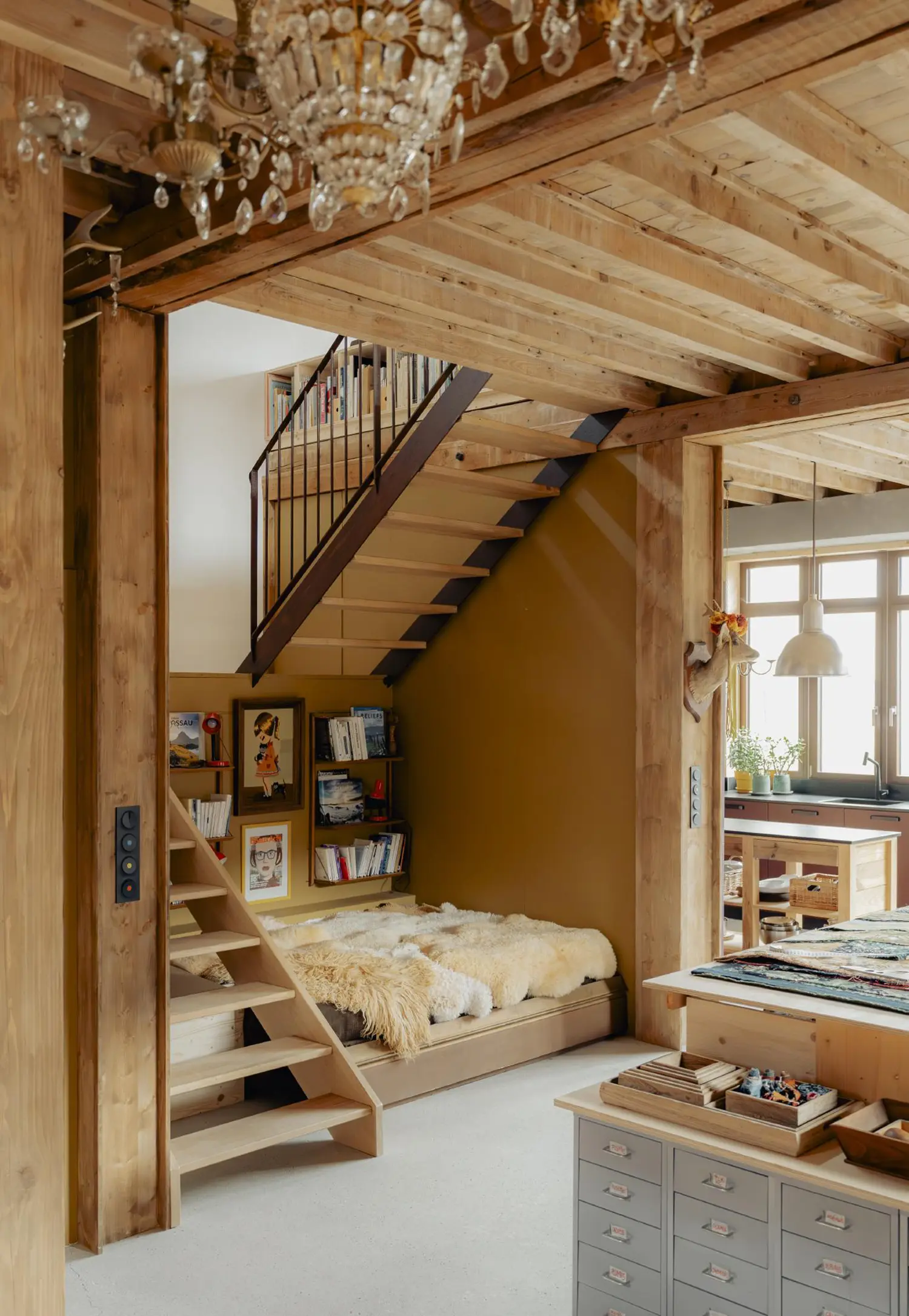
A philosophy of creative re-composition guided the interior transformation, echoing the clients’ own artistic practice of repurposing vintage canvases. Rather than importing new materials, the project functioned through an ethical sortingof what was already present. Every dismantled element was cataloged and cleaned; former floorboards were reborn as ceiling panels and custom cabinetry, while structural joists were fashioned into a woodshed and exterior furniture. This method reduces the carbon footprint and creates a deep sense of continuity, where the past lives on through the very fabric of the new domestic life.
The sensory experience of the mountains is amplified by the addition of a mansard volume, a subtle nod to the traditional Béarn vernacular. Perched upon the existing rafters like a small cabin, this upper chamber provides a quiet retreat that feels suspended within the exposed timber skeleton of the house. To the south, a terrace reinterprets the traditional Ossau galleries—spaces historically used for drying crops—now serving as a sheltered outdoor room that allows the residents to engage with the elements year-round, shielded by a wide, metal-clad overhang.
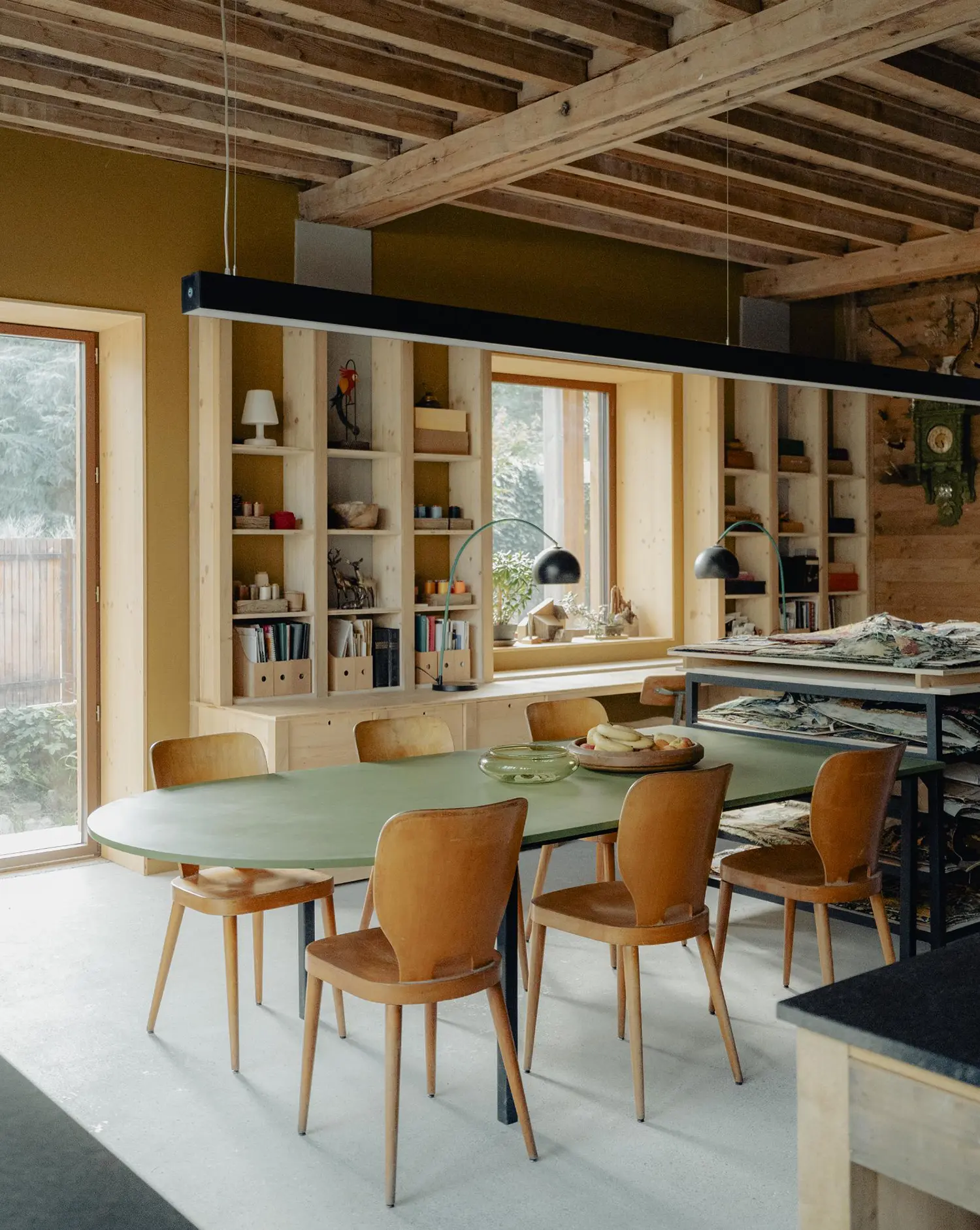
Interior landscapes are defined by an intentional sense of openness and adaptable living. The furniture is not merely decorative but integrated into the shell; built-in storage, large worktables, and alcoves are oriented specifically toward the peaks, turning the act of looking outside into a primary function of the home. A raised bed faces the horizon, ensuring the first and last moments of the day are defined by the changing light on the Pyrenean slopes. This minimalist approach to the fit-out emphasizes the textures of the raw stone and wood, creating a tactile environment that feels grounded and permanent.
The mineral garden outside serves as a continuation of the project’s economical and ecological logic. Using salvaged stones and pebbles recovered during the demolition phase, the landscape was designed to mimic the dry riverbeds and debris left by snowmelt in the valley. Local plant species are integrated into this stony terrain, which leads the eye toward a woodshed at the plot’s triangular tip. The green roof of this small structure visually merges with the distant alpine meadows, effectively erasing the boundary between the private property and the vast wilderness beyond.
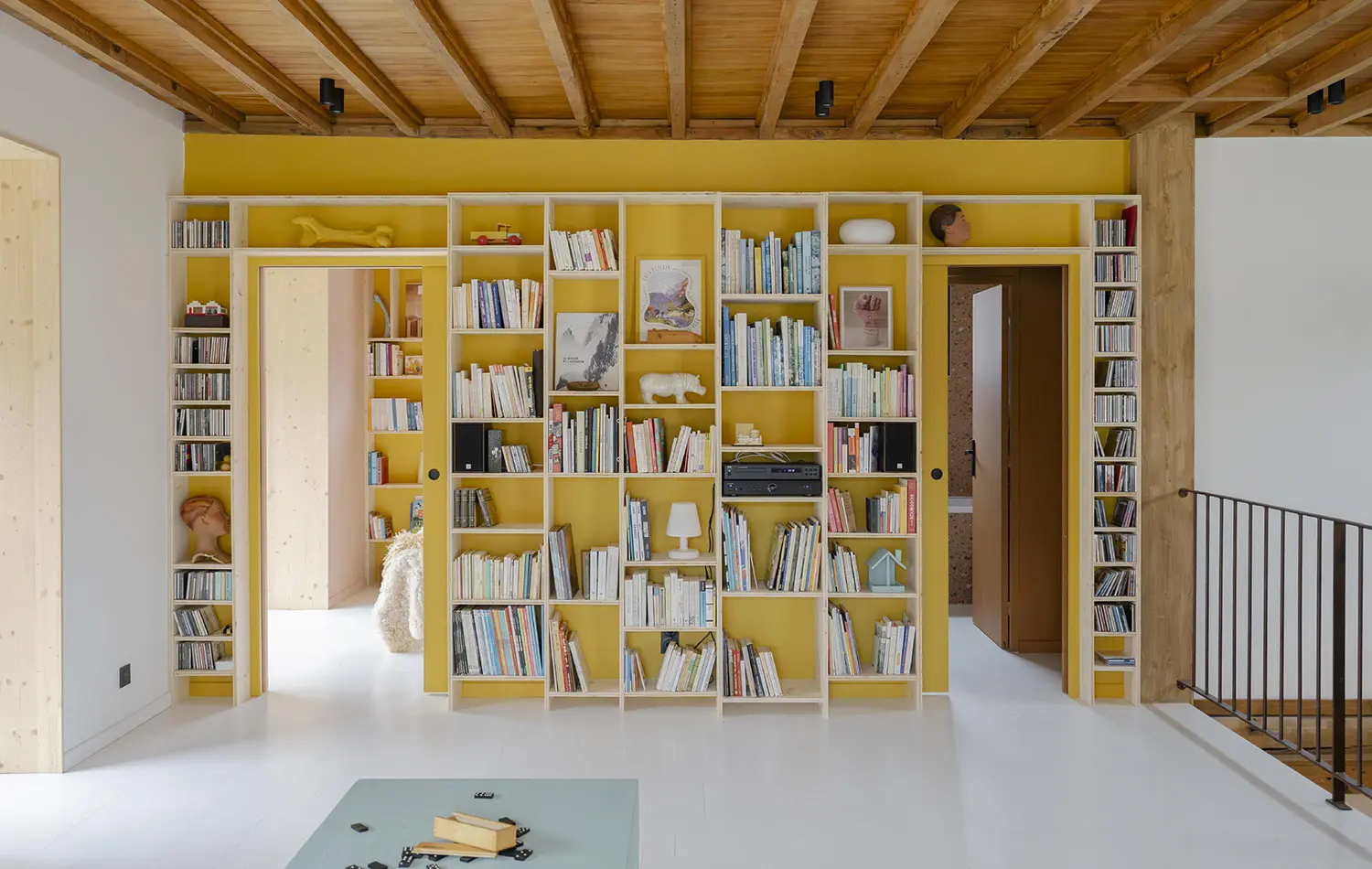
A collaborative construction model saw the architects, local tradespeople, and the clients working in a state of constant dialogue. This auto-construction phase allowed for real-time design adjustments based on the reclaimed materialsrecovered during the process. It moved the project away from a rigid blueprint and toward a form of “architectural stitching,” where the building is continuously reconfigured to meet the evolving needs of the inhabitants while respecting the inherent durability of the original structure.
The evolution of rural living often finds its most compelling expressions through the sustainable restoration of existing ruins or utilitarian shells. In a similar vein to the Strazne Cottage in the Czech Republic, where history and modernity are carefully balanced, or the approach of the Riverhouse, this project in Laruns proves that the most efficient path forward is often found within the walls we already have. Much like the Perchée House in Quebec, which seeks a harmonious relationship with its natural site, this work by Mesnil Architectures demonstrates that by editing and re-composing the vernacular, we can create spaces that are both deeply personal and profoundly connected to their environmental context.