


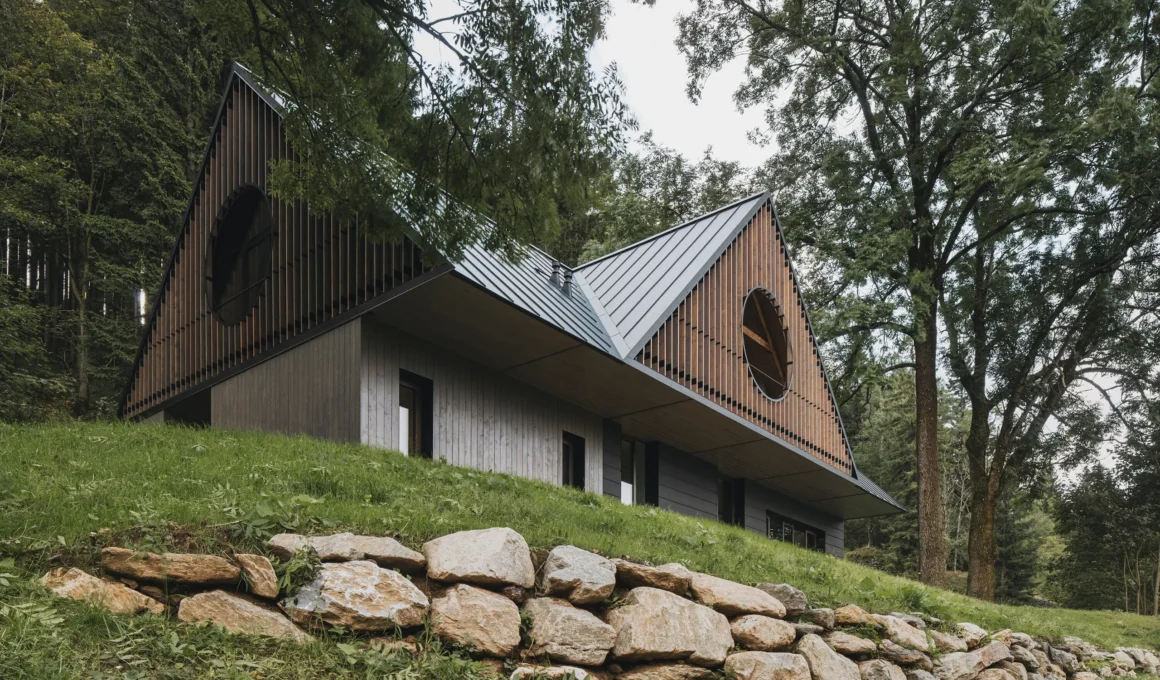
On a windswept slope above the village of Strážné, in the Krkonoše Mountains of the Czech Republic, Mimosa Architects has completed the reconstruction of a traditional cottage, stripping away decades of unsympathetic additions to rediscover the volumetric clarity and craft-led spirit of Bohemian alpine dwellings.
The recovery of character. For years, the original timber structure sat buried beneath layers of artificial panel cladding and makeshift socialist-era extensions, leaving almost nothing of the material substance worth saving. Rather than attempting a fragile restoration of decayed wood, the architects pivoted toward a more cerebral form of preservation: recovering the proportion and atmosphere of the site. The result is a building that feels ancient in its silhouette but sharp and intentional in its execution.
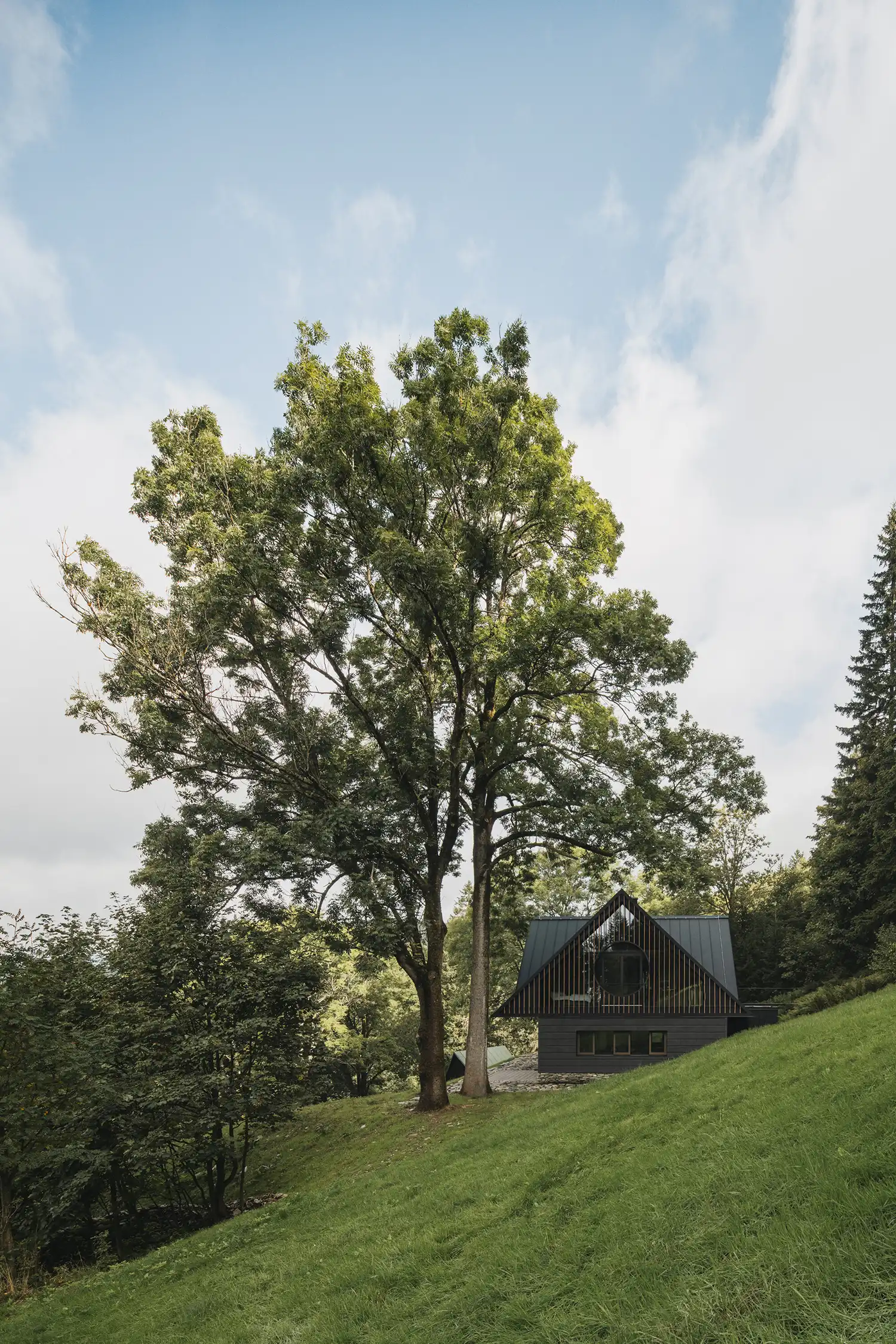
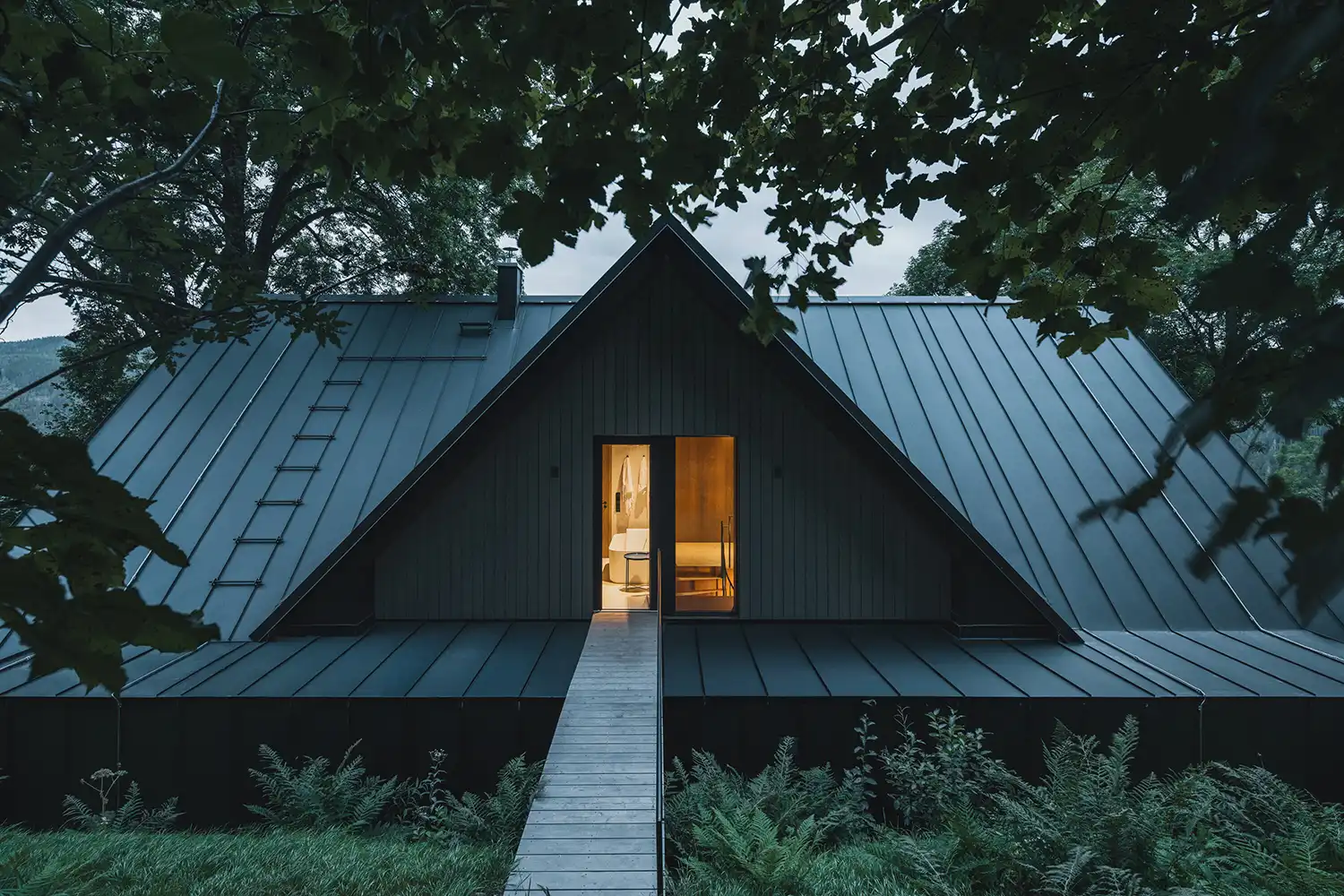
A dialogue with the ridge. The house is defined by the heavy, functional logic of the Krkonoše region, where steep roofs and stone plinths are visceral responses to long winters. Mimosa Architects avoided the trap of nostalgic imitation, instead utilizing a tripartite layout that honors the mountain vernacular without resorting to faux-historical kitsch. The asymmetrical roofline creates a sheltered porch, a traditional transitional space that grounds the building into the sloping terrain.
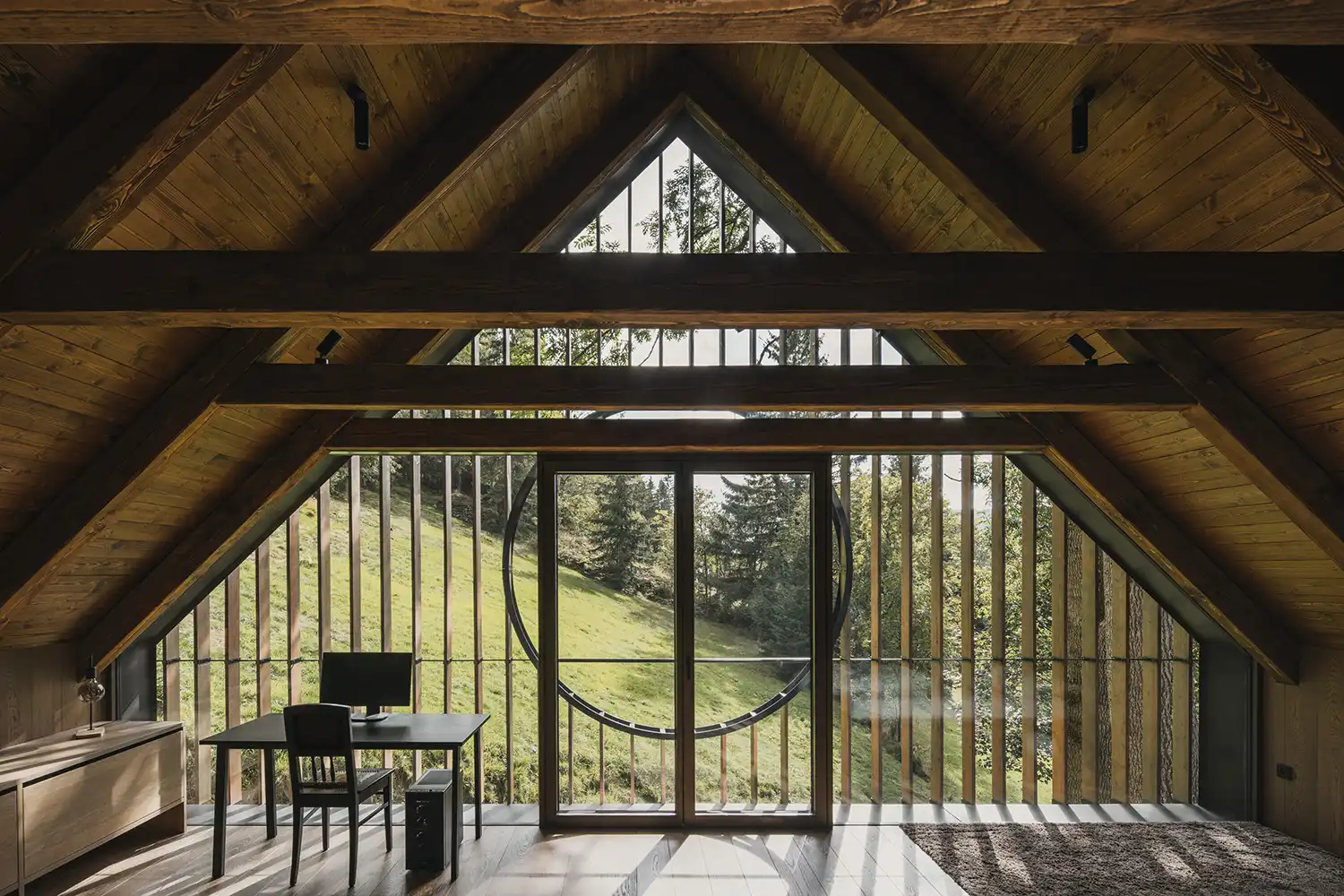
Internal scales and shadows. Inside, the spatial order was dictated by one of the few surviving original elements: an exposed beam ceiling. This structural relic established the clear height and intimate scale of the main living room. The experience of the interior is one of weighted safety; the walls feel thick and protective, yet the integration of frameless glazing allows the rugged landscape to bleed into the domestic sphere, creating a constant visual tether to the mountain peaks.
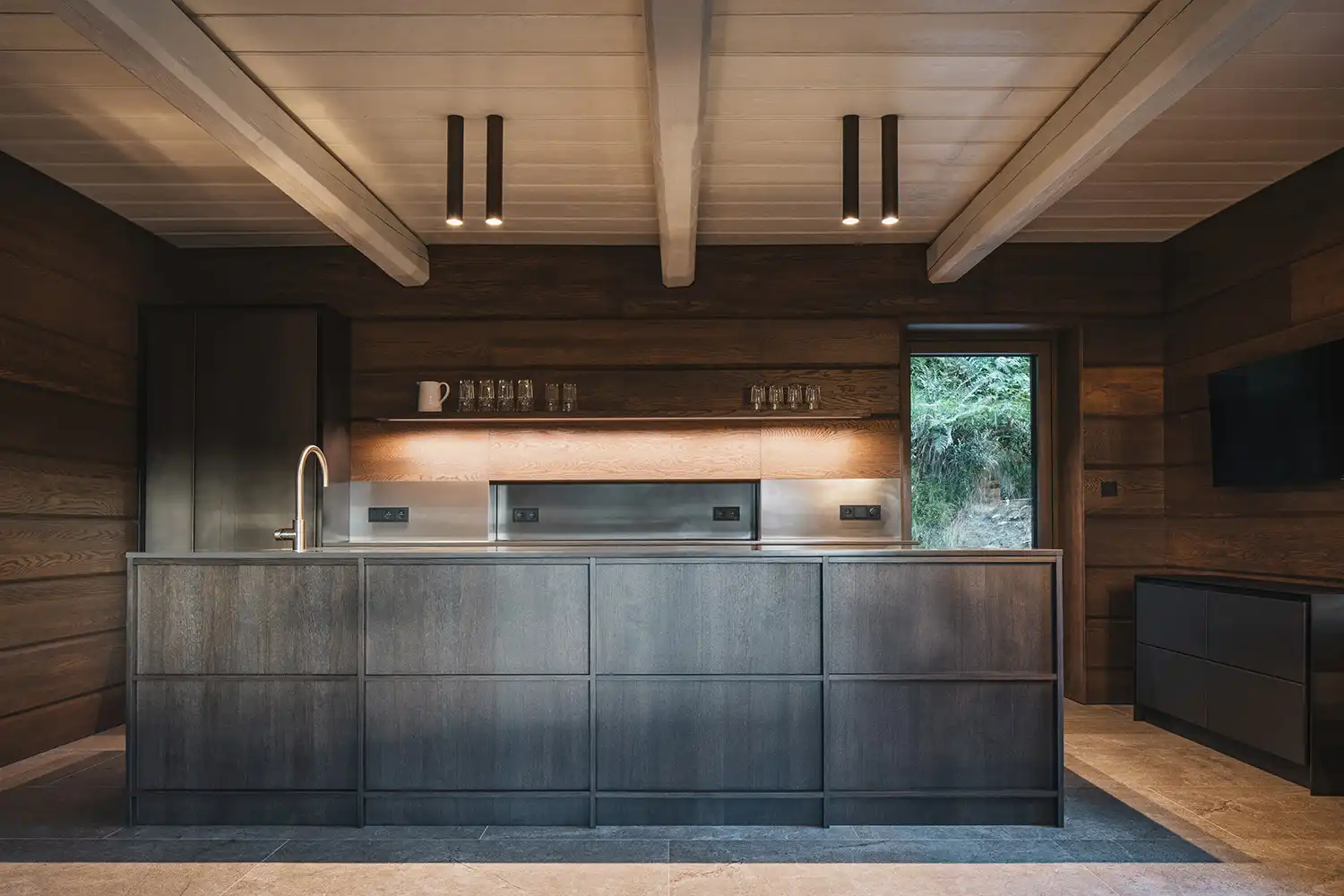
Functional modernism. The ground floor functions as the social heart of the retreat, centered around a large communal table and built-in window seating. However, the true intelligence of the plan lies in the “buffer” zone inserted between the slope and the living quarters. This utility spine houses the pantry, workshop, and equipment storage, ensuring that the mess of mountain life—skiing, cycling, and hiking—remains organized and out of sight, maintaining the serene clarity of the primary rooms.
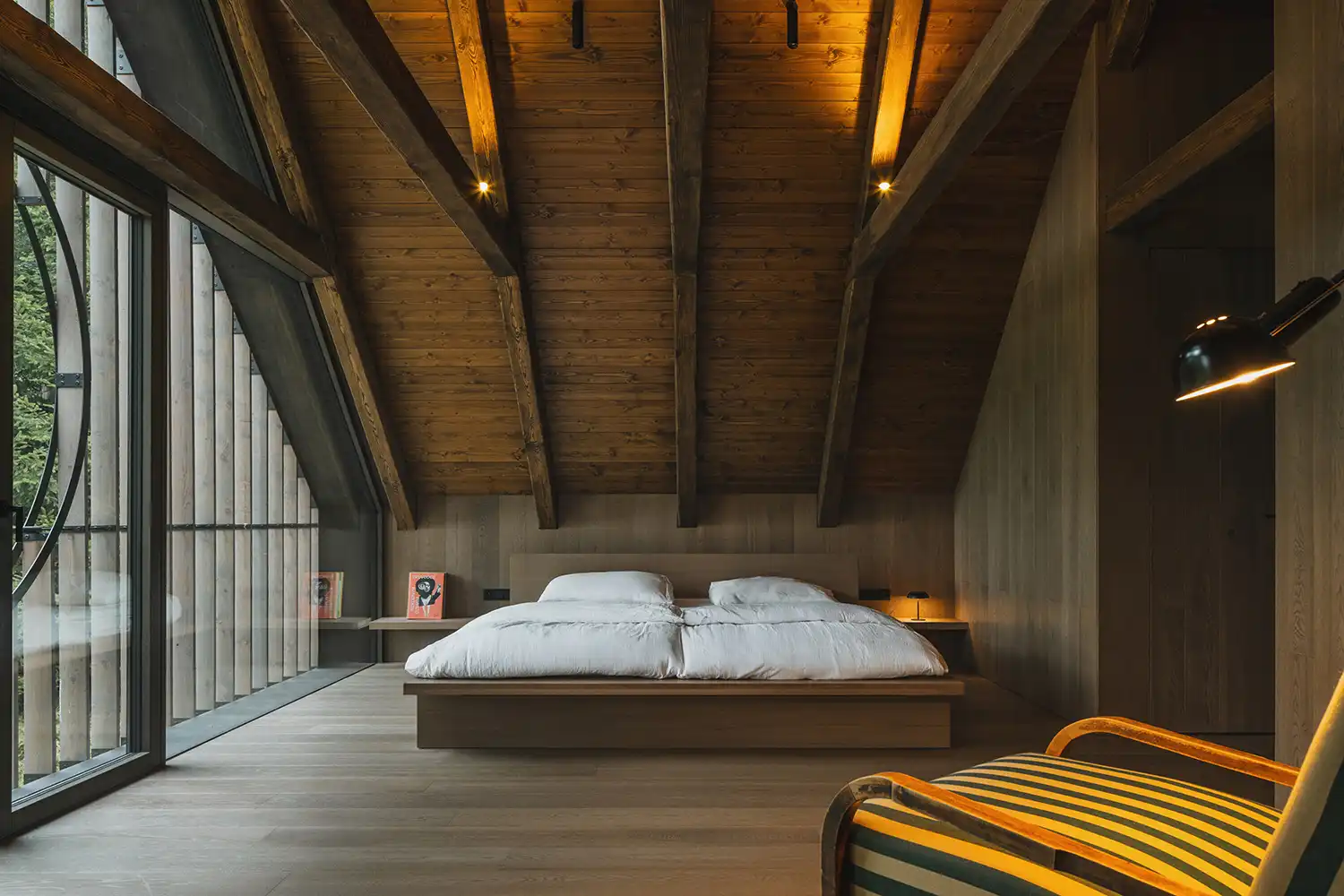
The lofted horizon. Moving upward, the attic spaces embrace the airy, open character of a traditional hayloft. These private quarters are stripped of unnecessary ornament, focusing instead on the breathtaking views framed by the gable windows. By keeping the technical systems—such as the geothermal heat pump and on-site water treatment—unobtrusive and functional, the focus remains entirely on the sensory relationship between the inhabitant and the environment.
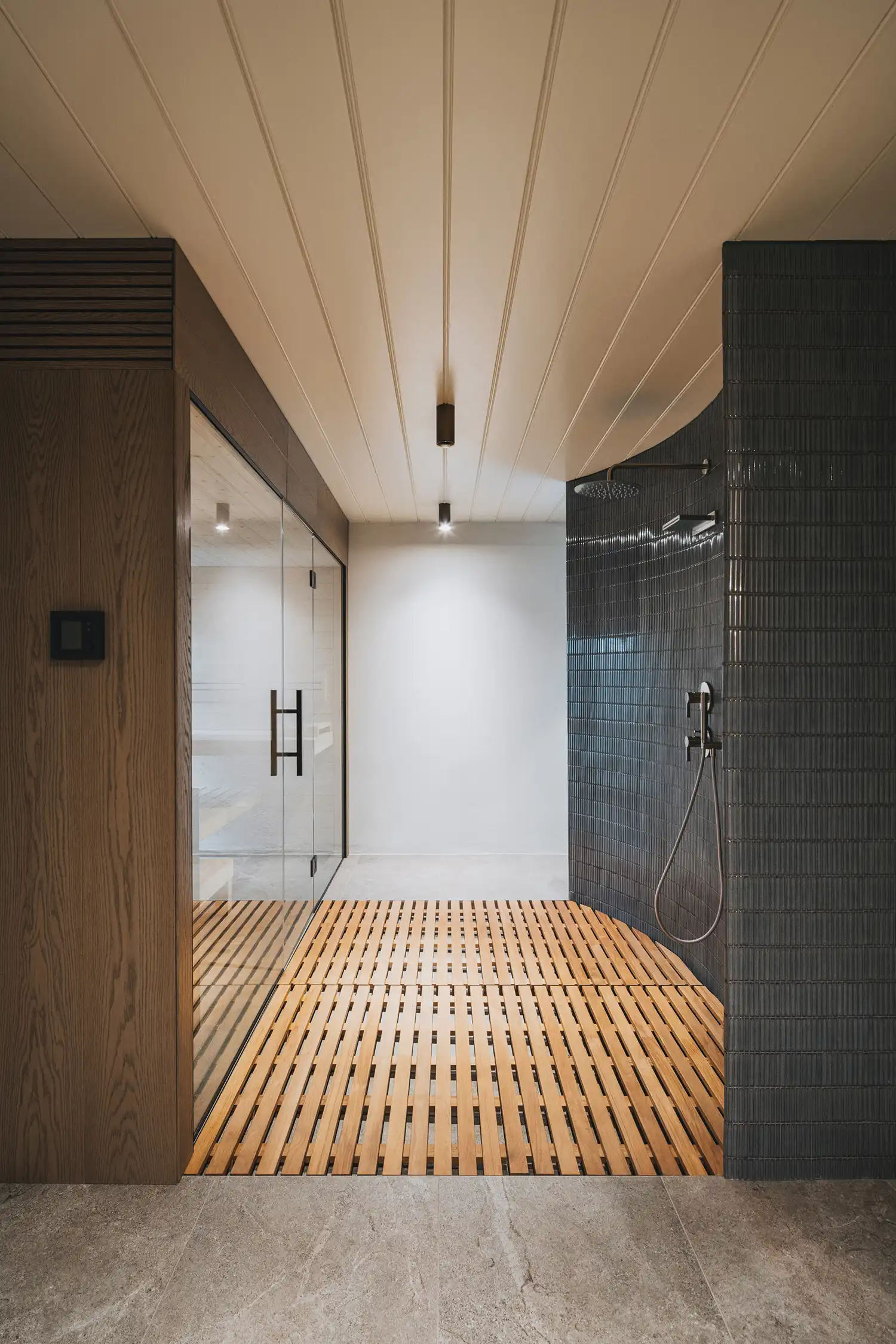
Craft and materiality. Every insertion feels deliberate, from the sauna tucked into the former service block to the washroom designed specifically for dogs and bicycles. This is a house built for the reality of the outdoors, where traditional spatial principles are leveraged to support a contemporary lifestyle. It is a quiet reclamation of a site that had lost its way, proving that the spirit of a place is found in its bones rather than its surface.
This project reflects a growing European movement toward sensitive rural interventions that prioritize essence over decoration. Much like the meticulous Burgundy winemaker house renovation by Atelier FCA or the minimalist Belgian Le Regain House, the Strážné Cottage values structural honesty. It stands as a sophisticated example of contemporary Czech mountain retreats, where the focus remains on a deep respect for the landscape.