



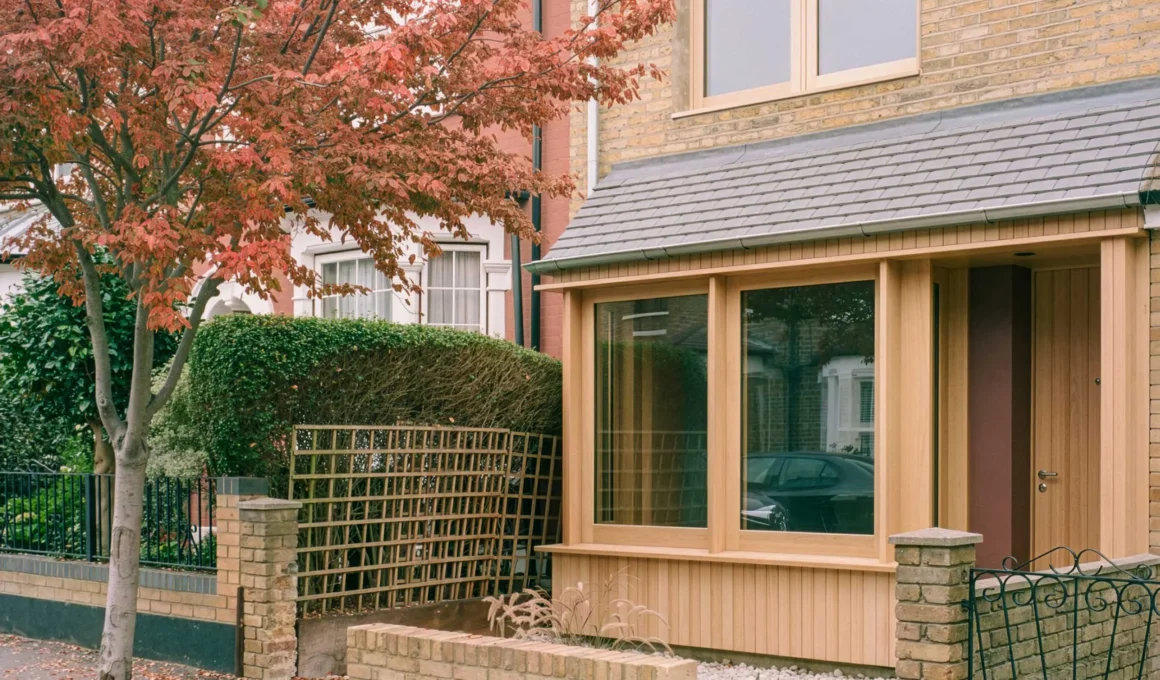
Architect Pablo Sanchez Lopez has overhauled a Victorian terraced house in Walthamstow, London, stripping away a restrictive 1970s remodel to reveal a home defined by spatial clarity and material warmth. Through the strategic relocation of the staircase and the insertion of a timber-framed side extension, the project transforms a once-dark interior into a fluid, light-filled sequence of spaces anchored by a sustainable palette of Red Grandis eucalyptus and Ceppo di Gré stone.
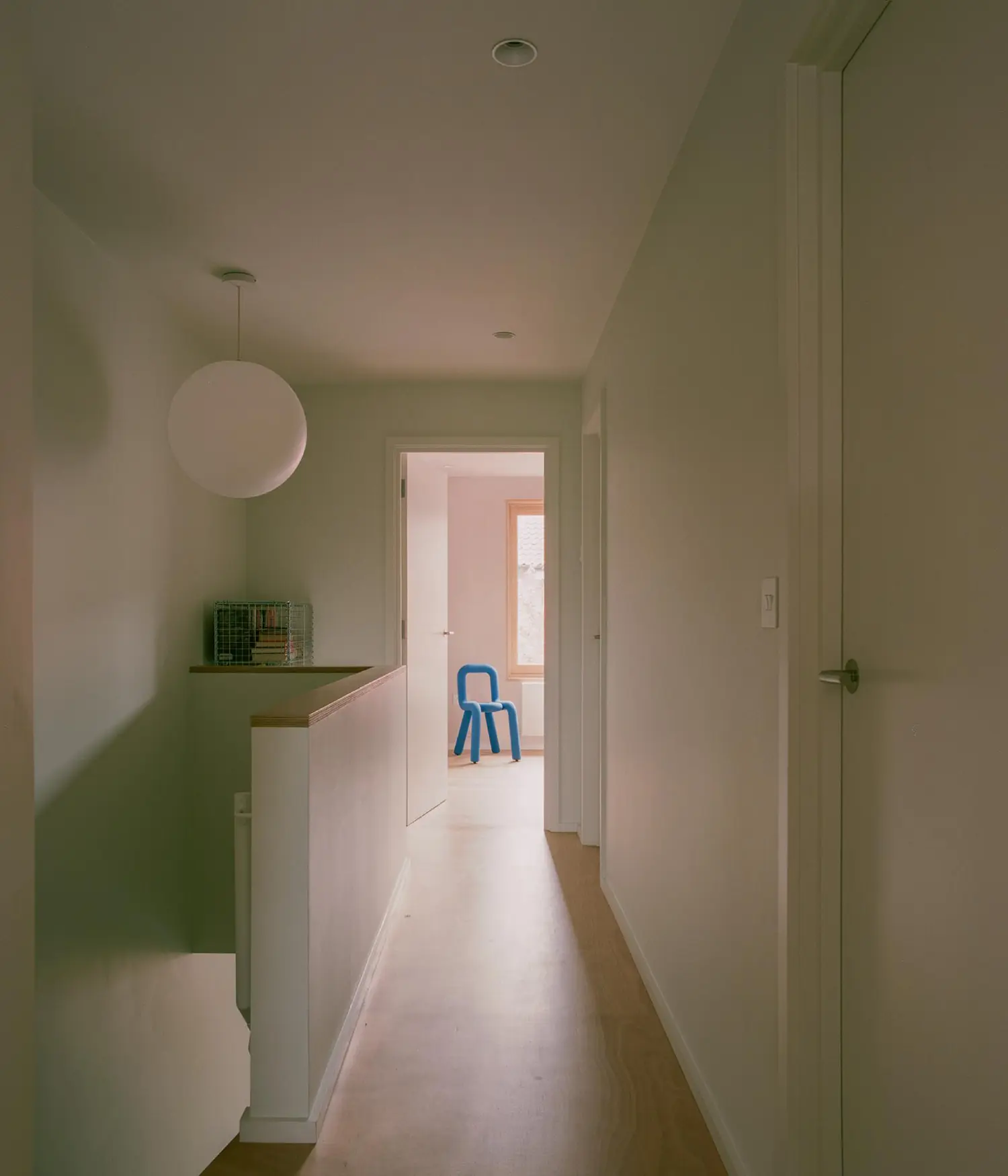
The rejection of fragmentation serves as the project’s conceptual foundation. Previously, the ground floor was choked by a centrally positioned staircase that acted as a visual and physical blockade. By shifting the vertical circulation to the party wall, Sanchez Lopez has liberated the plan, creating a continuous sightline that stretches from the front door to the rear garden. This structural move allows the Victorian refurbishment to breathe, replacing cramped corridors with a generous sense of volume.
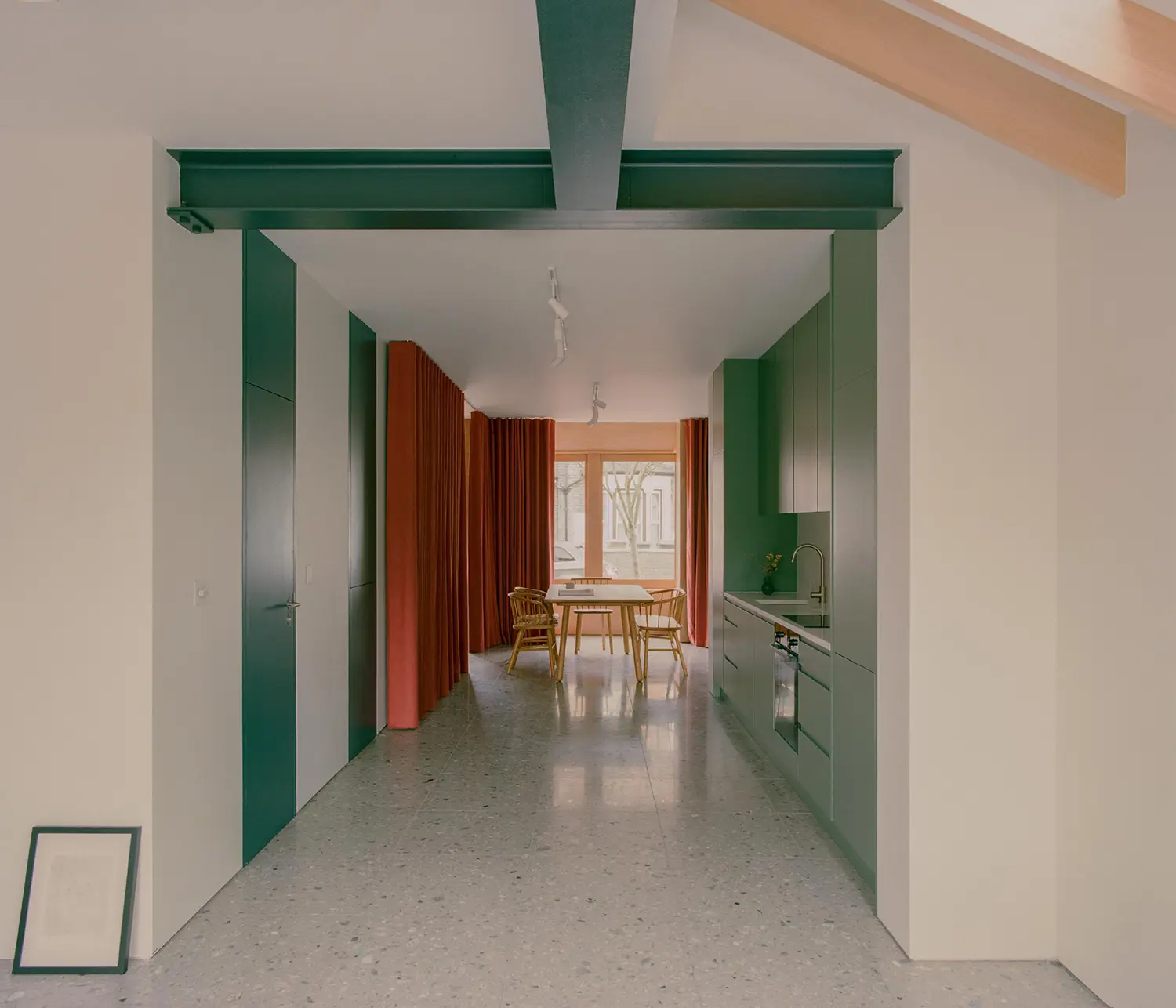
A central kitchen hearth now occupies the core of the plan, a move that dictates the domestic rhythm. By placing the functional services in the center, the architect ensured that the primary living and dining areas are pushed to the edges where natural light is most abundant. The new side extension facilitates this, acting as a light well that pulls brightness deep into the north-facing middle of the house, illuminating the textures of the timber and stone.
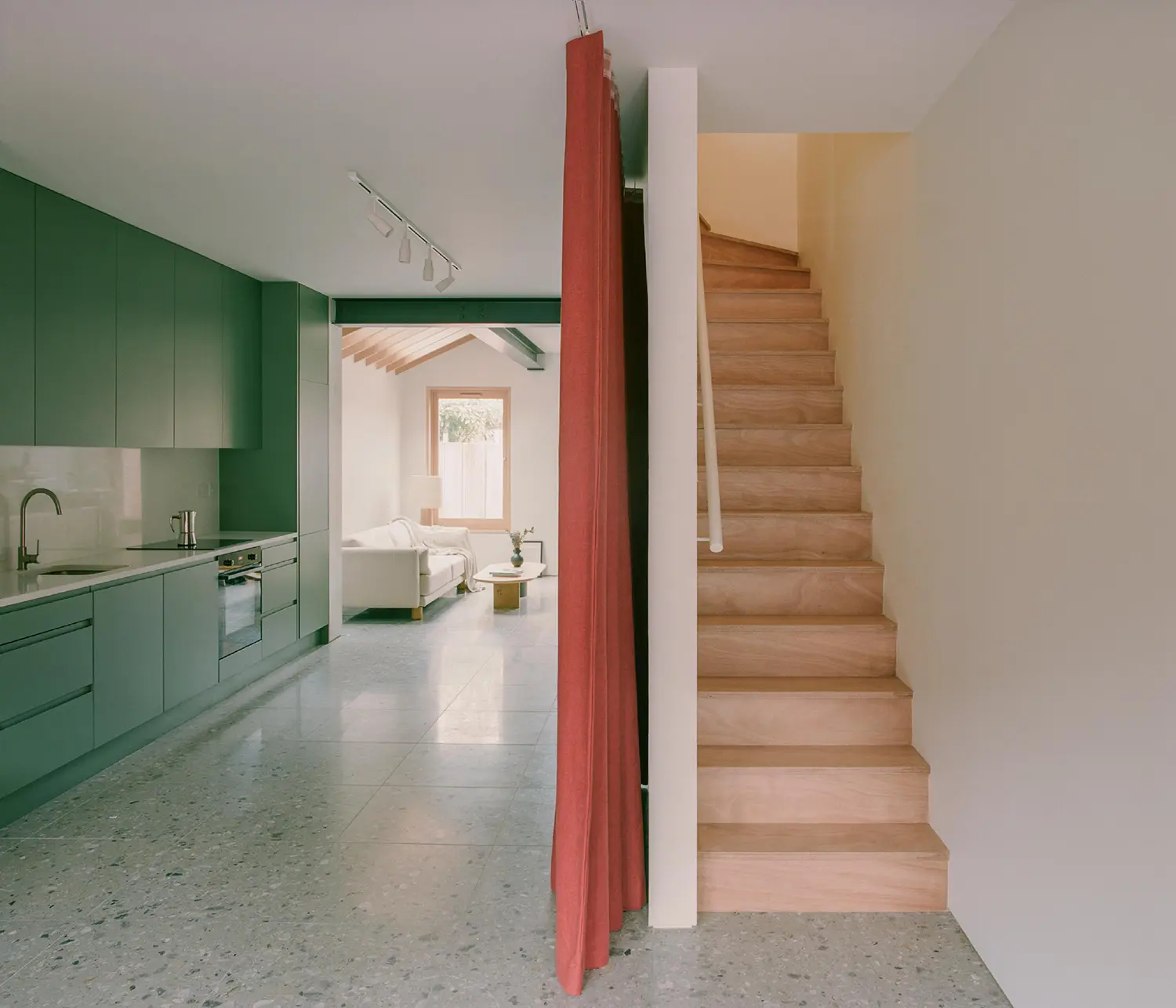
Sensory privacy is managed through a clever “soft” architectural intervention. To mitigate the exposure of the open-plan ground floor to the street, a full-height, heavyweight curtain was installed at the entrance. This fabric boundary creates a flexible “soft hallway,” allowing the residents to dial the level of intimacy up or down. When closed, it cocoons the dining area, muffling the sounds of the city and transforming the glass-heavy front into a private, textured enclave.
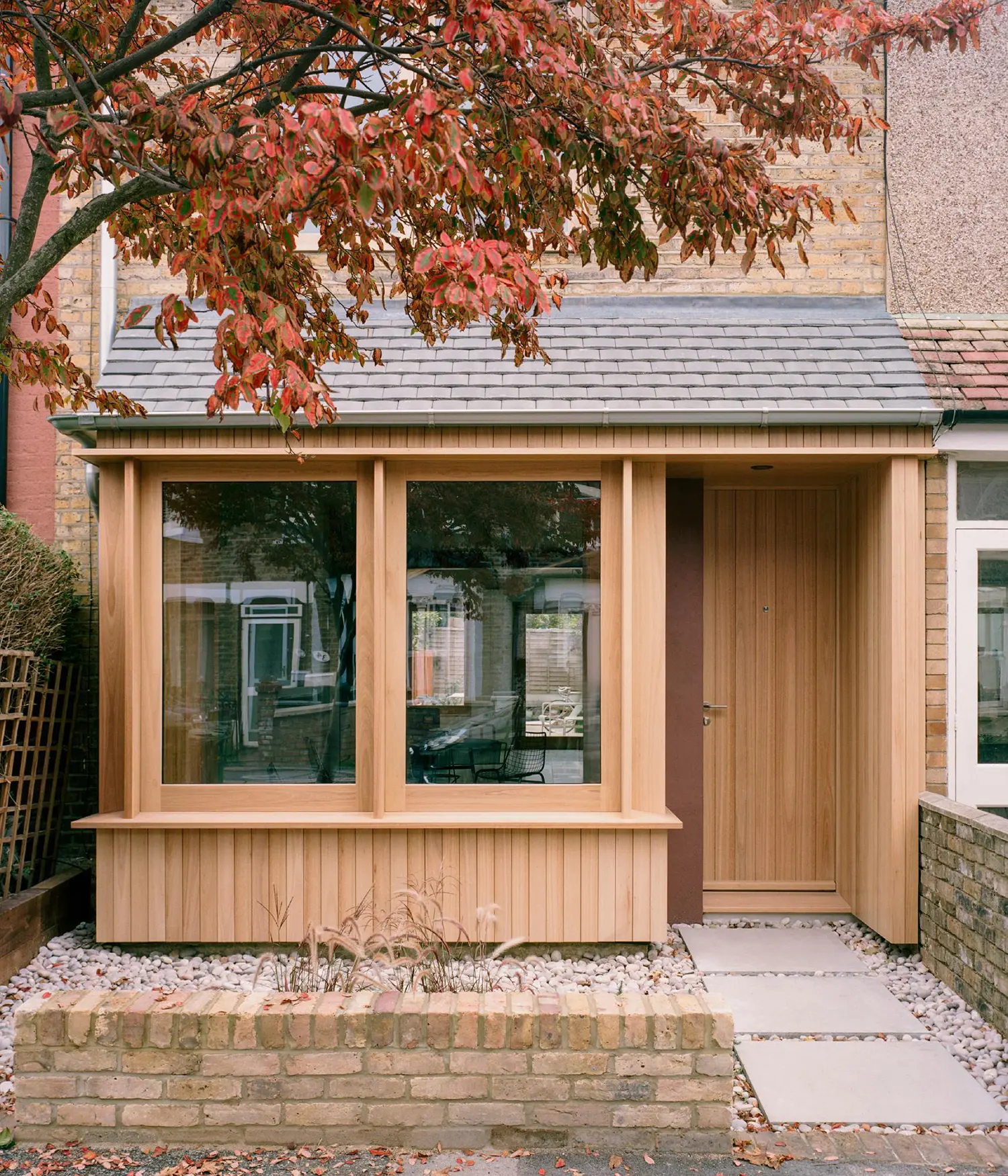
External craftsmanship replaces the remnants of poor-quality historical additions. The original uPVC porch, which disrupted the Victorian street’s rhythm, has been replaced by a contemporary timber structure. This intervention, crafted from Red Grandis, establishes a tactile connection to the street while signaling the material honesty found within. The same sustainable eucalyptus is used for internal rafters and window frames, creating a unified narrative throughout the project.
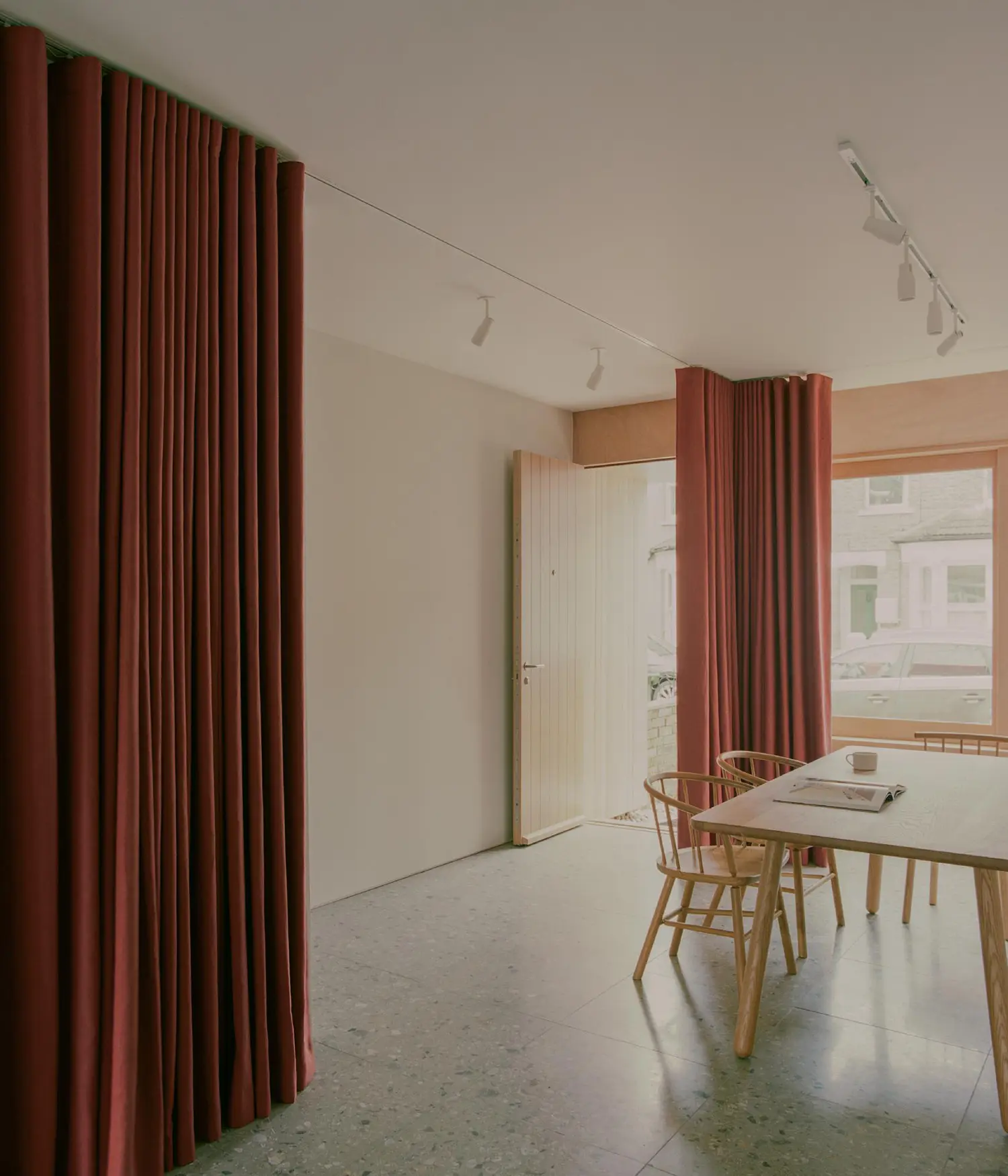
The materiality of the floor provides a cool, monolithic counterpoint to the warmth of the wood. Ceppo di Gré terrazzo flows across the ground floor and climbs the walls of the bathroom, its gray, pebbled surface offering a sophisticated durability. This choice of stone, often associated with Milanese courtyards, lends the Walthamstow home an analytical, grounded atmosphere that avoids the clinical feel of modern minimalism.
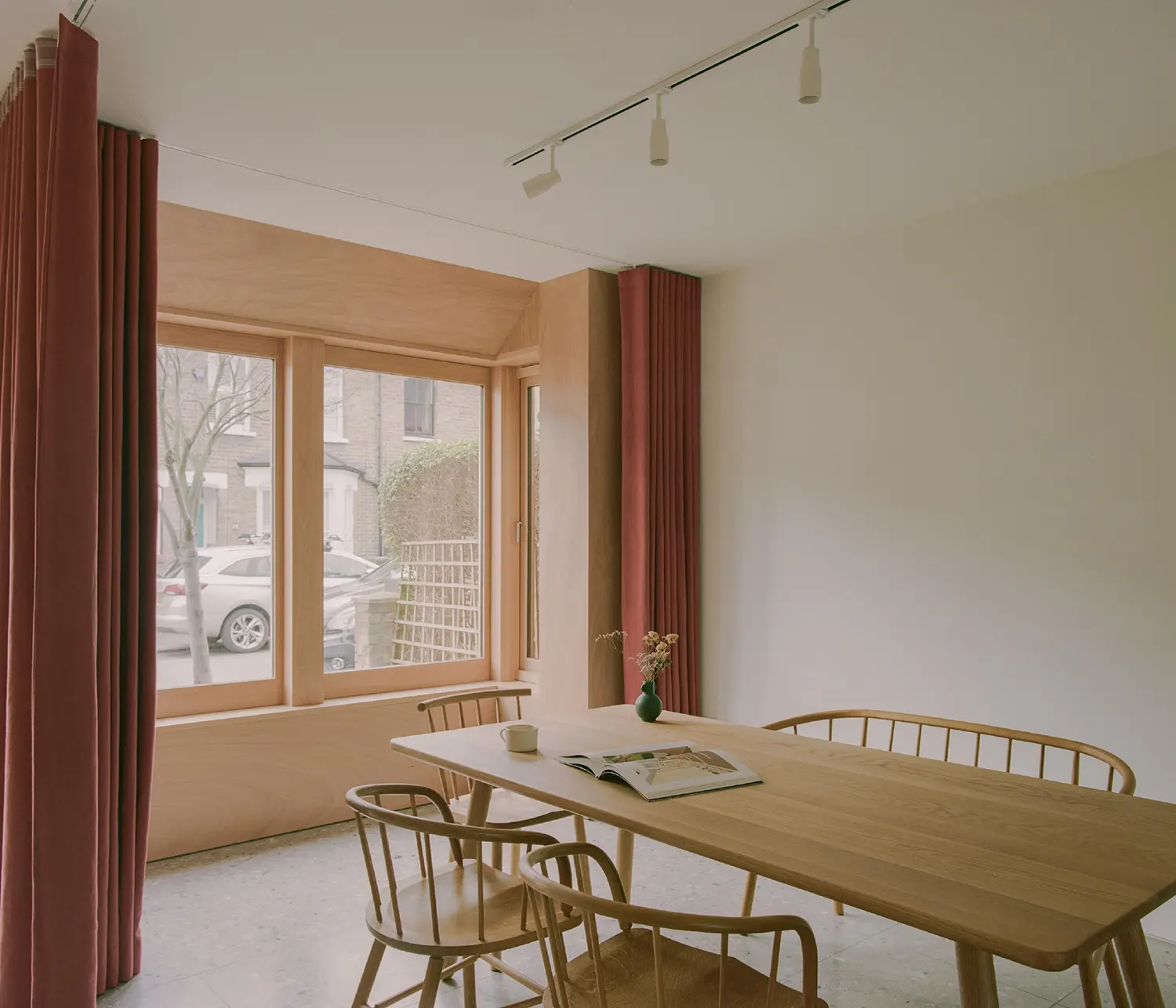
A commitment to performance underlies the visible aesthetics of the renovation. Beyond the spatial reorganisation, the building underwent a deep retrofit, including comprehensive internal insulation of the envelope. This technical layer dramatically improves the thermal efficiency of the Victorian brickwork, ensuring that the project’s longevity is measured not just in its visual appeal, but in its reduced energy footprint and long-term environmental resilience.
The ongoing reinvention of London’s housing stock is a theme shared by several recent high-profile interventions that prioritize both performance and material heritage. This Walthamstow project echoes the material sensitivity found in the cork loft extension by Office S&M, where texture defines the facade. It also aligns with the Islington heritage work by Architecture for London, and the deep retrofit by Studio 163 that utilized Portland stone. Each represents a shift toward a more sustainable, craft-oriented approach to urban living.
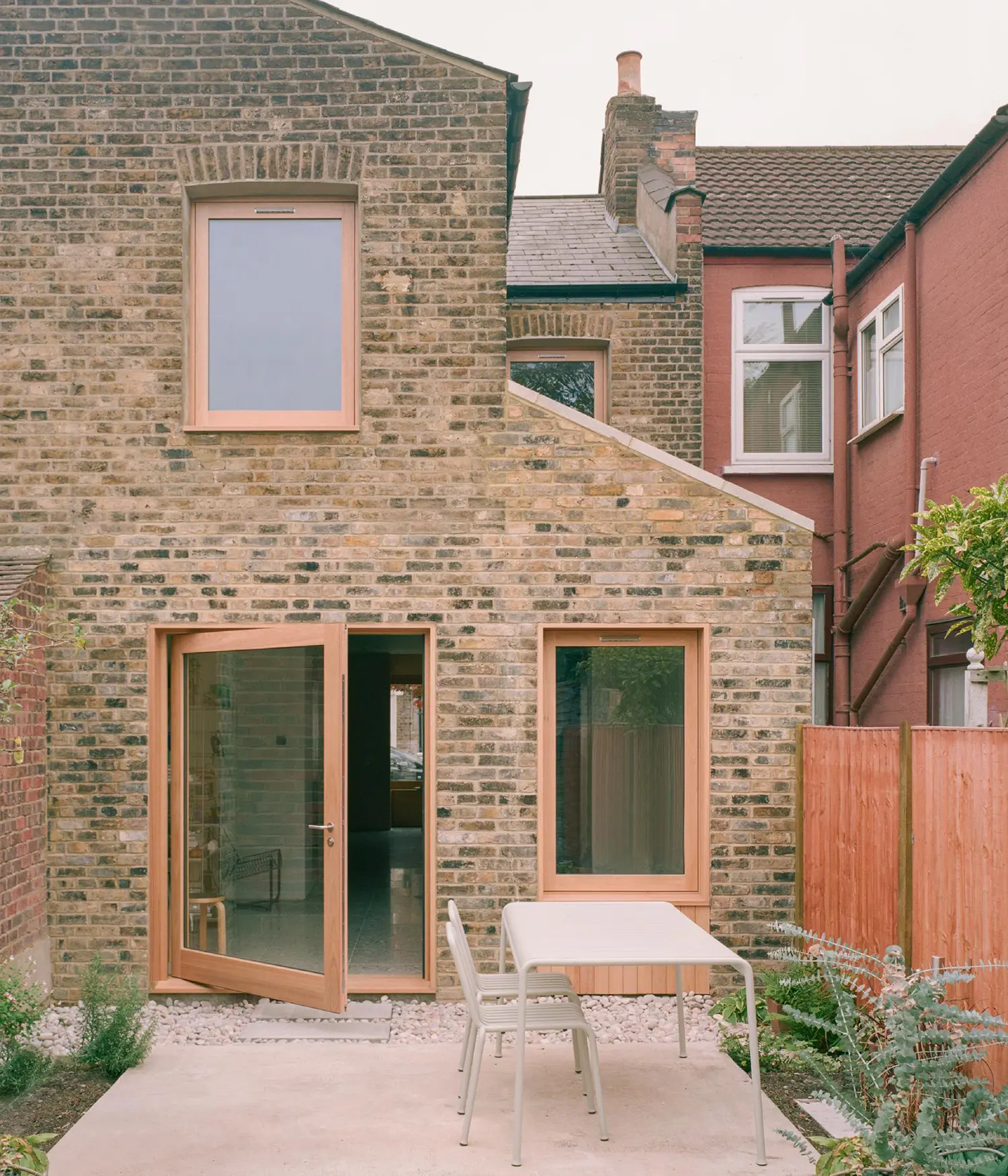
The connection to the garden serves as the final, quiet triumph of the plan. A large pivot door at the rear dissolves the boundary between the kitchen and the outdoors, framing the greenery as a living backdrop to the interior. By focusing on the essential qualities of light and the tactile nature of timber and stone, Sanchez Lopez has delivered a space that feels deeply human—a modern home that honors its Victorian bones while looking firmly toward the future.