



PEND has completed Canon Mews, a debut development project that transforms a constrained infill site in Edinburgh’s Canonmills into a pair of contemporary homes, reimagining the traditional mews typology through internal courtyards and reclaimed materials.
The conceptual vision for this project stems from a desire to place quality at the forefront of the urban residential experience. By taking an architect-led approach to development, PEND avoided the common pitfalls of volume housing, instead focusing on how to “unlock” a brownfield site from within. Inspired by the spatial philosophy of Tadao Ando’s Row House in Osaka, the design uses light as a primary tool, carving out voids to ensure that density does not come at the expense of openness.
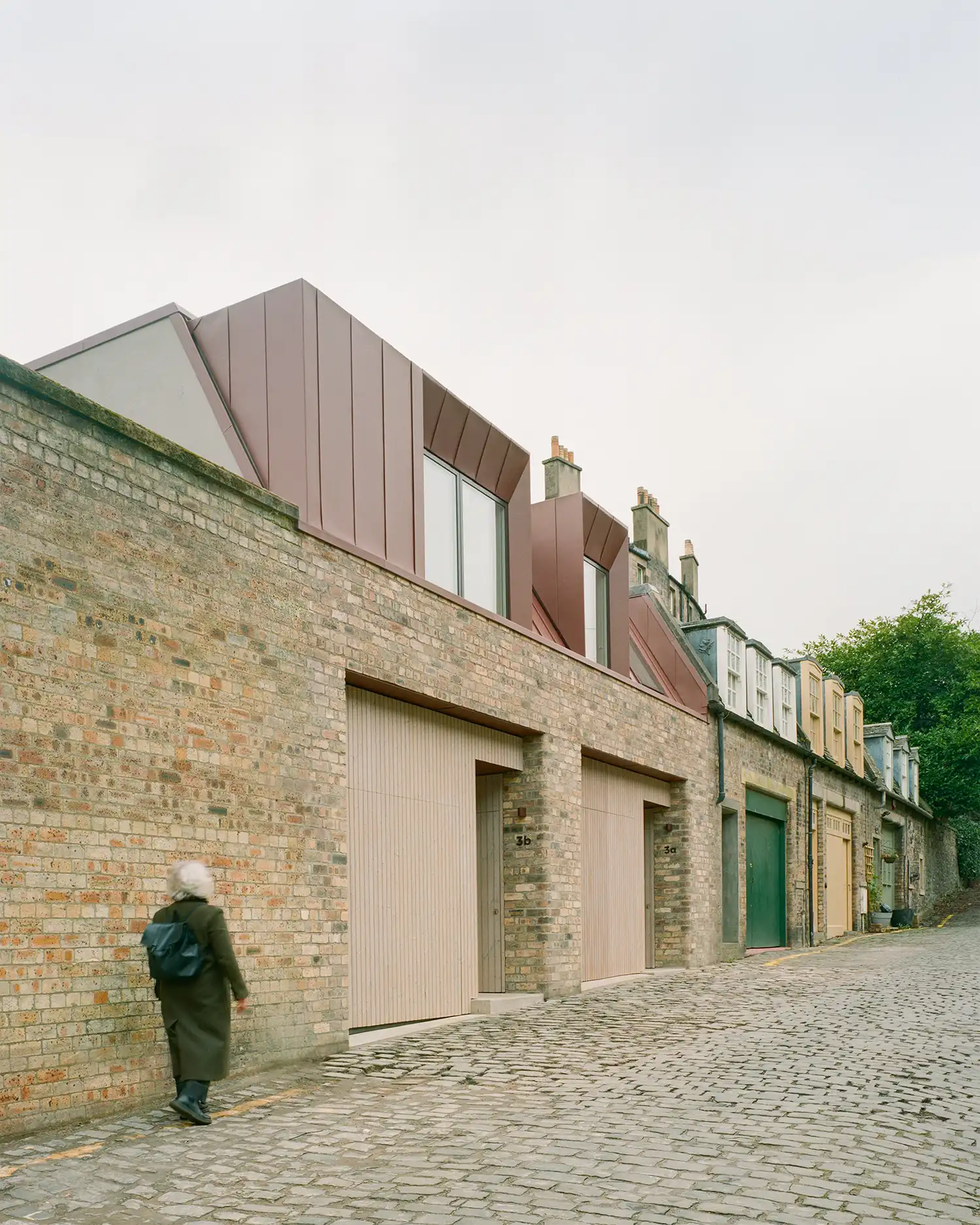
A reinterpreted typology allows these two, three-bedroom homes to flourish in a dense historic setting where privacy is usually a luxury. While typical mews properties in the United Kingdom often suffer from being overlooked, Canon Mews turns inward. Each residence is wrapped around a private outdoor courtyard, a move that filters natural light deep into the living spaces and creates framed views that feel deliberate and calm. It is a sophisticated alternative for discerning buyers, with the two properties priced at £950,000 and £825,000 respectively, valuing longevity over square footage alone.
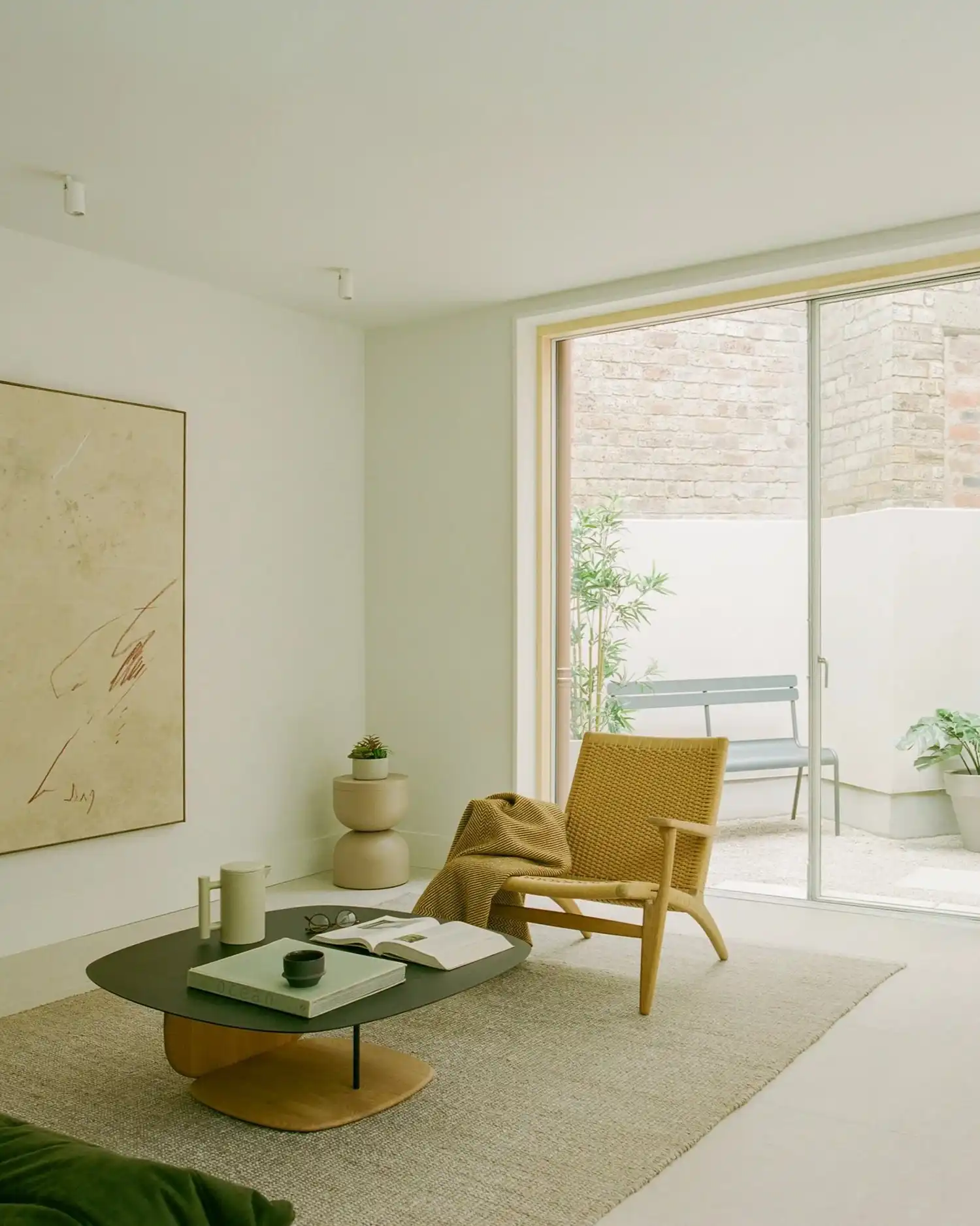
The material narrative underscores a commitment to the site’s history. The envelope of each home is constructed from reclaimed brick salvaged during the demolition phase. These bricks were meticulously cleaned and reinstated, including a bullnose brick detail at each entrance that softens the threshold. This tactile connection to the past is contrasted by red zinc on the upper levels, which adds a warm, contemporary crispness to the roofline, while finely detailed timber cladding marks the garages and recessed vestibules.
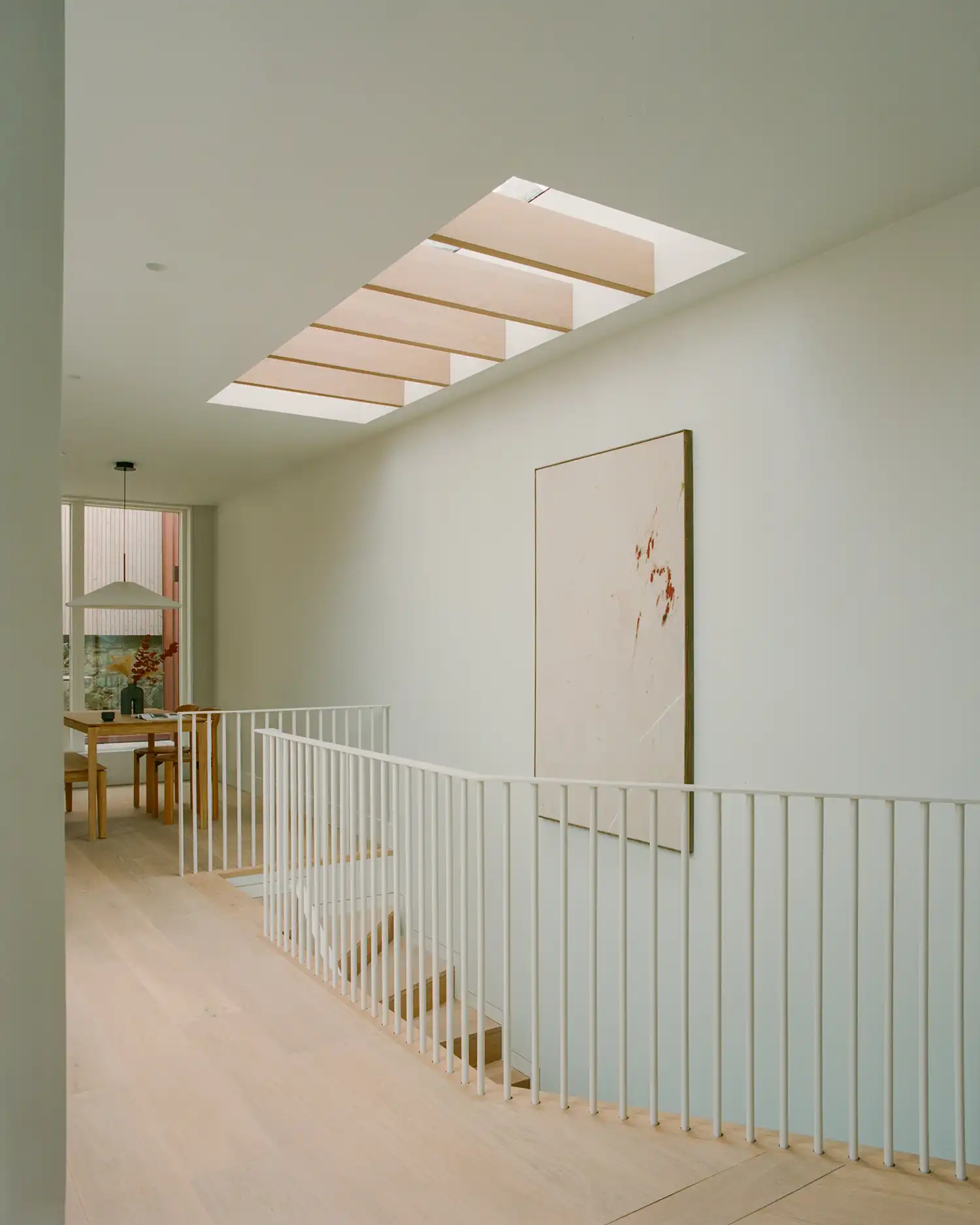
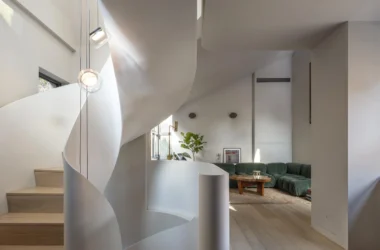
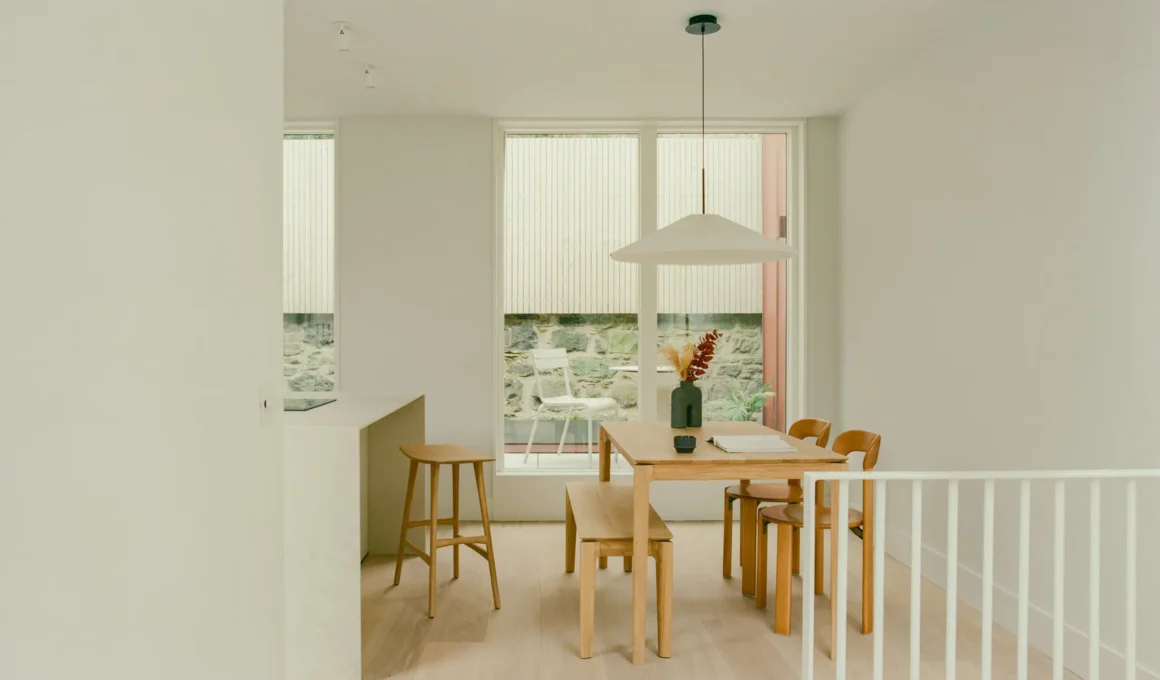
Internal spatial planning maximizes the modest footprint to accommodate generous living, kitchen, and dining areas. The transition between floors is marked by a sculptural stair with solid timber treads and a bespoke metal balustrade, leading residents toward the heart of the home. This sense of craftsmanship and “authored” space is a signature of the studio’s work, echoing the sensitivity seen in their previous Victorian renovation in Edinburgh, where historic bones were similarly respected through modern intervention.
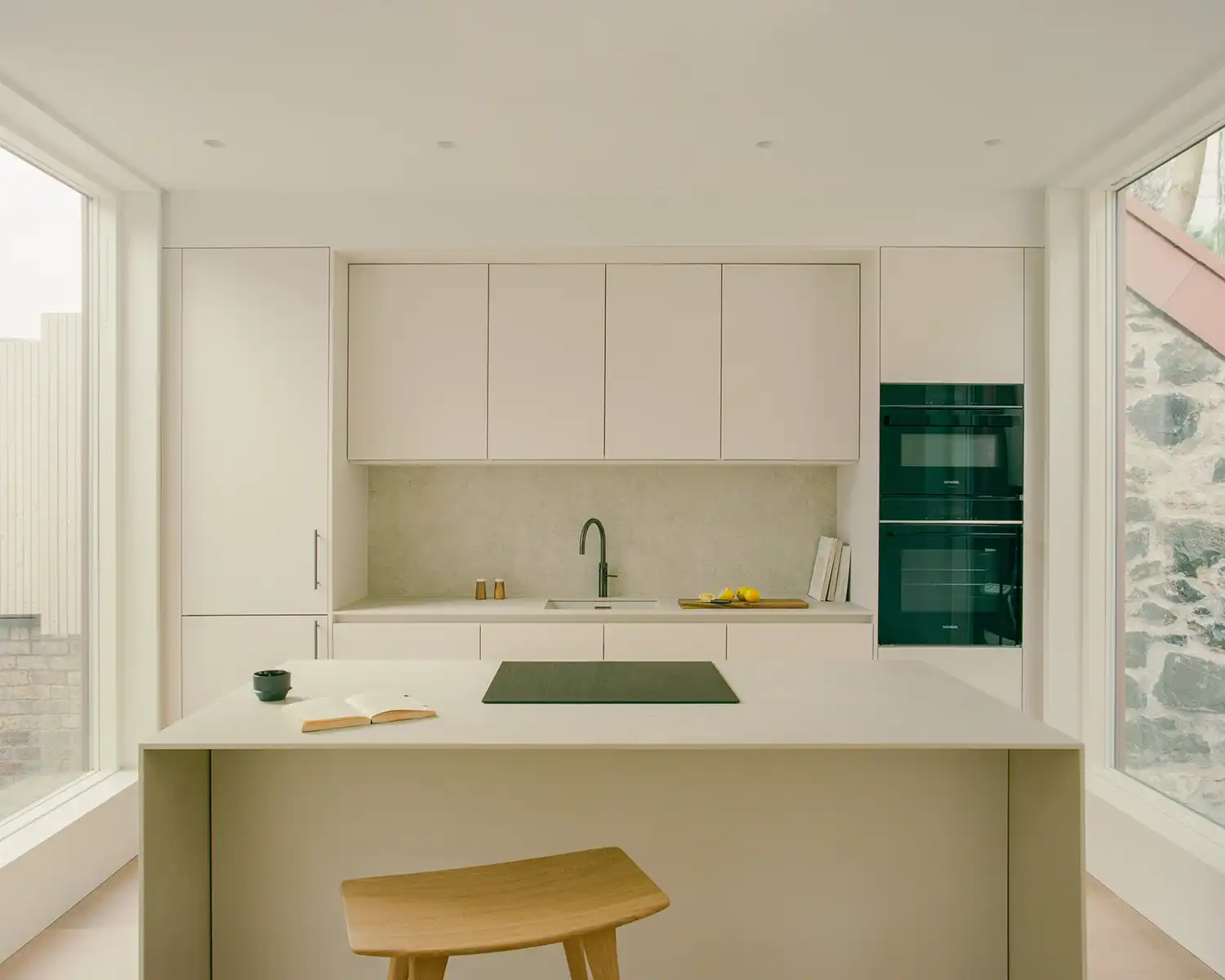
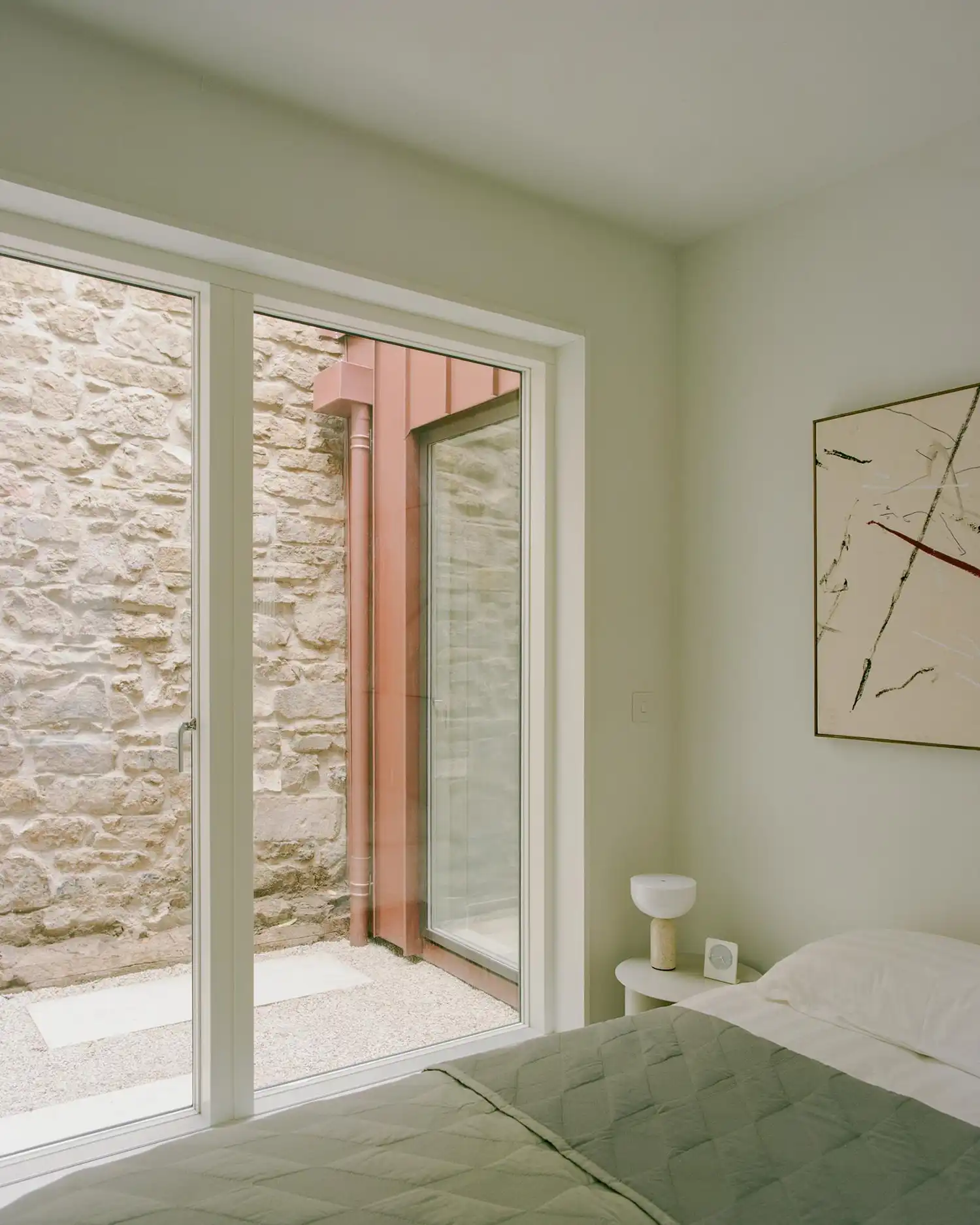
The sensory experience of the interior is defined by a rich, varied palette. On the ground floor, robust porcelain tiles with underfloor heating provide a grounded, tectonic feel. As one moves through the home, the view frequently returns to the central courtyard, where the exposed existing masonry and the red zinc cladding meet. This interaction of light and texture ensures that the homes feel expansive and connected to the outdoors, despite their tucked-away location on a quiet lane.
Technical precision and sustainability are woven into the fabric of the build. Constructed with a highly insulated timber frame, the project integrates solar PV panels and EV charging points, bringing high-performance energy efficiency to a sensitive urban context. This partnership with local contractor Gloss Projects ensured that the technical execution matched the design intent, resulting in turnkey properties that feel both finished and deeply considered.
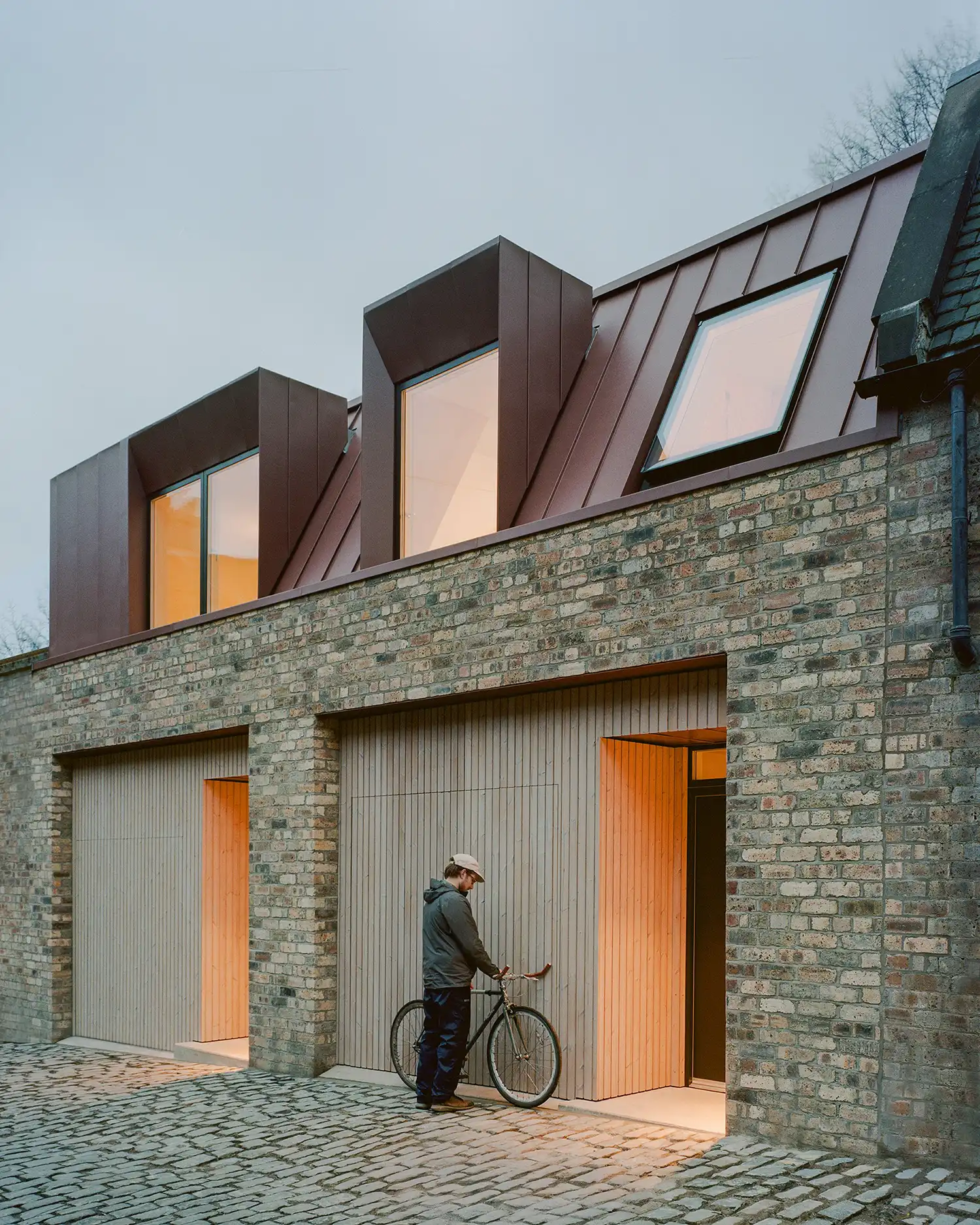
The contextual impact of Canon Mews marks a significant graduation for PEND. By collaborating with independent real estate agency Niksen, the studio is signaling a shift toward a more design-forward model of property development in Scotland. This project proves that even the most overlooked “gap sites” can be transformed into high-quality housing that respects the grain of the city while providing a fresh, light-filled way of living.