

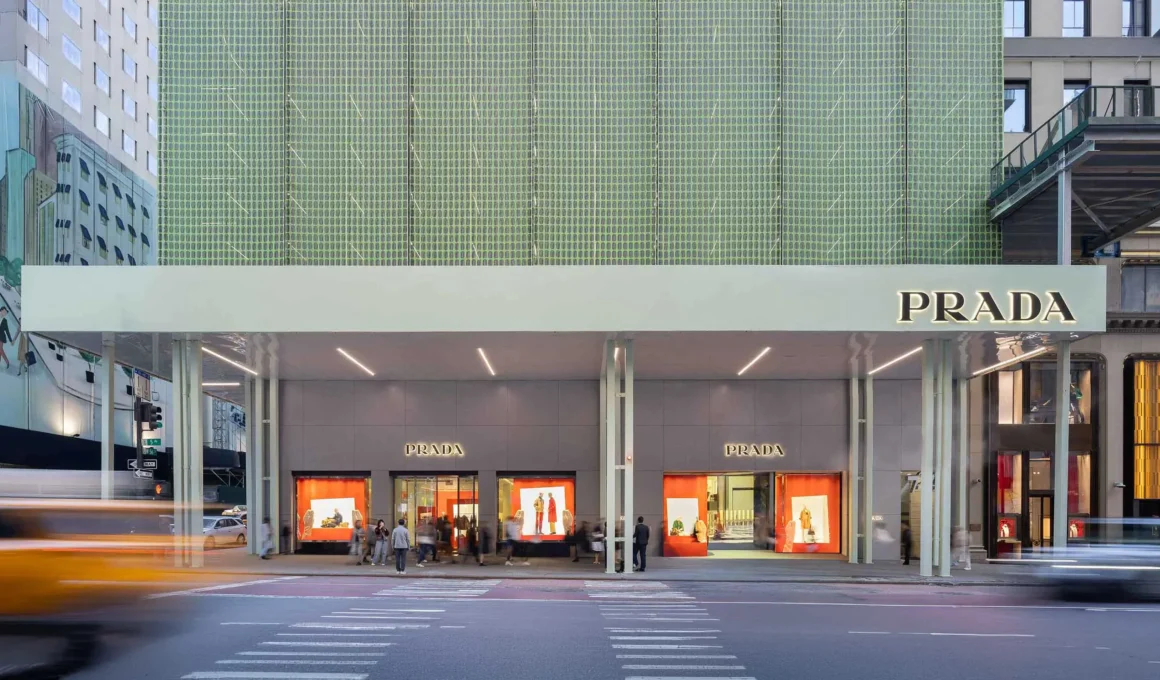
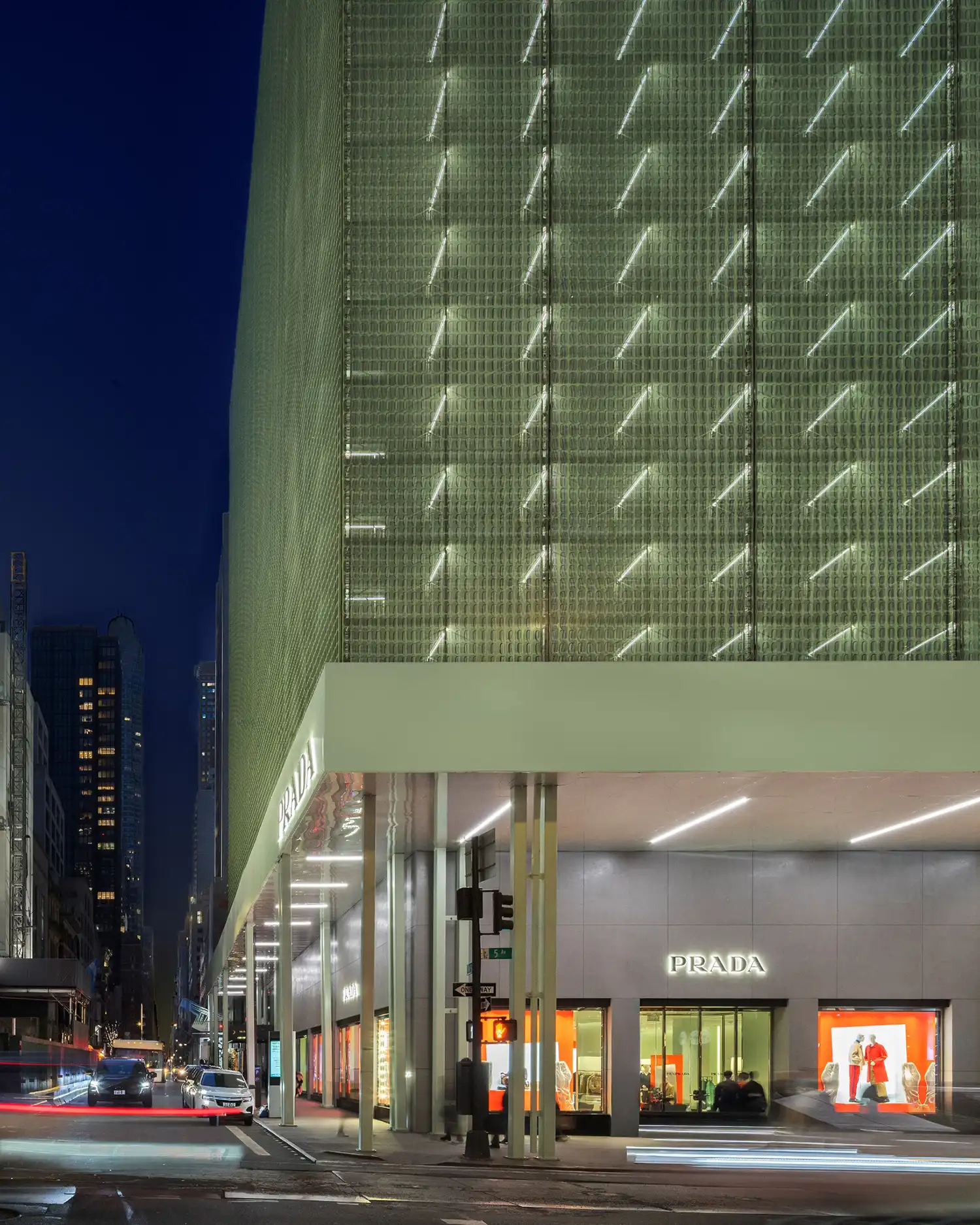
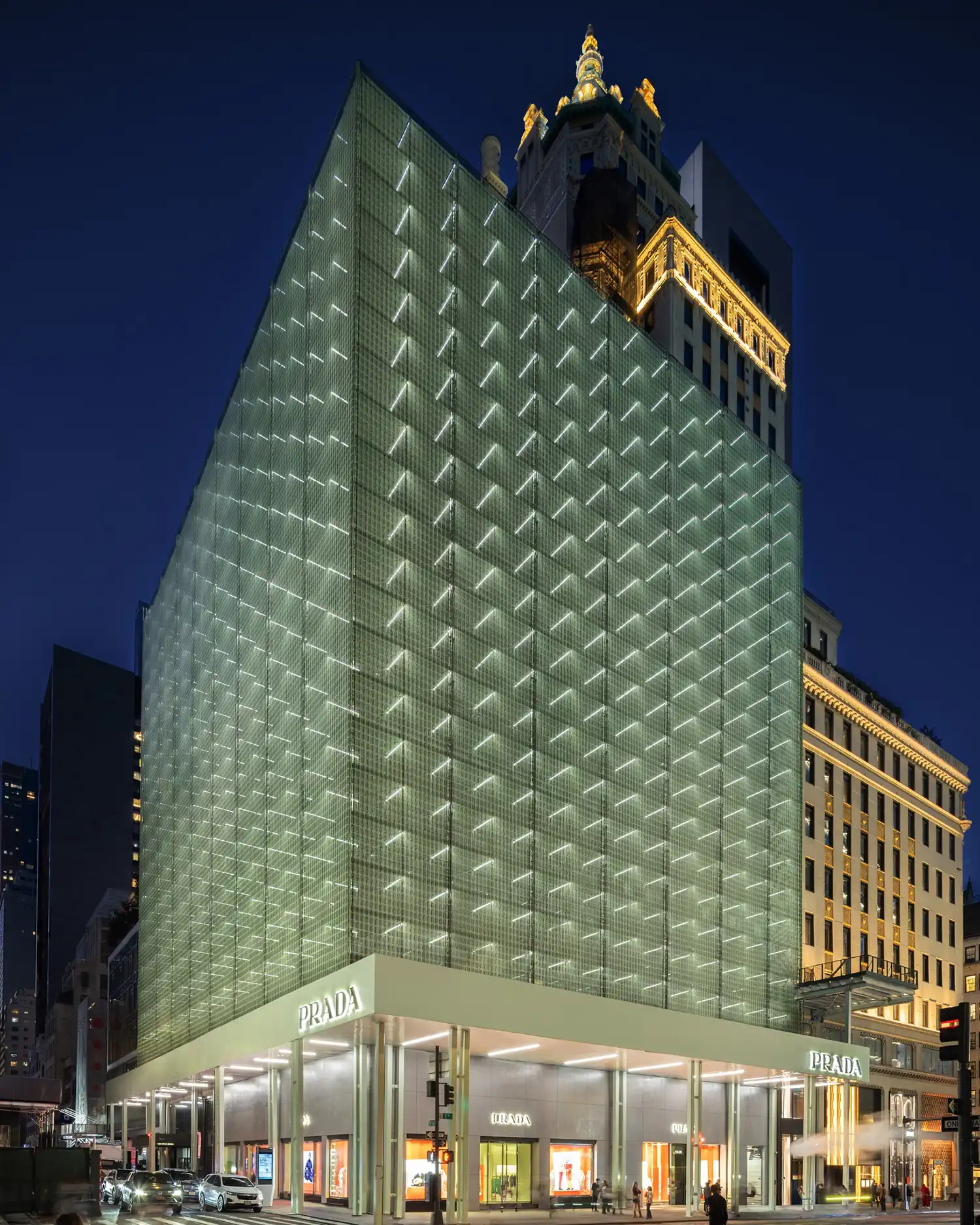
Prada has teamed up with the multidisciplinary studio 2×4 to envelop its Fifth Avenue flagship store in New York City with a functional, seafoam-green installation that reimagines the industrial necessity of scaffolding as a shimmering, moiré-effect urban landmark.
A reimagined urban necessity. In a city where steel pipes and green wooden planks are often viewed as a persistent visual nuisance, the intervention on Fifth Avenue serves as a radical departure from traditional construction aesthetics. By embracing the inevitability of renovation, the project transforms a restrictive regulatory requirement into a high-fashion statement. This temporary envelope does not merely mask the building; it utilizes the very bones of the scaffolding structure to broadcast a distinct brand identity, turning a site of maintenance into a site of spectacle that reacts to the movement of the observer.
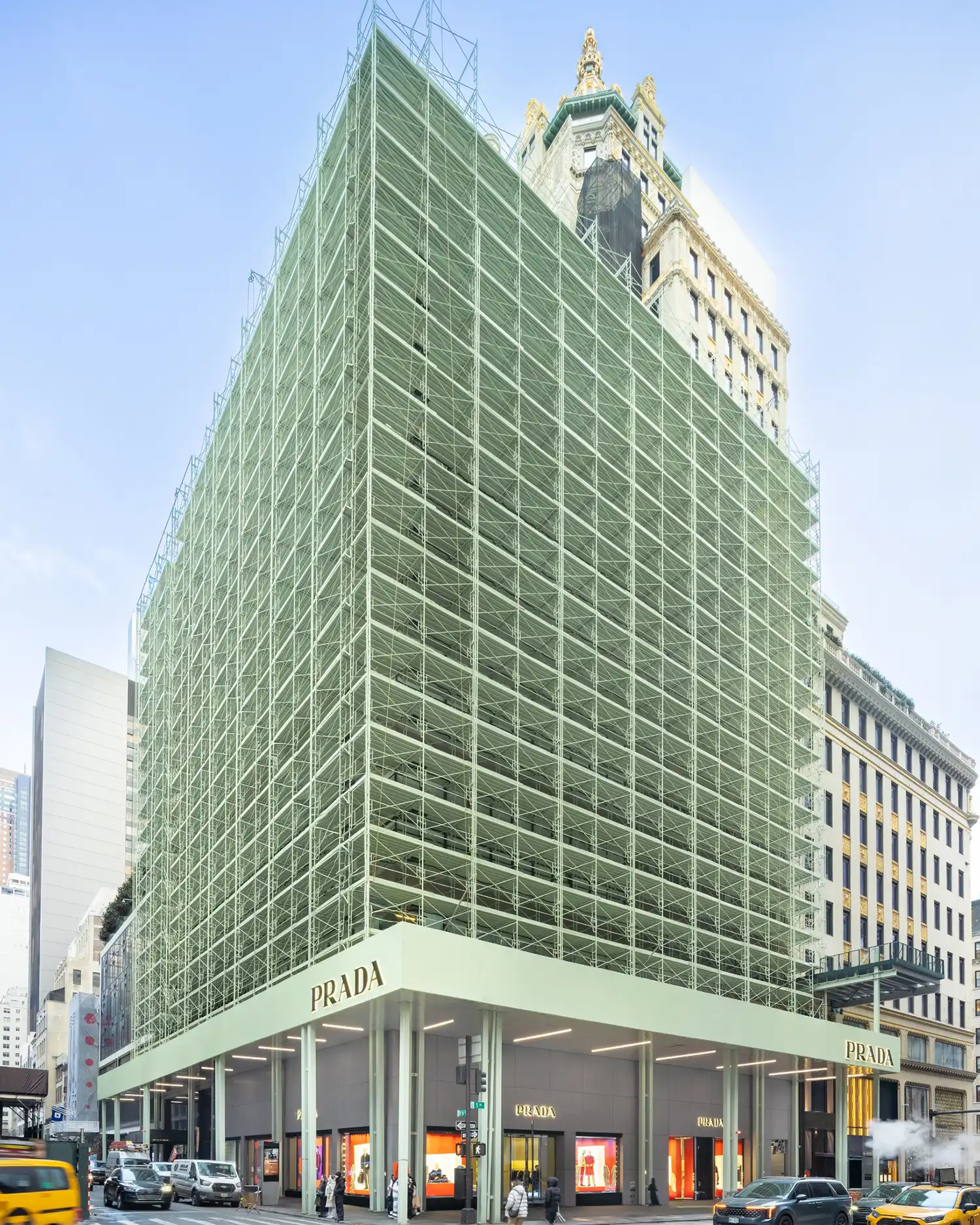
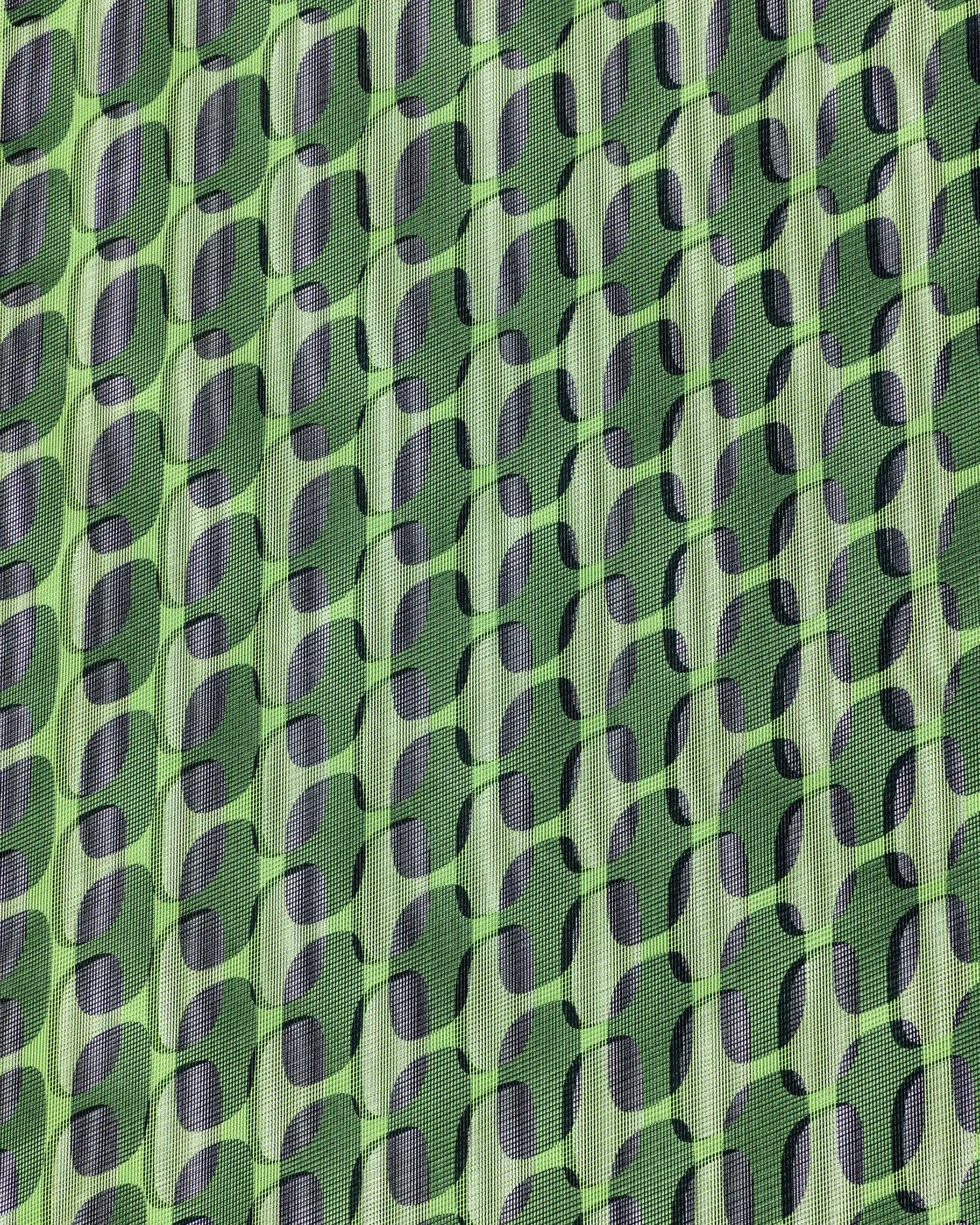
The alchemy of the moiré effect. The primary allure of the installation lies in its optical complexity and materiality. Utilizing a double-layered scrim paper—a lightweight, fiber-based material typically reserved for the theater—the designers have engineered a surface that breathes. By printing slightly offset patterns on the semi-transparent layers, the facade generates a rippling moiré effect. As pedestrians navigate the bustling Manhattan sidewalk, the building appears to oscillate between a solid, monolithic block of “Prada Green” and a translucent veil that reveals the industrial skeleton beneath.
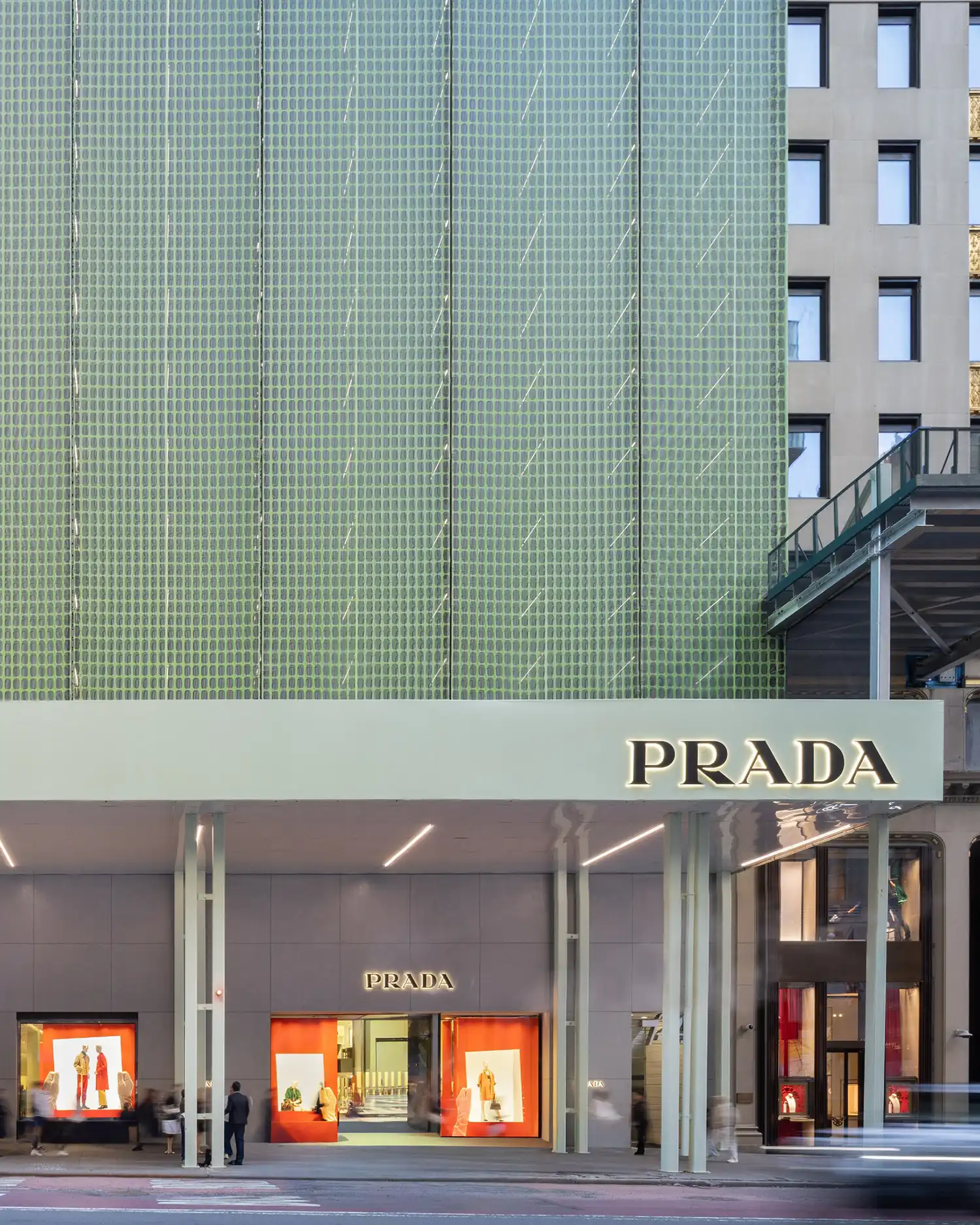
A dialogue with light and weather. Beyond its graphic impact, the installation functions as a reactive skin that bridges the gap between the permanence of stone and the fleeting nature of a seasonal collection. The seafoam-green palette, synonymous with the brand’s heritage, takes on different qualities depending on the time of day and the intensity of the New York sun. In the harsh midday light, the scrim appears opaque and vibrant; at dusk, internal lighting integrated into the standard commercial pipe scaffolding transforms the shop into a glowing lantern, softening the hard edges of the construction site.
Contextualizing the New York sidewalk. The project arrives at a poignant moment in New York’s legislative history, as local officials continue to push for the redesign and removal of long-standing sidewalk sheds. By elevating the functional scaffolding to an artistic medium, Prada and 2×4 contribute to a broader conversation about urban maintenance. Rather than treating the renovation period as a “lost” moment for the brand’s image, they have treated the city itself as a gallery, echoing recent experimental facades seen elsewhere in luxury retail, yet maintaining a uniquely ethereal and lightweight materiality.
Conceptual vision and collaboration. The partnership between the Italian fashion house and the New York-based studio 2×4 is rooted in a long history of spatial experimentation. For this installation, the studio’s intent was to leverage the “branding of and in the structure of the city.” By using a material as humble as paper and a structure as utilitarian as steel piping, they have crafted a sophisticated narrative that explores the tension between the industrial and the elegant. It is an exercise in “revealing by concealing,” a concept that has long permeated the brand’s approach to both garments and environments.
The evolution of the brand language. As the renovations continue behind the green veil, the installation remains a testament to a philosophy where the process of change is as valuable as the finished product. From the monumental scales of the OMA-designed Fondazione Prada Torre and its accompanying restaurant to ephemeral global pop-ups like the Prada Hyper Leaves or the runways designed by OMA, the brand consistently utilizes the world’s most influential creators to redefine how we perceive space. To explore this expansive history of merging fashion with the surrounding landscape, one can look back at the numerous PRADA collaborations and spatial projects that have redefined contemporary aesthetics through a relentless pursuit of beauty within functional constraints.