


Mexican architecture studio CAAM has masterfully reinterpreted an industrial warehouse in Querétaro, Mexico, creating Sōko – a sophisticated Japanese teppanyaki restaurant that harmoniously fuses oriental culinary tradition with contemporary design. Named after the Japanese word for “warehouse,” Sōko celebrates its raw architectural origins while delivering a refined, multi-sensory dining experience.
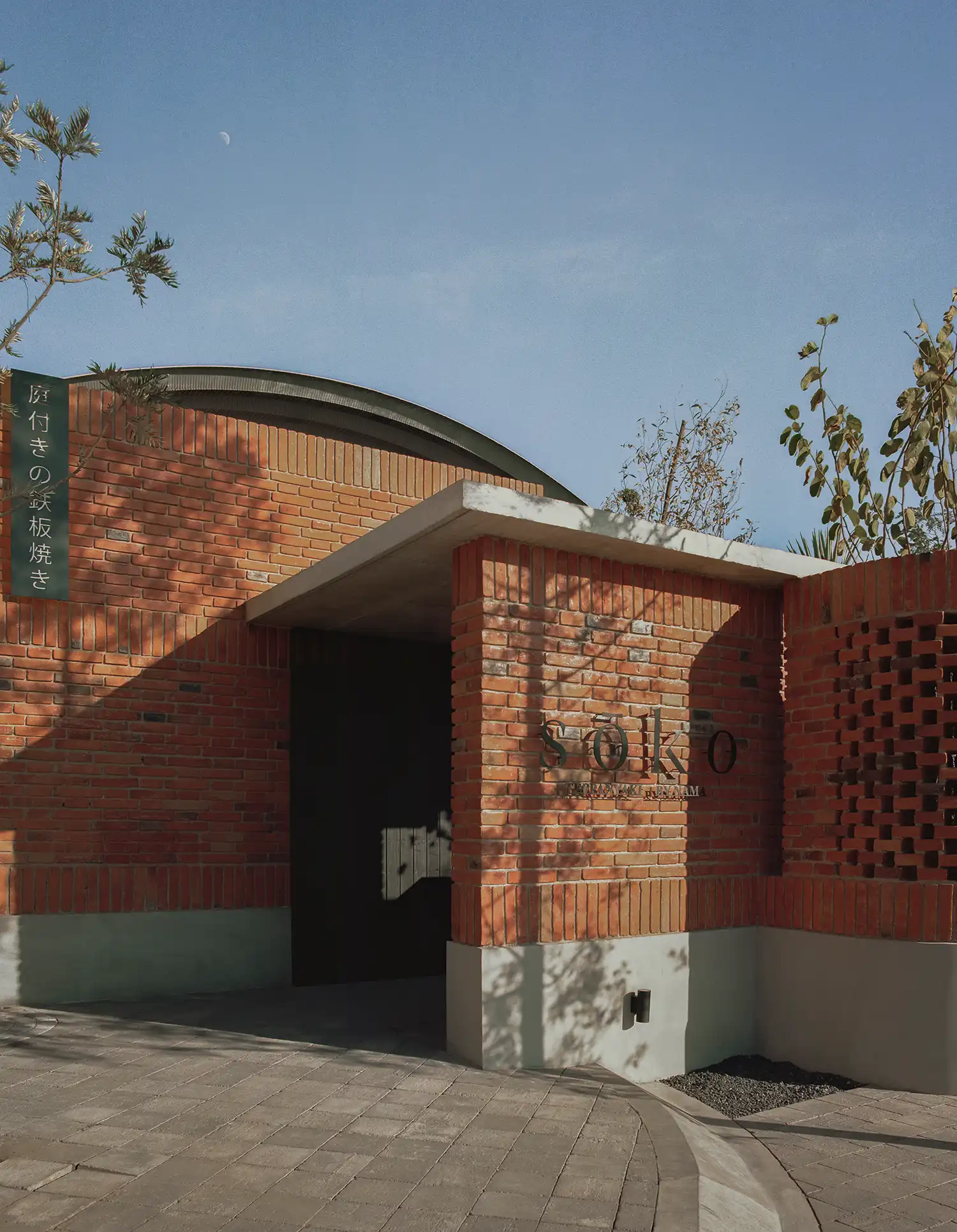
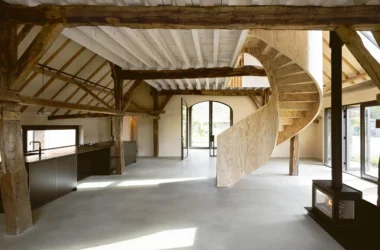
Occupying a structure defined by its arched roof and robust materiality, the project thoughtfully preserves existing industrial materials like exposed brick walls, textured concrete, and structural metal. CAAM complements these with warm timber accents in furniture and architectural details, striking a deliberate balance between industrial aesthetics and Japanese minimalism. The subdued lighting scheme accentuates the natural finishes, reinforcing a tranquil ambiance.
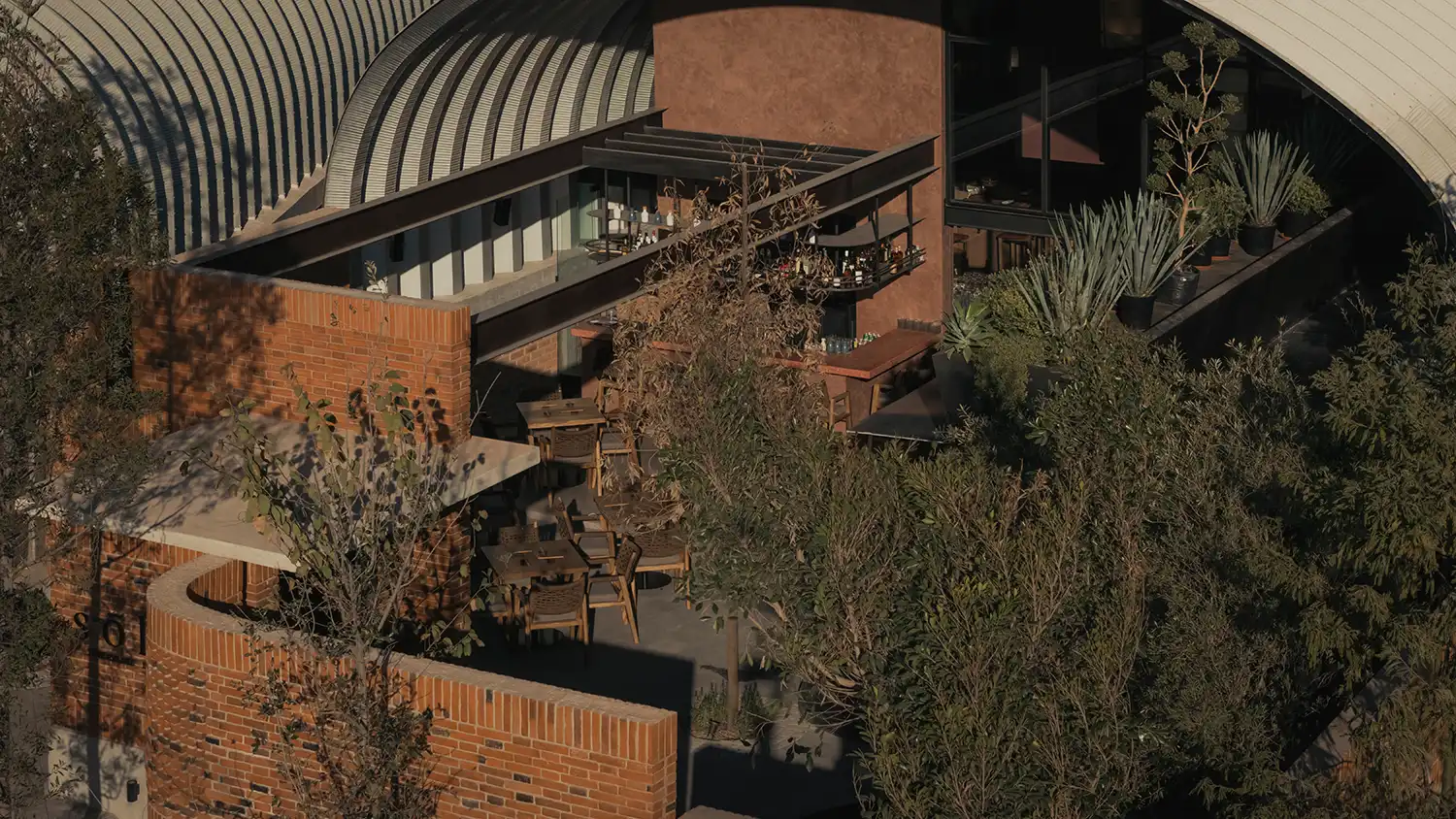
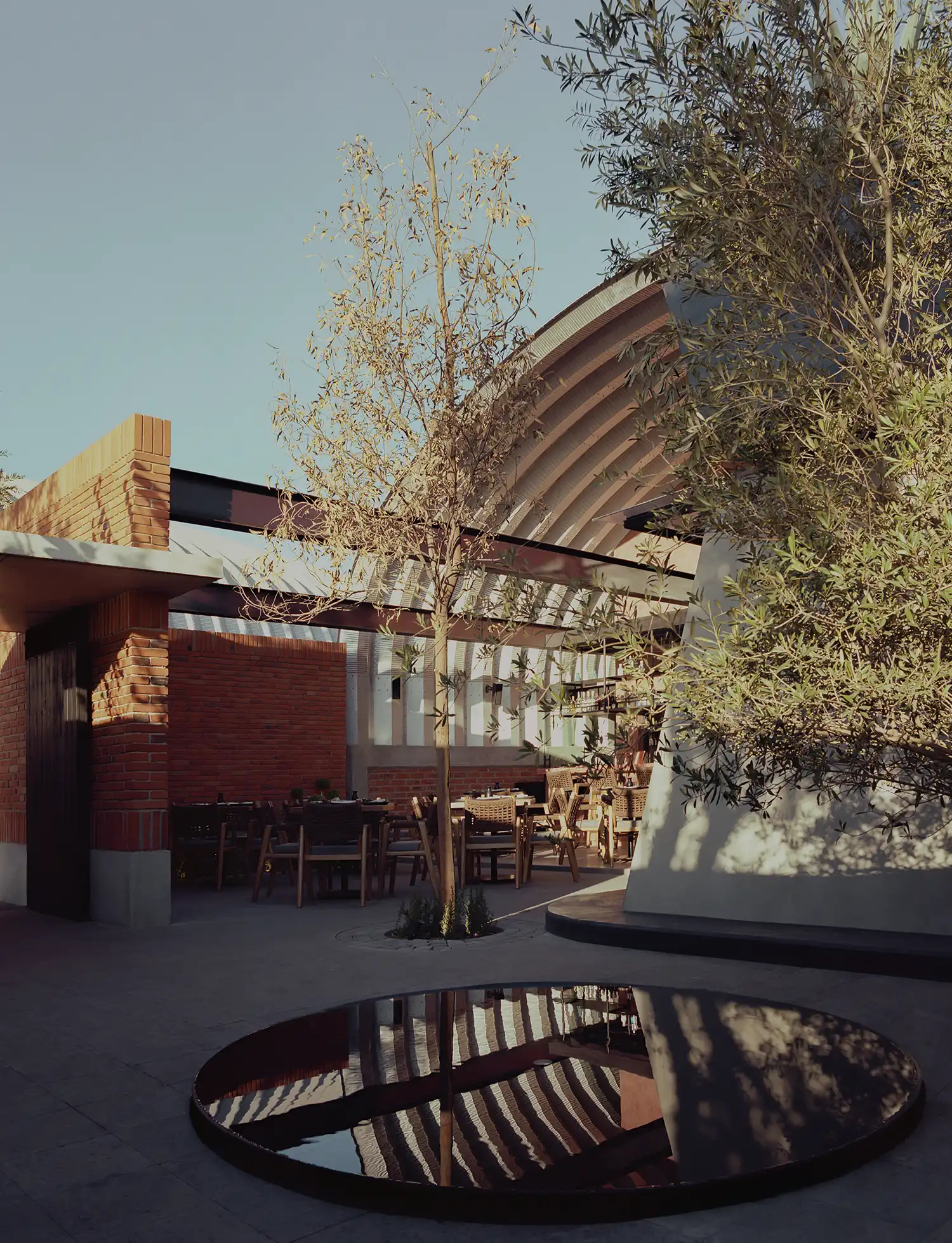
The arrival sequence sets the experiential tone: guests enter through a serene outdoor gardenenclosed by brick walls, shielding the space from urban noise. Here, interplaying shadows from treesreflect softly on water features, creating a dynamic yet calming prelude. This seamless indoor-outdoor transition establishes an immediate connection with nature while building anticipation.
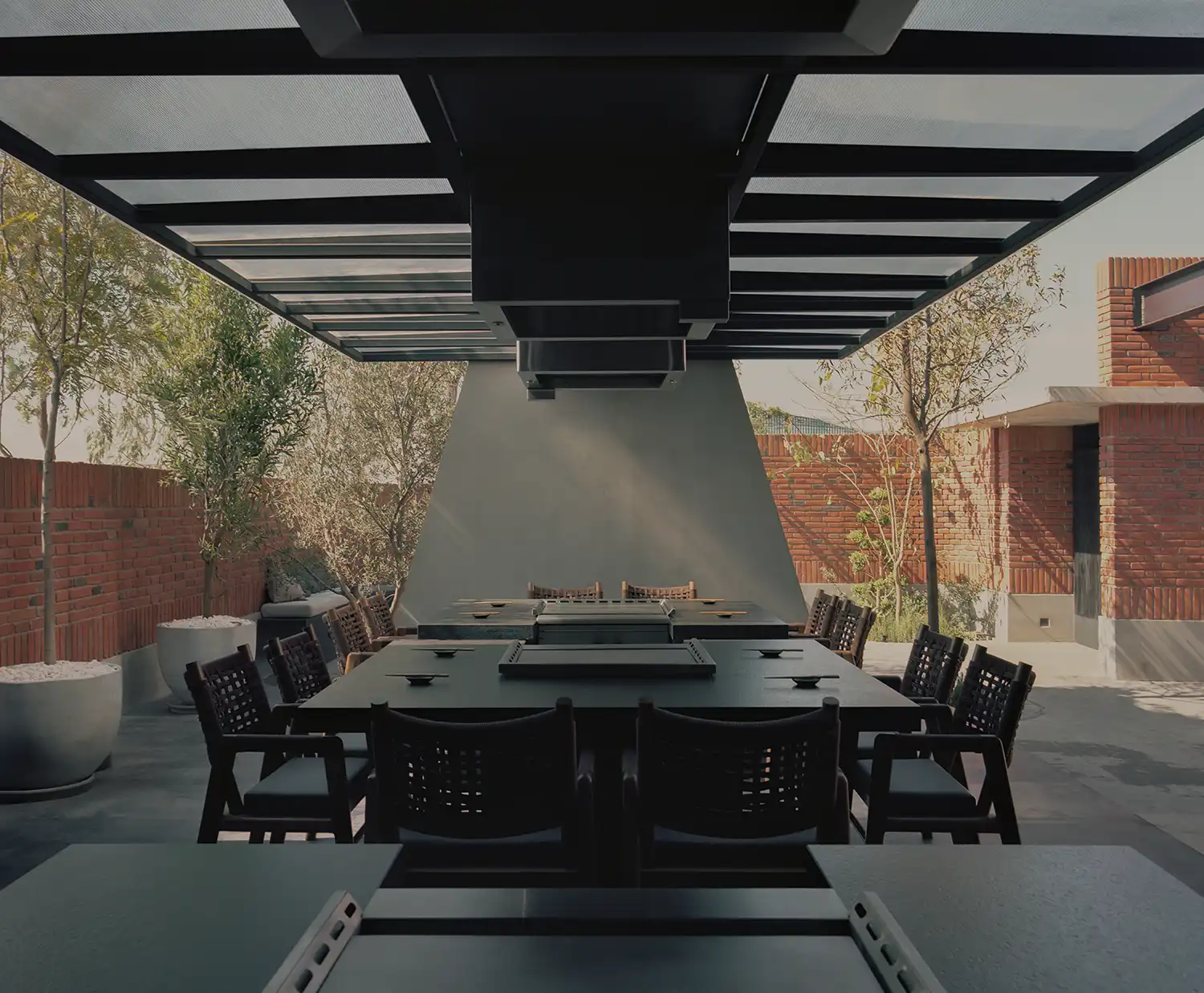
At the heart of the 473m² interior lies an innovative suspended planter structure. Supported by dramatic trapezoidal concrete brackets that traverse the warehouse volume, this multifunctional element serves several purposes: it ventilates the teppanyaki cooking stations, optimizes natural lighting distribution, incorporates greenery for freshness, and strategically organizes the spatial layout. The planter effectively carves out more intimate dining zones, enhancing privacy without compromising the warehouse’s inherent openness. Its position fosters a visual dialogue between interior and exterior spaces.
“Sōko is a space where functionality and aesthetics merge harmoniously,” notes the studio. The design meticulously adapts to the warehouse’s industrial essence, transforming it into a modern environmentthat respects Japanese tradition. Every element – from the material preservation to the strategic insertion of the planter – contributes to a distinctive dining experience defined by elegance and subtlety.
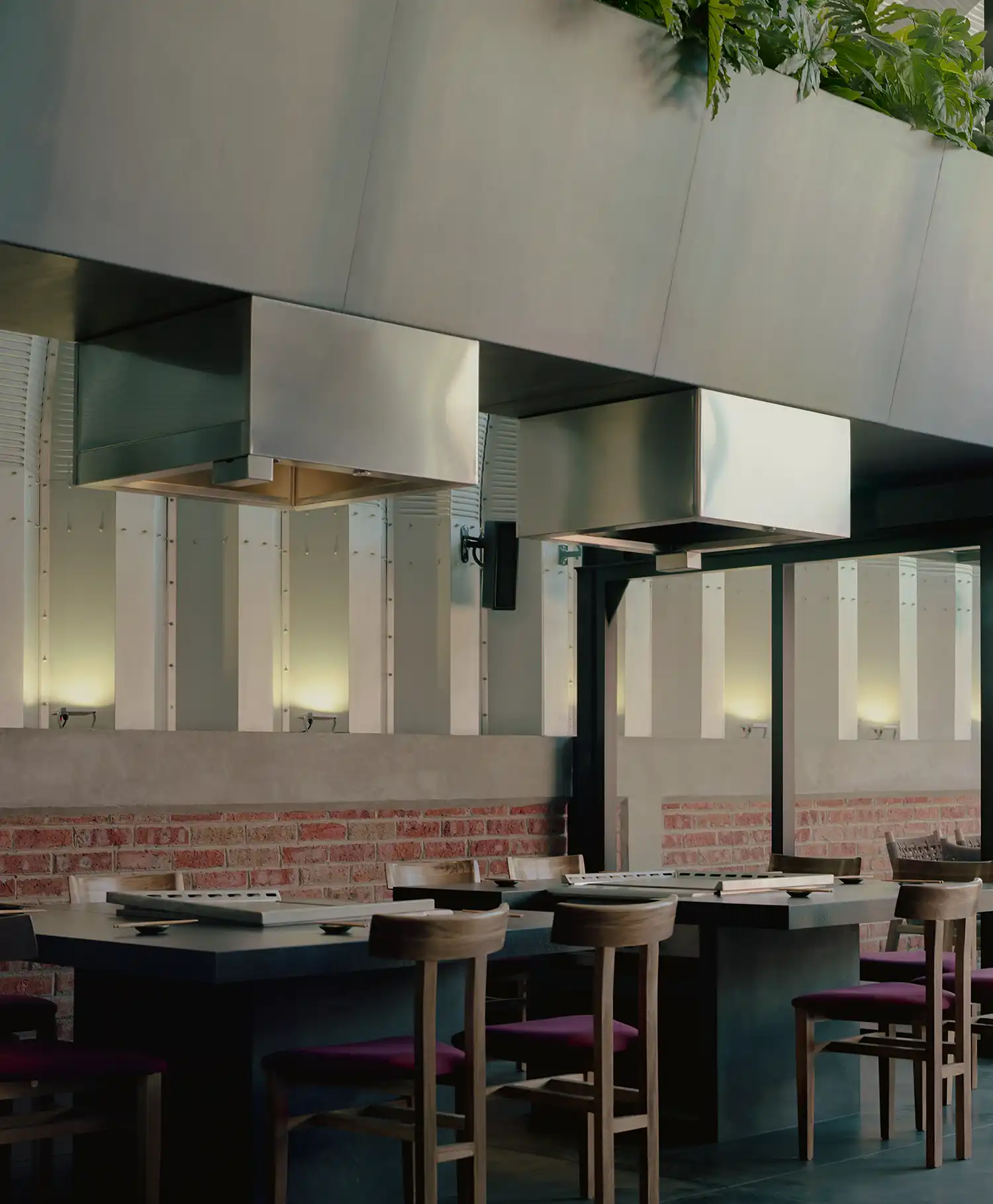
Completed in 2024, Sōko exemplifies adaptive reuse architecture, demonstrating how industrial heritage can be reimagined into vibrant cultural destinations. Photography by Zaickz Moz captures the interplay of light, material, and space in this poetic Querétaro architectural gem.