

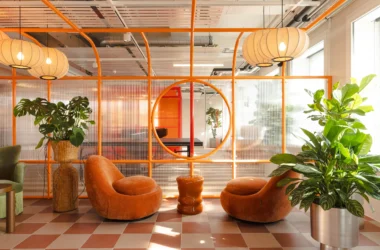
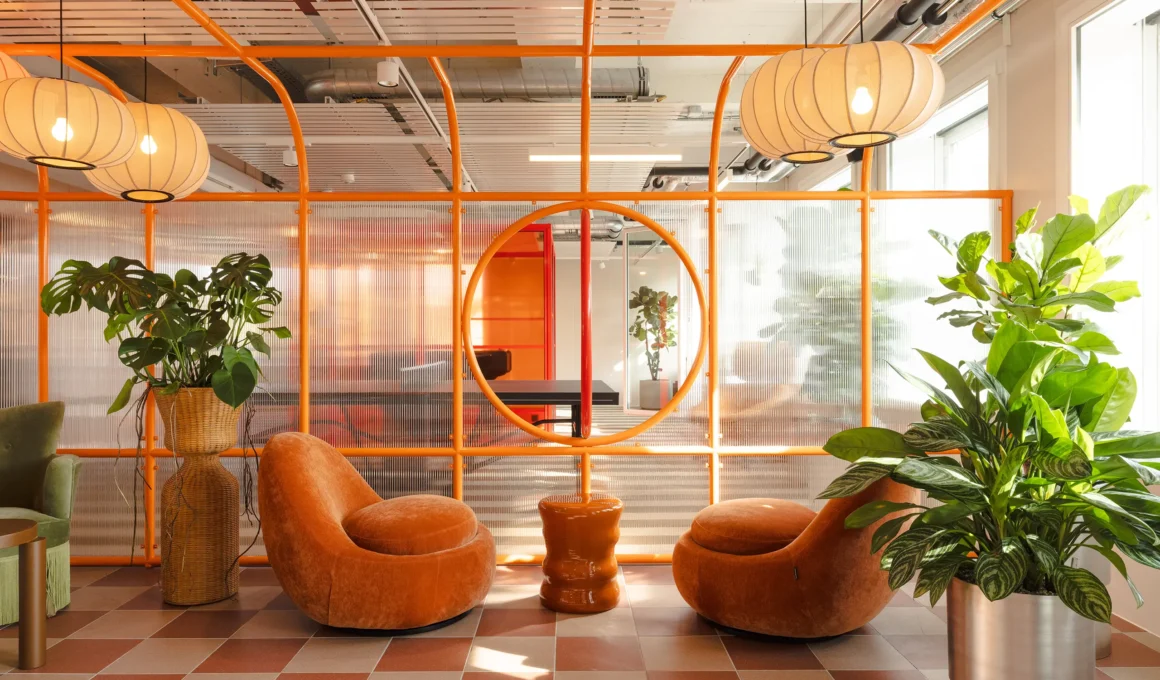
In the heart of Zurich, the collaboration between Swiss premium workspace provider Headsquarter and Studio Aisslinger reaches a definitive peak with “The Artistic,” a 4,100-square-meter flagship that dismantles the traditional office typology to create a hybrid environment where hospitality and community-driven professional life converge.
Beyond the Functional Grid. The conceptual vision for “The Artistic” begins with a deliberate shift in perspective. Rather than adhering to the rigid, often sterile layouts of corporate environments, Studio Aisslinger has introduced a fluid spatial organization that prioritizes the human experience over mere desk count. With over 550 workstations distributed across multiple floors, the challenge was to maintain a sense of intimacy and “emotional belonging” within a significant architectural volume. The result is a landscape that feels less like a place of mandatory production and more like a curated destination for self-determined work.
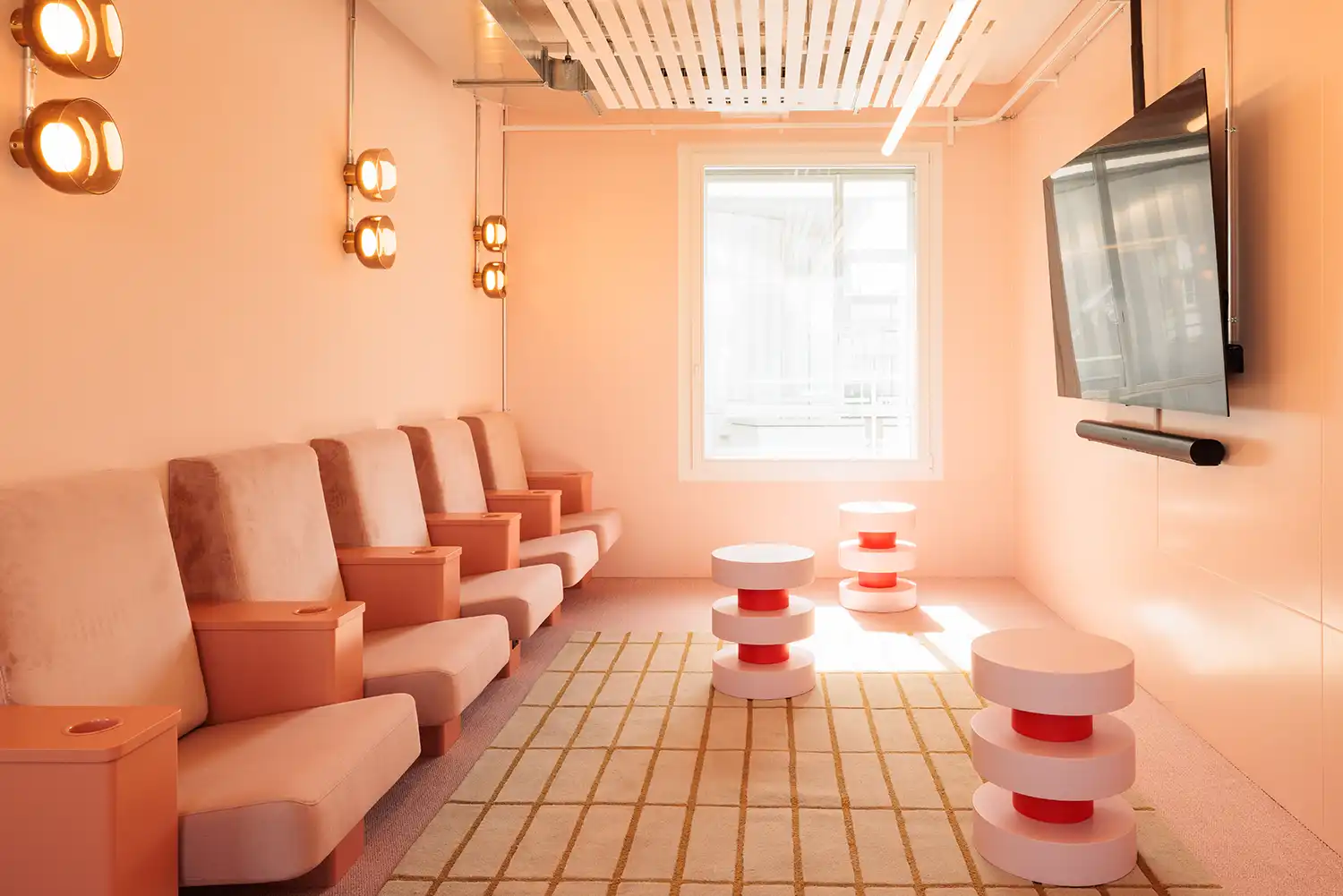
The Hospitality Hybrid. The guiding motif, “This is not a hotel,” serves as a playful paradox. While the aesthetic draws heavily from the warmth and material richness of boutique hospitality, the functionality remains tethered to the high-performance needs of modern industry. By integrating warm color palettes and eclectic design elements reminiscent of retro pop culture, the studio avoids the coldness of typical coworking models. This layered approach ensures that the transition from a private task to a social interaction feels organic, mirroring the way we navigate high-end leisure spaces.
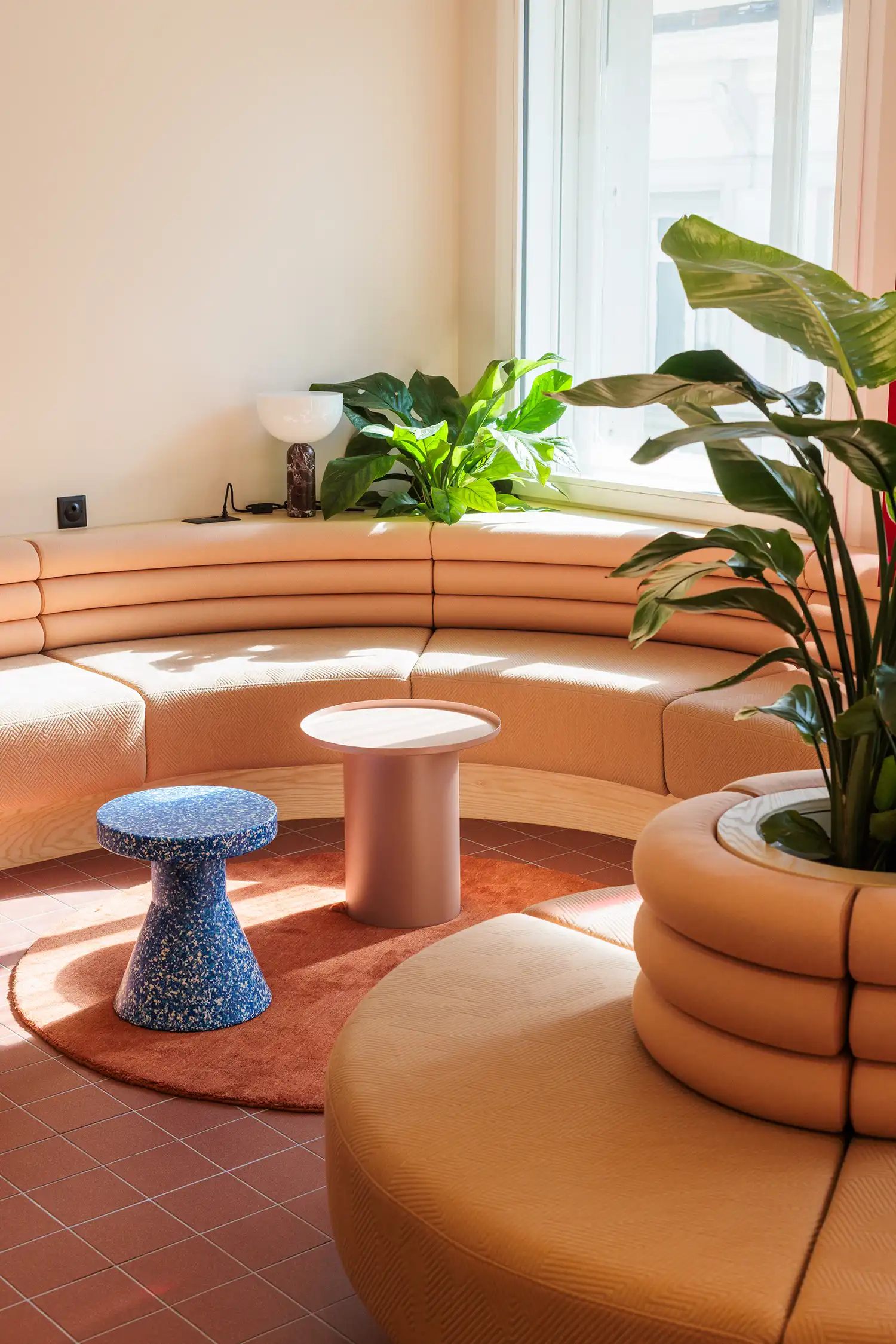
Acoustic and Psychological Zoning. Technical precision lies beneath the project’s vibrant surface. To avoid the auditory chaos often found in large-scale hubs, the floor plates are acoustically differentiated, creating a spectrum of soundscapes tailored to various professional needs. This psychological grounding is essential; by offering a variety of “retreat opportunities” alongside open collaborative zones, the project empowers users to choose an environment that matches their internal state. This spatial appropriation is a key driver for long-term motivation and cognitive performance in the modern workforce.
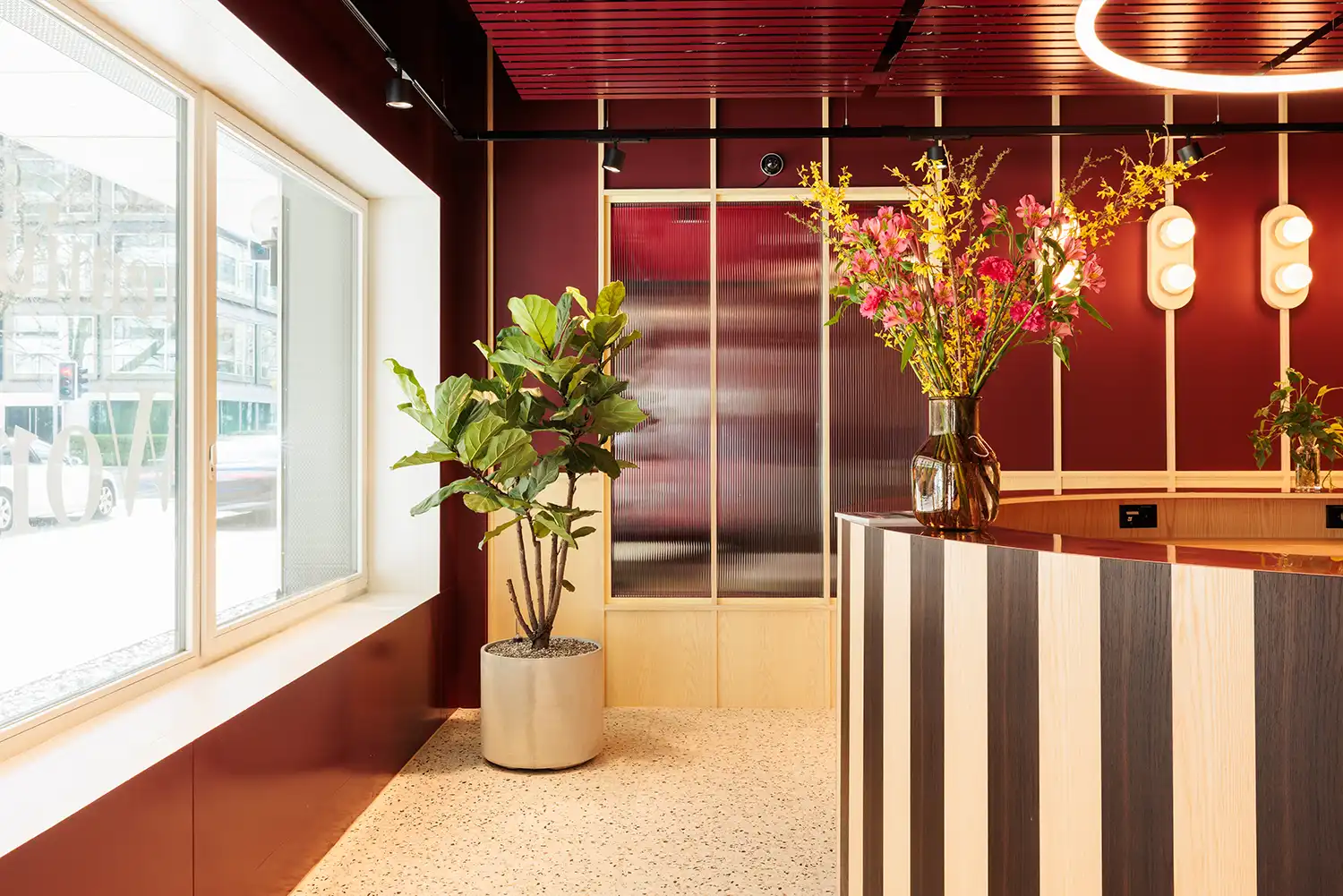
Escapism as a Tool for Productivity. Central to the “The Artistic” are the so-called “escapist spaces”. These areas—including a dedicated podcast studio, a sophisticated reception lounge, and a high-design event bar—are engineered to break the monotony of the workday. These are not merely amenities but strategic interventions designed to shift the user’s mindset. By stepping into an environment that feels removed from the “office,” employees can find the mental distance necessary for creative problem-solving and authentic community building.
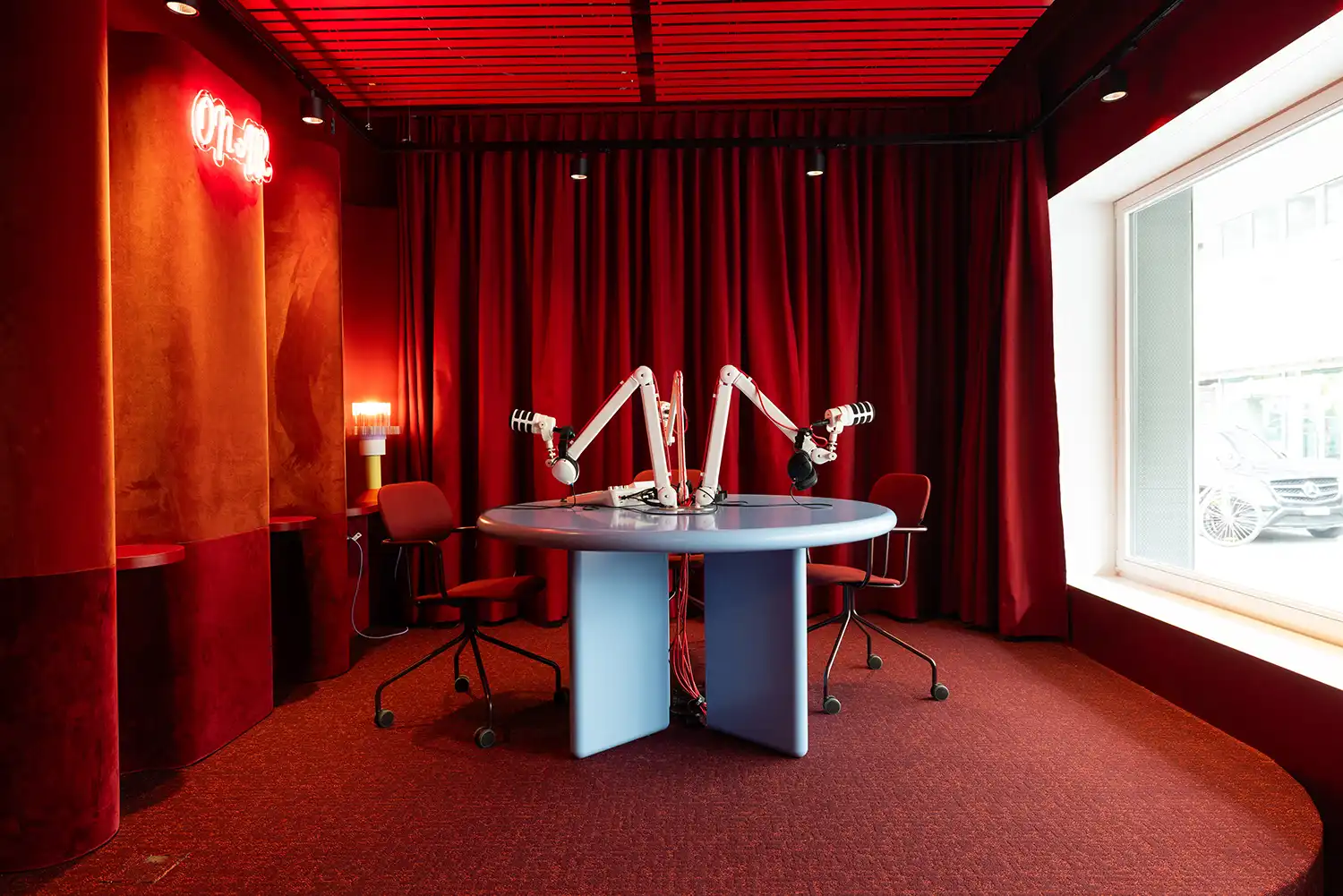
The Power of Connection. A significant emphasis has been placed on the design of meeting environments. Moving away from the boardroom cliché, these spaces are treated as hubs for vibrant exchange. They are characterized by a touch of extravagance that signals the importance of the human relationships formed within them. Whether it is a formal pitch or a casual brainstorm, the environment reinforces the idea that collaborative value creation is a social act, best performed in a setting that feels hospitable and inclusive.
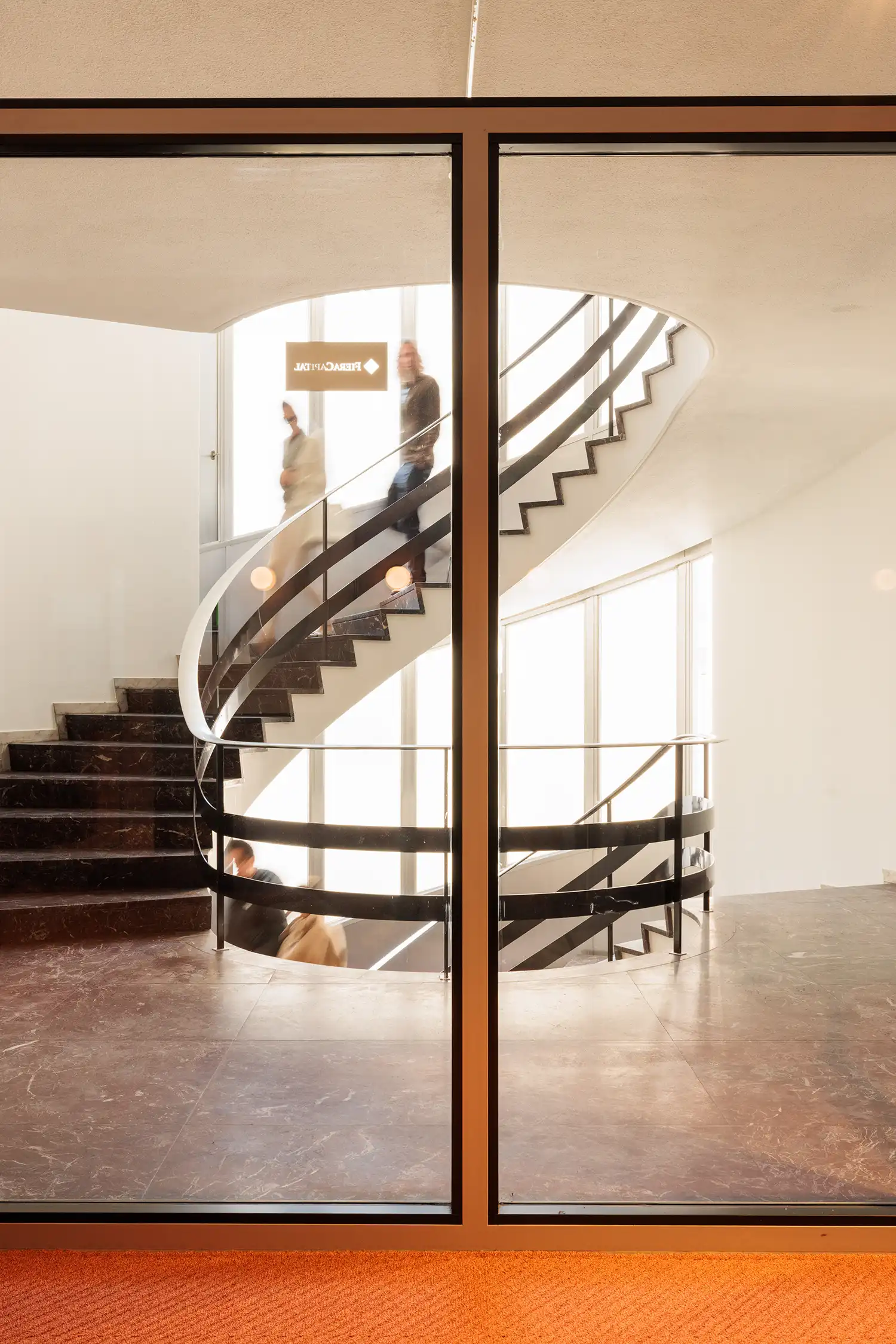
A Manifesto for New Work. This project represents a bold statement for a new work culture where productivity and well-being are no longer viewed as competing interests. By treating the workspace as a living ecosystem, Headsquarter and Studio Aisslinger have created a blueprint for the future of urban professional life. It is an immersive experience that recognizes that the “office” of the future must offer something that the home or the local café cannot: a sense of shared purpose within a meticulously crafted, high-authority environment.
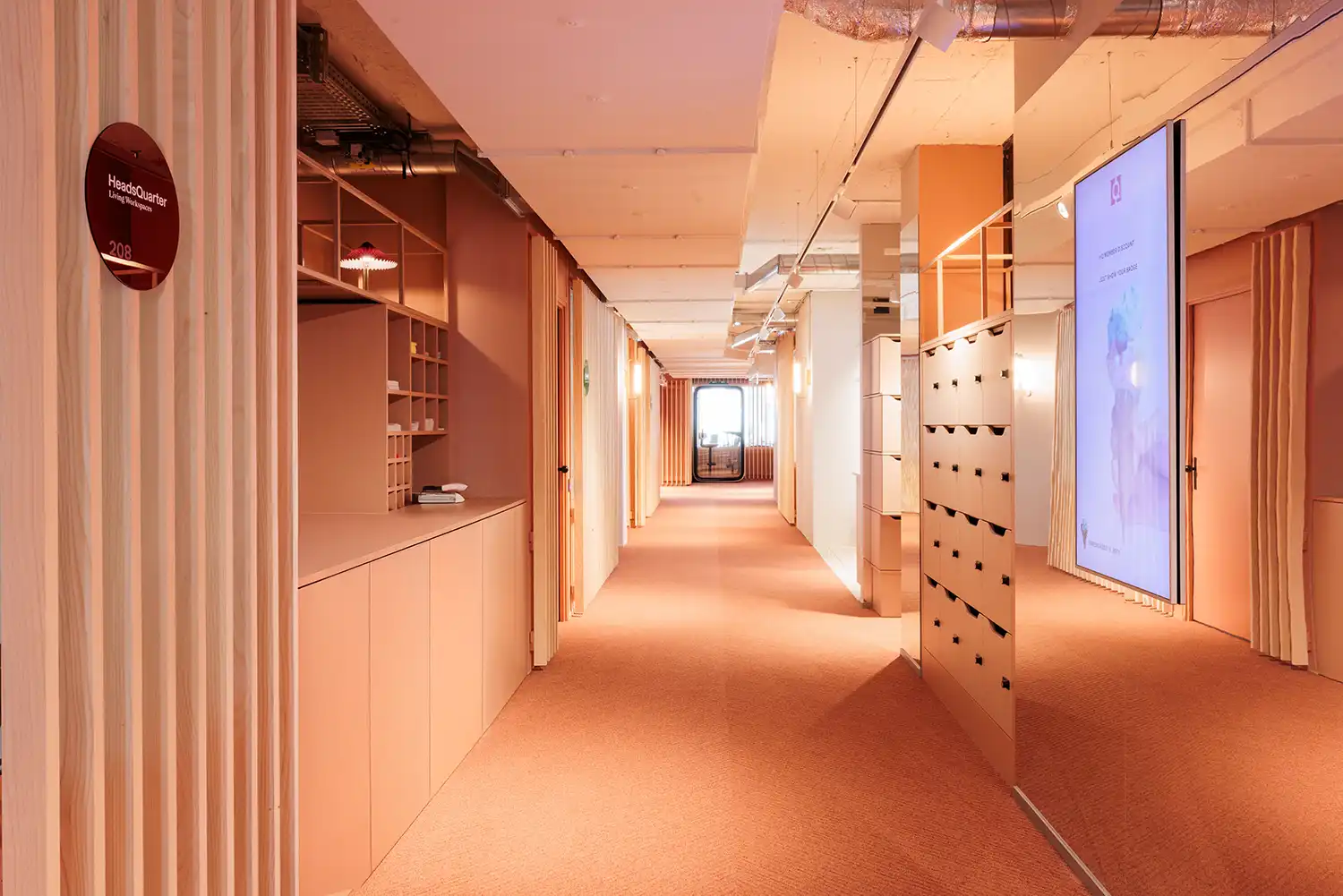
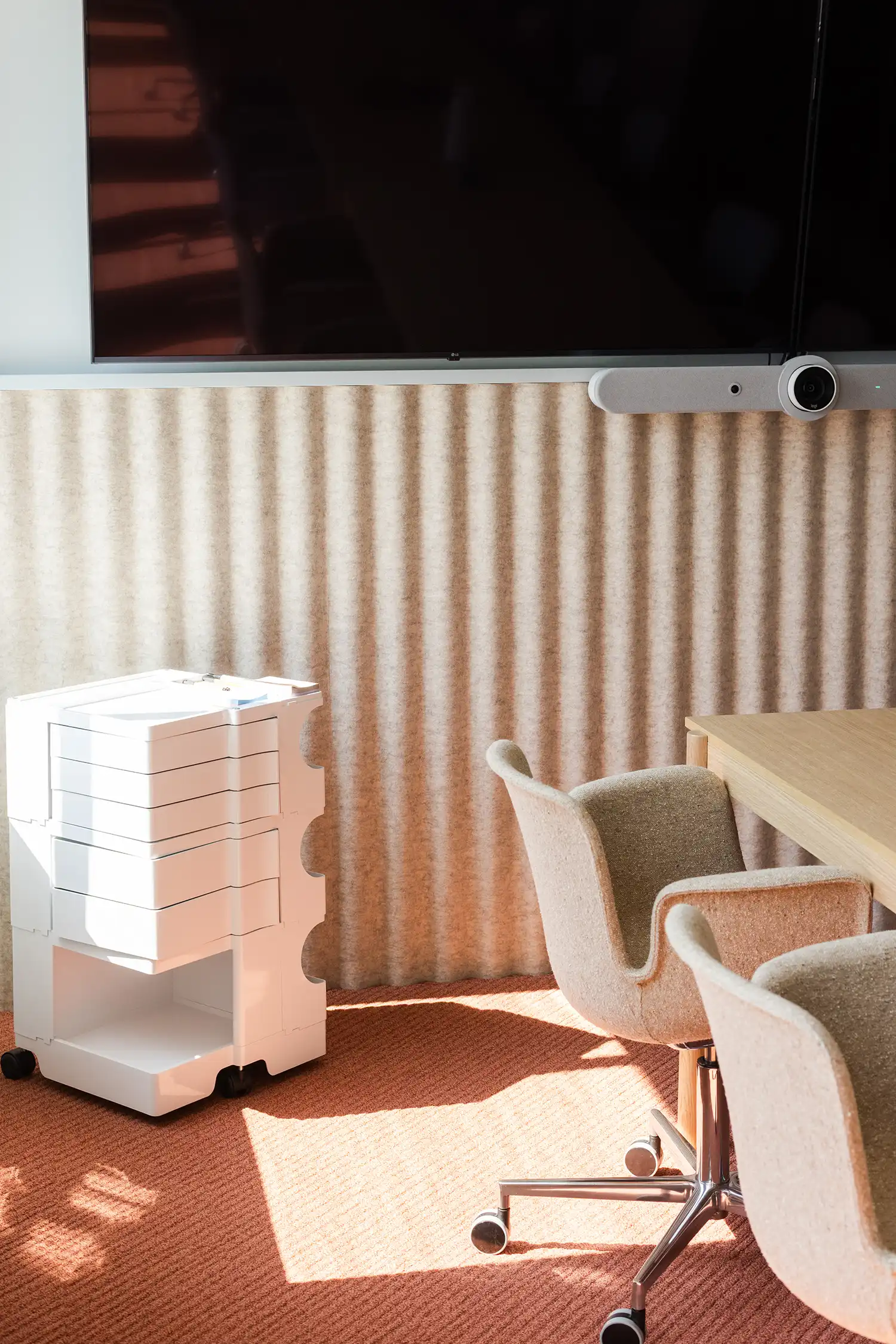
Materiality and Sensory Depth. The sensory experience of “The Artistic” is defined by its tactile variety. From soft textiles that dampen sound to the sleek lines of custom furniture, every detail is intended to be felt as much as seen. This attention to detail elevates the project from a simple interior renovation to a pioneering flagship for the Swiss market. It challenges the status quo of Zurich’s professional landscape, proving that a high-density workspace can still feel soulful and deeply personal.
This shift toward highly curated, atmospheric professional hubs is part of a broader international movement. We are seeing a similar rejection of the corporate “beige” in other European capitals, such as the hospitality-inspired Conductor workspace in Stratford, where the focus on materiality and local context mirrors the sophisticated approach seen here in Zurich. These projects collectively signal that the next generation of premium boutique workspaces will be defined not by their utility, but by their ability to inspire and emotionally connect with the global workforce.