

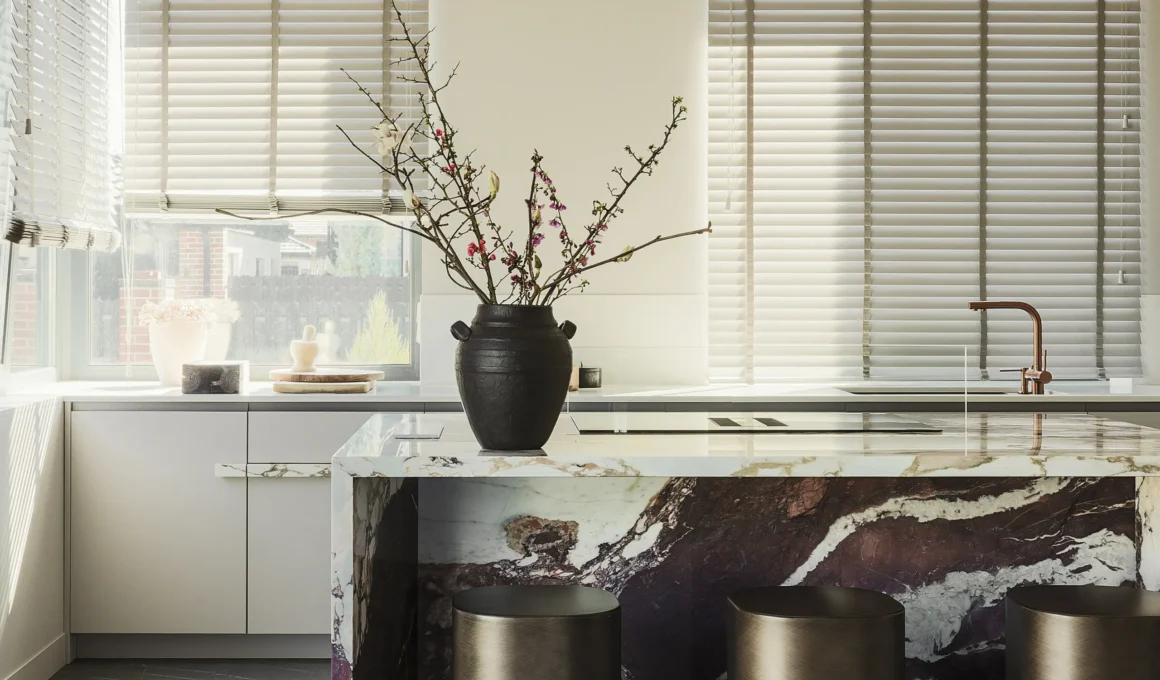
The pursuit of a familial retreat often begins with a search for silence, but for a family of four in the suburbs of Kyiv, it began with a search for the perfect stone. Designed by Vilchynska Design Bureau, the Calacatta Viola House is a project defined by its rejection of the sterile minimalism that often dominates modern residential work. Instead, the interiors lean into a rich, emotive palette where cool grays meet the intoxicating depth of wine-hued marble. The narrative of the home is one of transformation, taking an existing property with a functional layout and layering it with textures that evoke both permanence and warmth.
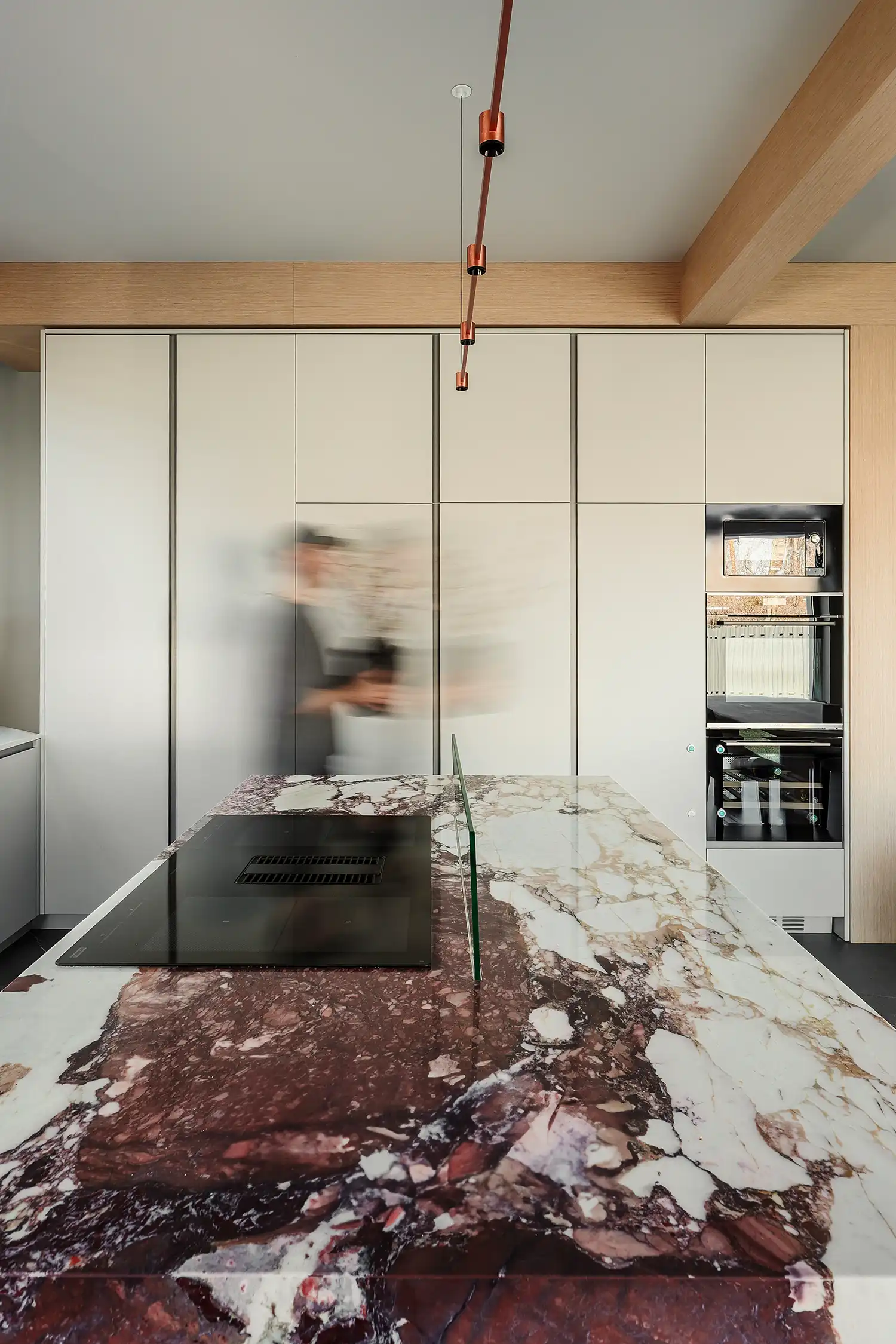
At the heart of the conceptual vision lies the decision to let the material palette dictate the emotional temperature of the space. Founder Anastasia Vilchynska steered the project toward a sophisticated interplay of natural stone and copper details, anchored by the striking presence of Calacatta Viola marble. This specific stone serves as a rhythmic thread throughout the home, appearing as a sculptural kitchen island, a bespoke bathroom sink, and a minimalist fireplace surround. By avoiding the impulse to bring in furniture or art from their previous residence, the clients allowed the architecture itself—and its high-contrast materiality—to become the primary source of personality.
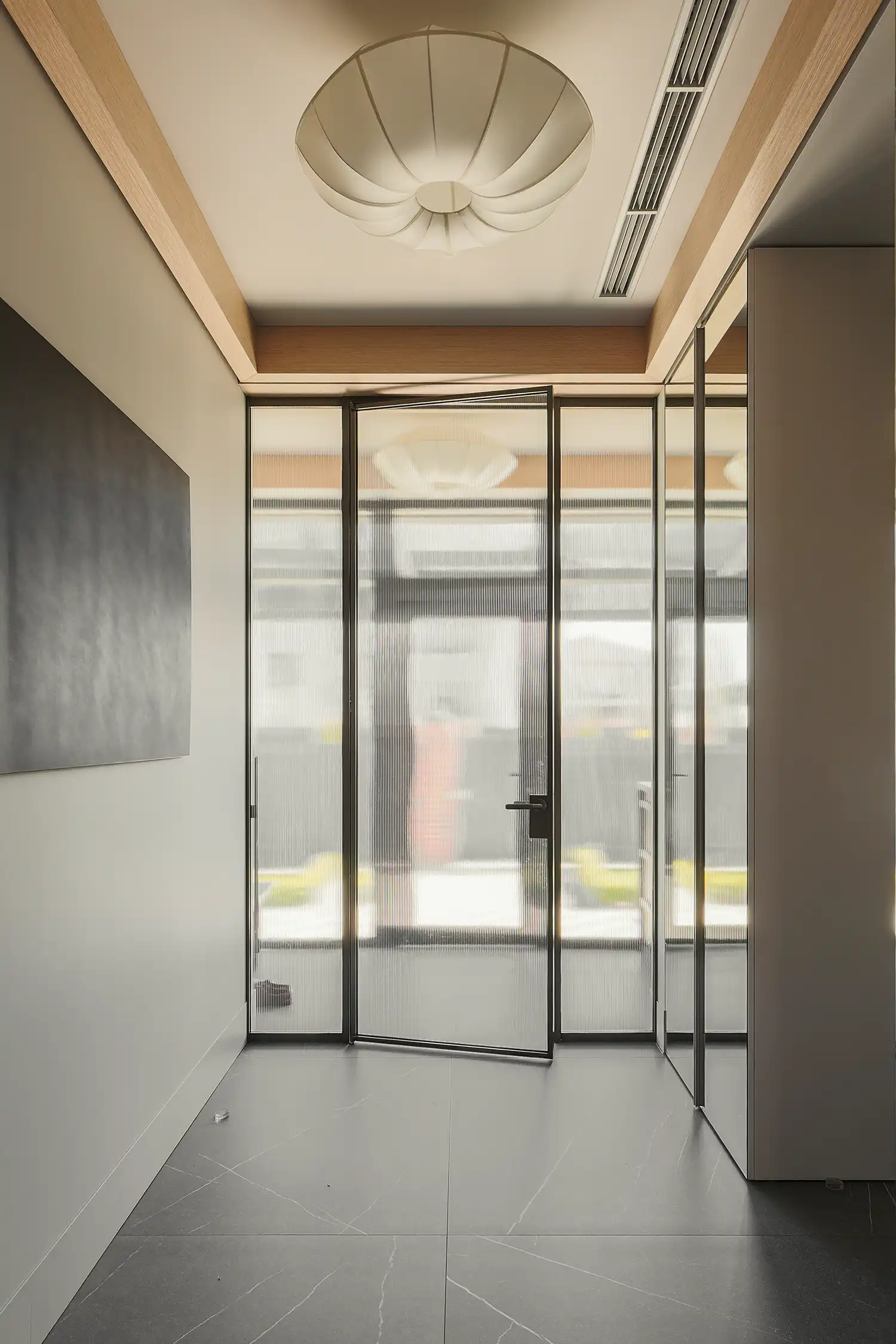
The technical choreography of the first floor involved a strategic reconfiguration to prioritize flow and utility without sacrificing the sense of entry. By relocating the guest bathroom, the studio carved out space for extensive storage, essential for a busy family life. A geometric glass partition, crafted from embossed glass, now defines the hallway, acting as a functional thermal buffer while diffusing light across a decorative copper composition. These enlarged doorways and vertical lines lend the interior a sense of scale, ensuring that even the transitional areas of the home feel considered and expansive.
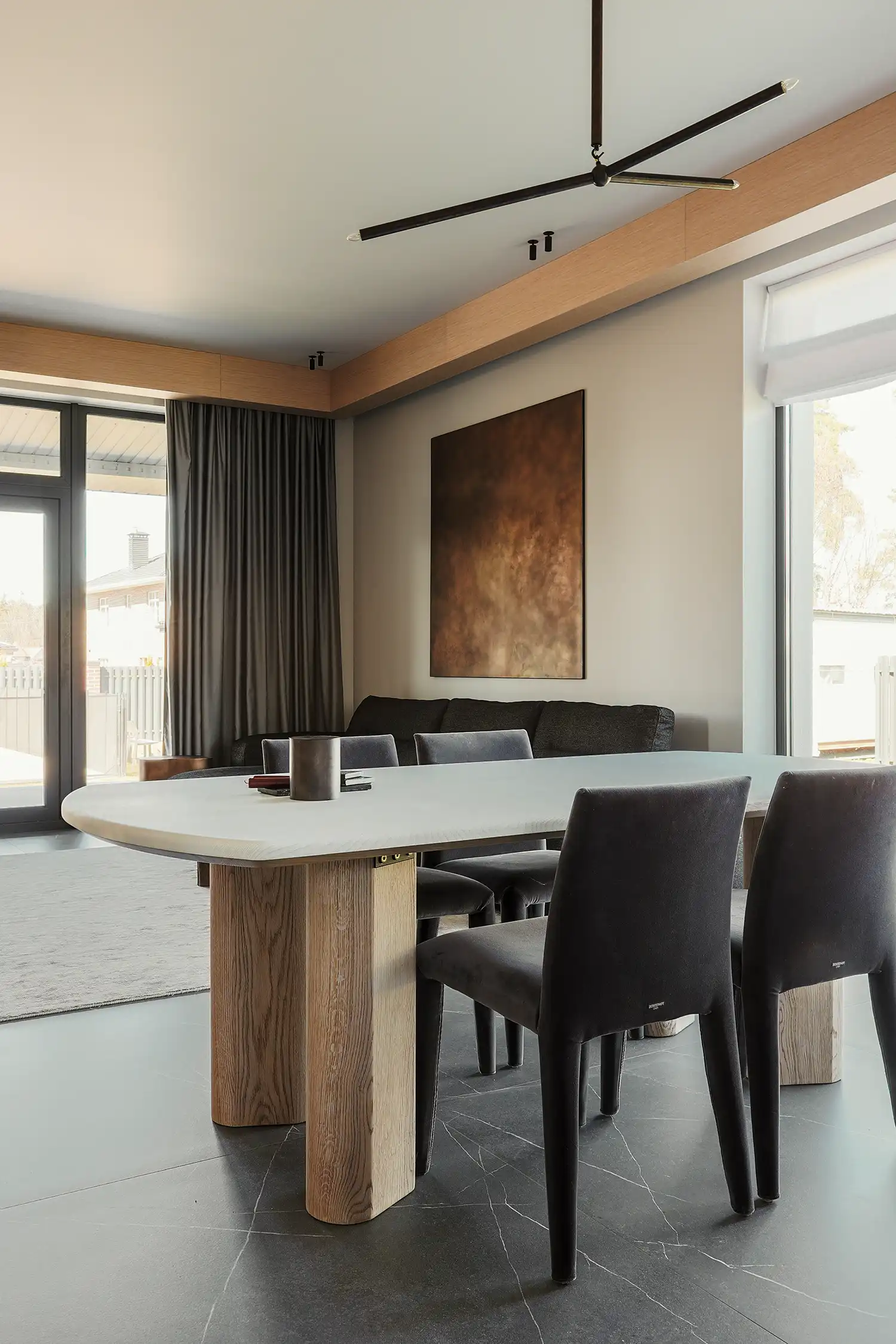
Zoning through structural elements provided a clever solution to the common problem of exposed technical systems. In the kitchen, what began as a decorative proposal for ceiling beams evolved into a sophisticated concealment strategy for the ventilation system. This integration of form and function extends to the second floor, where the master suite was optimized by replacing a redundant bathroom with a generous dressing room. The result is a layout that feels intuitive, where the “back-of-house” logistics are hidden behind a facade of textured thermowood and refined joinery.
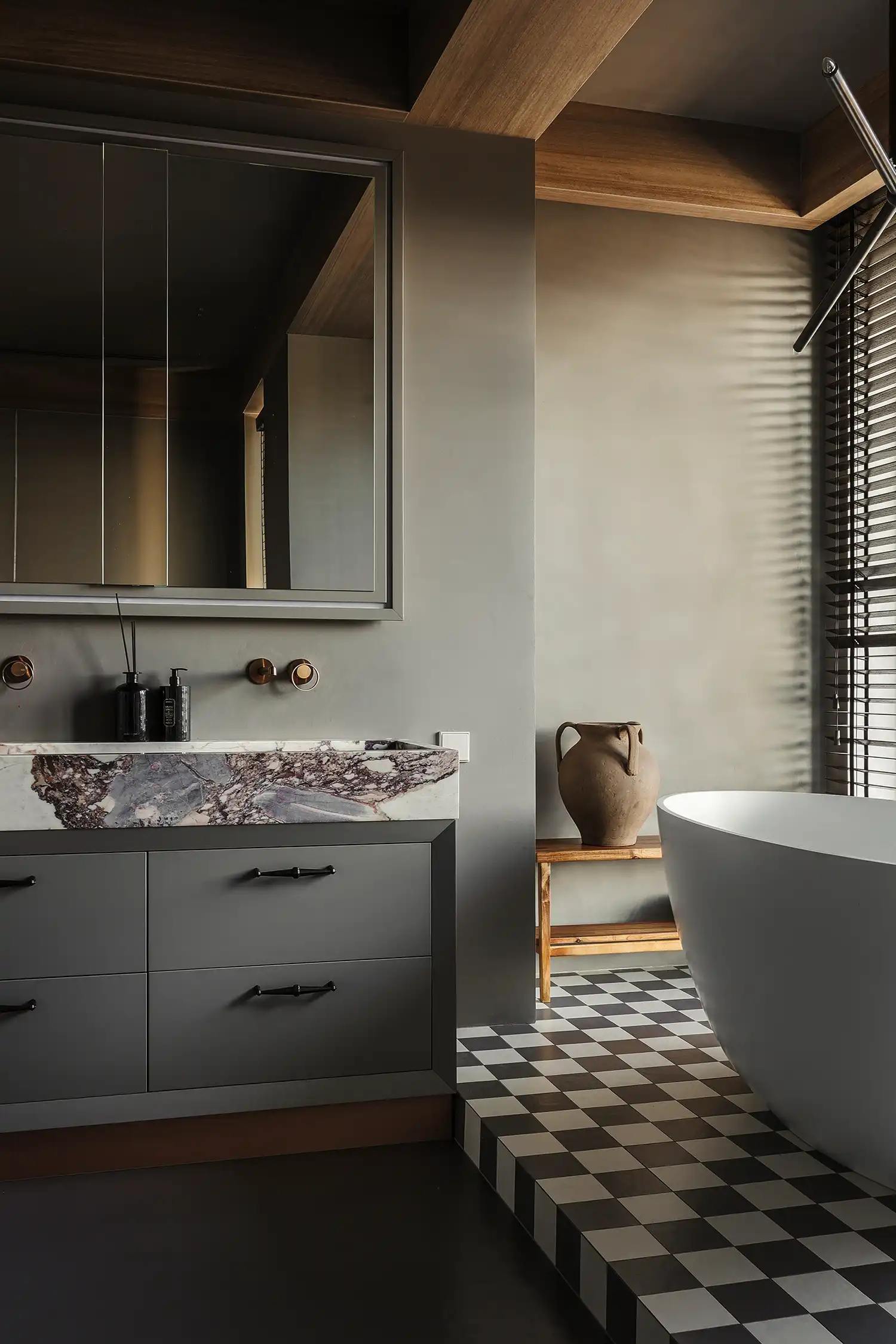
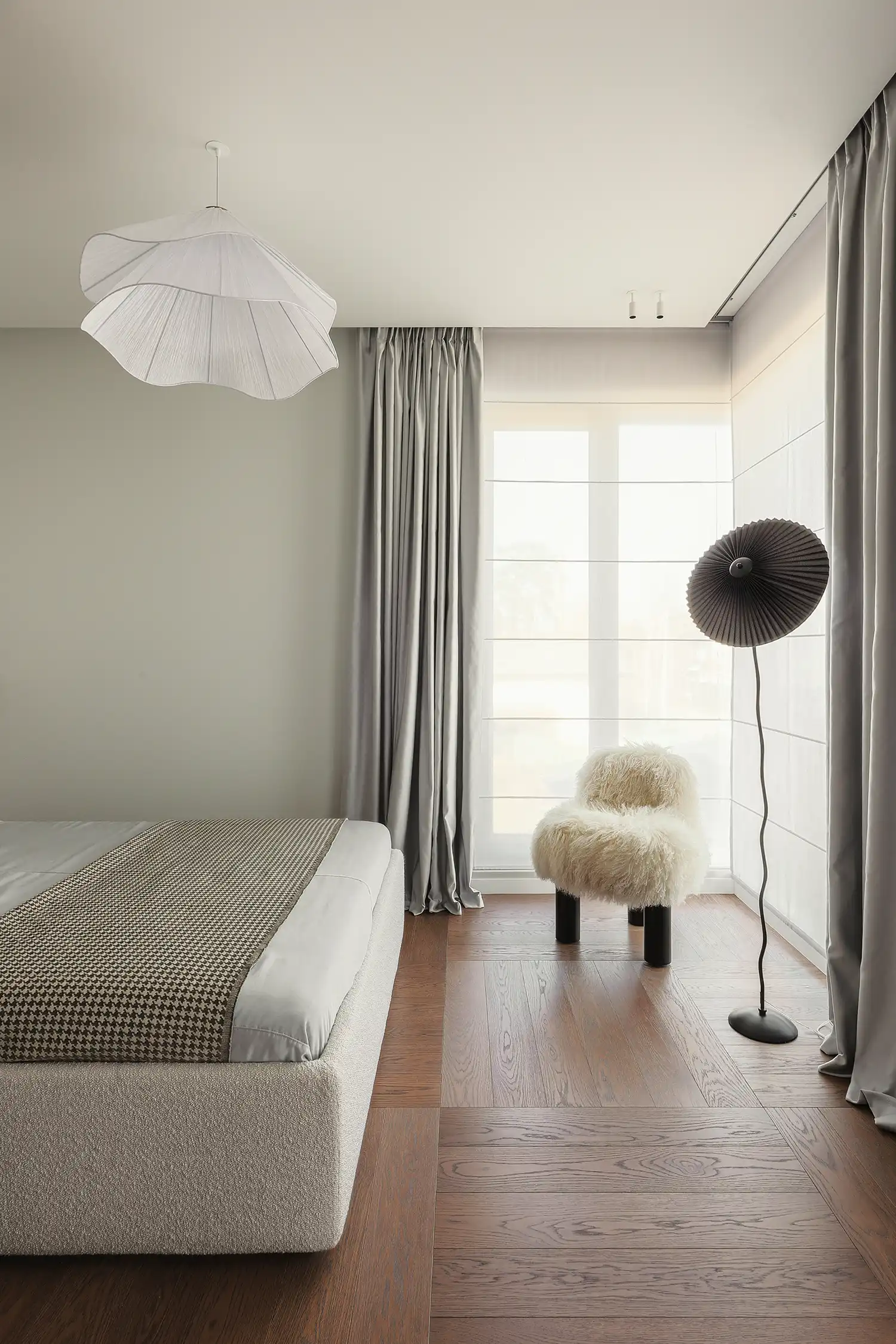
Achieving the perfect atmosphere required a rigorous, almost obsessive approach to color theory. The design team conducted seven separate paint trials to find a gray that remained neutral under the shifting Ukrainian sky, avoiding the purple undertones reflected from the landscape. This same level of precision was applied to the parquet flooring, which underwent seven iterations to reach the exact depth of tone required to ground the vibrant marble accents. These subtle nuances—the grit of microcement against the softness of natural wallpaper—create a sensory experience that feels both curated and deeply lived-in.
Refining the residential landscape of Kyiv has become a hallmark of the city’s burgeoning design scene, where projects like this one sit alongside other notable interventions. While the Calacatta Viola House focuses on a moody, stone-heavy aesthetic, one can see a similar dedication to texture in the Kyiv Landscape Alley Apartment, which utilizes a lighter touch to connect with its urban surroundings. Conversely, for those interested in a more structured, geometric approach to modern Ukrainian apartment design, the city continues to prove itself as a hub for sophisticated interior solutions that balance heritage with a contemporary edge.