

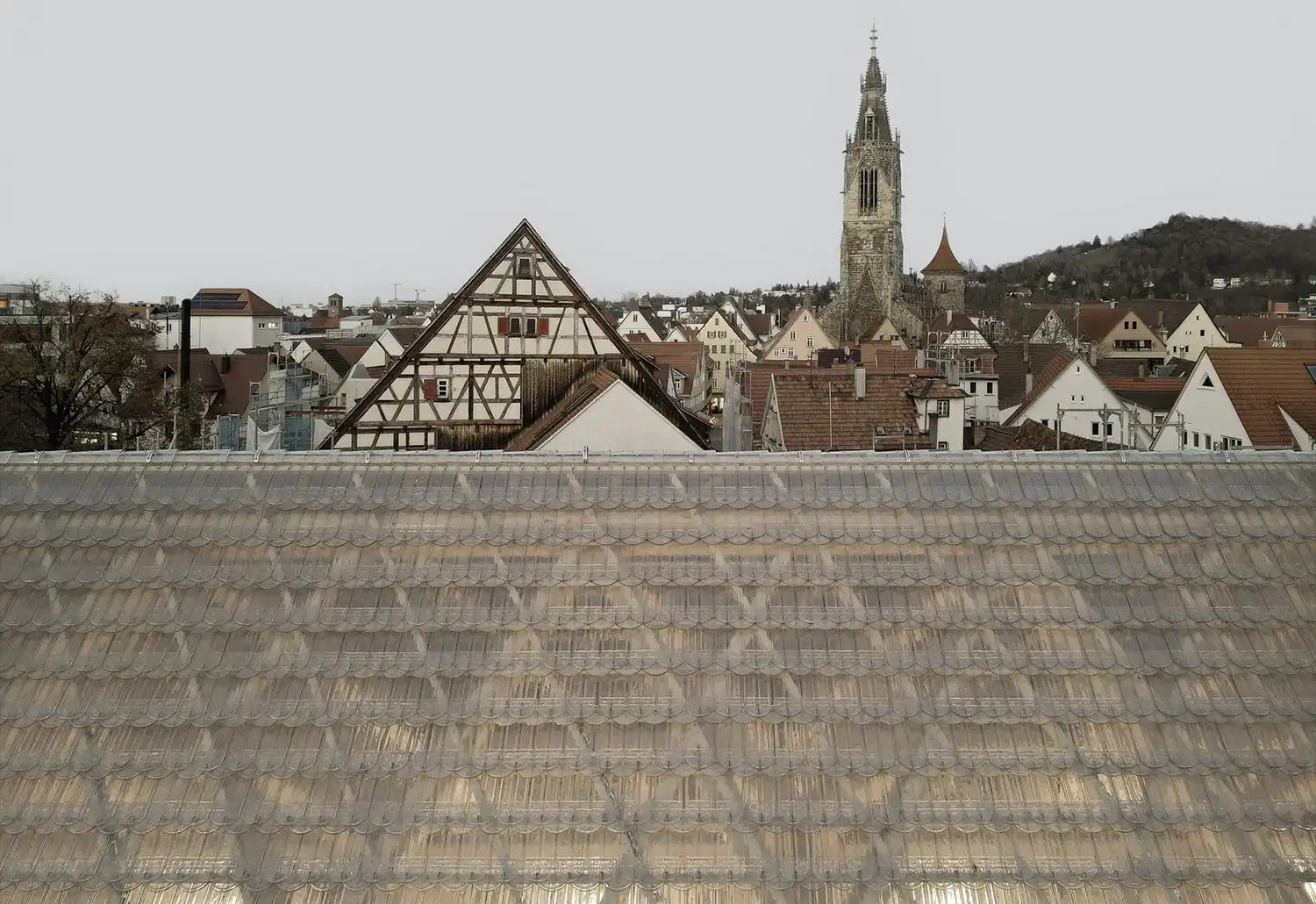
A threshold between centuries, the historic row of houses at Oberamteistraße 28–32 in Reutlingen, Germany, stands as a silent witness to the evolution of Southern German urbanism. These structures, rooted in the 12th and 13th centuries, represent one of the oldest half-timbered ensembles in the region, authentically reflecting the domestic cultures of a former Free Imperial City. For decades, however, a void haunted this streetscape—the site of the “Stone House” at number 34, demolished in 1972. The recent intervention by Wulf Architekten does not merely fill this gap with contemporary volume; it performs a delicate architectural séance, materializing a lost icon through a lens of modern abstraction.
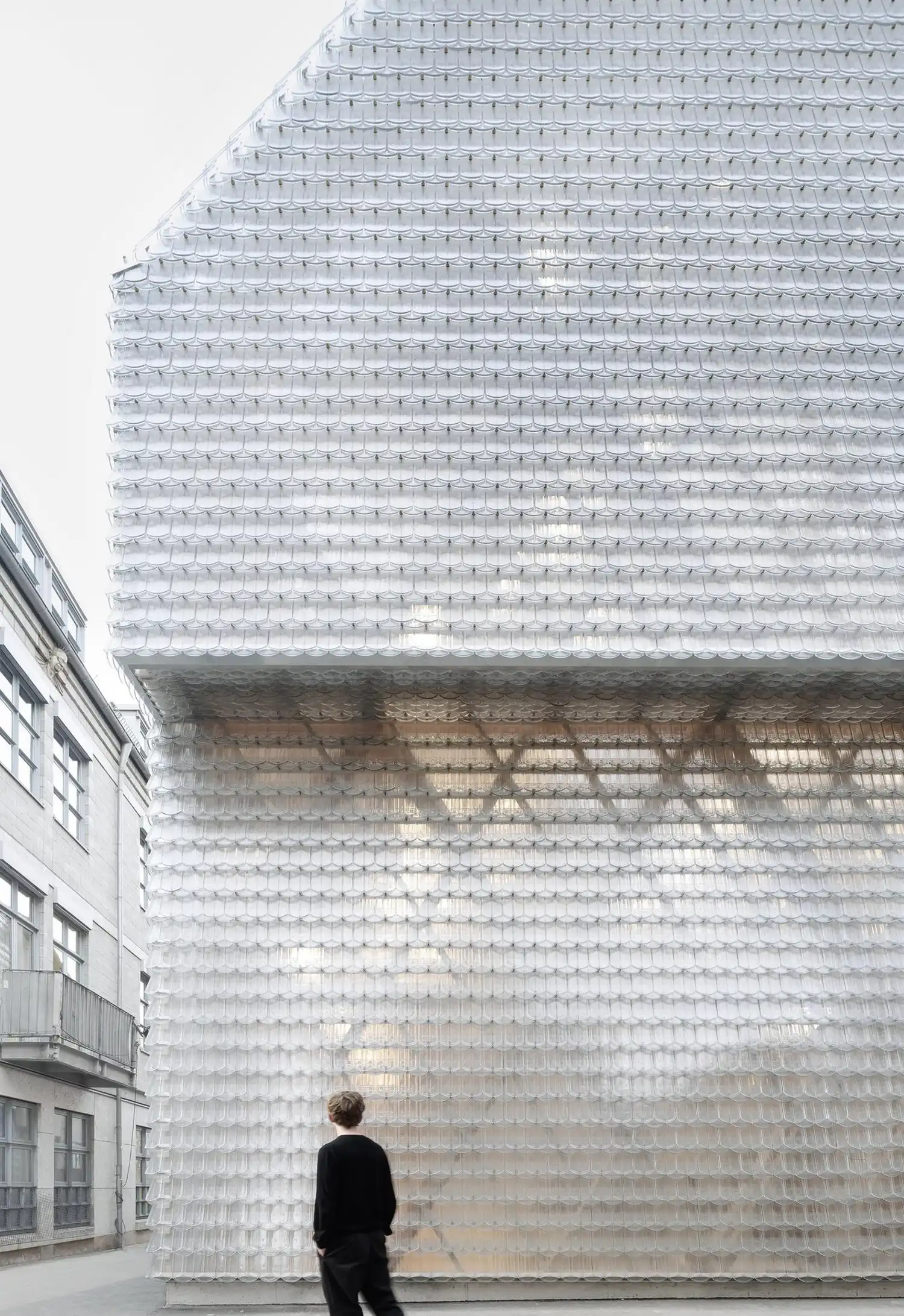
The conceptual vision for the Museum Historical Oberamteistraße centers on the idea of the building as an exhibit in its own right. Rather than treating the medieval timber frames as mere containers for artifacts, the architects have restored the existing fabric according to strict preservation criteria, allowing 700 years of cultural history to speak through the walls. The “Stone House” site, however, demanded a different language—one that could bridge the heavy materiality of the past with the functional requirements of a 21st-century cultural institution. The resulting corner building acts as a structural anchor, providing essential barrier-free access and event spaces while shoring up the fragile adjoining row.
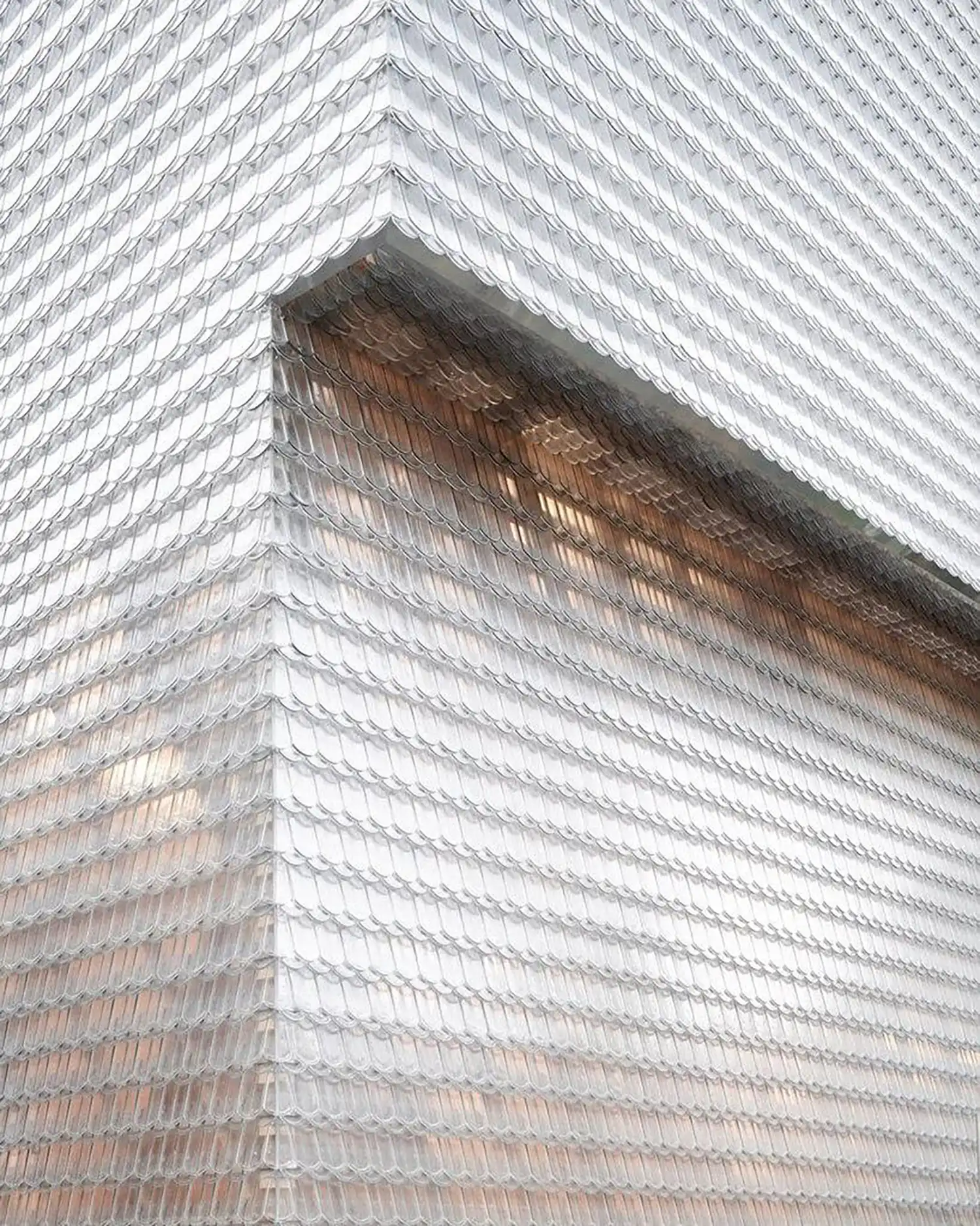
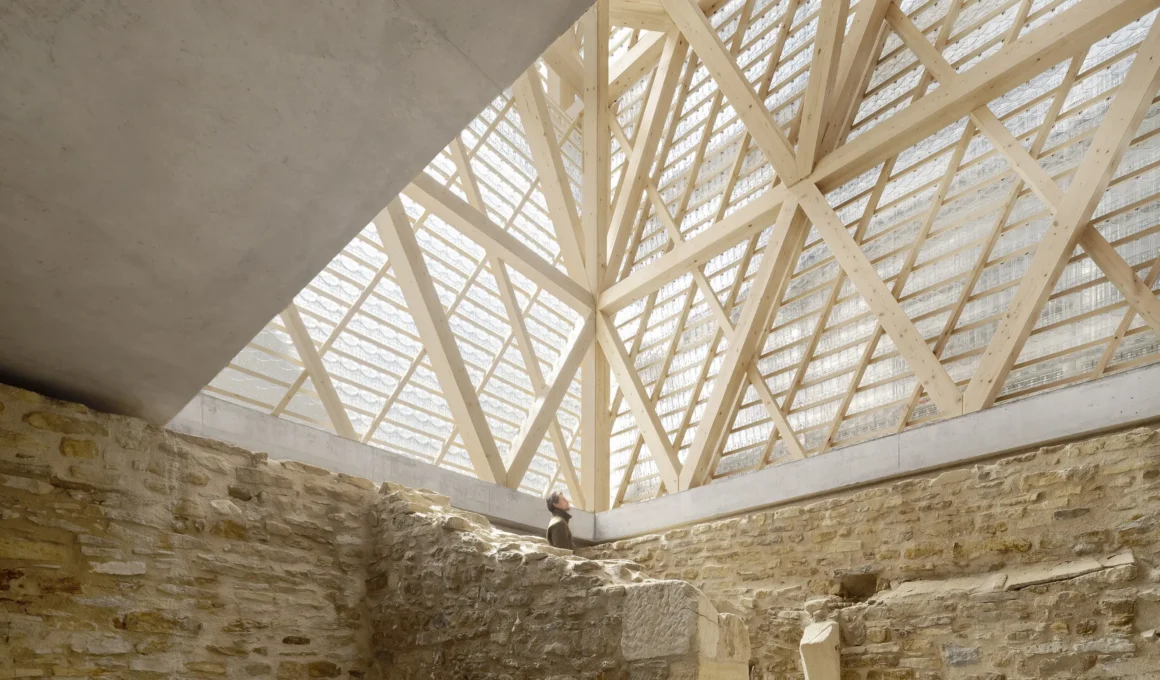
Technical ingenuity meets poetic form in the internal skeleton of the new addition. A complex wooden trusswork system reestablishes the lost geometry of the original historic house, yet it does so without resorting to pastiche. This timber framework is wrapped in a homogeneous skin of cast-glass “beaver-tail” tiles, a contemporary riff on traditional roofing scales. The sensory experience is one of constant flux; depending on the angle of the sun or the glow of interior lights, the wooden “bones” of the structure appear and disappear behind the glass. The building behaves like a chimera—at times a solid, glittering mass, at others a translucent veil that feels like a fading memory.
Navigating the interior offers a journey through time where the tactile and the ethereal collide. Within the restored segments, the scent of aged wood and the irregular geometry of the medieval rooms ground the visitor in the reality of the Holy Roman Empire. Conversely, the new wing feels blurred and atmospheric. The cast-glass facade softens the surrounding cityscape, filtering the German daylight into a milky, quiet ambiance. It is a space designed for contemplation, where the architecture itself suggests that history is not a static point in time, but a layered, evolving narrative that remains partially obscured by the present.
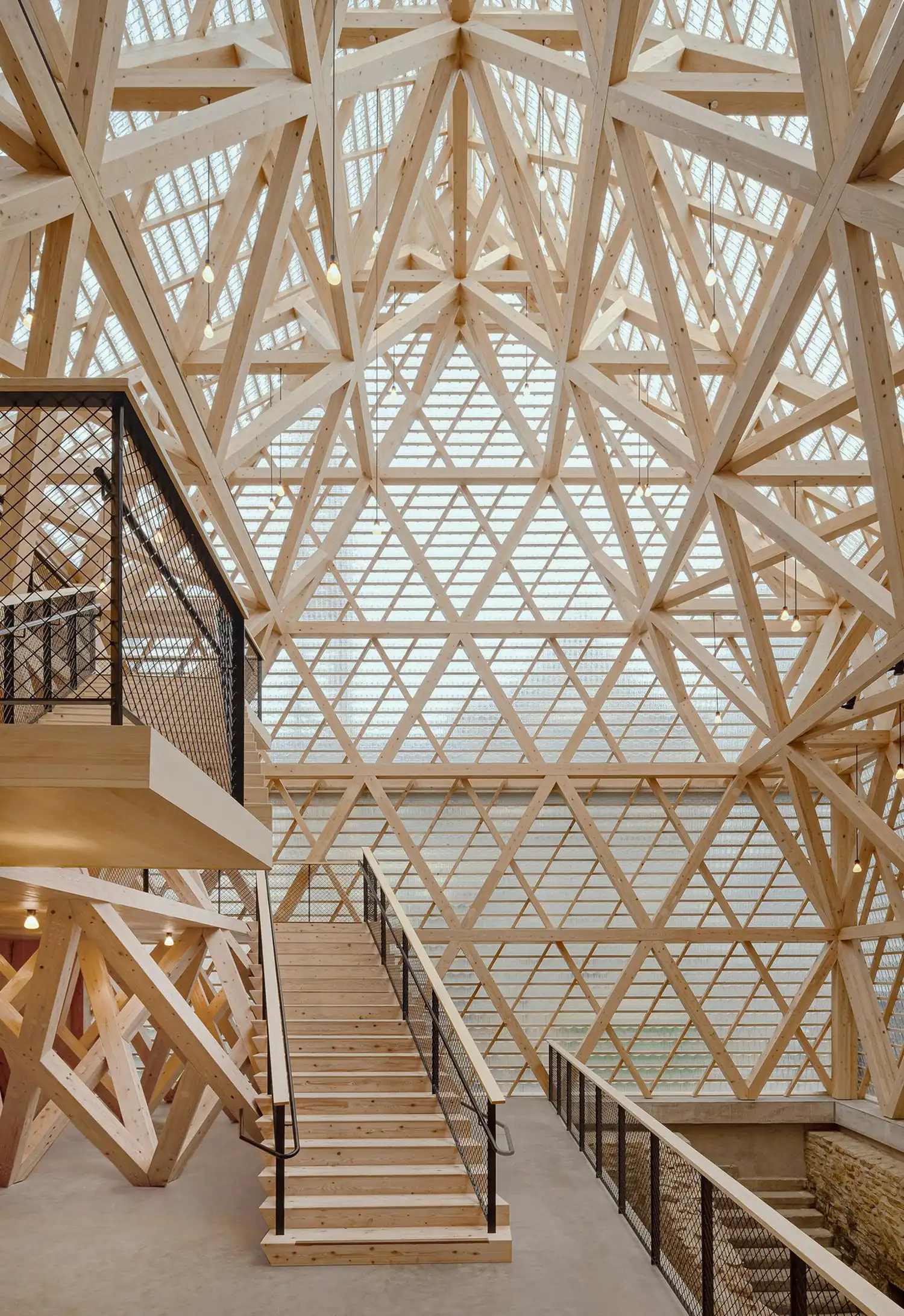
The contextual impact of this project lies in its ability to restore the iconic silhouette of Reutlingen while honoring the void left by 20th-century demolition. By using transparency to signal “absence,” Wulf Architekten avoids the heaviness of stone while maintaining the urban density required for the street’s rhythm. This sophisticated use of a translucent outer skin to reveal an underlying structural logic draws a fascinating parallel to other European cultural milestones, such as the translucent ETFE membrane of the EMT Museum in Madrid, where modern materials are similarly employed to create a “glowing” urban landmark that balances technical performance with visual lightness.
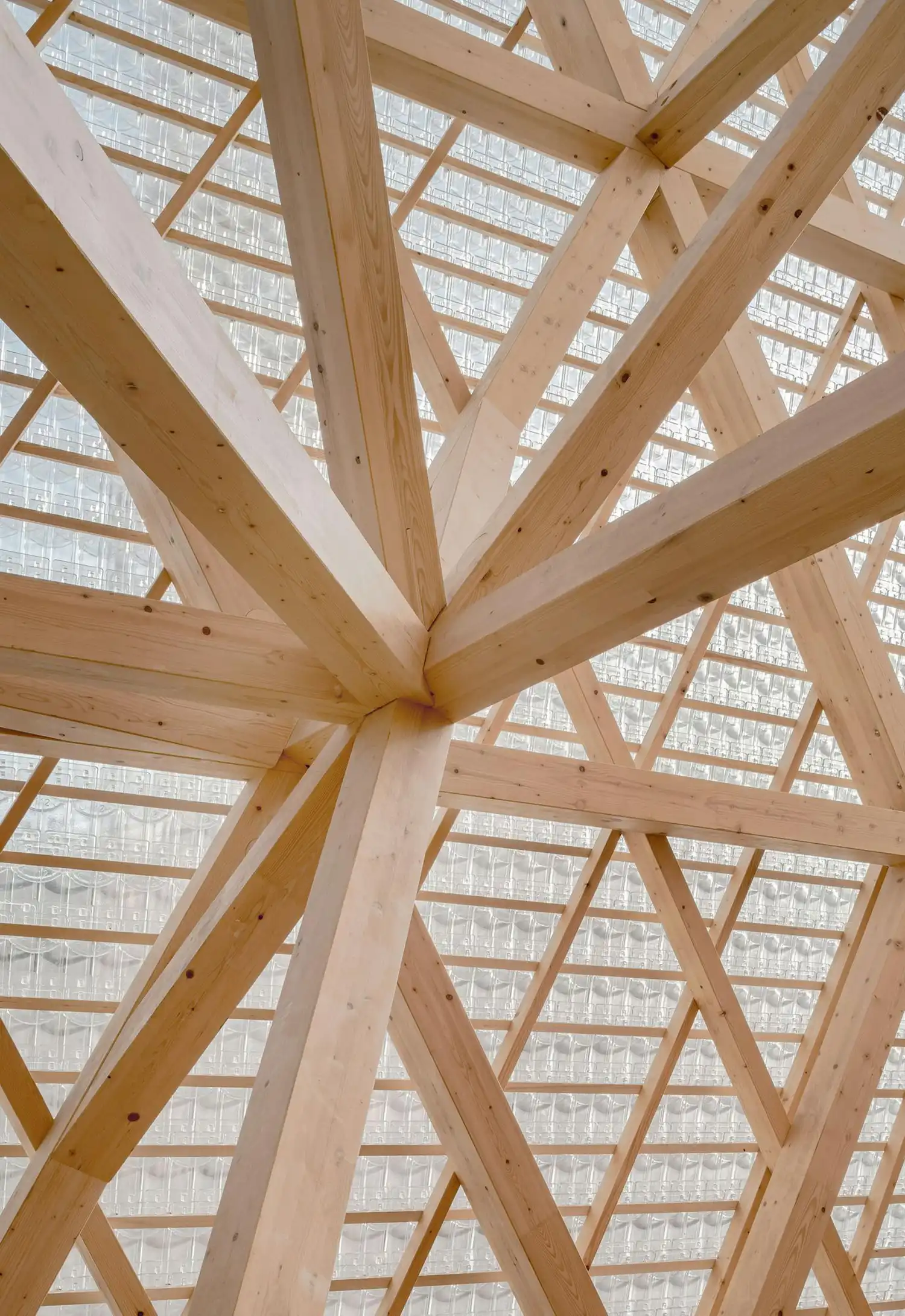
A legacy reclaimed, the ensemble now functions as a publicly accessible “exhibit” that invites the community to step into their own collective past. By treating the rehabilitation not just as a construction task but as an act of memory, the architects have ensured that what was once lost to progress is now preserved for future generations. The Museum Historical Oberamteistraße succeeds because it refuses to choose between the old and the new, opting instead for a diaphanous middle ground where the architectural heritage of Germany can shine through a contemporary prism.