



In a world where urban decay and nature’s resilience collide, Italian artist and designer Alessio Fava redefines the dialogue between concrete structures and organic life with his captivating project, Mondobruto. This innovative series of handcrafted terrariums merges the raw aesthetic of brutalist architecture with the vibrant energy of self-sustaining ecosystems, offering a microcosmic glimpse into the relentless power of nature to reclaim man-made spaces.
At the heart of Mondobruto lies a striking contrast: cast concrete sculptures, meticulously crafted using artisanal molds to replicate the geometric rigidity of brutalist buildings, are placed within glass enclosures teeming with mosses, plants, and natural substrates. Over time, these miniature landscapes evolve as vegetation colonizes the concrete, softening its harsh edges and transforming it into a living, breathing entity. The result is a dynamic interplay between decay and regeneration, where the boundaries between architecture and nature blur.
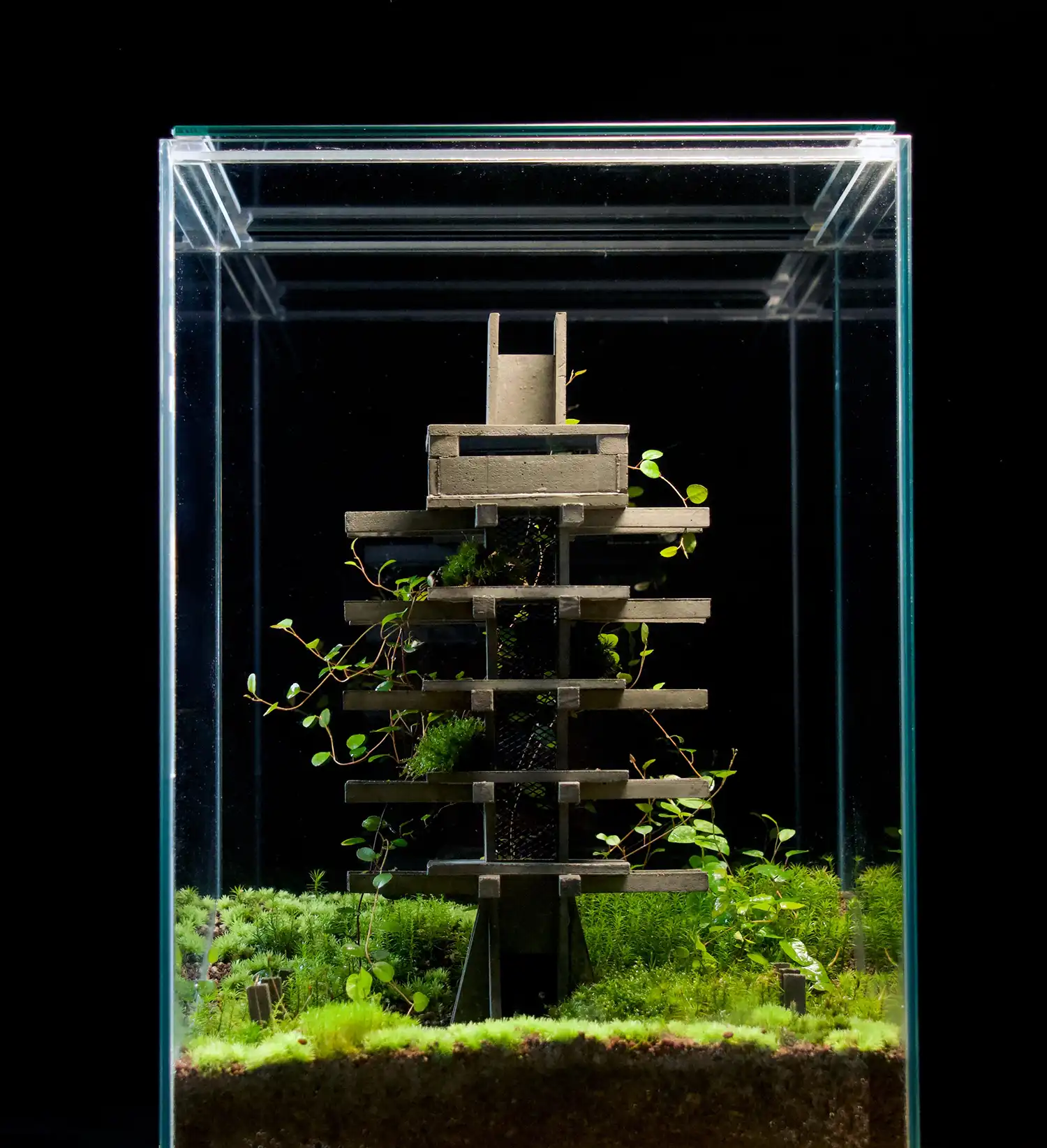
Fava’s work draws inspiration from abandoned structures, where nature slowly reclaims its territory—a process that typically unfolds over decades. Mondobruto accelerates this phenomenon, compressing it into a controlled, observable scale. The project challenges conventional notions of sustainable designand biophilic aesthetics, proposing a narrative where concrete jungles and organic growth coexist in harmony. By integrating Japanese planting techniques, Fava ensures each terrarium achieves a delicate balance between architectural form and ecological vitality.

Beyond its visual appeal, Mondobruto sparks a deeper conversation about urban regeneration, rewilding, and the lifecycle of built environments. In an era dominated by discussions of climate resilience and green architecture, Fava’s terrariums serve as poetic reminders of nature’s indomitable force. They ask: When human structures are left behind, does nature destroy them—or simply transform them into something new?
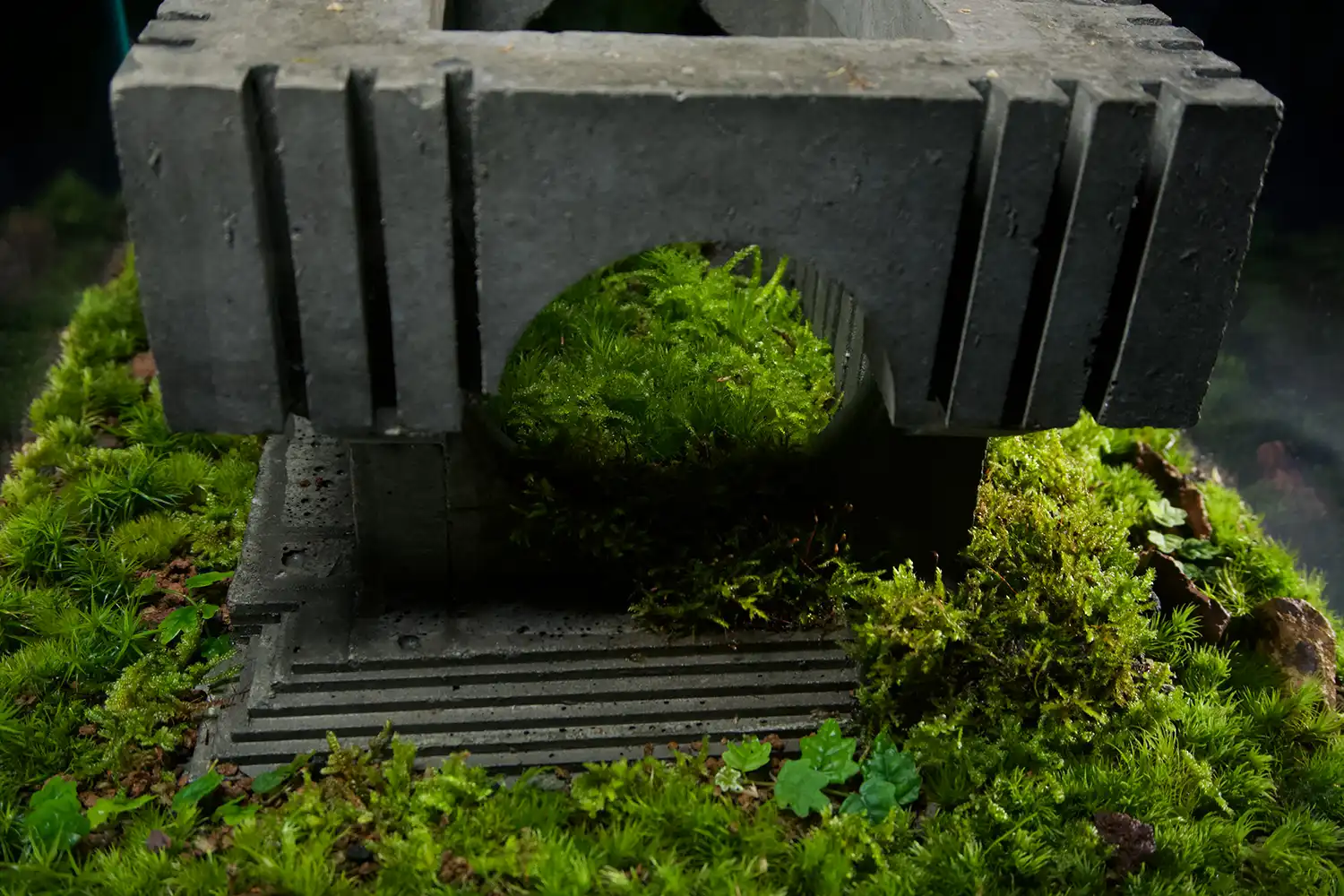
Situated at the intersection of art, design, and environmental activism, Mondobruto has garnered attention for its innovative approach to materiality and ecological storytelling. Fava’s work is not just an artistic statement but a call to rethink humanity’s relationship with the spaces it inhabits—and those it leaves behind.
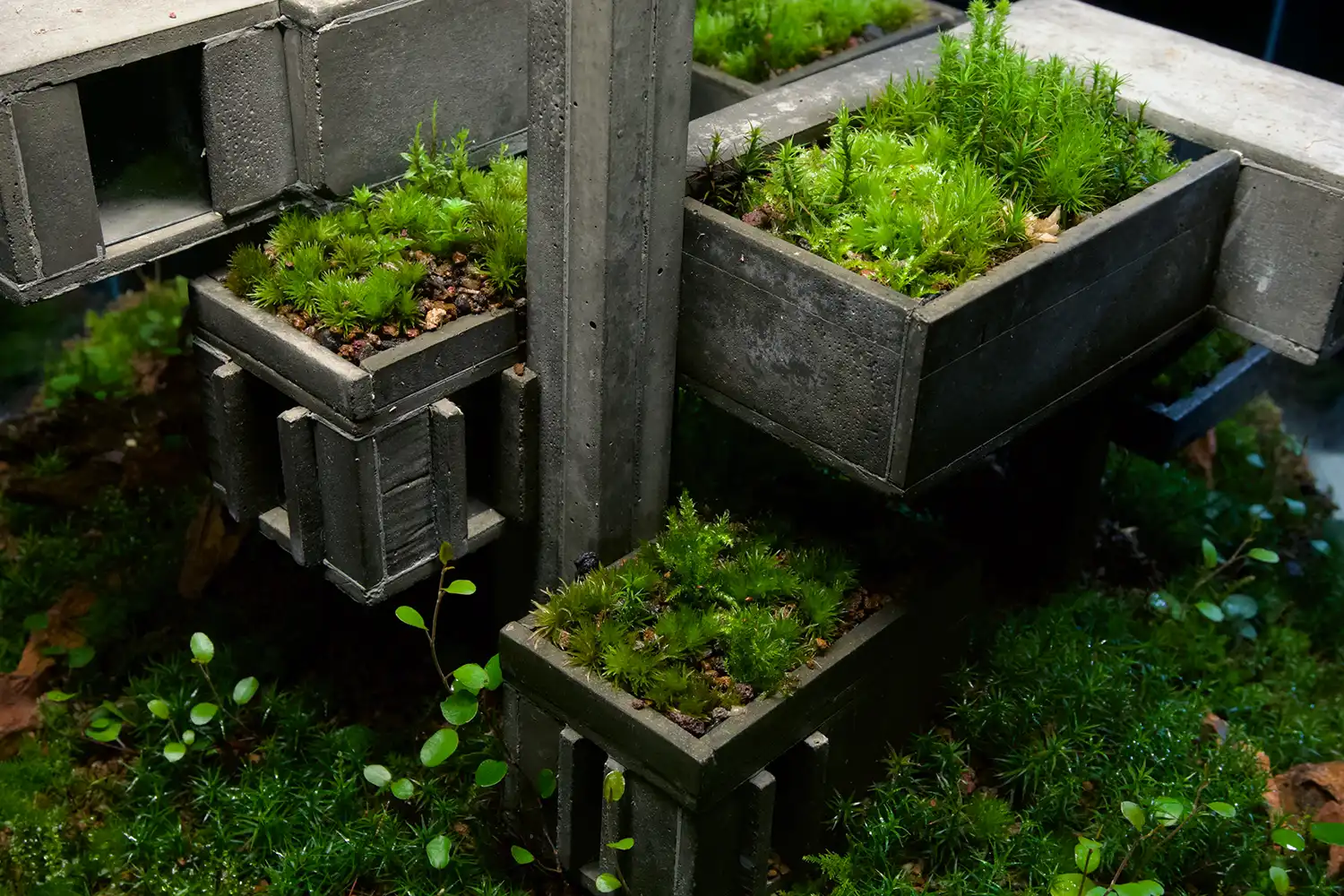
For those eager to witness this fusion of brutalism and biodiversity, Mondobruto’s evolving terrariums can be explored through Fava’s Milan-based studio or his online platforms. As the project continues to grow—literally and figuratively—it stands as a strong example of to the enduring dance between human creation and natural reclamation.