



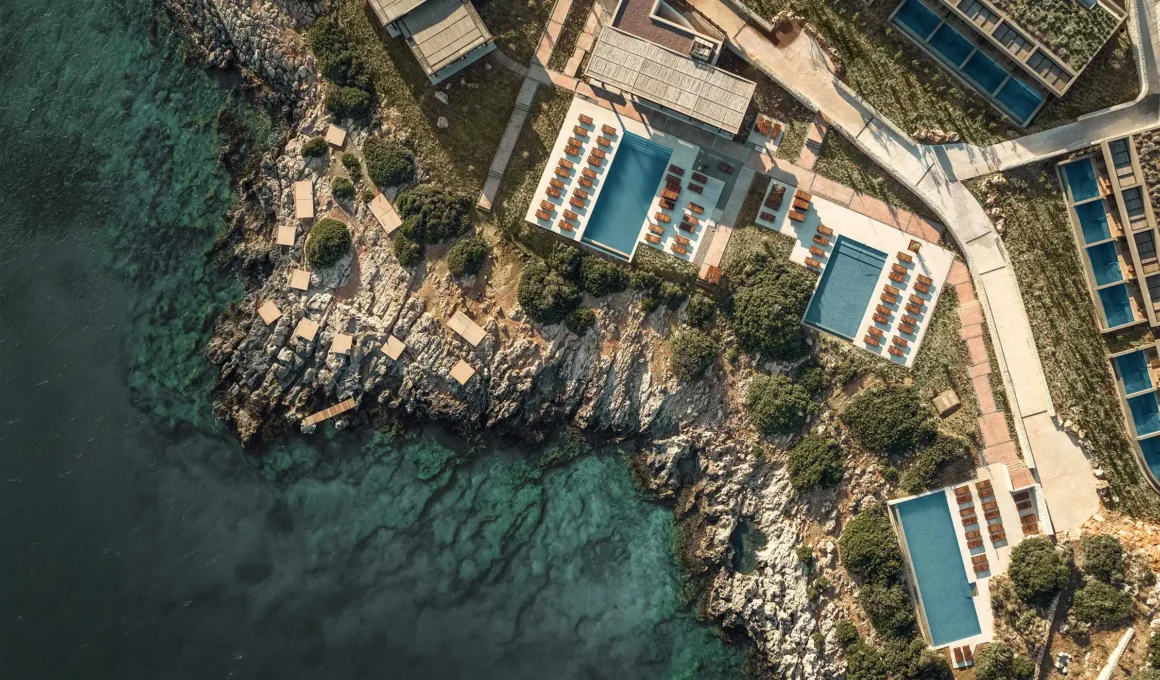
In an era where luxury hospitality often prioritizes opulence over ecology, Athens-based studio Block722 has redefined the paradigm with the newly opened JW Marriott Crete Resort & Spa. Perched dramatically on the untamed hills of Akra Pelegri overlooking Souda Bay, this 5-star sanctuary merges immersive architecture with regenerative design, setting a bold precedent for sustainable Mediterranean hospitality. The project—a collaboration between Marriott International, local developer Vasilakis SA, and Block722—showcases how high-end resorts can honor their environment while delivering transformative guest experiences.

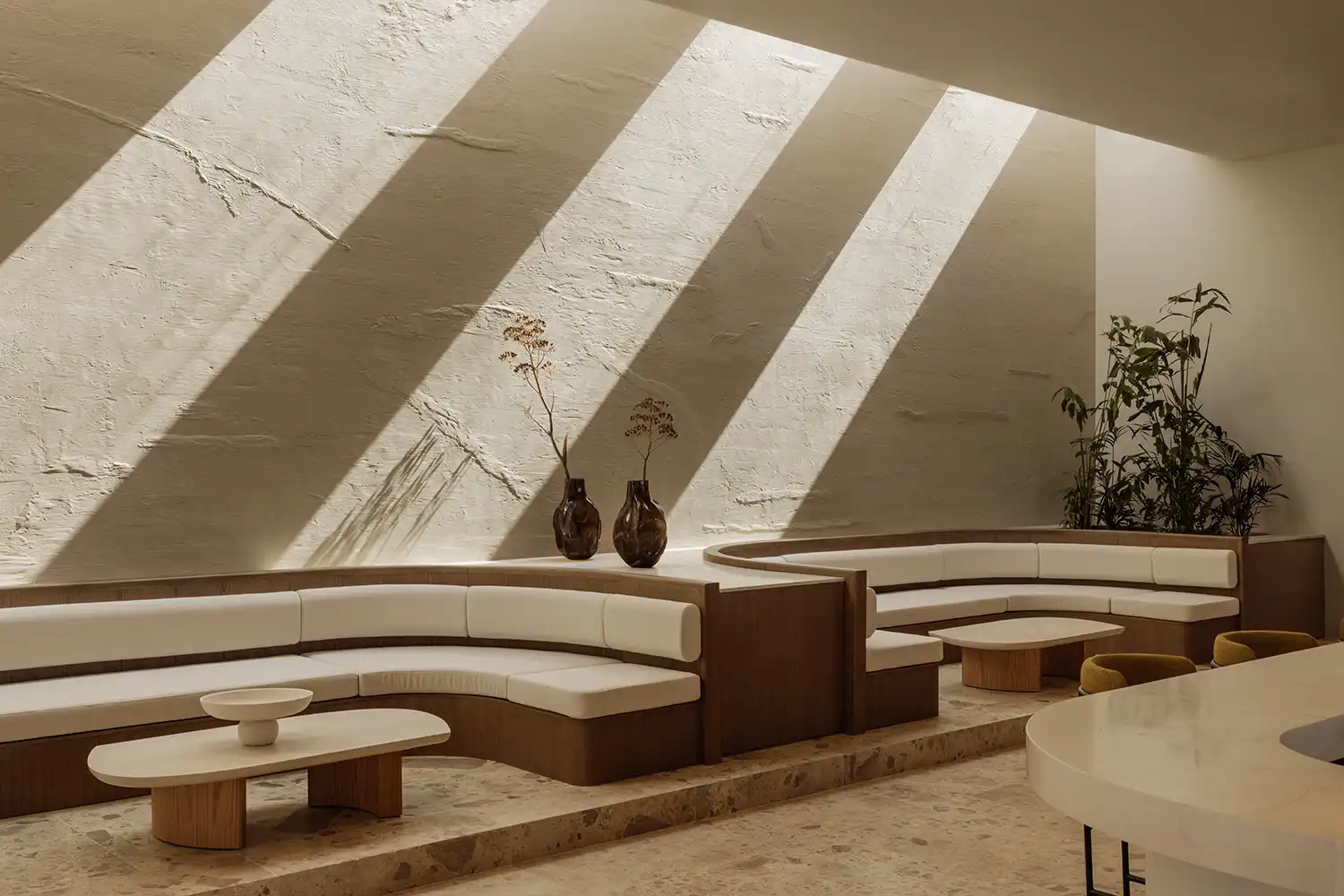
Spanning a 59,700 m² terraced plot, the resort’s 160 rooms and suites accommodate 450 guests through structures that appear organically grafted onto Crete’s rugged topography. Block722’s design philosophy—refined simplicity rooted in environmental integrity—shapes every detail. From arrival, guests traverse a native-shrub-lined square where the sea reveals itself gradually, orchestrating a sensory journey. The lobby blurs boundaries between built and natural worlds: an internal garden bathed in skylight frames reception areas, while interconnected spaces flow toward restaurants and bars beneath grand pergolas. These shading structures, evoking ancient Doric columns, filter Mediterranean light into ever-shifting patterns across reflective pools and sunken seating islands, creating zones of meditative calm.
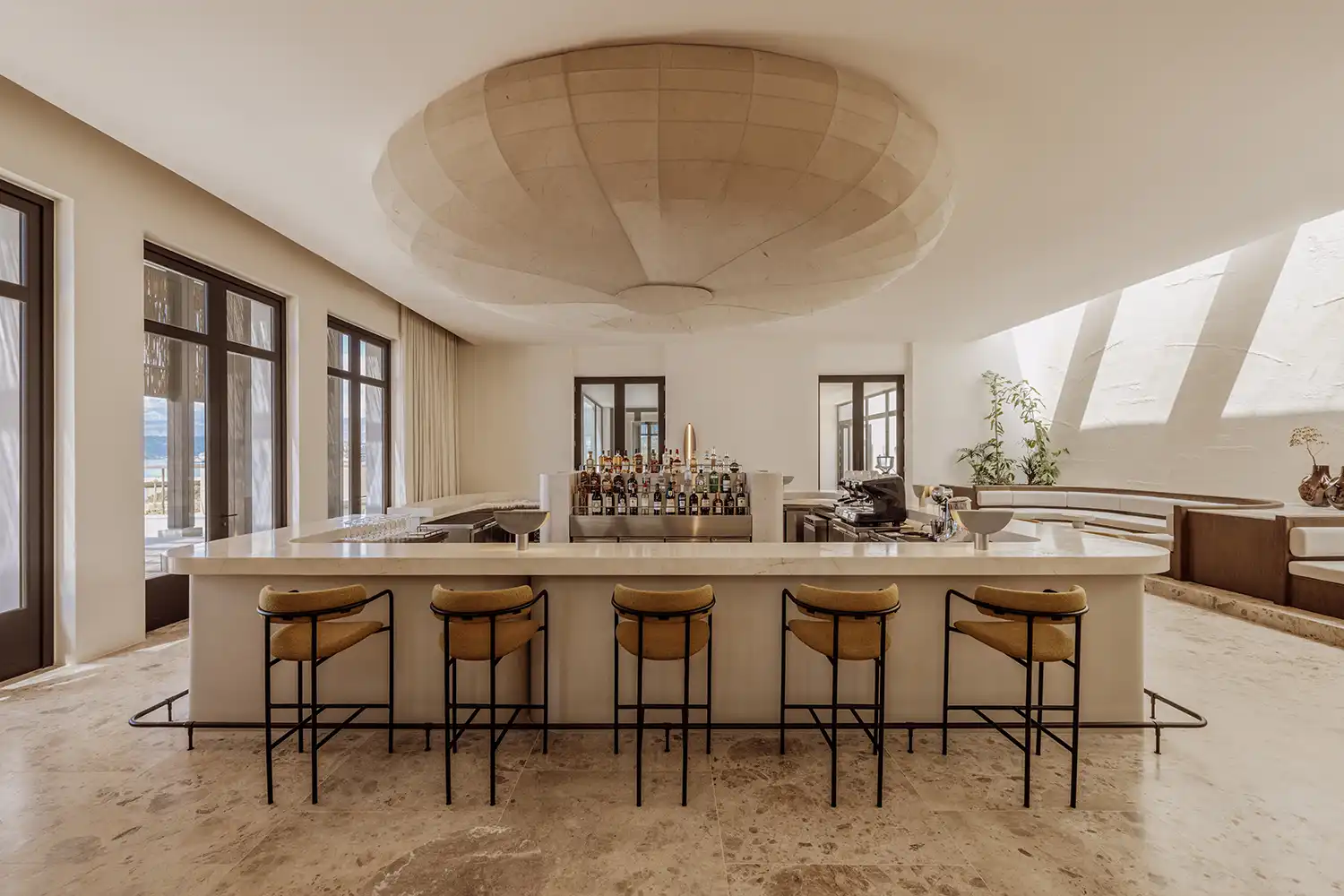
Local craftsmanship and materials anchor the resort’s authenticity. Stone walls were built from on-site excavations, while concrete aggregates incorporate earth from the terrain—literally embedding the hotel in its landscape. Furnishings feature raw linen, terracotta, earthenware, and rattan, their textures echoing Crete’s raw beauty. This commitment extends to collaborations with Cretan artisans, ensuring generational knowledge informs every surface. As Sotiris Tsergas of Block722 notes, “The Marathi is born from its landscape—a dialogue between contemporary precision and ancient land.”
The project’s groundbreaking sustainable design employs both passive and active systems to minimize ecological impact. Passive environmental strategies include optimal solar orientation, natural cross-ventilation, and deep pergolas that reduce cooling needs. Green roofs cascade over buildings, visually merging architecture with hillsides while enhancing insulation. Active systems feature photovoltaic panels for renewable energy and on-site wells for water sourcing. Native, drought-tolerant plantings require minimal irrigation, boosting local biodiversity. Together, these approaches create regenerative hospitality—a resort that actively heals its ecosystem.
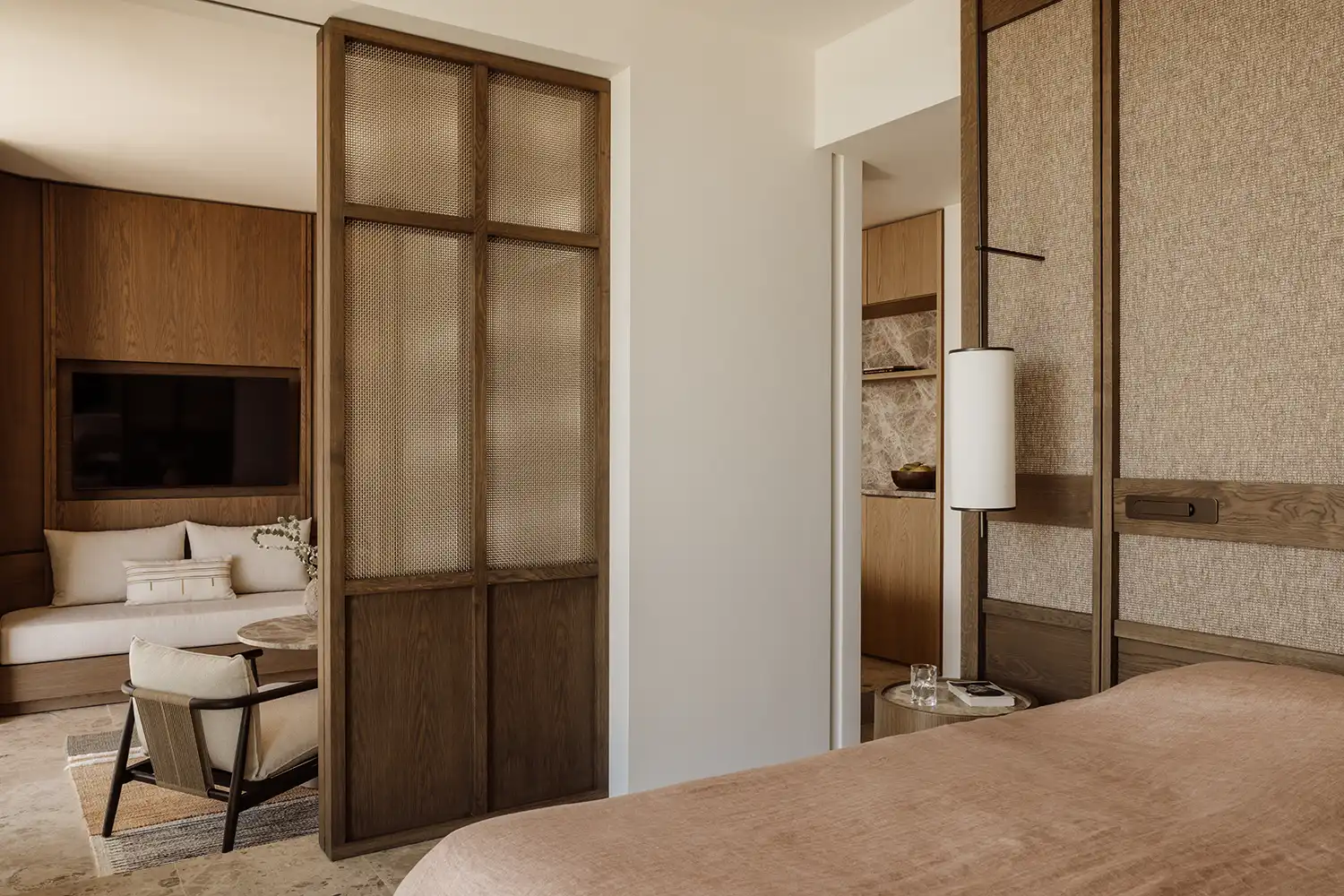
Guest rooms exemplify seamless indoor-outdoor living. Positioned amphitheatrically across slopes, each unit guarantees privacy and panoramic sea views. Private pools appear to float within the terrain, while shaded terraces and planted roofs integrate daily rhythms with nature. Wellness facilities—including a thermal spa, gym, and outdoor yoga areas—extend this ethos, alongside dining venues like Fayi and Cuccagna, which spotlight Cretan produce.

For Block722, this project transcends aesthetics: it’s a blueprint for restorative architecture. By prioritizing low environmental impact and cultural authenticity, the studio proves luxury needn’t exploit—it can elevate. As the resort opens on Greece’s wildest coastline, it stands as a testament to design that honors place, tradition, and tomorrow.