




Within the iconic curves of Oscar Niemeyer’s Bienal Pavilion in São Paulo, Debaixo do Bloco has distilled the monumental spirit of Brasília into a domestic scale, creating an evocative interior that translates the Federal District’s sprawling urban memory into a refined, tactile living environment.
The conceptual vision for this intervention stems from the collective memory of the Brazilian capital. While the Plano Piloto is defined by rigid structure, the surrounding satellite cities grew with a spontaneous energy that lacks a consolidated aesthetic. Clay Rodrigues, the lead at Debaixo do Bloco, seeks to bridge this gap by stripping away the rigid formality of public palaces and reinterpreting their atmospheric essence. The space is not a literal representation of a city; instead, it is a study of the spatial repertoire that defines the local culture of the Federal District.
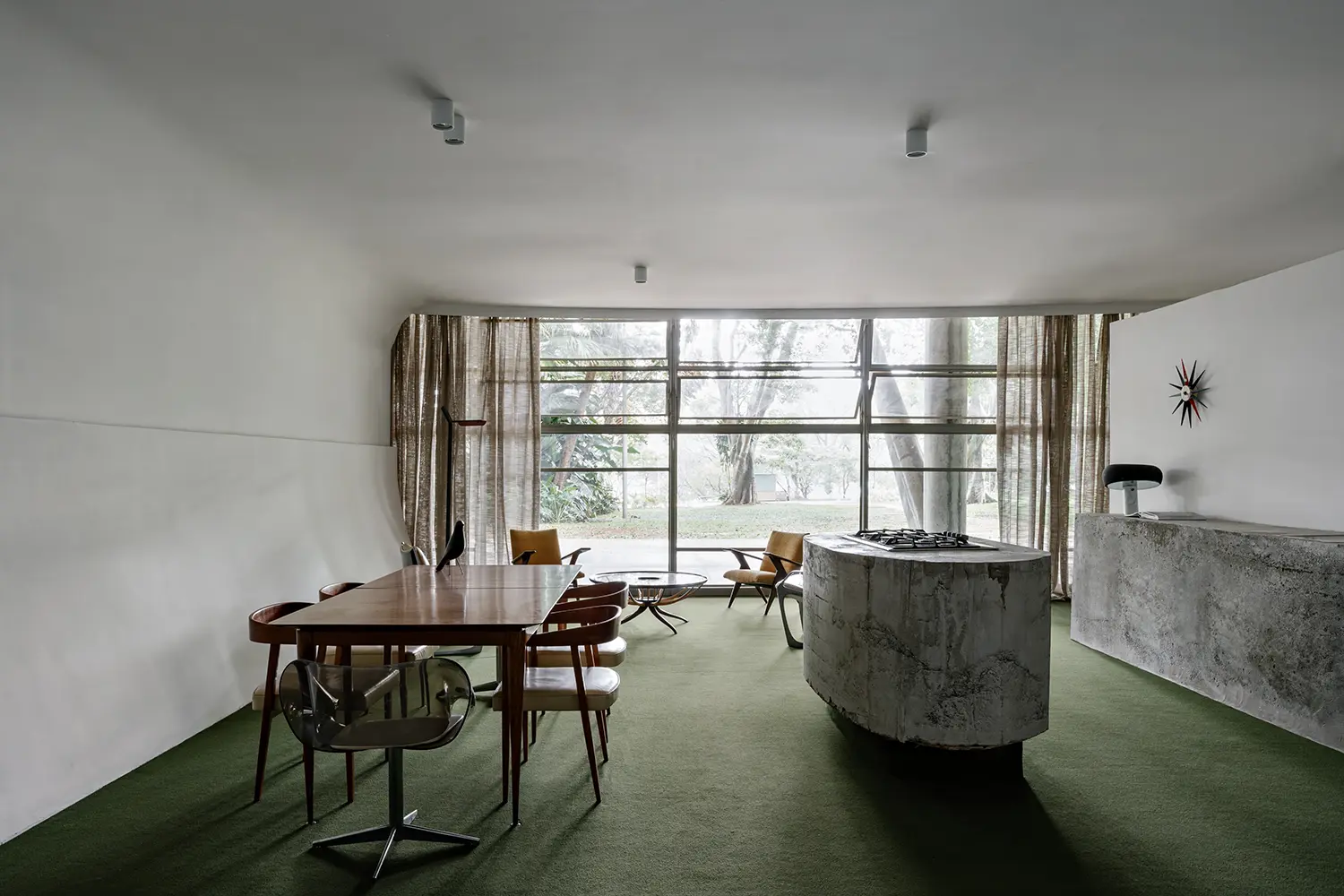
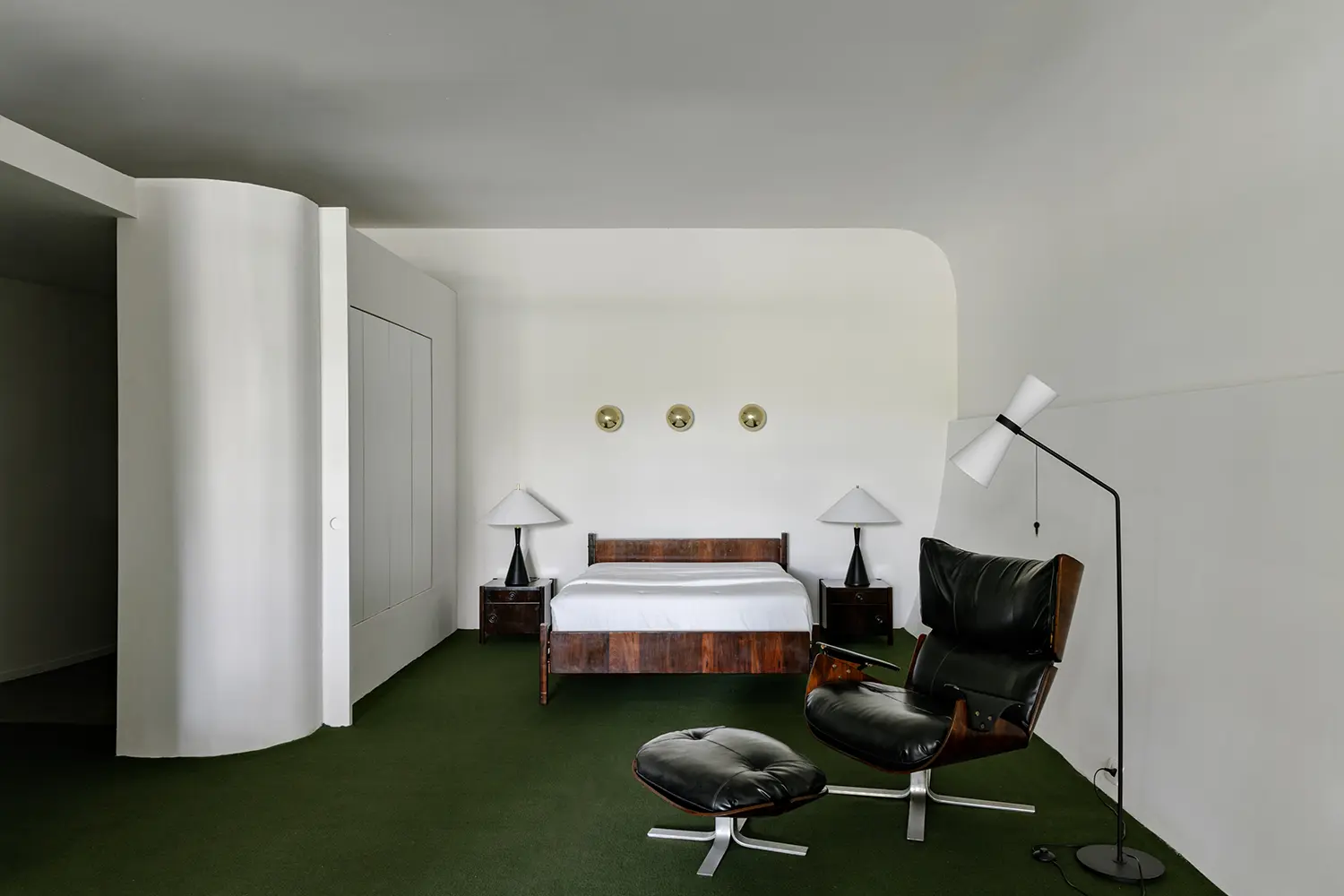
A continuous landscape is established through a striking green carpet, a deliberate nod to both the classic interiors of Brasília and Niemeyer’s French Communist Party Headquarters in Paris. This lush, monochromatic plane serves as the foundation for the entire project, allowing the vertical elements to rise without the clutter of traditional walls. By treating the floor as a singular, uninterrupted horizon, the studio evokes the vastness of the Brazilian central plateau within the confines of a historic pavilion.
The choreography of curves defines the internal zoning. Soft, undulating surfaces organize the environment, yet they intentionally stop short of touching the ceiling. This maintains a sense of lightness and transparency, echoing the pilotis and voids that characterize modernism. These curved partitions are more than functional dividers; they are autobiographical. The points where the surfaces meet the floor and ceiling are designed to recall the connecting passages between ministry annexes, a quiet homage to the architect’s childhood memories of visiting his mother’s workplace.
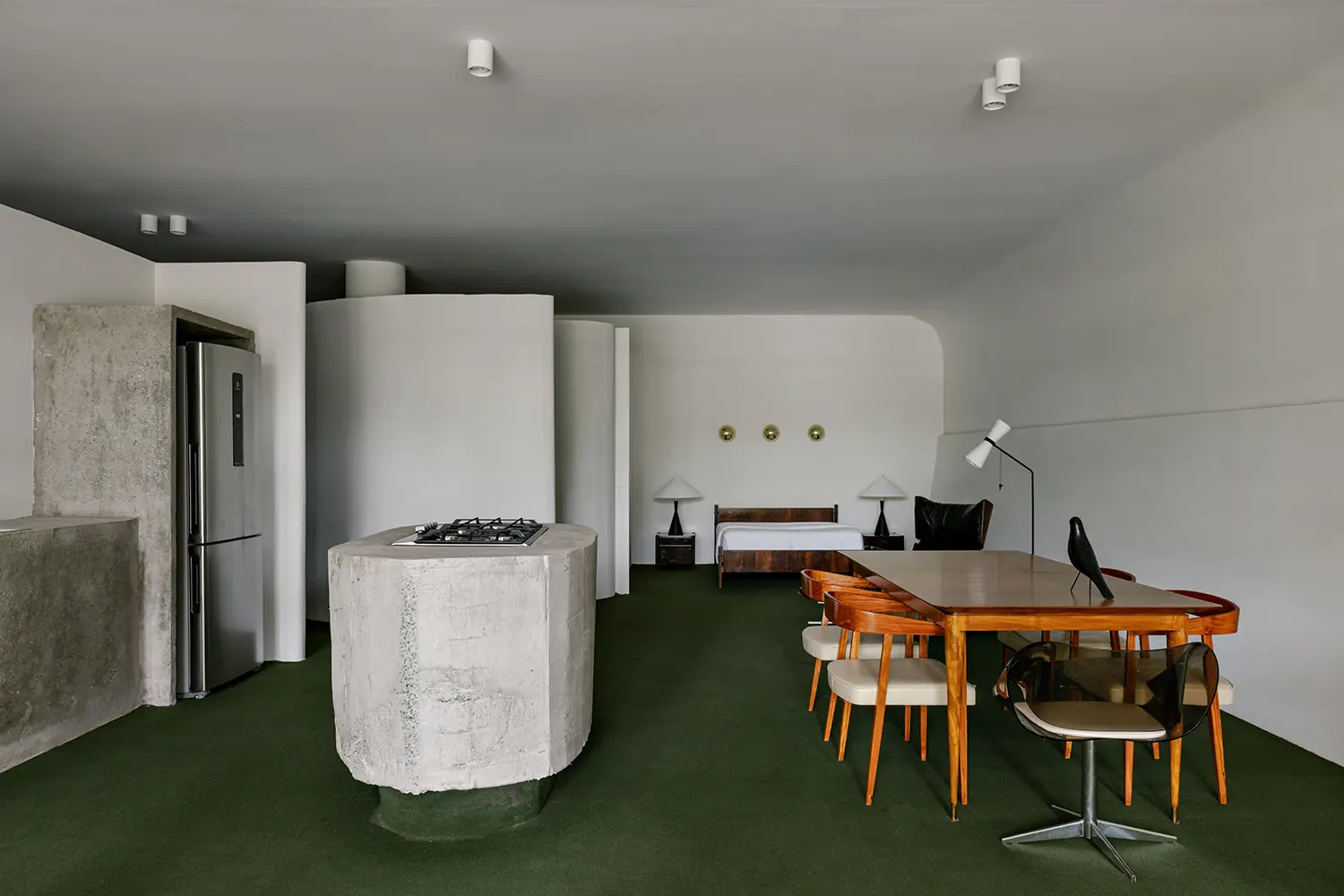
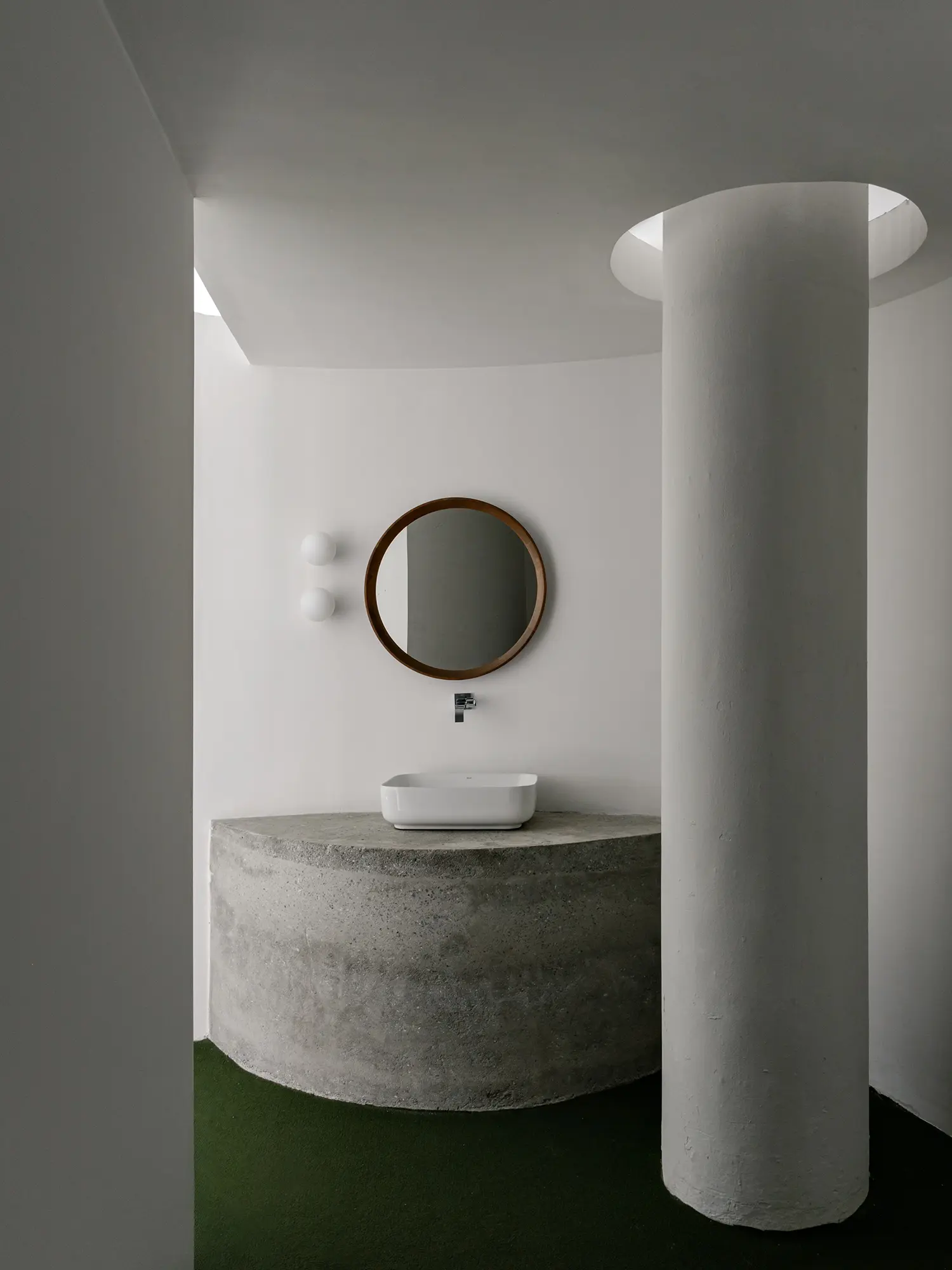
Materiality and precision take precedence over traditional ornamentation. The project adopts the language of interior architecture, where the precast concrete counters reference the rapid, urgent construction of the capital. This choice of material feels particularly poignant in a biennial setting, acknowledging the ephemeral nature of an exhibition while maintaining a sense of structural permanence. The lack of decorative excess allows the light and proportions to dictate the sensory experience, proving that a space can be defined entirely by its volume and texture.
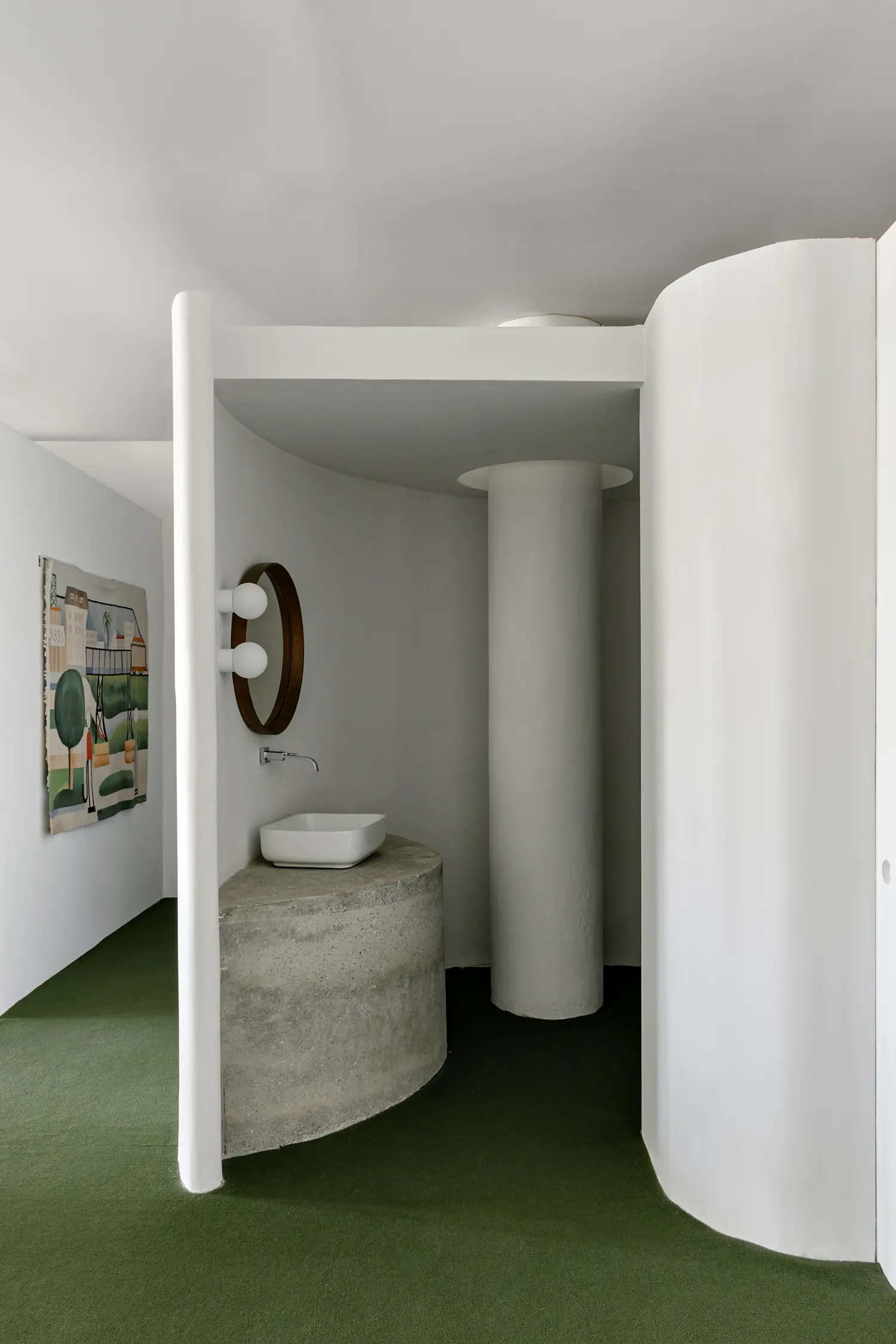
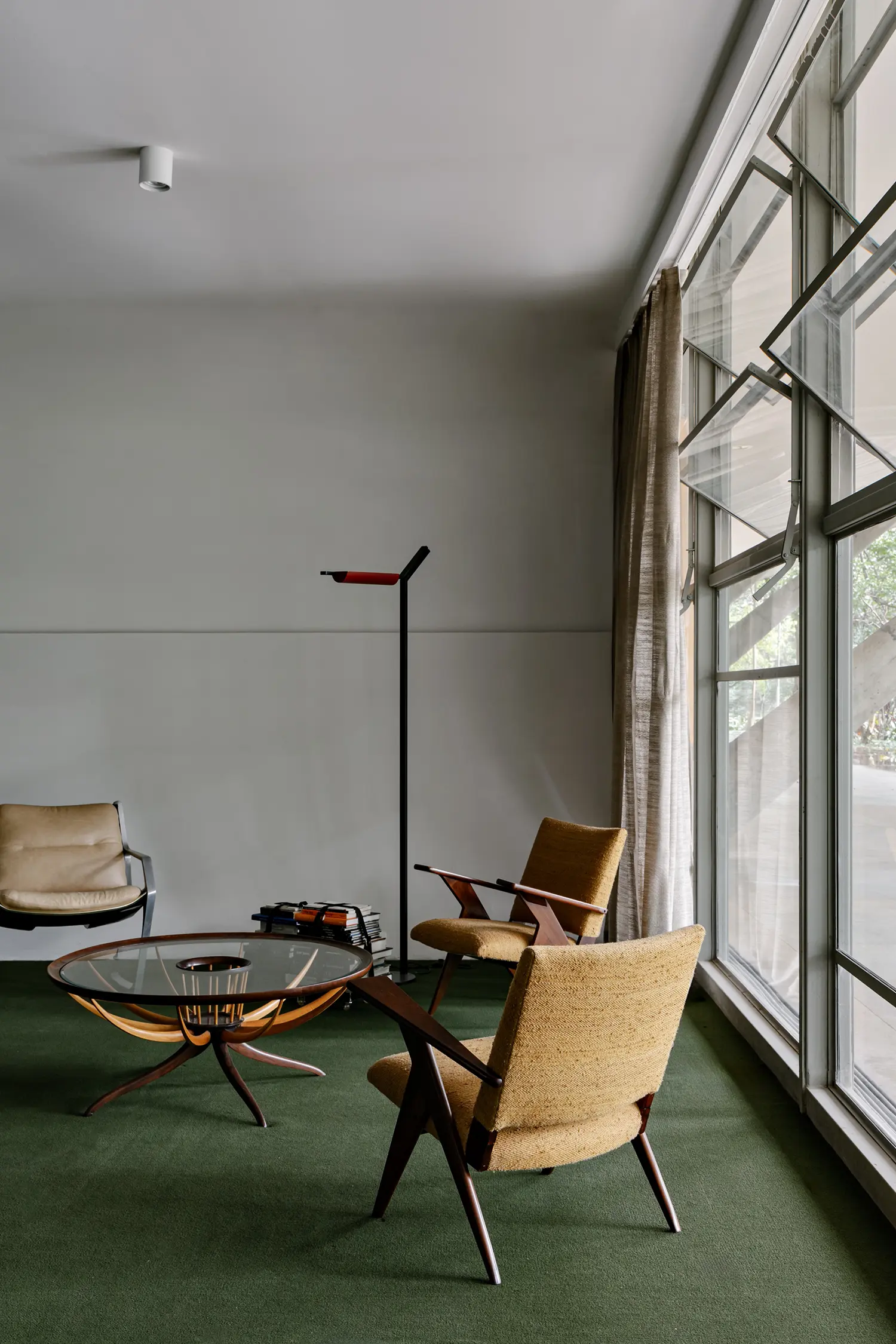
Dialogues with the existing building are handled with transparency and respect. The pavilion’s original façade, featuring window frames designed by Niemeyer, is treated as a living backdrop, framing the garden by Otávio Augusto Teixeira Mendes as a natural extension of the interior. Rather than hiding the massive structural columns, the design celebrates them. By highlighting these pilotis as they intersect the living areas, the studio transforms a functional necessity into a powerful sculptural presence that anchors the room.
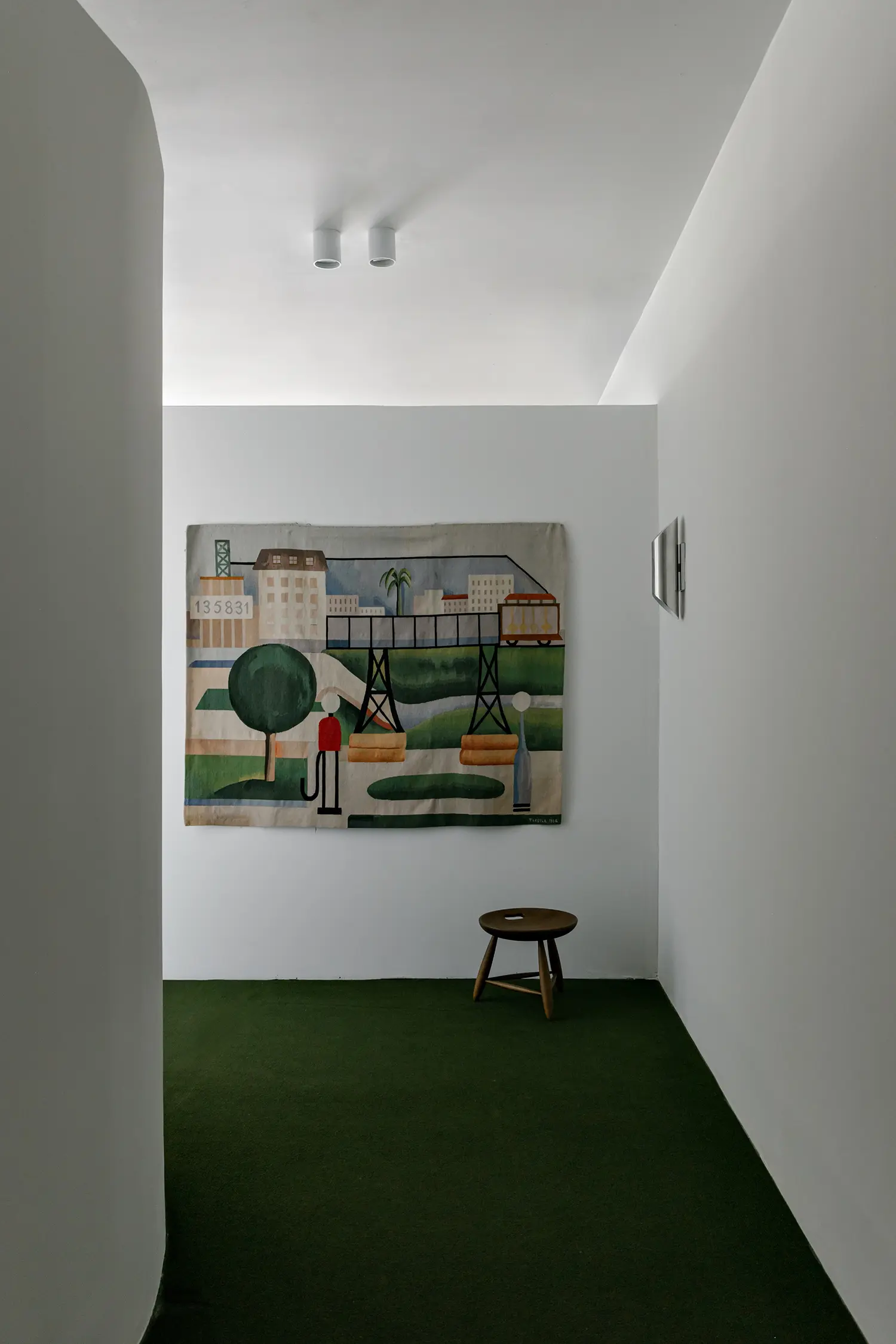
A historical layer is introduced through a curated selection of furniture that reads like a registry of Brazilian modernism. Pieces by Jorge Zalszupin, Joaquim Tenreiro, and Sergio Rodrigues provide a warm, organic contrast to the cooler concrete and green surfaces. This dialogue between the built environment and the objects within it is further enriched by Dominici lighting fixtures and a tapestry by Tarsila do Amaral, which bridges the gap between the applied arts and the construction of Brazil’s modern identity.
The meeting of memory and contemporary living suggests that the monumental can indeed be intimate. By translating the vast scale of the Esplanade into a human-centric format, Debaixo do Bloco offers a sophisticated reflection on how we carry the cities we live in within us. It is an exploration of how the echoes of a public landscape can be softened and reshaped to provide comfort, identity, and a sense of belonging in a domestic setting.
The evolution of the built environment increasingly favors this type of intellectual retrofit, where the primary challenge is to reinterpret existing volumes for a new, more intimate purpose. This project serves as a sophisticated exercise in style, proving that even the most imposing structures can be adapted to a “relax scale” without losing their soul. This approach mirrors a growing global movement toward high-quality renovation, as seen in the Portland stone deep retrofit by Studio 163 or the ingenious use of space in the Cork Loft extension by Office S&M. Much like the material-driven red clay transformation in Hackney by Architecture for London or the kitchen-led revitalization of a Victorian semi by Noto Architects, Debaixo do Bloco demonstrates that the future of living lies in the dialogue between history and domesticity. By softening the edges of Brasília’s modernism, the studio provides a blueprint for how we might continue to inhabit our heritage, turning architectural memory into a lived, sensory experience.