



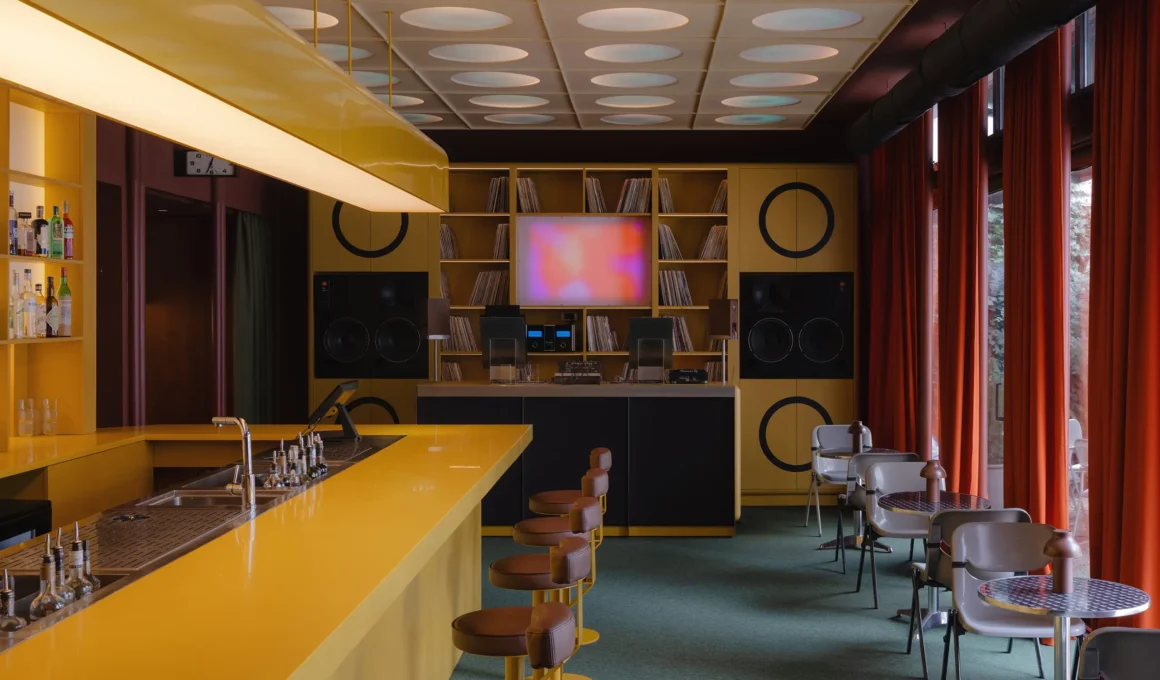
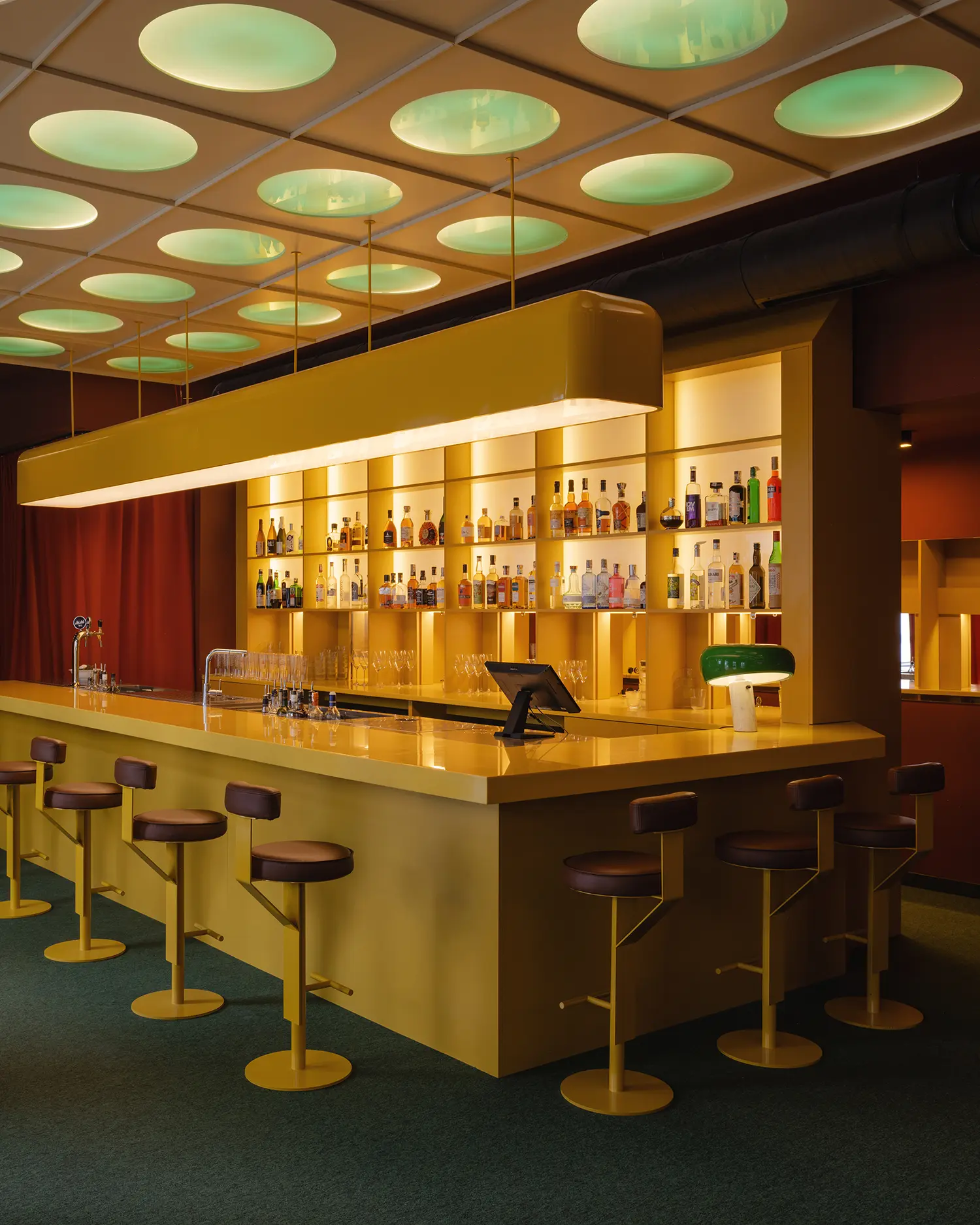
Paris design practice Supaform Studio has recently transformed a corner of Belgrade into EJE, a speculative, multidisciplinary station for the Esthetic Joys Embassy that merges the utilitarian modularity of Yugoslav brutalism with the ritualistic intimacy of a Japanese listening bar.
Belgrade’s layered urban identity serves as the primary catalyst for the project. Walking through the Serbian capital, one encounters a rhythmic dialogue between neoclassicism and the intricate verticality of socialist modernism. The designers at Supaform Studio interpreted this as a nearly utopian environment—a landscape of futuristic block architecture that feels moments away from a cyberpunk reality. EJE (Esthetic Joys Embassy) embraces this local complexity, evolving into an autonomous hub that functions simultaneously as a disco bar, a hotel, and a high-fidelity sonic lounge.
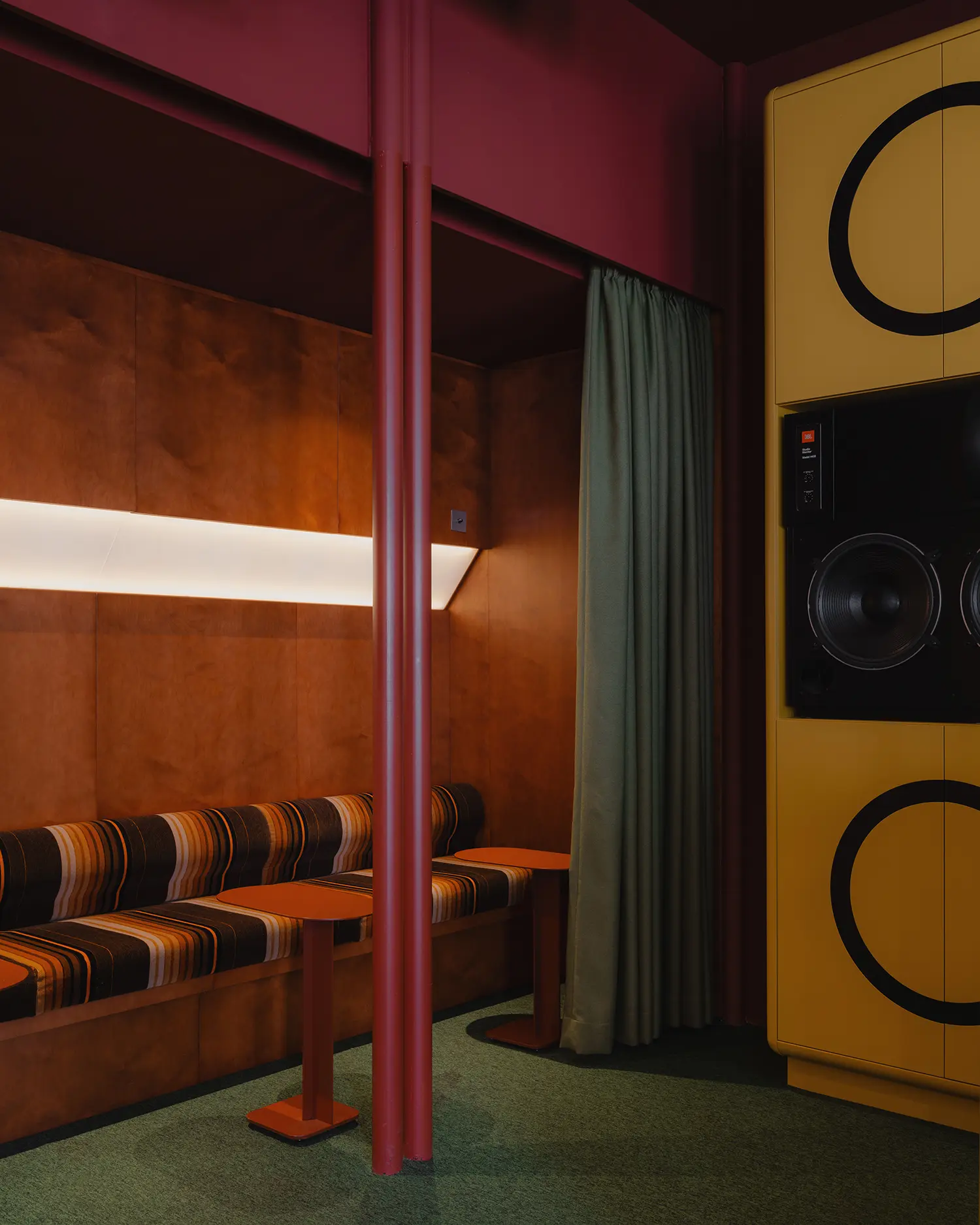
The conceptual vision of the interior is anchored by a deep reverence for the K67 kiosk, the iconic modular system designed by Saša Mächtig in 1966. With its rounded, aerodynamic edges and fiberglass construction, the kiosk represented a mid-century faith in a mobile, optimistic future. In EJE, this geometry is reinterpreted through a cinematic lens; the DJ booth itself is a dreamlike homage to the K67, suggesting a space that is less a fixed room and more a docking station for a spacecraft. This aesthetic choice bridges the gap between the city’s Yugoslav brutalism and a speculative, futuristic timeline.
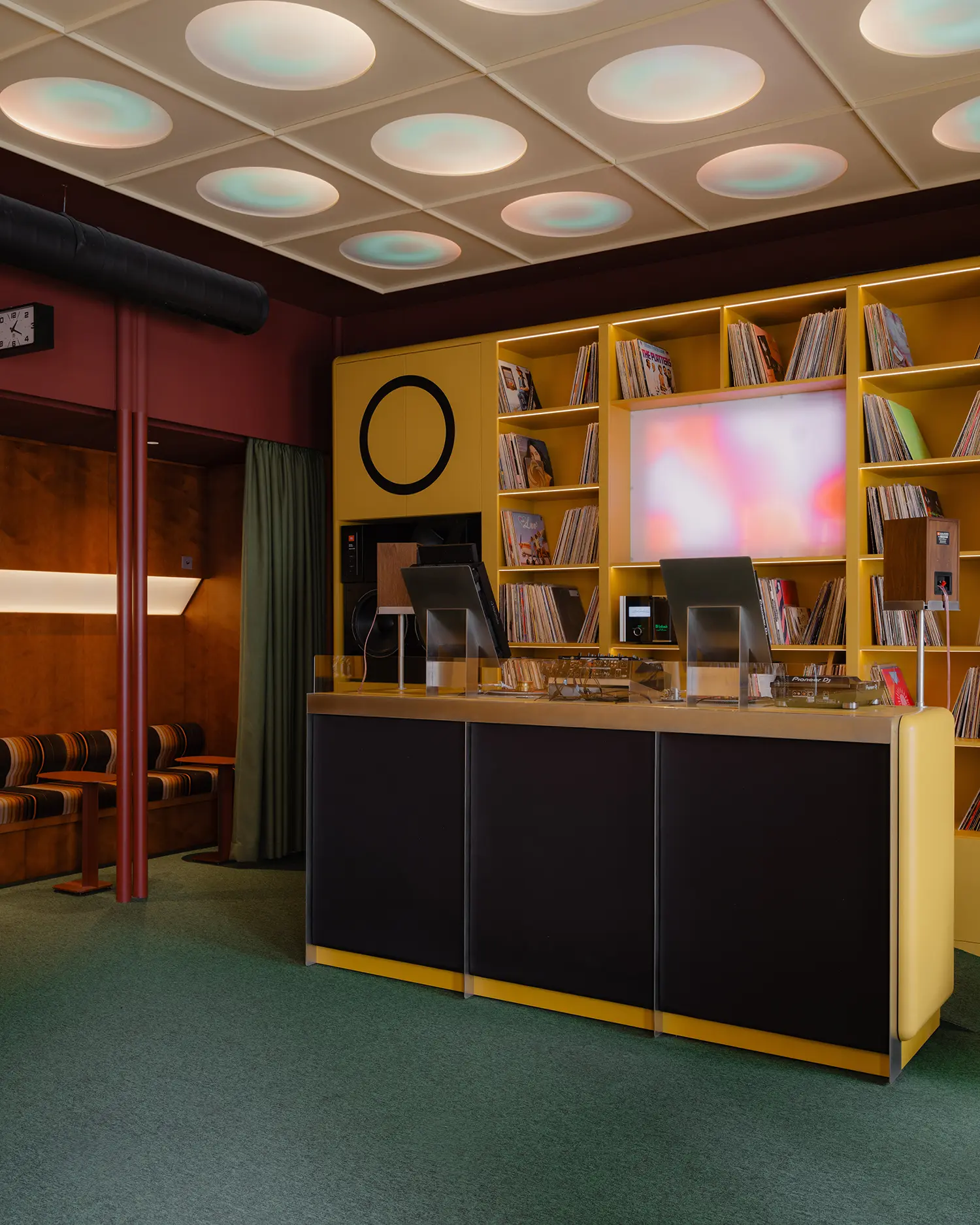
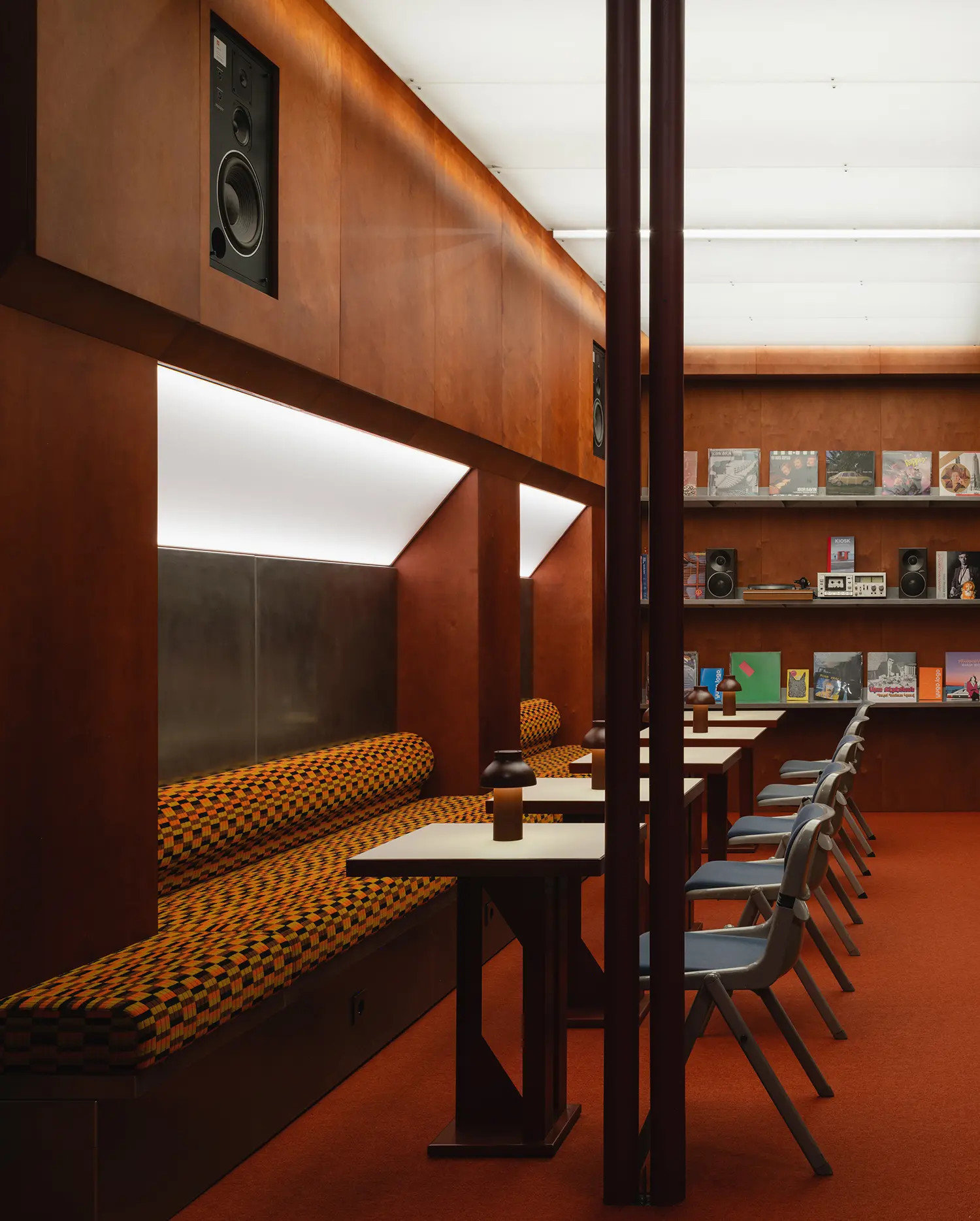
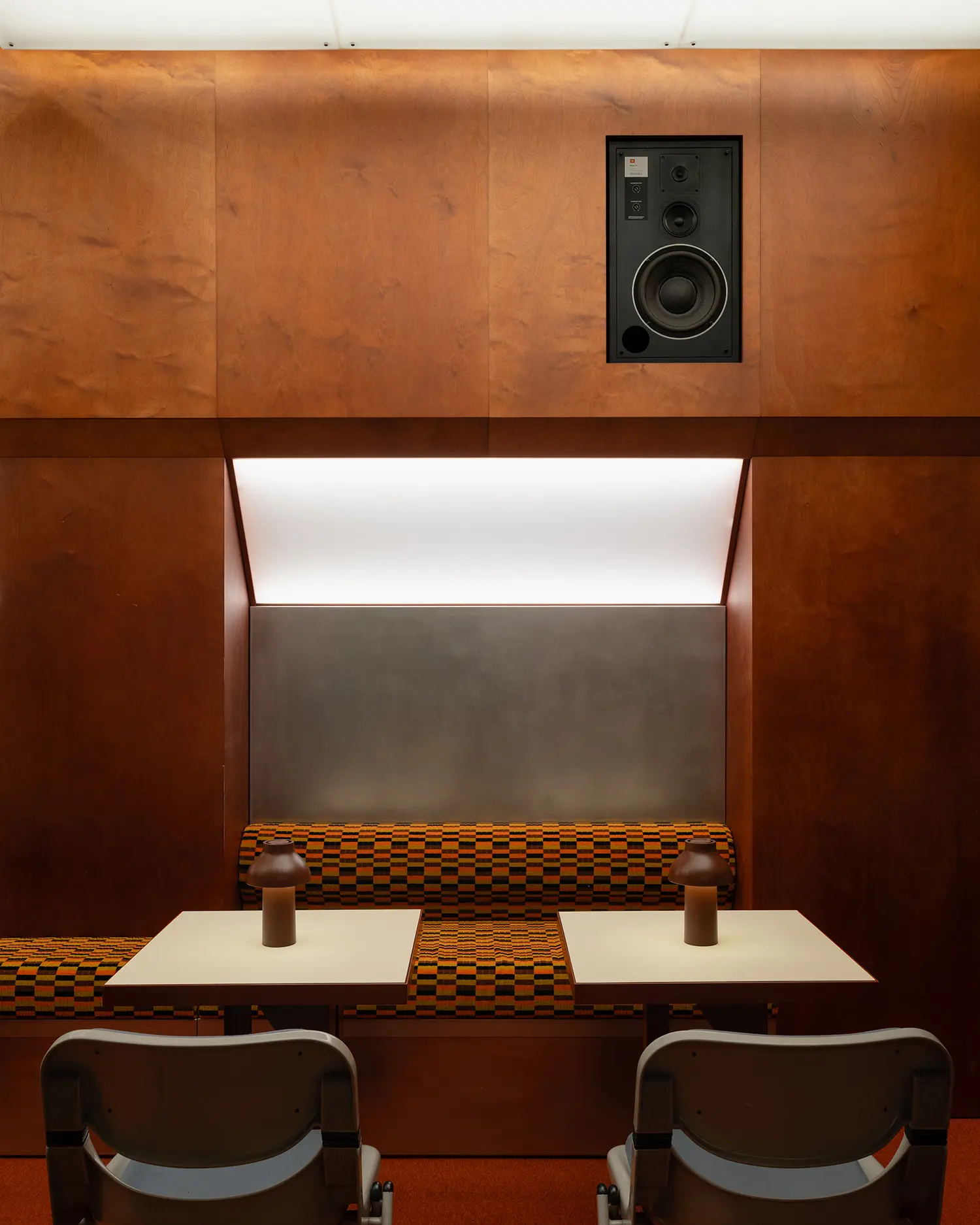
Technical details and acoustic precision define the core of the guest experience. At the heart of the venue sits a pair of vintage JBL 4435 studio monitors, serving as the focal point for a library of vinyl records curated with a digger’s obsessive logic. The space functions with the intentionality of a Japanese listening bar, where high-fidelity sound is treated as a physical presence. Above the dance floor and listening modules, oval light panels create a shifting, rhythmic glow that mirrors the analog warmth of the sound system, evoking the sterile yet comforting atmosphere of a high-end lunar infirmary.
A sensory exploration of material history is found in the custom seating arrangements. The sofas are upholstered in original moquette sourced directly from the final production run of the London Underground’s District line pattern. Designed by Misha Black, this visually dense textile was originally engineered to withstand the rigors of mass transit. Here, in the heart of the Balkans, it anchors a collective memory of travel and movement. It suggests that the guests are passengers on a shared journey, navigating a space that feels both transient and deeply grounded in history.
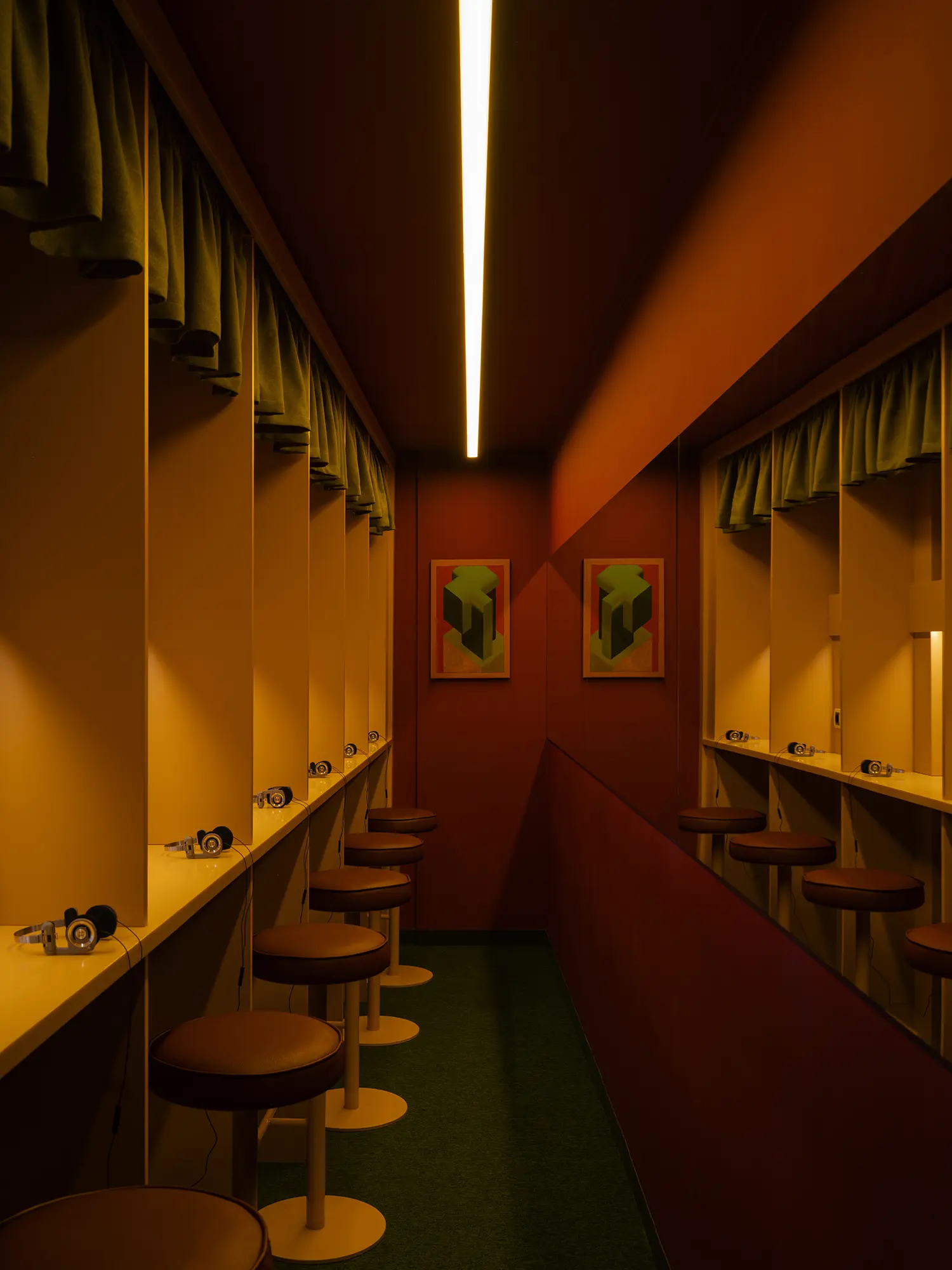
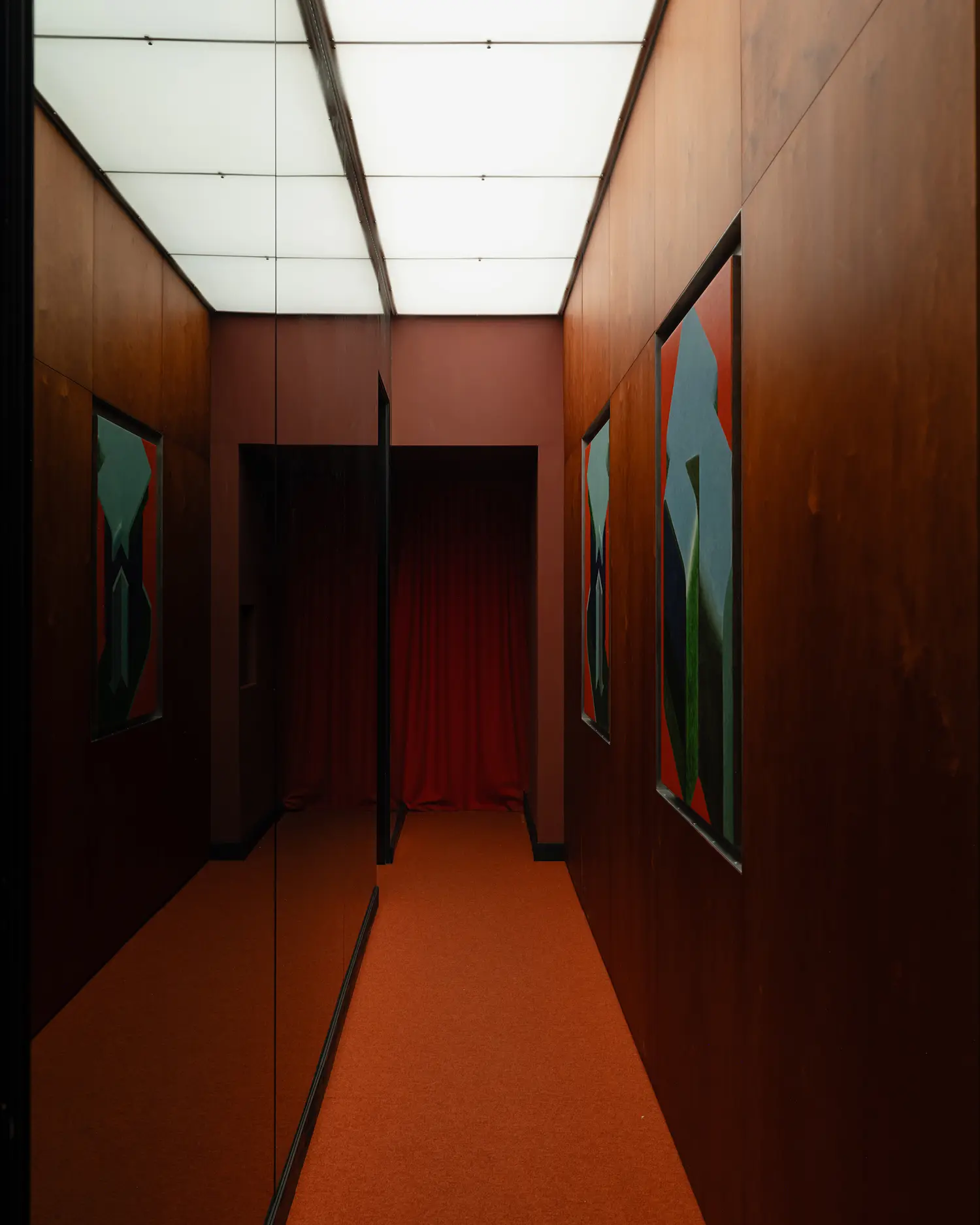
Modular social scenarios allow for a fluid transition between public and private life. While the central area encourages collective movement, the layout features a row of six Ichiran-style booths on the far side of the bar. These individual modules, separated by vertical curtains and equipped with headphones, allow visitors to retreat into total solitude while enjoying contactless service. This transplant of introverted Japanese bar culture into the communal energy of Belgrade creates a fascinating cultural friction, offering a moment of quiet focus amidst the surrounding vibrancy.
The culinary narrative further explores this cross-cultural exchange through the concept of Yoshoku. Helmed by chef Katsuhiko Kobayashi, the kitchen serves a menu that mirrors the interior’s eclectic logic. Dishes like bisque ramen are presented alongside hambagu—a Japanese reimagining of the ground meat patty that feels instinctively familiar to the Serbian palate. It is a cosmopolitan fantasy where local ingredients and global techniques coexist, proving that the most interesting results often emerge from the intersection of seemingly disparate worlds.
The contextual impact of EJE Belgrade lies in its ability to synthesize a fragmented history into a coherent, optimistic reality. By blending the aesthetic of a train sleeping-car cabin with high-tech Japanese station timepieces, the studio has created a venue that feels untethered from a specific year. It is a site of aesthetic pleasures where the heavy weight of concrete modernism is softened by warm yellow accents and a playful, postmodern wit. The project stands as a testament to the power of speculative environments to reshape our perception of the cities we inhabit.
A rising global trend in hospitality continues to champion these high-fidelity, concept-driven environments. Much like the Onda Listening Bar in Milan, which explores the synergy between sound and minimalism, or the immersive, underground atmosphere of Ganko feat. Milan, EJE Belgrade prioritizes the ritual of the experience over mere utility. It joins the ranks of venues like MOGO Hi-Fi Bar & Dining, where the intersection of high-end audio and refined interiors creates a new standard for urban nightlife, proving that the desire for focused listening and curated atmospheres is a borderless movement.