



In the challenging urban fabric of Mexico City, where steep topography and social neglect often converge, a remarkable architectural intervention demonstrates the power of sensitive design. UH INFONAVIT Santa Fe, a project by local practice AMASA Estudio, has turned an abandoned, landslide-prone ravine on the western edge of the city into a dynamic and accessible public park. This circular architecture project not only solves complex technical issues but also weaves a new narrative of community and safety into the landscape.
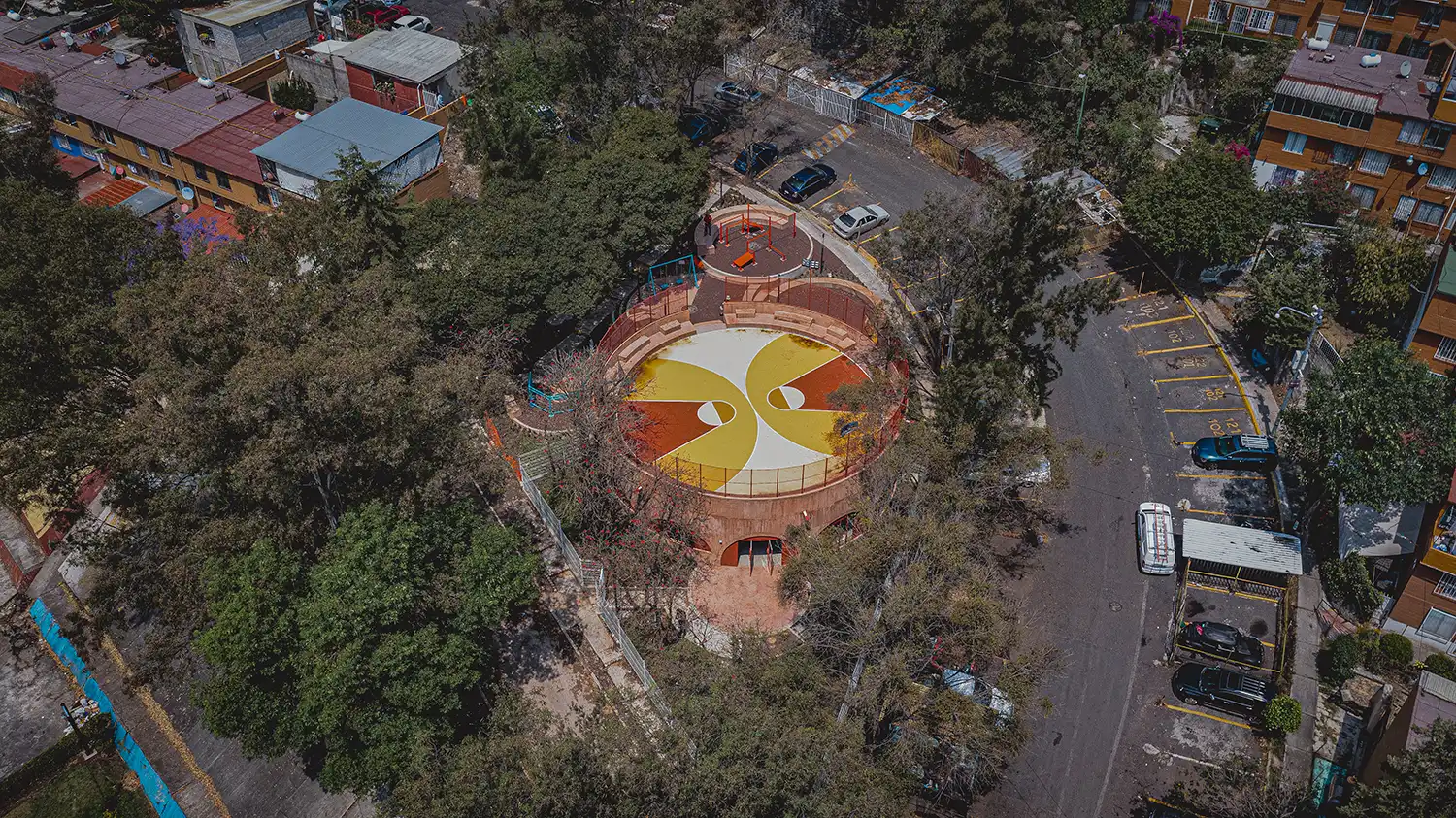
The site presented a formidable challenge: a triangular leftover parcel at the confluence of two sloped streets, with a six-meter elevation change and a history of abandonment. Previously occupied by a deteriorated basketball court, the area was characterized by physical deterioration, limited use, and a pervasive sense of insecurity. Commissioned by INFONAVIT, the federal housing institute, AMASA Estivo was tasked with a comprehensive recovery of the space, requiring the construction of a multipurpose hall, the rehabilitation of play areas, and the integration of a calisthenics zone.
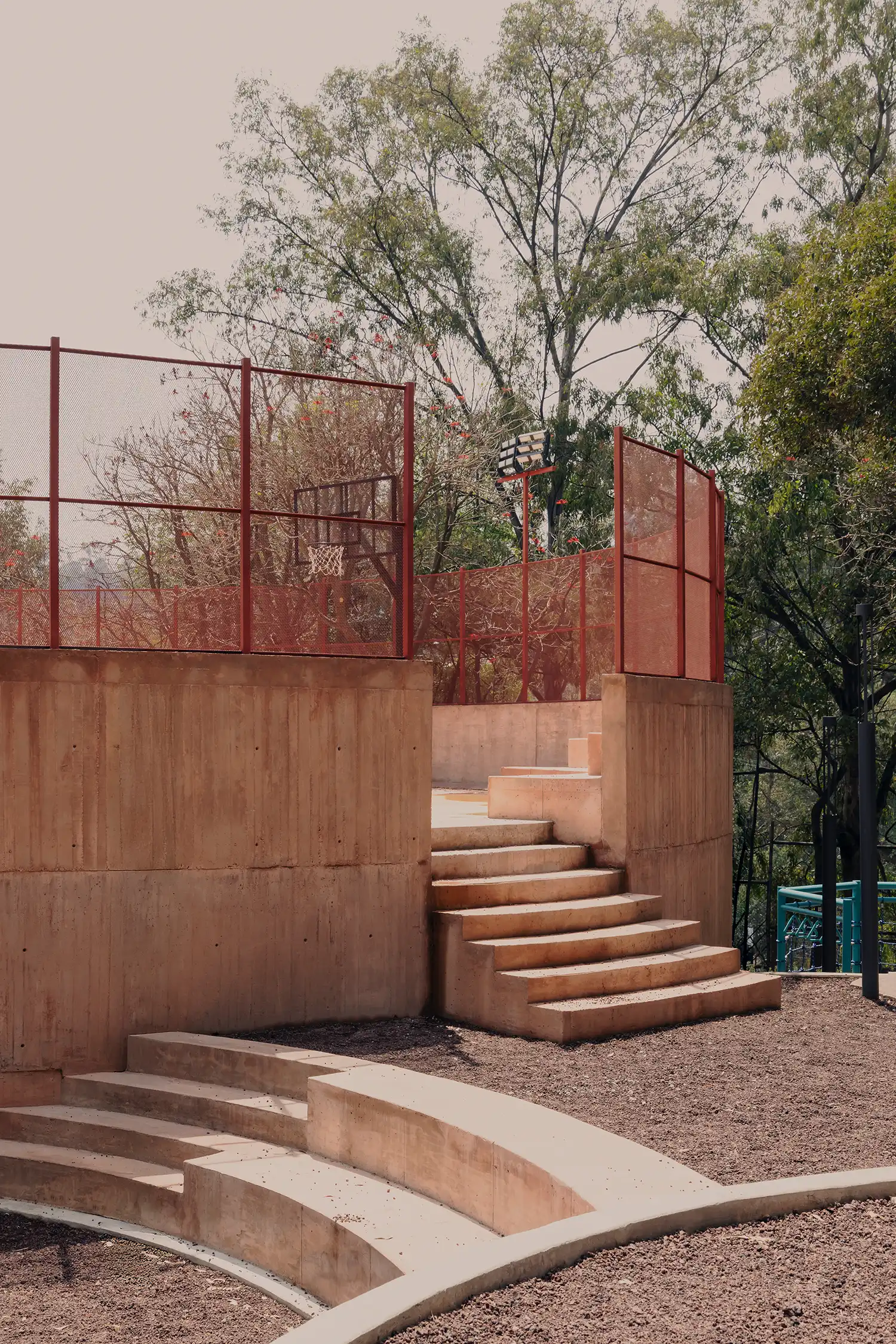
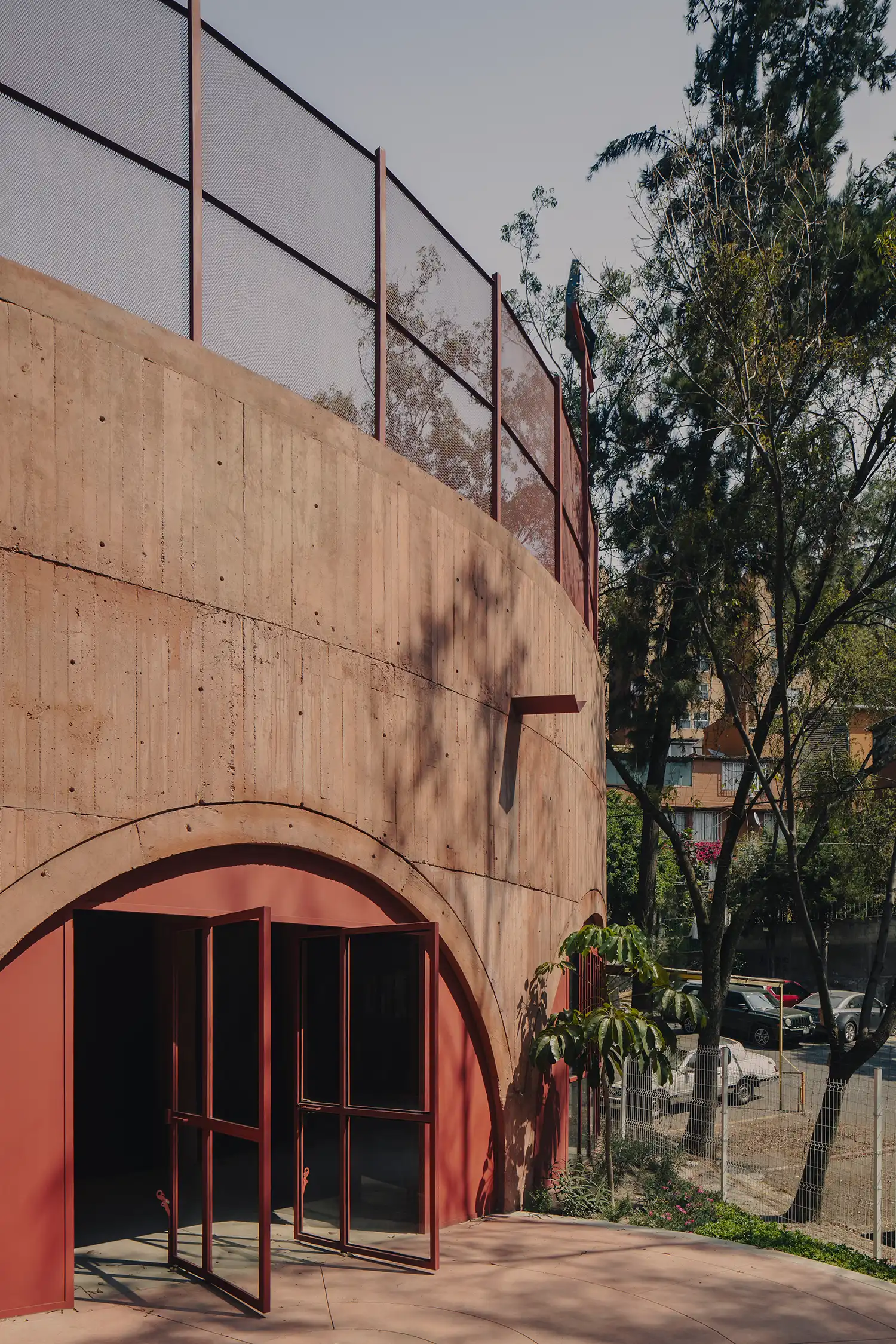
Faced with the site’s steep topography and a mandate to preserve existing eucalyptus, pine, and colorin trees, the architects proposed a bold yet elegant solution: a circular volume placed at the heart of the site. This design strategy was a direct response to the constraints. A conventional rectangular building would have created blind spots and consumed the limited space inefficiently. The circular form, however, minimized the construction footprint, allowed the preservation of every tree, and enabled the architectural program to be distributed across staggered terraces that blend seamlessly into the slope.
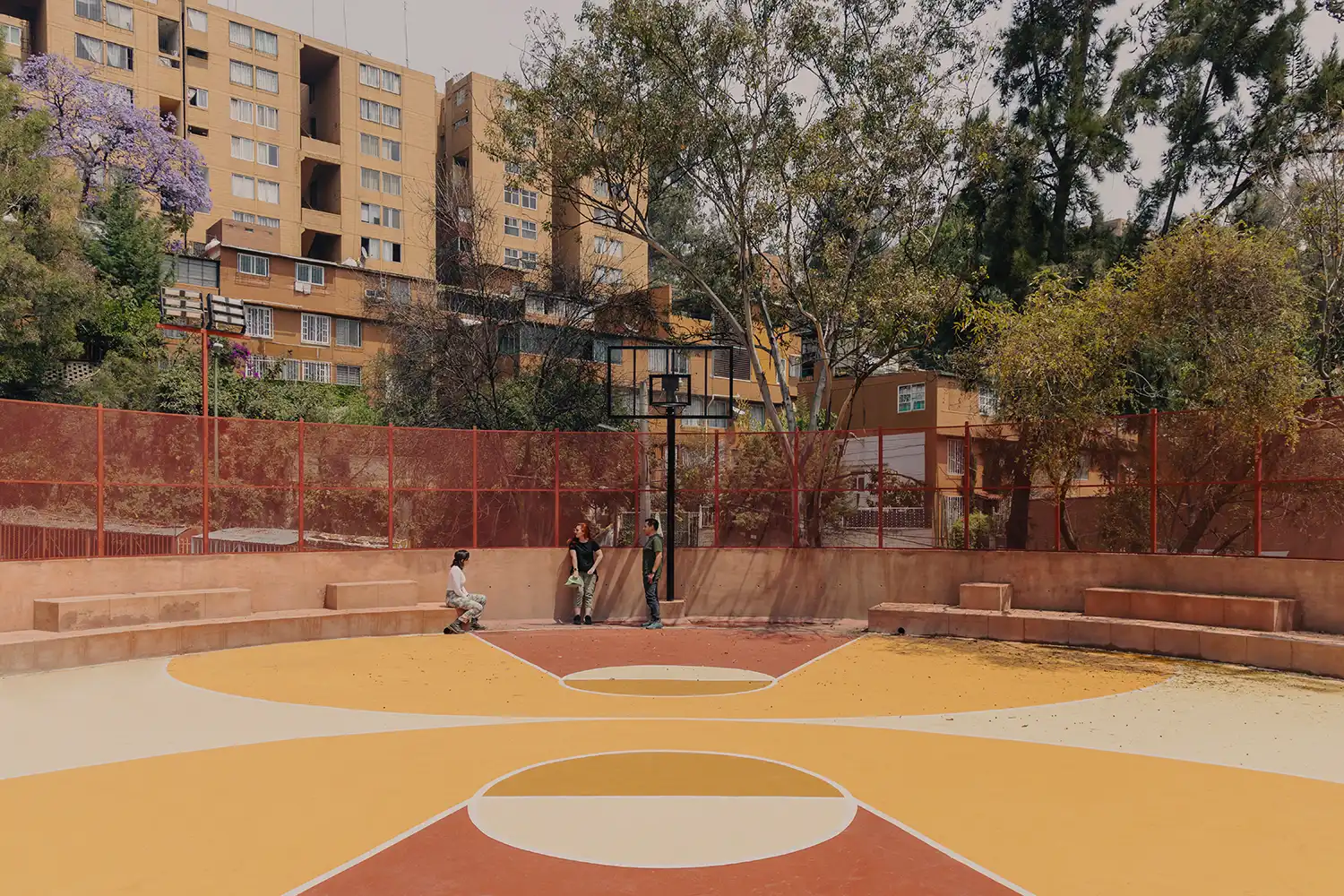
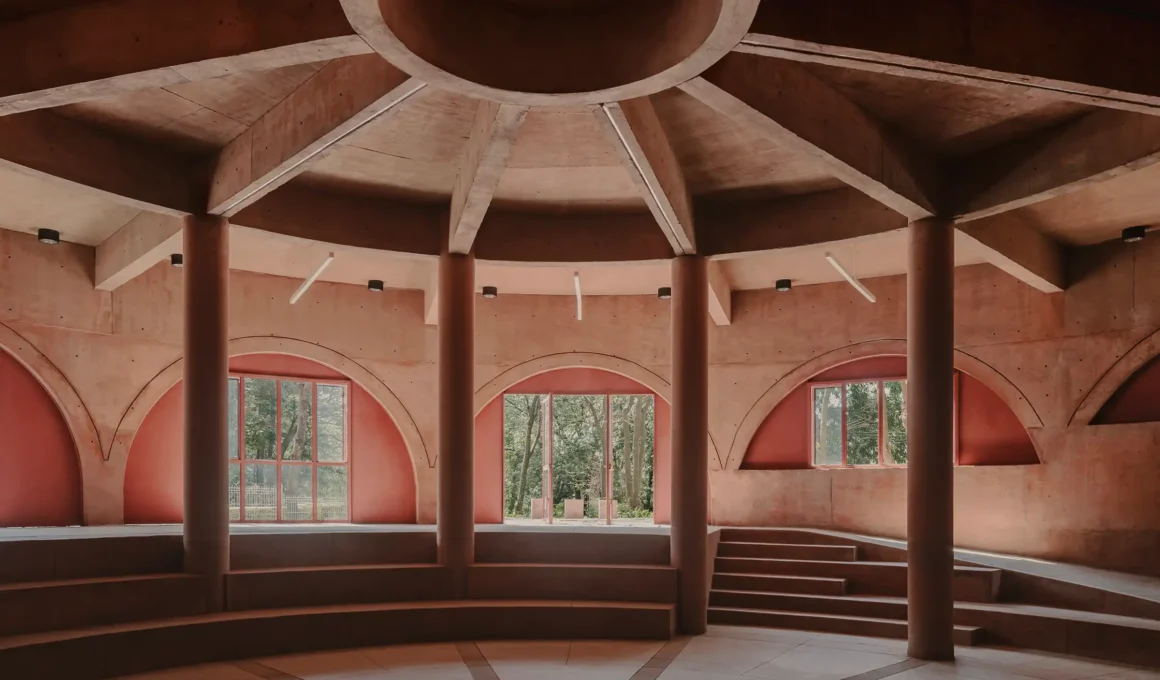
The resulting spiral park creates a continuous pedestrian experience. An ascending path connects a new 230 m² multipurpose hall, children’s play areas, and a rooftop basketball court, which is accessible from both the highest and lowest points of the site. This promotes spatial continuity and encourages daily use. The cylindrical building itself is a feat of structural engineering, featuring a radial system of concrete columns and beams that support a central compression ring. This ring holds a pigmented double concrete slab that serves as both the roof and the structural base for the sports court above.
Beyond formal and functional success, the project addresses critical environmental integration. The design incorporates two strategically placed absorption wells to manage rainwater runoff, a chronic issue that caused frequent landslides. The effectiveness of this sustainable drainage system was proven when the project successfully withstood the intense 2025 rainy season, one of the most severe in Mexico City in two decades.
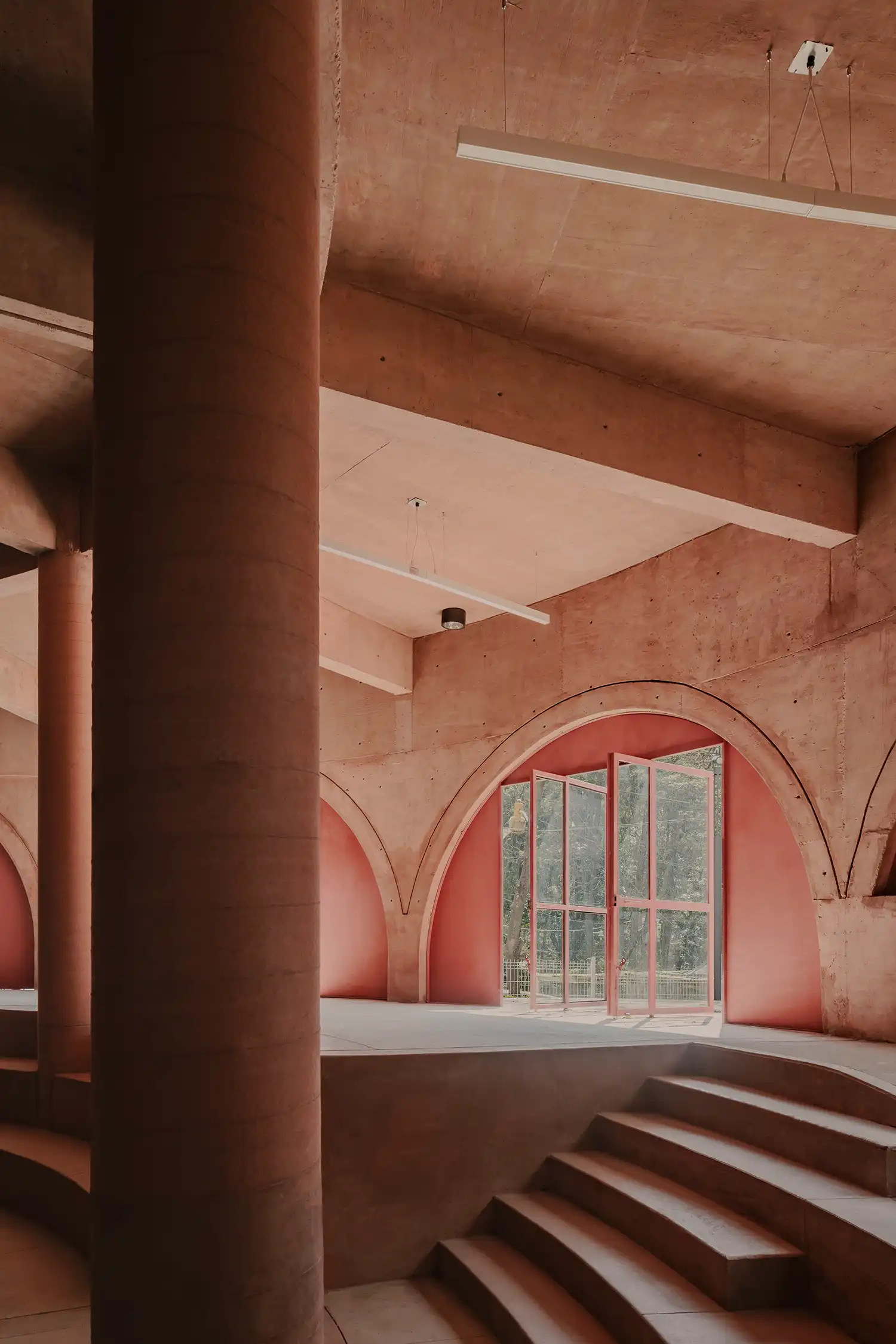
The UH INFONAVIT Santa Fe project is a testament to the impact of contextual architecture. By choosing a circular geometry, AMASA Estudio avoided a confrontational relationship with the terrain and instead created a dialogue. The intervention transforms a marginalized zone into a vibrant community hub for gathering, play, and civic life. It stands as a powerful example of how, even with limited budgets and in complex urban contexts, thoughtful design can reframe forgotten spaces into assets of social infrastructure and ecological resilience.