



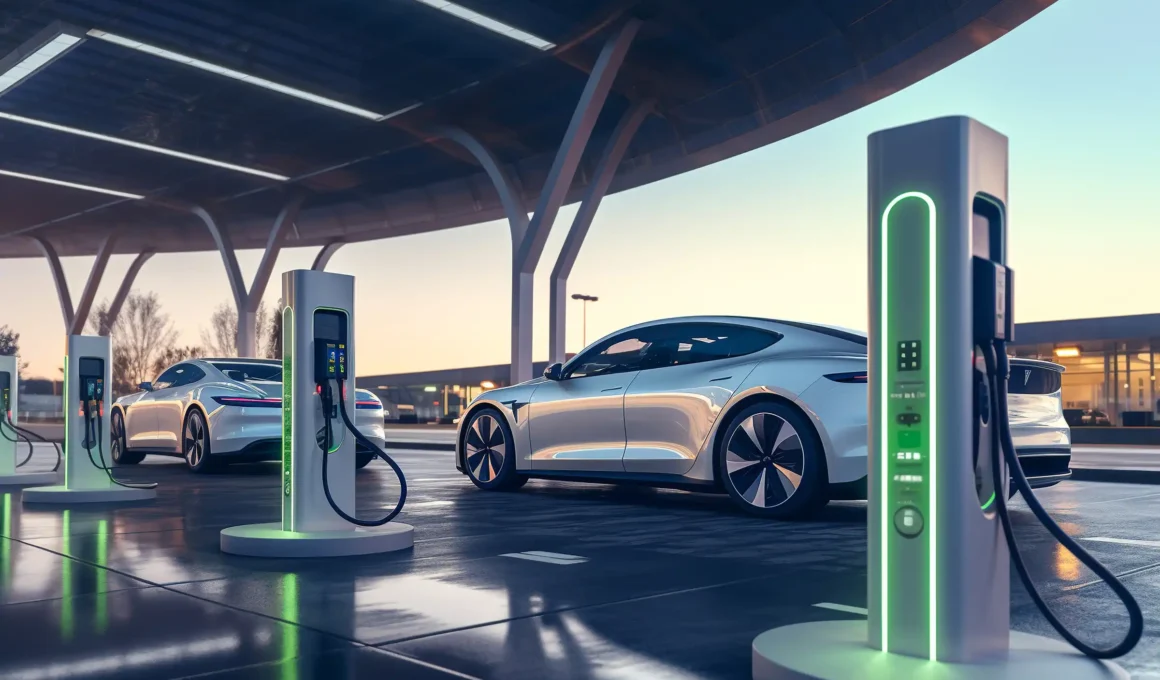
The ambitious vision of an all-electric Europe by 2035 is hitting a series of unexpected roadblocks. While the EU pushes for a green revolution in mobility, the reality on the ground – from infrastructure to consumer adoption and global competition – reveals a complex, evolving landscape. This is the story of Europe’s grand electric vehicle experiment, caught between bold policy and the hard facts of the market.
The Charging Conundrum: More Than Just Plugs
Europe has made strides, surpassing 1 million public charging points in late 2024. Yet, this achievement masks a significant challenge: uneven distribution. While countries like the Netherlands and Germany boast dense networks, much of Southern and Eastern Europe lags behind. The EU’s target of 3.5 million charging points by 2030 still seems distant, underscoring a critical infrastructure gap.
But the future of EV charging isn’t just about quantity; it’s about ingenuity. Beyond the standard AC/DC systems, cutting-edge innovations are emerging. Bidirectional charging (V2G), allowing electric vehicles to feed energy back into the grid, promises to transform cars into mobile power banks. Even more revolutionary is wireless inductive charging, a technology we explored in our previous feature on wireless EV charging and urban design. Imagine cities where EVscharge seamlessly while parked, integrated effortlessly into the urban fabric – a true design solution for everyday mobility.
The Battery Breakthrough: Solid-State and Beyond
The performance of today’s lithium-ion batteries is impressive, but the quest for greater range, faster charging, and enhanced safety continues. The next frontier in battery technology is the solid-state battery. By replacing volatile liquid electrolytes with solid materials, these innovations promise to:
- Double energy density, potentially reaching up to 500 Wh/kg.
- Slash charging times to less than 10 minutes.
- Significantly increase safety by eliminating fire risks associated with liquid components.
Pioneers like Toyota and various specialized startups are aggressively pursuing mass production, with timelines set between 2027 and 2030. This advancement could be a game-changer, addressing key consumer anxieties about EV range and safety.
The Chinese Challenge and European Protectionism
The rise of highly competitive Chinese EV brands like BYD and MG, offering attractive, lower-cost models, has sent ripples through the European automotive industry. In response, Brussels has introduced tariffs of up to 35% on Chinese-made electric cars. This protectionist measure aims to shield European manufacturers, but it comes with a trade-off: potentially higher prices for consumers, which could dampen EV adoption.
The long-term implications are complex. While these tariffs aim to create a level playing field, they could also encourage Chinese firms to circumvent the duties by establishing production facilities directly within the EU, as BYD plans to do in Hungary. This dynamic highlights the geopolitical tensions inherent in the global EV transition.
The Hybrid Handoff: A Strategic Retreat?
One of the most surprising twists in Europe’s EV journey is the burgeoning resale value crisis for some high-end electric vehicles. Luxury models such as the Porsche Taycan and Audi e-tron have experienced rapid depreciation, sometimes losing 50% of their value in just three years. This accelerated loss of value, attributed to swift technological advancements and battery longevity concerns, is a significant deterrent for potential buyers.
This market hesitation has prompted a strategic pivot by several major manufacturers: a “hybrid U-turn.” The case of the Fiat 500e is illustrative. Originally conceived as an electric-only model, lukewarm demand and infrastructureconstraints have led Stellantis to re-engineer a hybrid version (the 500 Ibrida Torino) for production at its Mirafiori plant. This move signals a pragmatic recognition that hybrid technology might serve as a more accessible and market-friendly bridge to a fully electric future for many consumers.
Conclusion: A Winding Road Ahead
Europe’s path to an all-electric future is less a straight highway and more a winding, complex road. The ambition of 2035remains, but the journey is being shaped by technological innovation, fierce global competition, evolving consumer preferences, and the undeniable need for robust infrastructure. The coming years will reveal whether the EU can navigate these challenges, transforming its ambitious vision into a sustainable mobility reality.
FAQ
What is the EU’s main target for electric vehicles?
The EU’s primary target is to ban the sale of new internal combustion engine (ICE) cars by 2035, effectively mandating a transition to electric vehicles.
How many EV charging points are currently in the EU?
As of late 2024, the EU has surpassed 1 million public charging points, though this is still short of its 2030 goal of 3.5 million.
What are solid-state batteries and why are they important?
Solid-state batteries use a solid electrolyte instead of liquid, promising double energy density, much faster charging times (under 10 minutes), and enhanced safety compared to current lithium-ion batteries. They are seen as the next major breakthrough in EV technology.
Why has the EU imposed tariffs on Chinese EVs?
The EU has imposed tariffs of up to 35% on Chinese-made electric cars to protect its domestic automotive industry from highly competitive and lower-priced imports.
Are luxury EVs losing value quickly?
Yes, luxury electric vehicles like the Porsche Taycan and Audi e-tronhave shown a tendency to depreciate significantly faster (sometimes 50% in three years) than their petrol counterparts, largely due to rapid technological advancements and battery concerns.
Why are some car manufacturers returning to hybrid models?
Some manufacturers are reintroducing or focusing more on hybrid models (like the Fiat 500e re-engineering into a hybrid version) due to slower-than-expected EV adoption, concerns over charging infrastructure, and consumer hesitation regarding the high initial cost and rapid depreciation of full EVs.