



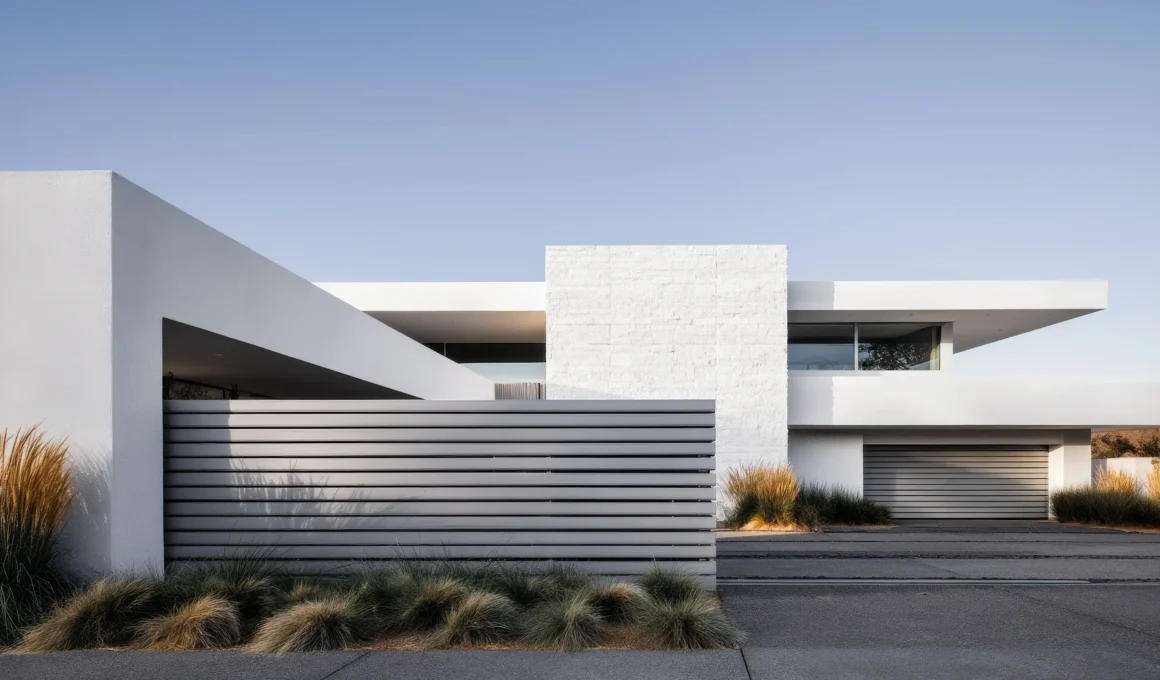
Good design is rarely about a single hero element. It is about how everything works together, how the parts relate, repeat and reinforce one another to create a coherent whole. In residential design, the fence is one of the most overlooked players in that composition. We obsess over interiors, facades and finishes, then wrap the whole thing in whatever fence is cheapest or quickest, undoing some of the care that went into everything else.
A design-led approach treats the boundary as an opportunity rather than an obligation. Chosen well, a fence sharpens the identity of a home, frames it to its best advantage and extends its design language right out to the street. Here is how to think about fencing as a designer would.
The Fence Sets the Tone
Before anyone reaches your front door, they have already read your fence. It is the first design statement a visitor encounters, and it primes how they perceive everything that follows. A crisp, contemporary boundary signals a contemporary home. A soft, planted, informal fence suggests a relaxed and natural aesthetic. A heavy, ornate barrier tells a different story again.
Because the fence is seen first and seen from a distance, it carries disproportionate weight in the overall impression. Getting it aligned with the character of the home is one of the highest impact design decisions a homeowner can make, and one of the most commonly squandered.
Match the Language, Not Just the Look
The instinct when choosing a fence is to ask whether it looks nice. The better question is whether it speaks the same design language as the house. A home with clean horizontal lines, large glazing and a restrained palette calls for a boundary design in the same vocabulary, perhaps horizontal battens in a complementary tone. A period home with detailed joinery and traditional proportions calls for a fence that respects that heritage.
Matching the language does not mean matching every material exactly. In fact, the most refined results often come from complementary contrast, a warm timber screen against a cool rendered house, or a dark steel boundary setting off a light facade. What matters is that the choice feels intentional and connected, part of one design conversation rather than two unrelated ones.
Proportion and Rhythm
Designers know that proportion makes or breaks a composition, and fences are no exception. The height of a fence relative to the house, the width of panels, the spacing of battens and the placement of posts all create a rhythm that either sits comfortably with the architecture or jars against it.
A fence too tall can overwhelm a low slung home and make it feel hemmed in. One too low can fail to provide the privacy or presence the design needs. The spacing of vertical or horizontal elements creates a visual beat that should relate to the proportions of the building, the windows, the cladding, the structural bays. When these rhythms align, the eye reads harmony even if it cannot name why.
Material and Texture
Material choice is where a boundary develops character. Timber brings warmth, grain and a sense of the natural. Steel and aluminium offer precision, slimness and a contemporary edge. Rendered masonry provides solidity, mass and a smooth canvas. Mixing them, thoughtfully, creates depth.
Texture matters as much as material. The play of light across a battened screen, the shadow lines between slats, the contrast between a smooth rendered base and a textured timber top, these are the details that make a boundary engaging rather than flat. A design-led fence rewards a second look, revealing texture and detail that a plain panel never could.
In Perth, that might be a charcoal steel boundary that sets off native planting in a Floreat garden, or warm timber that suits a character home in Fremantle. Realising these material ambitions consistently is a craft in itself, and it’s why discerning homeowners turn to experienced fencing contractors Perth trusts to translate a design idea into a boundary built to last and finished to a high standard.
Colour as a Quiet Decision
Colour is one of the most powerful and most underused tools in boundary design. A dark fence recedes, making a garden feel deeper and planting more vivid, and lending a sophisticated, understated backdrop. A light fence brightens and opens a space. A natural timber tone adds warmth and ties a home to its landscape.
The most elegant approach is usually restraint. A boundary that quietly supports the home and garden, rather than shouting for attention, tends to age better and feel more considered than one that tries too hard. Choosing colour with the whole palette of the property in mind, the house, the roof, the paving, the planting, keeps everything in concert.
The Boundary and the Garden
A fence never exists in isolation. It is the backdrop to the garden and the frame for the outdoor space. Designing the two together produces far better results than treating them separately. A fence designed to host climbing plants, to set off a planting scheme, or to align with paths and beds becomes part of the landscape rather than a wall around it.
This integration is where boundaries become genuinely beautiful. The interplay of structure and planting, the way greenery softens and animates the hard line, the layering of foreground planting against a considered backdrop, all of this lifts a boundary from functional to delightful. A design-led fence anticipates the garden it will live with.
Detailing Makes the Difference
As with all design, the difference between good and great lies in the details. How the fence meets the ground, how it turns a corner, how the gate is integrated, how posts are expressed or concealed, these small decisions separate a boundary that looks designed from one that looks merely built.
Clean junctions, considered gate design, careful resolution of changes in level, and attention to how the boundary terminates and connects all signal quality. These are the things the eye may not consciously register but the brain reads as care. They are also the things most likely to be skipped when a fence is treated as an afterthought.
Style Families and How to Choose
It helps to have a sense of the broad style families a boundary can belong to, because matching the fence to the home is much easier once you can name what you are working with. Contemporary minimalist boundaries favour clean horizontal lines, restrained palettes and slim profiles, pairing naturally with modern homes of glass, render and simple forms. Warm modern or organic styles lean on natural timber, planting and softer textures, suiting homes that want to feel relaxed and connected to the landscape. Traditional and heritage styles draw on detailing, proportion and materials appropriate to a period, and are essential for older homes where a jarringly modern fence would look out of place.
Choosing within these families is not about following fashion but about honesty. The most successful boundary is the one that tells the truth about the home behind it. A modern home dressed in a fussy traditional fence, or a period cottage fronted by stark contemporary steel, creates a dissonance that no amount of quality can resolve. Identifying the style your home belongs to, and choosing a boundary that speaks the same dialect, is the foundation on which all the finer decisions rest.
Working with a Designer or Specialist
While many homeowners have a good instinct for what they like, translating that instinct into a resolved boundary benefits enormously from experienced input. A specialist who has built many fences across many homes can see possibilities and pitfalls that are invisible to someone doing it for the first time. They can advise on which materials will achieve the look you want while standing up to the conditions, how to handle the tricky junctions and level changes, and how to get the proportions right so the finished boundary sits comfortably with the house.
This collaboration is where ideas become buildable reality. A good specialist does not impose a generic product but listens to what you are trying to achieve and finds the way to deliver it in a manner that lasts. The result is a boundary that reflects your taste and your home while benefiting from craft and knowledge you could not bring on your own. For a design-led result, the partnership between the homeowner’s vision and the specialist’s experience is the most reliable path.
Small Details, Big Impact
It is worth dwelling on how much the small, often overlooked details shape the perception of a boundary. The cap that finishes a post, the way a gate handle feels in the hand, the shadow line where two materials meet, the alignment of the fence with a path or a tree, these are the grace notes of boundary design. Individually they seem minor. Collectively they are the difference between a fence that looks thrown together and one that looks composed.
Paying attention to these details costs little beyond care and intention, yet it transforms the result. A boundary where everything lines up, where the materials meet cleanly and the proportions feel right, projects a quality that lifts the whole property. Design, in the end, lives in these details, and a boundary designed with them in mind rewards a closer look as much as a passing glance.
Designing for the Long View
Finally, a design-led approach considers how a boundary will look not just on installation day but in five, ten and twenty years. Materials that weather gracefully, finishes that hold, and a design that accommodates a maturing garden all ensure the boundary improves with age rather than dating quickly. Stylus Architects’ Green Lodge in London shows the principle at its most disciplined, wrapping walls, roof and fence in a single run of larch left to silver naturally over time, so the boundary ages in step with the building it belongs to rather than as a separate element.
This long view is the essence of good design. The most satisfying boundaries are those that still look right years later, having settled into their setting as the planting fills in and the home weathers around them.
The Takeaway
The fence is not the last thing to think about. It is one of the most influential elements of a home’s design, the first impression, the frame, the connective tissue between architecture and garden. Approached with the same care brought to the rest of the home, matched in language, considered in proportion, refined in material and colour, integrated with the landscape and resolved in its details, the boundary becomes a genuine design asset.
For anyone investing in the look and feel of their home, the fence is too important and too visible to leave to chance. Treat it as design, and it will repay the attention every time you pull into the driveway.
About FencrGatr
FencrGatr partners with Perth homeowners to design and build boundaries that complement the home, in Colorbond, timber, aluminium and mixed materials. More at fencrgatr.com.au.