


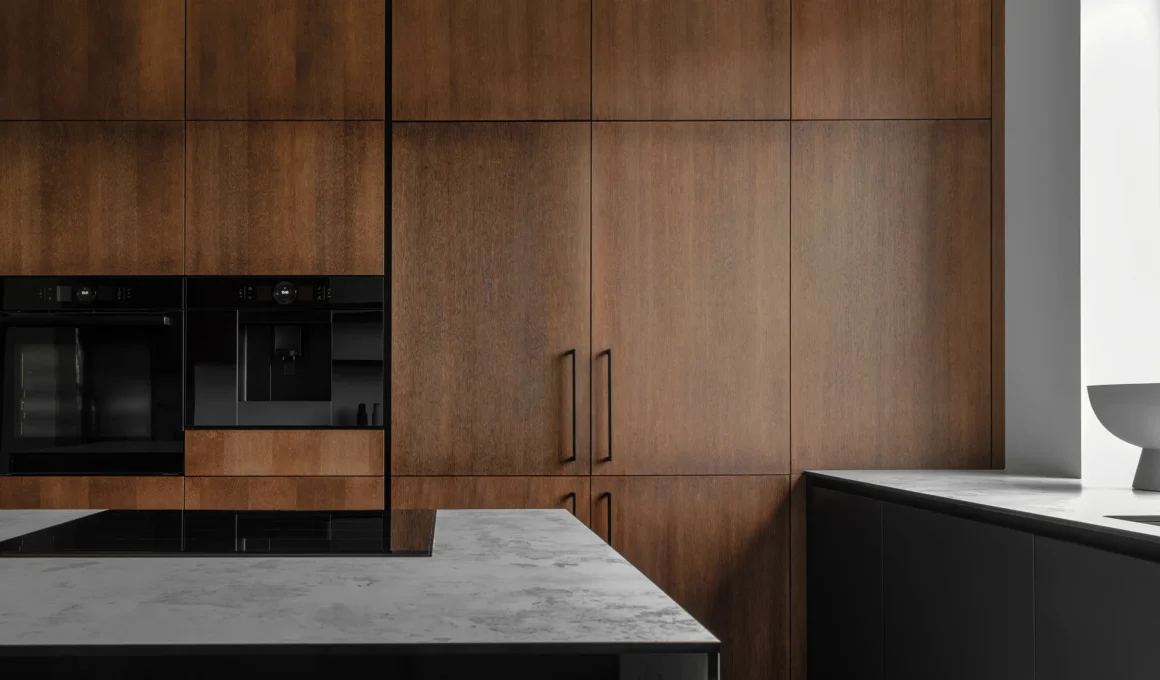
A luxury kitchen should look beautiful, but it also has to keep working beautifully after the installation crew leaves.
That is where predictive maintenance is starting to matter. In high-spec kitchens, appliances are no longer simple plug-in pieces. Built-in refrigeration, smart wall ovens, wine columns, ice machines, panel-ready dishwashers, and connected ventilation are often built directly into the kitchen architecture.
The cleaner the design looks, the more important the hidden planning becomes. If an appliance needs airflow, service access, water shutoffs, filter changes, or a strong network connection, those details need to be considered before cabinetry and finishes are finalized.
Predictive maintenance uses appliance data, sensors, and software to catch early warning signs before breakdowns. A refrigerator may show longer compressor run times. A freezer may report temperature swings. A smart oven may flag heating inconsistencies. An ice machine may detect restricted water flow.
The technology can be useful, but it cannot fix poor planning. A smart appliance can send an alert. It cannot make itself easier to reach, create more airflow, or move a shutoff valve out from behind finished millwork. Those decisions belong in the design phase.
Key Takeaways
- Predictive maintenance is becoming part of luxury kitchen planning, not just appliance ownership.
- Connected appliances can help detect temperature swings, unusual run times, airflow problems, water-flow issues, and recurring error codes.
- In warm, humid areas such as Buford, GA, refrigeration, ventilation, ice production, and moisture control deserve extra attention.
- A seamless kitchen should still allow practical access for inspection, cleaning, filter replacement, and repairs.
- Smart diagnostics can help homeowners act earlier, but they do not replace professional maintenance or repair.
Why Maintenance Belongs in the Design Conversation
For years, appliance maintenance was treated as something that happened later. The kitchen was planned, the appliances were installed, and if something failed later, the homeowner dealt with it.
That is less practical in today’s high-end homes. Modern luxury kitchens often include expensive appliances surrounded by custom cabinetry, stone counters, hardwood floors, and integrated panels. A leak beneath a dishwasher can damage more than the dishwasher. A poorly ventilated refrigerator or tightly installed wall oven can quickly become a design issue too.
Predictive maintenance brings these concerns forward. Instead of waiting until an appliance stops working, connected systems can report unusual patterns early. That may include rising energy use, longer operating cycles, temperature changes, or repeated error codes.
But the alert is only the beginning. The real value comes when the home is designed so someone can respond quickly. If the refrigerator sends a warning about abnormal compressor activity, a technician needs to inspect airflow, coils, seals, and installation conditions. If a smart oven reports repeated temperature faults, it should be possible to access the appliance without damaging surrounding finishes.
That is why maintenance access should not be seen as a compromise. In a well-designed kitchen, it is part of the craftsmanship.
A Buford, GA Example: Designing for Climate and Real Use
A High-Spec Kitchen Project in Buford, GA
The home is designed for frequent entertaining. It sits in a residential area not far from Lake Lanier, with a large main kitchen, a scullery, a beverage area, and enough cold storage for family meals, weekend guests, and summer gatherings.
The finishes are warm and polished: painted cabinetry, wide-plank flooring, stone counters, integrated refrigeration, layered lighting, and a large island. The goal is not a showroom kitchen that feels untouchable. It is a refined kitchen that can handle real daily use.
Buford’s Climate and the Design Brief
North Georgia summers are hot and humid. During the warmer months, refrigeration systems work harder, ice machines run more often, and ventilation has to manage cooking heat, steam, and moisture. Homes near wooded lots or lake-adjacent areas may also deal with seasonal pollen, humidity, and more frequent door traffic during gatherings.
In that setting, predictive maintenance is not a gadget-driven extra. It is practical design thinking.
For this type of Buford project, the design team should consider:
- giving built-in refrigeration enough space to breathe behind finished panels;
- keeping condenser coils and filters reachable for routine cleaning;
- placing water shutoffs where a homeowner or technician can actually access them;
- adding leak sensors near the dishwasher, ice machine, refrigerator water line, and scullery sink;
- making sure the smart oven can be inspected or removed without damaging millwork;
- checking Wi-Fi coverage in the kitchen, scullery, pantry, and beverage zone;
- sizing ventilation for real cooking heat, summer humidity, and frequent entertaining;
- documenting appliance access points before the project is handed over.
None of these details need to be visually obvious. A removable panel, better-placed shutoff, service cavity, or hidden leak sensor can protect the home without interrupting the design.
That is the difference between a kitchen that only looks high-end and one that performs like a high-end kitchen should.
Refrigeration Is Often Where Problems Show First
Refrigeration is one of the clearest examples of why predictive maintenance belongs in residential design.
A built-in refrigerator can look perfect from the outside while working too hard behind the panels. The airflow may be restricted. The condenser coils may be dusty. The door seal may be wearing. The appliance may be installed close to a heat source or inside cabinetry that does not allow enough breathing room.
At first, the homeowner may not notice. The refrigerator still feels cold, and the doors still close. But the compressor may be running longer than it should.
A connected refrigerator can help identify that pattern. It may report temperature variation, increased energy use, or longer compressor cycles. Those warnings can be especially useful during Buford’s hotter months, when refrigeration is already under more stress.
For a family hosting in July, this matters. Refrigerator doors open more often, the beverage center fills up, and the ice machine may run constantly. If the main refrigerator is already struggling because of poor airflow, the extra demand can expose the problem quickly.
The design lesson is straightforward: appliance cavities matter. Manufacturer clearances should be respected. Ventilation grilles, toe-kick details, panel dimensions, and access routes all affect long-term performance.
Smart Ovens Need Practical Service Planning
Ovens are also becoming more data-driven. Many smart wall ovens and ranges can monitor heating performance, temperature consistency, sensors, and error codes.
This matters because oven problems often start quietly. The oven may still turn on, but it may take longer to preheat, struggle to hold temperature, or cook unevenly. A homeowner may tolerate those symptoms for a while before realizing there is a service issue.
In the Buford kitchen example, imagine the smart wall oven begins sending recurring temperature alerts. At first, the issue seems minor. The oven still works, but longer baking and roasting cycles are becoming less consistent. The alert history may point to a developing sensor, control, or heating issue.
That is where smart diagnostics and hands-on expertise meet. A connected oven can identify a pattern, but it cannot replace a failed component or correct an installation problem on its own. If the issue continues, the homeowner may need professional GE oven repair in Buford, GA to inspect the appliance, diagnose the cause, and restore dependable performance.
For designers and builders, the takeaway is simple. A wall oven should not be trapped behind a design decision. Electrical access should be safe and logical. The appliance should be removable without damaging cabinet fronts, trim, stone edges, or surrounding finishes.
Water Lines, Humidity, and Hidden Damage
Water-connected appliances need careful planning in high-end kitchens. Dishwashers, ice machines, refrigerator dispensers, built-in coffee systems, steam ovens, and wet bars all introduce water into finished cabinetry.
That convenience comes with risk. A slow leak beneath an ice machine or dishwasher may not be visible right away. By the time the homeowner sees warped flooring, staining, or cabinet damage, the issue may have been developing for some time. In a humid climate, moisture problems can also become more stubborn once they start.
Predictive maintenance can help when paired with leak sensors and water monitoring. But placement matters. Sensors should sit near the areas most likely to leak. Shutoff valves should be easy to reach. Filters should be replaceable without disassembling cabinetry. Drain lines should be planned clearly.
In homes with a scullery, beverage area, and undercounter ice machine, these details are especially important. Entertaining kitchens put extra demand on ice production, refrigeration, and cleanup zones. During warm months, those systems may be used heavily for days at a time.
Good planning gives the home a better chance to catch a small issue early and makes the repair less disruptive.
Energy Efficiency Is a Lifecycle Issue
Energy efficiency is often discussed when appliances are selected, but that is only part of the story.
An efficient appliance can become inefficient if it is poorly installed or poorly maintained. A refrigerator with restricted airflow may run longer than necessary. A freezer with a worn gasket may work harder to hold temperature. An oven with a faulty sensor may cycle unevenly. A dishwasher with water-flow problems may require repeat cycles.
Connected appliances can make these changes easier to notice. Rising energy use, longer run times, and repeated alerts can show that something has changed. This helps homeowners maintain efficiency instead of assuming an appliance is performing well simply because it still turns on.
Refrigeration, ice production, and ventilation can all carry heavier loads during summer. If appliances are already operating inefficiently, heat and humidity can make the problem more noticeable.
For sustainable residential design, this is an important point: a home’s energy performance is not fixed on move-in day. It changes as equipment ages, filters clog, seals wear, and family routines shift.
Smart-Home Integration Should Be Planned Early
Predictive maintenance depends on communication. If the appliance cannot stay connected, the homeowner may never receive the alert.
That is why smart-home planning should happen early in a high-spec project. Wi-Fi coverage, hubs, smart-home platforms, electrical planning, and energy monitoring should be coordinated before the kitchen is finished. This is especially true in larger homes where the scullery, pantry, bar, garage refrigerator, or outdoor kitchen may sit farther from the main router.
The goal is not to make the kitchen feel like a showroom for gadgets. The best smart-home design usually feels quiet. A connected refrigerator should be able to send a temperature alert. A smart oven should be able to report repeated faults. A leak sensor should notify the homeowner before water damage spreads.
Expert Perspective: Small Symptoms Usually Matter
Appliance technicians often see the same pattern: small symptoms are ignored until they become larger failures.
A refrigerator runs a little longer. An oven temperature feels slightly off. An ice machine produces less ice than usual. A dishwasher leaves dishes wetter than before. A freezer has occasional temperature swings.
At first, these issues feel minor. Homeowners may adjust their habits and live with them. Eventually, the minor inconvenience becomes a major repair.
Predictive maintenance helps because it gives those small symptoms a clearer signal. It can show patterns that are easy to miss in daily life. It can also help technicians diagnose problems more efficiently because there is more performance history to review.
Still, the technology has limits. A refrigerator can report abnormal activity, but it cannot clean its own coils. An oven can show fault codes, but it cannot replace a component. An ice machine can detect restricted water flow, but it cannot change its own filter.
The strongest approach combines smart monitoring, good design, routine maintenance, and professional service when needed.
Frequently Asked Questions
What Is Predictive Maintenance in a Residential Kitchen?
Predictive maintenance uses appliance data, sensors, and software to identify early warning signs before a major breakdown occurs. In a kitchen, that may include monitoring temperature, airflow, water flow, heating performance, energy use, or error codes.
Why Does Predictive Maintenance Matter in Luxury Kitchen Design?
Luxury kitchens often include integrated appliances, custom cabinetry, premium flooring, and expensive finishes. If an appliance fails or leaks, the damage can affect more than the appliance itself. Predictive maintenance helps homeowners act earlier and reduce unnecessary disruption.
Why Use Buford, GA as an Example?
Buford is a useful example because many homes in the area combine upscale suburban living, entertaining-focused layouts, and North Georgia’s warm, humid climate. That makes refrigeration, ice production, ventilation, moisture control, and appliance access especially relevant.
Do Connected Appliances Replace Professional Service?
No. Connected appliances can provide alerts and diagnostic information, but they do not replace inspection, cleaning, maintenance, or repair. They are best used as early-warning tools.
Final Thoughts
Predictive maintenance is not about turning the kitchen into a control room. It is about designing a home that can take better care of itself.
In high-spec residential projects, cabinetry, stone, lighting, and appliance finishes still matter, but so do airflow, service access, water management, smart-home connectivity, and long-term energy performance.
The Buford, GA example shows why local conditions matter. In a warm, humid climate, refrigeration, ice production, ventilation, and water-connected appliances can face added stress. A well-designed kitchen accounts for that from the start.
That is the real value of predictive maintenance in residential design. It helps protect the appliances, the finishes, the homeowner’s investment, and the experience of living in the home.