


In the coastal city of Fujisawa, Kanagawa Prefecture, the weight of history is often measured by the grain of timber and the narrowness of property lines. For Uchida Shōten, a hardware manufacturer with a 160-year legacy, the challenge was not merely to replace a decaying headquarters but to reconcile the rigid demands of a modern industrial office with the deep-rooted cultural heritage of the Tōkaidō road. Jo Nagasaka and his team at Schemata Architects have responded with a project that eschews the typical corporate monolith in favor of a porous, adaptive structure that honors the traditional machiya typology.
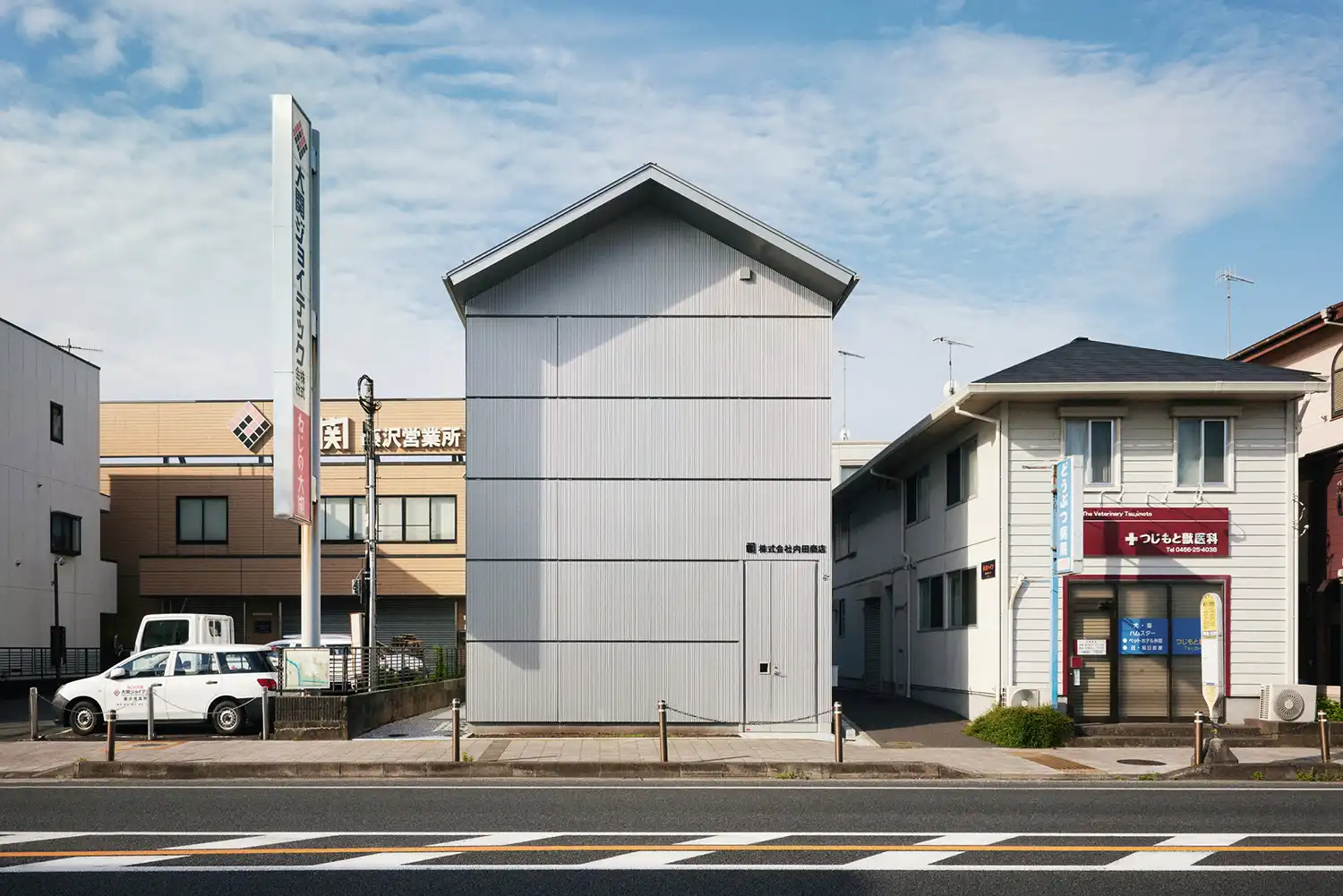
A narrative rooted in the Edo-period “frontage taxation” system defines the spatial logic of the site. Historically, the narrow, elongated plots of Fujisawa-juku—the sixth post town along the ancient highway—were a byproduct of fiscal policy, forcing merchants to build deep rather than wide. Schemata Architects embraced this linear constraint, viewing the site as a sequence of functional zones rather than a singular volume. By referencing the traditional division of front-facing shops and rear-facing quarters, the architects have successfully reinterpreted the vernacular “townhouse” for a contemporary manufacturer, creating a dialogue between the site’s merchant past and its industrial future.
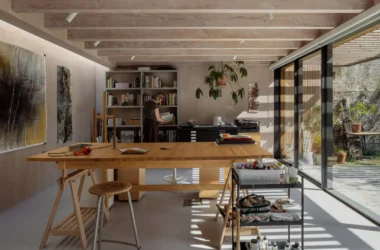
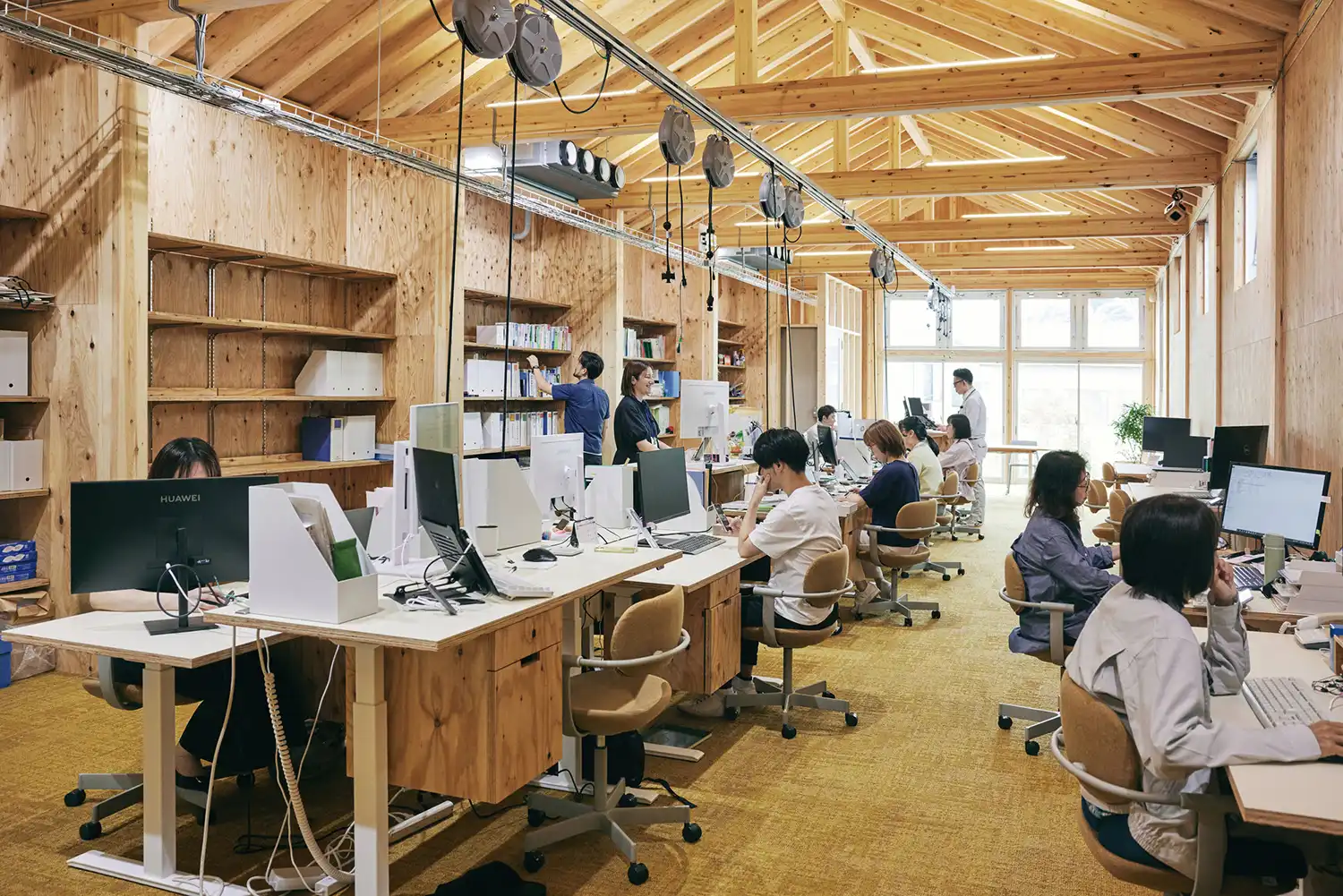
The programmatic heart of the project lies in a radical subversion of corporate privacy. Recognizing that the company’s internal team remained small, Nagasaka proposed a hybrid model: an artist-in-residence facility at the street-facing front, with the primary offices tucked toward the rear. This spatial configuration transforms the building into a cultural threshold. By inviting students, international creators, and local designers to inhabit the “frontage,” Uchida Shōten effectively gifts its most visible square footage back to the public realm of Fujisawa-shi, fostering an environment where routine manufacturing is constantly disrupted by creative production and exhibition.
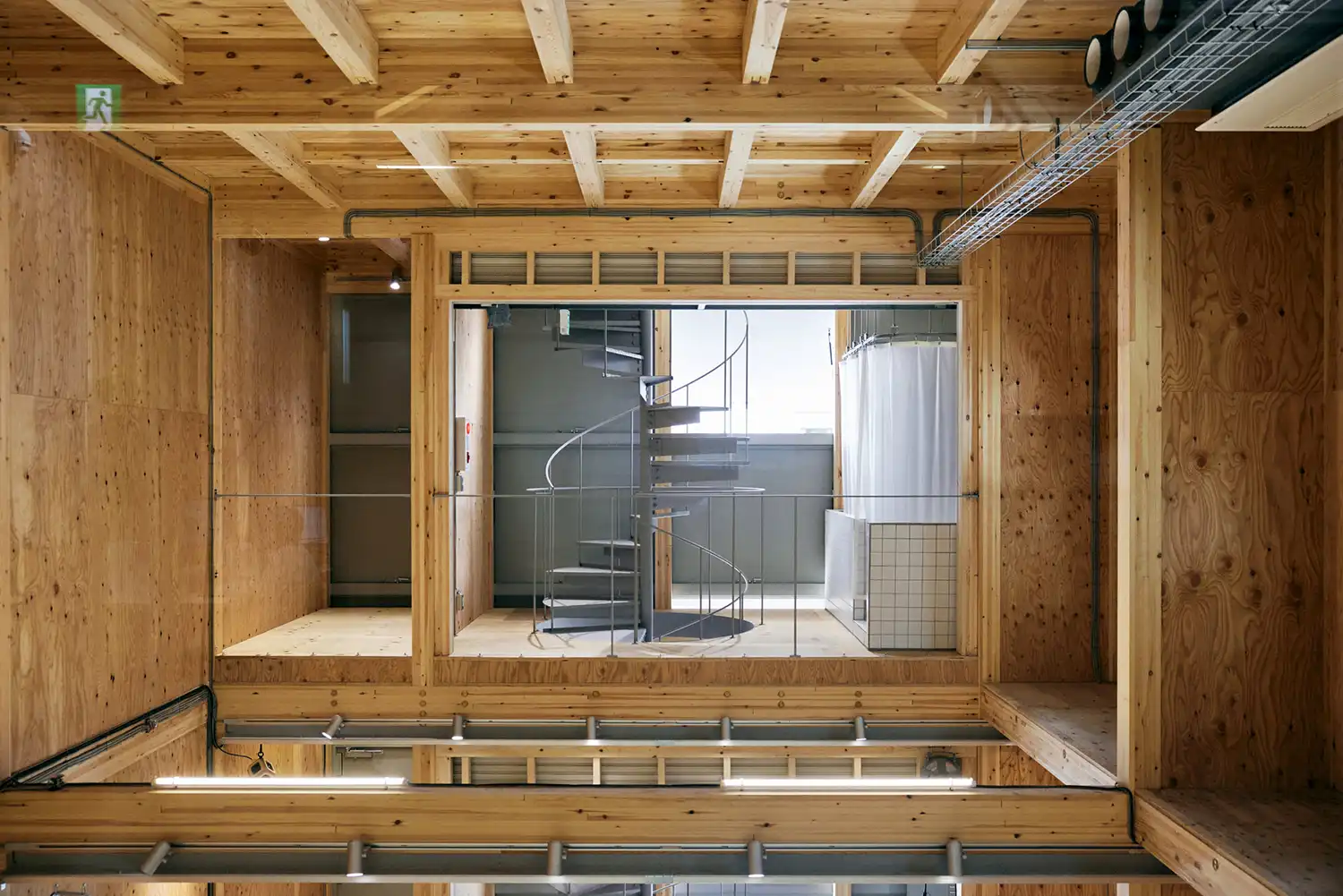
Materiality and structural honesty guide the technical execution of the “large box” concept. Driven by a disciplined approach to cost-effectiveness, the building is composed of a series of simple, repetitive frames. This creates a skeletal clarity that allows the interior to breathe. Within this shell, the architects inserted the “nedoko”—or berth—a compact, high-density living core hidden behind shutters. Accessed via a sculptural spiral staircase, this lofted sanctuary provides all the domestic essentials—kitchen, bathroom, and sleeping quarters—allowing the workspace to transition seamlessly into a residence without losing its industrial edge.
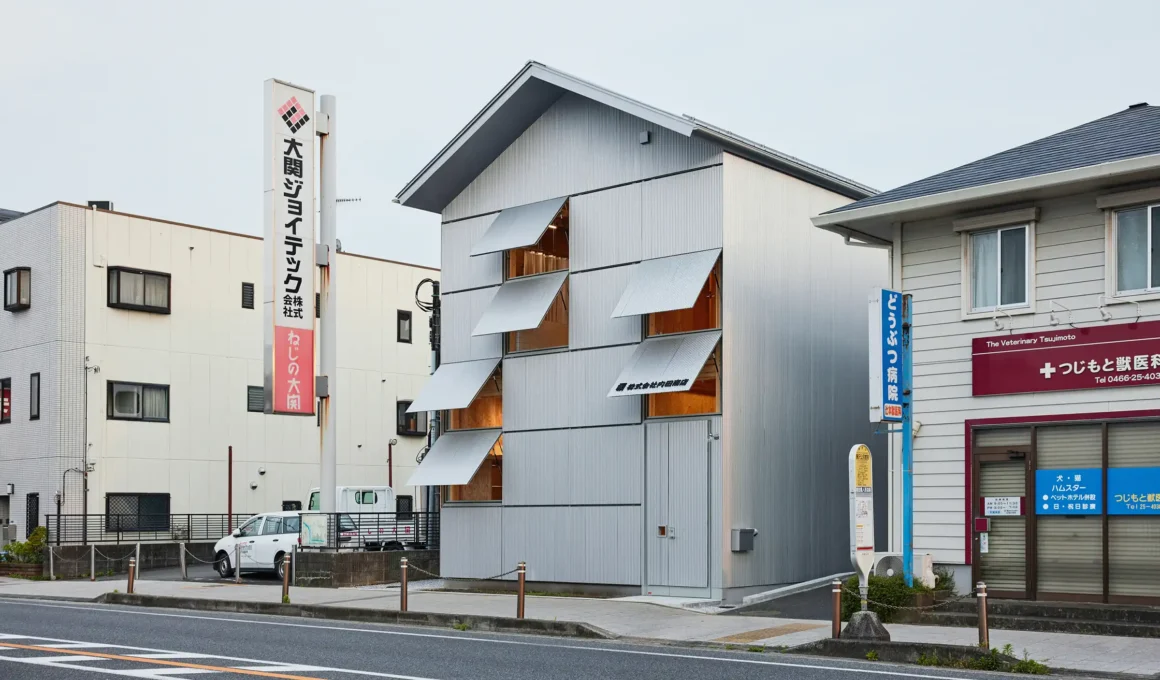
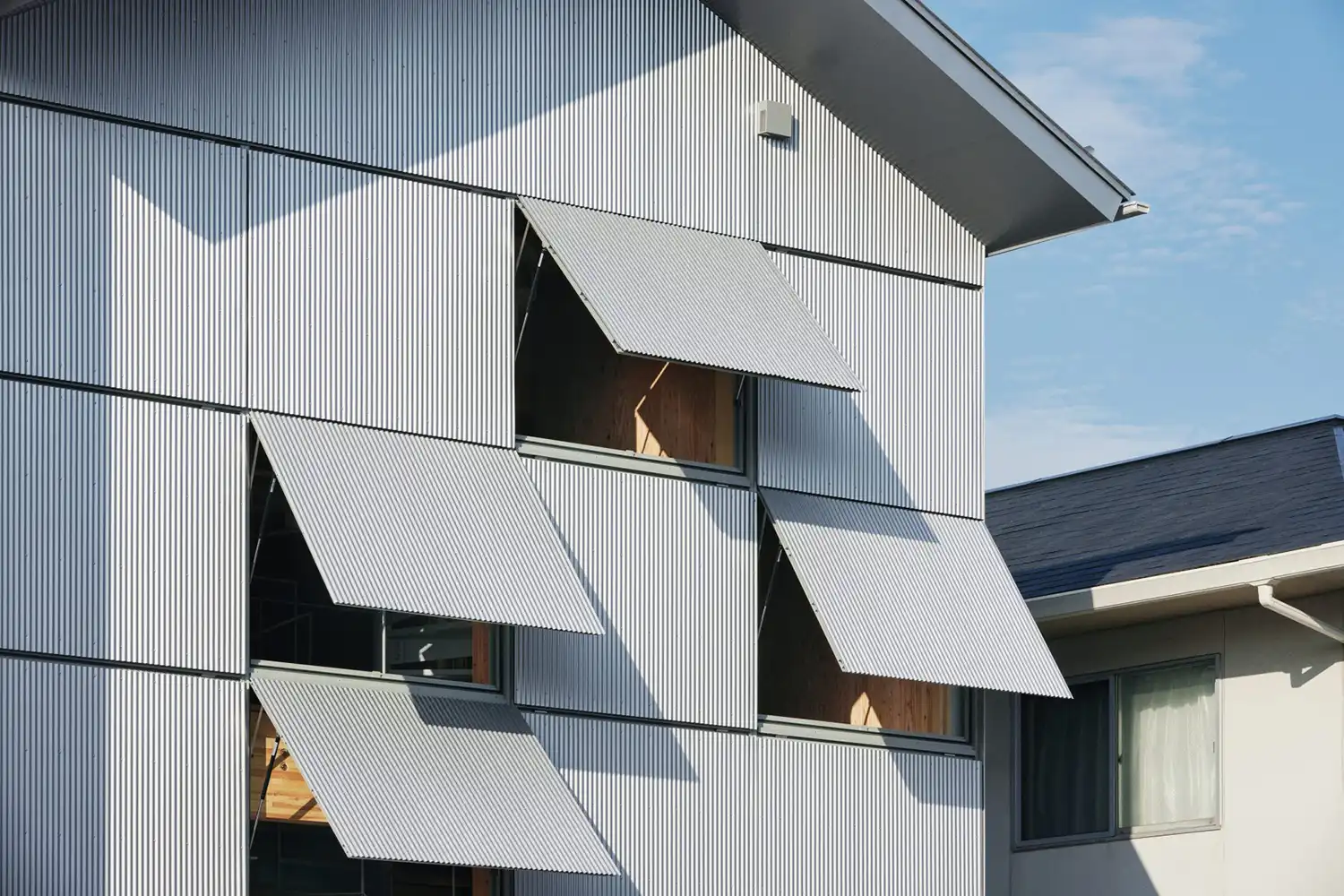
The sensory experience of the building is most palpable on the northern façade. Here, a series of large awning windows act as the lungs of the structure. When these windows swing open, the boundary between the private office and the Tōkaidō road dissolves. The juxtaposition of the manufacturer’s quiet, analytical work with the vibrant energy of visiting artists creates a “seepage” of human presence. To the passerby, the building does not appear as a static object but as a living organism—one that inhales the atmosphere of the street and exhales new cultural value into the neighborhood.
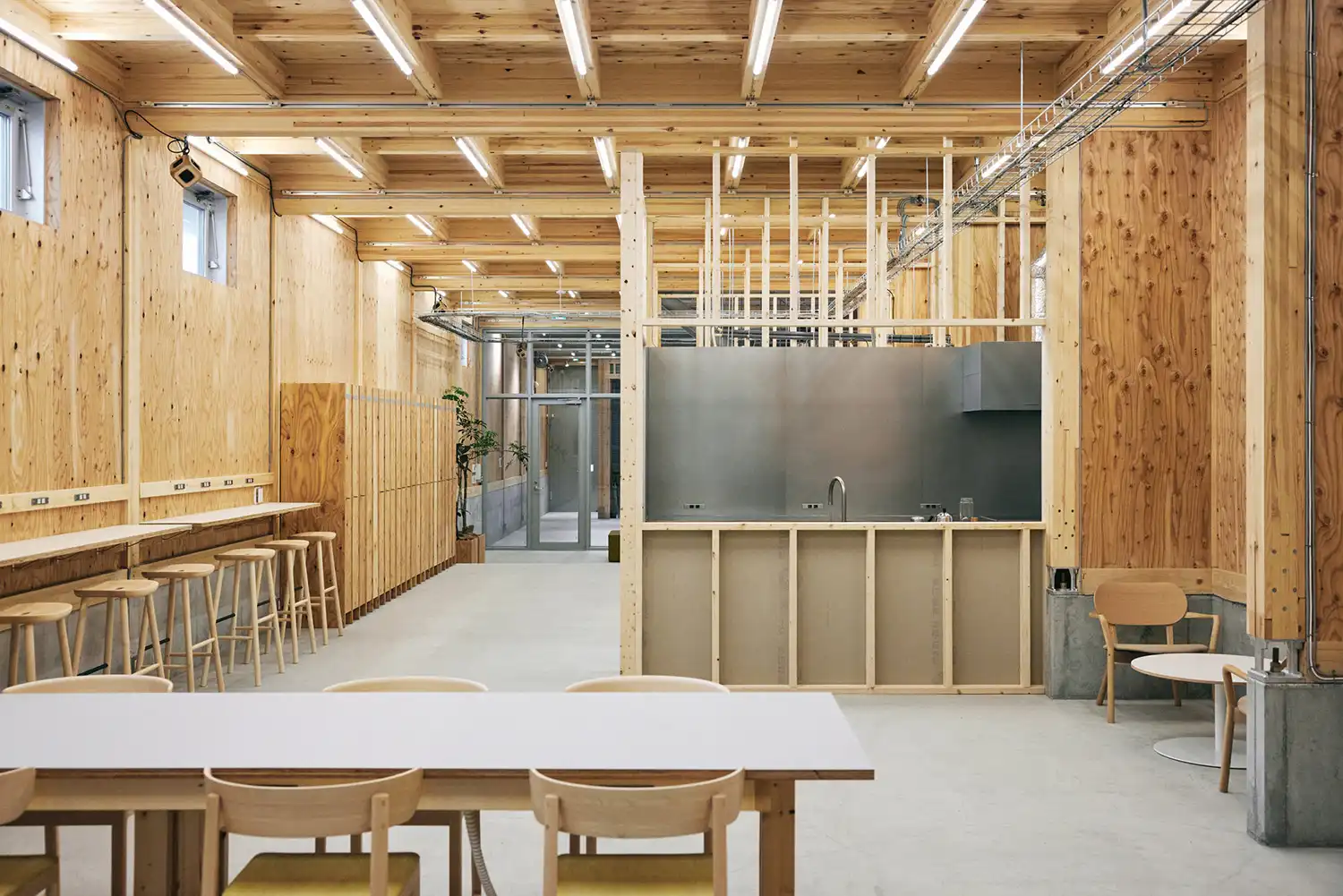
Ultimately, the contextual impact of the new Uchida Shōten head office serves as a catalyst for urban renewal that respects history without being shackled by it. It stands as a “foothold” for the community, proving that even a 160-year-old company can pivot toward a future of communication and openness. By integrating the artist-in-residence program, Schemata Architects have ensured that this piece of Fujisawa remains a place of movement and encounter, mirroring the spirit of the ancient travelers who once walked these very paths centuries ago.