

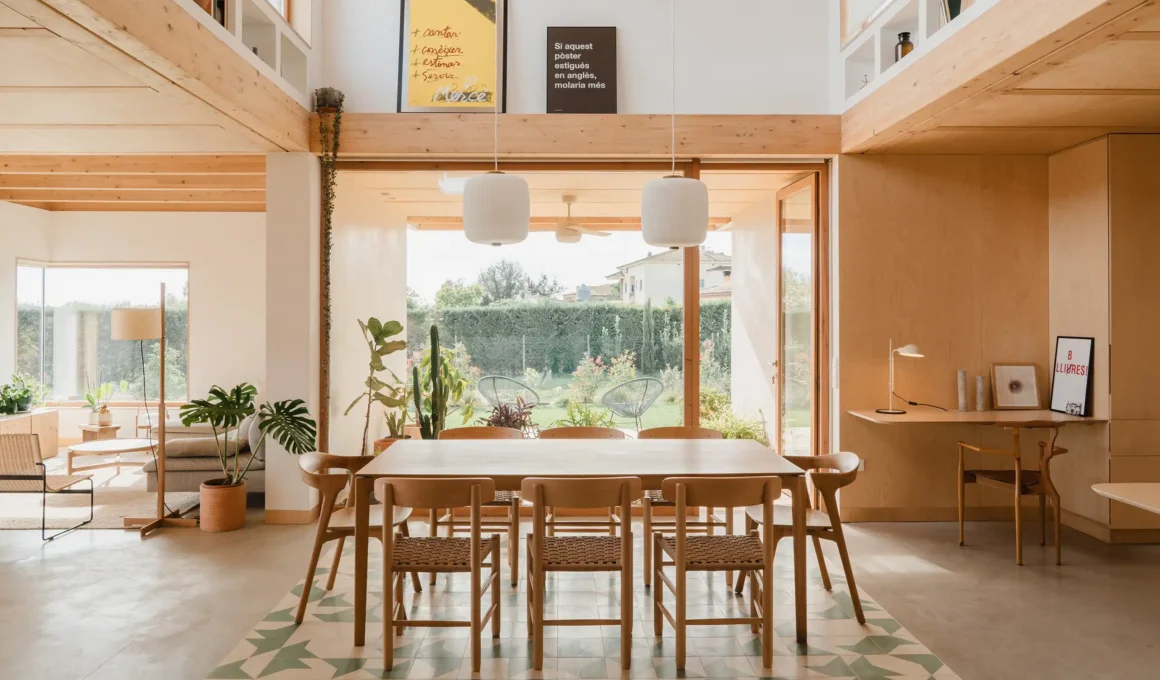
In the windswept landscape of Vilamacolum, a small village nestled within the Alt Empordà region of Spain, architecture has long been a byproduct of the earth’s own cycles. Here, the tramontana wind and the seasonal flooding of the plains dictate the rules of survival and shelter. Casa al Pradet, the family residence designed by architect Clara Crous, does not merely occupy this territory; it emerges from it. Conceived through a process of self-construction that bridged the gap between digital fabrication and traditional farming labor, the home serves as a poignant manifesto on how contemporary living can synchronize with agricultural time.

The genesis of the project was defined by a unique intersection of professional expertise and ancestral roots. Clara Crous and her partner Carles, a specialist in digital fabrication, acquired a triangular plot that marks the edge of the urban fabric and the beginning of the vast Catalan fields. For Carles, whose family has farmed this land for generations, the site was more than a technical challenge—it was a homecoming. By leveraging his access to heavy agricultural machinery and expertise in timber processing, the duo bypassed conventional construction hierarchies, allowing the design to be shaped by the very tools used to till the soil.
A temporal alignment with the harvest dictated the project’s physical realization. Construction did not follow a standard corporate schedule; instead, it waited for the end of the corn harvest. This decision ensured that local hands, seasoned by the rhythms of the land, were available to pivot from the fields to the building site. This synchronization transformed the act of building into a communal, rhythmic process, where the “architectural time” was indistinguishable from the “agricultural time” of the Girona province.

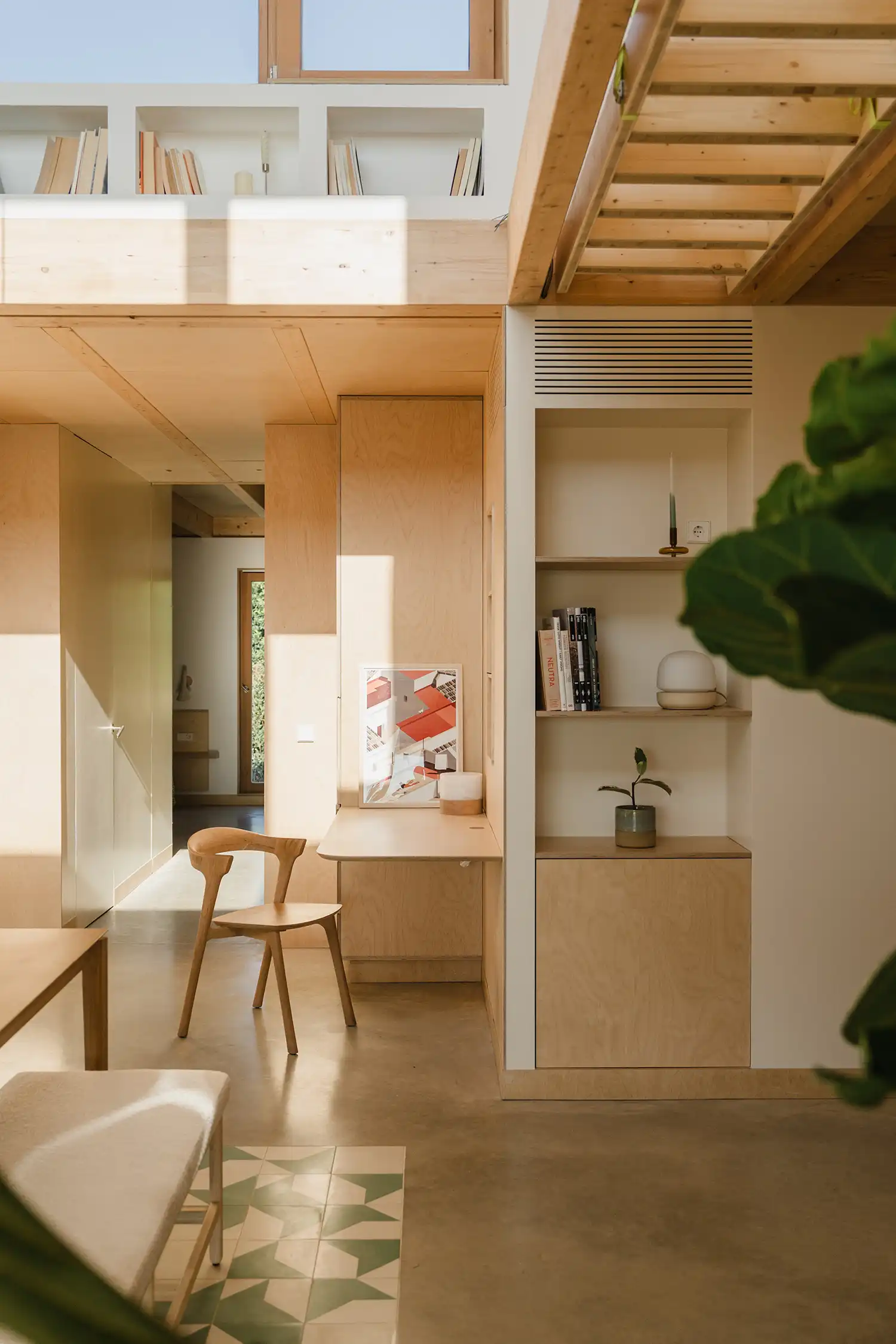
The structural logic of the residence is a sophisticated nod to the vernacular masia. Rather than a singular, imposing block, the house is composed of staggered timber-framed modules of varying heights. These volumes are elevated 1.2 meters above the ground—a necessary intervention to allow the natural flow of rainwater toward the nearby river without compromising the interior. This elevation gives the house a light, almost floating quality, despite its deep material connection to the site. The fragmented silhouette echoes the traditional outbuildings that historically expanded around Mediterranean farmhouses, creating a visual language that feels both fresh and deeply familiar.
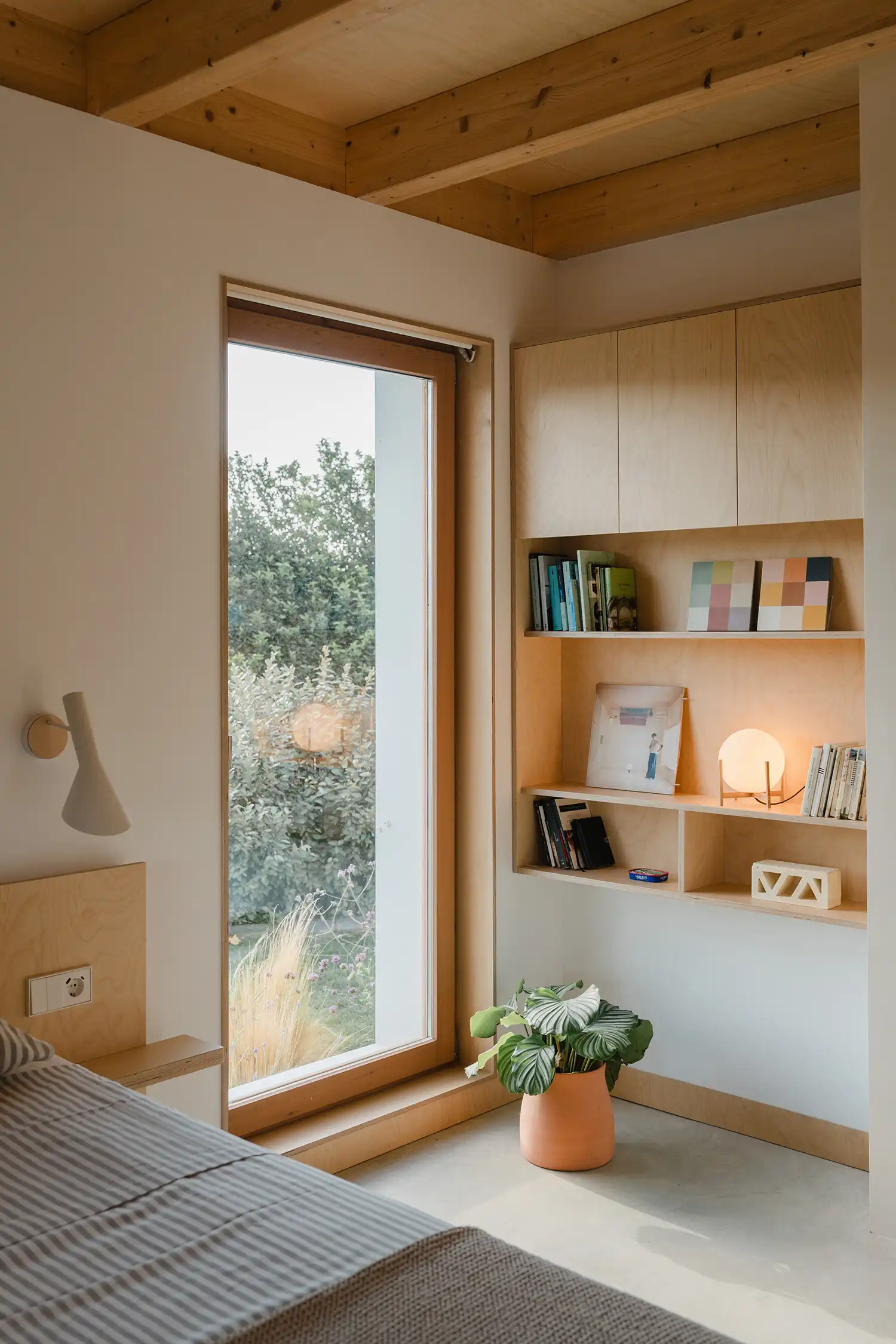
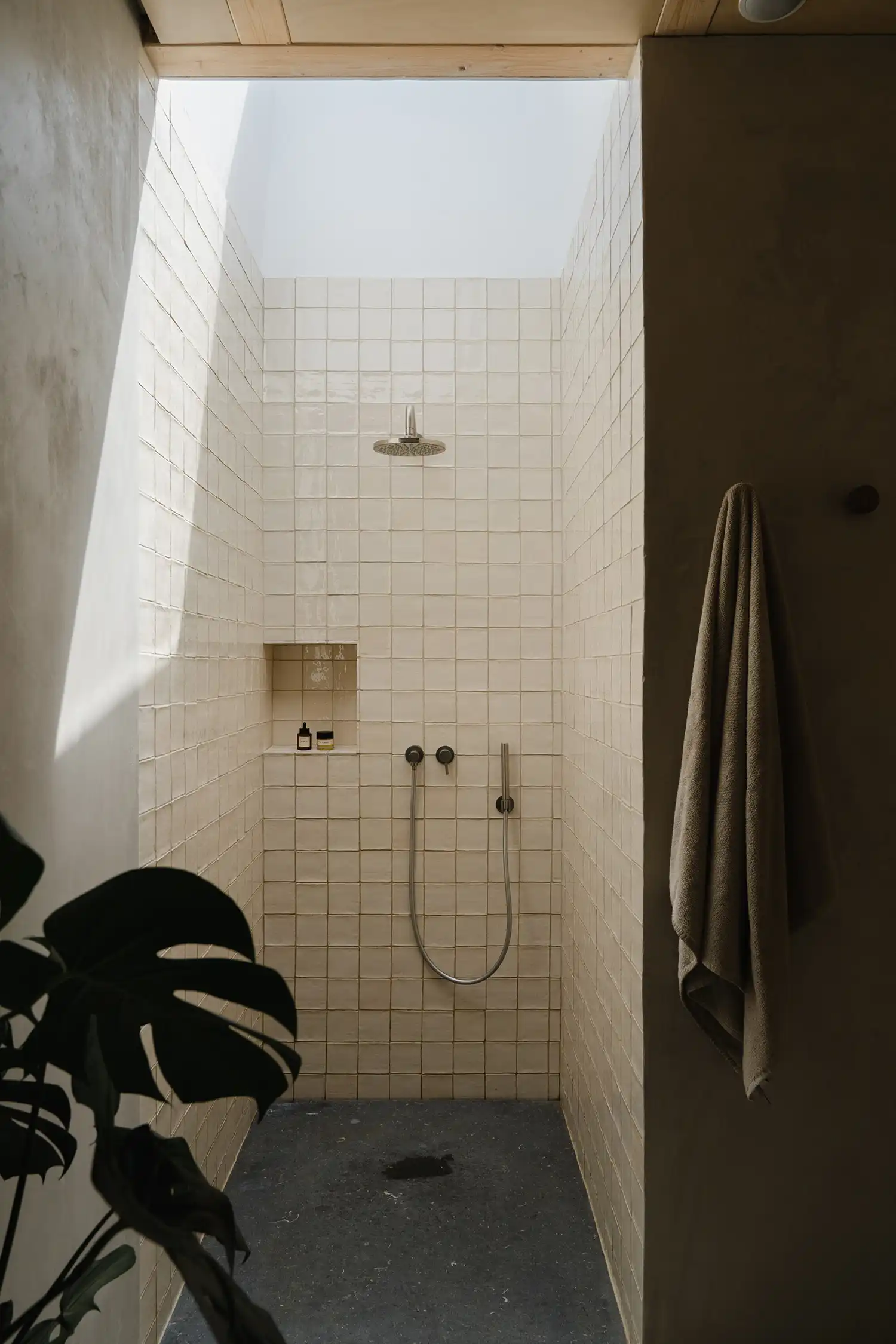
Sensory continuity and material honesty define the interior experience. Walking through the spaces, one encounters a tactile palette of cork, lime mortar, adobe, and handmade ceramics. The scent of raw timber lingers in the air, a reminder of the prefabricated framework that forms the home’s skeleton. This commitment to “slow” materials is a philosophy we have explored previously, particularly in how natural materials like lime and cork redefine modern sustainability, creating environments that breathe alongside their inhabitants. In Casa al Pradet, these elements are not mere finishes but a continuation of the landscape, where hydraulic tiles underfoot provide a cool, rhythmic counterpoint to the warmth of the wood-integrated furniture.
The integration of technology serves to refine, rather than replace, traditional wisdom. While the home’s orientation and staggered volumes provide natural protection against the tramontana, a smart system now manages motorized shutters to optimize solar gain. Surrounding the perimeter, a bed of ceramic gravel acts as a functional drainage shroud, catching the runoff that defines the site’s hydrology. It is a residence that proves self-construction is no longer a matter of rustic improvisation, but a precise, tech-enabled dialogue between human effort and environmental necessity.