


The renovation of the Casa da Moeda Apartment in Lisbon by Aurora Arquitectos reimagines a traditional “Rabo de Bacalhau” typology, flipping the internal logic of a mid-20th-century dwelling to prioritize southern solar exposure and fluid social connectivity.
A structural legacy redefined. The “Rabo de Bacalhau” or “cod’s tail” buildings are a staple of Lisbon’s urban expansion, characterized by a rigid grid of solid masonry partition walls and thin concrete slabs. While these structures provided stability, they often dictated a fragmented internal life. In this particular residence, the original layout suffered from a paradoxical orientation: the private quarters occupied the light-drenched southern façade, while the living areas were relegated to the shadowed northern rear, overlooking the interior of the block.
The alchemy of light. The intervention by Aurora Arquitectos centers on a fundamental question: can the sun reshape a house? By challenging the existing hierarchy, the studio sought to align the home’s rhythm with the natural movement of the day. The primary ambition was to minimize demolition while maximizing the spatial amplitude of the communal zones. This required a bold reversal of the domestic program, migrating the kitchen and lounge into the footprint of the former bedrooms.
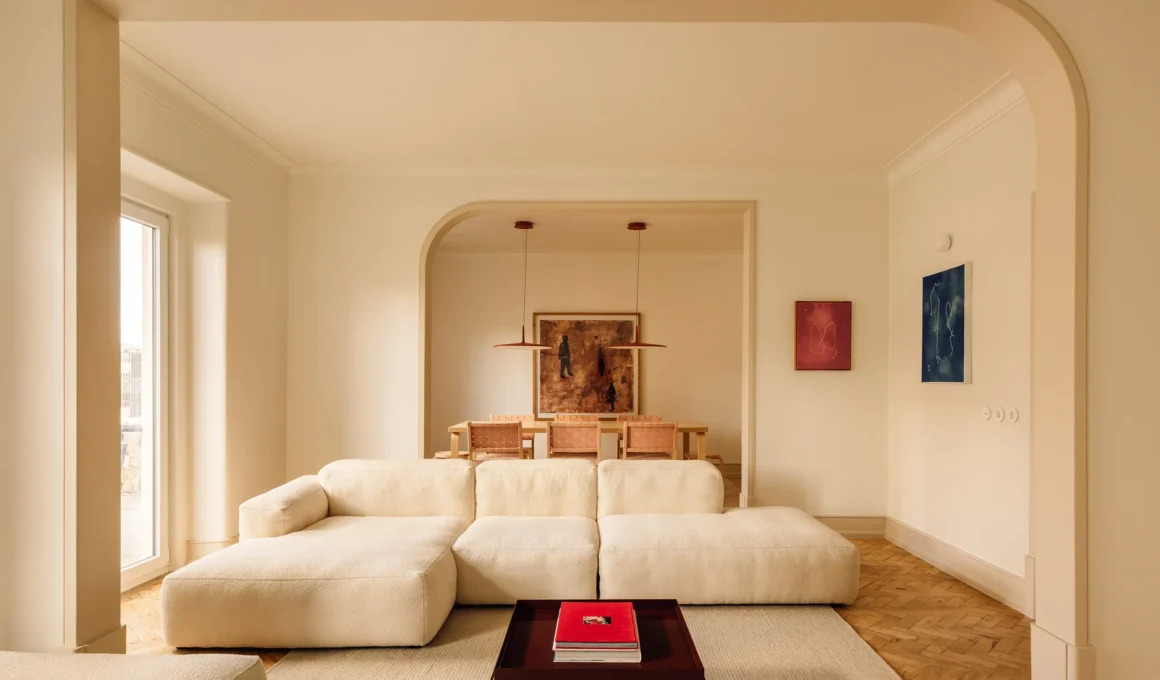
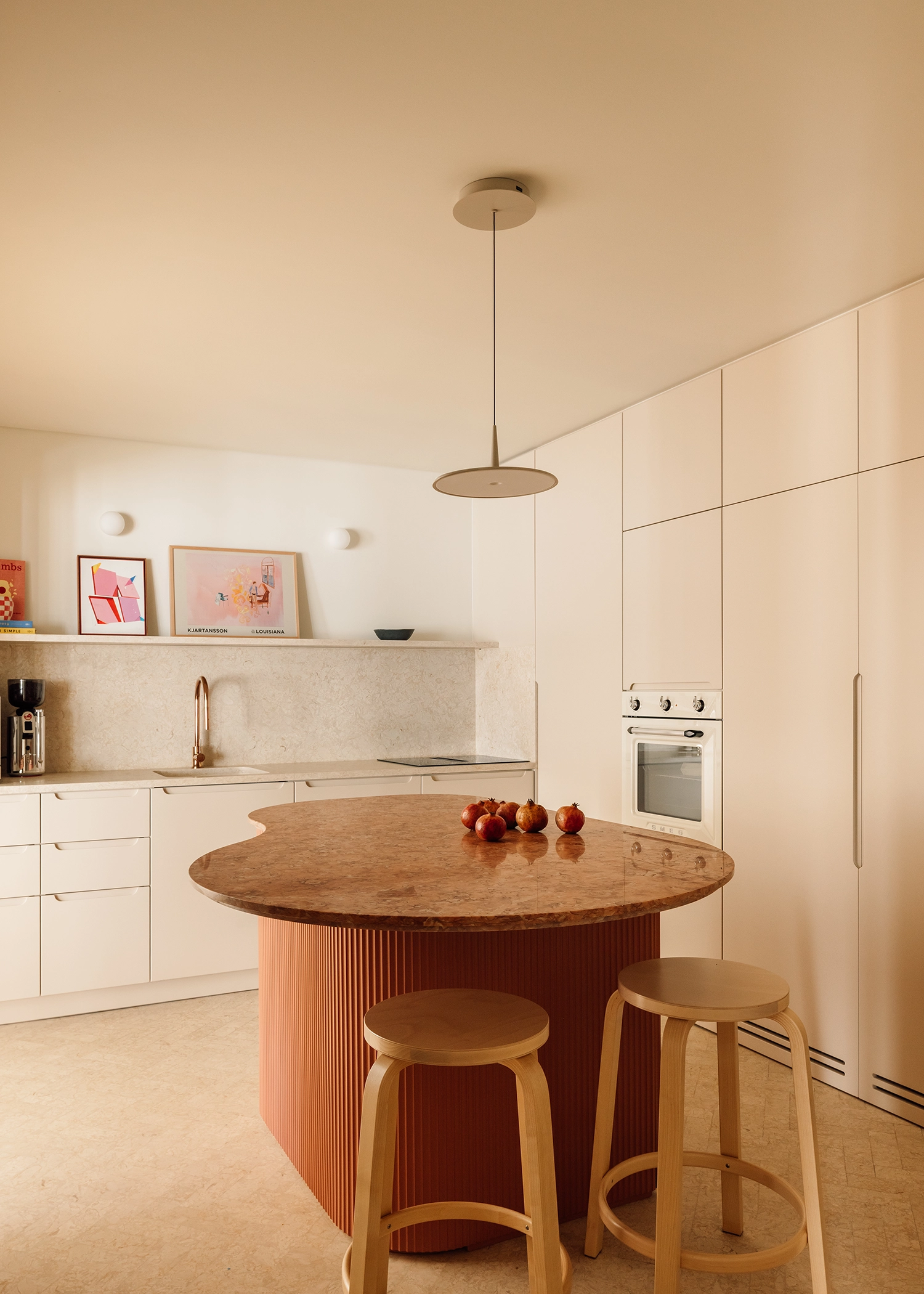
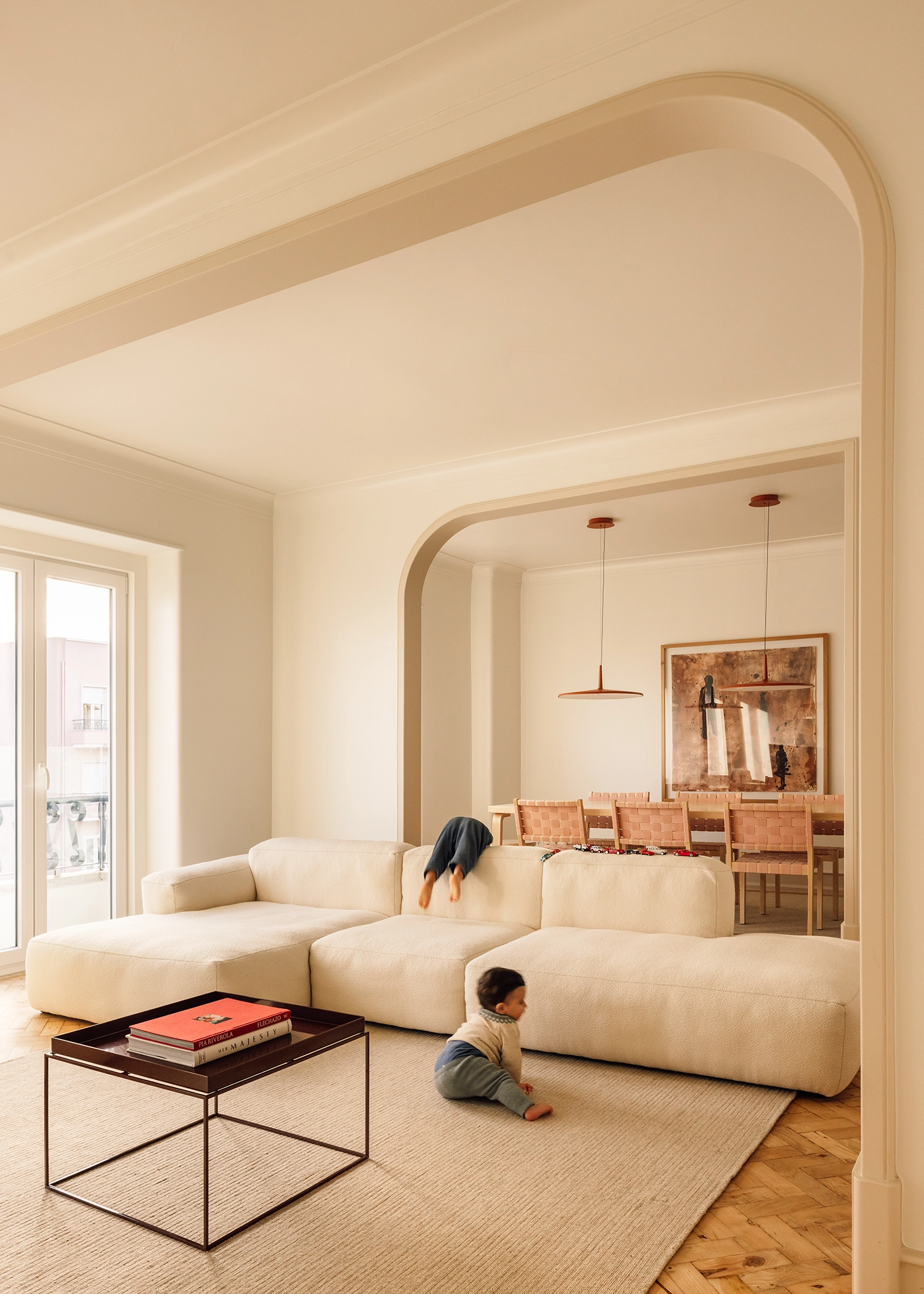
Narrative of openness. Where small, partitioned rooms once stood, a continuous and interconnected volume now stretches across the main façade. This new open-plan configuration dissolves the boundaries between cooking, dining, and relaxation. The atmosphere is transformed by the influx of southern light, which reflects off pale surfaces to create a sense of ethereal lightness. It is a sensory shift that moves away from the compartmentalized gloom of the original 20th-century plan toward a modern, breathable environment.
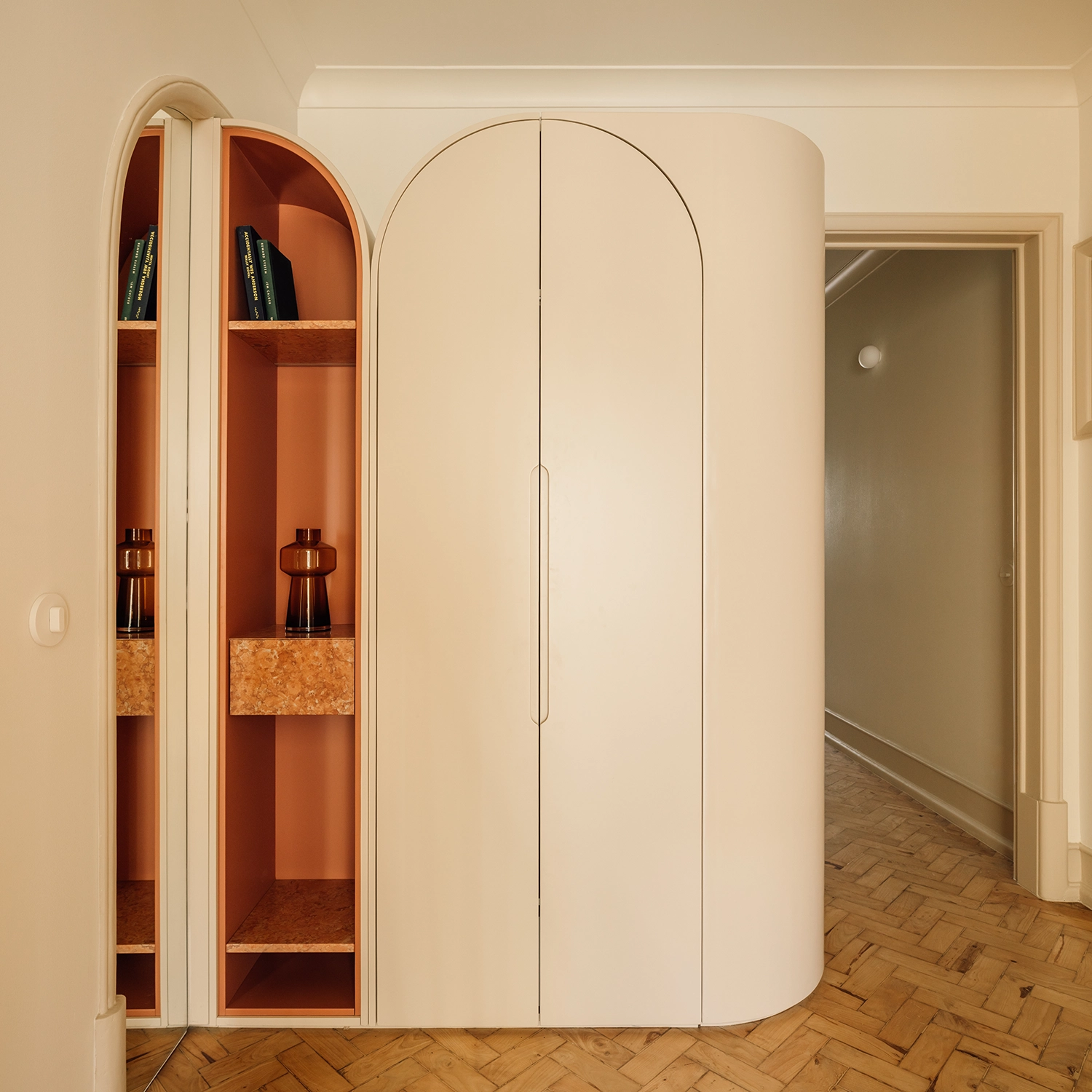
The articulating spine. A significant challenge lay in the disproportionately large entrance hall, a common vestige of formal Portuguese apartments. Rather than treating it as wasted square footage, the project integrates it into a functional spine. A series of custom built-in cabinetry and a hidden pantry form a long, tactile element that guides the inhabitant through the home. This timber-toned cabinetry acts as a transitional anchor, linking the hallway to the kitchen and the deeper corridor.
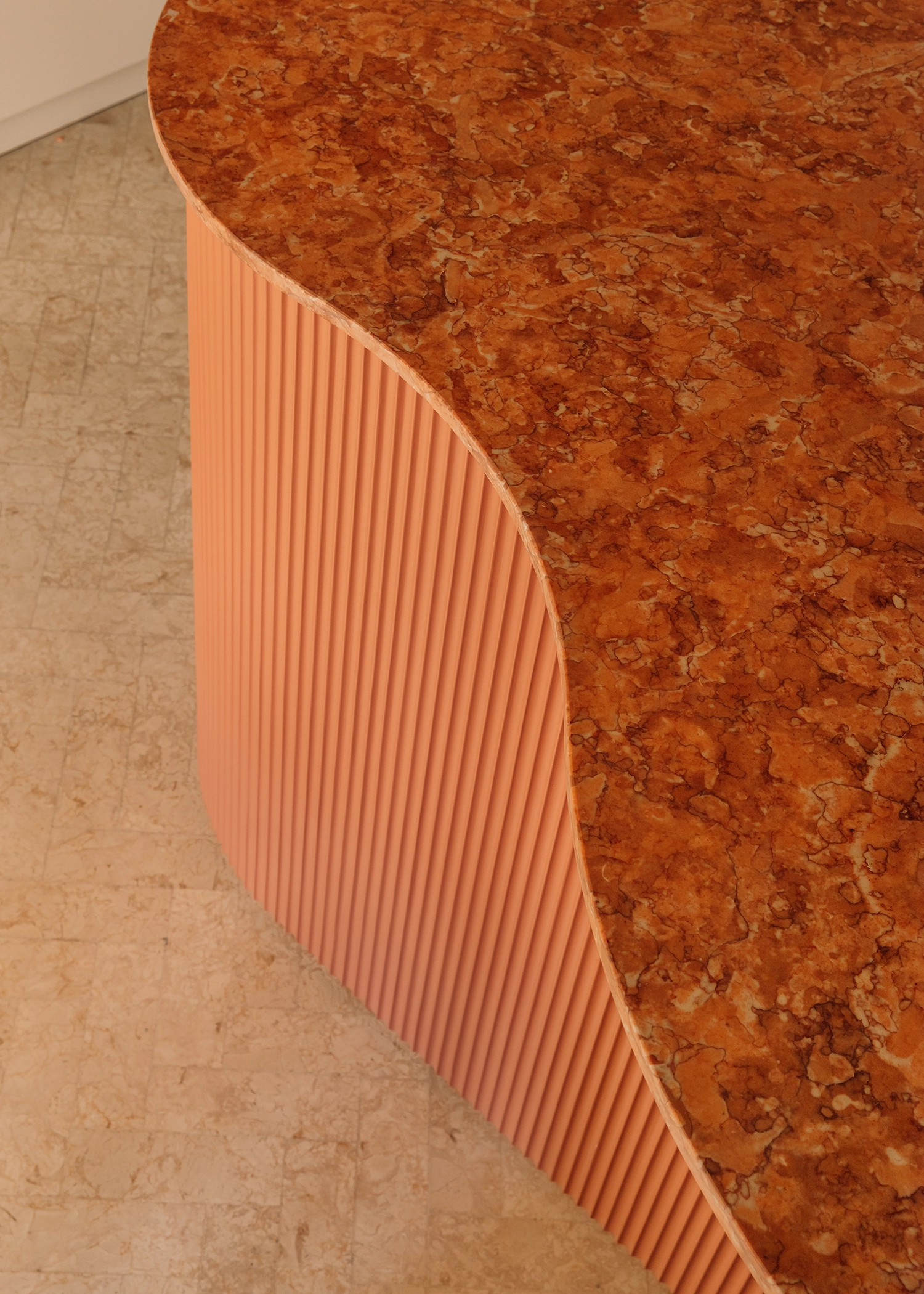
Material honesty and rhythm. The technical execution respects the building’s bones while introducing contemporary clarity. The transition between different floor treatments and the rhythmic placement of the new cabinetry define the interior layout without the need for intrusive walls. There is a palpable honesty in the way the new elements sit within the old shell, acknowledging the masonry heritage while providing the sleek utility required for a 20th-century renovation.
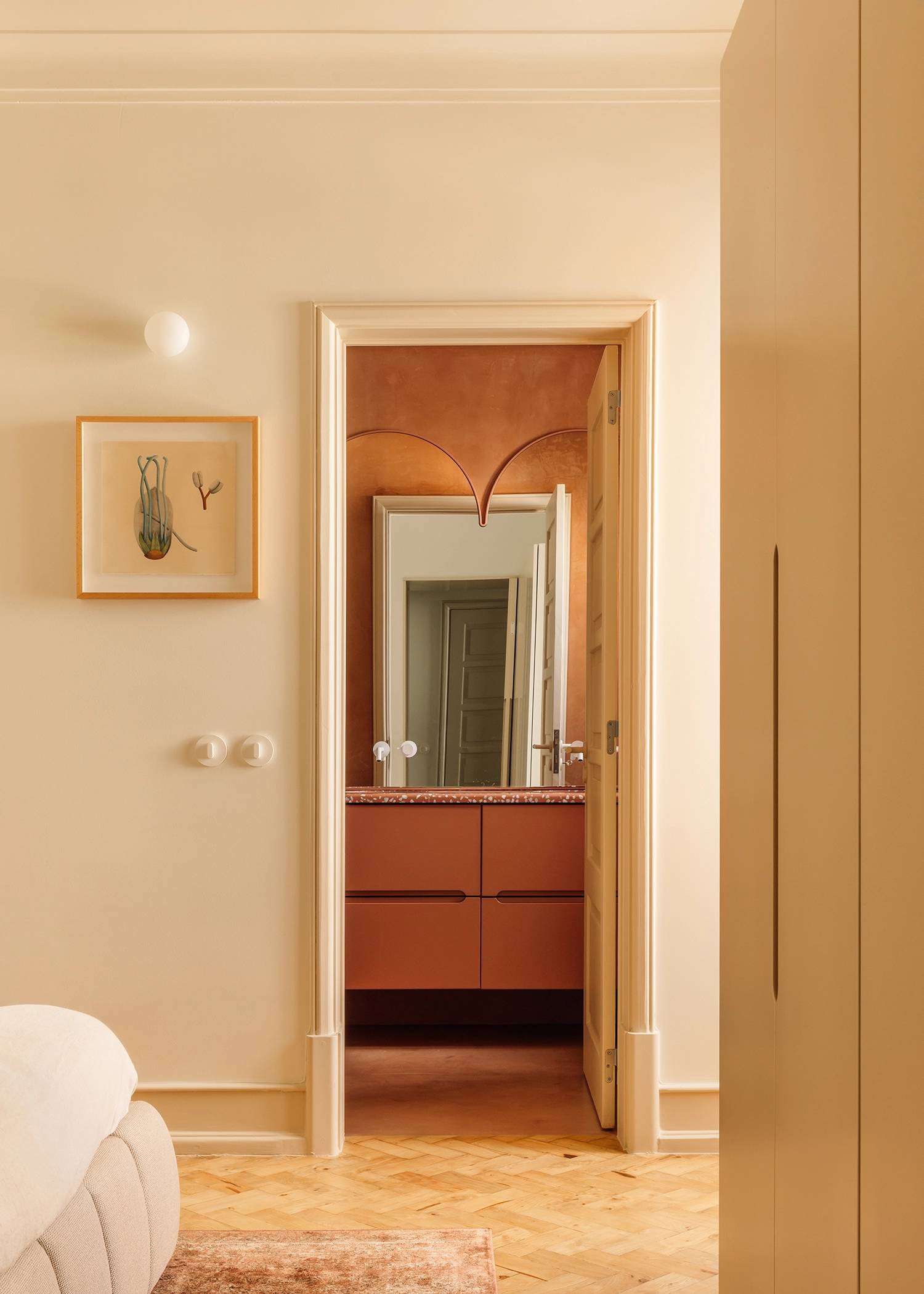
Contextual equilibrium. Beyond the internal walls, the apartment now engages more vibrantly with the streetscape of Lisbon. By placing the social heart of the home against the street-facing windows, the project fosters a visual connection with the city’s pulse. The urban integration is no longer passive; the residents now occupy the most luminous part of the building, turning the act of daily living into an experience defined by views and vitamin D.
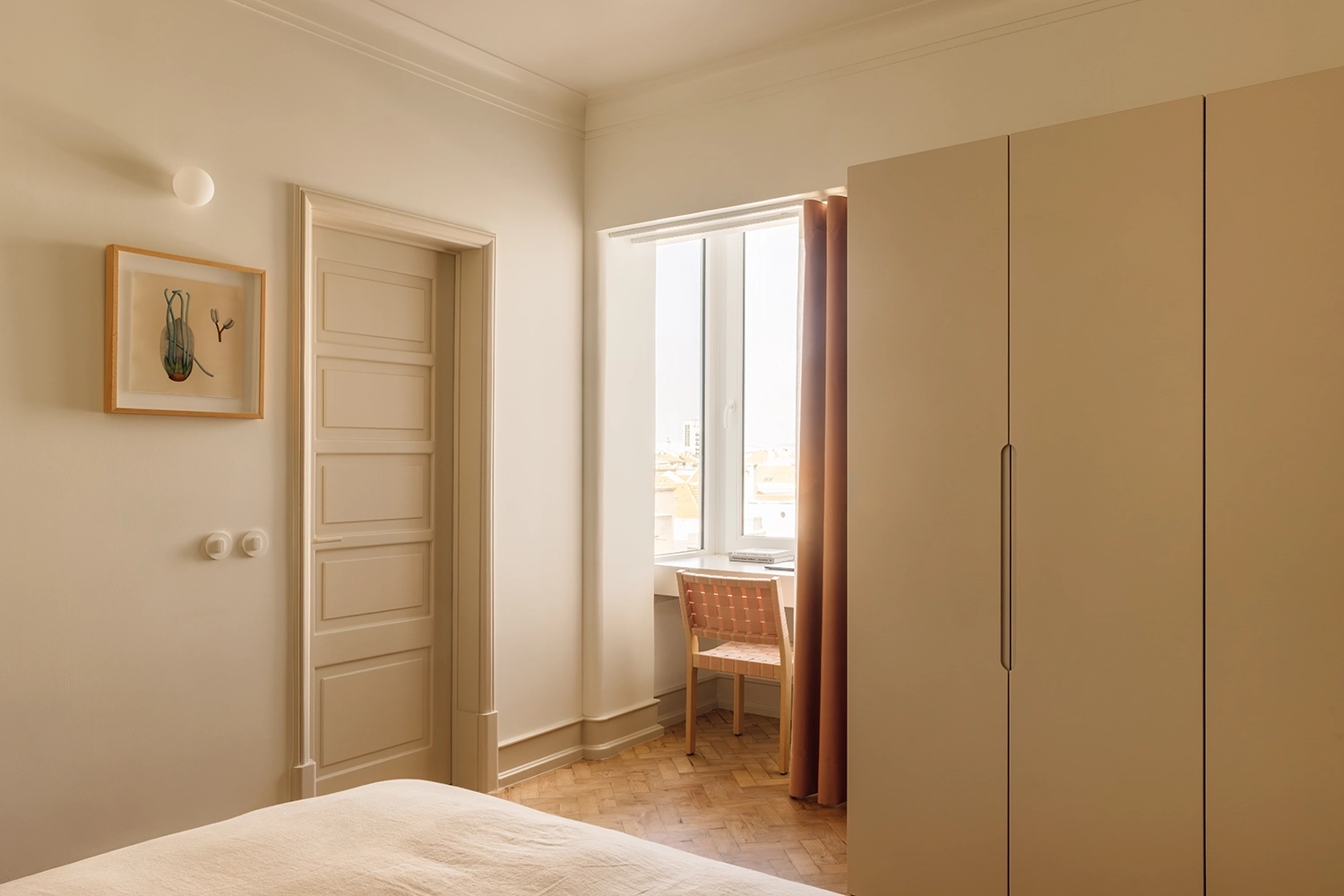
Functional aesthetics. Storage, often an afterthought in historical renovations, is elevated here to a defining feature of the house’s identity. The seamless integration of closets and service areas ensures that the minimalist aesthetic remains uncluttered. By consolidating the technical needs—plumbing, storage, and partitions—into specific zones, the architects have freed the rest of the floor plan to remain flexible and airy.
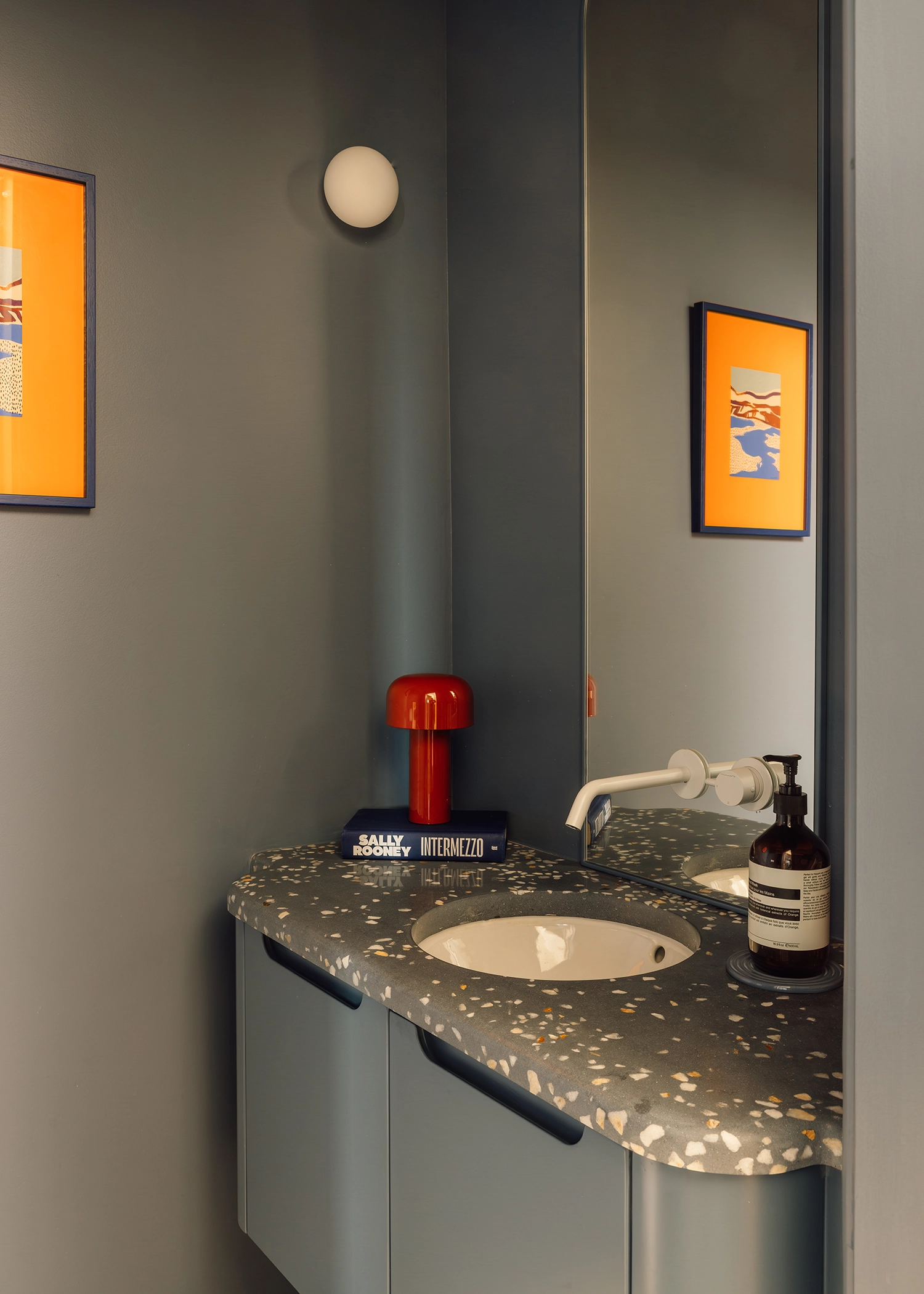
Evolution of the Lisbon home. The Casa da Moeda Apartment demonstrates that heritage is not a static constraint but a framework for evolution. By strategically breaking the “cod’s tail” mold, Aurora Arquitectos has created a space that feels both timeless and urgently modern. The focus remains on the human experience—how one moves through light and how a floor plan can facilitate a more connected way of living.
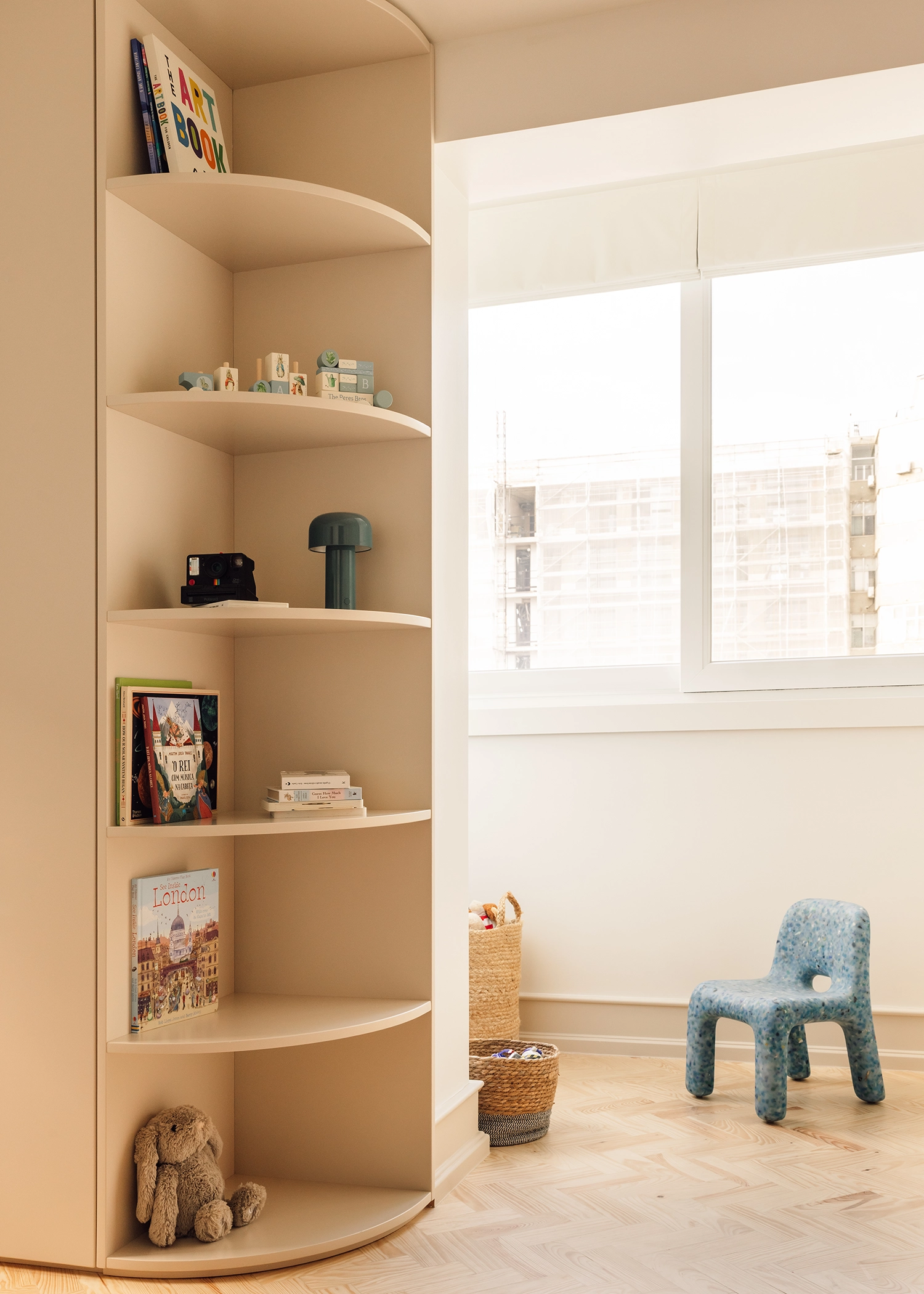
Designing for the light. This project is part of a broader exploration by the studio into how light acts as a primary building material. The approach mirrors their work on the Barão Sabrosa Apartment, where the renovation of a “Gaioleiro” building similarly used light as a structural pillar to organize space. For readers looking to understand the future of Portuguese residential projects, observing how these traditional typologies are being updated offers a clear perspective on the intelligent manipulation of volume and sun.