



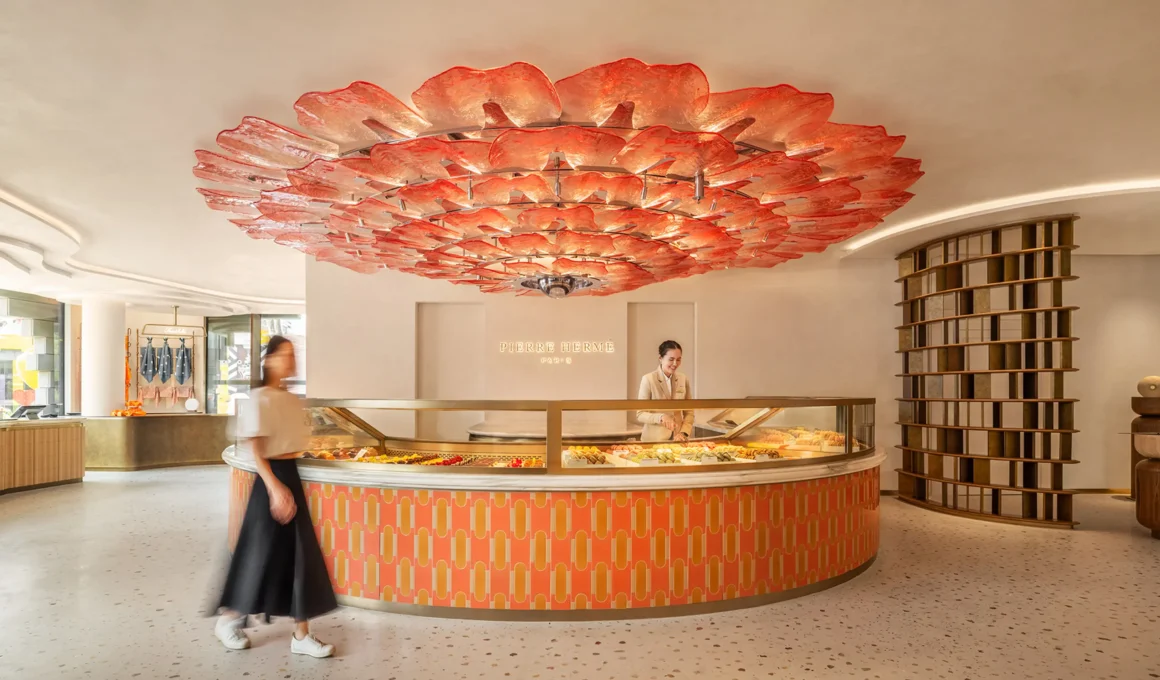
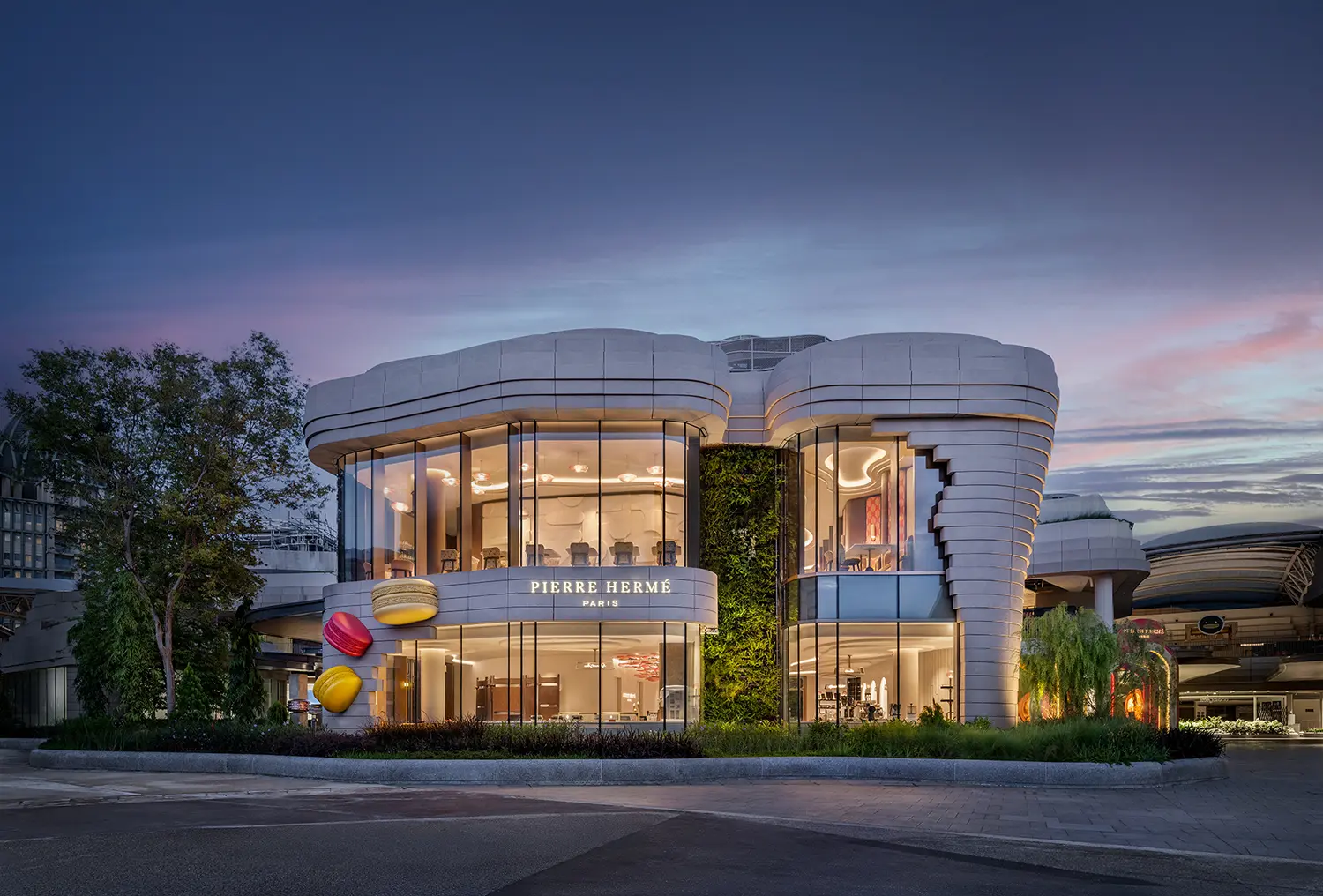
The new Pierre Hermé Paris flagship store in Singapore, designed by CCD / Cheng Chung Design, represents a sophisticated fusion of Parisian haute pâtisserie and Southeast Asian tropicality, located within the vibrant heart of the city-state.
A conceptual vision of emotion begins with the understanding that for Pierre Hermé, pastry is a medium of feeling rather than just a culinary product. CCD has translated this philosophy into a physical environment that rejects the notion of a static retail boutique in favor of a dynamic sensory experience. By embracing the spirit of localization, the studio avoids the trap of a repetitive international rollout, instead opting for a dialogue between French refinement and the lush, high-energy vitality of Singapore’s urban landscape.
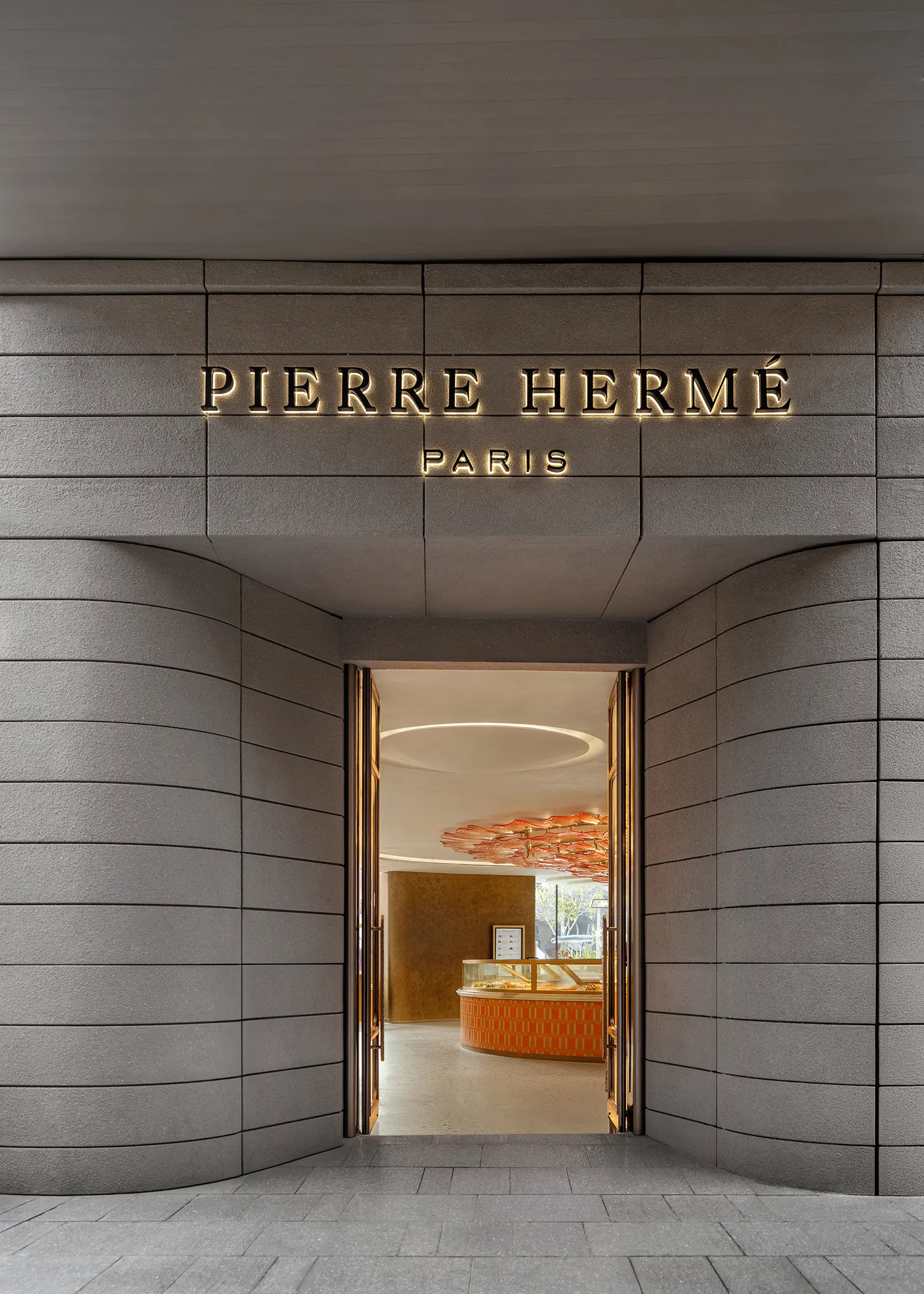
The contextual impact of the entrance functions as a poetic threshold, blending the DNA of a Parisian street café with the verdant richness of a tropical garden. Here, the brand’s signature macaron sculptures are nestled among dense foliage, appearing as sweet fruits discovered within a wild landscape. This intentional juxtaposition grounds the luxury brand in its specific geographic context, ensuring the arrival sequence feels rooted in the island’s natural charm rather than appearing as a foreign imposition.
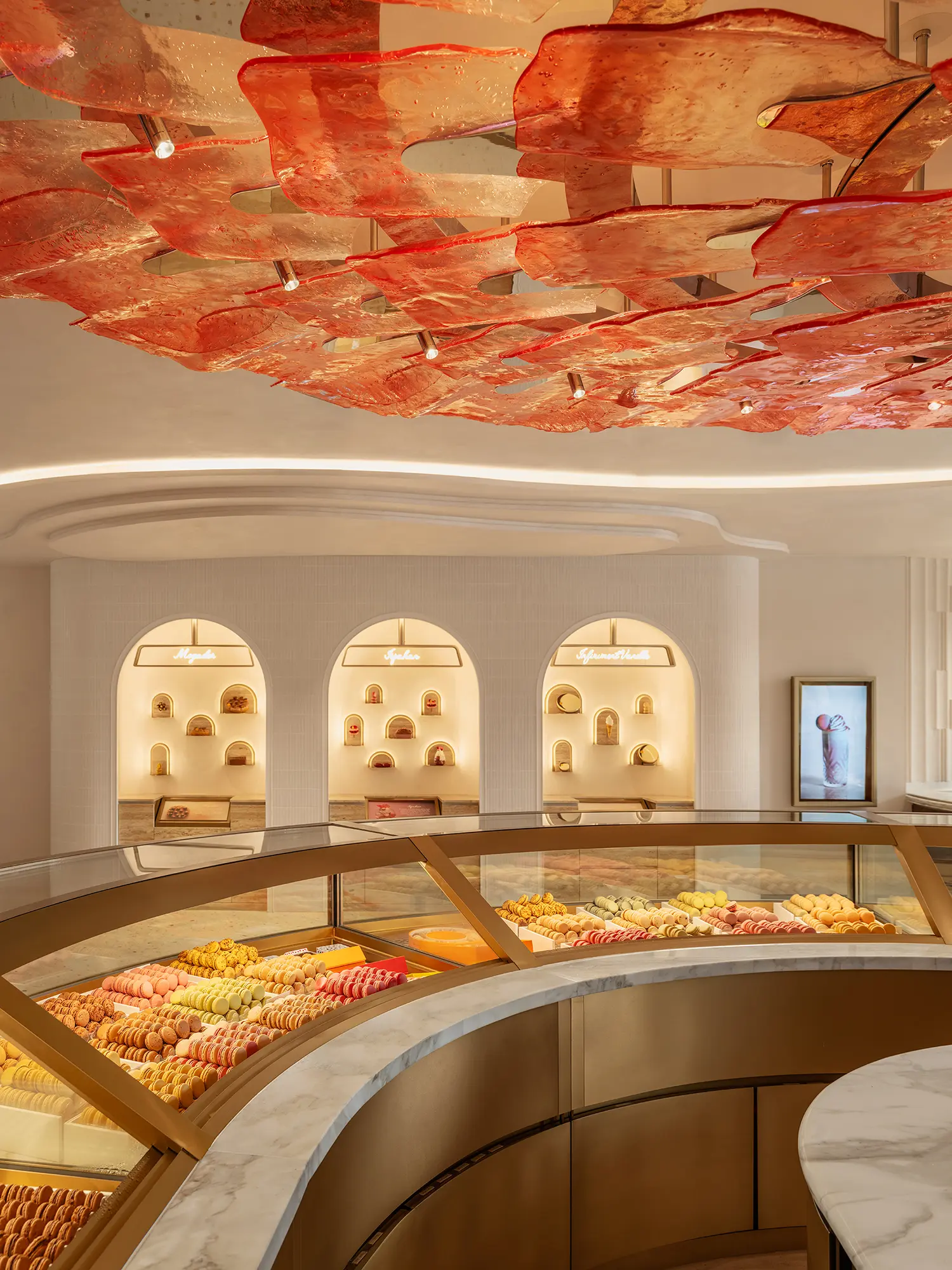
A tactile rhythm of materials defines the interior, where bold contrasts mirror the complexity of a Hermé recipe. Smooth, polished surfaces meet raw, textured finishes, creating a physical dialogue that guides the visitor’s hand and eye. This play of materiality reflects the layered nature of the desserts themselves—where a crisp outer shell often gives way to a soft, daring ganache—allowing the environment to echo the structural integrity of the products on display.
The spatial choreography of the layout is dictated by a series of gentle curves that break away from traditional linear retail flows. A sweeping curved counter showcases an array of pastries and breads with surgical precision, while a central circular island acts as a stage for the brand’s icons: macarons and chocolates. This arrangement encourages a fluid movement through the space, treating the customer’s journey as a choreographed performance where the act of selection becomes as significant as the act of consumption.
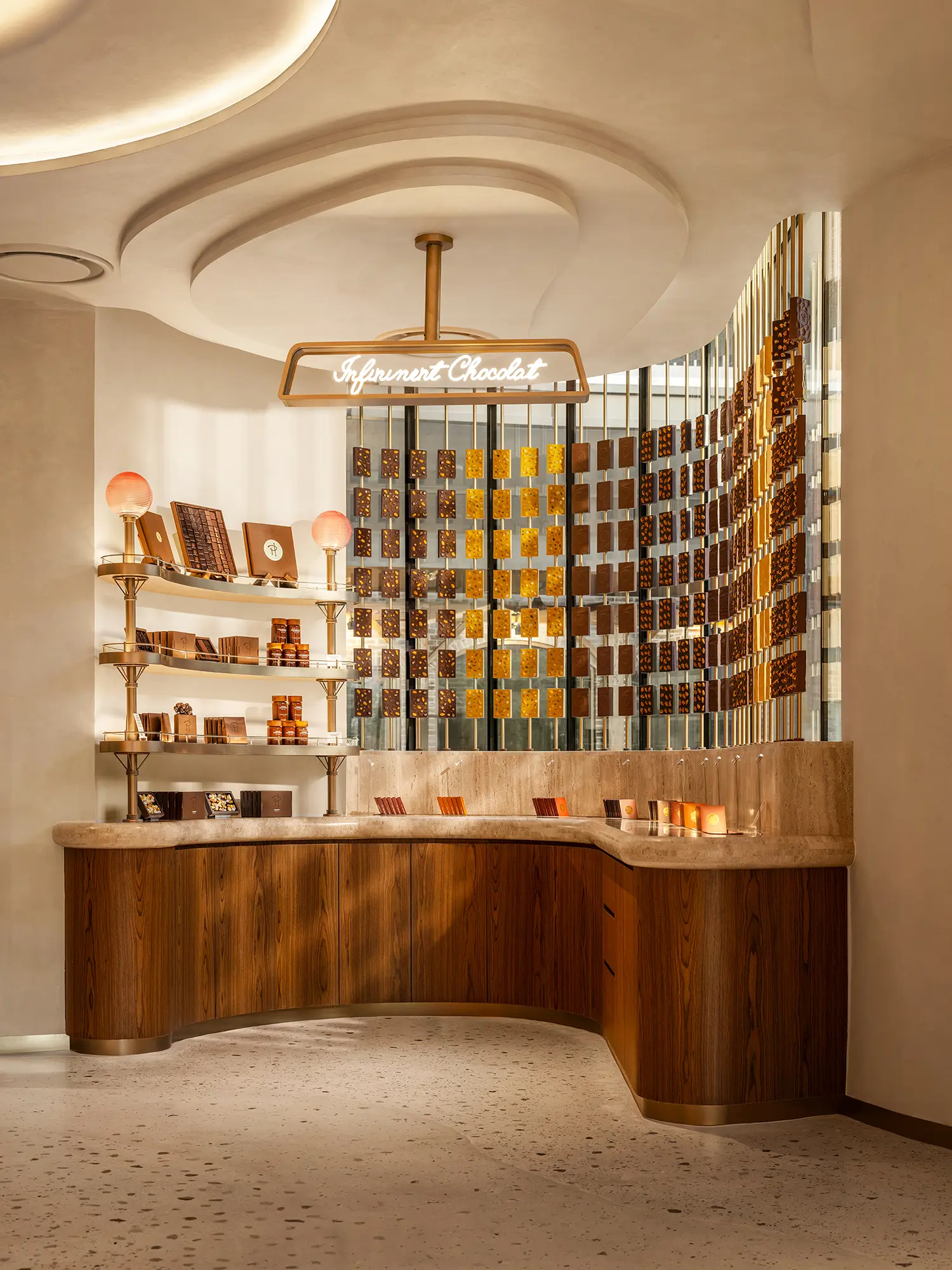
Technical details and atmospheric lighting are used as fundamental building tools rather than mere accents. Soft, warm illumination is strategically diffused to emphasize the vivid, natural pigments of the pastries, while natural wood furnishings provide a grounding, organic warmth. Every element, from the bespoke signage to the custom lighting fixtures, is executed with a discipline that mirrors the precision of French confectionery, ensuring that the technical execution matches the prestige of the ingredients.
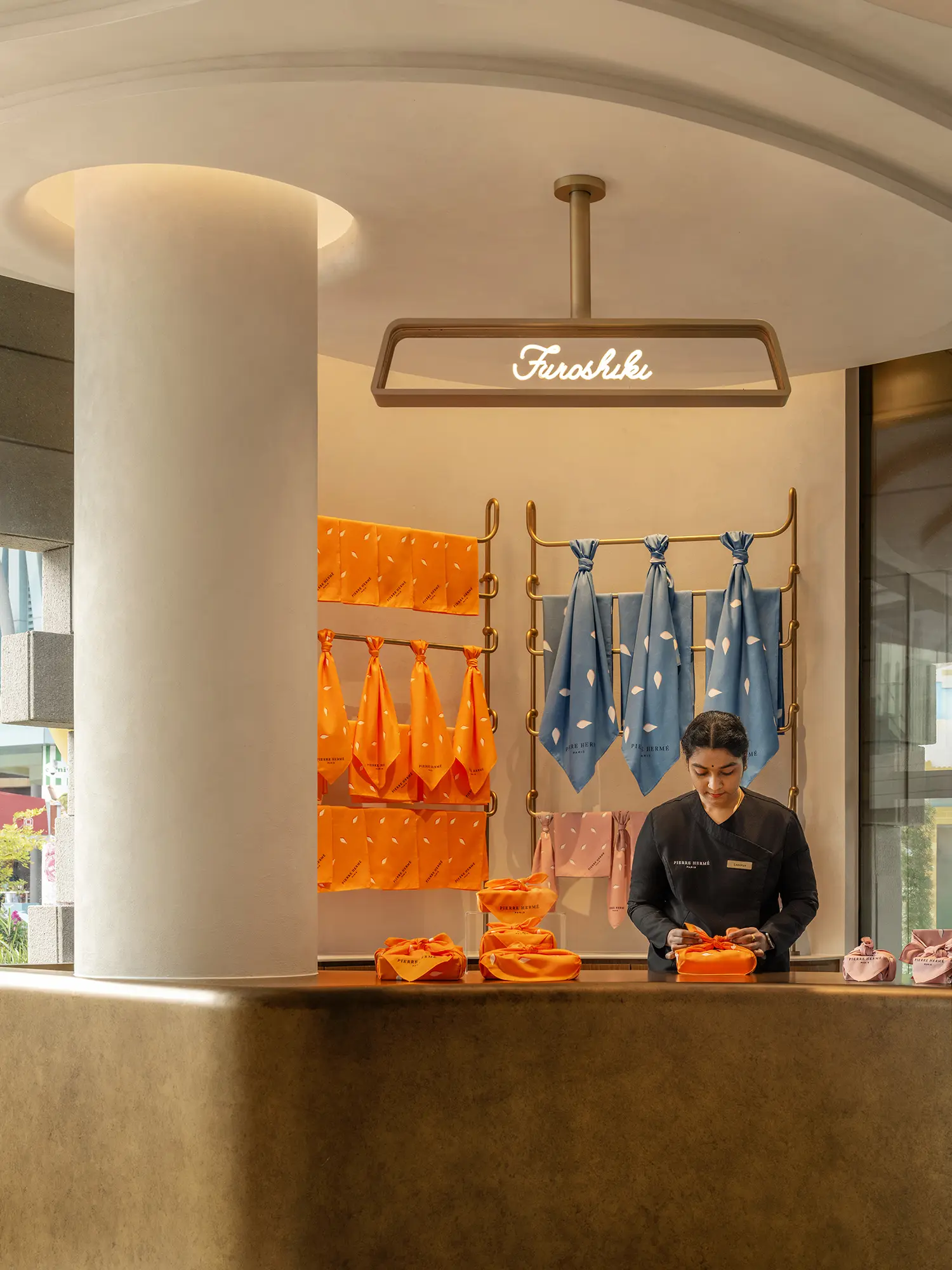
Sustainability and cultural craft meet in the flagship’s introduction of eco-conscious cloth packaging, a nod to both Eastern gift-giving traditions and global environmental principles. This integration of cloth—a tactile, reusable material—adds a layer of functional elegance that elevates the takeaway experience. It demonstrates a cultural sensitivity that bridges the gap between Western luxury standards and a more mindful, localized approach to consumption.
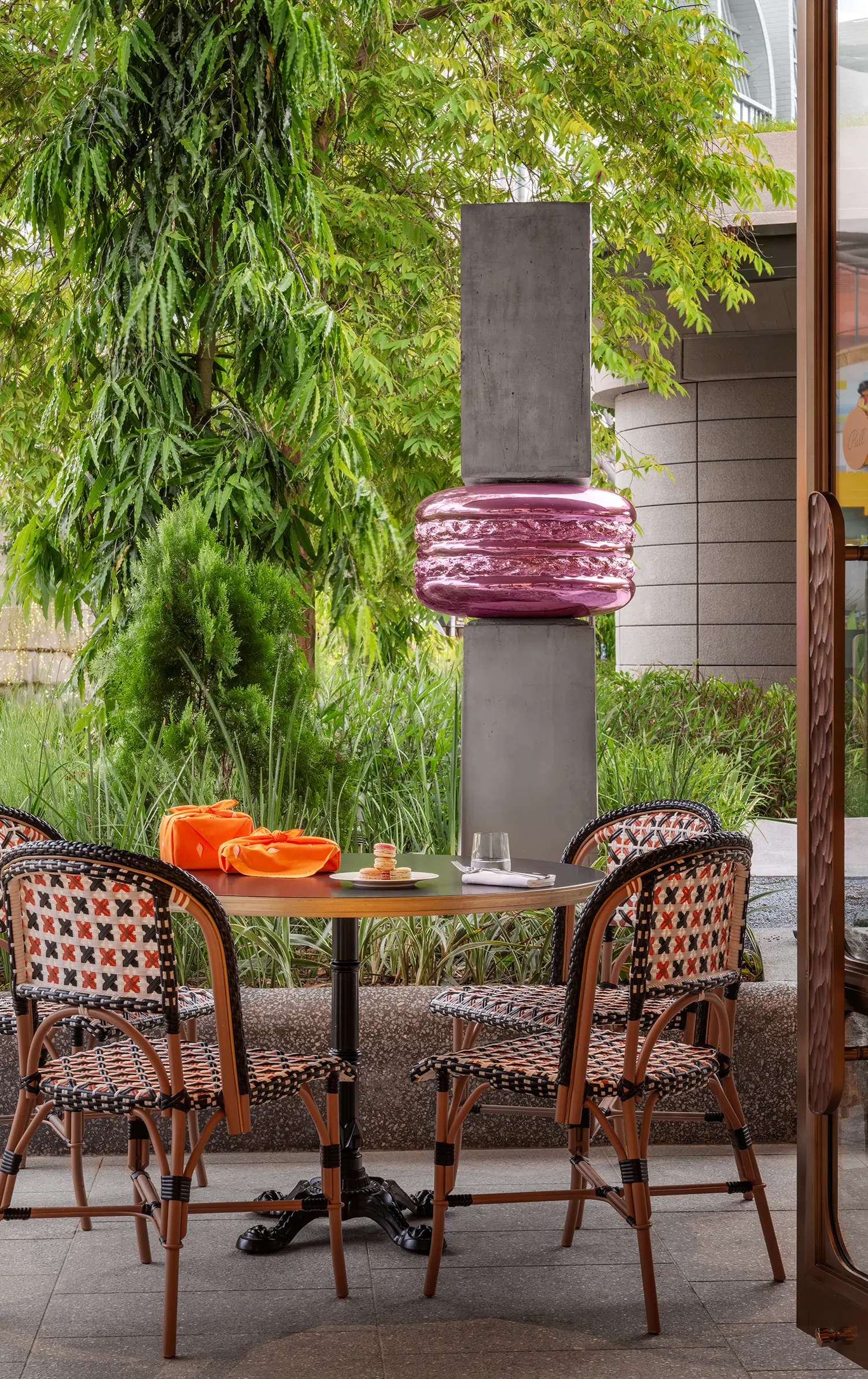
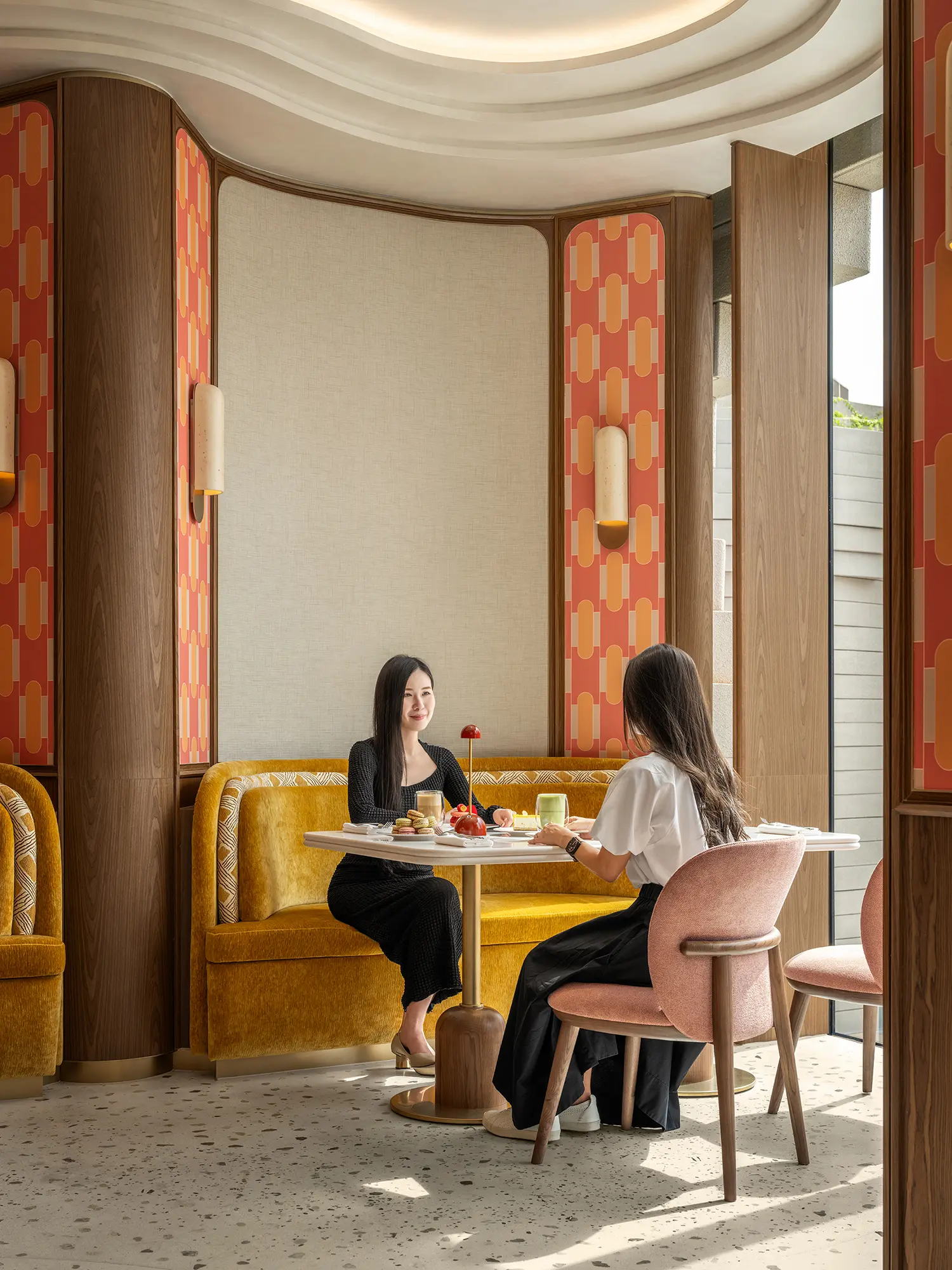
The theatrical stage of experience ensures that the seating area is designed as a vantage point for observing the craft of pastry. Every guest becomes an active participant in the brand’s narrative, watching the interplay of service and artistry. By focusing on the human-centric aspect of the shop, CCD ensures that the flagship remains a place of joy and discovery, where the philosophy of “pleasure as a compass” is felt through the spatial volume and the intimacy of the seating arrangements.
A broader perspective on the patisserie genre reveals a fascinating divergence in how studios approach these commercial spaces. While the Pierre Hermé flagship by CCD leans into high-concept spatial storytelling and luxurious materiality, other projects such as the Season Patisserie in Taipei by Ecru Studio or the Pastelowe Pasteis de Nata in Warsaw demonstrate the versatility of this typology. Where Taipei focuses on a minimalist, almost ethereal restraint and Warsaw utilizes bold, nostalgic geometry, Singapore opts for an atmospheric fusion. These varied approaches highlight a global shift: the pastry shop is now a sophisticated laboratory of brand expression where budget, location, and craft converge to redefine the boundaries of retail.