



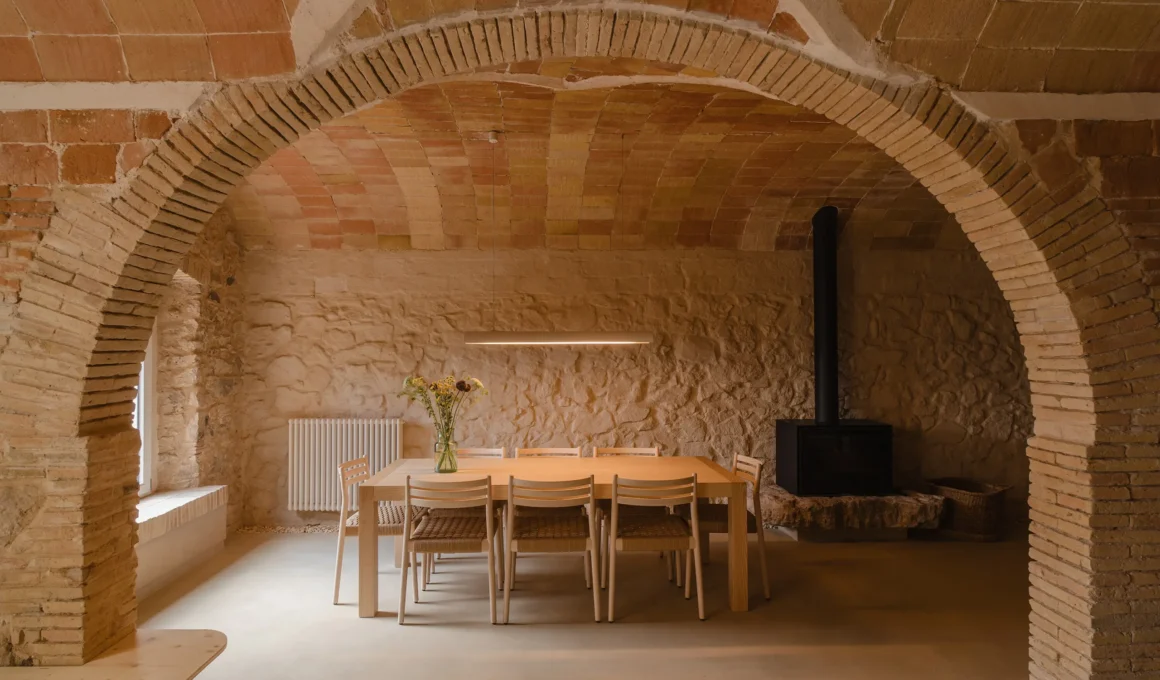
Located in a quiet village within Spain’s Alt Empordà region, La Fusteria sees Clara Crous Arquitectura transform a storied carpentry workshop into a versatile residence that balances the rhythms of family life with the requirements of a contemporary holiday rental.
A dialogue with heritage defines the initial approach to the site. The project’s name—Catalan for “carpentry”—serves as a permanent link to the building’s industrial past, ensuring that the transition from a place of labor to a place of rest does not erase its history. Instead of a radical overhaul, the intervention focuses on a thoughtful adaptation that treats the existing volume as a vessel for collective memory, allowing the layers of time to remain visible through the texture of the walls and the rhythm of the structural bays.
The structural choreography of the ground floor is dictated by two magnificent Catalan vaults. These sweeping curves, which once sheltered the saws and workbenches of local artisans, now organize the domestic program. By concentrating the daytime living areas beneath these historic elements, the architects have created a spatial gravity that pulls inhabitants toward the center of the home. The kitchen and living areas unfold in a singular, fluid sequence, where the weight of the masonry overhead provides a sense of enclosure and permanence that is rare in modern construction.
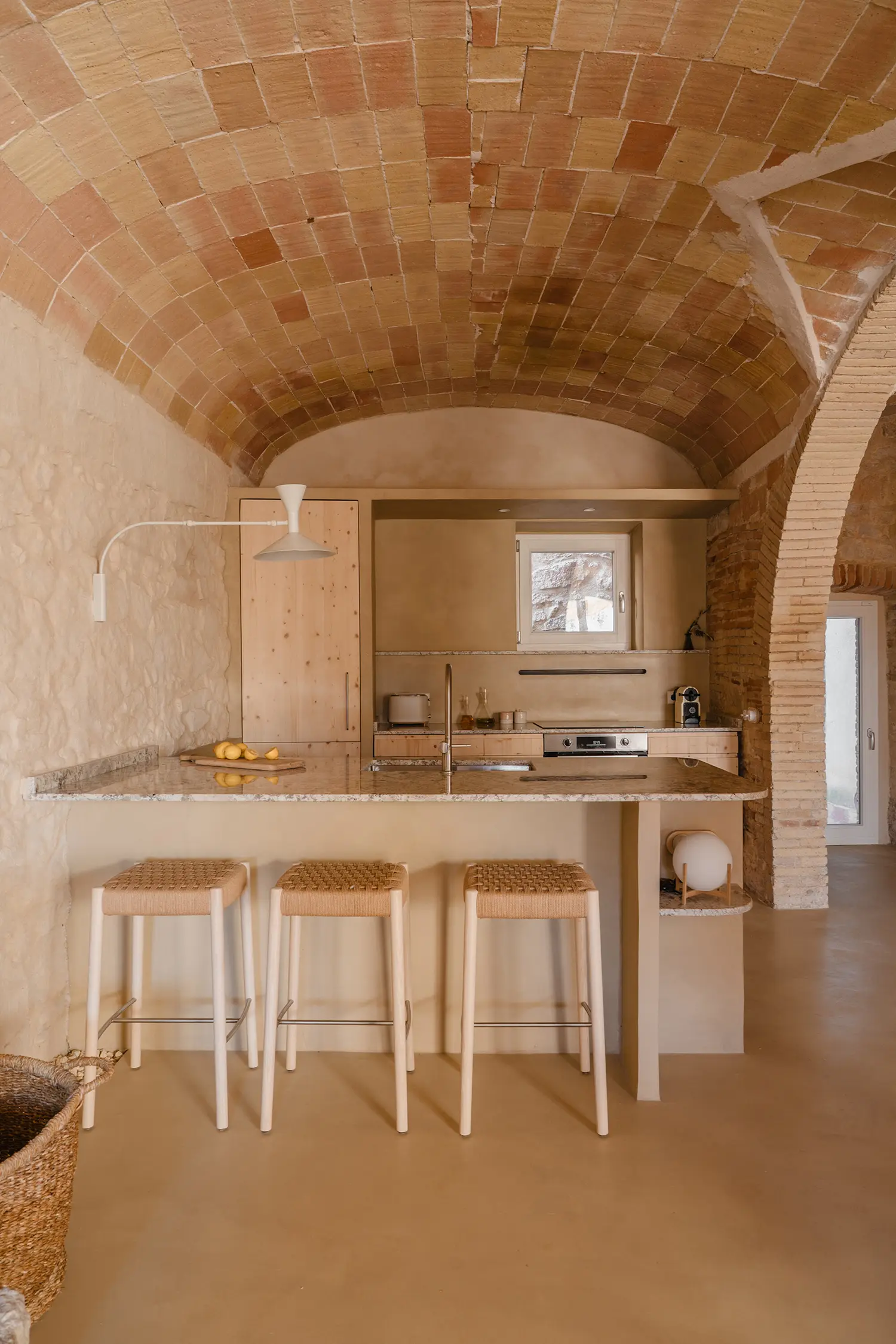
Sensory materiality guides the tactile experience of the interior. The design team stripped away decades of superficial finishes to reveal the honest character of the masonry. By utilizing lime mortars and plasters, the walls are allowed to breathe, creating a regulated microclimate that feels cool to the touch and soft to the eye. The restoration of handmade toba floors and the strategic use of artisanal tiles bridge the gap between the building’s original bones and its new residential purpose, grounding the project in the specific geological and cultural context of the Empordà.
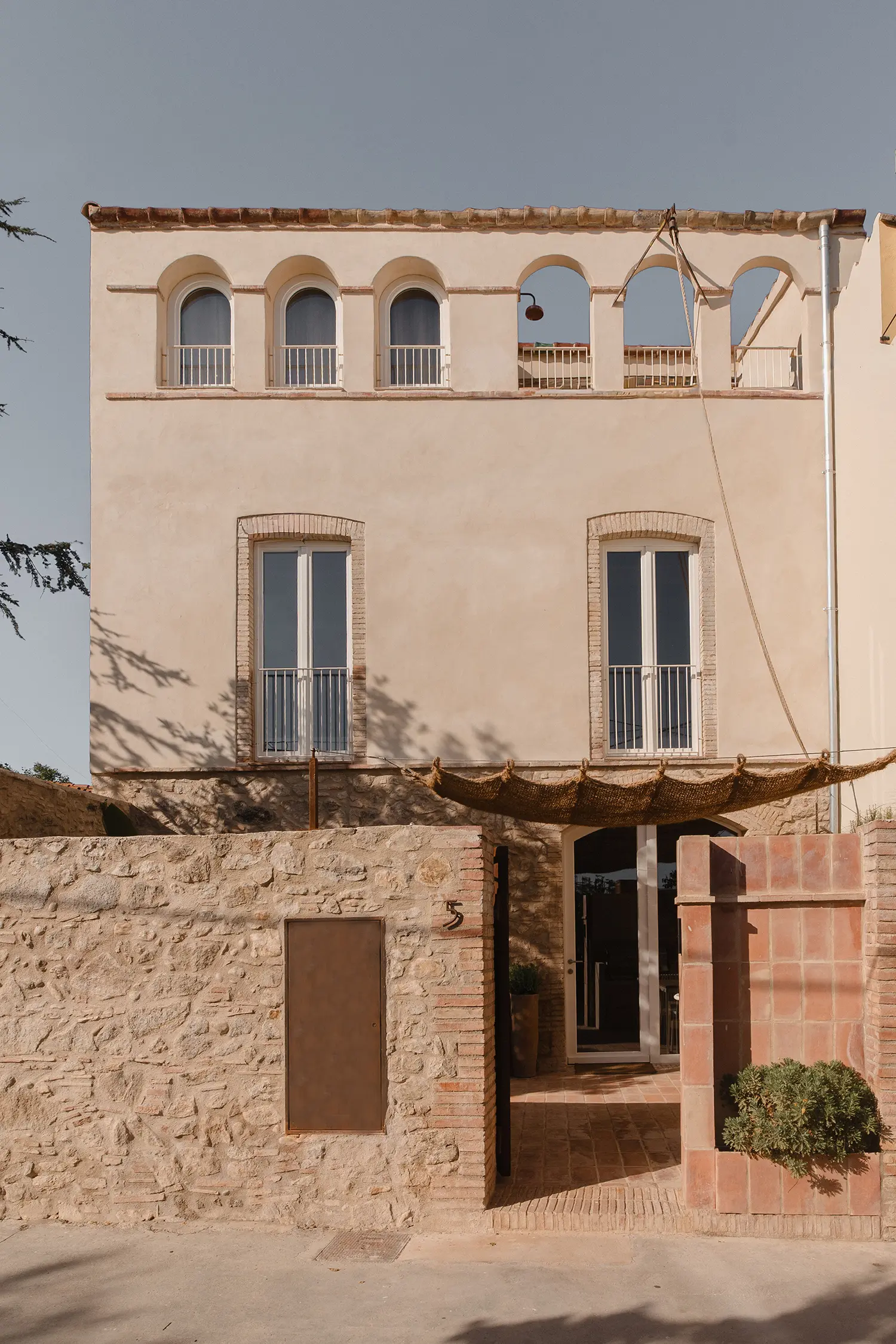
The transition between public and private is handled with a sophisticated understanding of village life. The front courtyard has been reclaimed as a vital buffer zone, acting as a threshold that negotiates the privacy of the home with the communal nature of the street. New custom-designed railings and exterior joinery improve the building’s thermal performance and visual clarity, yet they do so with a restrained aesthetic that avoids overshadowing the weathered charm of the original facade.
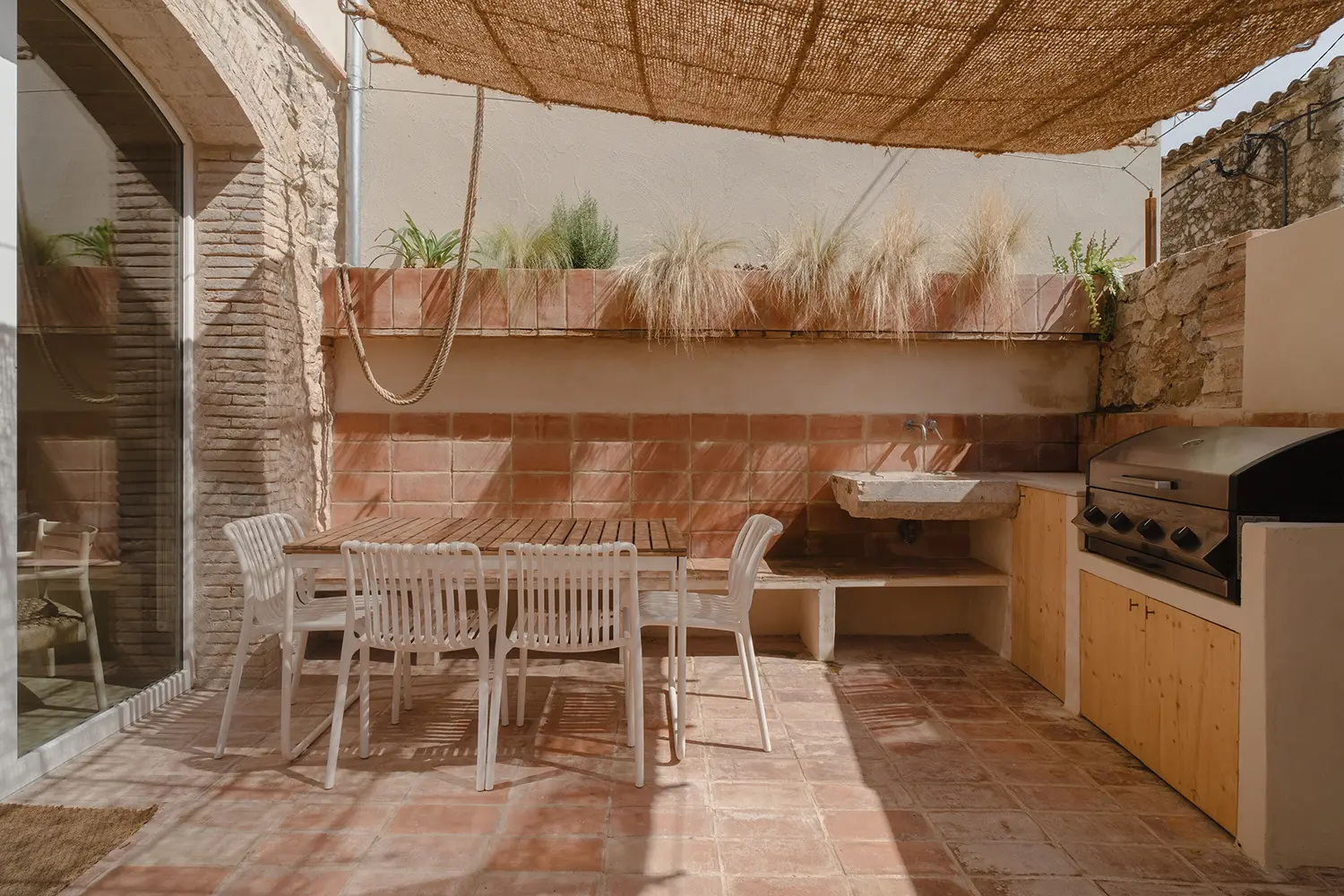
Vertical organization ensures that the more intimate aspects of the program remain undisturbed. While the ground floor is an open invitation for gathering, the upper levels are dedicated to private bedrooms and bathrooms. This separation is particularly effective for the project’s dual role as a family annex and a rental property; it provides a sense of sanctuary for guests while maintaining the functional efficiency required for a high-turnover hospitality space.
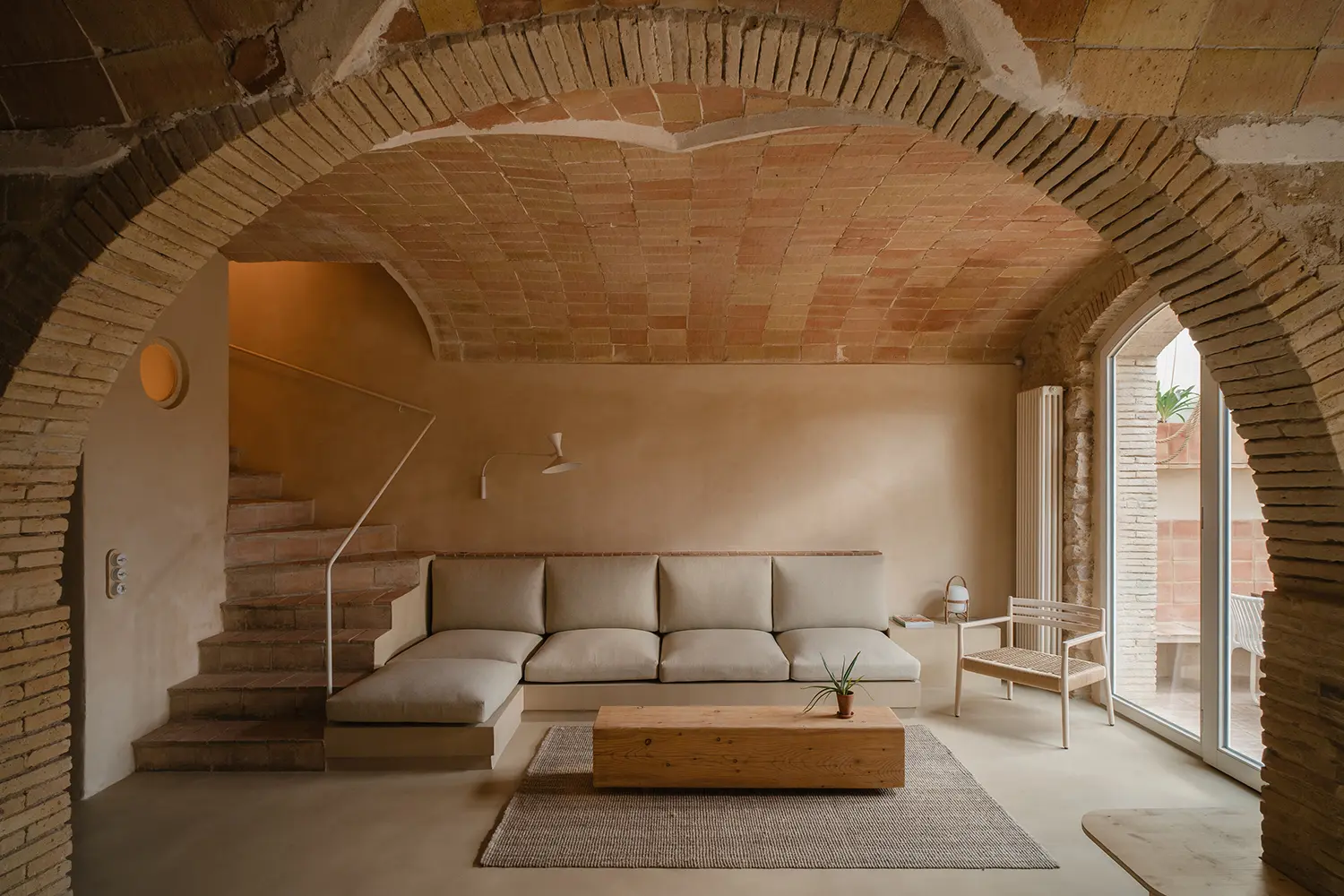
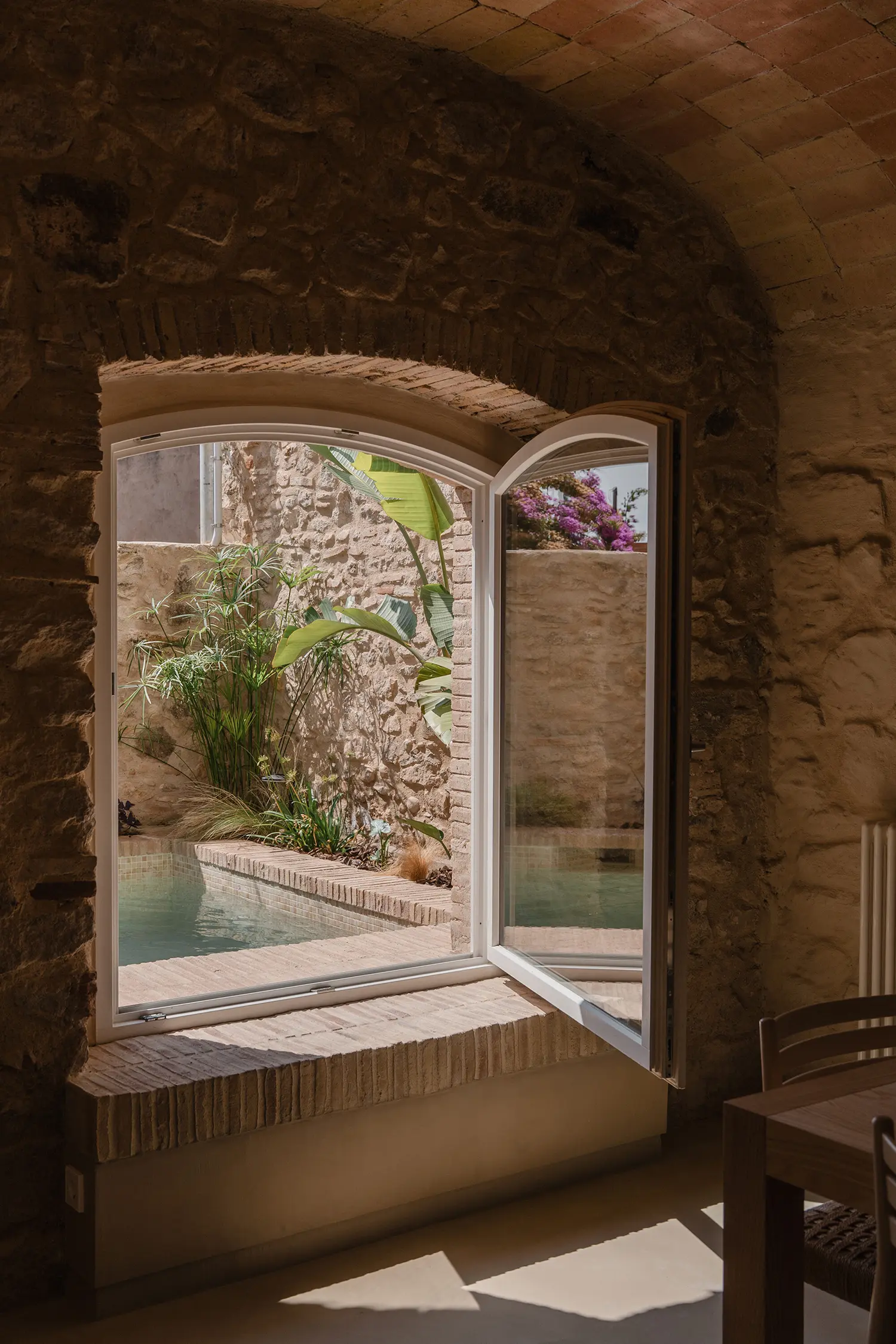
Atmospheric light plays across the irregular surfaces of the stone and plaster, changing the mood of the rooms as the sun moves across the Spanish sky. The intervention does not rely on flashy gestures but rather on the subtle interplay of shadow and texture. The way light catches the grain of a restored timber beam or the slight variations in a fired clay tile creates a narrative of craft that resonates with the building’s former life as a workshop.
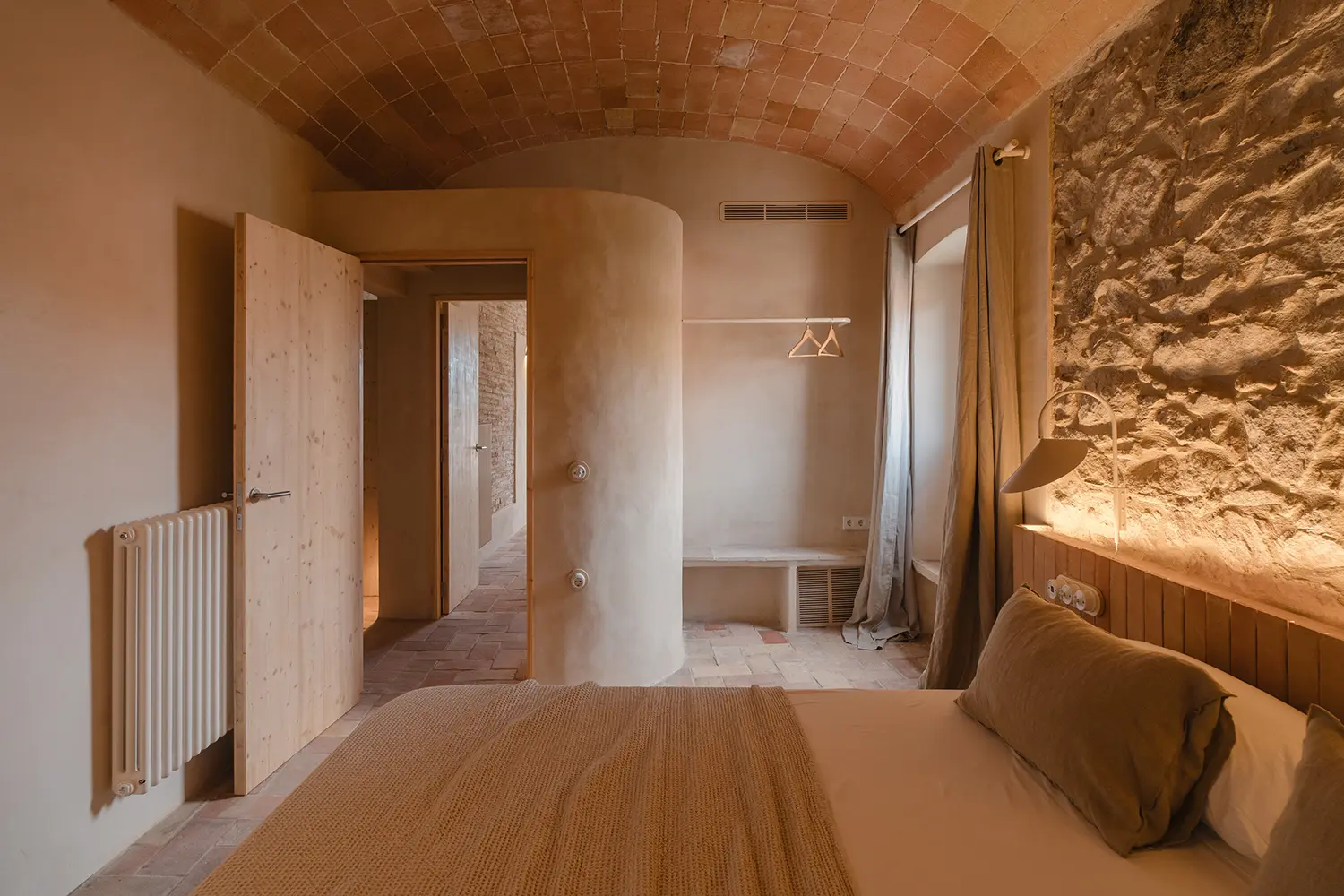
A broader movement toward the reclamation of stone and earth is currently reshaping the landscape of the Iberian Peninsula. Projects like La Fusteria exist in a meaningful conversation with other recent Spanish interventions, such as the subterranean elegance of Casa Balma or the rigorous minimalism of Casa Felipa. These works share a common thread: a refusal to treat history as a museum piece, opting instead to use heritage as a raw material for modern living.
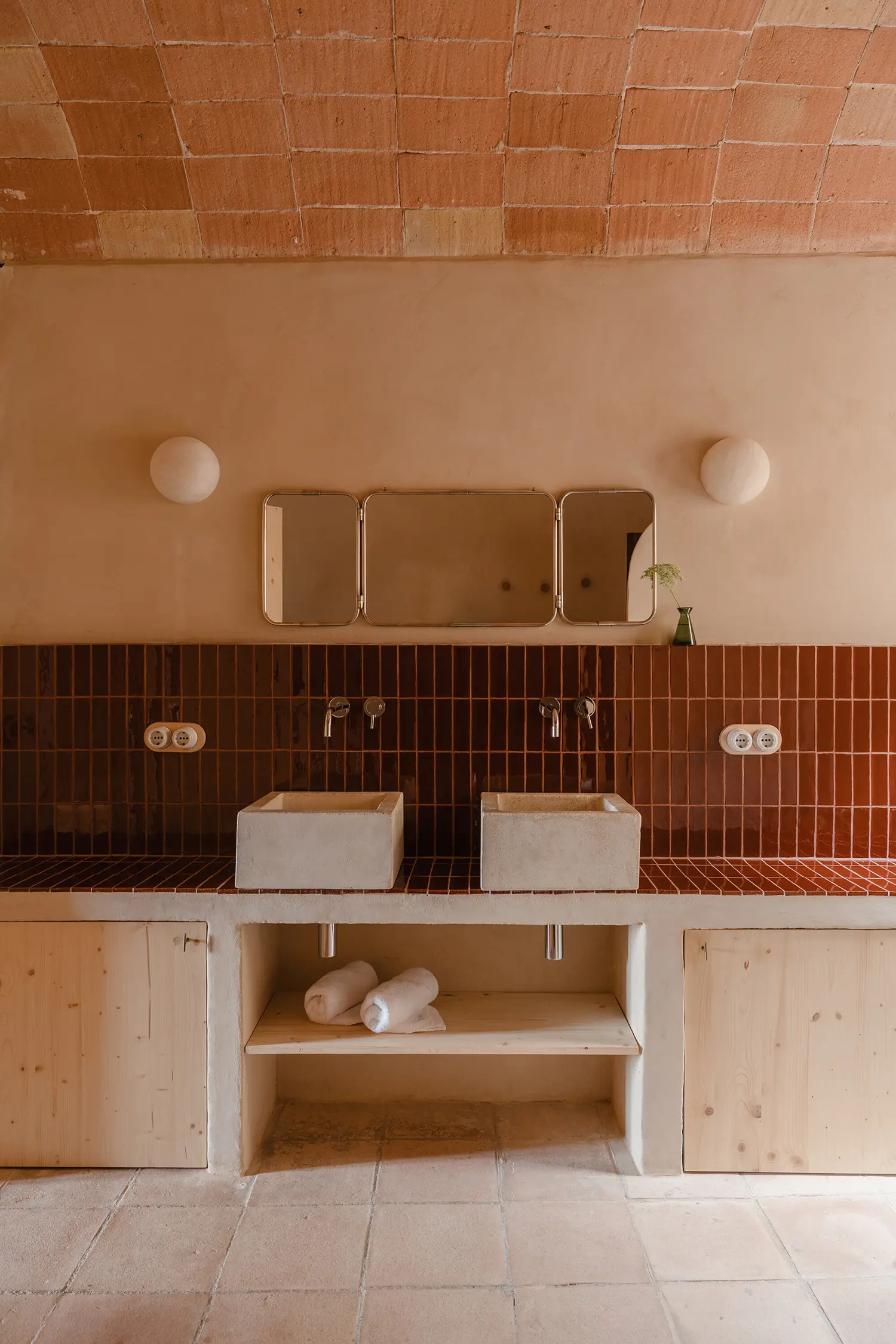
The enduring relevance of these spaces lies in their ability to feel both ancient and essential. By prioritizing the “breathability” of the architecture—both literal and metaphorical—Clara Crous Arquitectura has ensured that La Fusteria is not just a renovated building, but a living environment. It stands as a testament to the idea that the most sustainable way to build for the future is to listen closely to the whispers of the past, creating a home that feels as though it has always belonged to the village.