

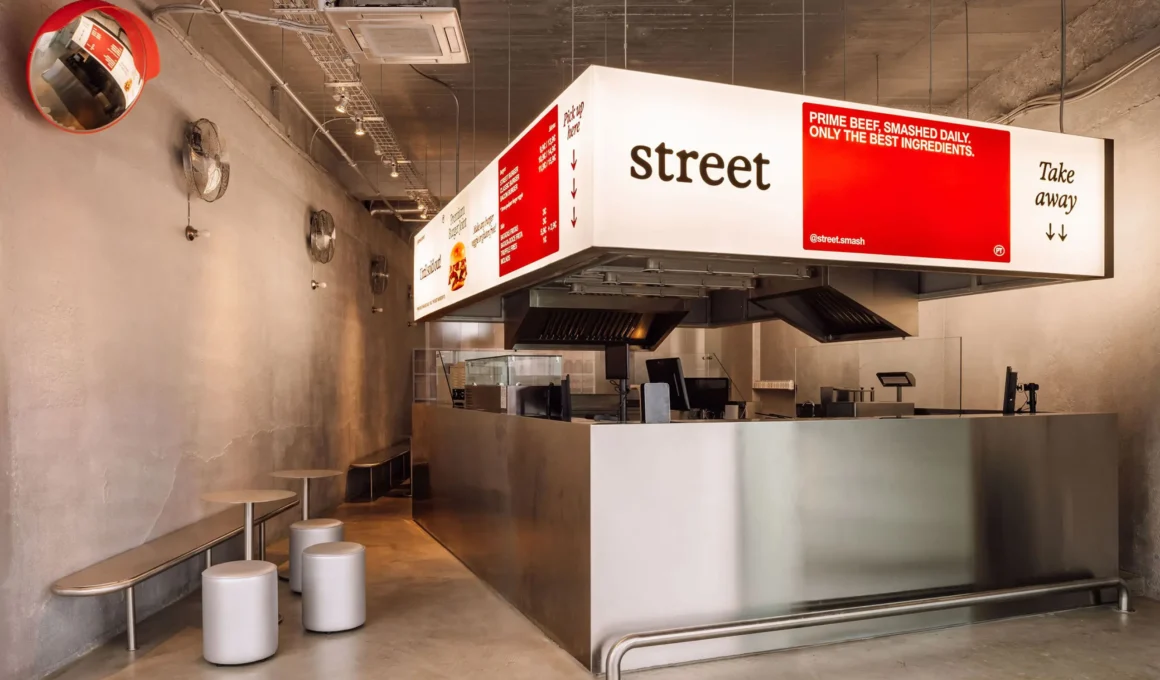
XXXI.studio puts the kitchen where the signage would normally go, treating food preparation itself as the entire brand identity of Street Smash Burgers in Almada. The project marks the chain’s shift from an informal, inconsistent set of restaurants into a repeatable architectural blueprint built for rapid growth. What used to be a back-of-house process becomes, here, the one thing visible from across the square.
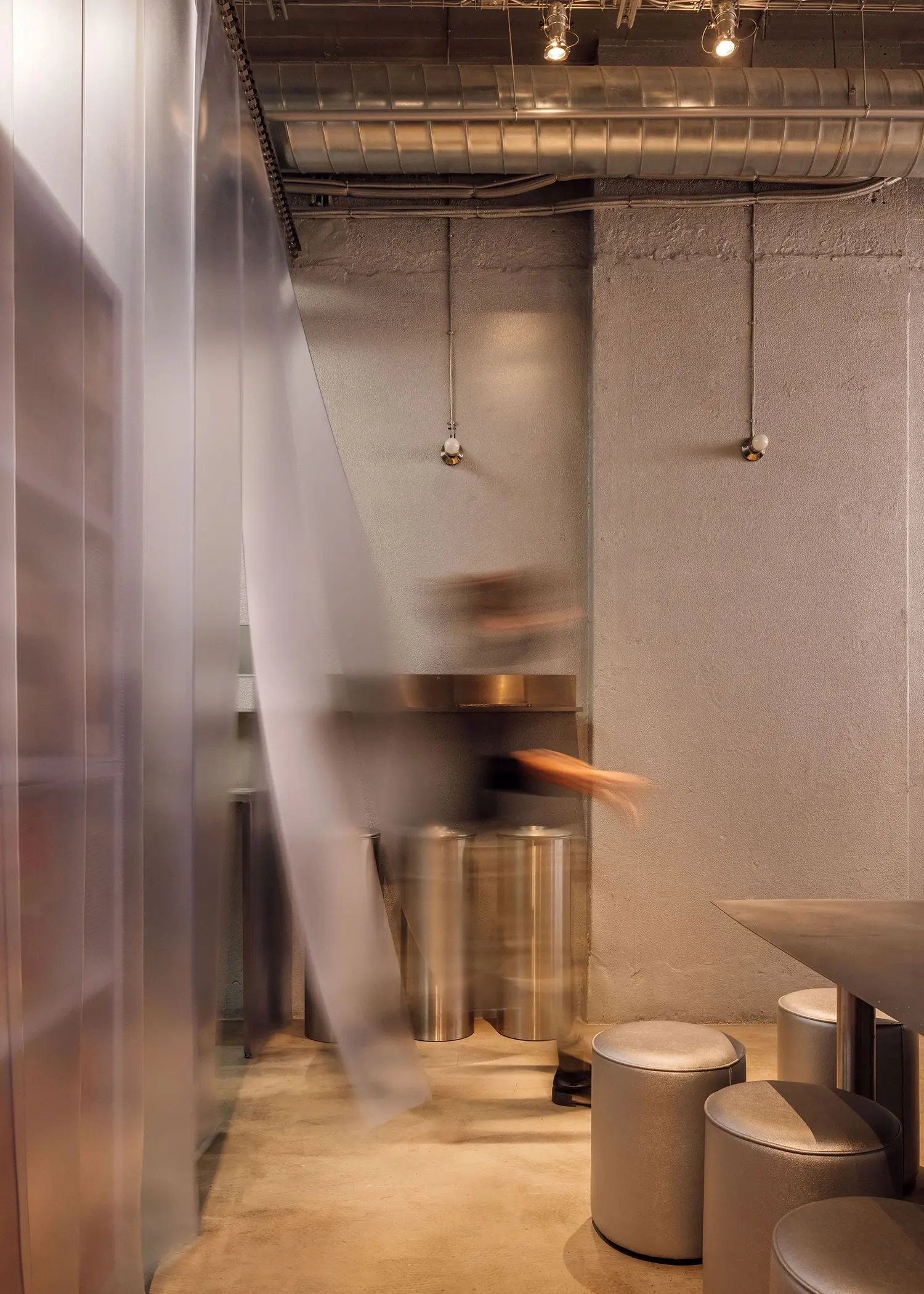
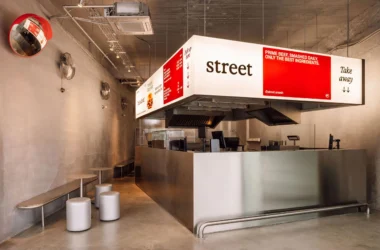
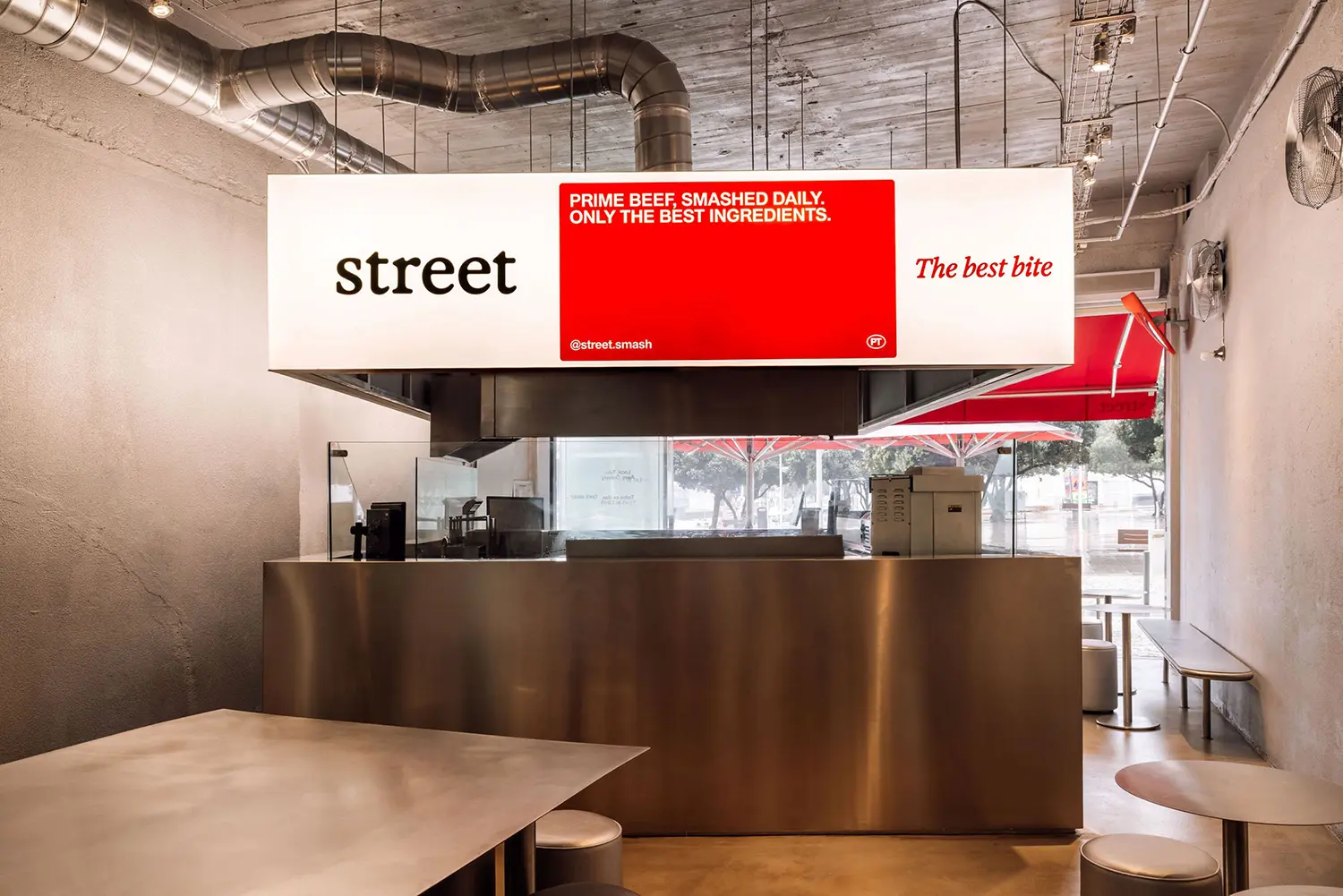
The central kiosk anchors the whole plan as a self-contained, high-volume machine. Treated as a foreign object dropped into the room, it reads less like built-in restaurant furniture and more like a compact American food trailer that happened to land indoors.
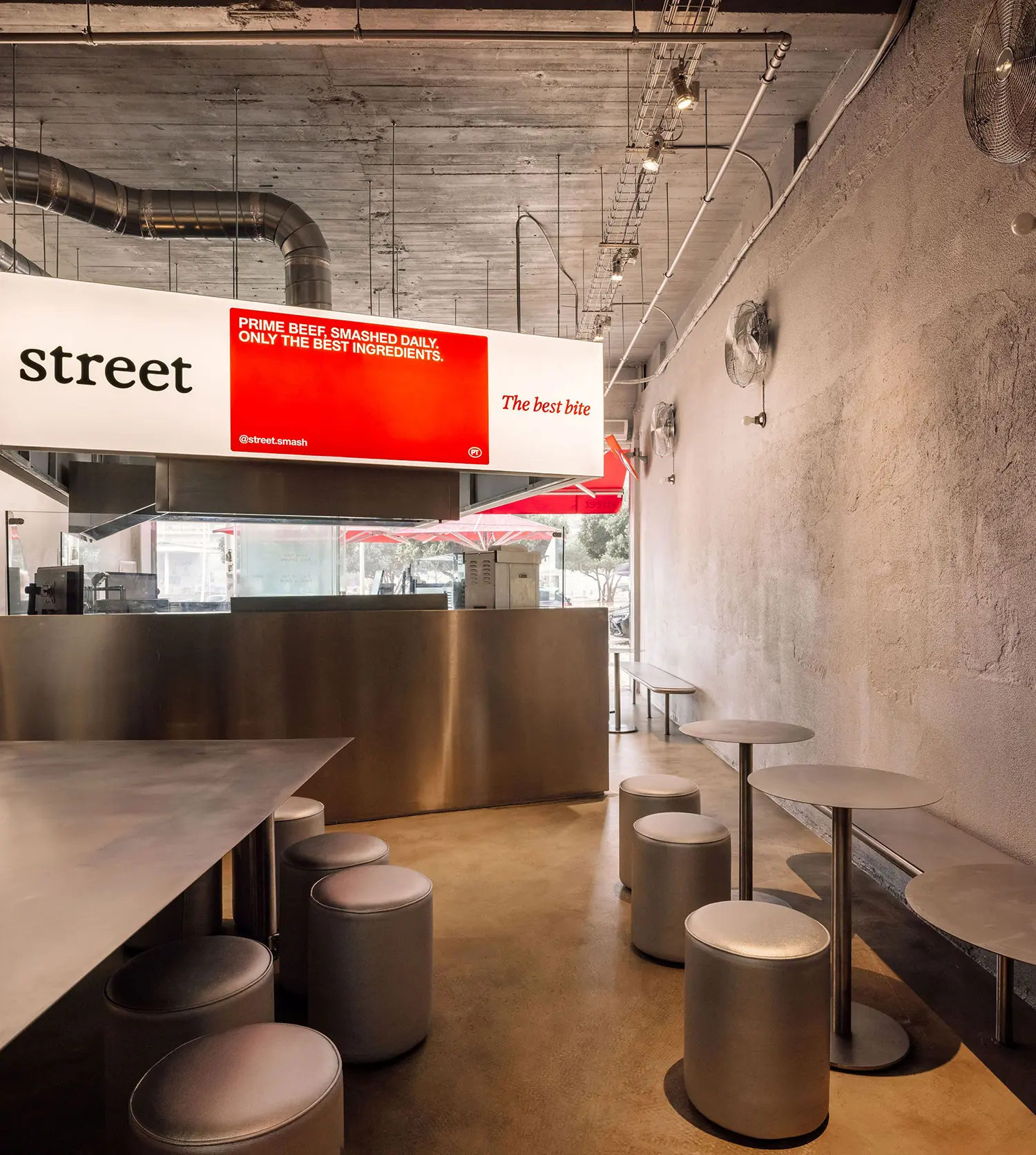
Around that kiosk, the open kitchen operates as both engine and stage. The griddle’s rhythm, the fryer’s flare, the assembly, the wrapping, the handover — each step reads as part of one continuous, performative sequence rather than a series of separate tasks hidden from the customer.
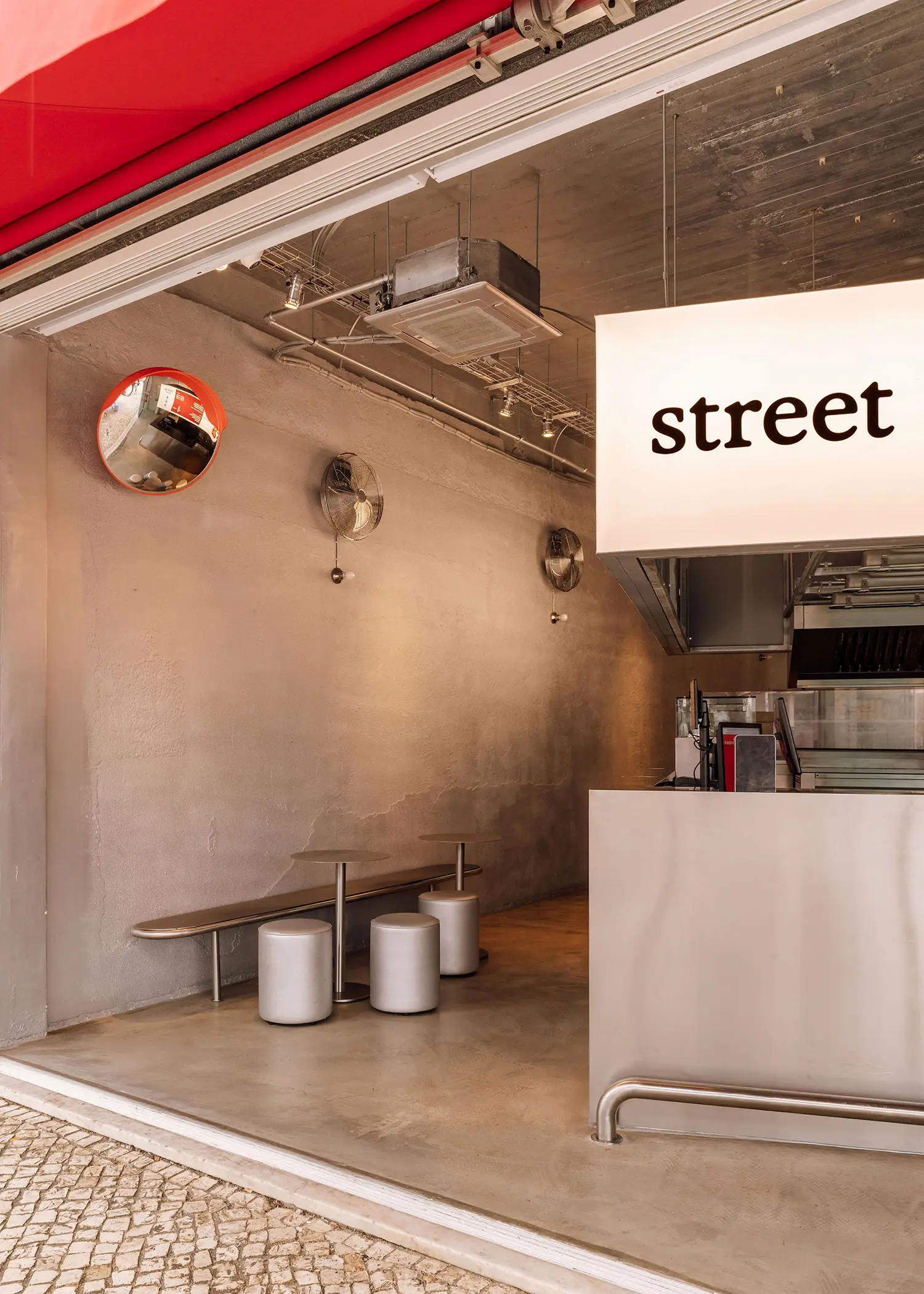
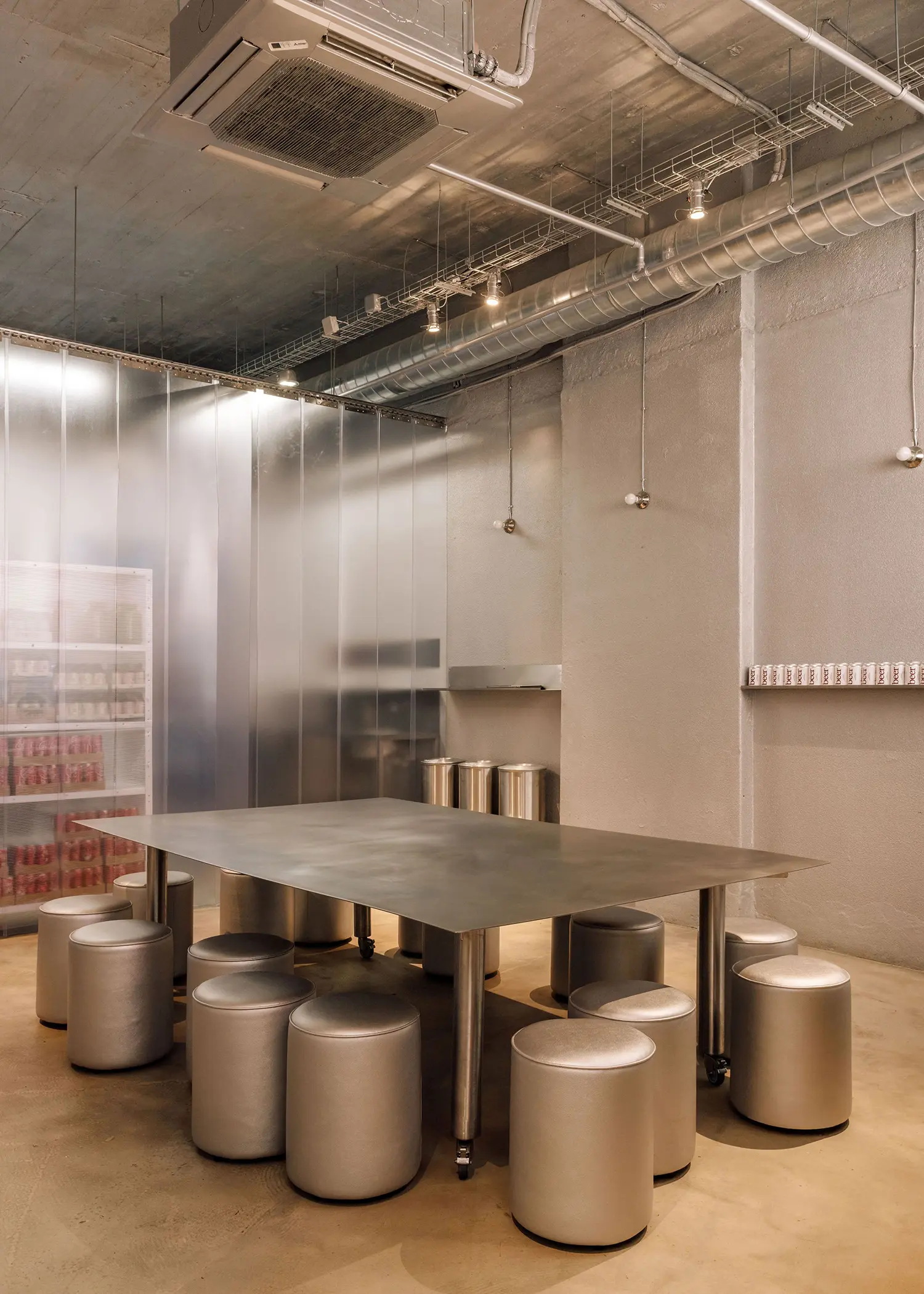
A strategy of metallic tones and a silver-coated finish strips the surrounding surfaces of visual noise. XXXI.studio calls it a kind of petrification of the space’s past — a neutral, reflective backdrop deliberately built to lose against the shapes and color of the food itself.
Lighting reinforces the same logic. A massive custom light box hangs directly above the kiosk, acting as the room’s visual anchor and making sure attention lands on the workspace before it lands on anything else.
For the studio itself, the intent is explicit. “We believe this combination of strategies results in a very clear sense of what the restaurant intends to be and how it intends to interact with its customers,” said Carlos Aragão, co-founder of XXXI.studio.
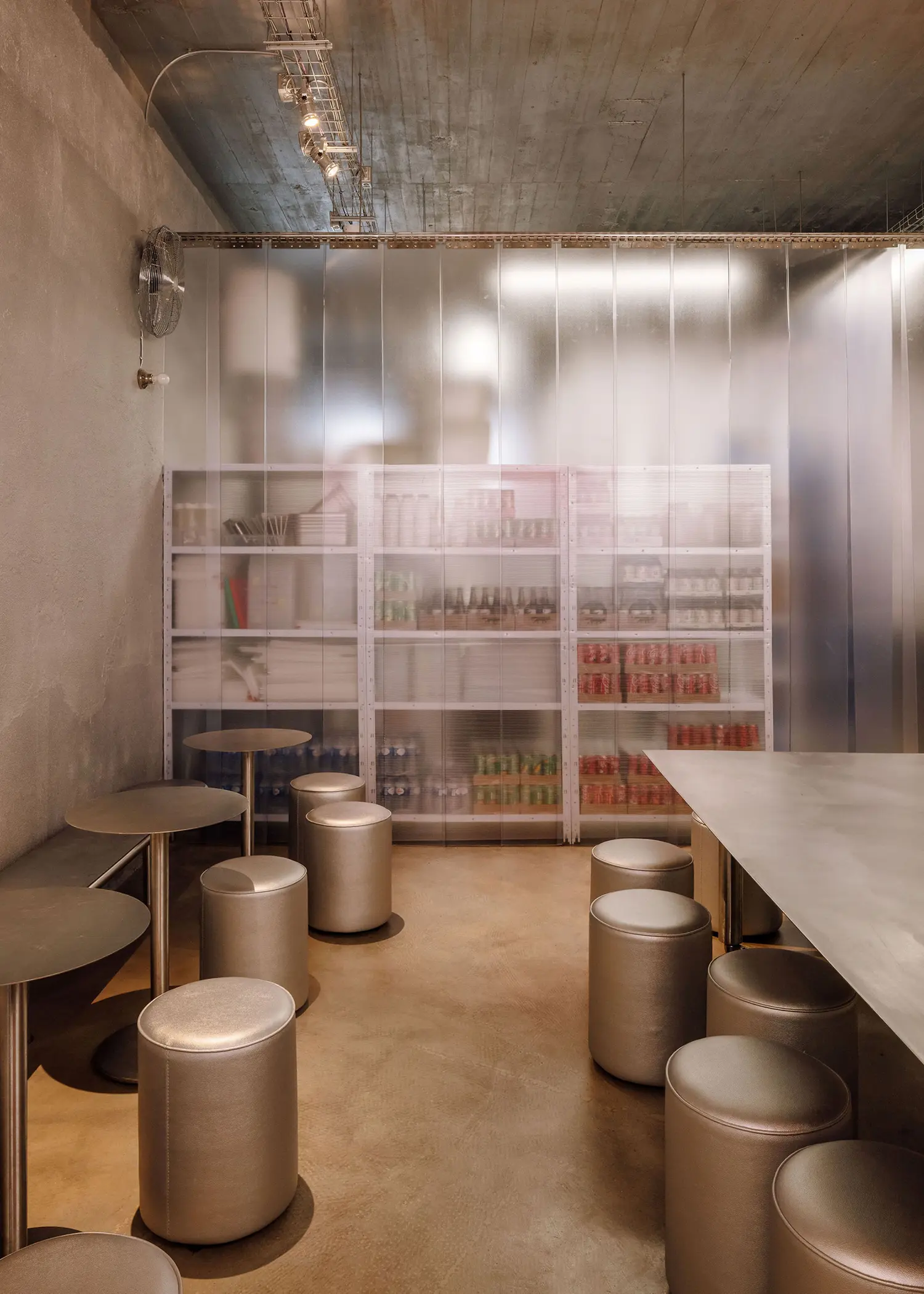
No clear boundary separates inside from outside. The space dissolves into an extension of the street itself, and the architecture doesn’t frame the experience so much as amplify it — letting the intensity of the process, not a designed atmosphere, set the tone.
A comparable instinct — building the kitchen as the restaurant’s real spectacle rather than hiding it — shaped Pluto Smash Burger in Wrocław, where Znamy się also put food preparation on full display rather than behind a counter. XXXI.studio pushes that same premise further by stripping away nearly all color from the surfaces around it.
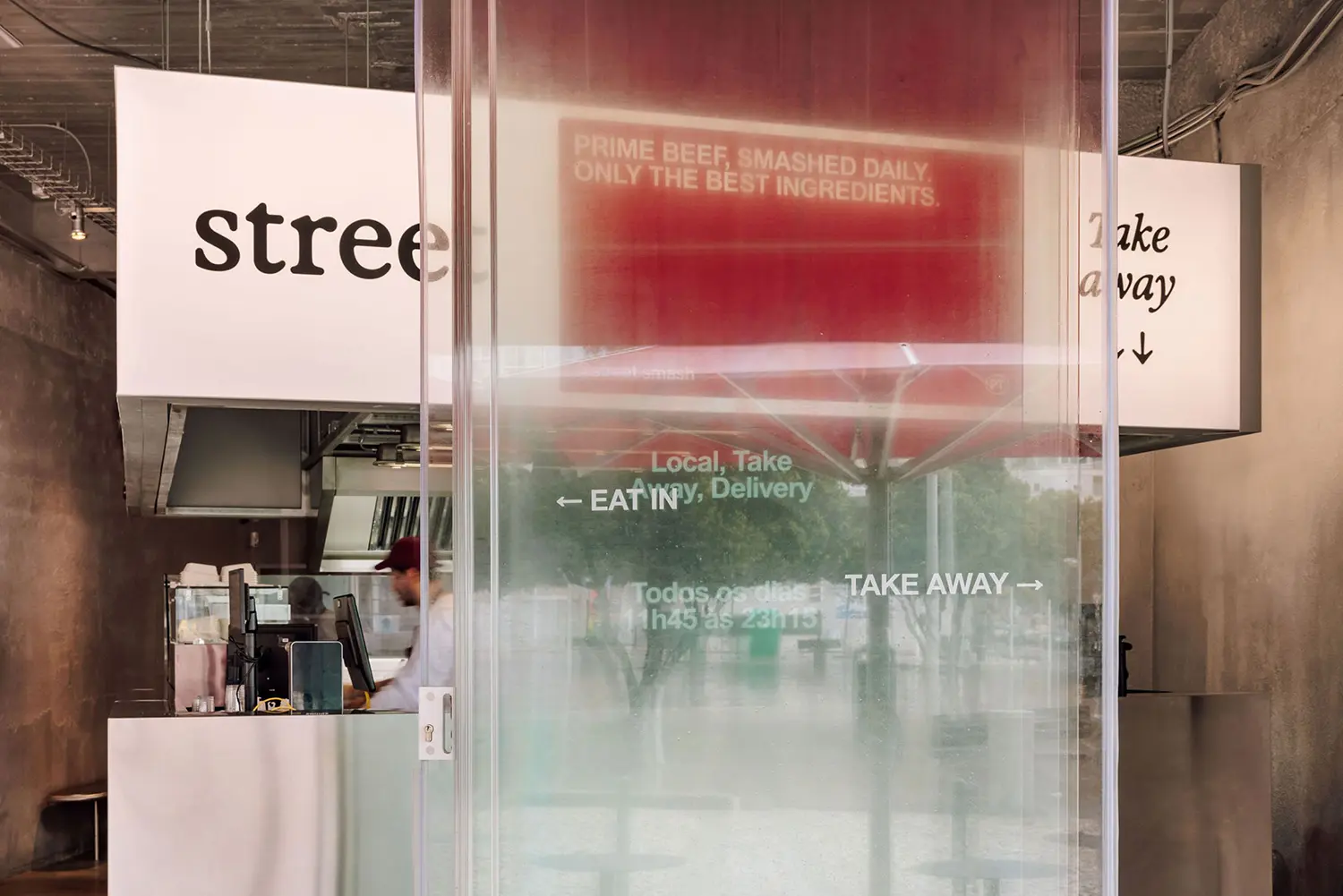
That restraint is a choice, not a default. Where Bruzkus Greenberg’s FlipNFry in Berlin uses aggressive color blocking to build a fast-food identity, Street Smash Burgers goes neutral and metallic on purpose, betting that the food’s own color will do more work on a silver backdrop than any applied graphic scheme could.
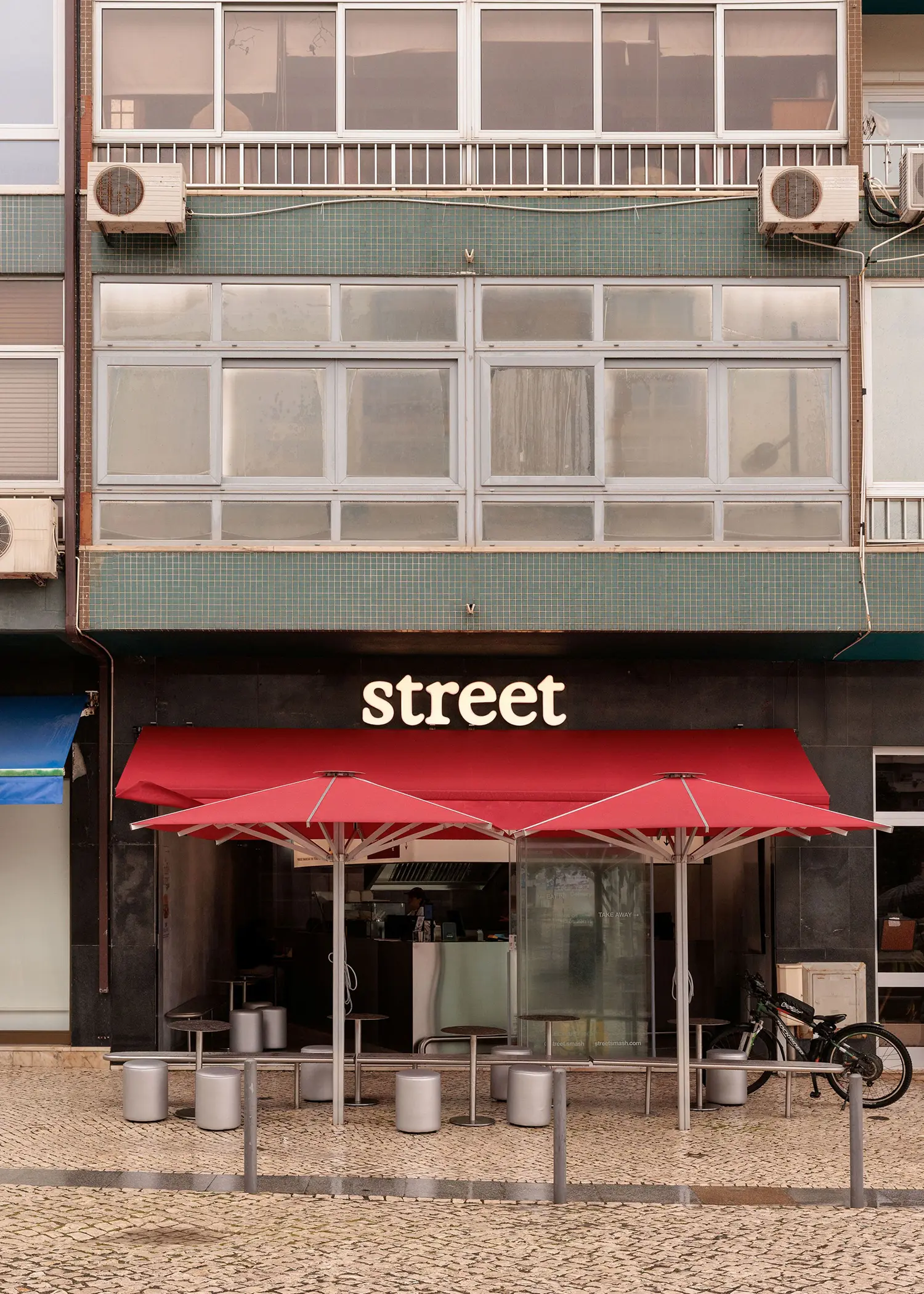
A restaurant built around one kiosk commits to a bet that layout can outperform signage, color, and lighting combined — and on a large public square in Almada, where the whole space is visible from a distance before anyone reads a single word of branding, that bet is the project’s real case.
Street Smash Burgers by XXXI.studio | Location: Almada, Lisbon, Portugal — Year: 2025 — Key materials: metallic silver-coated surfaces, custom suspended light box