



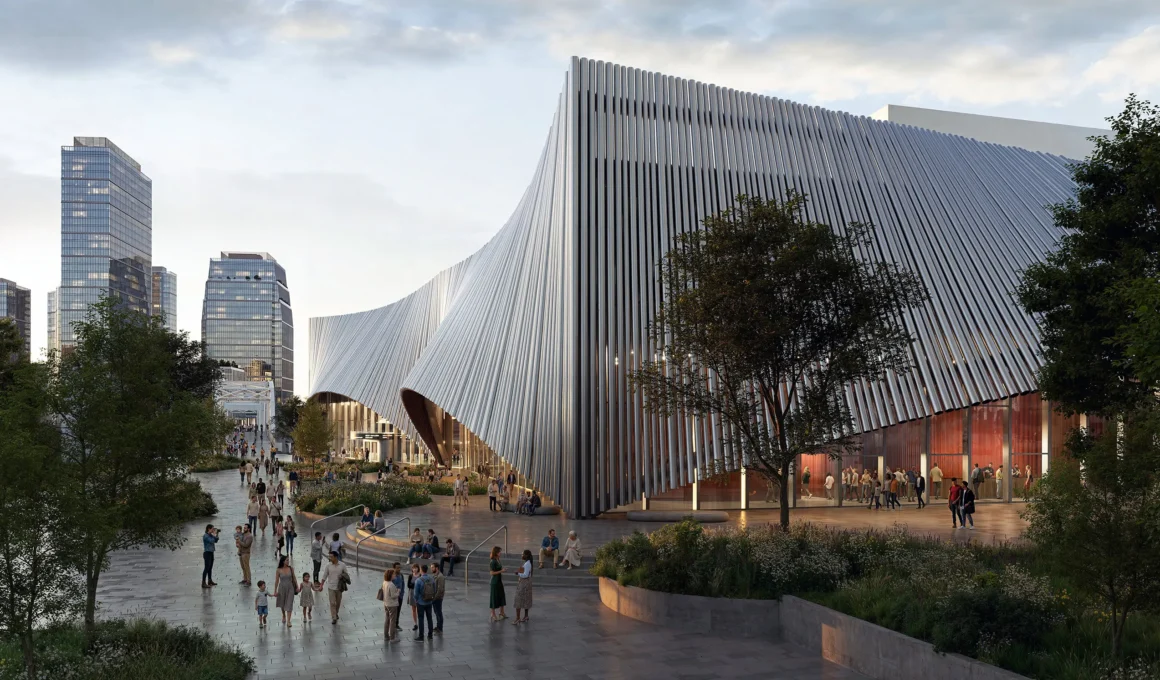
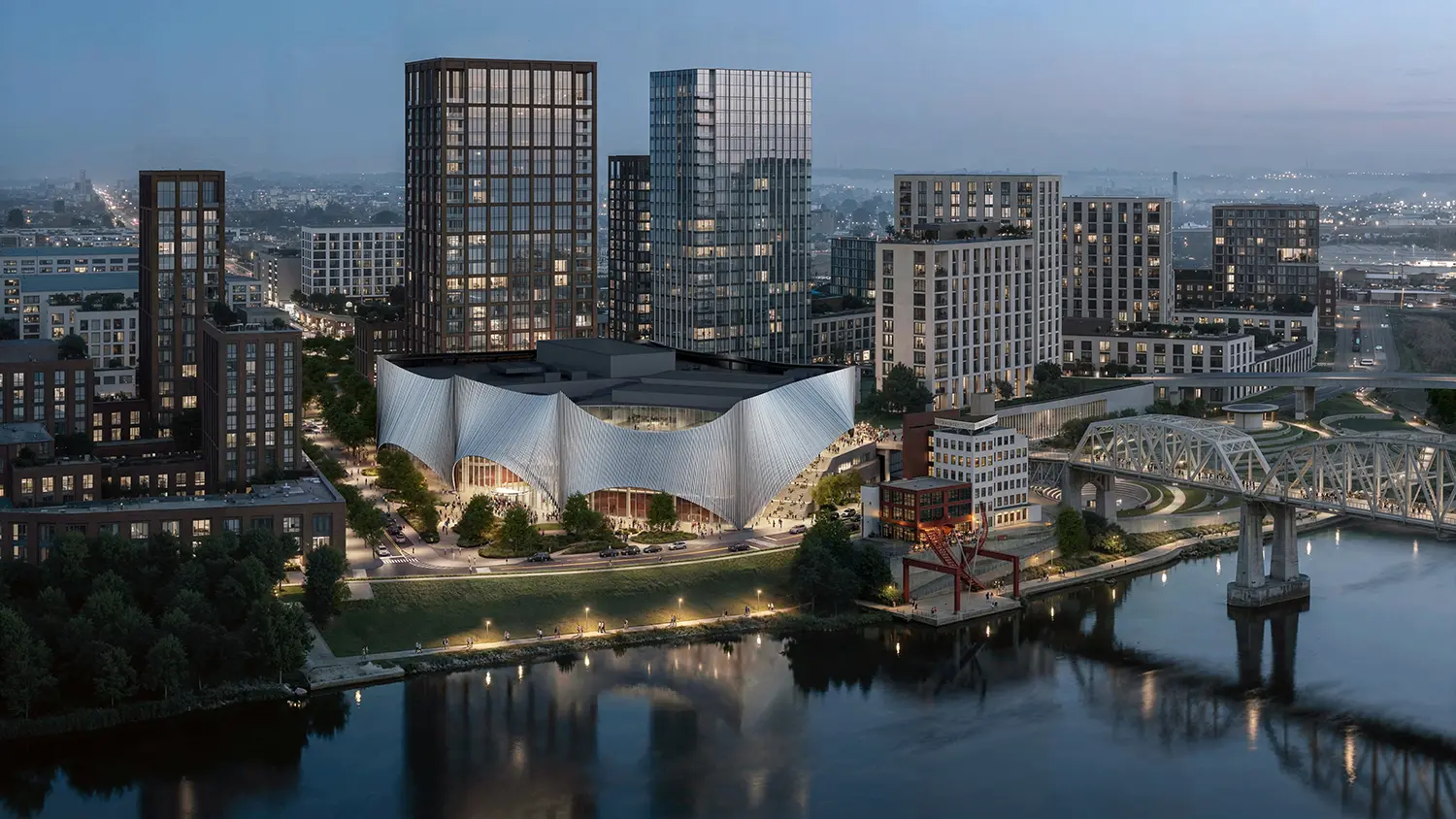
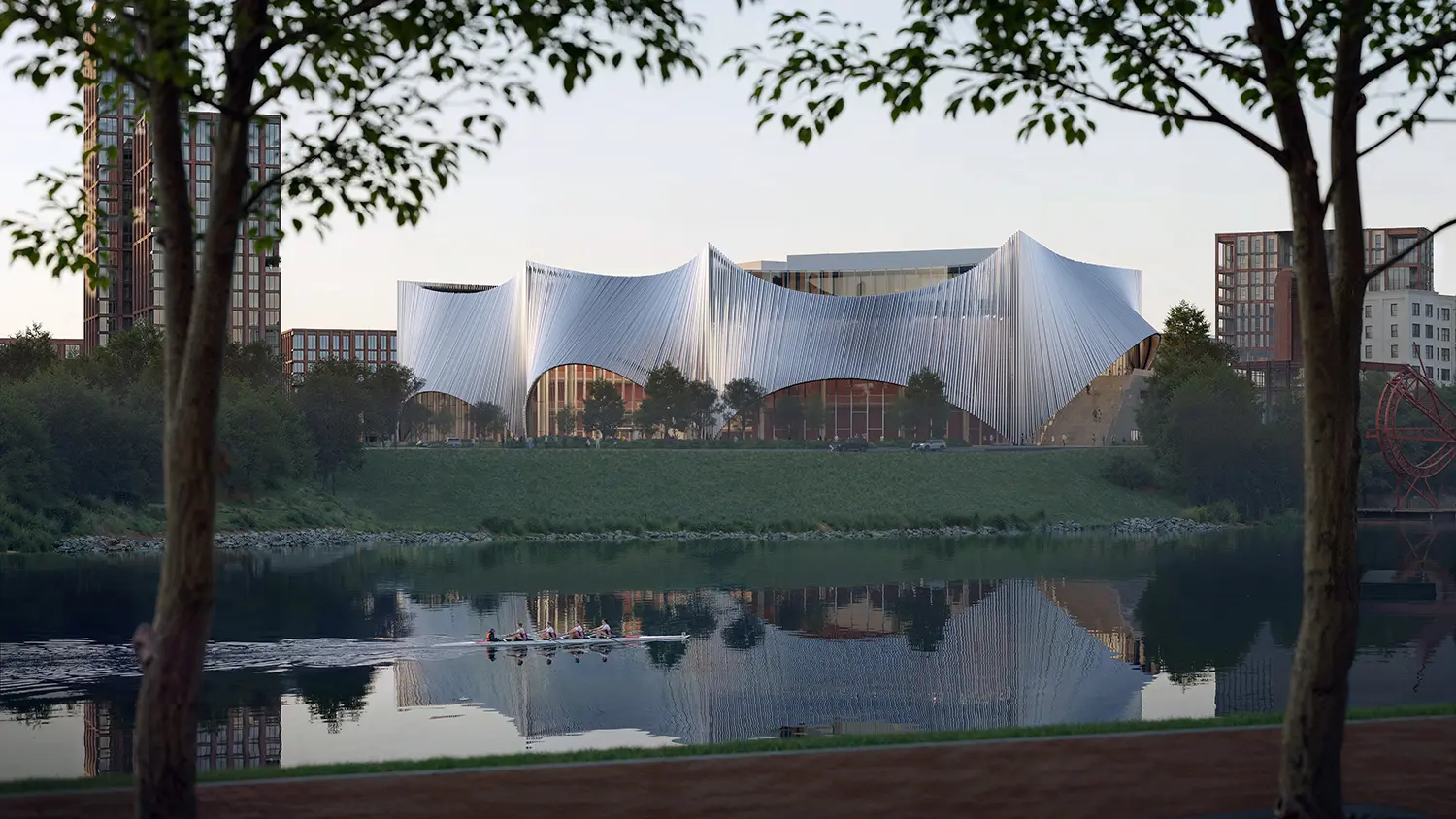
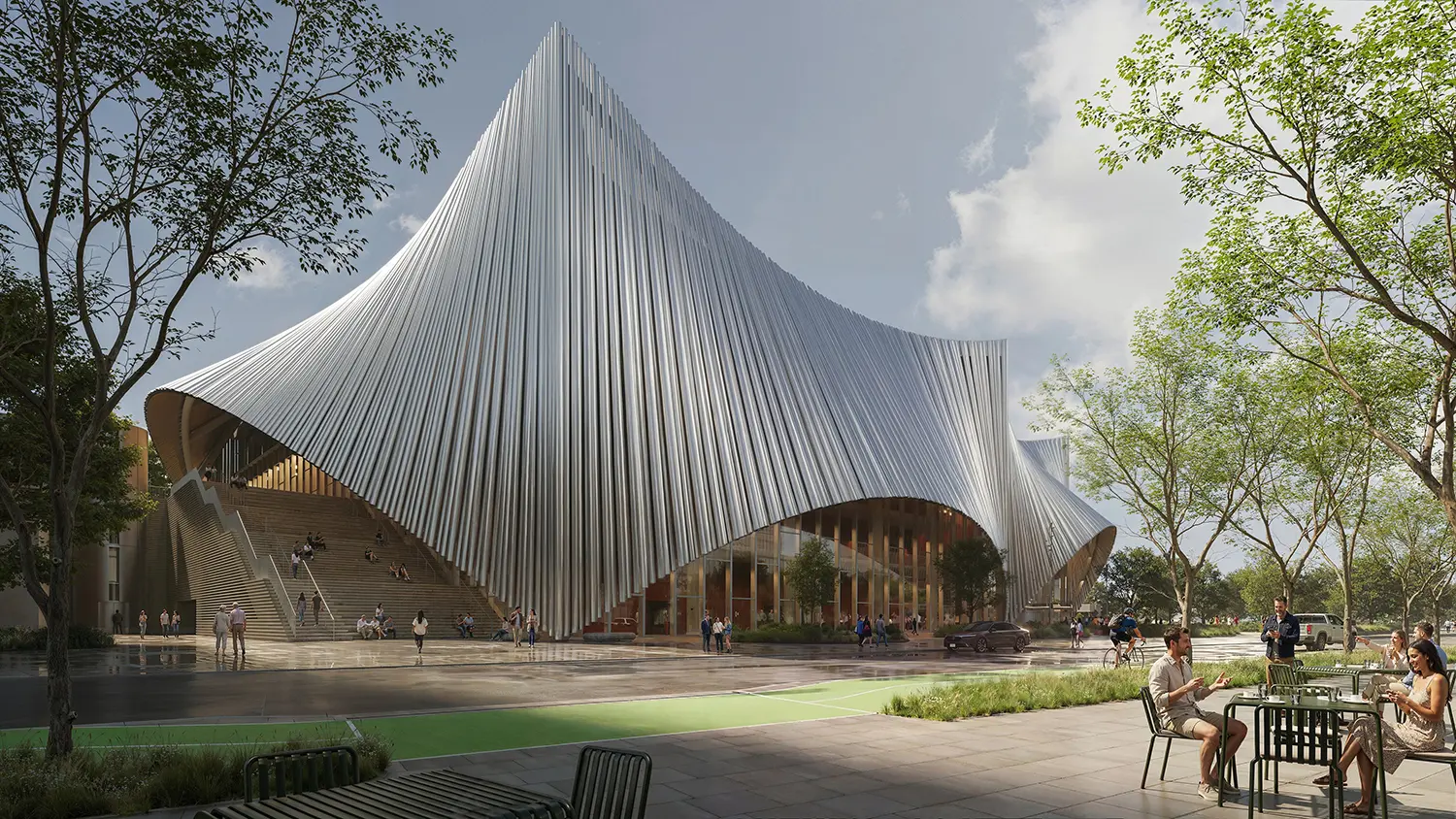
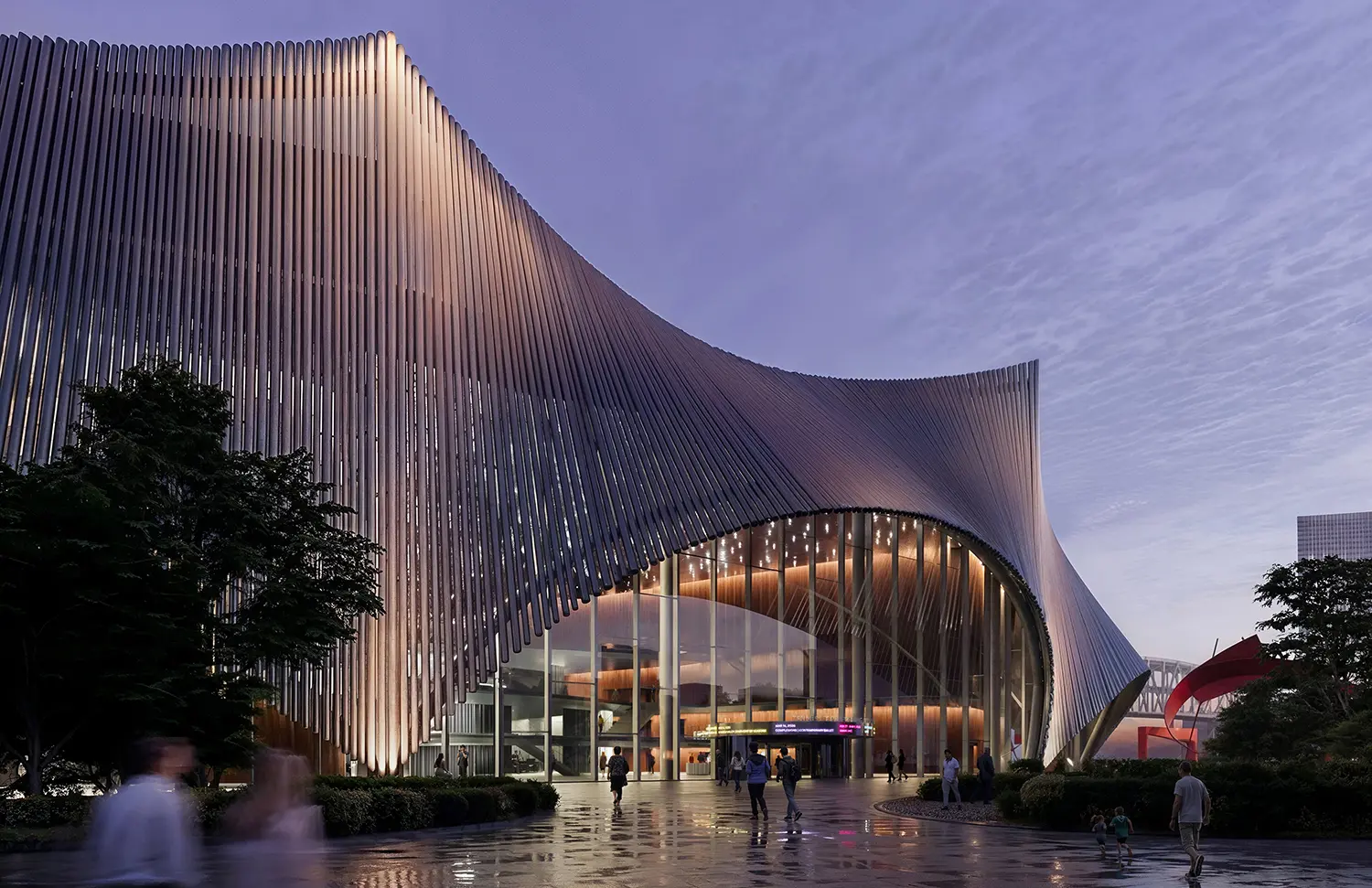
The new Tennessee Performing Arts Center (TPAC) is set to redefine Nashville’s East Bank as a sculptural cultural anchor designed by BIG (Bjarke Ingels Group) and William Rawn Associates in collaboration with Hastings Architecture, merging four distinct performance venues into a 307,000-square-foot waterfront landmark.
The relocation of TPAC from its historic downtown roots to the Cumberland River’s edge represents a pivotal shift in Nashville’s urban fabric. By situating the center between Cumberland Park and the upcoming Nissan Stadium, the project acts as a connective tissue, pulling the rhythmic energy of Broadway across the water. The structure is conceived not as a closed box, but as a permeable urban gateway that welcomes the public from every orientation, ensuring the arts remain a visible, breathing part of the city’s daily life.
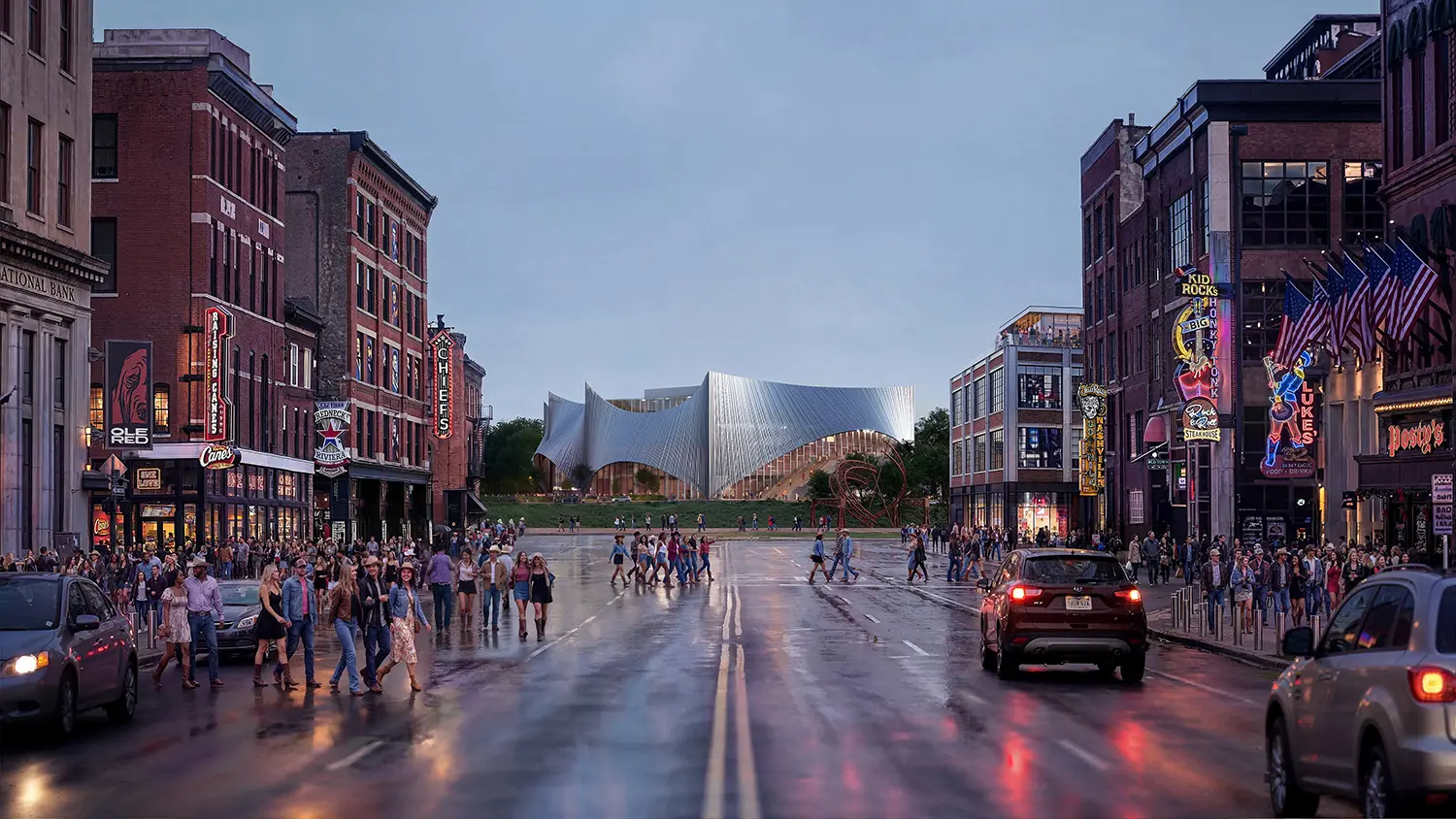
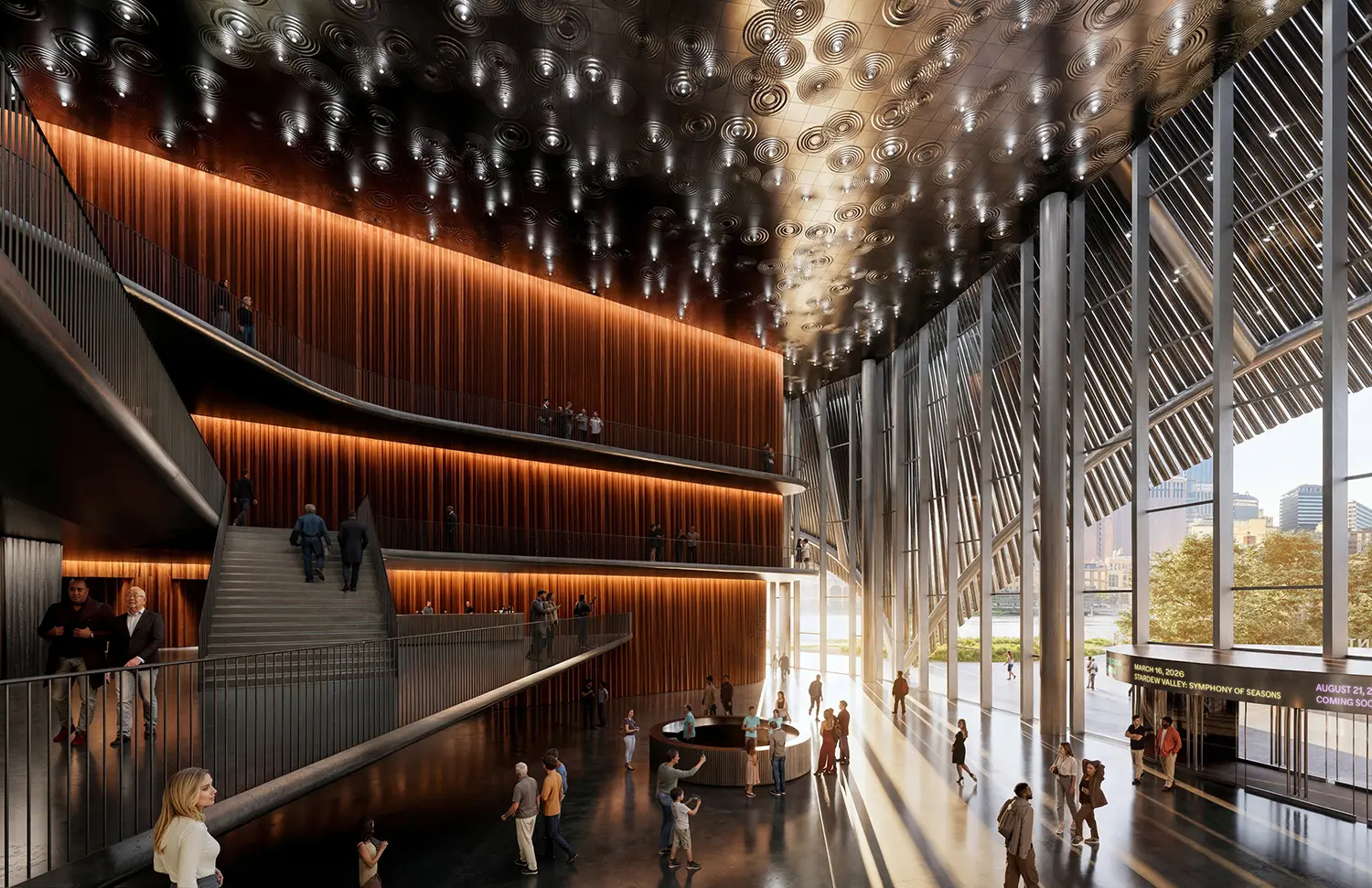
A vision of conceptual fluidity guides the audience through a “social choreography” that demystifies the theatrical experience. Rather than keeping the art behind thick walls, the atrium design utilizes a light-filled volume to bridge the gap between the professional stage and the public realm. Two distinct lobbies serve as the building’s lungs: a street-level hall that looks out toward the proposed waterfront park and an elevated lobby that aligns with the John Seigenthaler Pedestrian Bridge, effectively turning the act of “arriving at the theater” into a panoramic experience of the Nashville skyline.
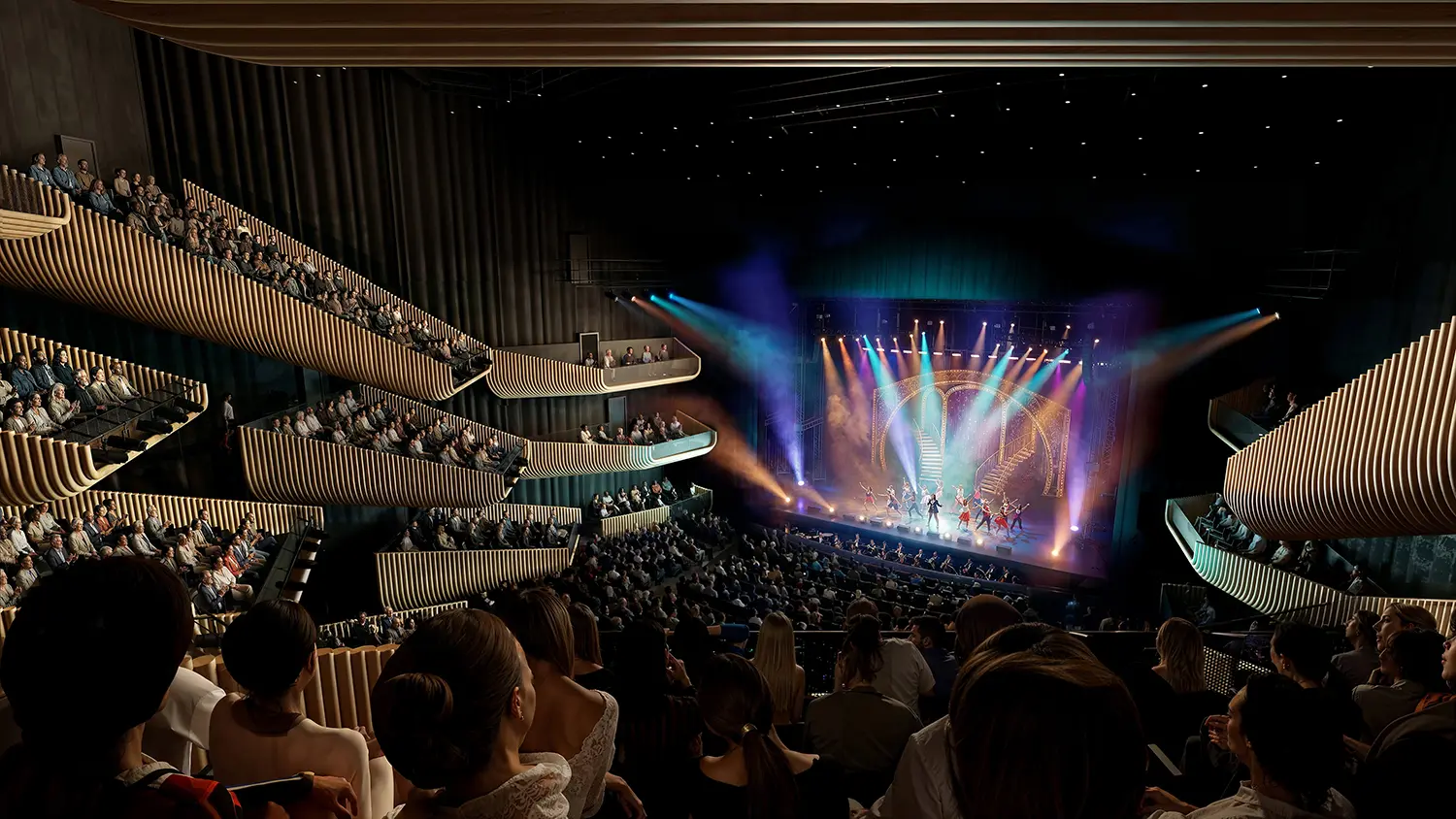
Technical precision within the performance halls ensures that the 2,500-seat Grand Broadway theater maintains a sense of human scale. BIG has utilized floating wood-clad ‘trays’ to break down the massive volume of the room, creating staggered seating clusters that feel personal despite the hall’s capacity. The opera and dance hall takes a more specialized approach, with sightlines specifically engineered to emphasize the movement of dancers’ feet, ensuring that the physical language of the Nashville Ballet is communicated clearly to every row.
The adaptability of the performance spaces is perhaps most evident in the Black Box Theater, a venue that sheds the traditional proscenium frame to foster a more visceral connection between performer and spectator. By allowing for modular seating configurations, the venue can morph to suit the experimental needs of the Nashville Repertory Theatre. This flexibility extends to the Cabaret space, where banquet-style seating and an extended stage invite a more immersive, jazz-club atmosphere that mirrors the city’s improvisational spirit.
Transparency serves as a recurring theme throughout the facility, particularly in the glass-walled rehearsal studios that allow passersby to catch a glimpse of the creative process. This choice intentionally strips away the elitism often associated with high-performance venues. The inclusion of a dedicated sensory room also highlights a modern commitment to inclusive design, providing a regulated environment for patrons who may need a quiet retreat during high-energy productions, ensuring the arts are accessible to neurodiverse audiences.
Materiality and landscape integration define the building’s exterior, where cascading concrete slabs create a series of outdoor terraces that feel like an extension of the riverbank. The landscape design by OLIN surrounds the structure with diverse plant life and “play groves,” acting as a buffer and a bridge. These green intervals allow the building to feel grounded in the Tennessee landscape rather than imposed upon it, creating pockets for spontaneous outdoor performances that bleed into the city’s public parks.
The crowning feature of the building is a vast public roof terrace that serves as a communal observation deck. From this vantage point, the relationship between the music, the river, and the urban core becomes tangible. It is a space designed for the “after-show”—a place where the dialogue between the city and its artists continues long after the final curtain call, overlooking the water that now defines the new cultural district of the East Bank.
This ambitious project joins a growing portfolio of transformative civic works by Bjarke Ingels Group that continue to push the boundaries of public infrastructure. The TPAC proposal shares a similar DNA with other upcoming cultural milestones, such as the timber-centric Rouen Sail Congress Center and the light-filled Suzhou MOCA. Much like the Ulsan Performing Arts Venue or the Drop Pavilion in Istanbul, this Nashville landmark proves that a venue can be both a specialized tool for artists and a vibrant social hub for the community at large.