



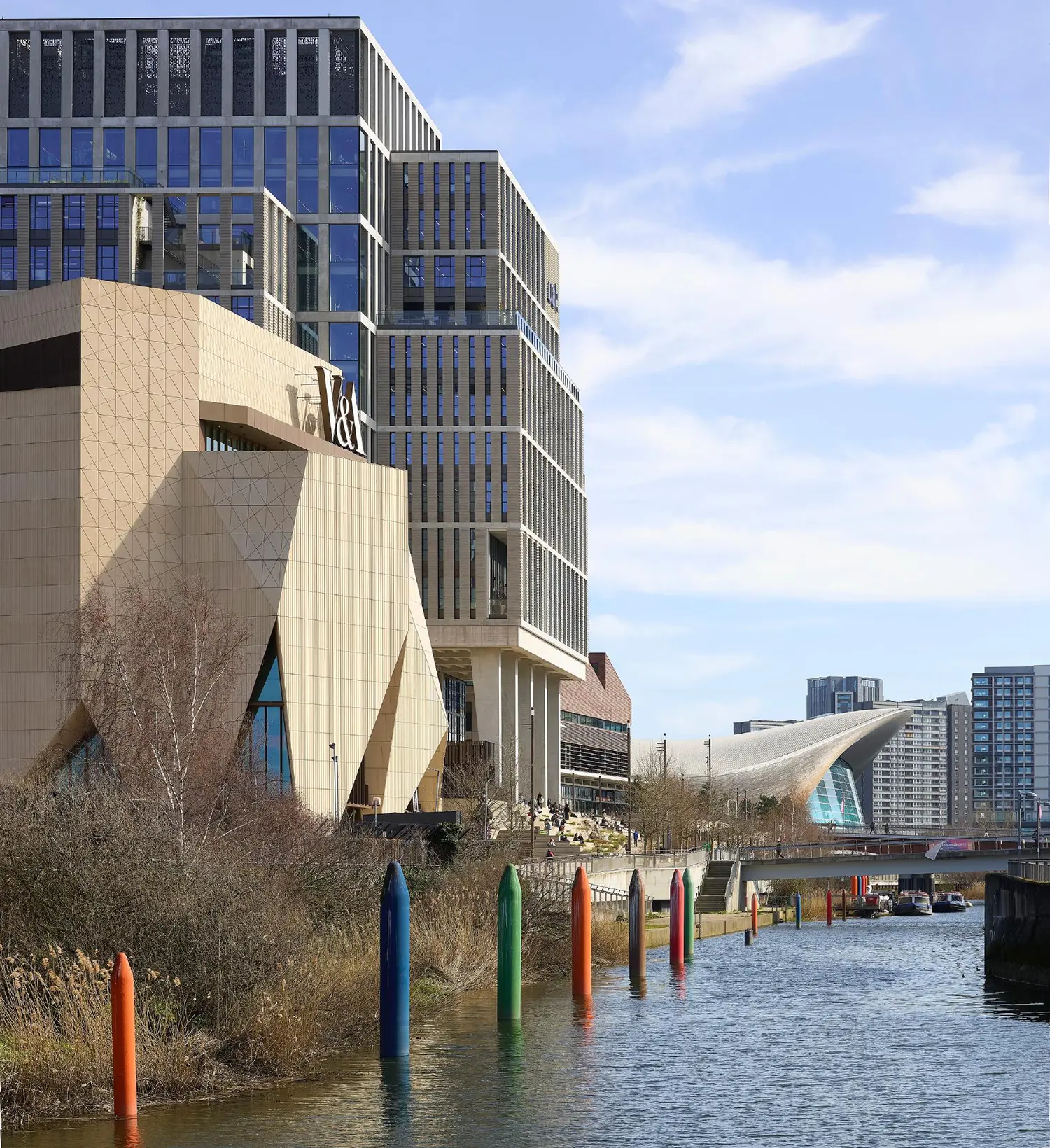
V&A East Museum arrives as a monumental addition to London’s cultural landscape, marking the completion of the ambitious East Bank district within Queen Elizabeth Olympic Park through a structure designed by Irish studio O’Donnell + Tuomey that bridges the gap between civic accessibility and high-concept craft.
A vision for the public sphere defines the opening of this five-storey institution, which officially welcomes the public on April 18, 2026. Rather than an imposing monolith, the building functions as an open invitation to the diverse communities of east London. The collaboration between the architects and local youth has resulted in a space that feels less like a traditional repository for artifacts and more like a vibrant, breathing organism dedicated to the power of making. This ethos of co-creation ensures that the museum sits comfortably alongside its prestigious neighbors, including the London College of Fashion and Sadler’s Wells East, forming a new epicenter for global culture.
The conceptual soul of the project finds an unlikely muse in the world of haute couture. Inspired by the sculptural tailoring of Cristóbal Balenciaga, specifically the “Ma” or the void between the garment and the skin, O’Donnell + Tuomey developed a “wrap” philosophy. The building is conceived as a protective outer shell that envelops an internal core, creating a dramatic tension between the structural skeleton and the skin. This approach transcends mere aesthetics; it addresses the fundamental museum challenge of protecting sensitive collections while remaining visually and physically porous to the city outside.
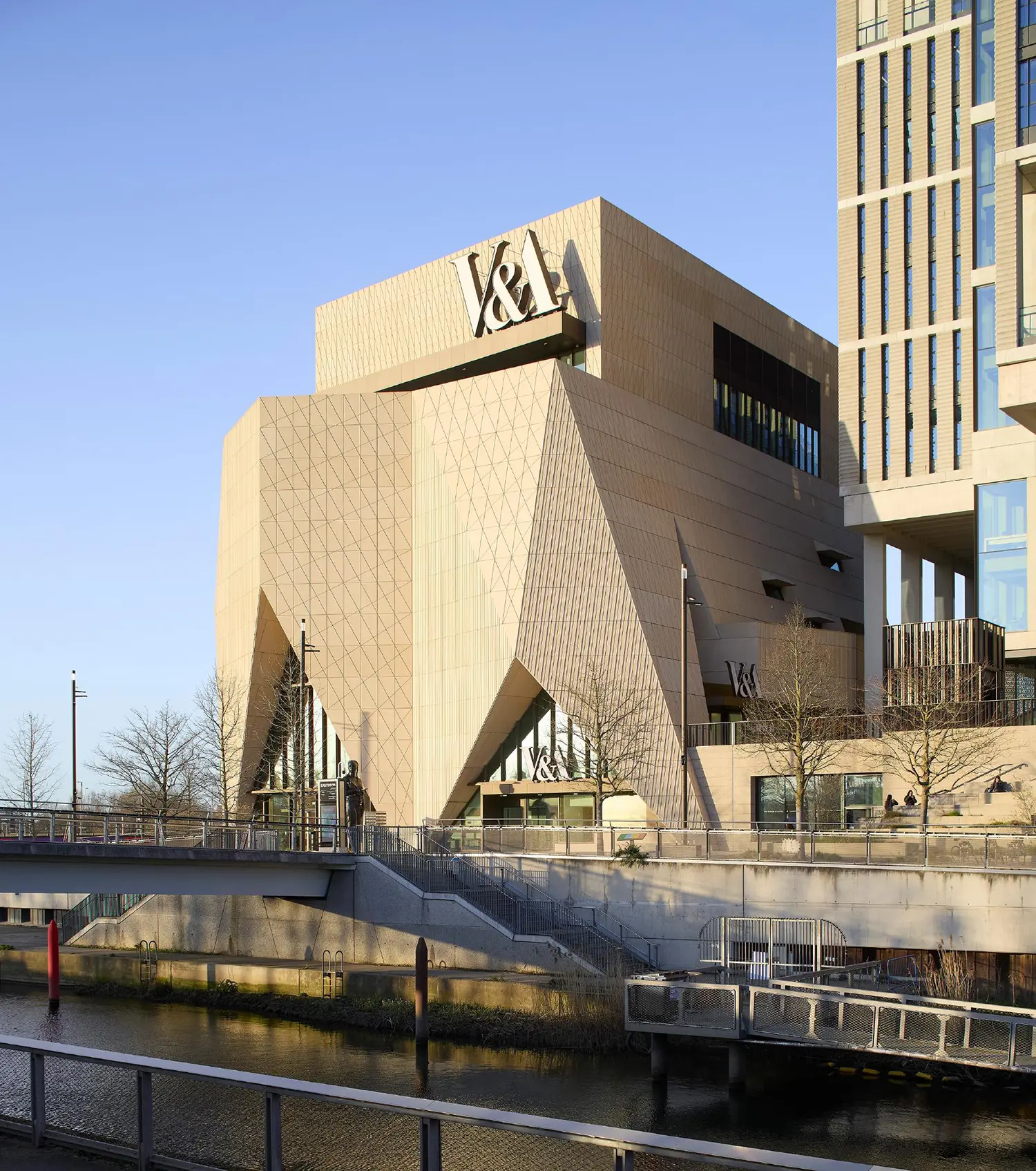
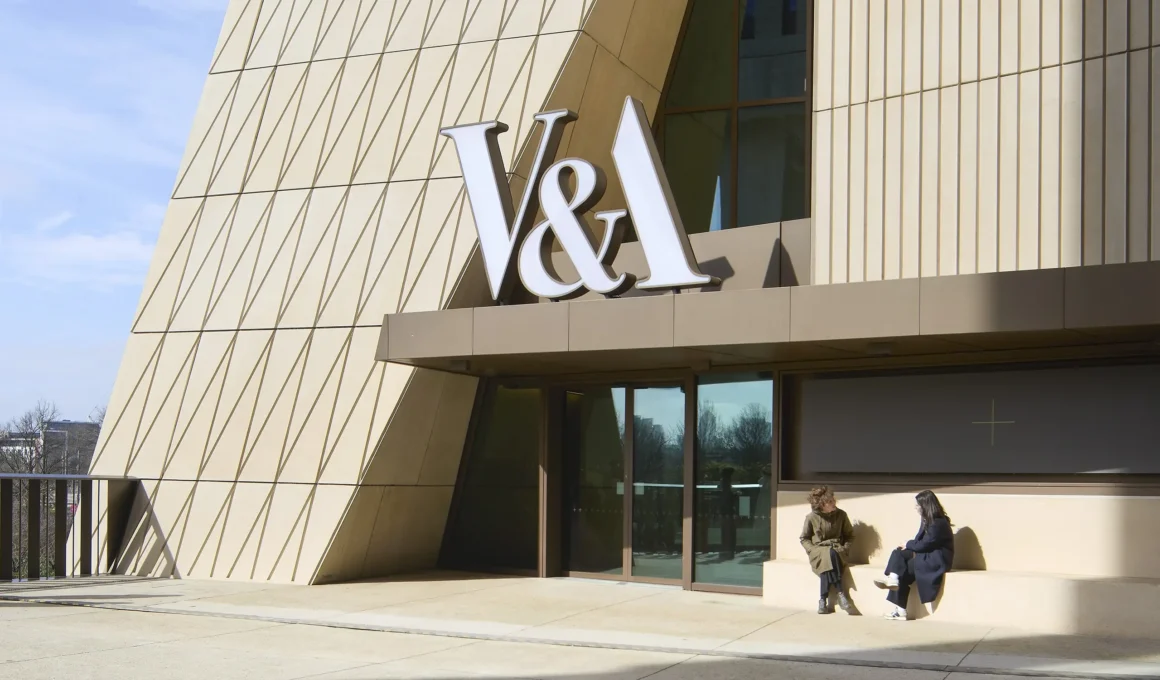
Materiality and the folded façade serve as the building’s most striking tactile signature. The exterior is composed of 479 uniquely shaped, sand-coloured precast concrete panels. These are not flat surfaces but are scored with intricate profiles that subtly echo the linework of the V&A’s iconic logo. As the sun moves across the Waterfront Square, the shadows cast by these folds animate the building, transforming the heavy concrete into something that feels as light and malleable as pleated fabric. It is a rigorous exercise in material continuity, where the geometry of the panels dictates the visual rhythm of the entire Olympic Park skyline.
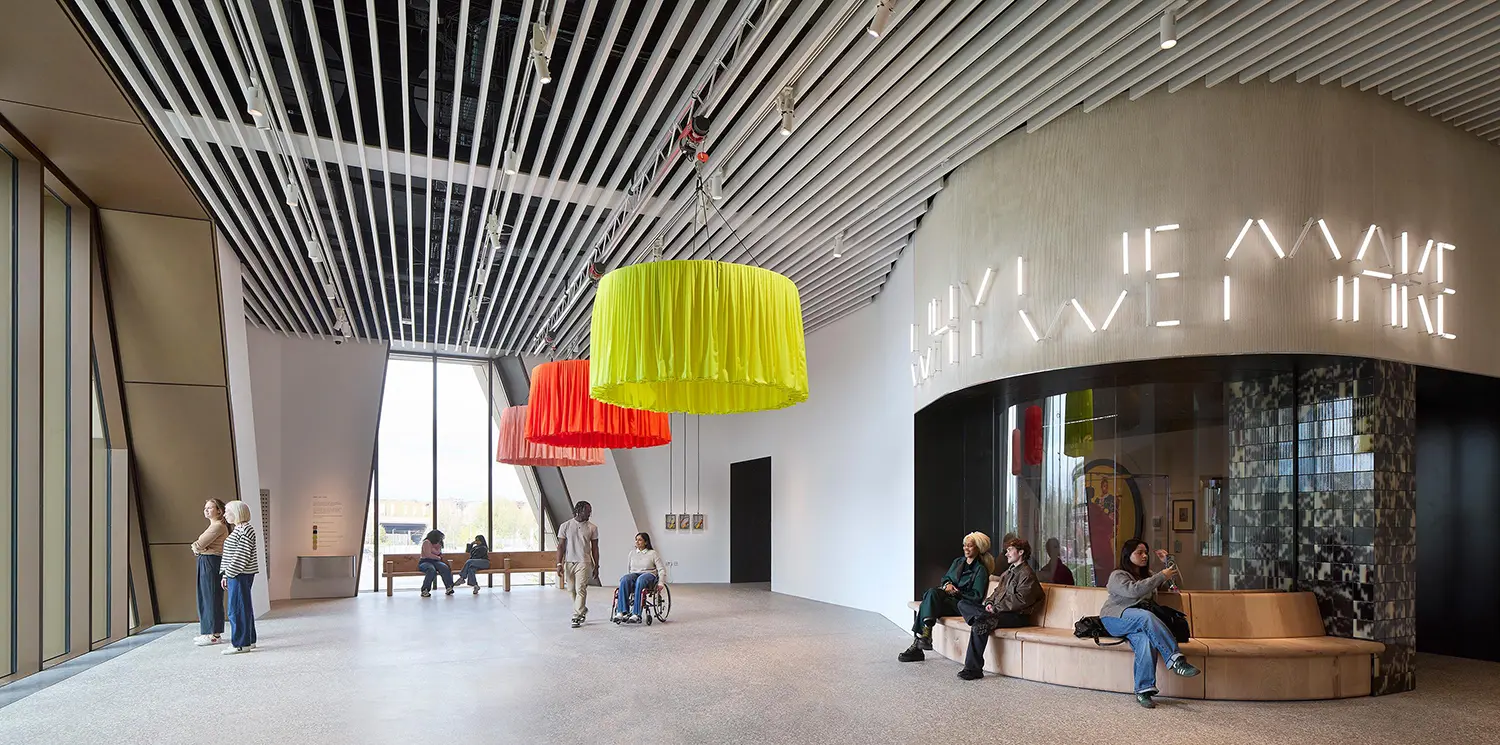
Navigating the internal volume reveals a sequence of circulation routes carved directly into the thickness of the external walls. Moving through the five public levels is a sensory experience defined by the transition from the “crafted white interiors” to the raw texture of the terrazzo concrete floors. The architects have used triangular openings at the entrances—reminiscent of pattern-cutting darts—to guide visitors into a vertical journey. This continuous path is punctuated by carefully framed views of the Waterfront, ensuring that the visitor never loses their connection to the urban context of Stratford.
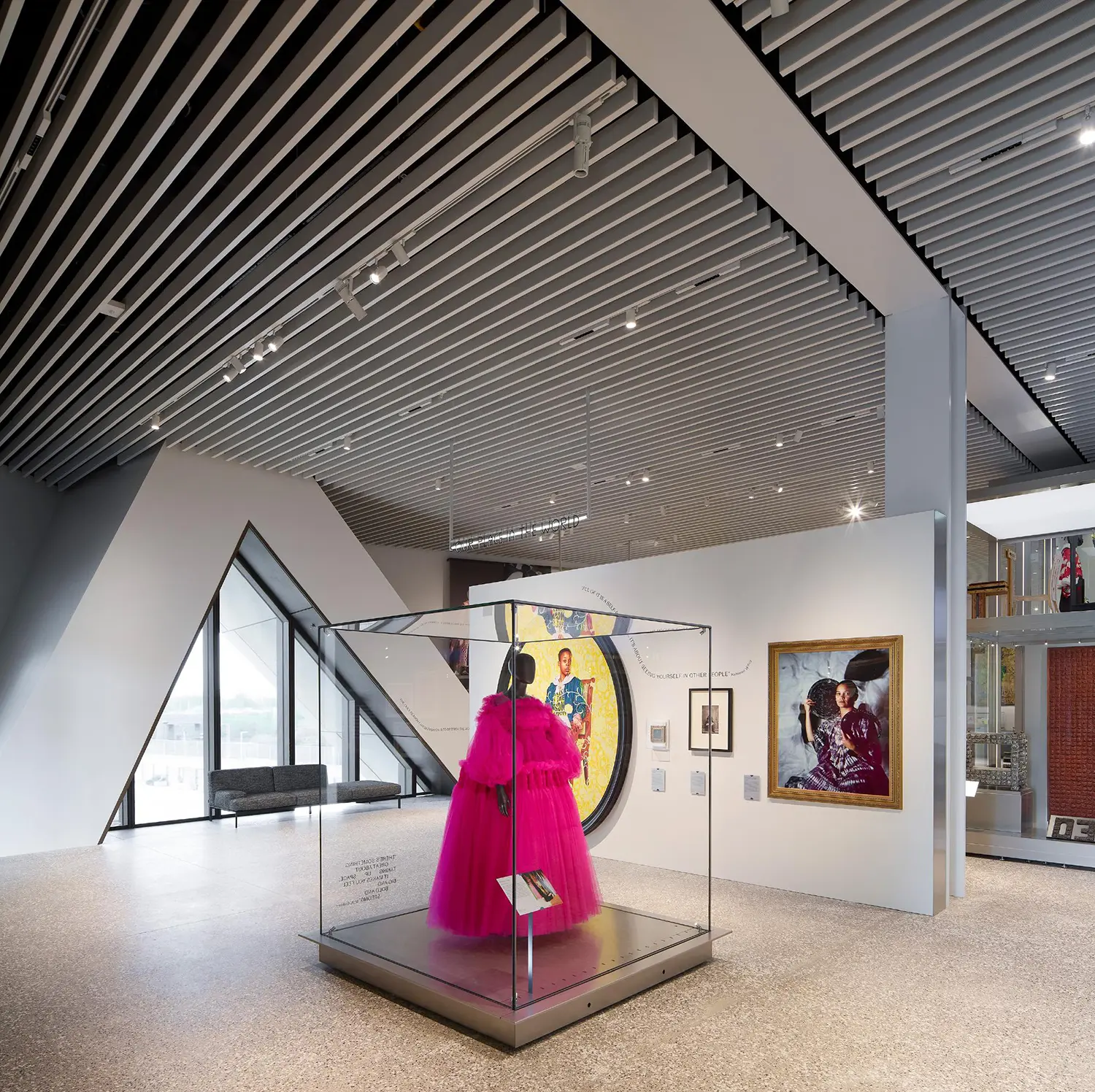
Cultural resonance and curated sound dominate the inaugural programming, specifically within the landmark exhibition, The Music is Black: A British Story. By housing such a significant exploration of Black British music within these walls, the museum asserts its role as a mirror to the community. The spatial configuration allows the heavy, bass-driven history of the UK’s music scene to resonate through the 900-square-metre temporary gallery, while permanent “Why We Make” galleries offer a more analytical, topical lens on the V&A’s global collections.
The intersection of art and social life is further cemented through the inclusion of Café Jikoni and various creative commissions. Artists such as Tania Bruguera and Carrie Mae Weems have contributed works that dialogue with the building’s geometry, turning the vertical project space and top-floor event areas into sites of active discourse. This is not a place for passive observation; it is a civic space designed for the exchange of ideas. Integrated benches at the podium level encourage passersby to linger, effectively blurring the line between the museum’s private interior and the public realm of the park.
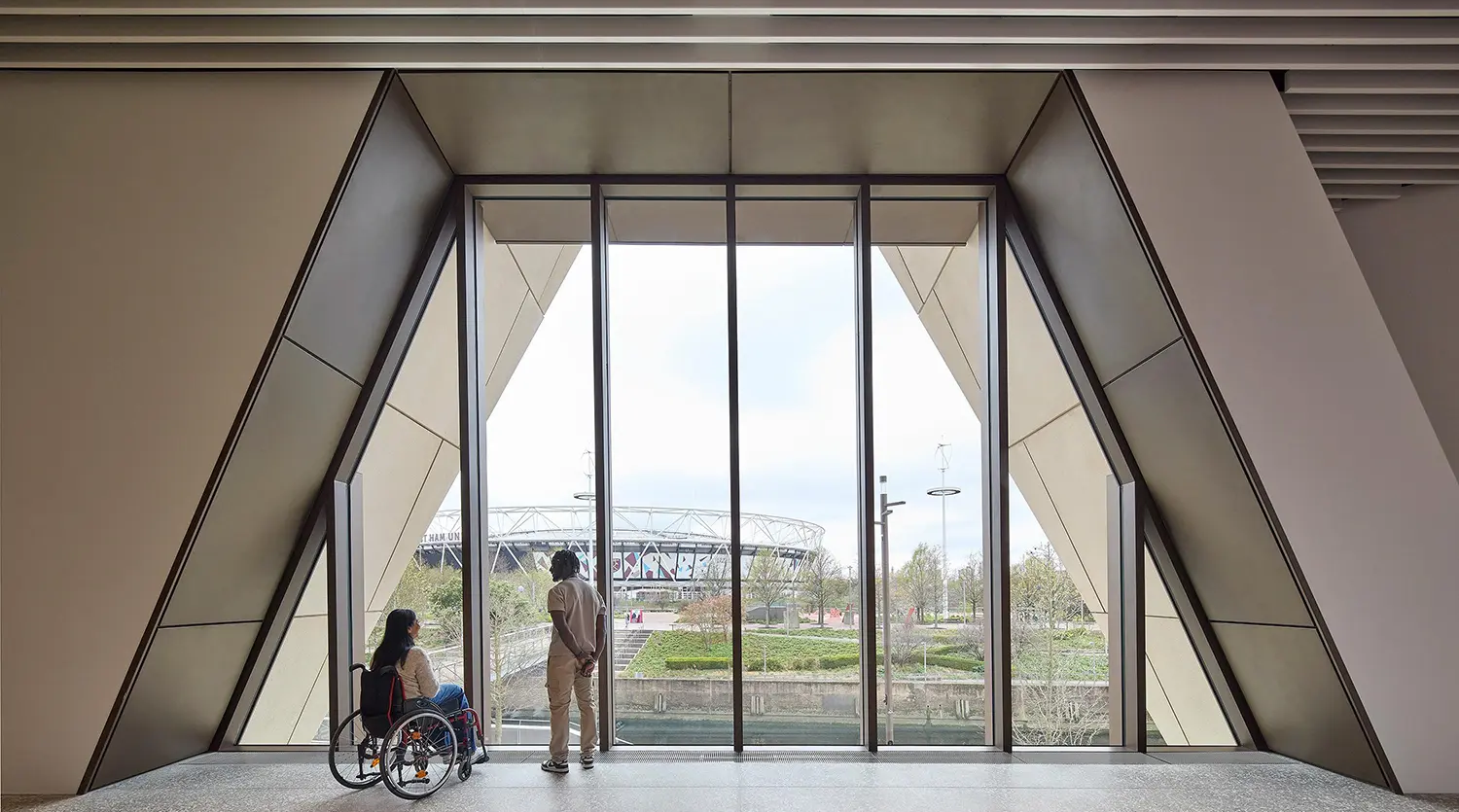
A dialogue between light and shadow persists throughout the day, thanks to the strategic placement of windows and three public terraces. These openings do more than provide light; they “bring the outside in,” allowing the energy of the surrounding East Bank to permeate the quiet, white-walled galleries. This balance between the monumental and the intimate is what defines the success of the project. It manages to feel significant in scale while maintaining the “barrier-free welcome” that was central to the original brief, catering to a generation of visitors who seek authenticity over traditional museum formality.
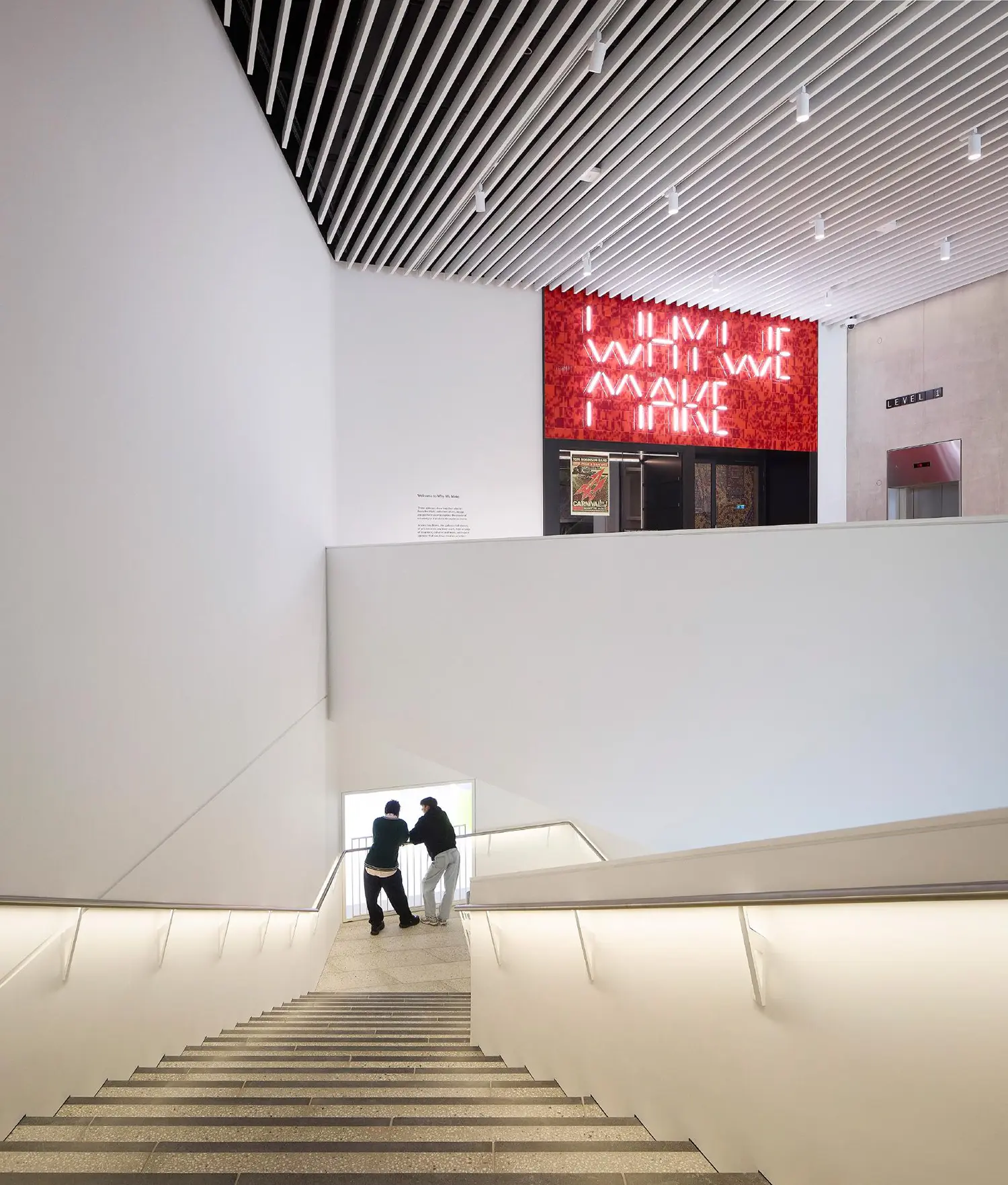
The evolution of the contemporary museum is currently witnessing a global shift toward these types of highly articulated, community-centric expansions. Much like the recent OMA-designed expansion of the New Museum in Manhattan, the V&A East Museum prioritizes a vertical, transparent approach to cultural programming. Both projects reflect a desire to move away from the “black box” gallery model, opting instead for structures that act as vertical neighborhoods. In London, this new landmark successfully concludes a decade-long journey, providing a permanent home for the intersection of fashion, performance, and the enduring human impulse to create.