



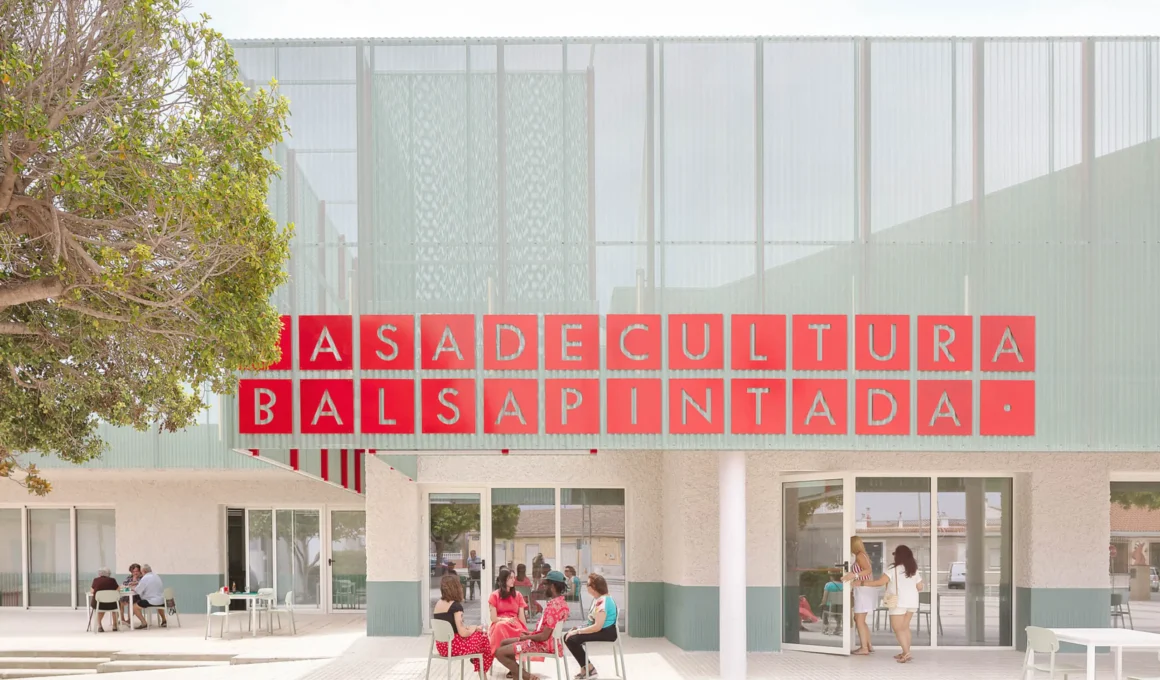
The rehabilitation of the Balsapintada Cultural Center in Murcia, Spain, by COR ARCHITECTURE+DESIGN, breathes new life into a 1,719-inhabitant community by transforming an obsolete municipal building into a vibrant, high-performance civic heart through the principles of the New European Bauhaus.
A catalyst for social cohesion. The intervention in Balsapintada is less about the ego of a new silhouette and more about the delicate art of urban acupuncture. By choosing to revitalize the existing fabric rather than opting for demolition, the studio has anchored the project in the collective memory of the town. Facing the primary public square, the center acts as a porous boundary between the interior program and the outdoor civic life, reinforcing its role as the definitive setting for local gathering and cultural exchange.
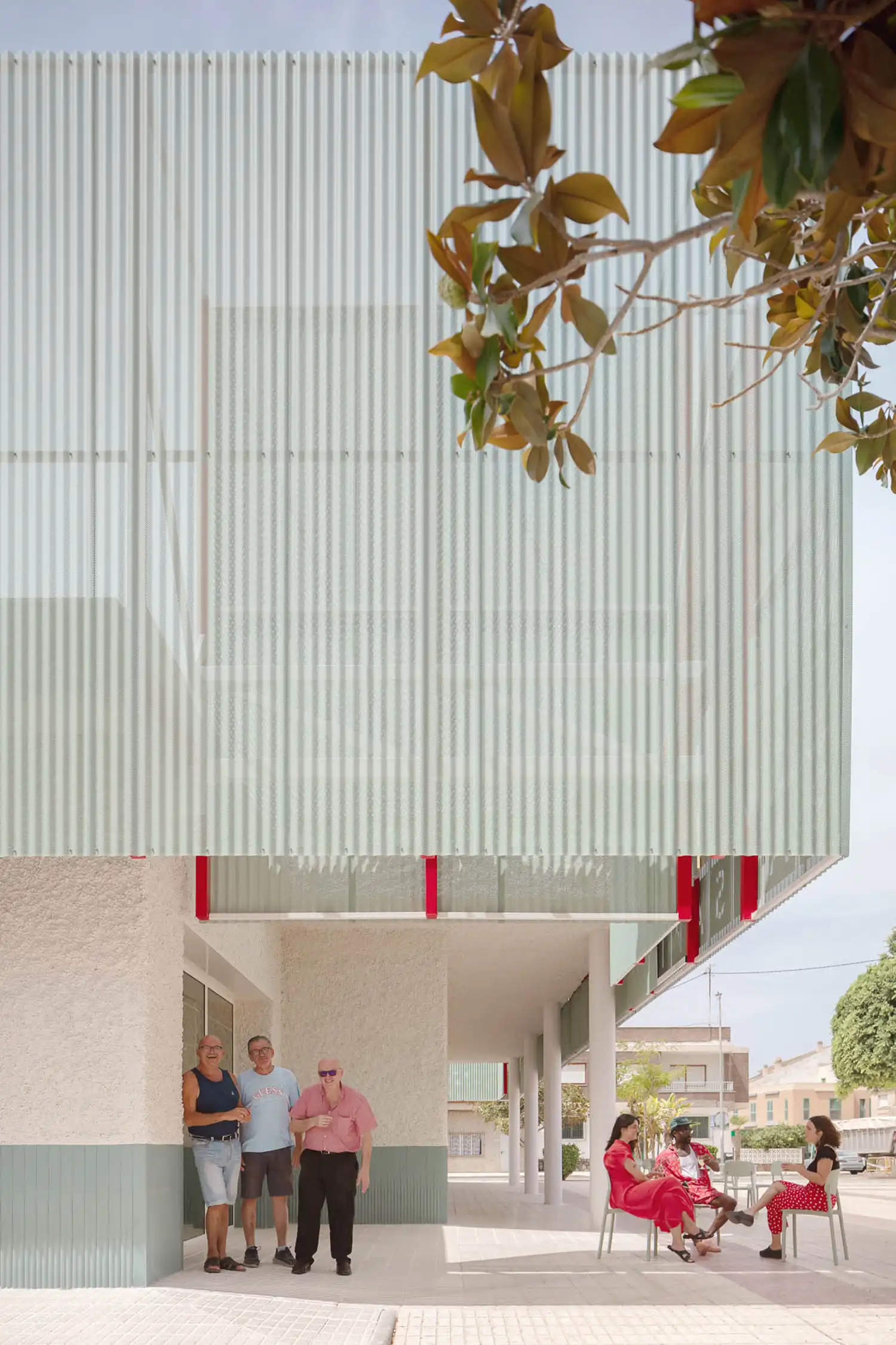
Refining the urban identity. The most striking evolution is the building’s new skin—a sophisticated metallic envelope characterized by deep blue-green tones punctuated by sharp red accents. This chromatic strategy does more than just modernize an aged facade; it unifies three disparate blocks built across different eras into a singular, legible volume. This adaptive reuse approach ensures the structure stands as a contemporary landmark, replacing an aesthetic of decay with one of intentional, high-contrast vitality that mirrors the active social value of the programs within.
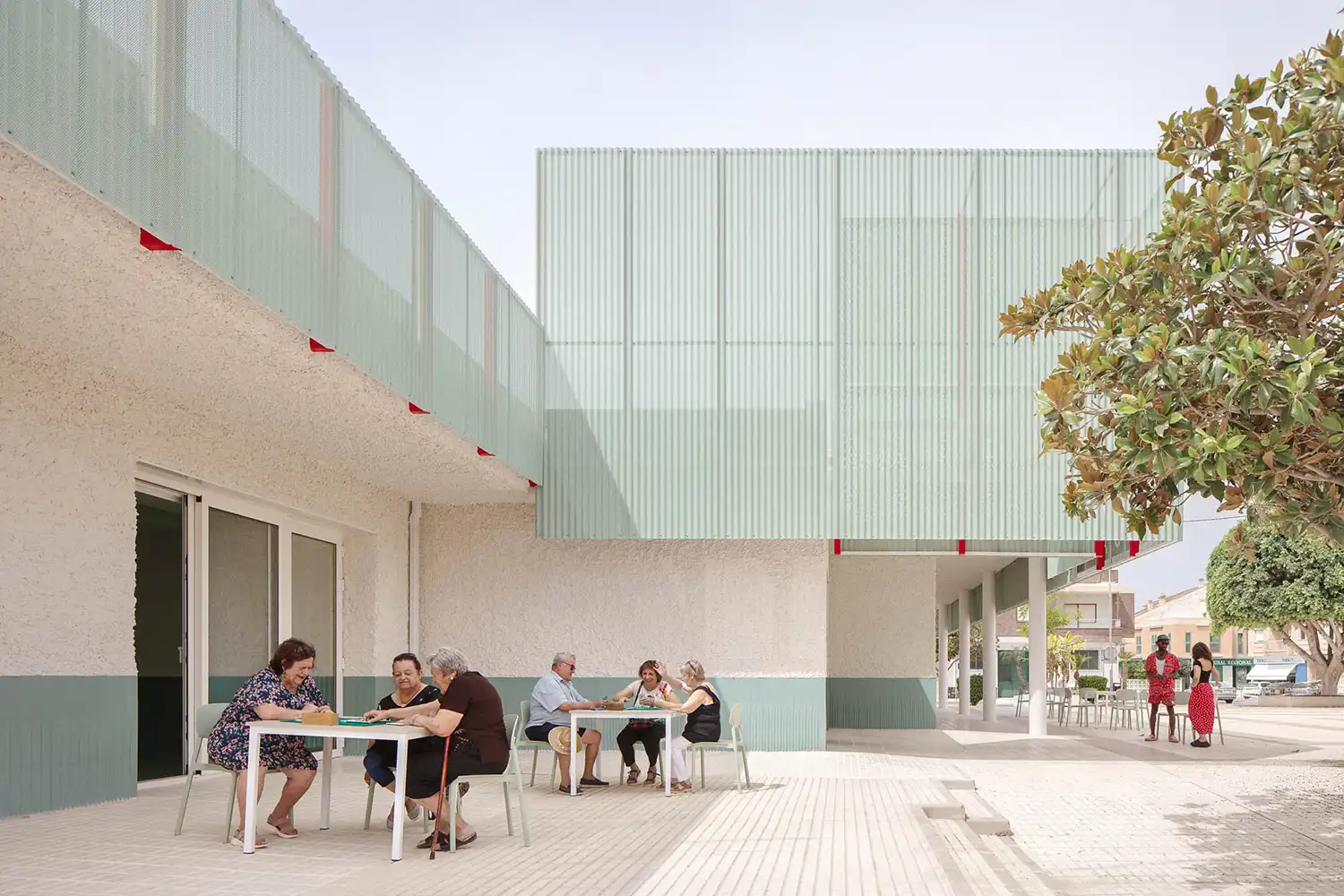
The sensory experience of light. Moving through the facility, the atmosphere is defined by the intelligent modulation of the Mediterranean sun. Perforated metal screens act as a functional veil, filtering natural light into soft gradients that protect the interior from harsh thermal gains. This play of light and shadow extends outward, where the facade’s overhangs cast cooling silhouettes onto the square, creating micro-climates that invite residents to linger. The choice of natural materials and integrated vegetation indoors further enhances a sense of well-being, shifting the perception of a municipal office toward that of a communal living room.
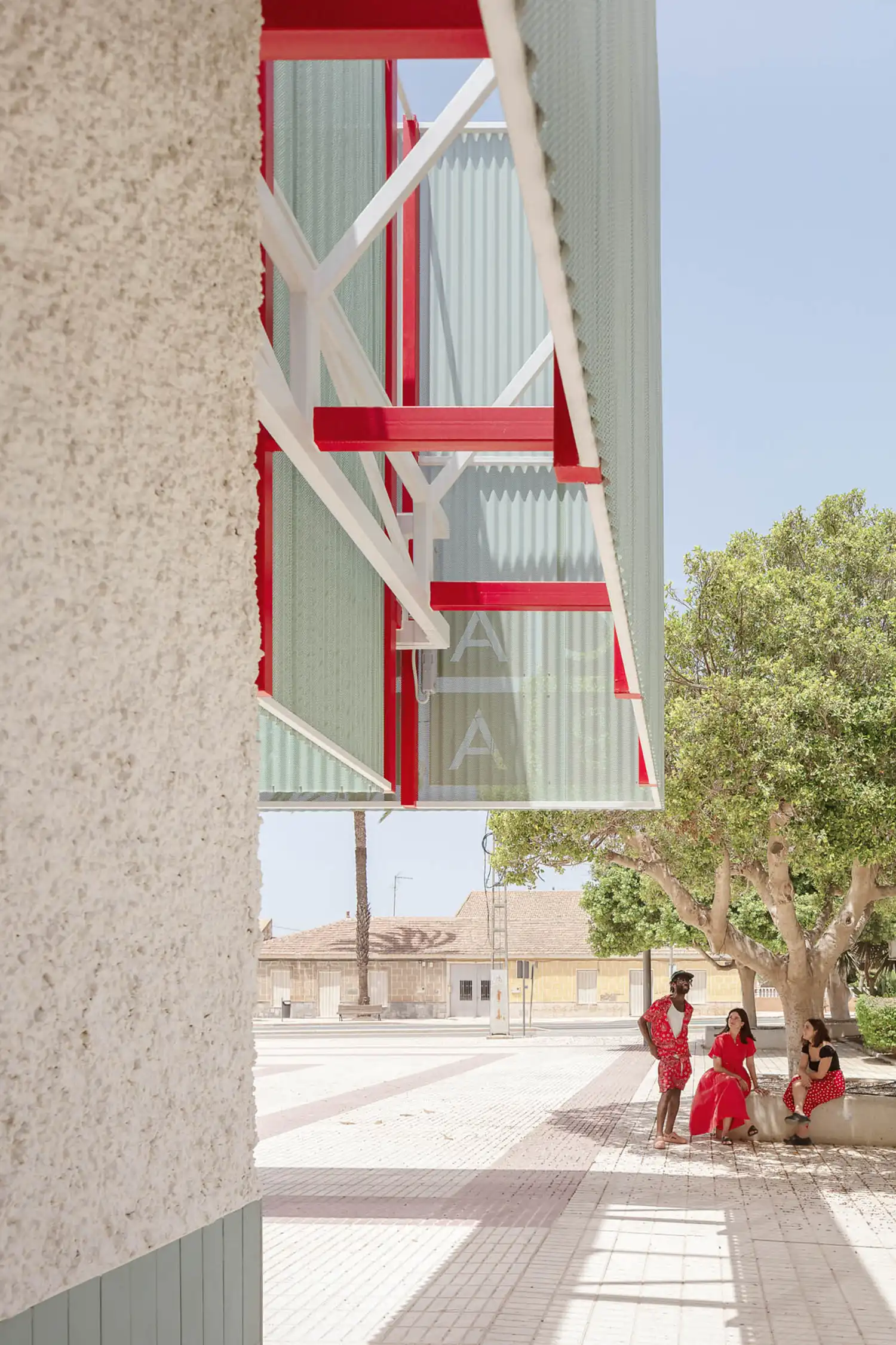
Technical precision and energy logic. Beneath its vibrant exterior, the project is a rigorous exercise in energy efficiency and bioclimatic performance. By significantly upgrading the building’s thermal insulation and incorporating advanced digitalization for energy management, the studio has achieved a Nearly Zero-Energy Building (NZEB) status. This technical overhaul allows the facility to meet modern regulatory standards while drastically reducing its environmental footprint, proving that rural infrastructure can be at the forefront of sustainable innovation.
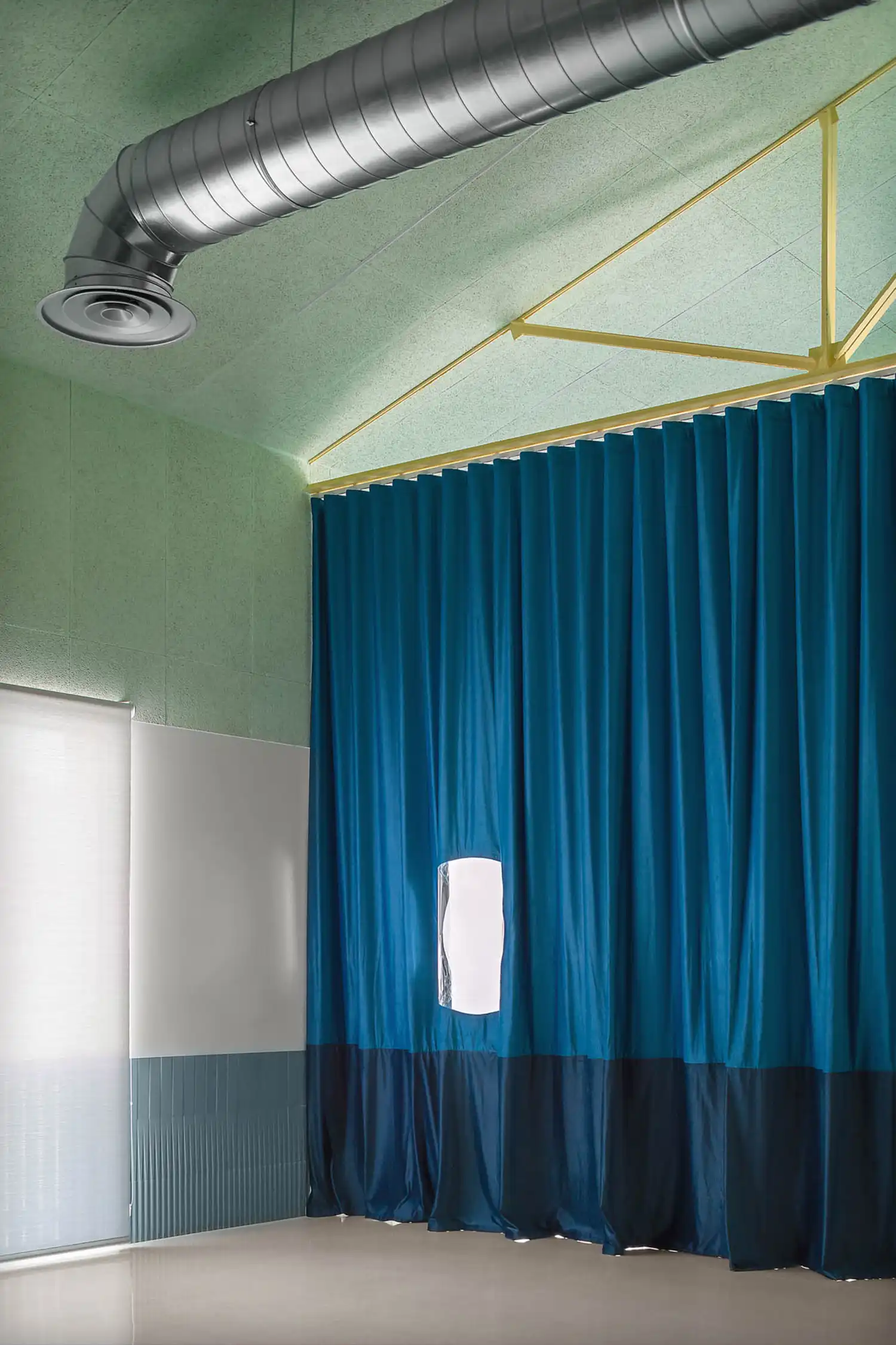
Fluidity and internal flexibility. The interior spatial organization prioritizes autonomy and simultaneity. Recognizing the diverse needs of a small community—from seniors’ associations to youth workshops—the floor plan utilizes movable partitions and strategic access points. This allows the main hall to be subdivided or expanded based on the day’s requirements, ensuring that the center remains active and occupied year-round without different activities interfering with one another.
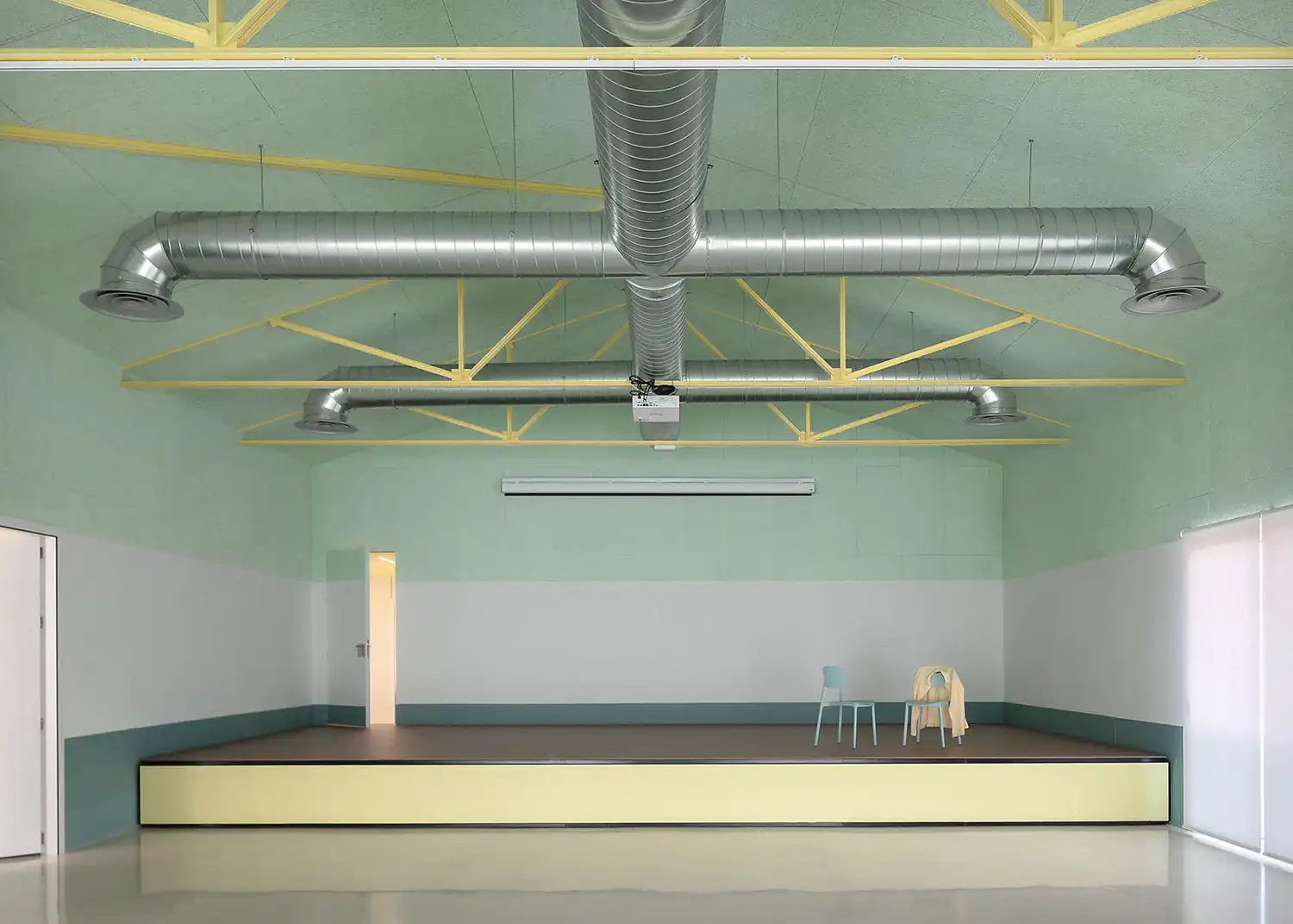
A commitment to accessibility. As a single-story structure, the circulation is inherently inclusive. The redesign removes physical barriers, creating a seamless flow that accommodates everyone from children to the elderly. The seniors’ association remains in its original location but is now harmoniously integrated into the wider layout through improved internal connections. This focus on universal design ensures that the “civic heart” is not just a metaphor, but a functional reality for every member of the Balsapintada population.
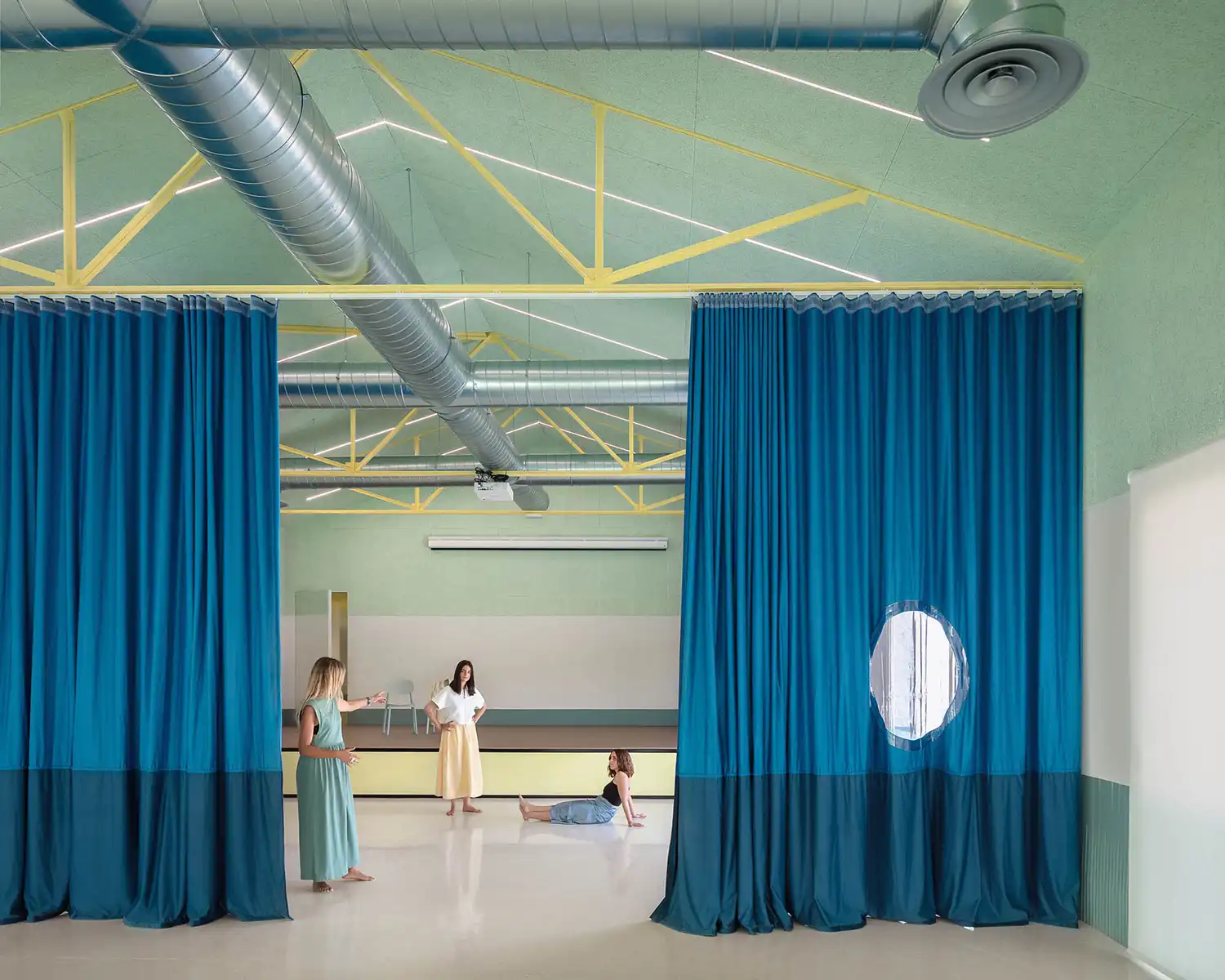
The global shift in cultural infrastructure. This project sits within a broader international movement where public facilities are being reimagined as hybrid landscapes of knowledge and social interaction. Whether at the scale of a Murcian village or within the monumental glass volumes of a contemporary cultural hub, the objective remains the same: to blend program and place into a unified experience. In both contexts, the focus remains on how light, materiality, and openness can redefine the relationship between the citizen and the institution.
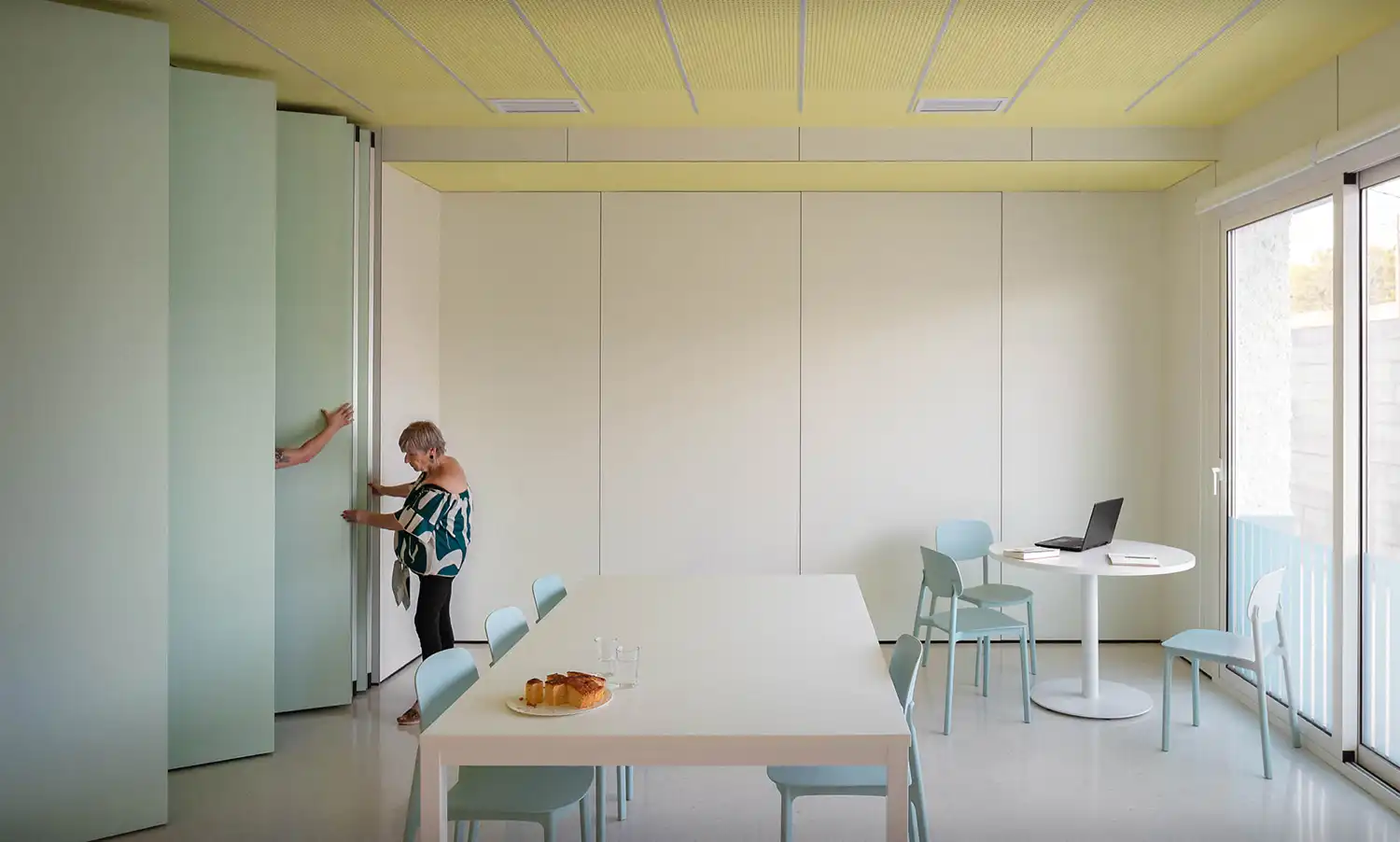
Resilience through preservation. Ultimately, the Balsapintada Cultural Center demonstrates that the most sustainable building is the one that already exists. By upgrading the urban footprint and symbolic value of the original site, COR ARCHITECTURE+DESIGN has provided a blueprint for how smaller municipalities can achieve high-level architectural quality and social impact. The result is a resilient, human-centric environment that honors its past while providing a sophisticated platform for the community’s future.