


French architect Coralie Gruit has recently transformed two stacked units in a 2000s-era building in Bagnolet, France, into a cohesive duplex defined by radical structural transparency and a bold, chromatic organizational logic.
A structural awakening begins with the decisive act of stripping the existing interior back to its skeletal essence. Rather than masking the technical challenges of merging two separate floors, the project focuses on a contemporary apartment renovation that celebrates the intervention. The primary exposed concrete beam supporting the new slab opening remains entirely visible, acting as a raw, honest narrative of the home’s physical evolution. By leaving the structural logic legible, the work avoids typical decorative tropes, opting instead for a gritty clarity.
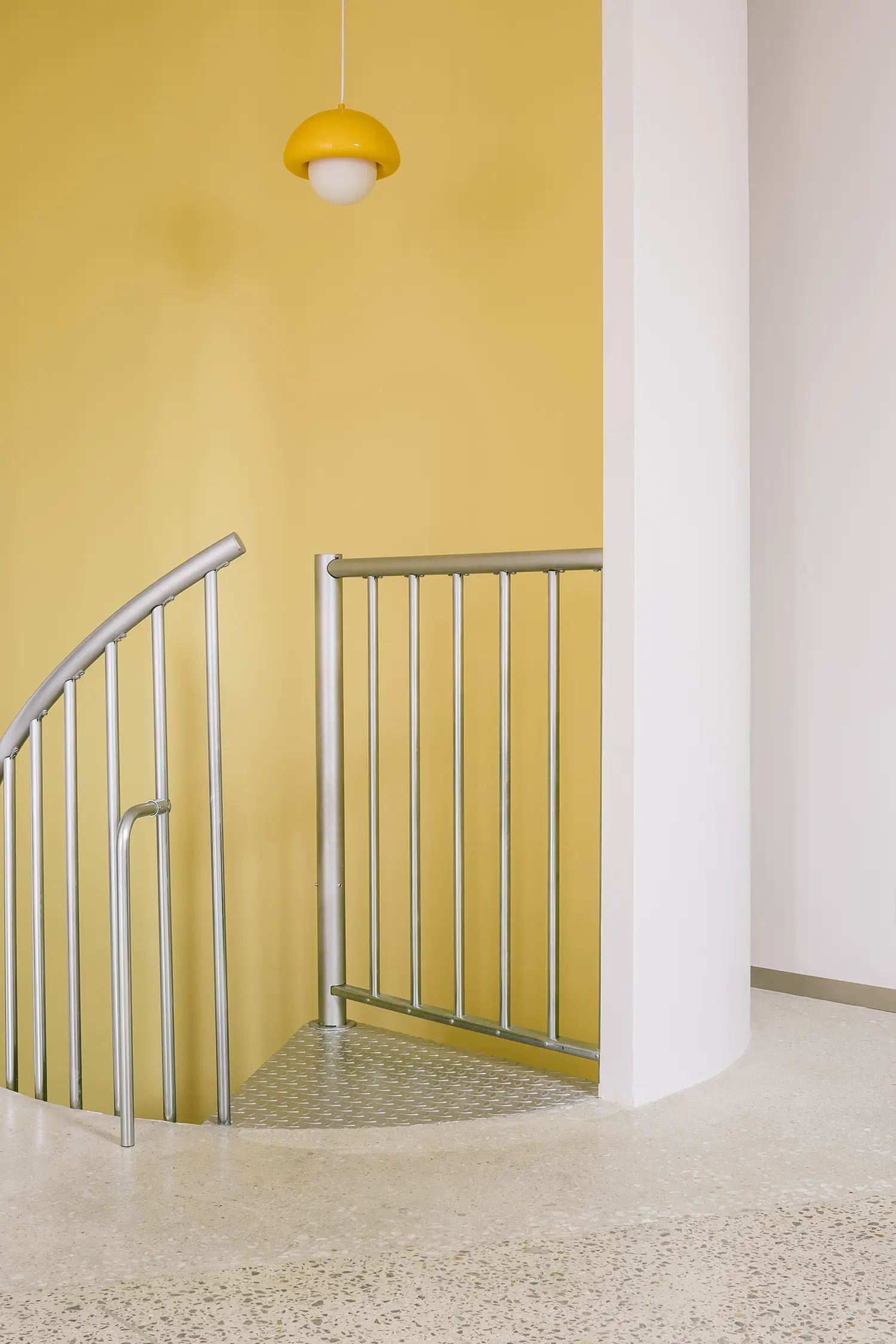
The geometry of the void is dictated by a diagonal path that cuts through the living spaces. This orientation allows the new beam to bear directly onto the load-bearing walls, creating a striking triangular opening in the floor slab. This minimalist interior is not merely a functional necessity for the staircase but a deliberate visual anchor. The dialogue between old and new is articulated through a shift in aggregate: dark concrete marks the original slab, while a white aggregate distinguishes the new structural interventions.
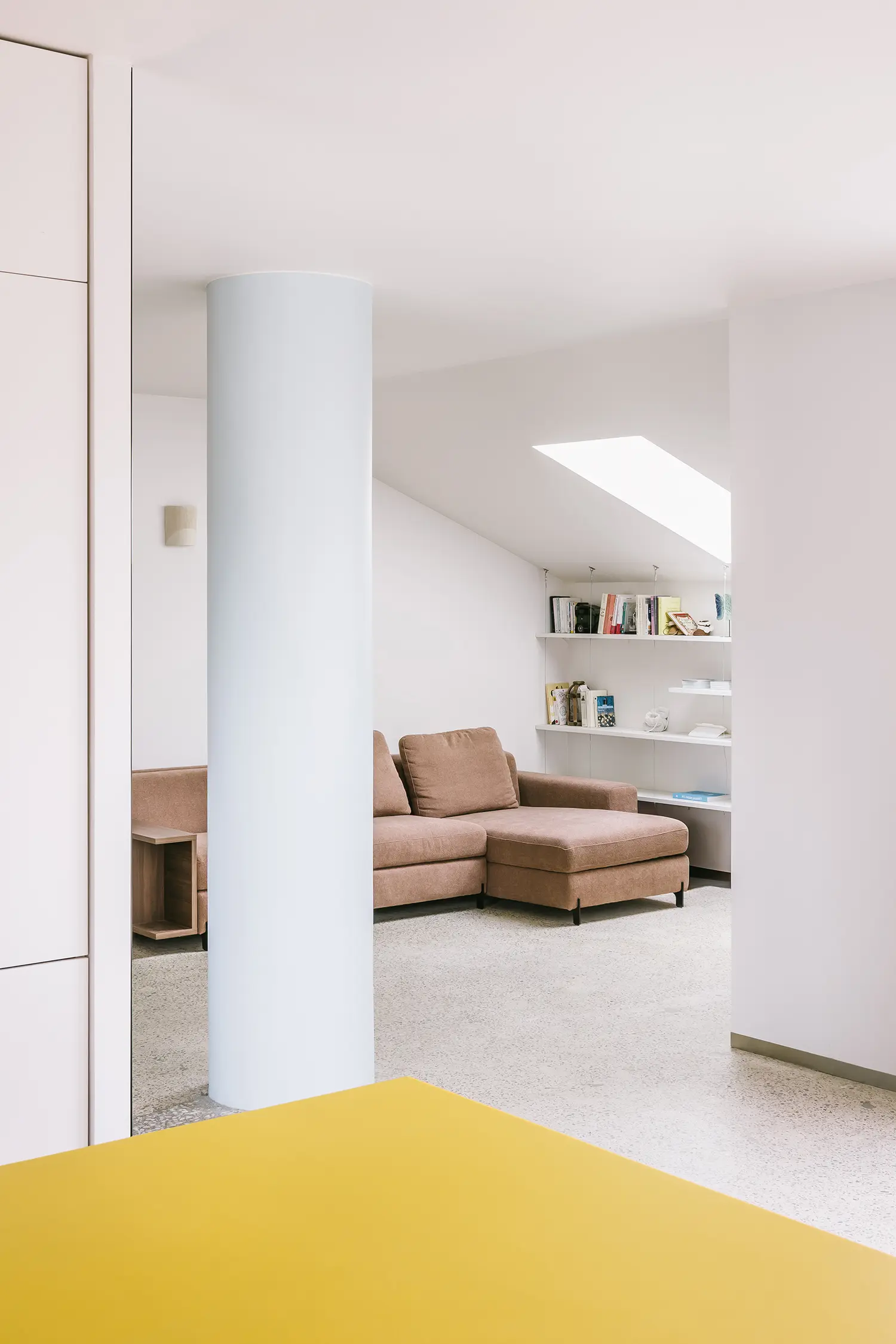
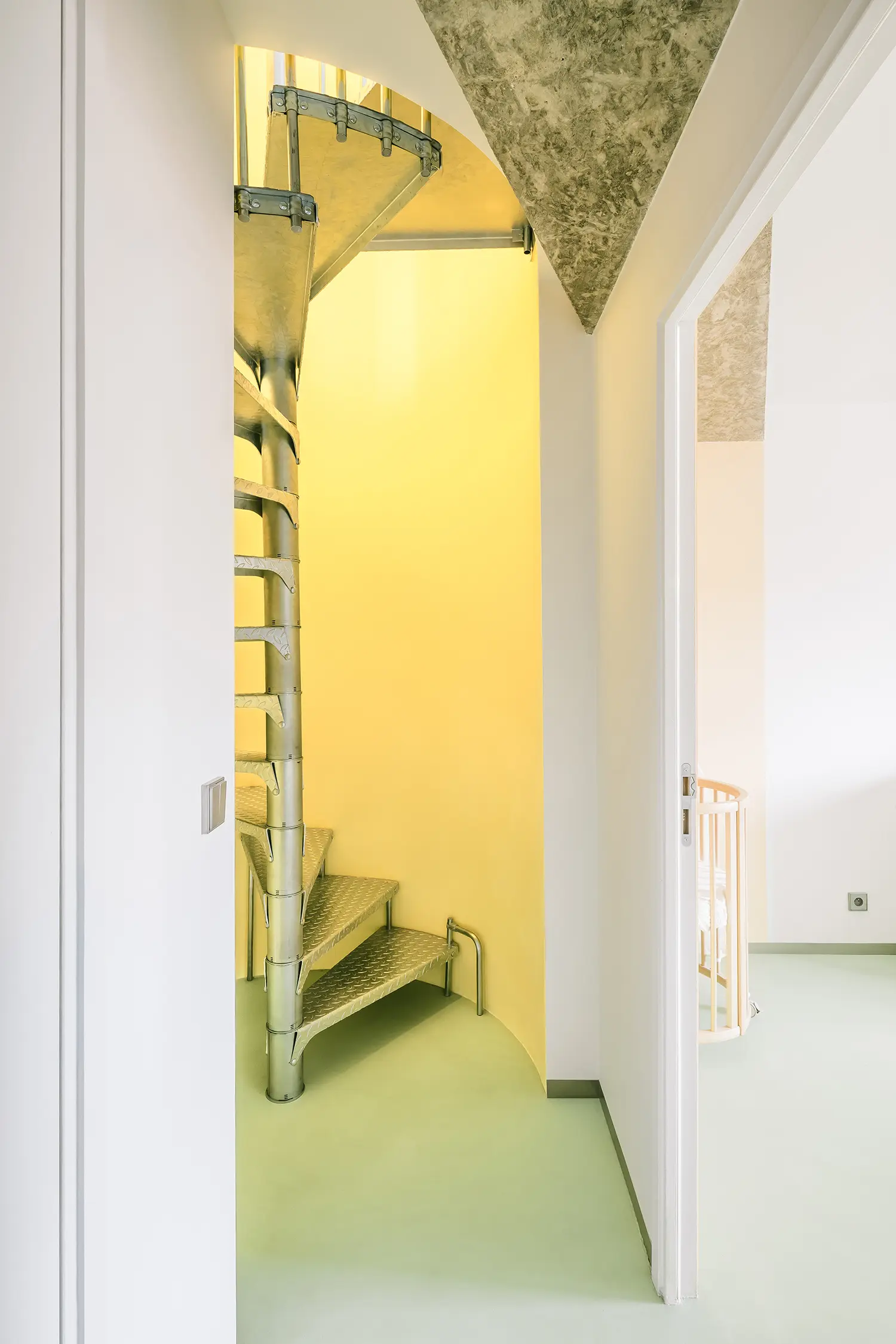
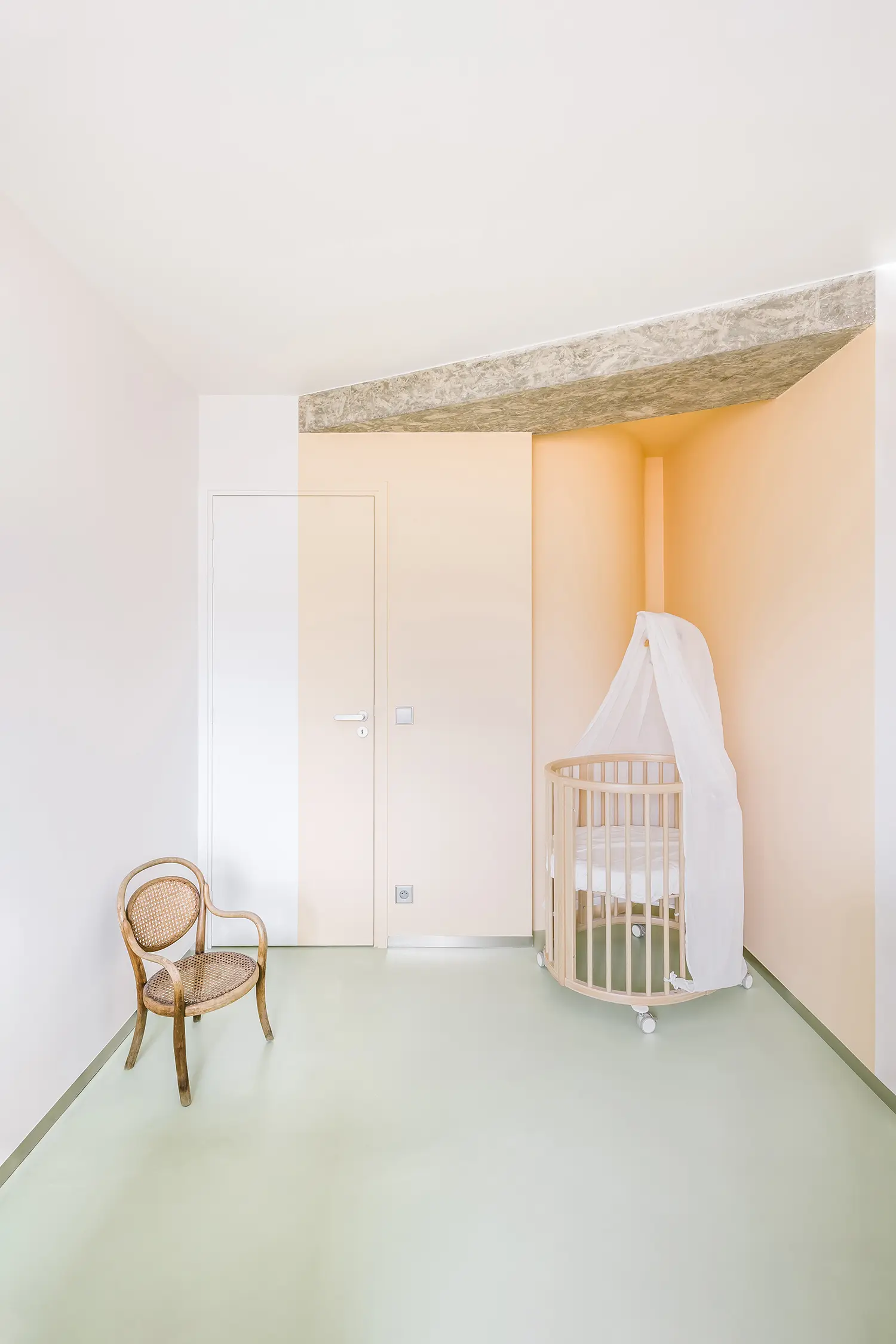
Continuity across levels is maintained by the persistent presence of the beam on the lower floor. It traverses the bedroom, corridor, and bathroom without interruption, defining the upper limits of these private quarters. By refusing to conceal the skeleton behind plasterboard, the industrial aesthetic dictates the atmosphere. This transparency creates a sense of scale and permanence, reminding the inhabitant of the building’s engineering even in the most intimate corners of the modern duplex.
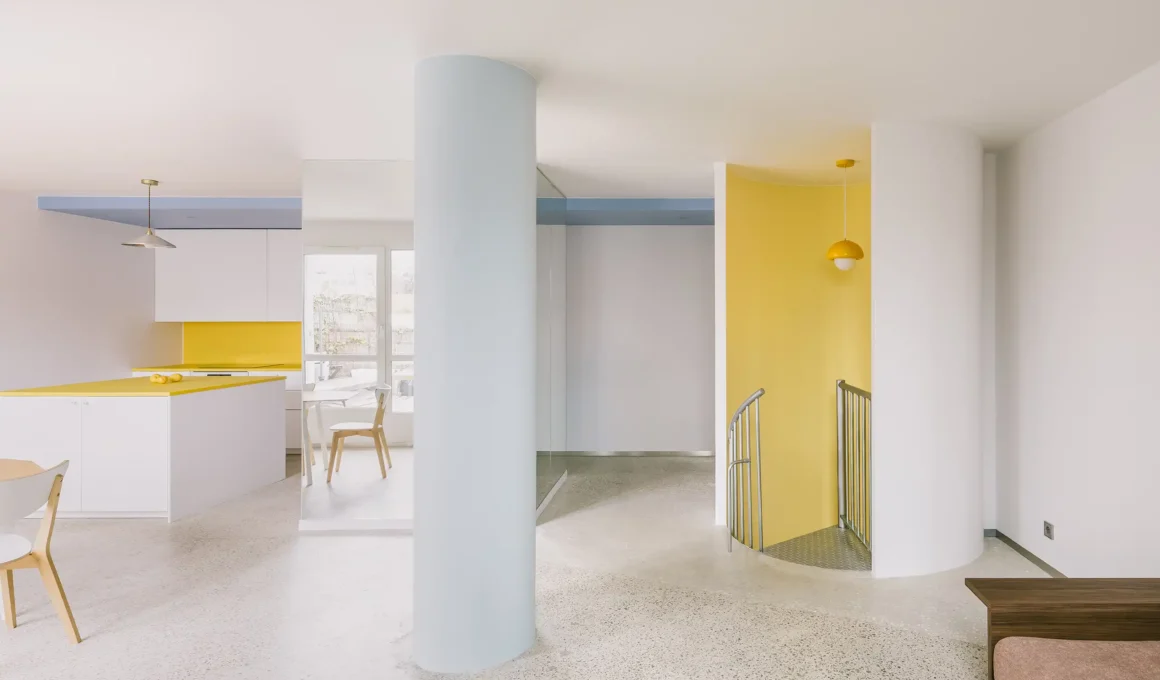
Color as a spatial producer replaces traditional partitions, serving as the primary tool for defining thresholds and movement. In this project, hue is never merely decorative; it is a functional system. A vibrant yellow volume encapsulates the vertical circulation, turning the staircase into a glowing spatial core. This chromatic choice establishes the upper living area as the point of departure, signaling a transition as one descends toward the lower-level bedrooms.
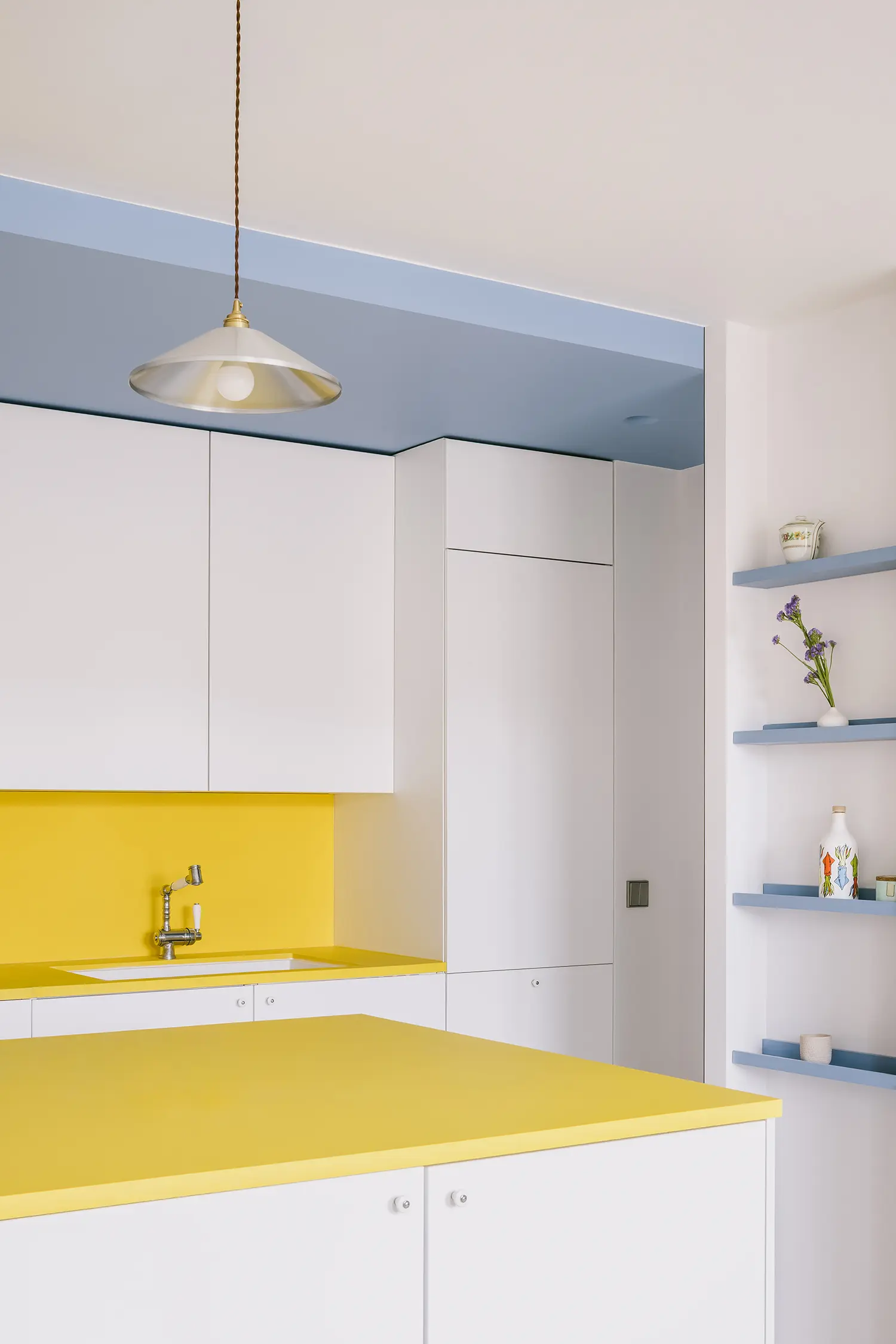
Materiality and domestic ritual converge in the kitchen, where the choice of surfaces challenges conventional luxury. The cabinetry and counters are crafted from polyethylene, a durable plastic typically reserved for professional-grade cutting boards. The specific yellow tone—traditionally used for poultry in food preparation—recontextualizes a utilitarian material into a permanent feature of interior architecture. The tactile nature of the polyethylene transforms the act of cooking into a focused, sensory experience.
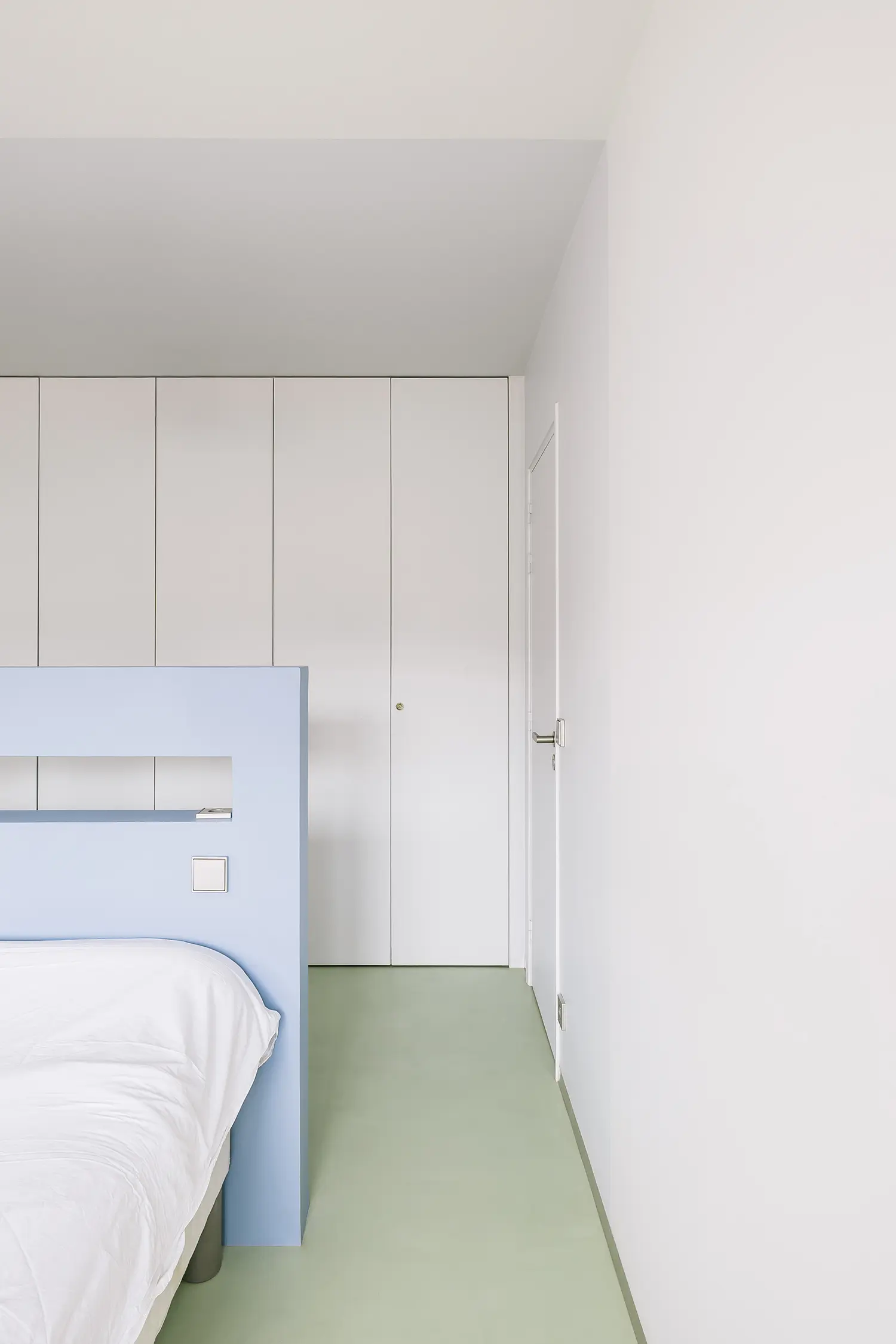
A chromatic horizon defines the secondary zones of the upper floor. In the background, a deep blue horizontal ceiling organizes the entrance and sanitary spaces into a single, cohesive block. This blue plane acts as a visual stabilizer against the raw concrete, grouping everyday uses into an intuitive sequence. On the level below, a soft peach-colored volume exists as a precise spatial condition, tucked under the heavy concrete beam to create a warm, sheltered environment for rest.
The Parisian influence is evident in Gruit’s meticulous attention to detail and spatial clarity. Having honed her expertise at firms across Paris and New York, her approach to this Bagnolet duplex reflects a deep understanding of urban rehabilitation. The project successfully moves away from the idea of “decoration” and instead focuses on how light, structure, and color can produce a living environment that feels both radical and deeply considered.
The evolving landscape of French residential design continues to favor these types of “archaeological” renovations, where the history of a site is balanced with contemporary needs. Projects like the Sarette Apartment in Paris demonstrate a similar commitment to maximizing compact urban footprints through clever geometry. Meanwhile, the bold experimentation with color and form seen in the Nautilus Apartment in Marseille and the textural richness of the Burgundy Winemaker House or the Riverside Living extension suggest a broader movement toward high-concept, personalized living. These interventions prove that the most successful homes are those that reveal the logic of their own creation.