


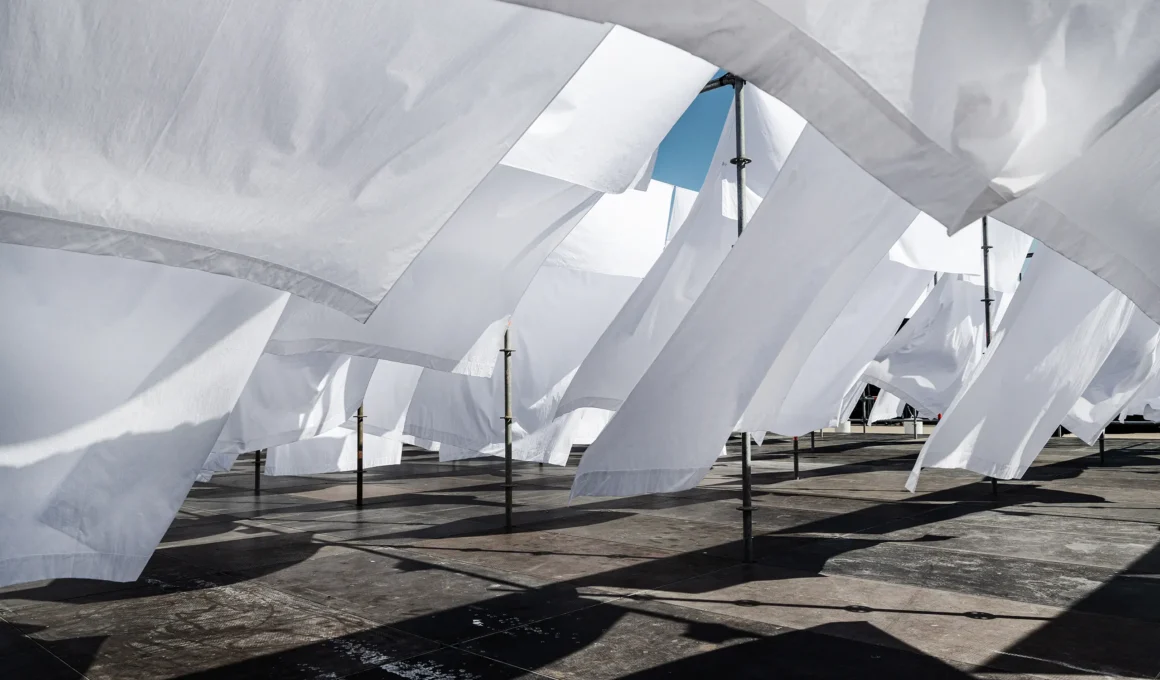
Luzinterruptus has transformed a windswept plaza in Madrid into a kinetic, sensory installation titled Hanging Landscapes, utilizing nearly one hundred backlit white sheets to evoke the collective memory of the city’s historic washerwomen during the LuzMadrid 2026 festival.
A choreography of wind and light defines the intervention, which moves away from static monuments to embrace the ephemeral. By suspending rows of fabric across a rigid industrial frame, the Madrid-based collective has captured the essence of a domestic ritual that was once a staple of the local urban fabric. The installation relies on the natural elements of the site, allowing the persistent breeze to dictate the rhythm of the heavy white fabric, creating a constantly shifting visual landscape that blurs the line between public art and shared history.
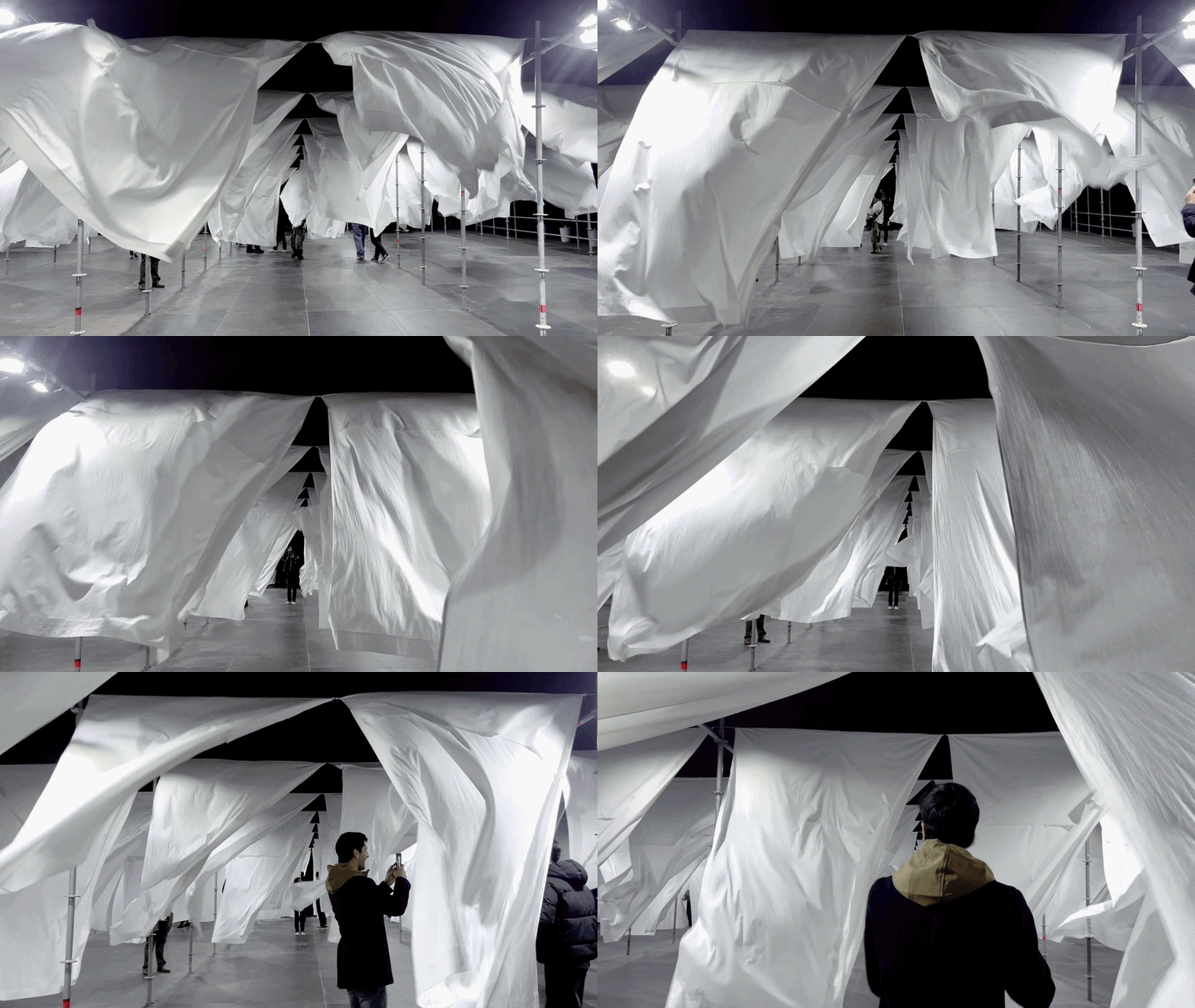
The conceptual vision draws directly from the “washerwomen of the Manzanares,” women who, until well into the twentieth century, performed the grueling labor of hand-washing the city’s laundry. Rather than a literal monument to their toil, the piece recreates the sensory environment of their work: the snapping sound of wet linen in the gale, the blinding reflection of the sun on white surfaces, and the unmistakable scent of clean laundry. It is an exercise in site-specific storytelling that honors invisible labor through the medium of atmosphere.
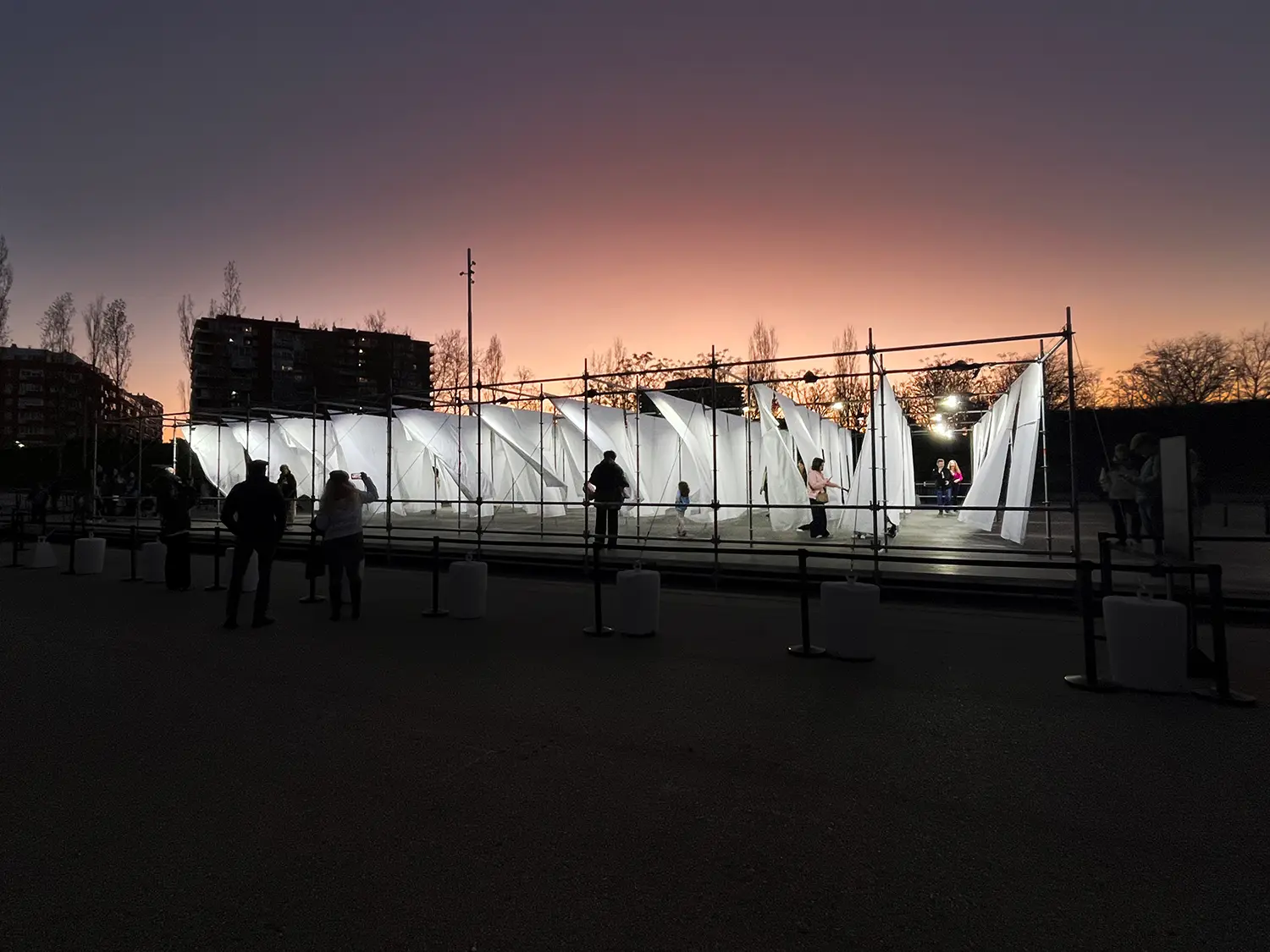
Technical simplicity serves as the backbone of the work, featuring a modular Layher scaffolding system that provides a stark, metallic contrast to the organic movement of the sheets. This low-tech approach ensures that the focus remains on the interplay between the materials and the environment. By backlighting the fabric, the collective transformed the plaza into a glowing, nocturnal light installation, where the translucency of the textile creates a play of shadows and depth that invites exploration.
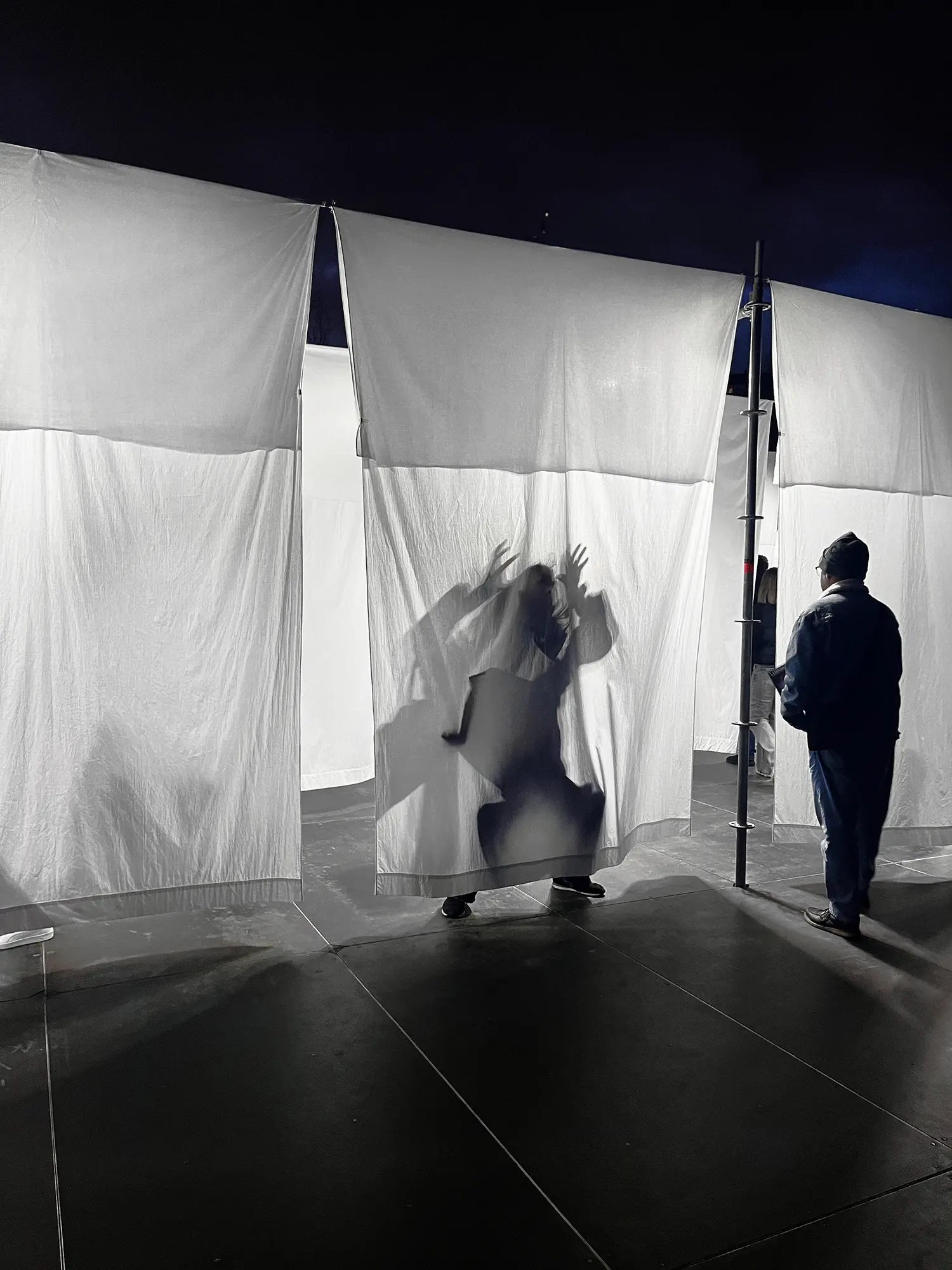
The sensory experience was further heightened by the intentional infusion of fragrance, triggering a nostalgic connection to childhood and the domestic sphere. As visitors moved through the rows, they were enveloped not just in fabric, but in a curated memory of the home. This multisensory layering is a hallmark of the studio’s evocative style, as previously seen in their On Blank Pages intervention in Cáceres, which similarly turned a public space into an interactive narrative.
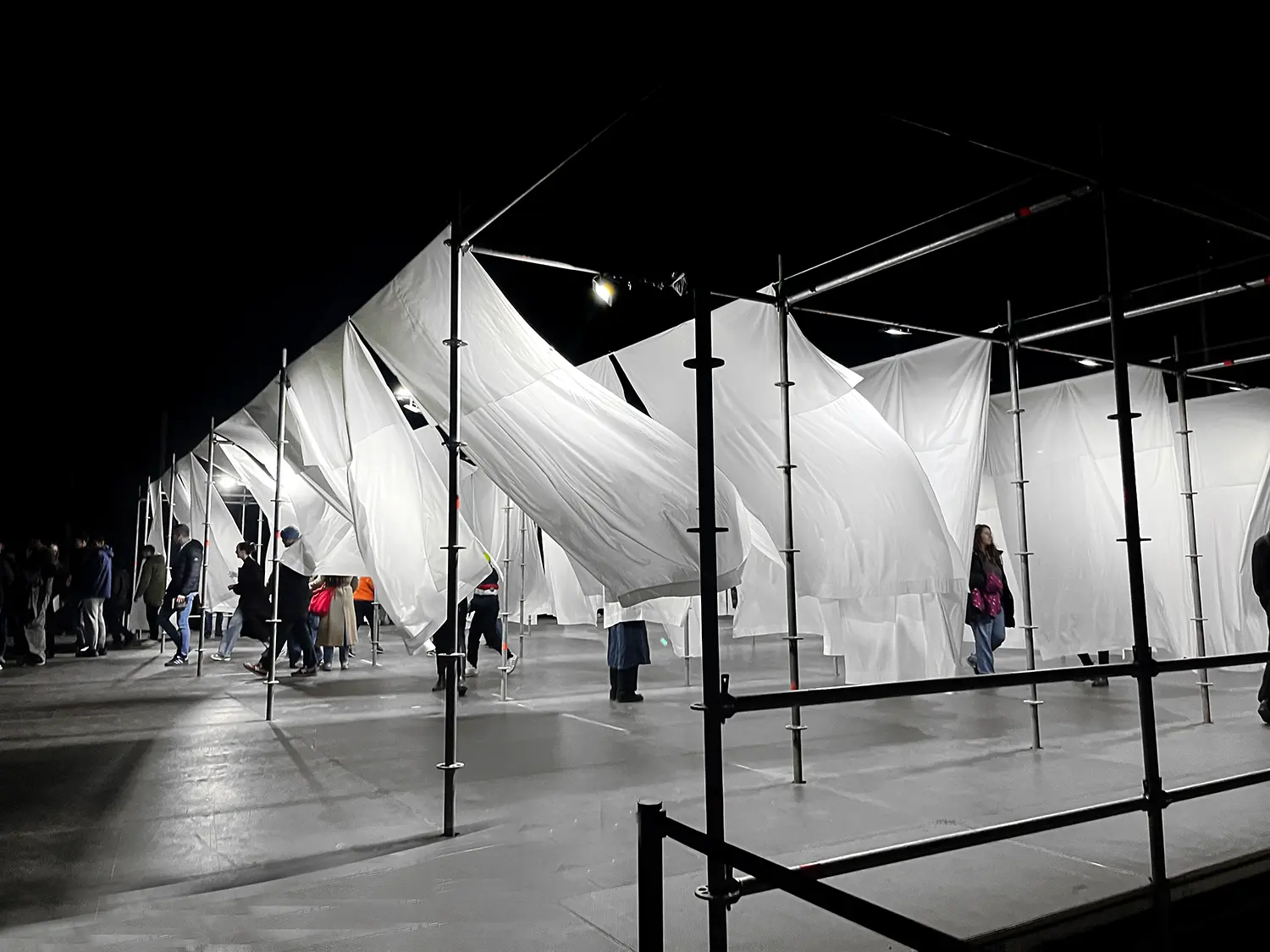
Spontaneous interaction became the defining social element of the three-day festival. While the installation carried a heavy historical weight, it was navigated by the public as a joyful, immersive labyrinth. Children, in particular, reclaimed the space as a playground, running between the billowing sheets and stripping away the traditional boundaries of high art. This uninhibited engagement saw over 15,000 people participate in the urban intervention, effectively turning a somber historical tribute into a celebration of communal life.
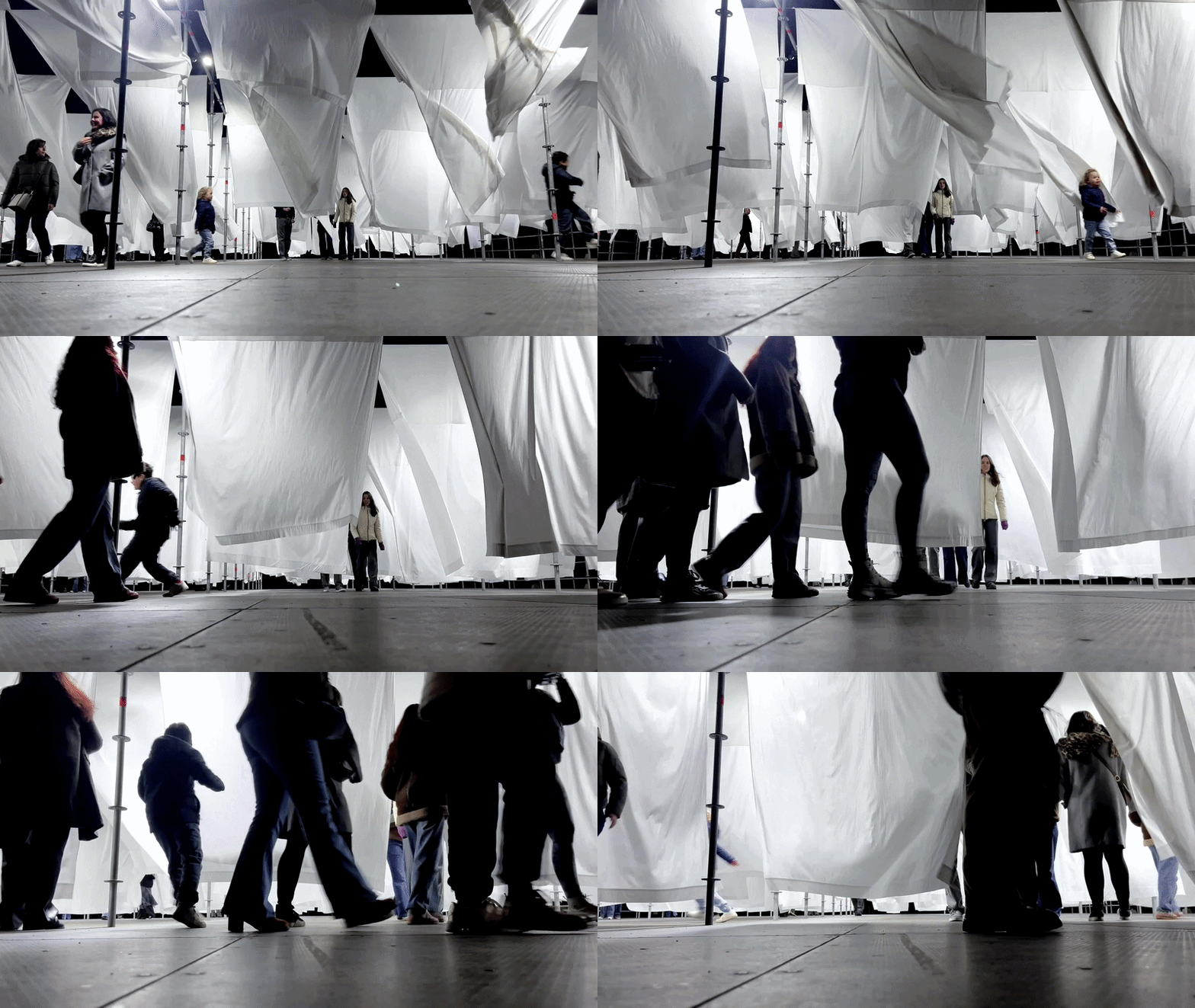
Contextual impact is achieved by returning a lost image to the river’s edge. For decades, the sight of laundry drying in the sun was an integral part of Madrid’s riverside identity, a visual marker of the city’s pulse that eventually vanished with modernization. Hanging Landscapes successfully reclaims this “landscape of the everyday,” forcing a dialogue between the city’s functional past and its contemporary cultural identity through temporary installation art.
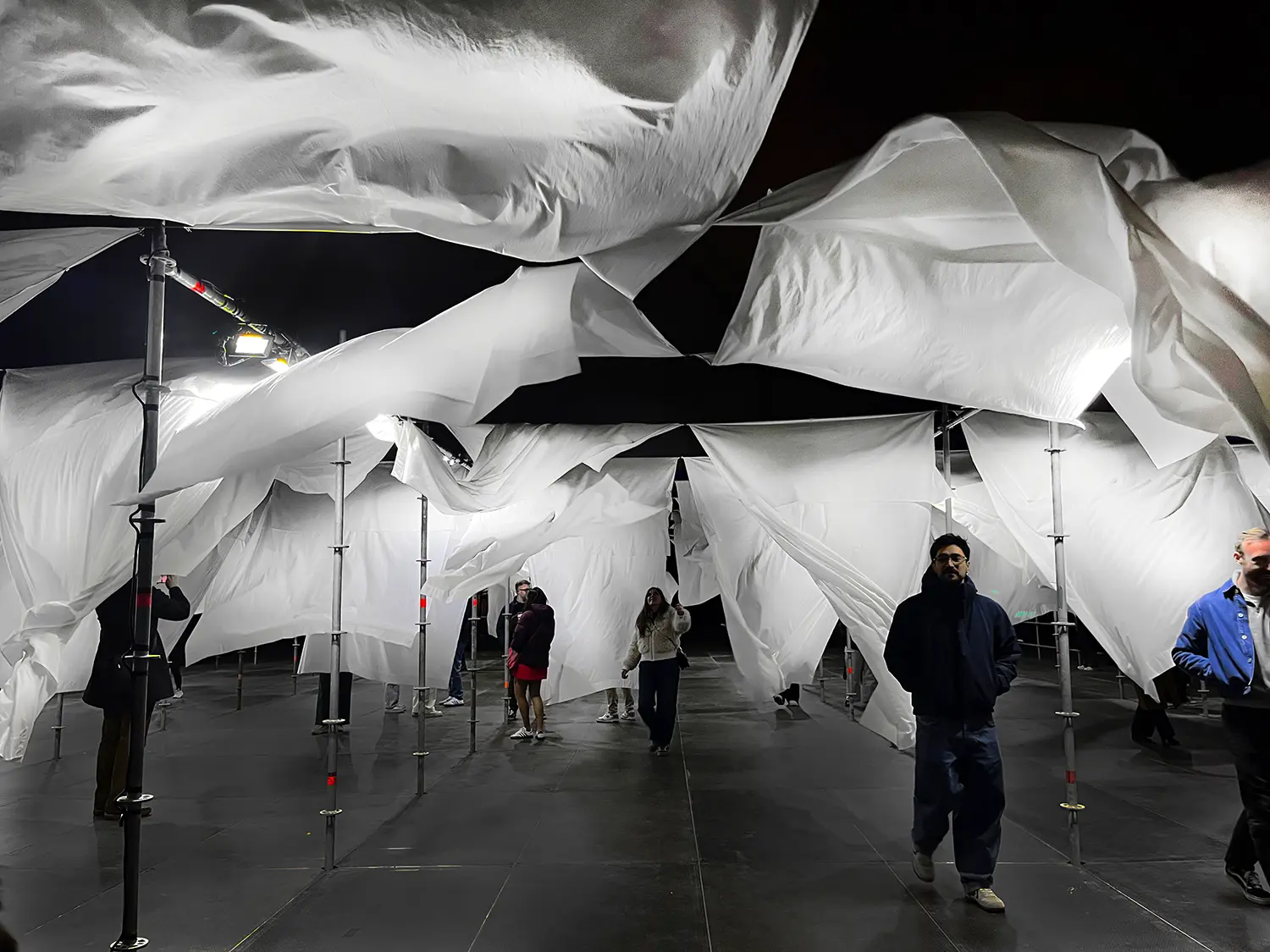
Materiality and movement work in tandem to challenge the permanence often associated with commemorative works. By choosing fabric—a material that is vulnerable, tactile, and responsive—the collective highlights the fragility of memory itself. The way the light passes through the weave of the sheets creates a soft, ethereal glow that softens the surrounding urban environment, providing a moment of pause within the bustling festival schedule.
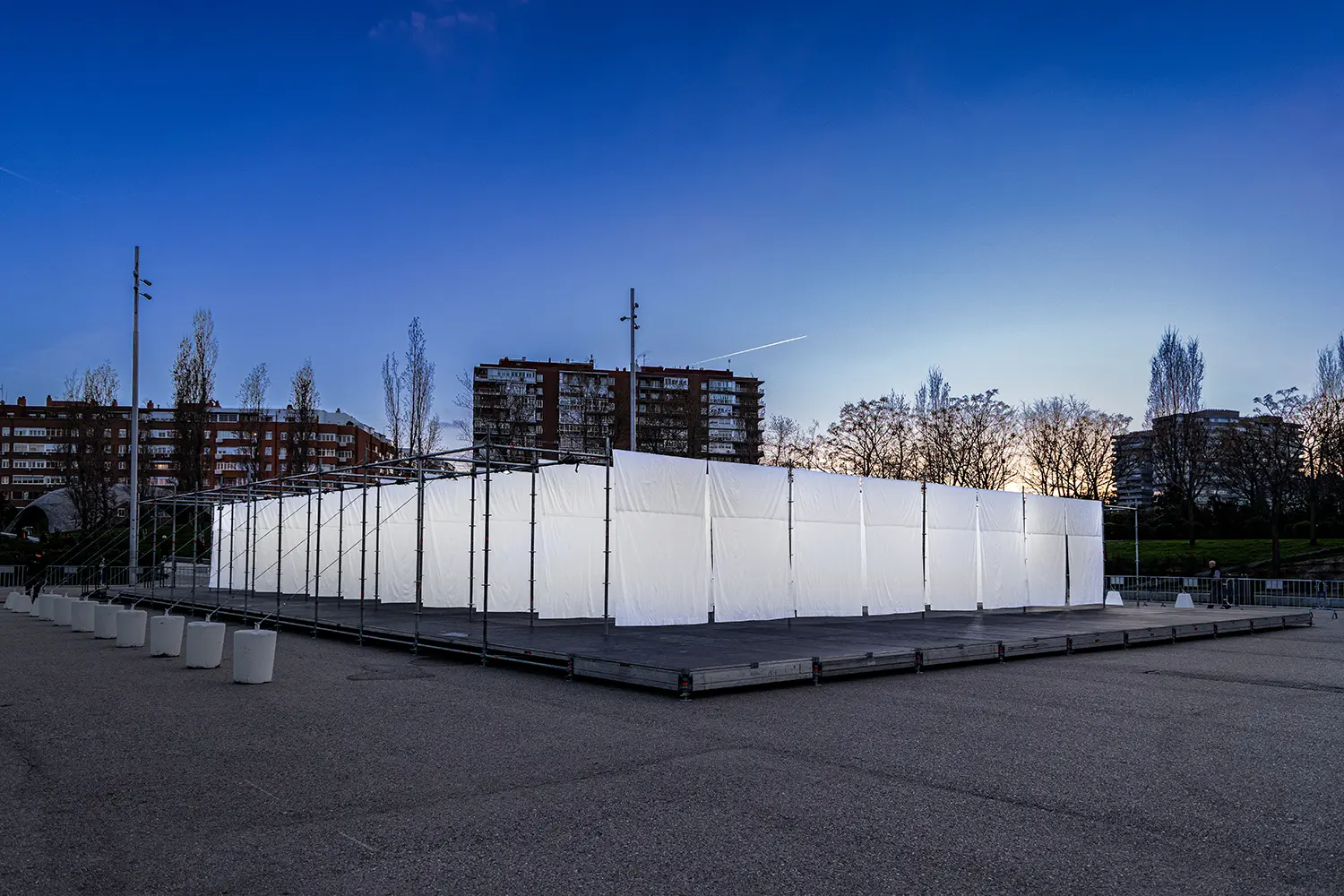
The narrative arc of the installation concludes not with a finished object, but with a lingering feeling of presence. By utilizing the wind as a primary collaborator, the studio ensures that no two moments within the space are identical. Hanging Landscapes stands as a testament to the power of simple elements to evoke complex emotions, proving that the most profound stories are often told through the most humble materials.