



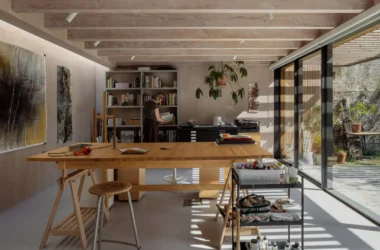
Studio 163 Architects has transformed a dark and uninviting ground floor flat in Kentish Town, London, into a bright, modern two-bedroom home, seamlessly connecting indoor and outdoor living. Faced with numerous challenges, including boundary issues, overlooking concerns, and the constraints of a Conservation Area, the architects ingeniously maximized space and natural light, creating a haven for the client, an aspiring landscape designer.

The original layout presented a significant design flaw, with the bedroom and bathroom at the rear, forcing occupants to traverse the bedroom to access the garden. Studio 163’s solution was a complete reconfiguration, flipping the layout and adding a bedroom. The living space now occupies the rear of the flat, establishing a strong visual and physical connection with the garden, amplified by a large pivot door. This dramatic shift has transformed the flat from a cramped and awkward space into an entertainer’s dream and a tranquil retreat.

Central to the design is the creation of a courtyard, strategically positioned to draw natural light deep into the plan. This clever intervention ensures that all rooms enjoy a view of the outdoors, mitigating the challenges of overshadowing and creating a sense of openness. The courtyard also serves to separate the microcement wetroom and WC, housed in two distinct “pods” flanking the main circulation path.

Sustainability played a pivotal role for both the client and the architects. Studio 163 focused on enhancing the building’s breathability by incorporating naturally porous materials, such as clay plaster on the exterior. This selection not only infuses the home with a warm, tactile essence but also harmonizes beautifully with the traditional London stock brick, creating a seamless fusion of the old and the new.

To further distinguish the new extension, the architects employed a contrasting color for the piers and the band above the opus. This thoughtful design choice clearly delineates the boundary between the ground floor and the flat above, adding a modern touch while respecting the building’s heritage.

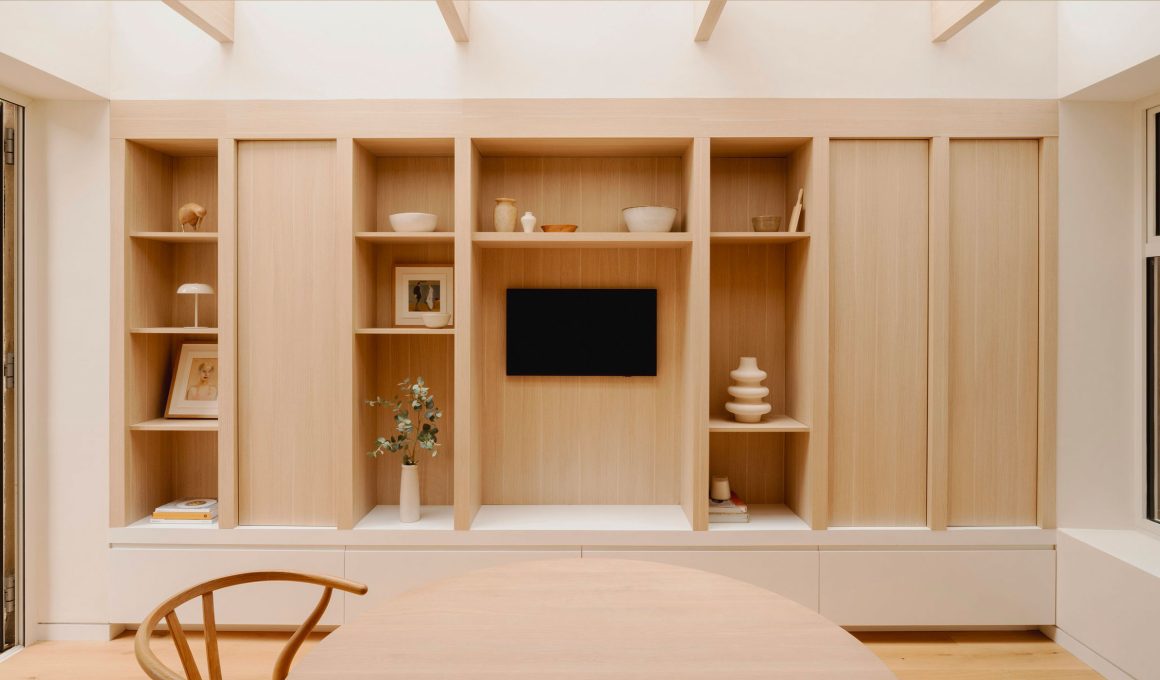
Recognizing the perennial challenge of storage in London flats, bespoke joinery plays a crucial role in the design. These crafted pieces provide ample shelf space while discreetly concealing utilities, including the boiler. The prevalent use of oak throughout the interior adds warmth and further strengthens the connection to the garden.

The landscape design, also conceived by Studio 163, complements the architectural vision. The garden is divided into distinct zones, with carefully selected plantings framing views and creating a sense of calm. The use of gravel, reminiscent of zen gardens, and the repetition of clay plaster on the planters, echoes the materiality of the house, blurring the lines between inside and out.

Clay House exemplifies the impact of intentional design. Studio 163 Architects has skillfully addressed a variety of challenges to craft a vibrant, contemporary, and eco-friendly residence that embodies the client’s character and way of life. This project showcases a profound grasp of context, materials, and the relationship between architecture and its surroundings, leading to an extraordinary transformation.