



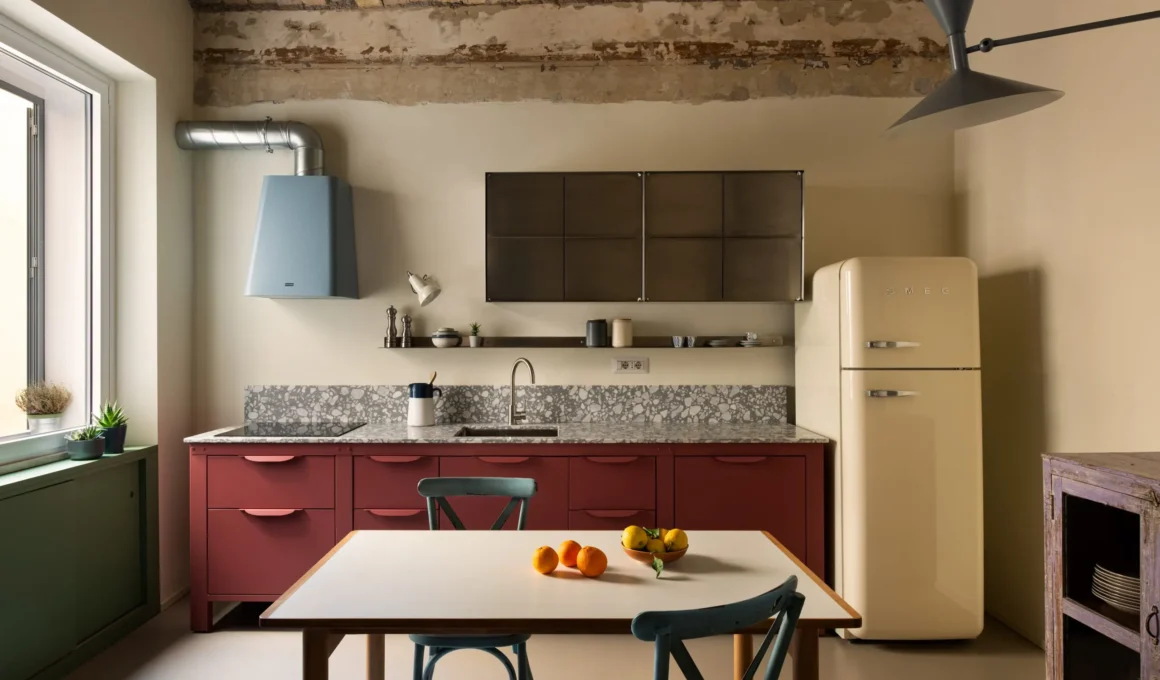
Along the quiet stretch of Via dei Bertani, where the traditional balconies of Trastevere still overlook a neighborhood largely shielded from the city’s frantic tourism, 02A Studio has reimagined a 60-square-meter apartment as a fluid landscape of custom green carpentry and recovered historical textures.
A rhythmic interior landscape defines the approach to this compact residence. Rather than adhering to the rigid boundaries of traditional Roman masonry, the architects chose to treat the internal volume as a singular, flowing entity. By replacing static walls with a system of integrated furniture, the studio successfully accommodated a family of four without sacrificing the perception of openness or the entry of natural light. The result is a home that breathes, using every centimeter of its footprint to guide movement through a sequence of interconnected zones.
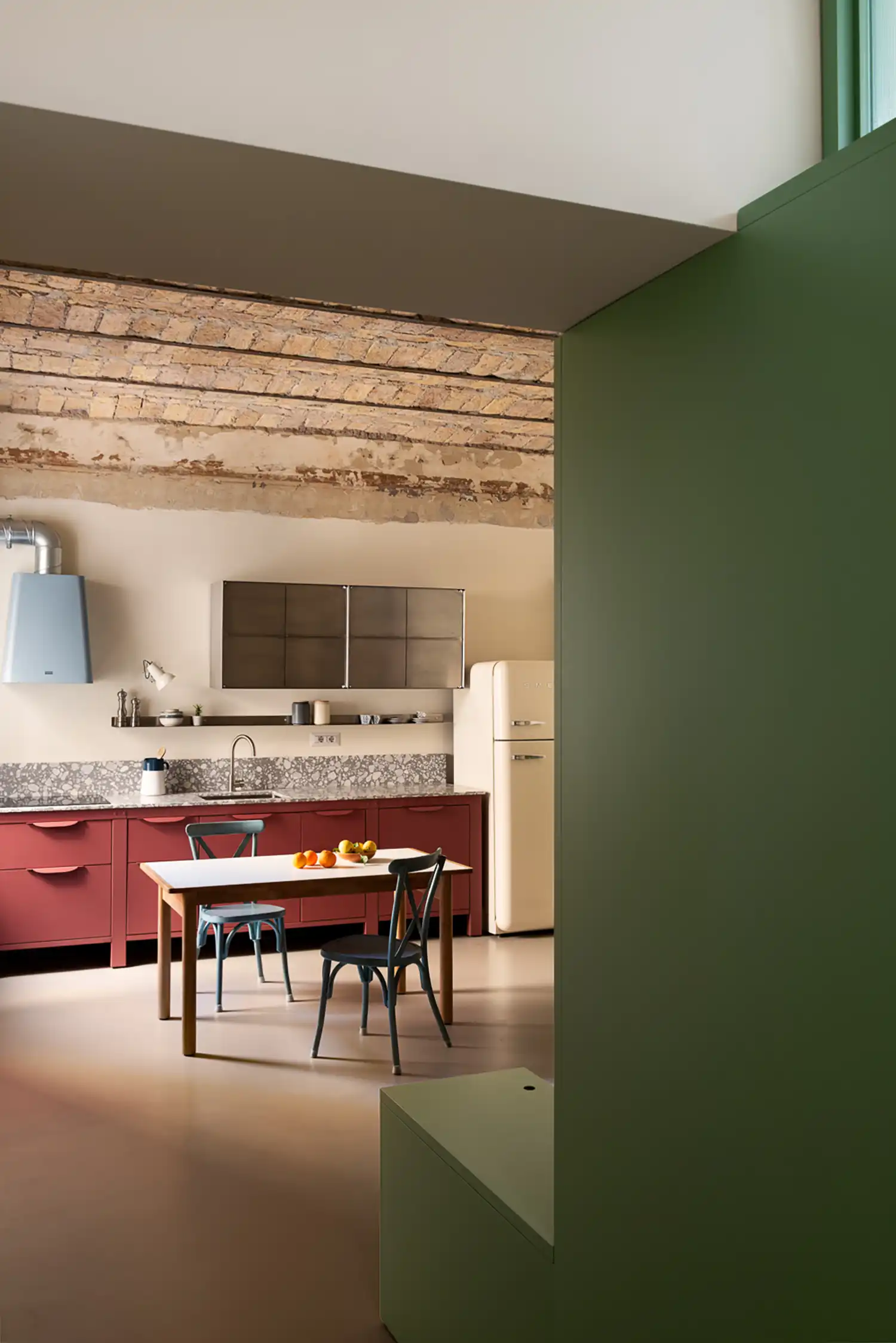
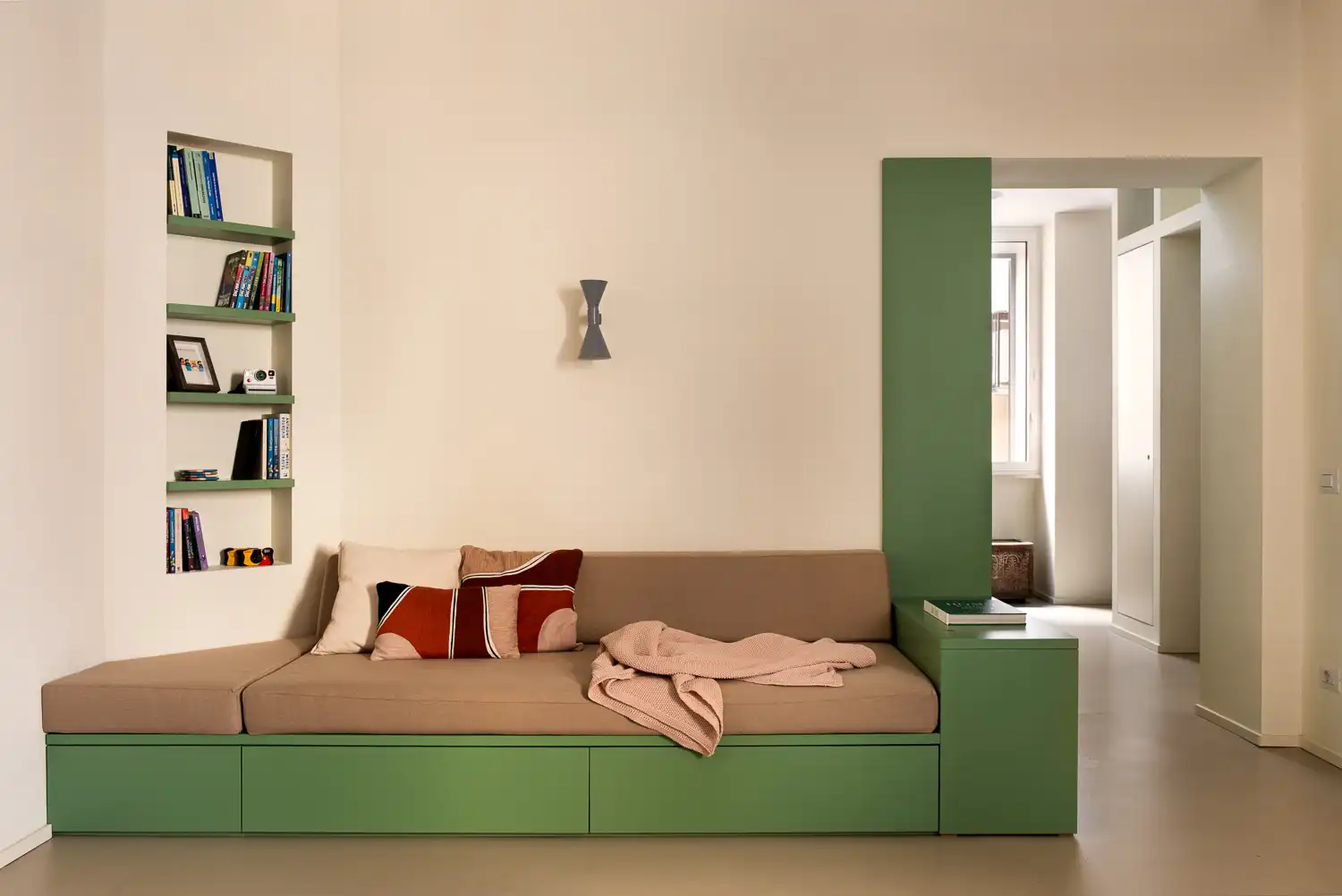
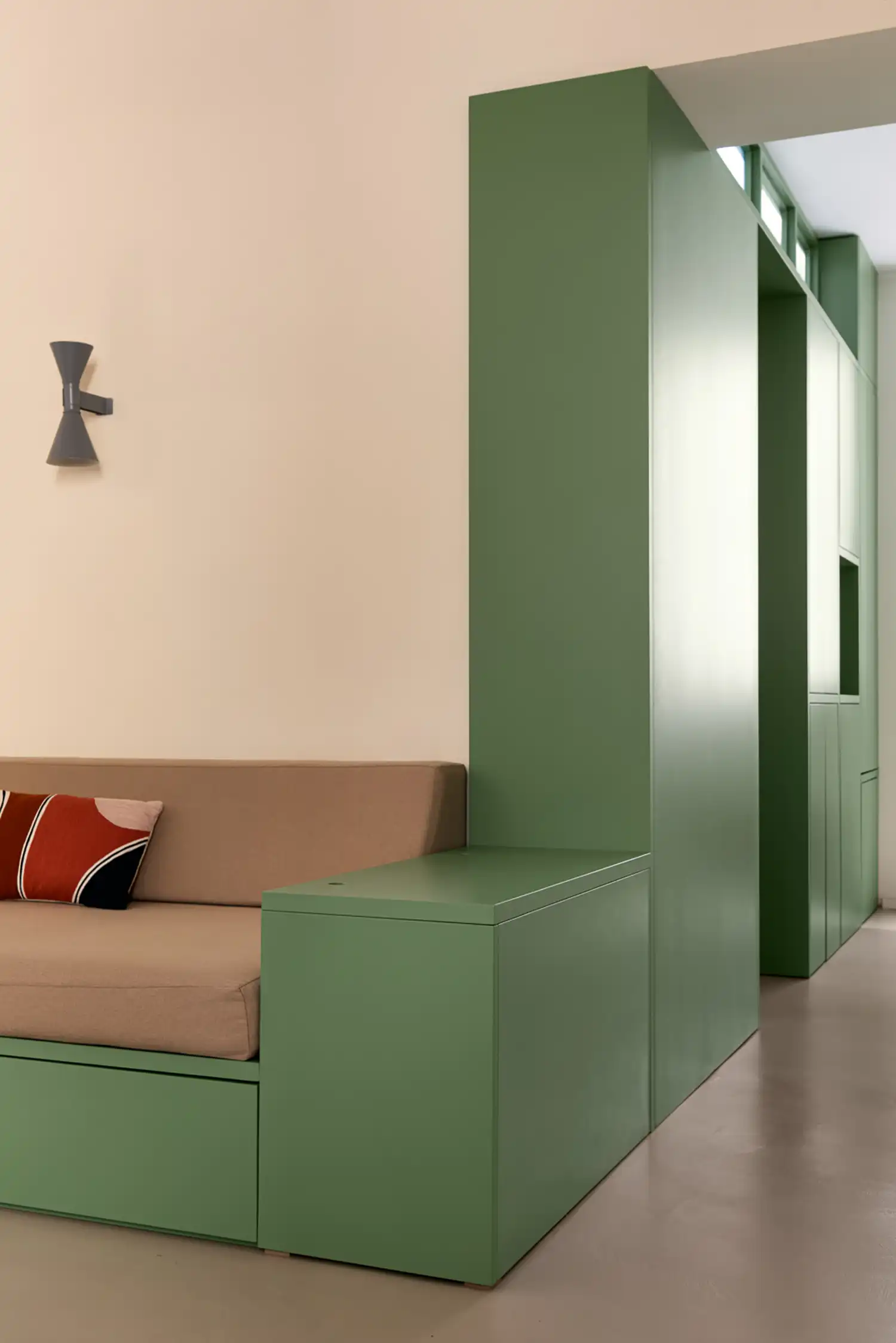
The green ribbon acts as the primary protagonist of the renovation. This sculptural element, finished in a deep, botanical hue, snakes across a neutral resin floor to serve multiple masters: it is simultaneously a storage unit, a doorway, and a visual guide. By concealing entrances to private zones and internal openings within its wooden skin, the device eliminates visual clutter. It creates a sense of spatial coherence that feels intuitive, allowing the small floor plan to maintain a high level of functional efficiency while remaining aesthetically light.
Material thresholds and transparency play a vital role in mediating the transition from the vibrant streetscape to the private realm. At the entrance, a glass-block partition serves as a translucent filter, a choice that nods to mid-century industrial aesthetics while functioning as a permeable boundary. This layered system captures light from the facade and pulls it deep into the plan, establishing a soft dialogue between the public landing and the home’s core. It ensures the living area feels connected to the world outside without compromising the domestic intimacy required for family life.
Uncovering the palimpsest of the building’s history was a fundamental step in the creative process. During the demolition phase, 02A Studio opted to strip back layers of previous interventions to reveal the apartment’s original “bones.” Traces of historic wall finishes and the vaulted ceilings were meticulously restored and left exposed. These textured, time-worn elements provide a rugged counterpoint to the sharp, clean lines of the new bespoke carpentry, creating a home where different eras exist in a calibrated, silent equilibrium.
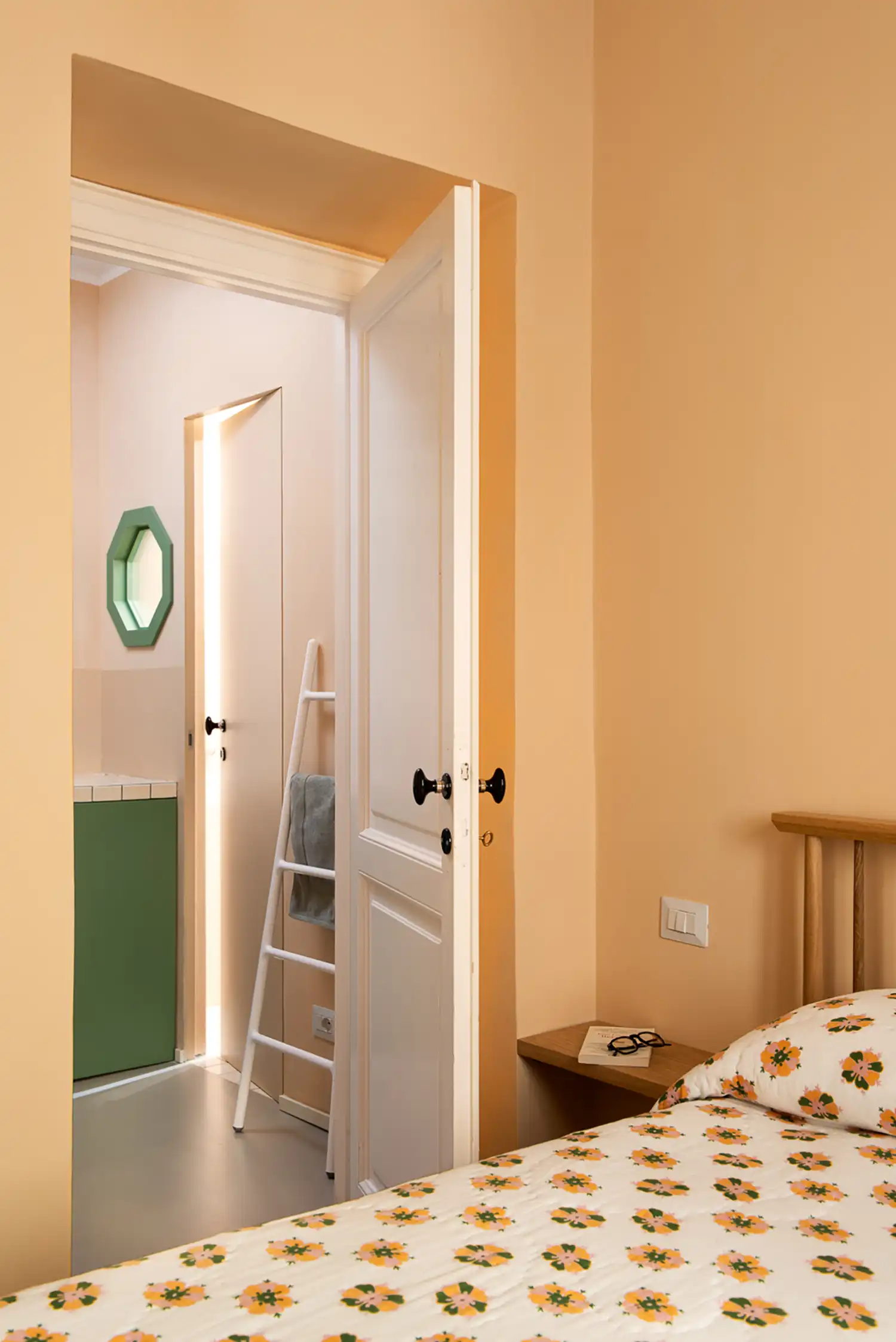
Sensory minimalism dictates the choice of finishes throughout the residence. The cool, continuous surface of the resin floor provides a silent stage for the interplay of light and shadow. There is a tactile honesty in the materials—the warmth of wood, the coolness of glass, and the rough grain of historic brickwork. This restraint ensures that the focus remains on the quality of space and the movement of the inhabitants, rather than on decorative excess. The home feels significantly larger than its physical dimensions suggest, thanks to this focus on essential materiality.
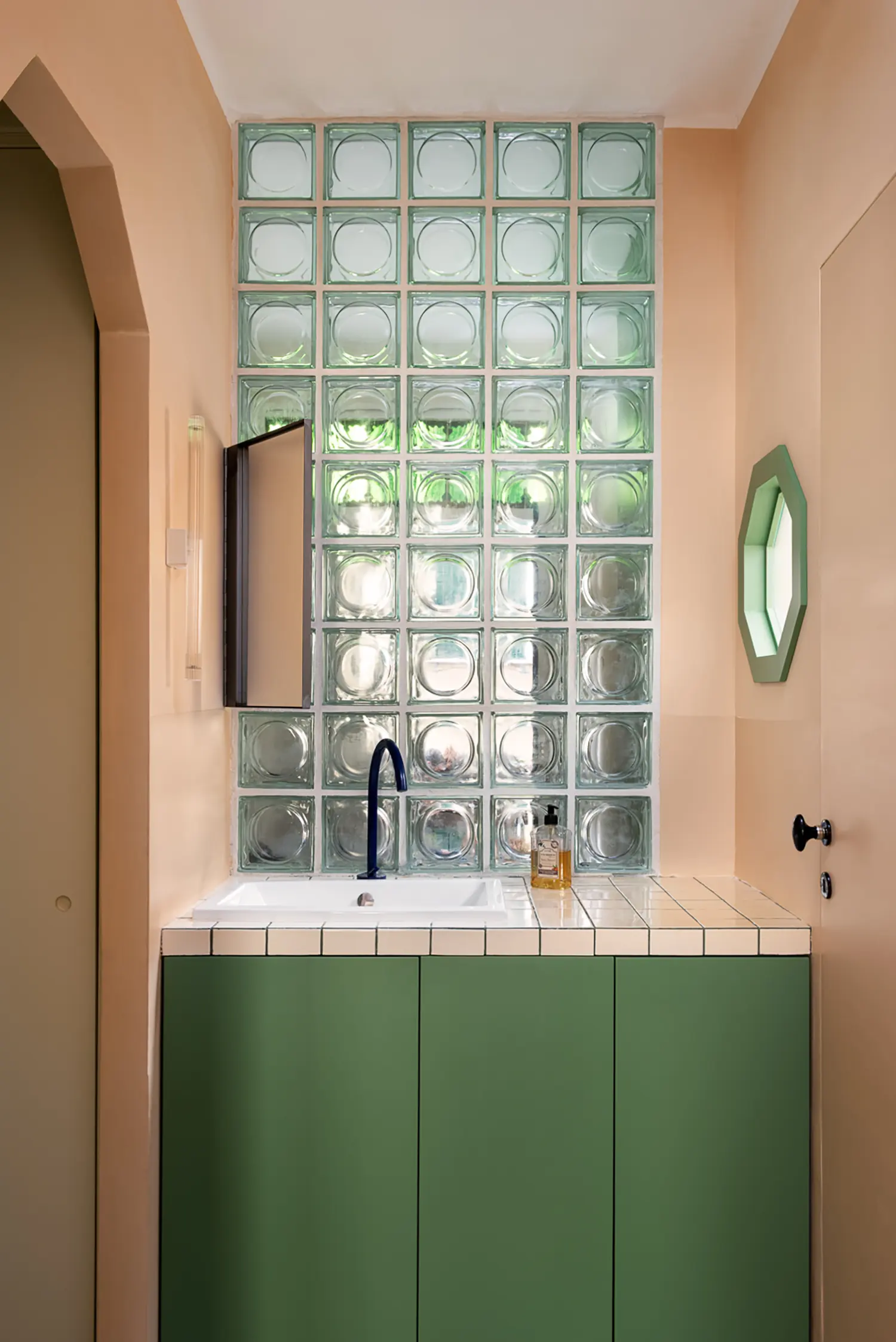
Contextual integration remains at the heart of the project’s philosophy. Despite the density of its location near Piazza San Cosimato, the apartment manages to filter the neighborhood’s energy into a refined domestic experience. The design does not shut out the city; it translates it. By aligning the internal circulation with the light-bearing windows and balconies, the studio ensures that the urban fabric is always a background presence, visible through the layered transparencies and framed views that define the apartment’s perimeter.
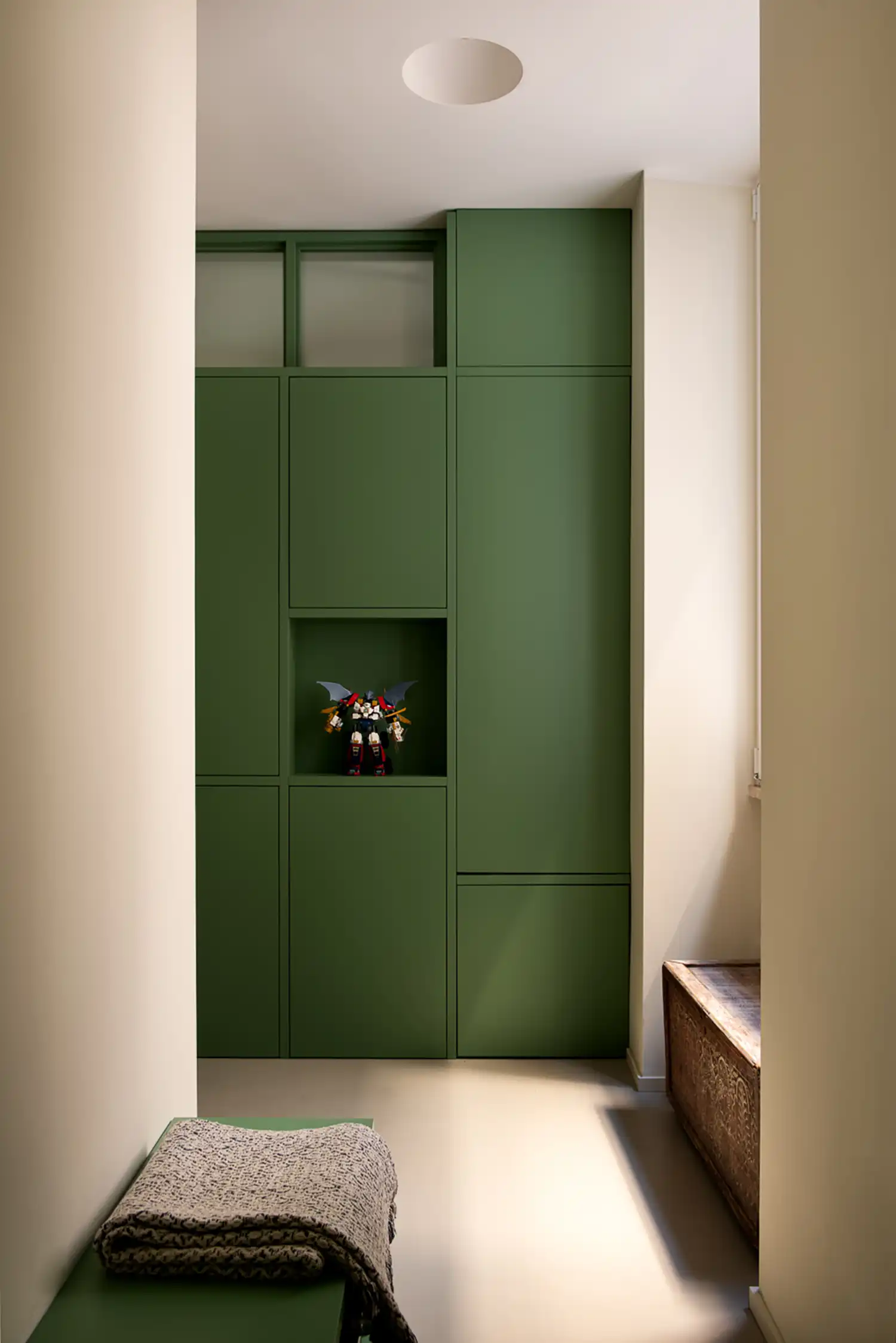
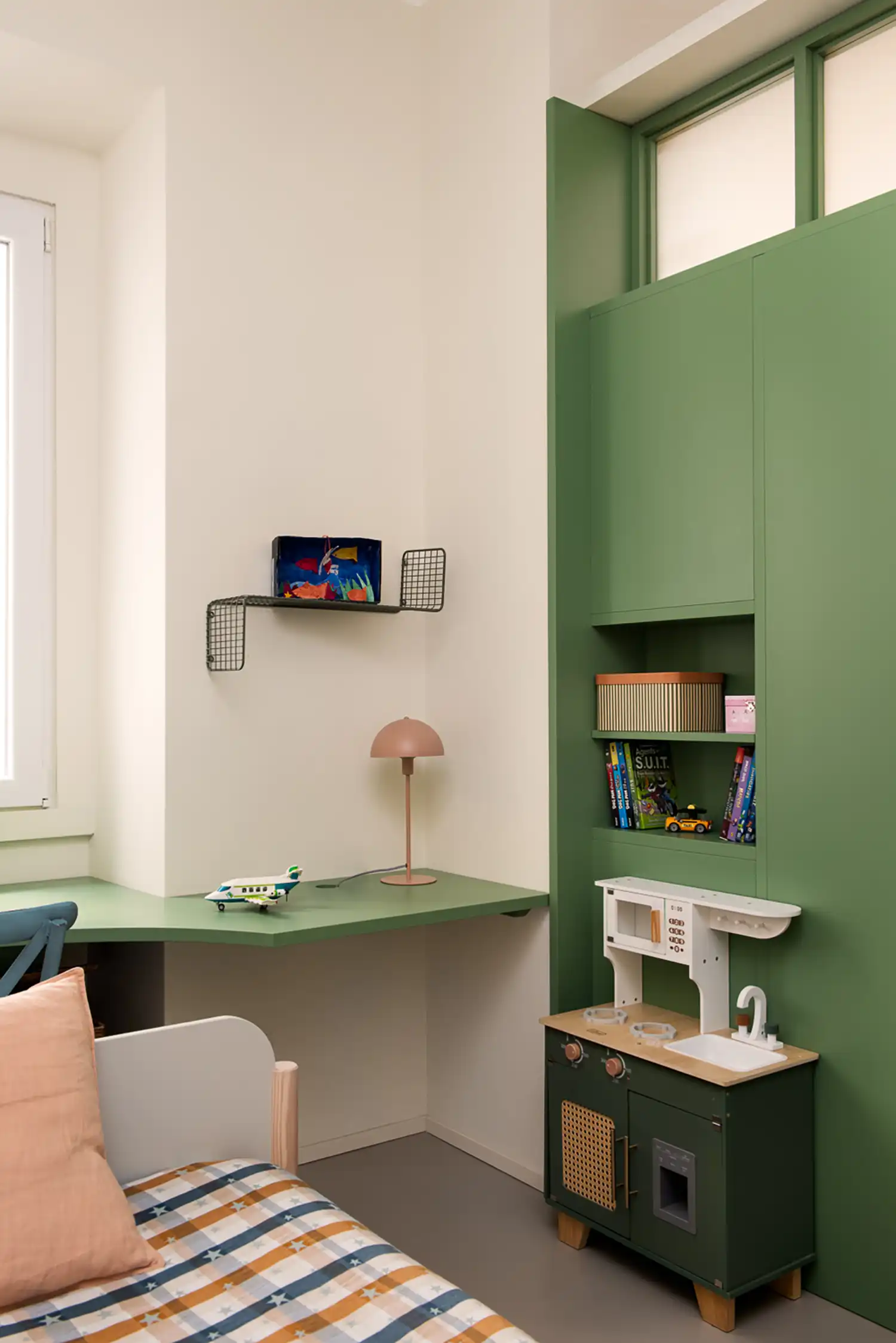
Technical precision meets artisanal craftsmanship in the execution of the storage systems. Every corner has been optimized to meet the needs of a contemporary family, from hidden niches to integrated wardrobes that disappear into the walls. This “infrastructure of living” allows the main rooms to remain flexible and uncluttered. It is a sophisticated response to the challenges of urban densification, proving that historic shells can be adapted for modern life through intelligent, custom-made solutions rather than structural overhauls.
A signature Roman narrative continues to emerge through the portfolio of 02A Studio, as they redefine the city’s residential identity one interior at a time. Casa Bertani is not an isolated experiment but part of a broader exploration of the capital’s domestic potential. For those captured by this balance of heritage and contemporary rigor, the studio’s previous interventions—such as the light-filled Station123, the vibrant geometry of Casa Polly, or the refined textures of Buondelmonti House—offer a deeper look into a practice that masterfully weaves the threads of history into the fabric of modern living.