

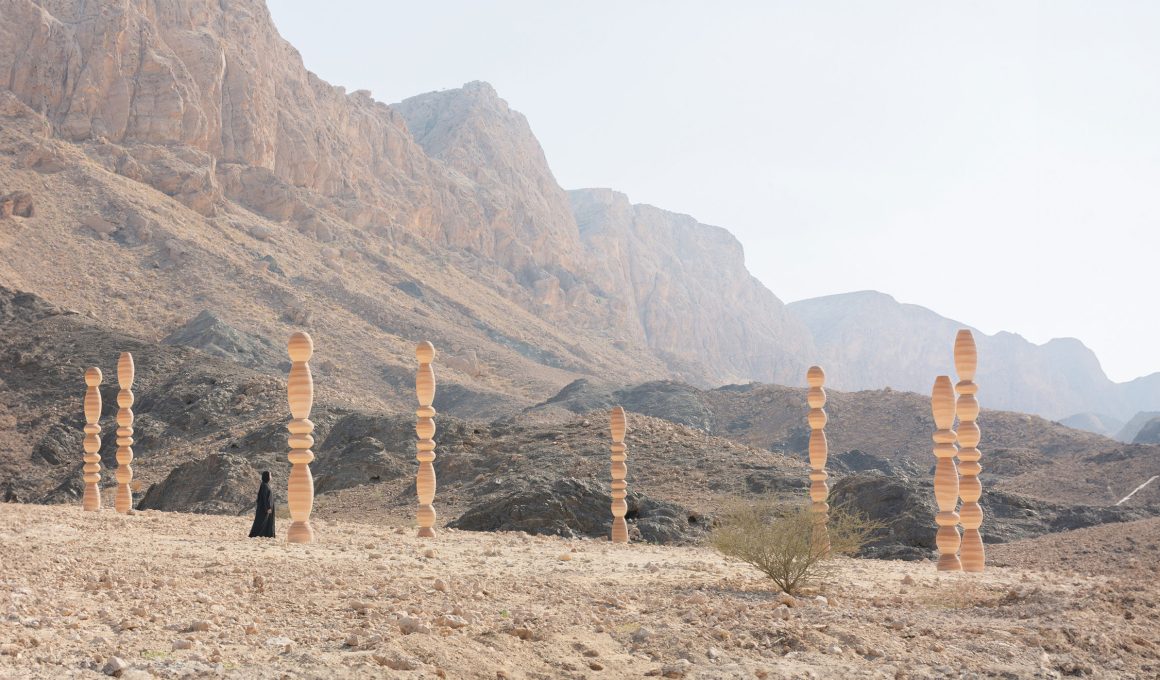
Rising from the very sands that cradle millennia of history, the “Desert Relics” installation by Karim+Elias offers a powerful dialogue between past and present. Located within the Mleiha Archaeological Reserve, a UNESCO World Heritage Site in Sharjah, UAE, the monumental land art project reimagines ancient artifacts through towering, totemic forms sculpted from rammed earth. Unveiled at the Tanweer Festival in November 2024, the installation is a permanent addition to the reserve, inviting visitors to contemplate the rich tapestry of human history woven into this desert landscape.
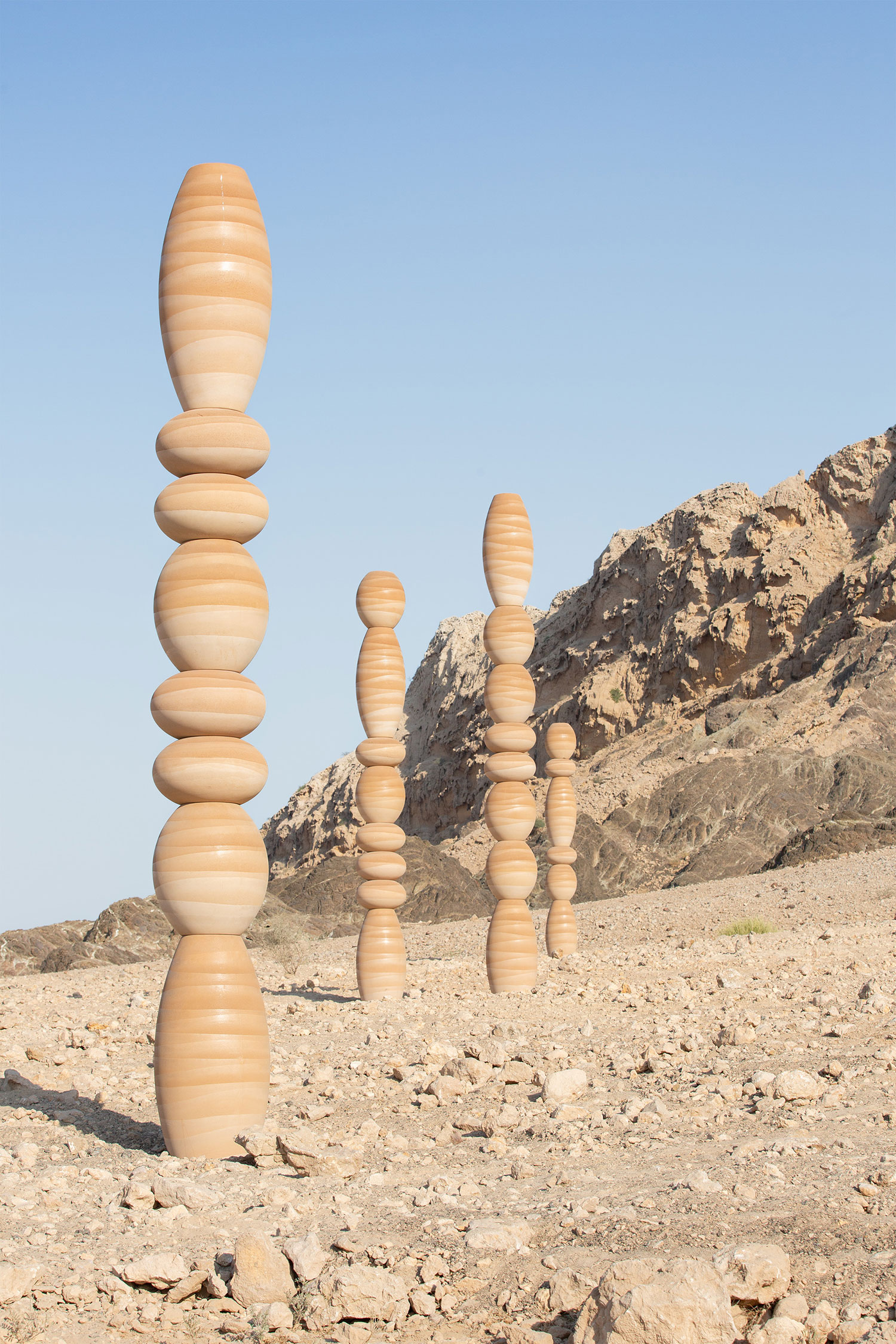
Against the backdrop of rolling dunes and rugged mountains, the twelve modular structures of “Desert Relics” stand as mystical expressions of ancient architectural techniques. The architects, Karim Tamerji and Elias El Hage, have masterfully employed rammed earth construction, a method dating back thousands of years, to create forms that resonate with the spirit of the site. This technique, involving the hand-compression of layers of natural materials like sand, clay, and water, not only connects the artwork physically to the land but also revives an ecologically mindful and locally rooted craft.
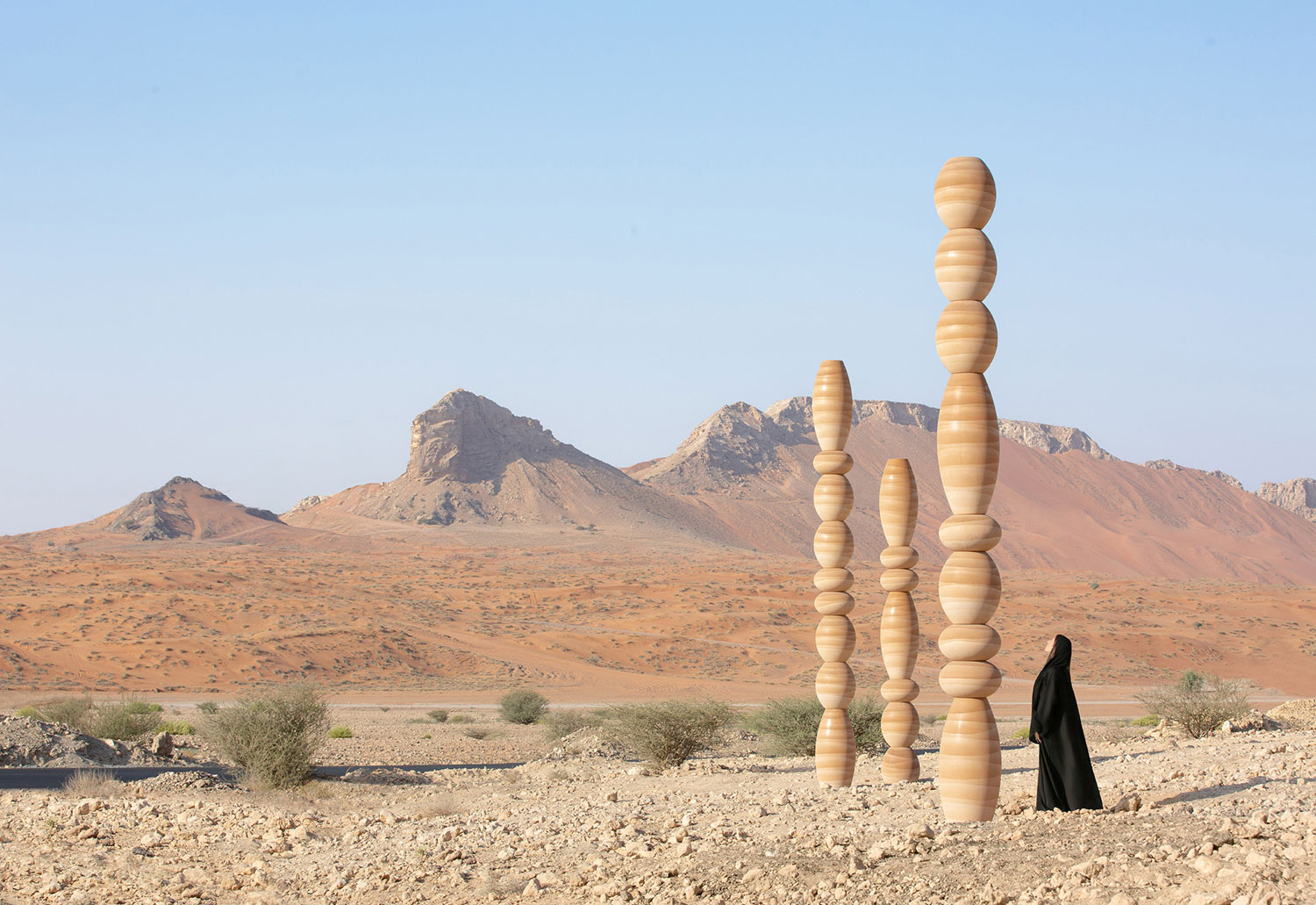
The installation draws direct inspiration from the Mleiha Archaeological Reserve’s significance, a site that holds traces of human habitation from both the Paleolithic and Islamic periods. The architects have skillfully translated this rich historical context into a captivating visual language, featuring stacked vessel vases, ancient stones, and even a grand, bejeweled necklace. Each of the twelve structures presents a unique silhouette and scale, their surfaces reflecting the pigments, textures, and contours of the surrounding desert.
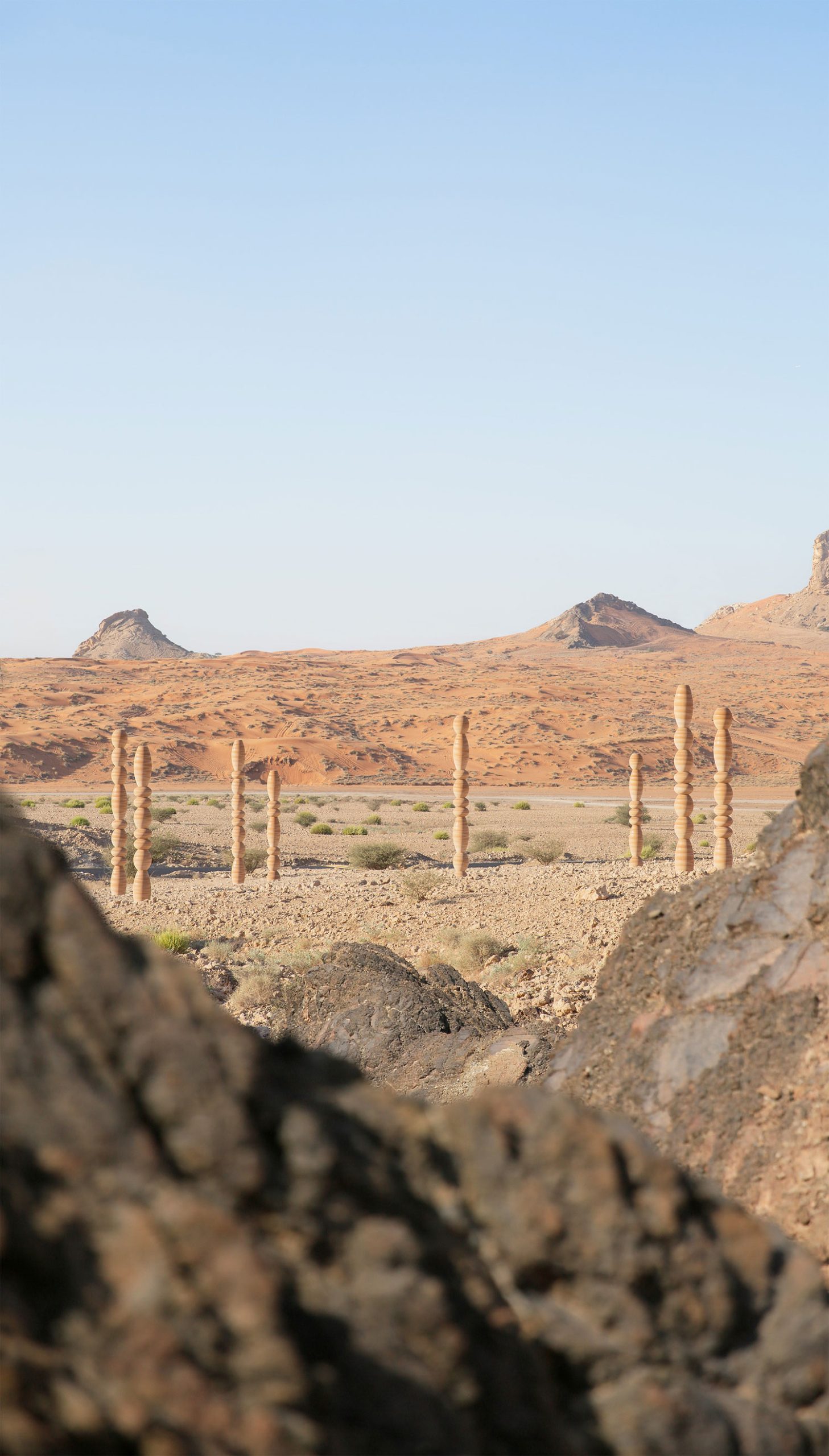
This meticulous attention to detail pays homage to the traditions that have shaped the crafts of ancient civilizations. It further emphasizes the profound connection between the artwork and its environment, inviting viewers to appreciate the deep-rooted history that informs this stunning installation.
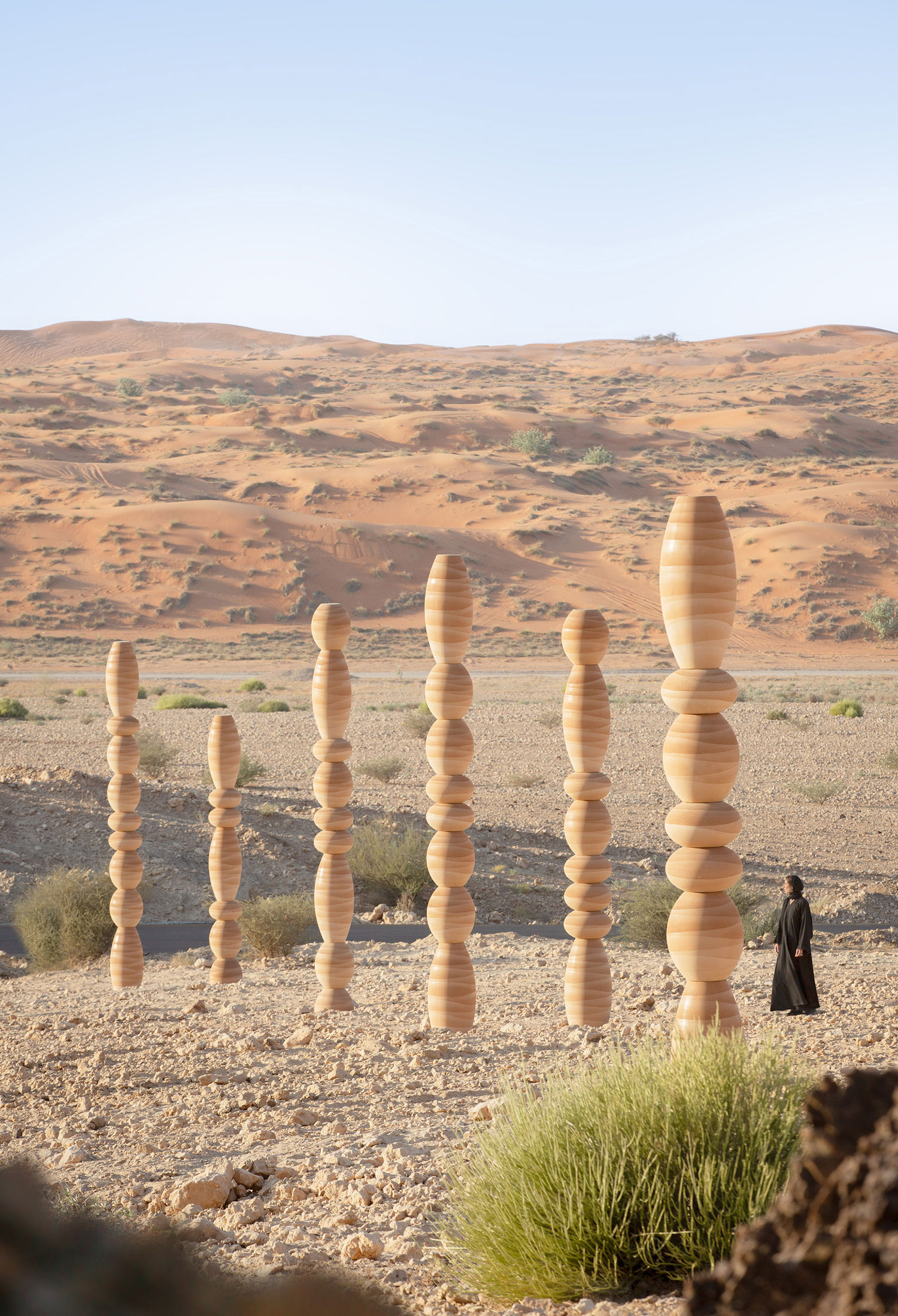
Karim+Elias have built their practice on unconventional, sculptural explorations of rammed earth, consistently pushing the boundaries of this ancient technique. “Desert Relics” represents a culmination of this exploration on a monumental scale. The installation’s almost otherworldly, spiritual presence is deeply informed by the Mleiha reserve’s extensive collection of regional artifacts. The architects visually evoke the idea of a treasured finding, an artifact unearthed and revered, rendered from a variety of vessel-like geometries.
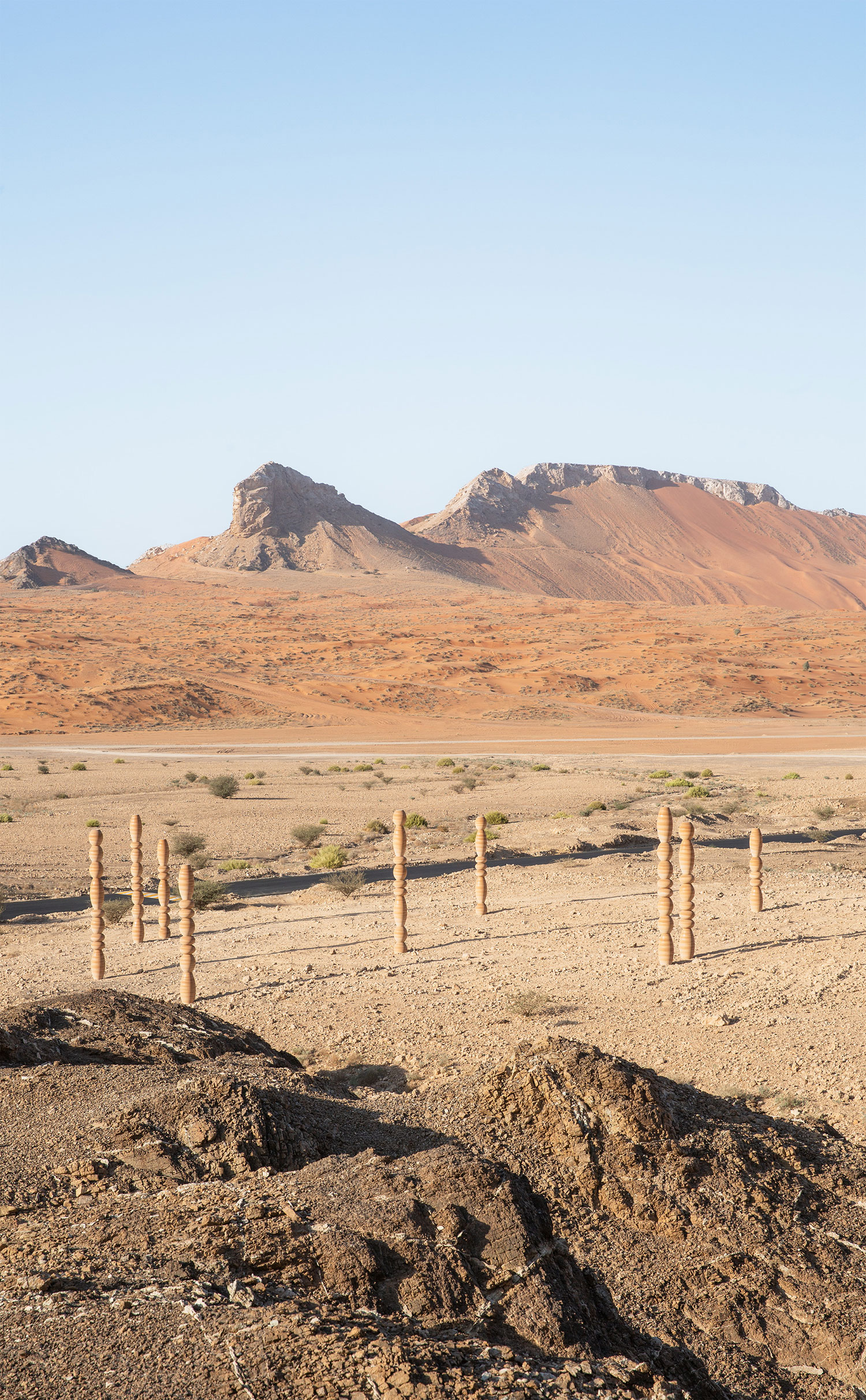
This project follows in the footsteps of previous modular works by Karim+Elias, such as “From This Earth” exhibited in Diriyah, Saudi Arabia, and “IOTA” showcased at Dubai Design Week. These prior projects also demonstrate the architects’ commitment to vernacular techniques and their ability to create compelling, site-specific works that resonate with their surroundings.
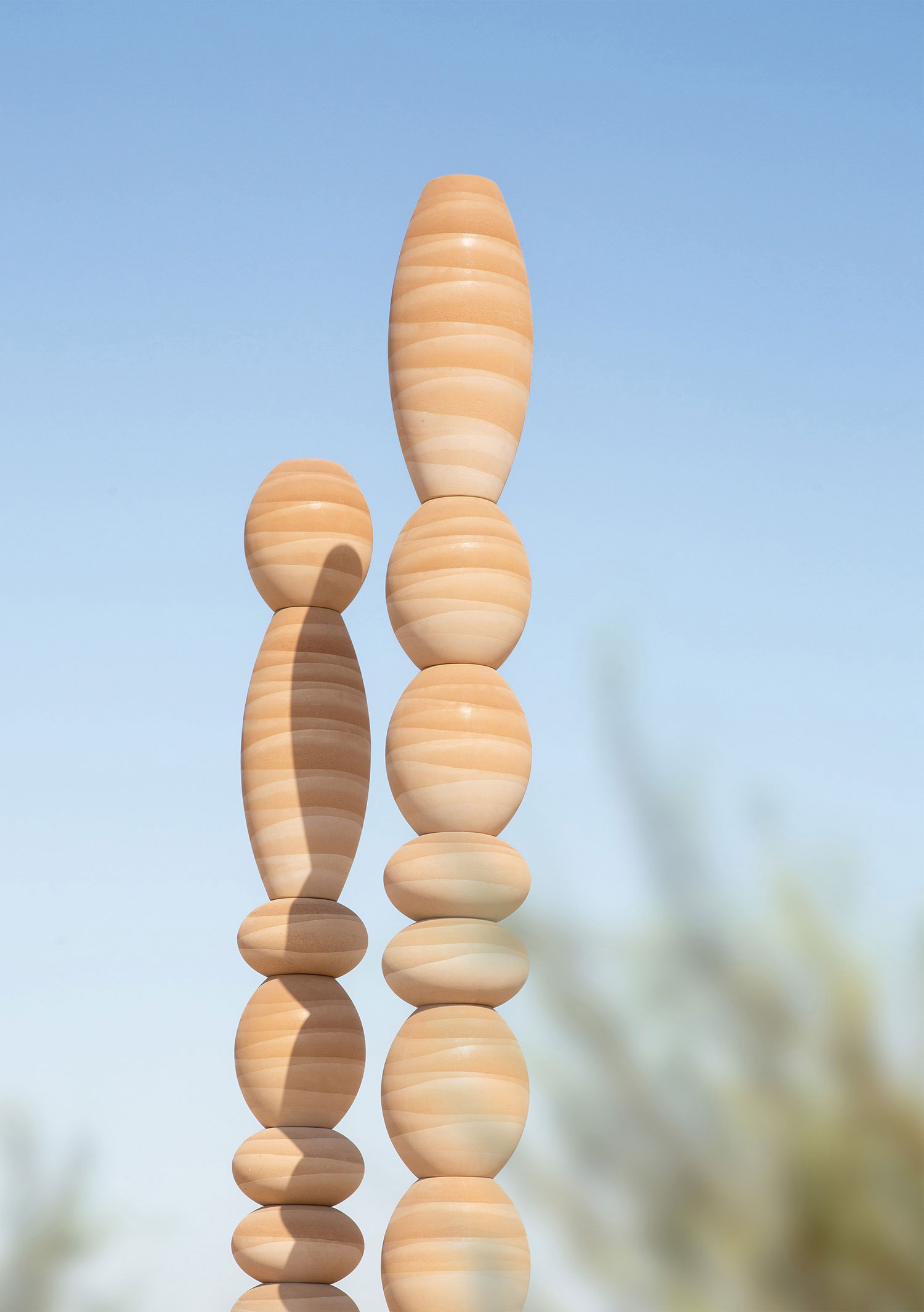
“Desert Relics” is more than just an art installation; it is an ode to history, a celebration of ancient craft, and a testament to the enduring power of human creativity. By sculpting the sands of time, Karim+Elias have created a powerful and poignant landmark that invites contemplation and fosters a deeper understanding of the rich cultural heritage of the Mleiha Archaeological Reserve.