


In the clamor of urban life, the yearning for a connection with nature often echoes as a quiet, persistent longing. For Mr. Manimaran, a lifelong Chennai resident, this longing took the form of a dream, reminiscent of W.B. Yeats’ desire for a simple cabin at Innisfree. Seeking respite from the relentless pace of city life, Mr. Manimaran envisioned a home in Vedanthangal, India, a sanctuary where he, his wife, and three children could reconnect with the earth and find solace in the rhythms of nature. This vision found its realization in the VAAZH house, designed by VY Architecture Studio, a dwelling deeply rooted in place and climate.
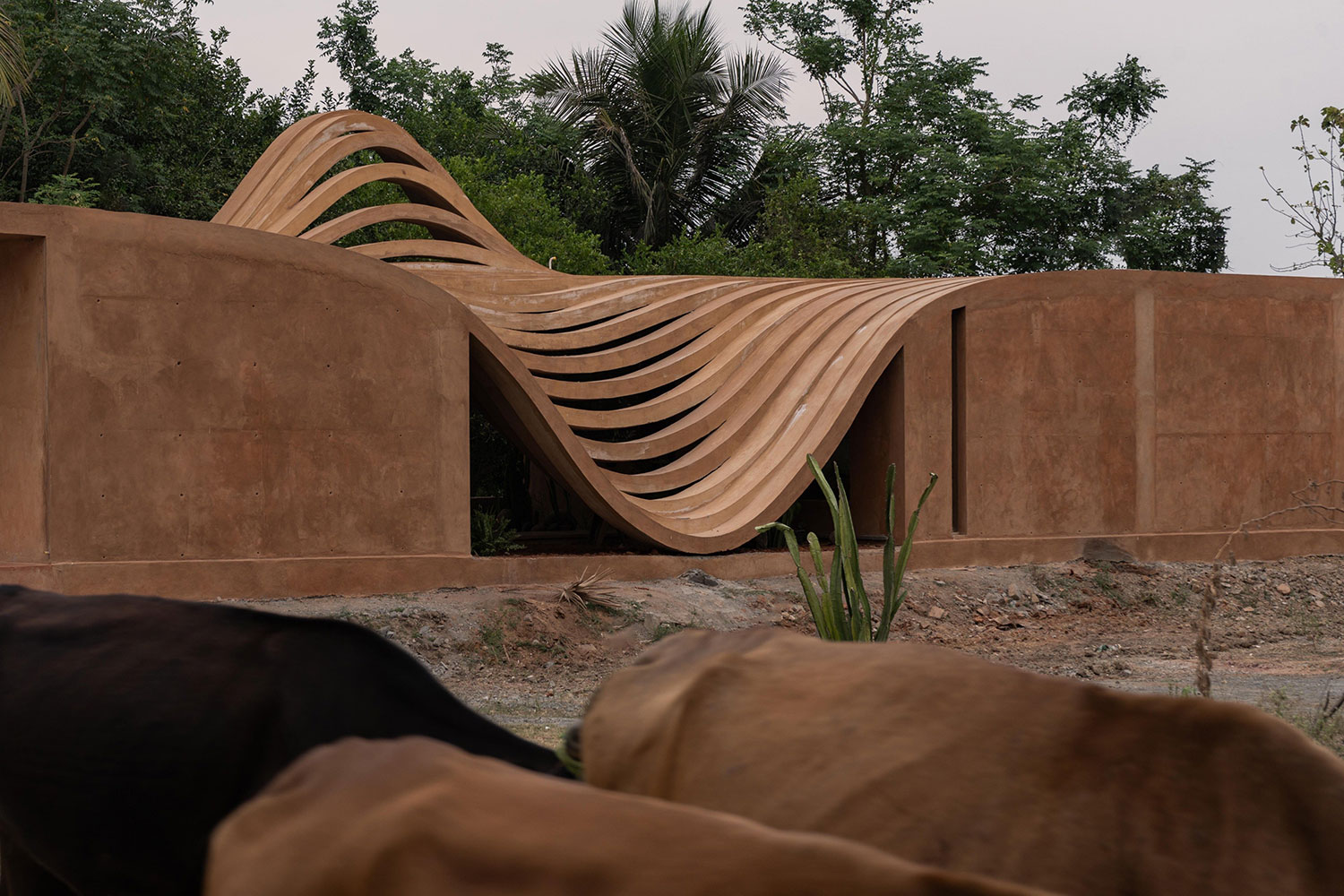
Vedanthangal, known for its renowned bird sanctuary, provided the perfect setting. As a haven for migratory birds, the area’s untouched vegetation and aquatic plants create a vibrant ecosystem. This context became a powerful metaphor for the architects: Mr. Manimaran, like a bird caged within the city, was now being set free in this chosen land. The VAAZH house was conceived as a “breathing edifice,” born of the earth and designed to seamlessly integrate with its surroundings.
VY Architecture Studio’s design approach drew inspiration from indigenous mud architecture and courtyard houses, blending historical precedent with contemporary sensibilities. The aim was to create a home that felt both familiar and modern, a space that resonated with the client’s desire for a life closer to nature. The house had to be more than just shelter; it had to be a living, breathing entity, a sanctuary not just for the family, but for all living beings.
The north-facing rectangular site, nestled amongst family-owned homes, presented a unique challenge. The architects chose to embrace the existing social fabric, recognizing the “thinnai”—a traditional raised veranda—as the heart of the neighborhood. This space, a place for casual conversations and community interaction, became an integral part of the house’s design, fostering a sense of belonging.
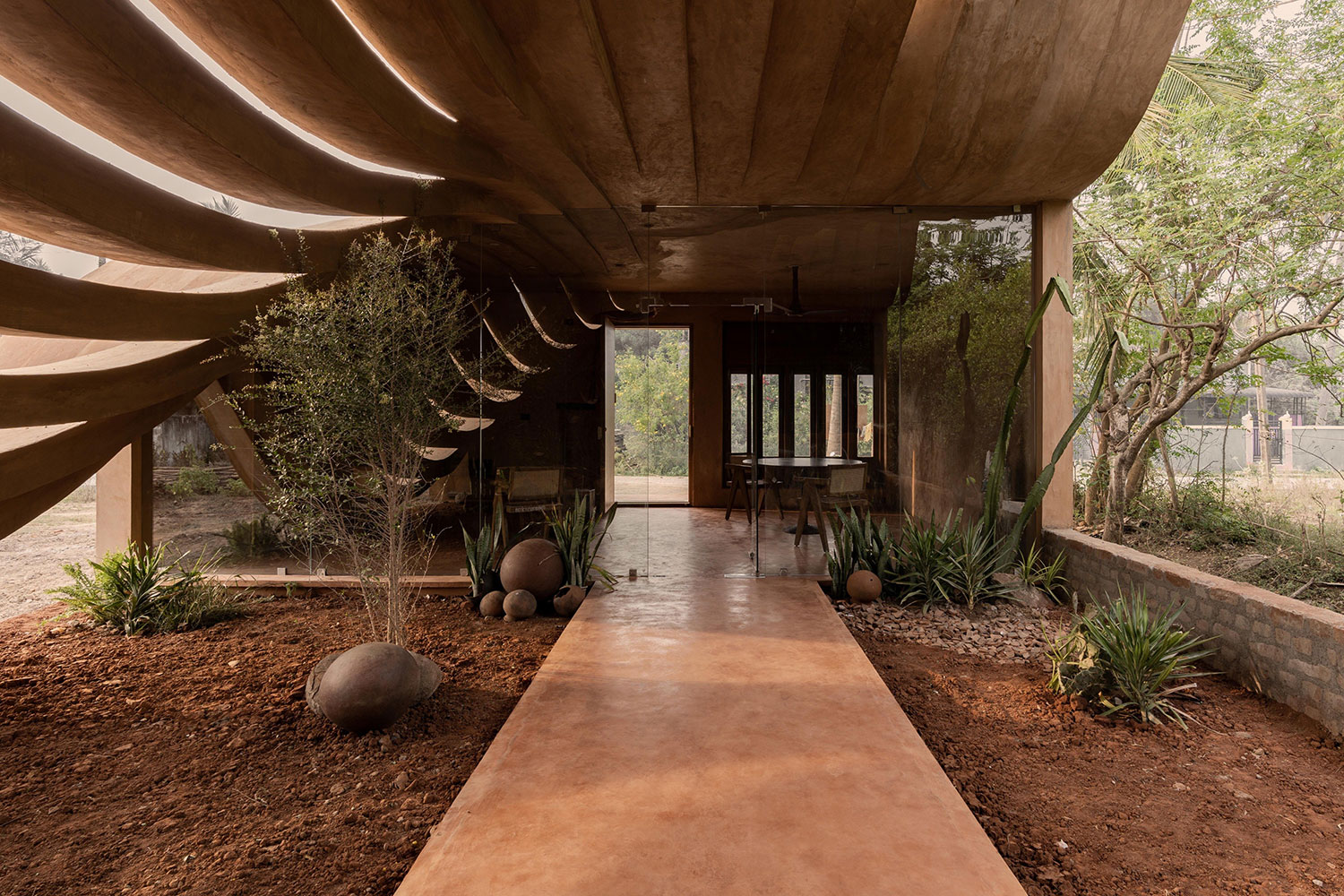
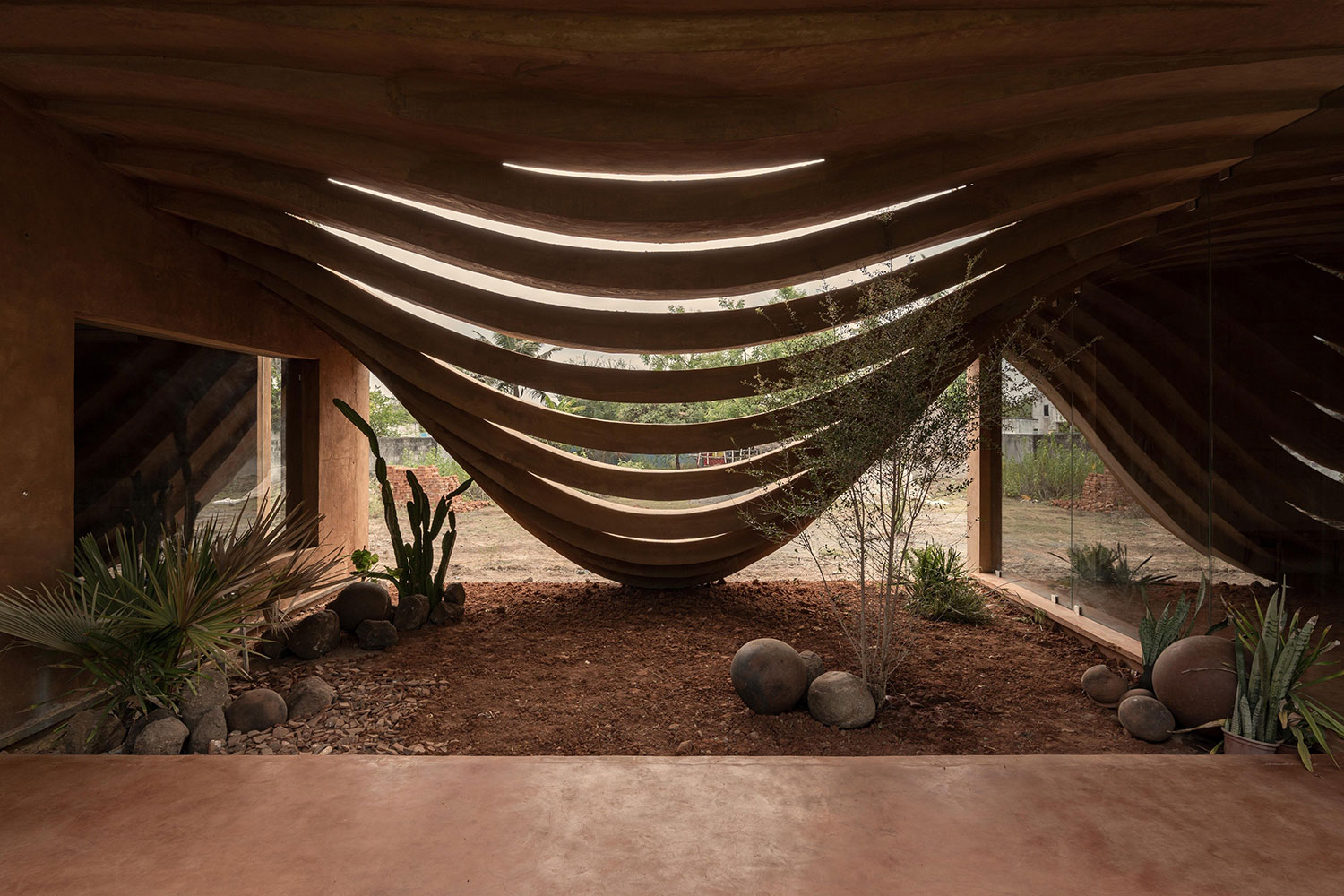
The house is thoughtfully divided into three unique zones: the lively communal areas, which include the thinnai, living room, and courtyard, and the more intimate spaces, such as the kitchen and bedrooms. These zones are arranged in a linear fashion, promoting a seamless visual flow throughout the home. At the core of this architectural masterpiece lies a central courtyard, which serves as the very essence of the residence. A beautifully curved wall encircles this area, providing a protective barrier against the intense afternoon sun from the west.
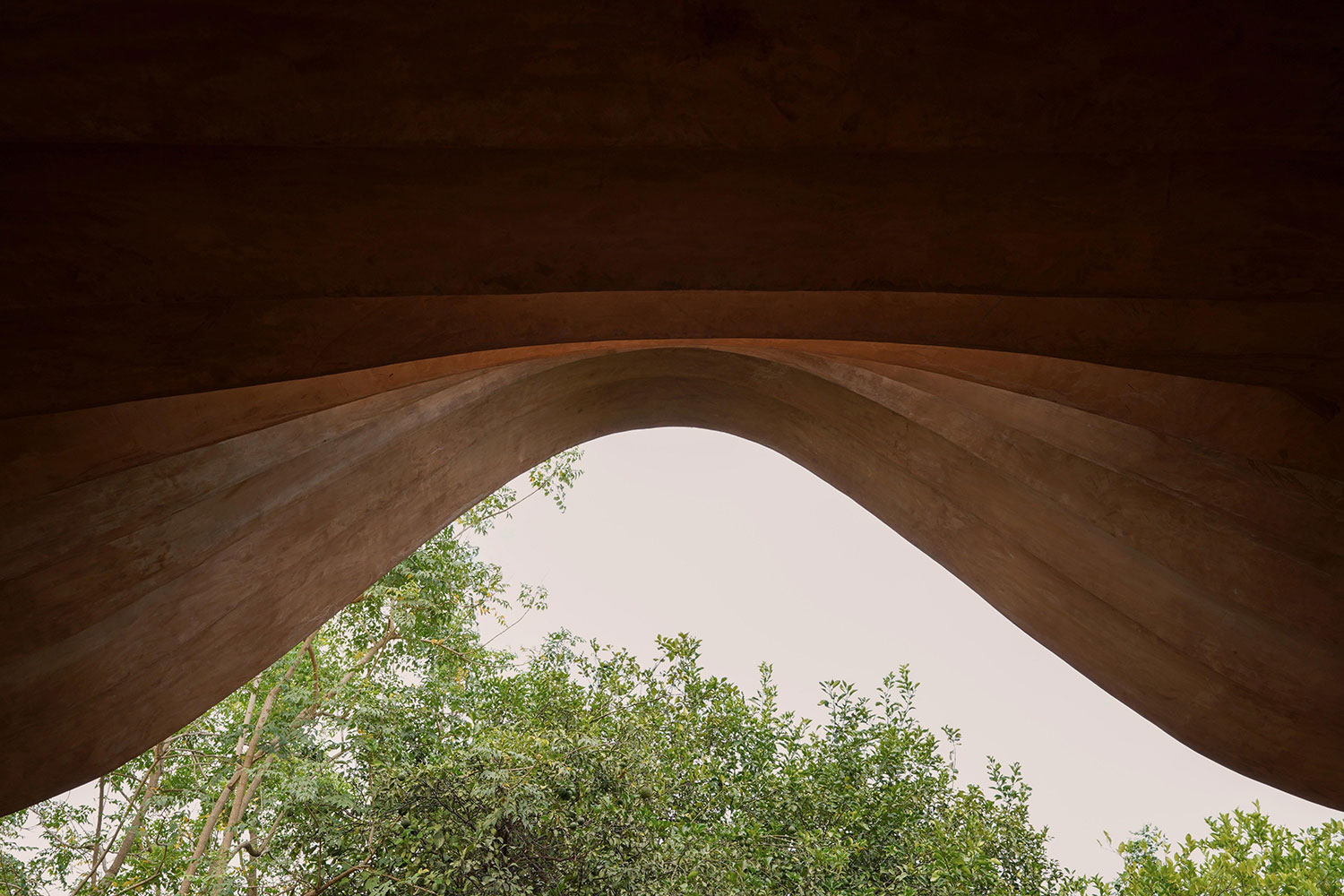
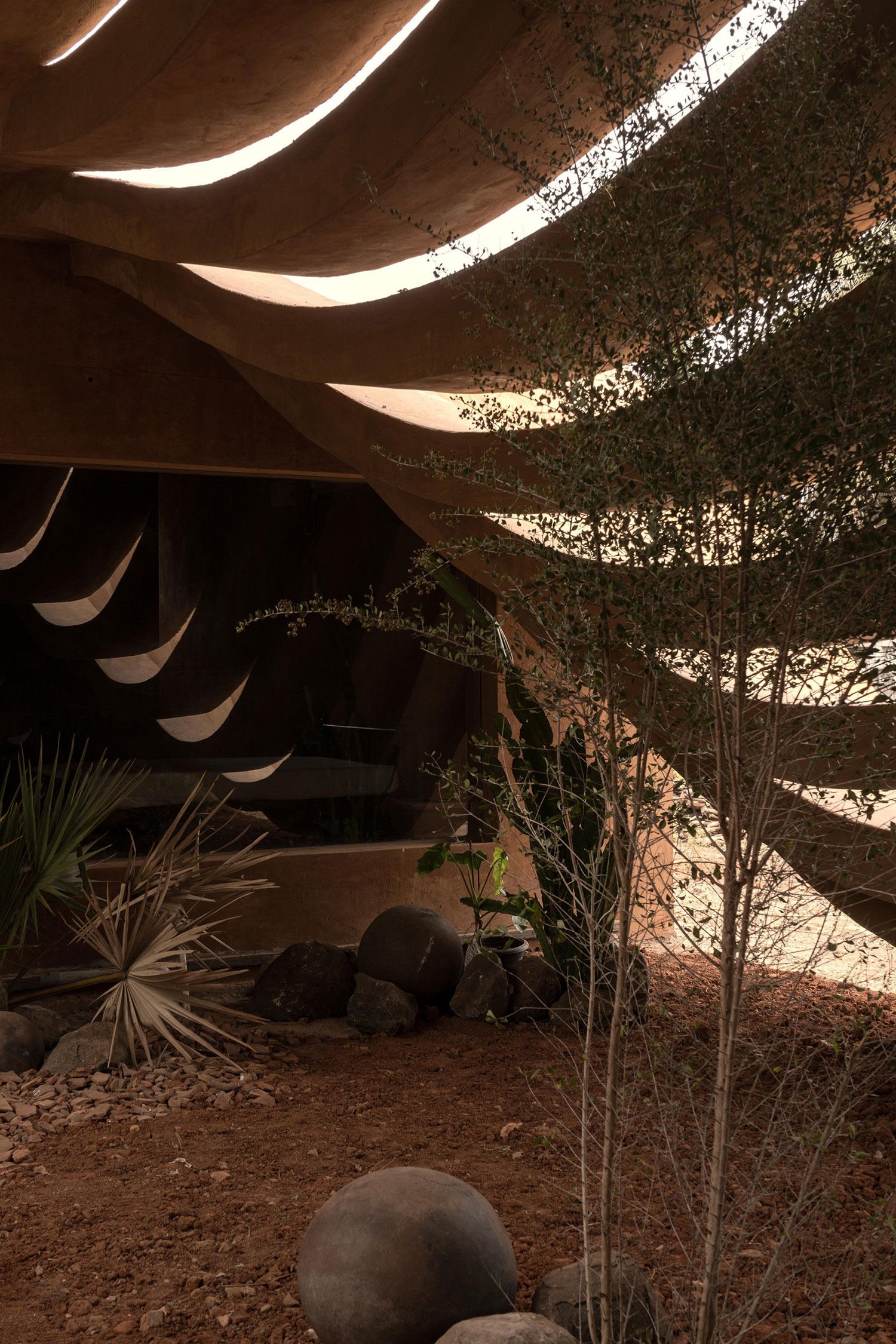
To the east, the curve gracefully extends to the roof, creating an inviting space that welcomes the gentle morning light. Strategically placed perforations in the wall allow sunlight to filter through, casting intricate patterns on the oxide floor below. This design not only enhances the aesthetic appeal but also allows rainwater to trickle down into the courtyard, creating a serene atmosphere that connects the indoors with nature.
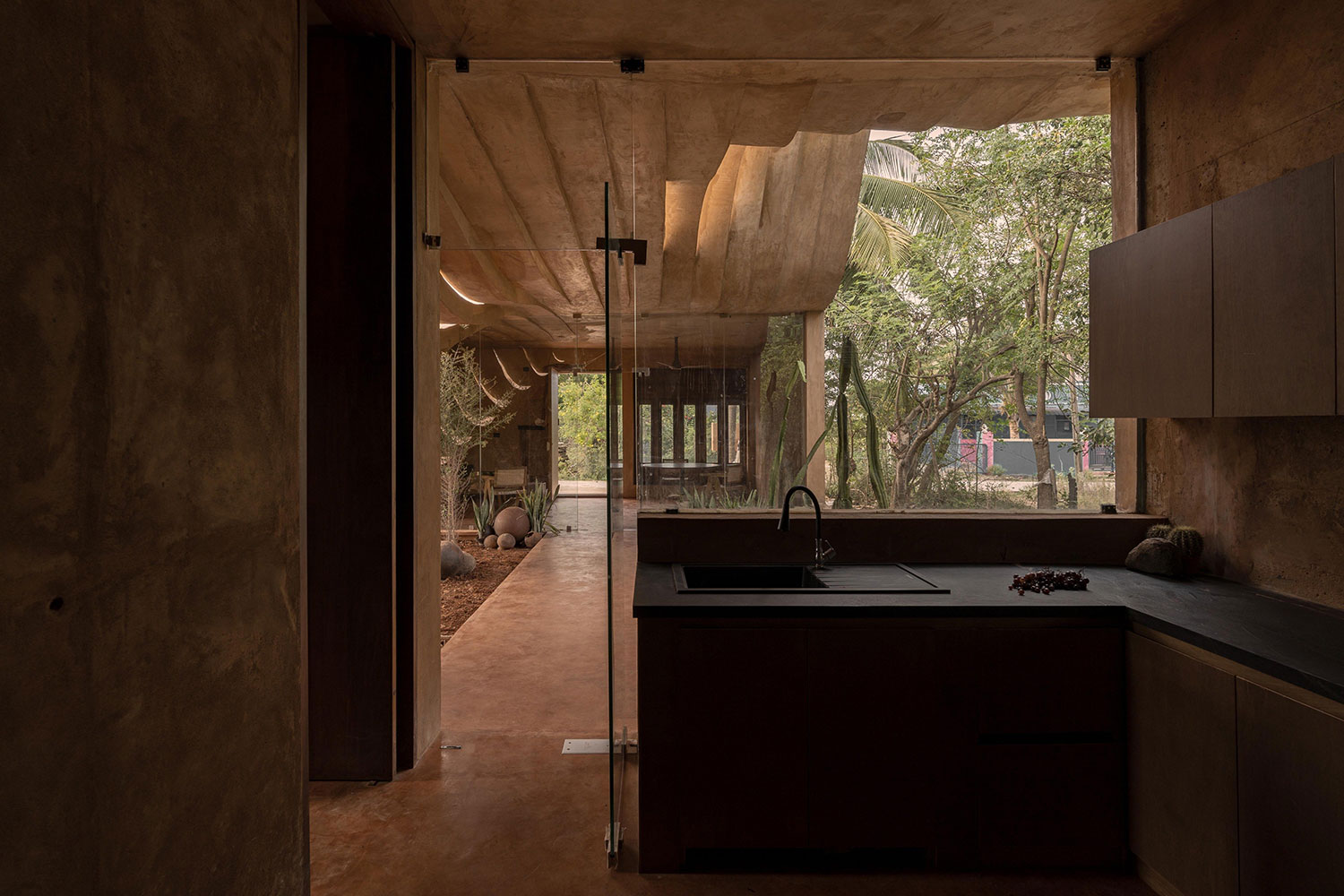
River rocks, reminiscent of the nearby river, are incorporated into the courtyard, serving as tactile reminders of the natural landscape. The curve itself transcends its function as a sculptural element; it becomes a playful feature, inviting residents to climb to the roof for panoramic views and quiet moments of contemplation. This element seamlessly connects the ground and the roof, creating a three-dimensional recreational space.

The courtyard serves as a vibrant gateway to the natural world, inviting not only the family but also a chorus of birds, buzzing insects, and curious neighborhood creatures. This enchanting space transforms the home into a sanctuary, where every visitor—feathered or furry—adds to the rich tapestry of life. Here, the residents can revel in the pure pleasures of existence: the cool, moist earth beneath their feet, the gentle patter of raindrops cascading from the open roof, and the awe-inspiring canvas of the night sky stretching above.
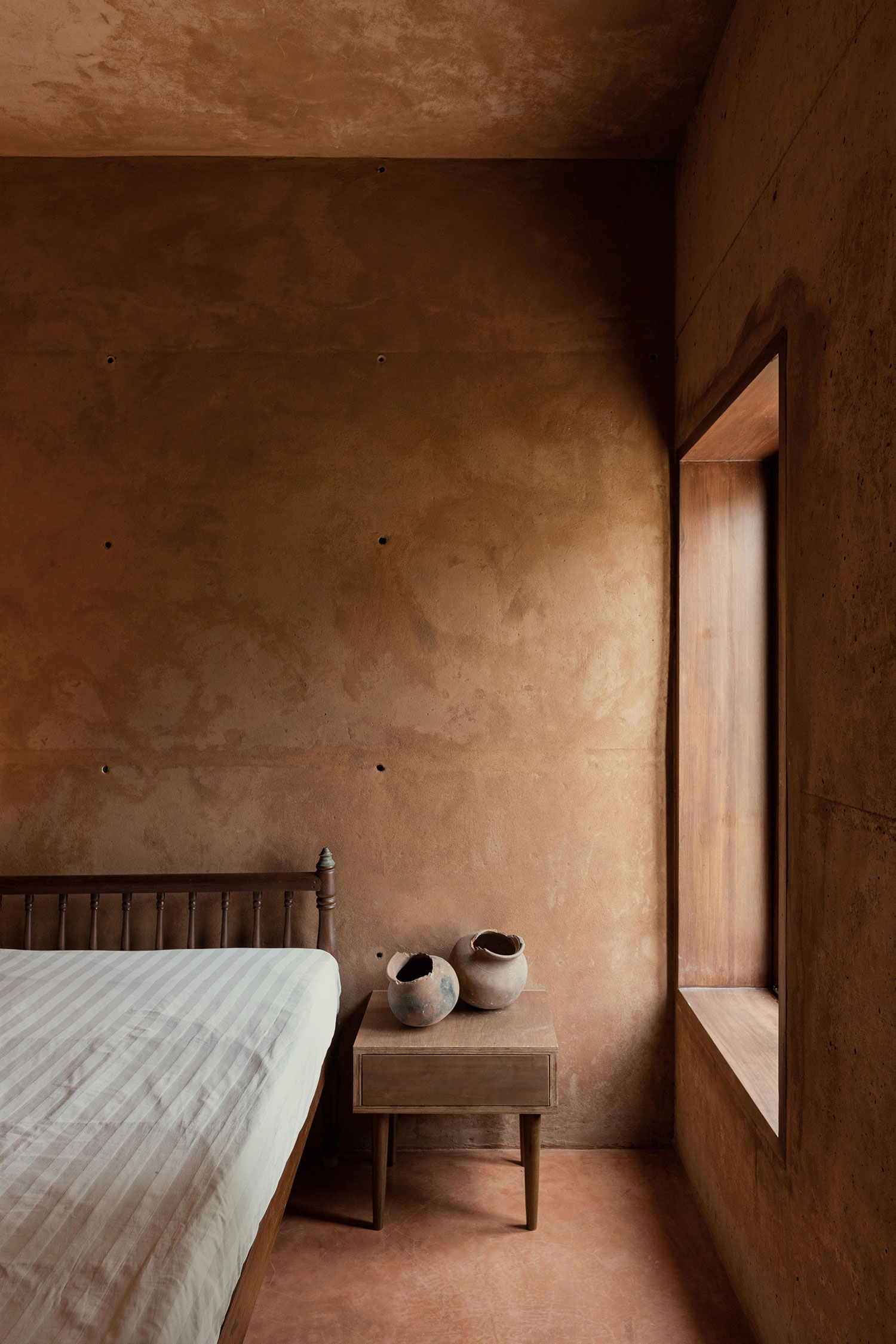
The VAAZH house stands as a powerful symbol of architecture’s ability to forge a deep connection with nature, providing a serene escape from the artificial trappings of contemporary life. It breathes vitality into the story of a family’s reconnection with the earth, manifesting their dream of a simpler existence. This vision, reminiscent of Yeats’ idyllic Innisfree, has taken shape in the harmonious blend of clay, sky, and the warm embrace of the natural environment, creating a home that resonates with authenticity and tranquility.