



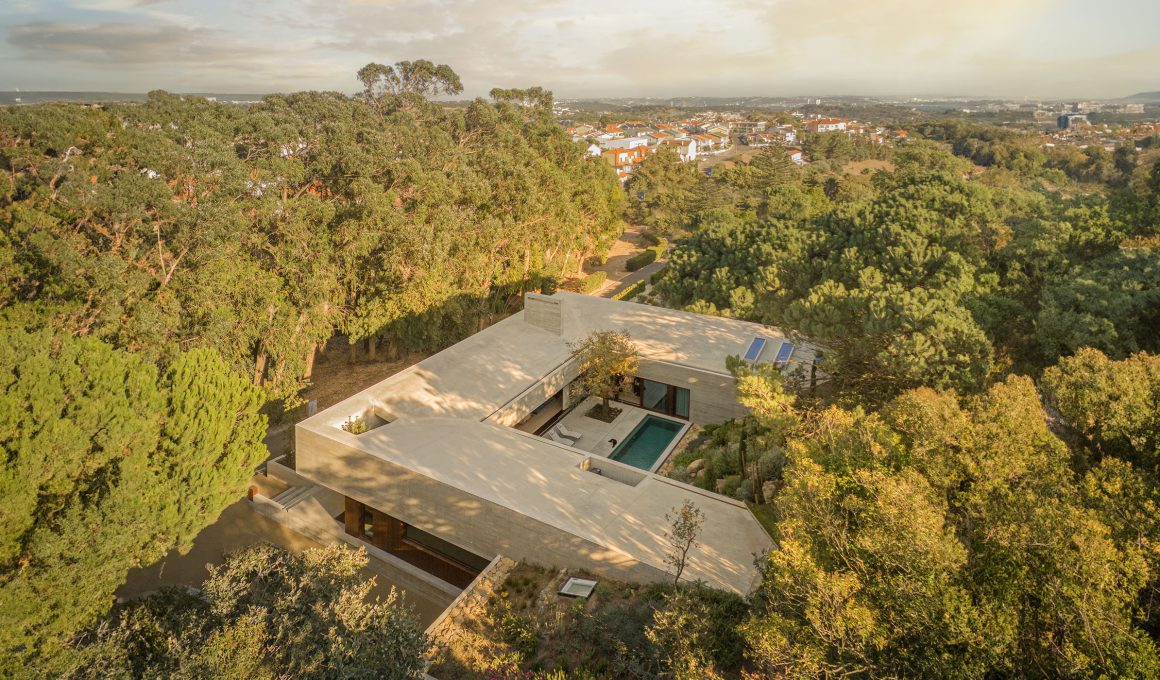
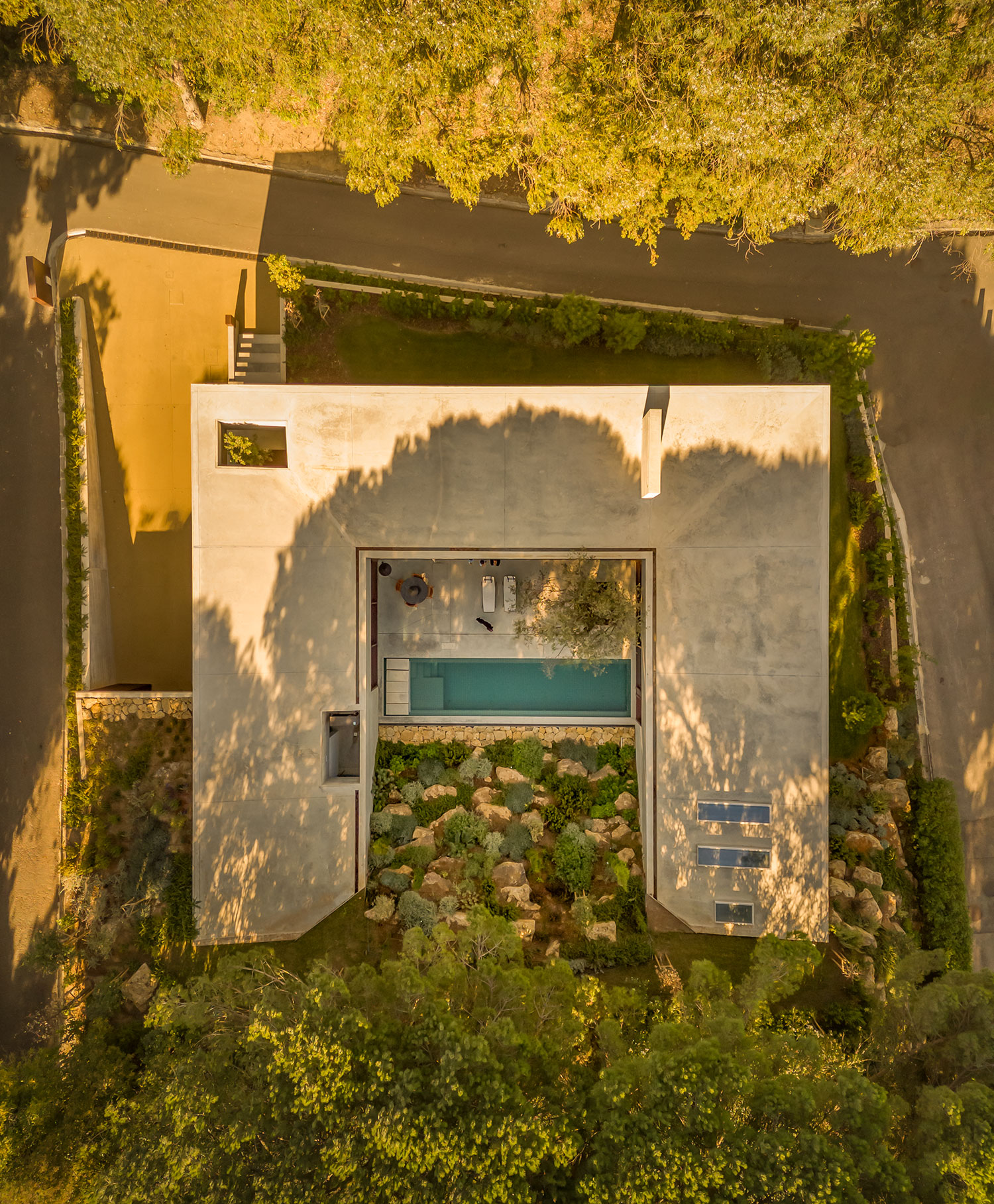
Harnessing the inherent potential of a constrained site in Oeiras, Portugal, OODA Architecture has realized the Oeiras House, a study in the symbiotic relationship between architecture and topography. By strategically leveraging the existing slope, the architects have not only mitigated site challenges but also generated a core design principle: a central, distributing patio that mediates between the social and private realms, establishing a dynamic interplay of volumes and voids that seamlessly integrates the building with its natural context.
Challenged by the site’s dimensions and an existing slope, OODA ingeniously transformed these constraints into the project’s core strengths. By embracing the natural contours of the land, they not only eliminated an “uninteresting and inconvenient environment” but also conceived a design that seamlessly integrates with its surroundings.
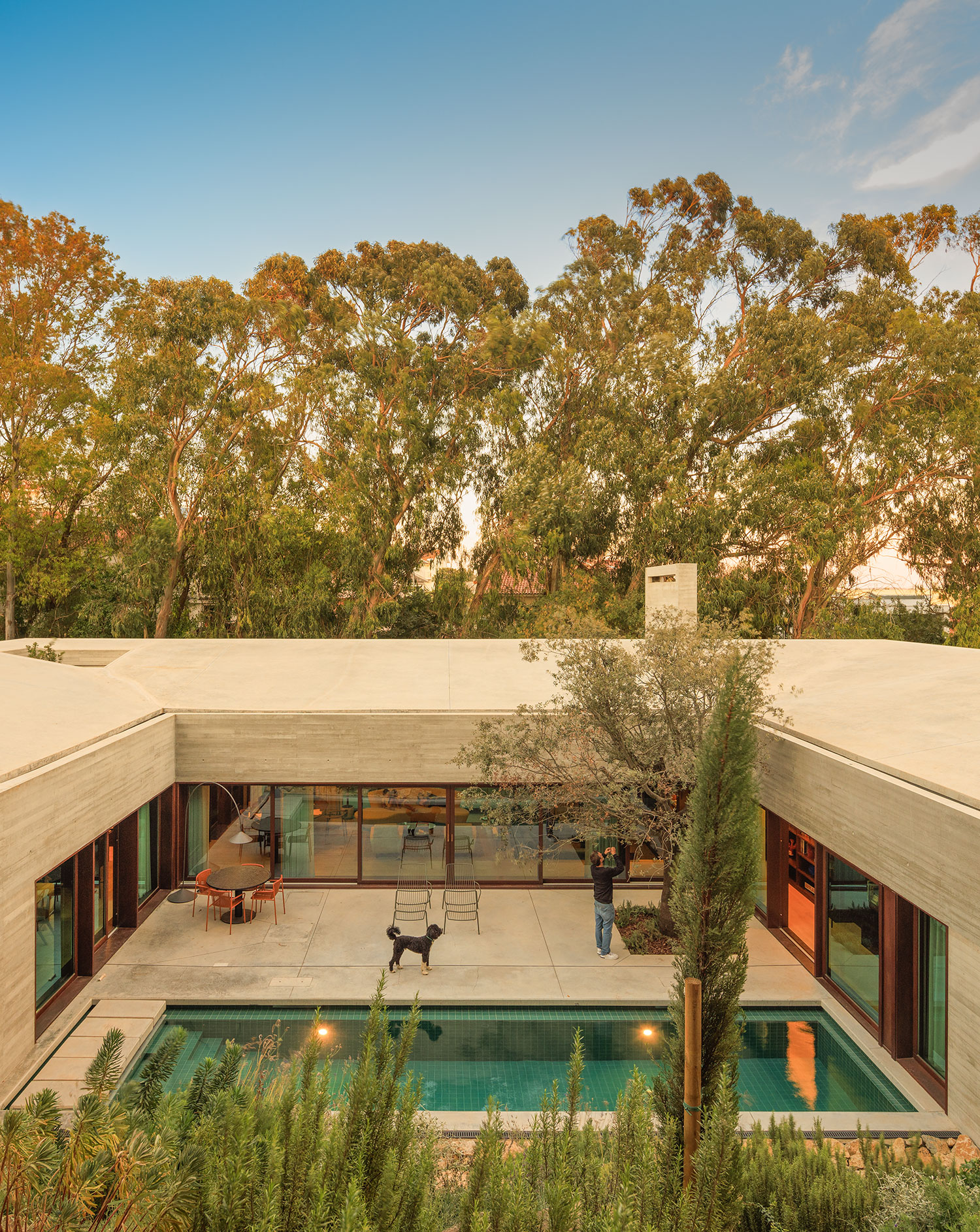
At the heart of the Oeiras House lies a central patio, a pivotal element that orchestrates the entire program. This void acts as a regulator and distributor, connecting the social and private areas of the house while fostering a strong connection with the outdoors. The patio is ingeniously shaped by three sides that “dilute” into the terrain, blurring the lines between the built and natural environments.
A striking water feature, designed as a scenic pool, not only compensates for the limited light in the half-buried entrance patio but also adds a touch of serenity and visual appeal. This thoughtful addition enhances the overall ambiance of the space, creating a tranquil and inviting atmosphere.
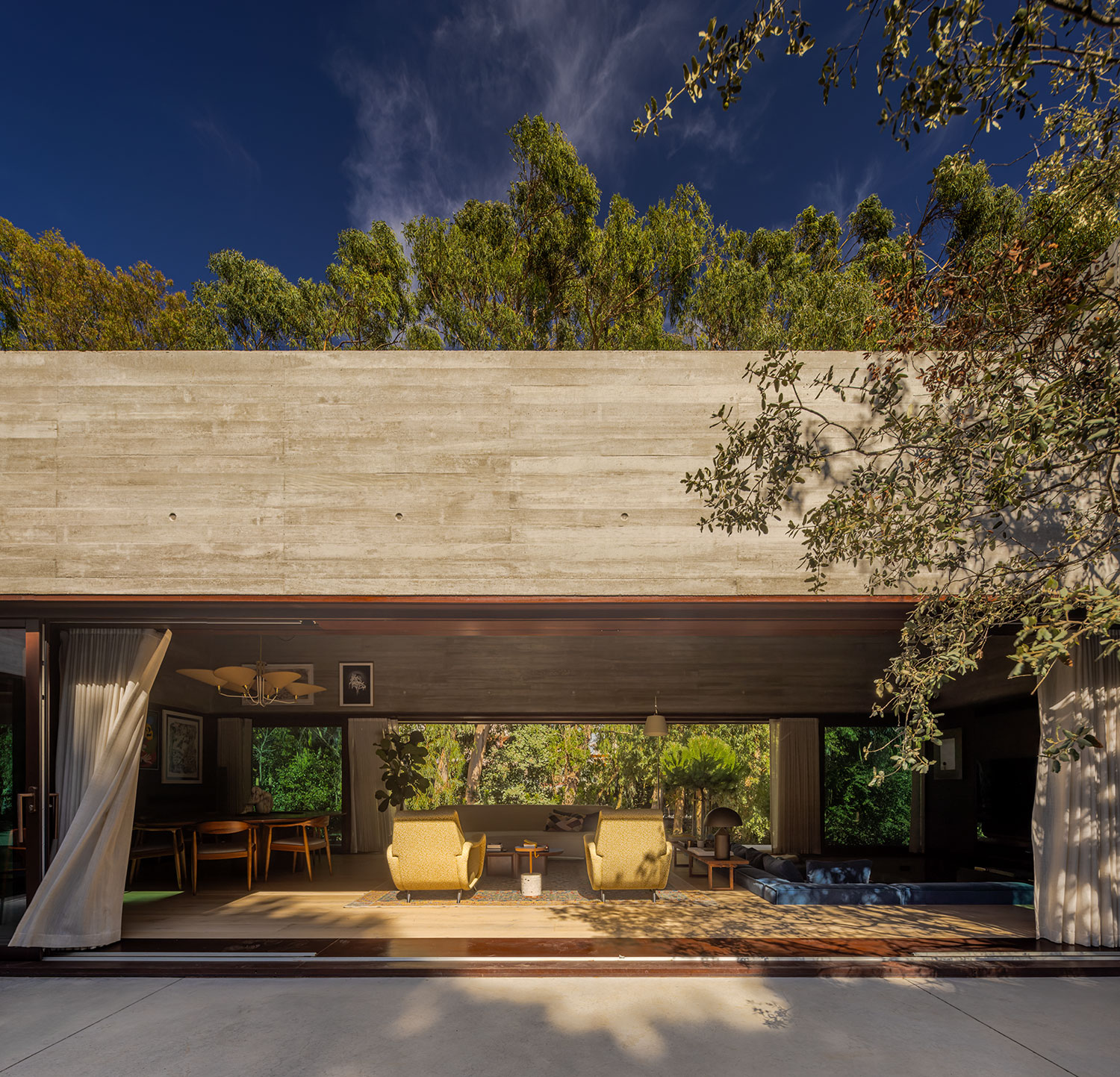
The house’s rationalistic geometry and volumetry serve to accentuate the natural and environmental qualities of the site.The seemingly hostile topography becomes the very essence of the design, with the structure appearing to levitate above the ground, allowing the landscape to flow uninterrupted beneath it. This design choice fosters a sense of continuity and unity between the exterior and the central patio, further enhanced by the lush vegetation that permeates the space.
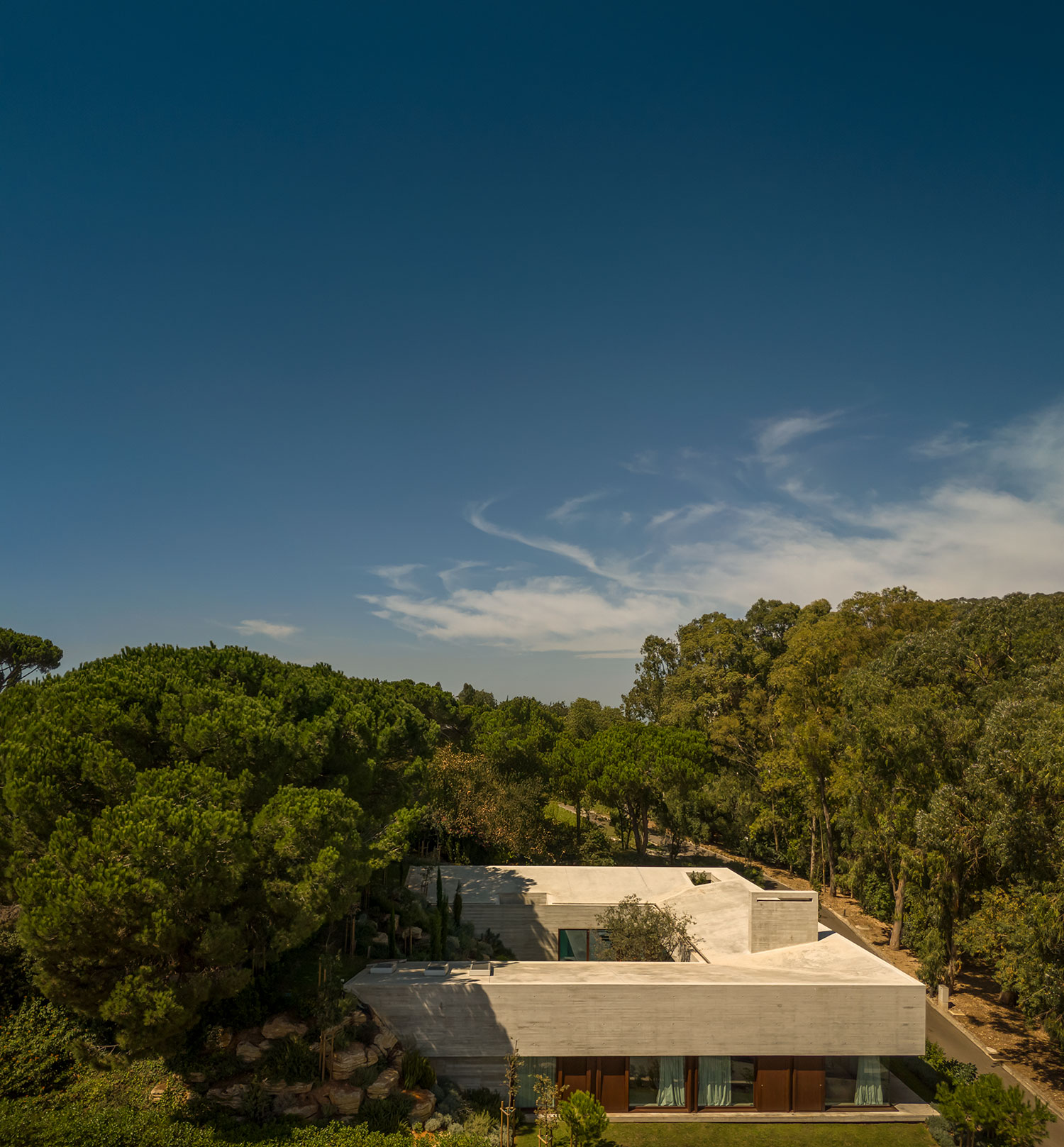
The Oeiras House is not confined by its static horizontality; instead, it is animated by dynamic diagonal cross movements.These are generated by varying levels of transparency and are further emphasized by the sloping, accessible roof. This unique feature, a direct response to the topography, expands the usable space of the house and adds another layer to its architectural narrative.
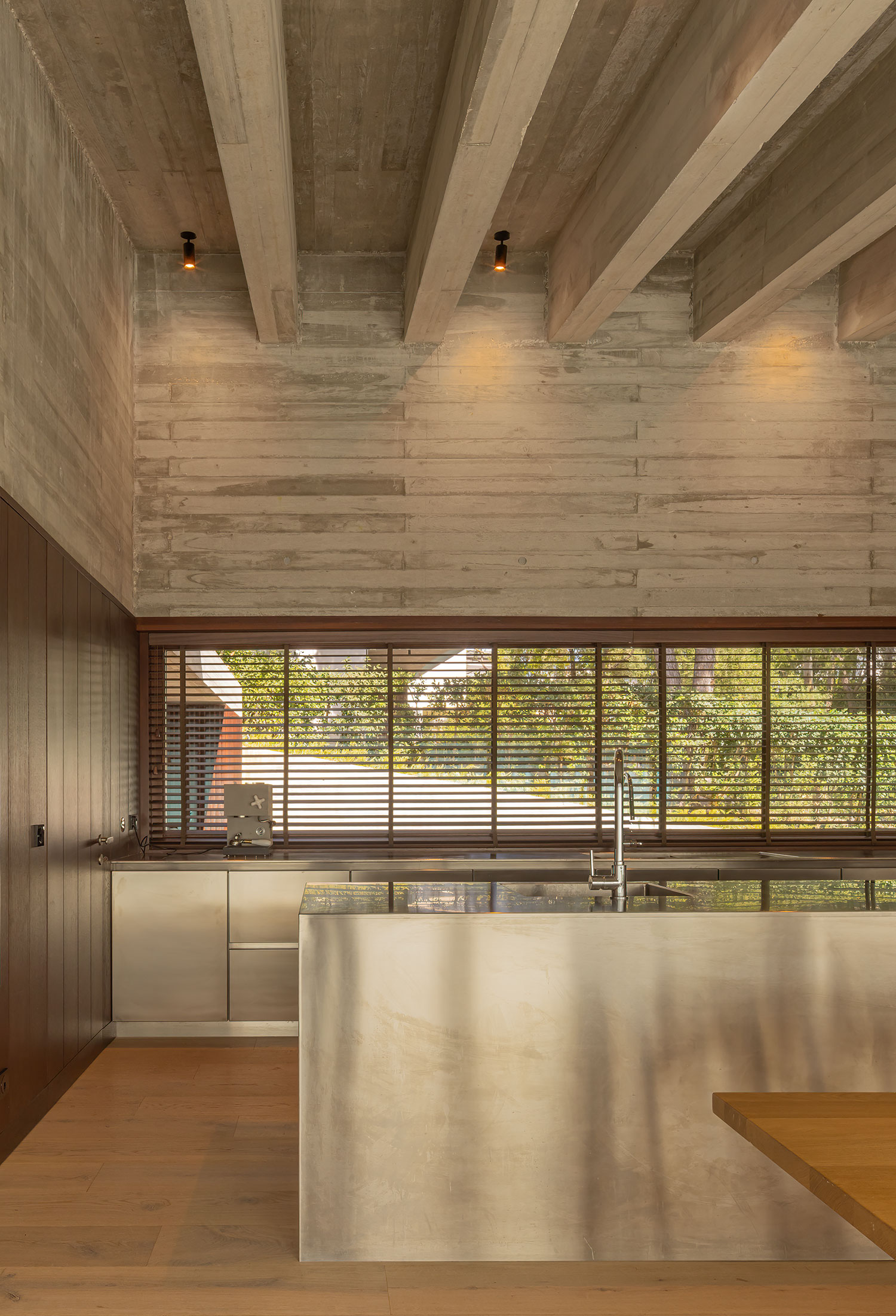
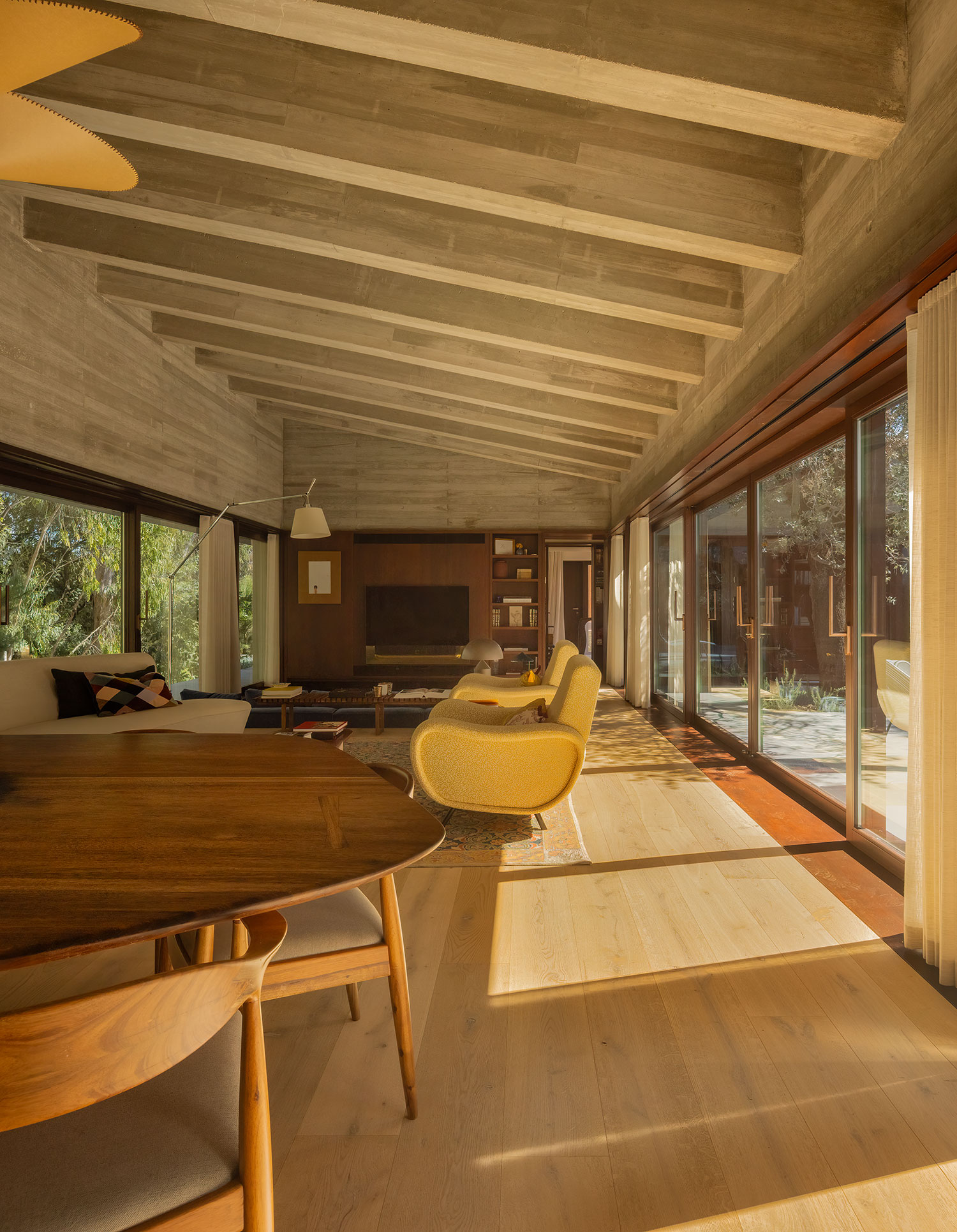
The materiality of the house plays a crucial role in unifying the overall design. By extending the chosen materials throughout the building, OODA reinforces the sense of a cohesive and holistic space. The architecture of the Oeiras House is both transformative and stabilizing, adding a sense of quality and permanence to the site. It stands as a powerful example of how architecture can not only adapt to but also enhance the natural environment.