



In the heart of Milan, a city celebrated for its unwavering dedication to design, Atelier Zero has completed a residential project that deftly navigates the line between historical reverence and contemporary living. The DUBI apartment is a masterful renovation that reinterprets classic Milanese architectural tradition through a modern lens. The design team used a palette of quintessentially local materials—geometric cement tiles, ceppo di Gré, clinker, and square-patterned parquet—not as mere replicas but as a starting point for a dialogue with modern finishes, creating a home that feels both timeless and of the moment.
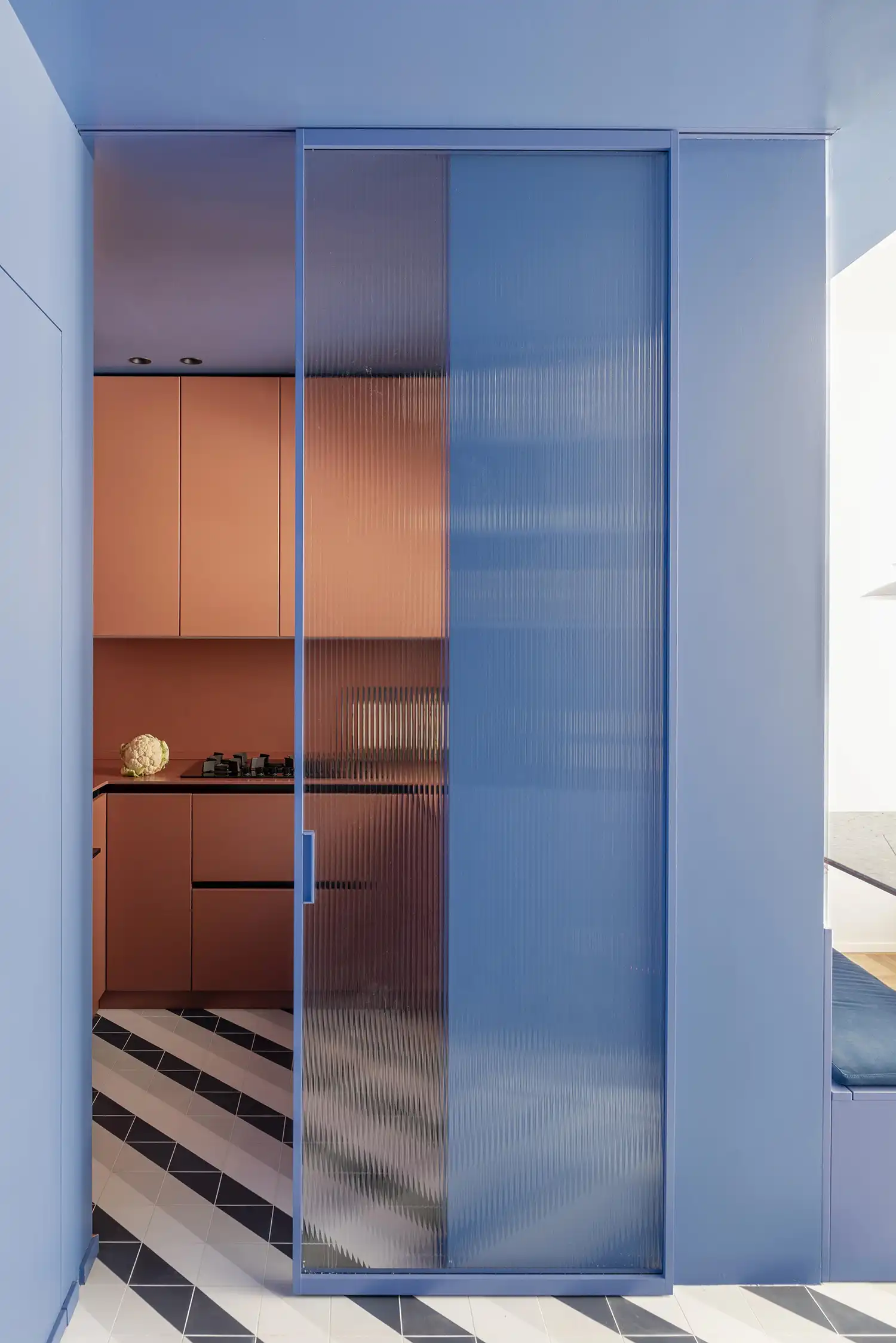
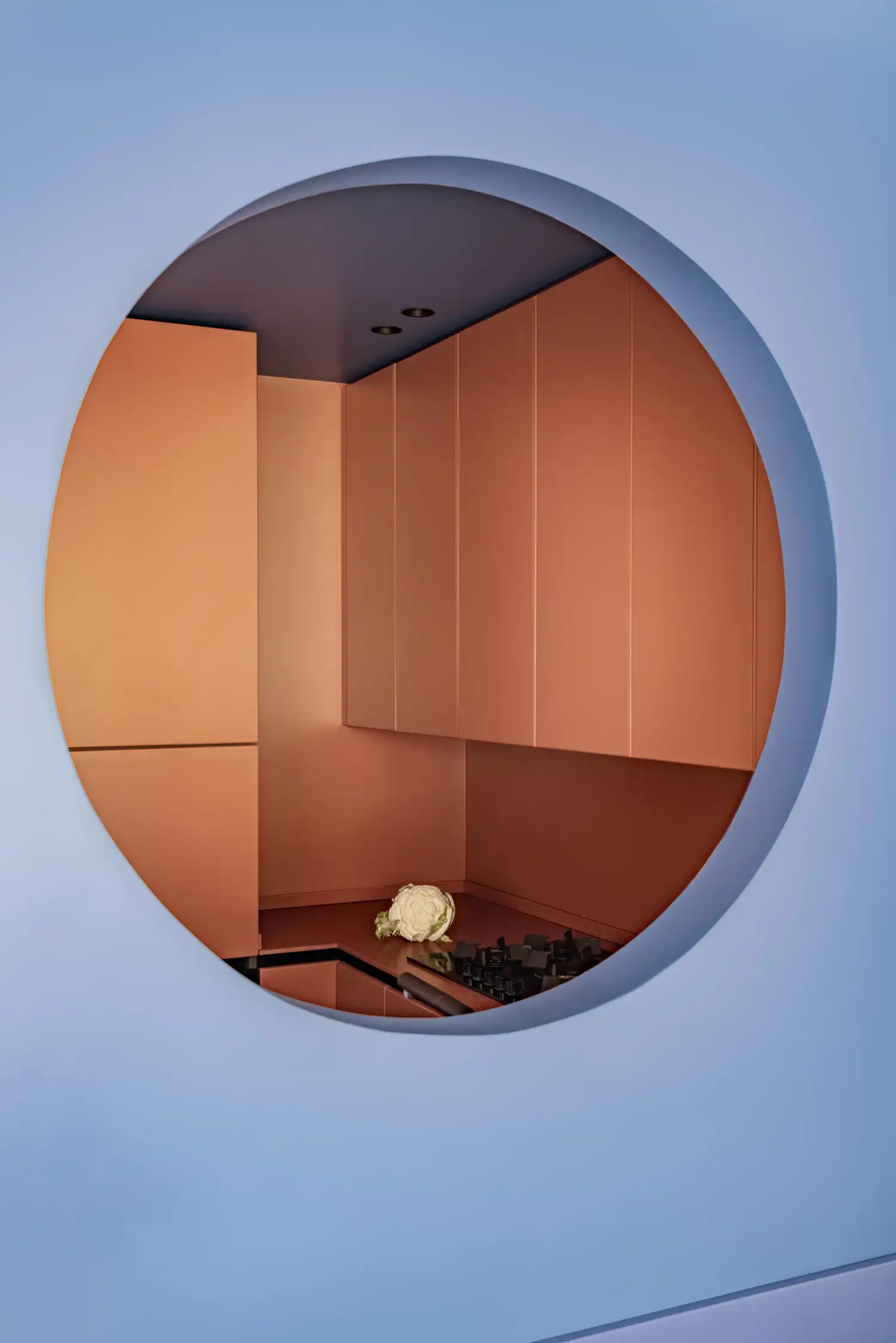
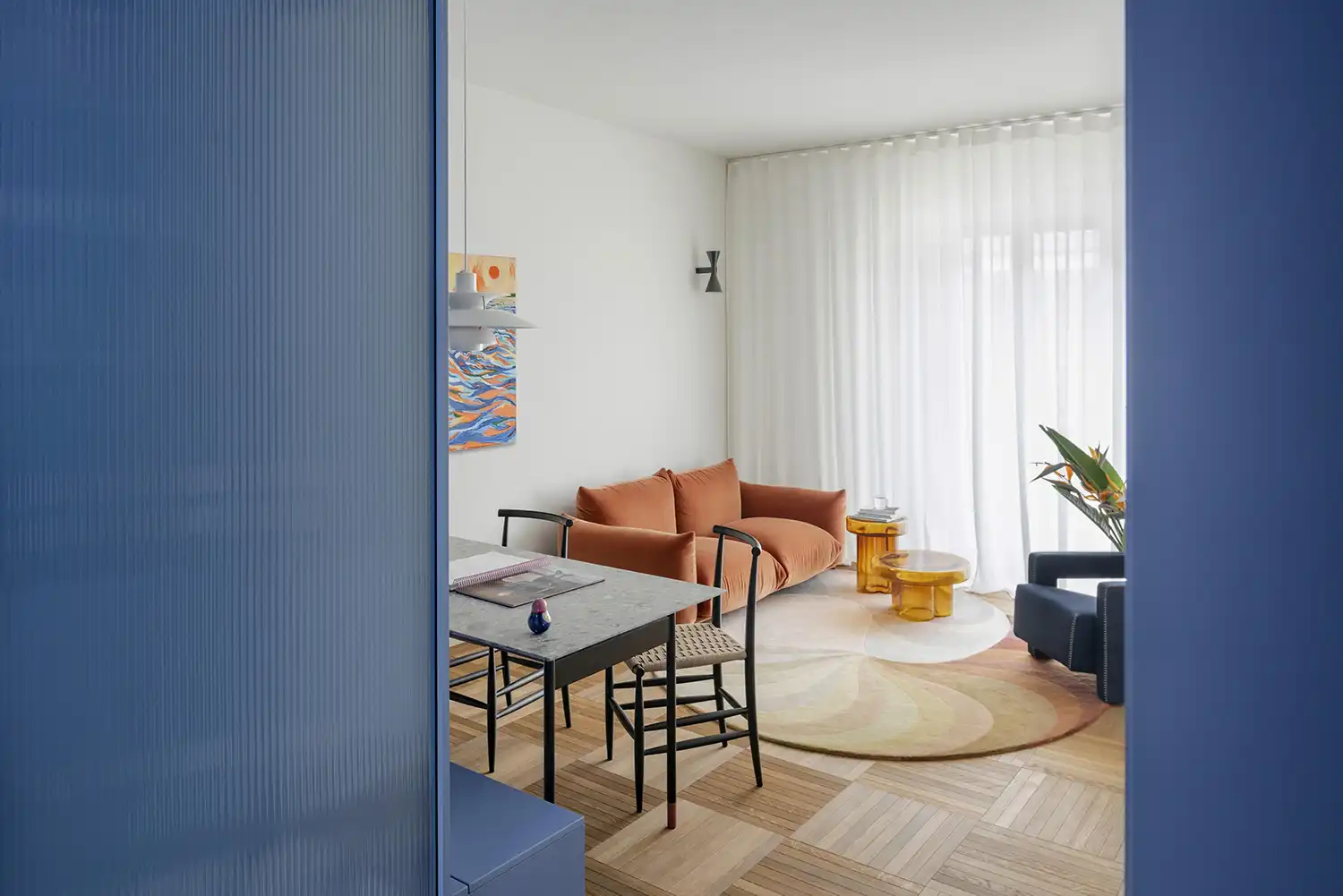
The apartment’s layout is organized with a clear, intelligent logic, divided into two distinct zones. The living area is bathed in light and defined by warm tones and the tactile presence of square-patterned parquet flooring. Here, the living room flows seamlessly towards the kitchen, which is conceived as the architectural and chromatic centerpiece of this zone. The kitchen’s prominence is achieved through strategic apertures: a large glass door facing the corridor and a distinctive porthole towards the living room ensure it maintains a constant visual connection with the life of the apartment, making it a hub rather than an isolated room.
Conversely, the sleeping area is a study in serene minimalism, characterized by neutral tones and continuous resin flooring that unifies the space. This private wing houses a master bedroom with an en-suite bathroom, a study, and a cleverly designed transitional space containing a shower and laundry area. This transitional zone acts as a functional link between the rooms, a theme of connectivity that is central to the project’s DNA. The true backbone of the DUBI apartment, however, is the corridor. With its dark, enveloping walls and distinctive flooring, it is far more than a passageway; it integrates a comprehensive system of built-in wardrobes, transforming it into the functional and visual core of the home.
A sophisticated conceptual framework underpins the entire design: the idea of a matryoshka doll. Each environment contains a central core, creating distinct hierarchies and connections that unfold as one moves through the space. This is vividly illustrated in the relationship between the neutral-toned master bedroom and its adjacent passageway, where a burst of red tiles creates a chromatic focal point, injecting energy between two calmer areas. This layering effect reinforces a sense of discovery and spatial depth, ensuring that the apartment reveals itself gradually.
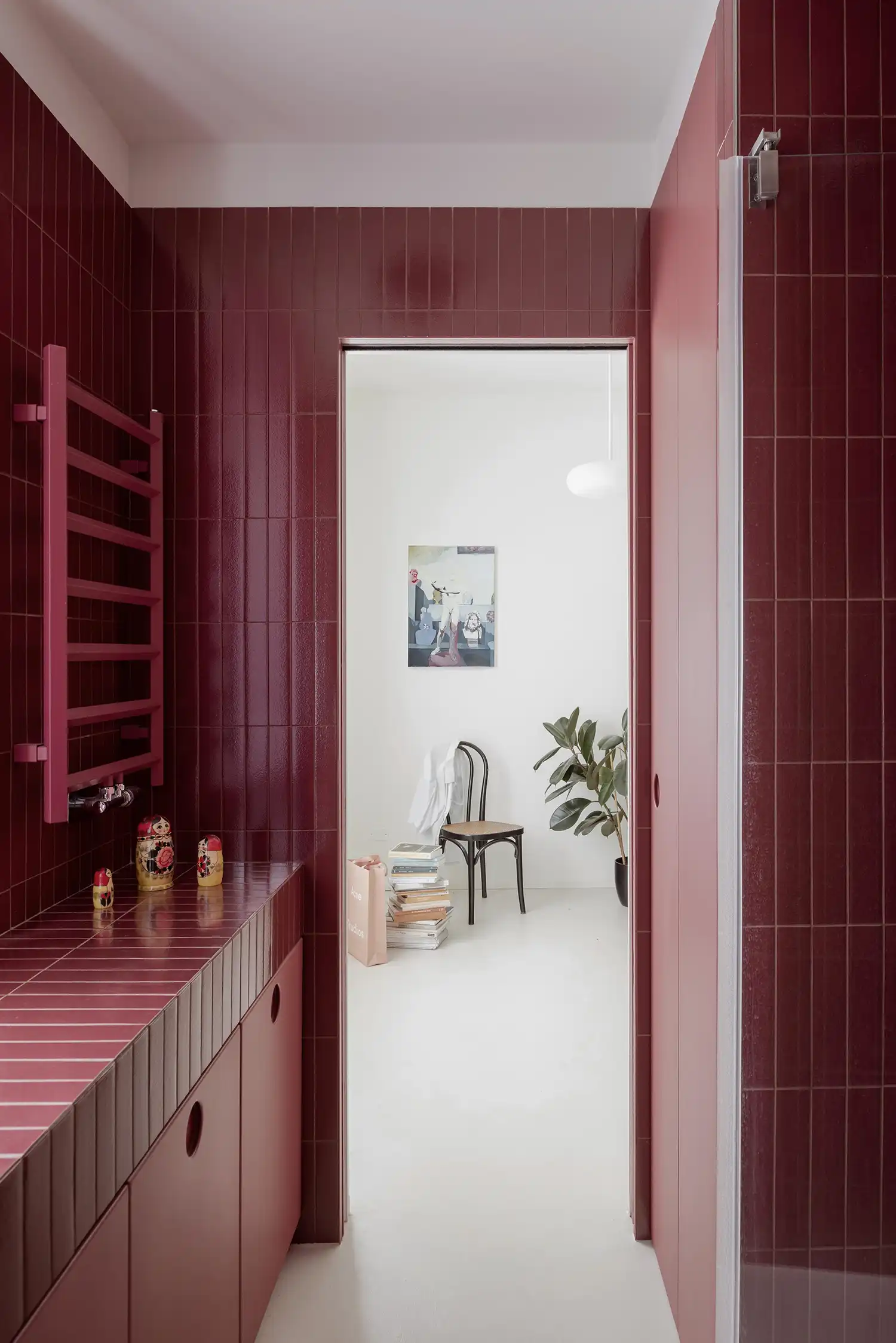
This matryoshka concept is further explored in the placement of the bathrooms. The guest bathroom is embedded within the central core of the house, visually aligned with the passage bathroom. This arrangement not only maximizes the efficiency of the spatial organization but also strengthens the corridor’s role as the unifying element that binds the apartment’s public and private halves together. The kitchen as a central hub remains a key player in this flexible layout, capable of being either isolated for privacy or opened up to become part of a larger social expanse, depending on the occupants’ needs.
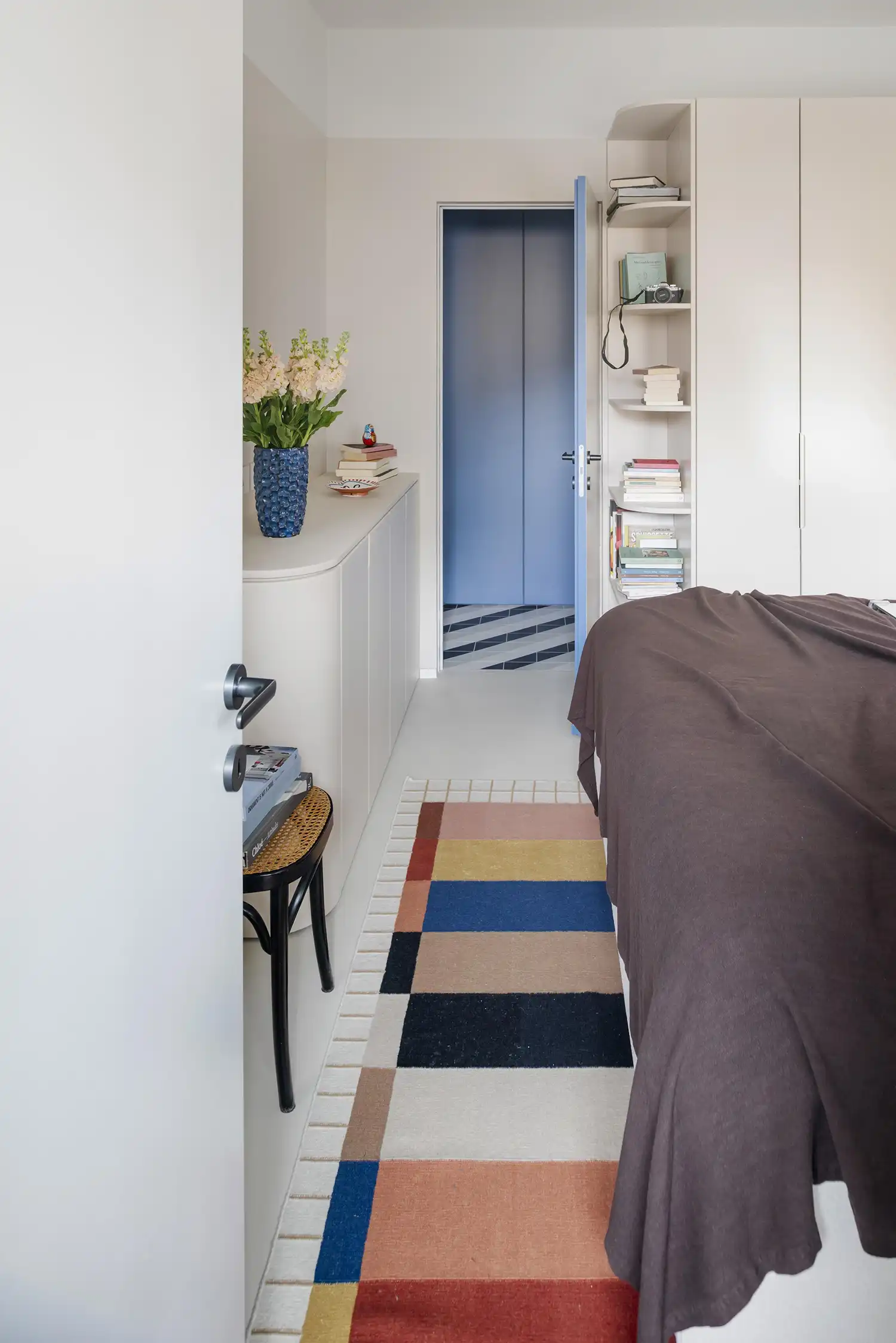
Ultimately, the success of the DUBI apartment lies in its harmonious composition. A carefully curated color palette, chosen through a process of chromatic affinity, recurs throughout the different spaces, creating subtle yet powerful visual rhythms. Every element, from the bold flooring choices to the meticulous custom carpentry details, contributes to a whole that is greater than the sum of its parts. Atelier Zero has not merely designed an apartment; they have composed a domestic environment where materials, color, and light interact like movements in a musical piece, offering a compelling new model for contemporary Milanese interior design.