



In the heart of Turin’s bustling San Salvario district, architect Davide Minervini has performed a small miracle of spatial efficiency. The challenge was Forno Belfiore, a new artisanal bakery compressed into a mere 25 square metres within a historic building. This tiny footprint had to accommodate a sales area, a baking laboratory, storage, and facilities, all while complying with the city’s stringent hygiene regulations. The result is a masterclass in compact commercial interior design that feels both expansive and intimately connected to its urban context.
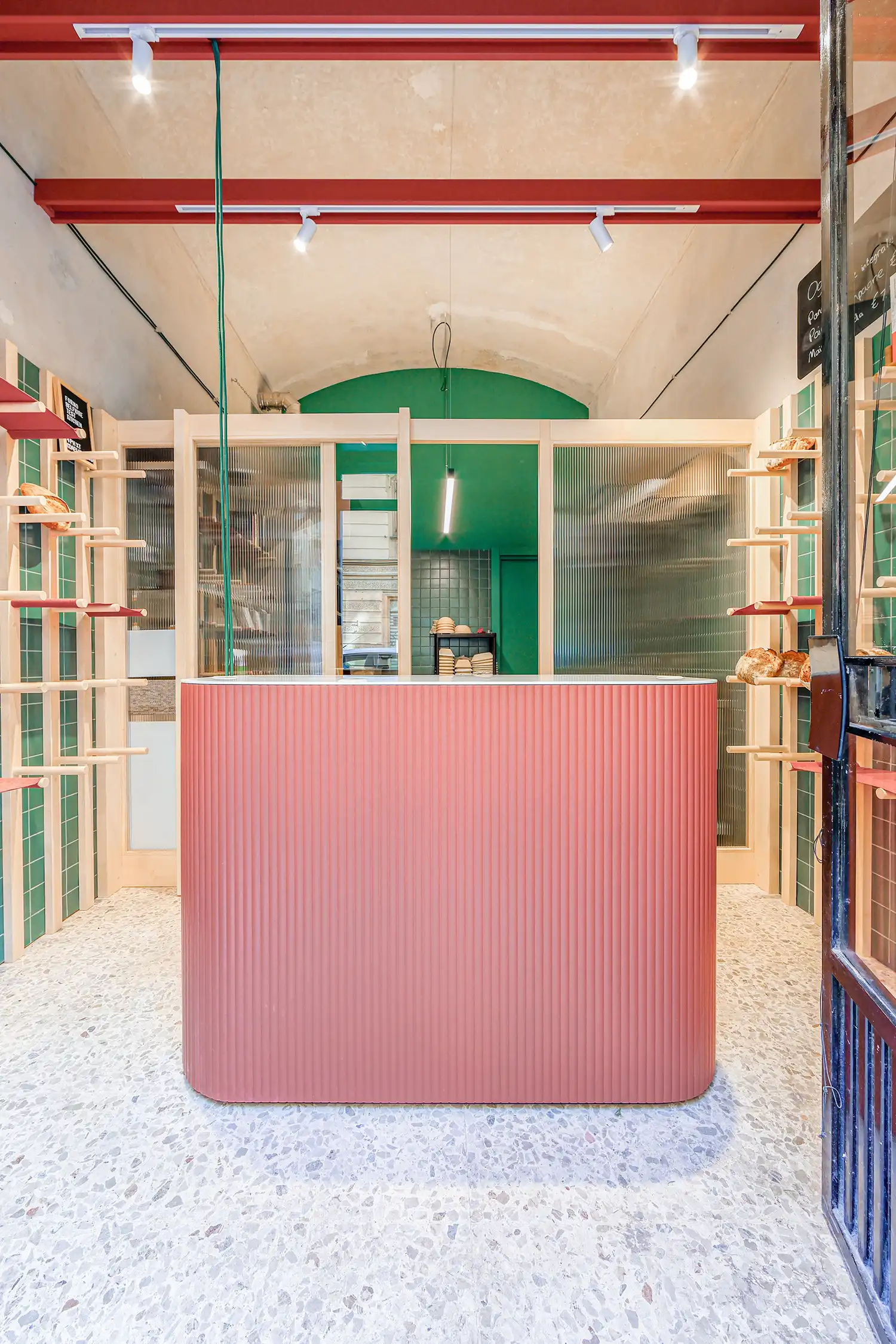
The core concept of the Forno Belfiore bakery project was to translate the client’s hands-on, craft approach to bread-making into a tangible spatial experience. Minervini’s solution was both simple and profound: a transparent, sliding partition that cleanly separates the public sales zone from the working kitchen and laboratory. This design choice transforms the act of baking into a public performance, allowing passersby and customers to witness the creation of organic, handcrafted products, forging a direct visual link between the artisan and the community.
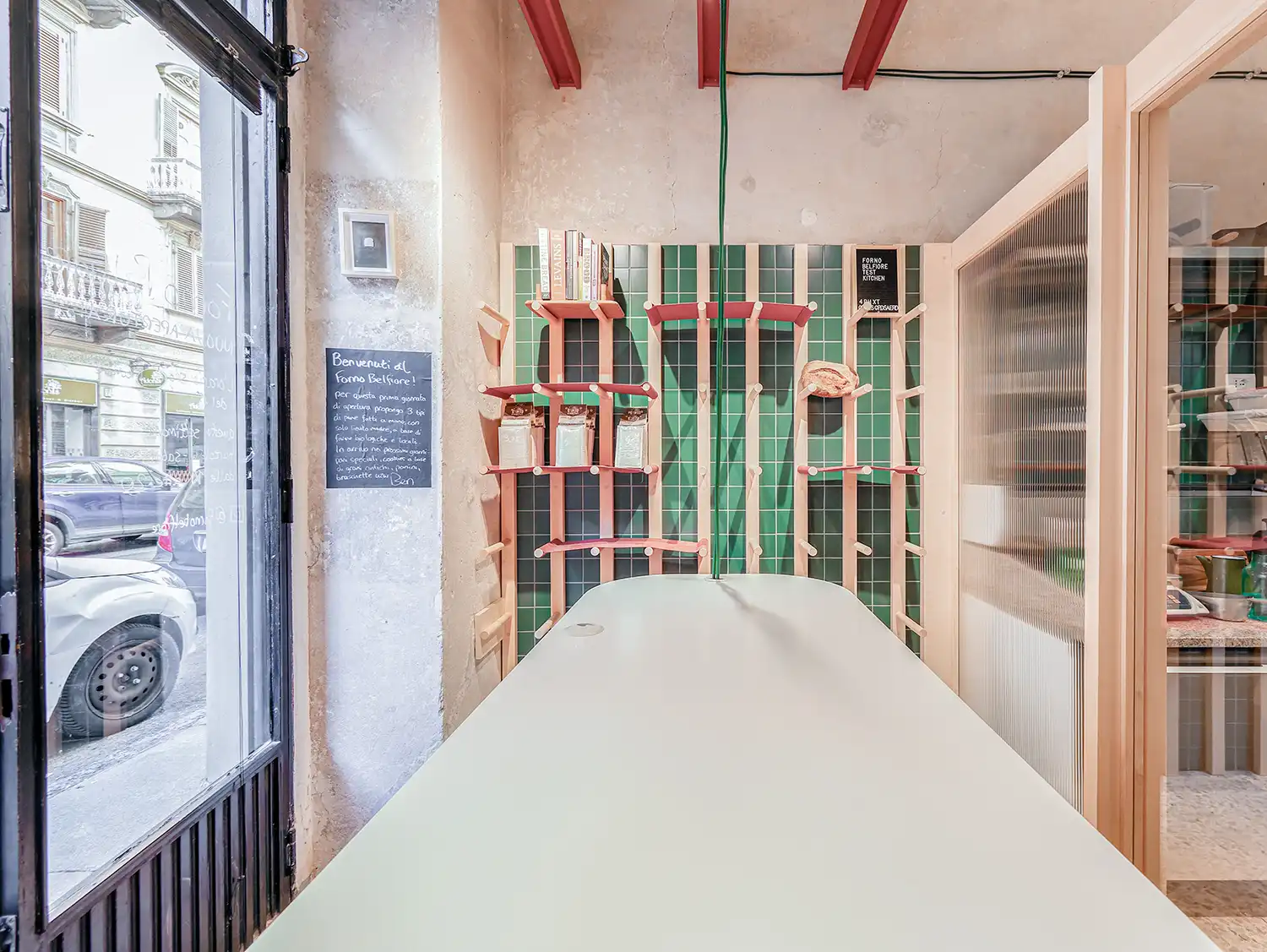
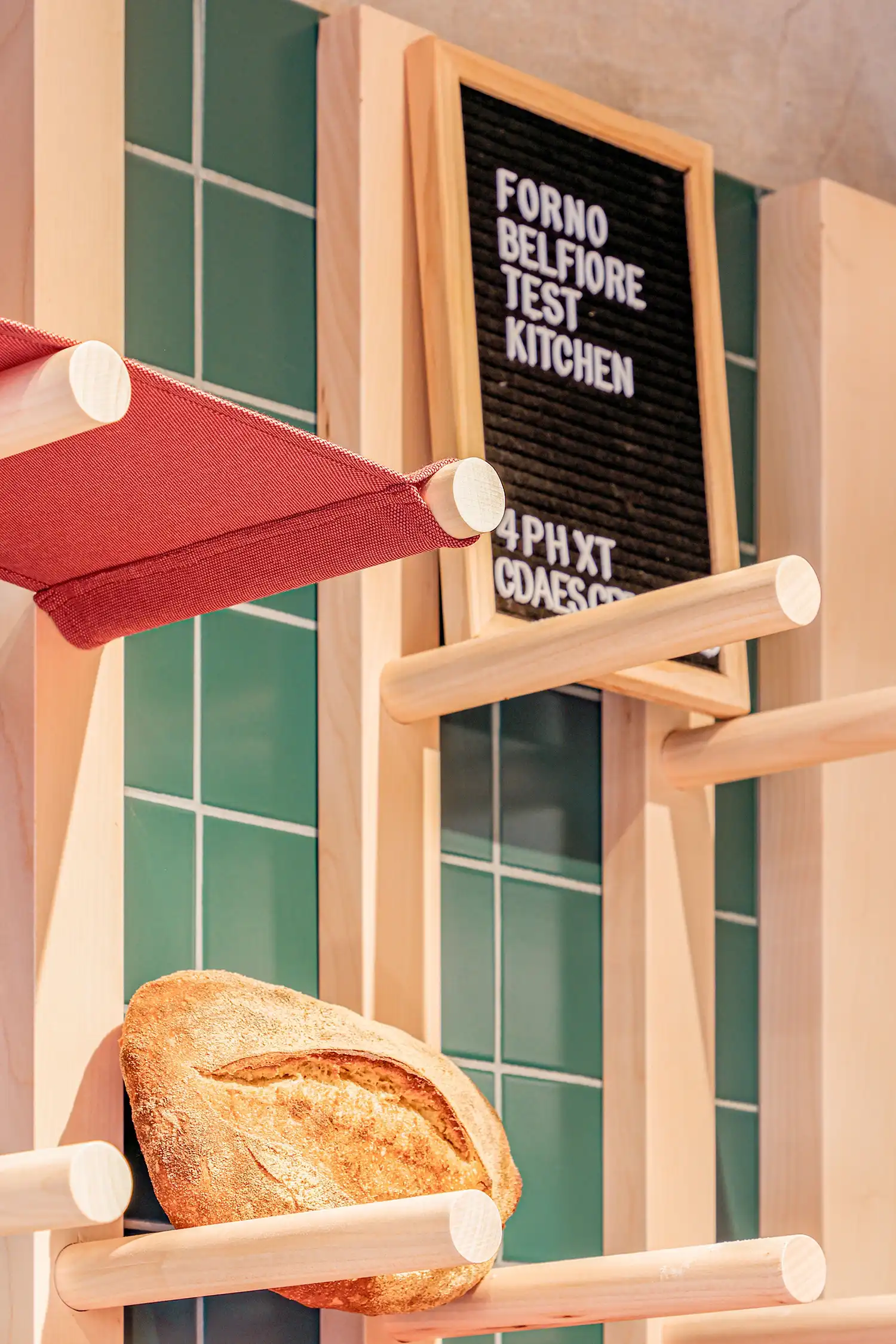
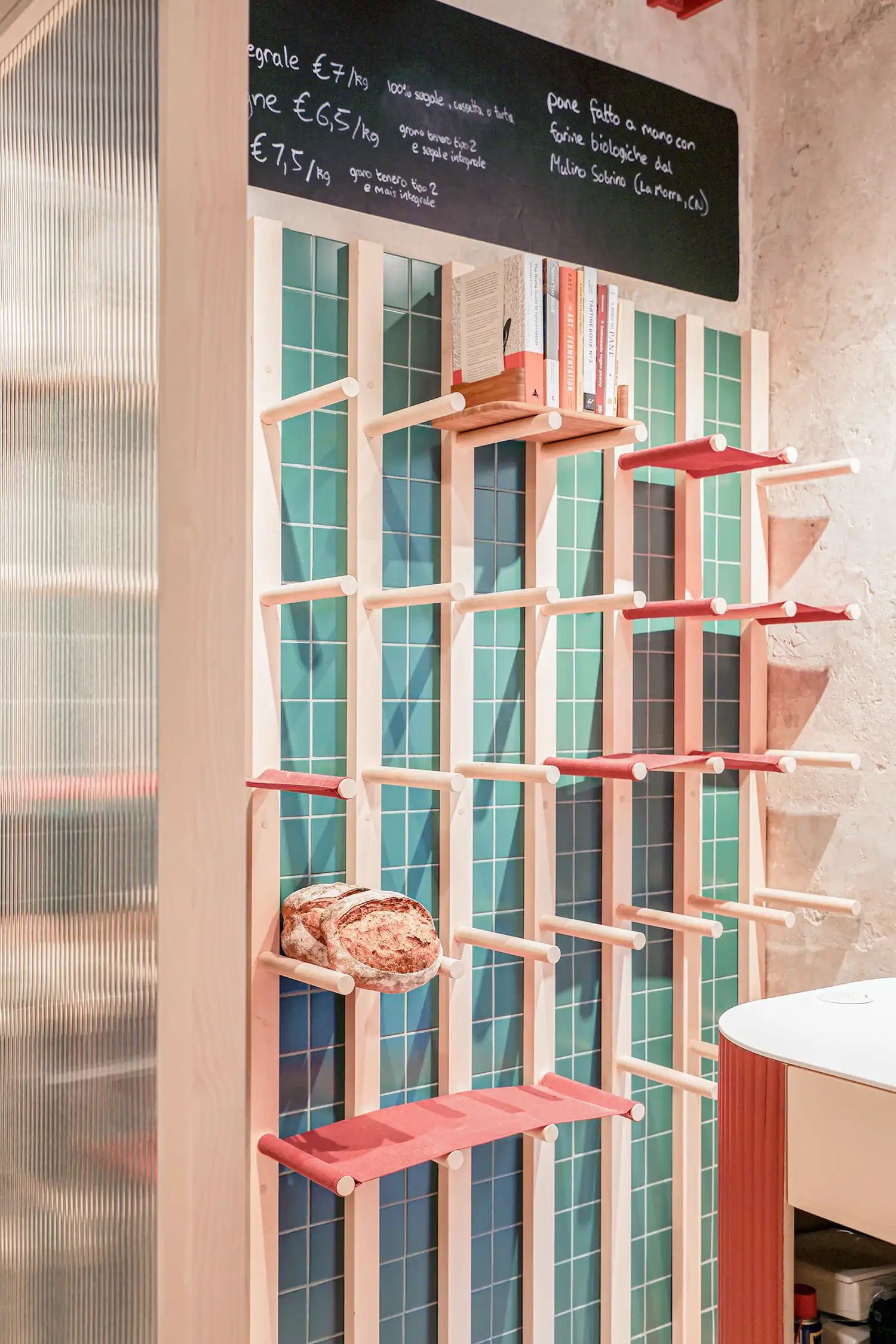
Materiality is central to the narrative. Reflecting the bakery’s use of organic flours and ancient grains, the Turin bakery interior is composed of a palette of natural materials. Solid woods, plaster, and the building’s original flooring form the foundation. Specially designed display cases and the sales counter were crafted by local artisans, extending the theme of craftsmanship from the products to the very fixtures that present them. This creates a deeply coherent and authentic contemporary bakery design.
The existing historic fabric of the small shop presented specific constraints, particularly for lighting. Unable to interfere with the original walls and floors, Minervini devised an ingenious system. Track spotlights are installed on false beams made of Valchromat, a colored, moisture-resistant fiberboard, which were themselves artisan-crafted for the space. In a bold and tactile detail, the electrical connections are left exposed, executed with green textile cables that add a stroke of color and technical honesty.
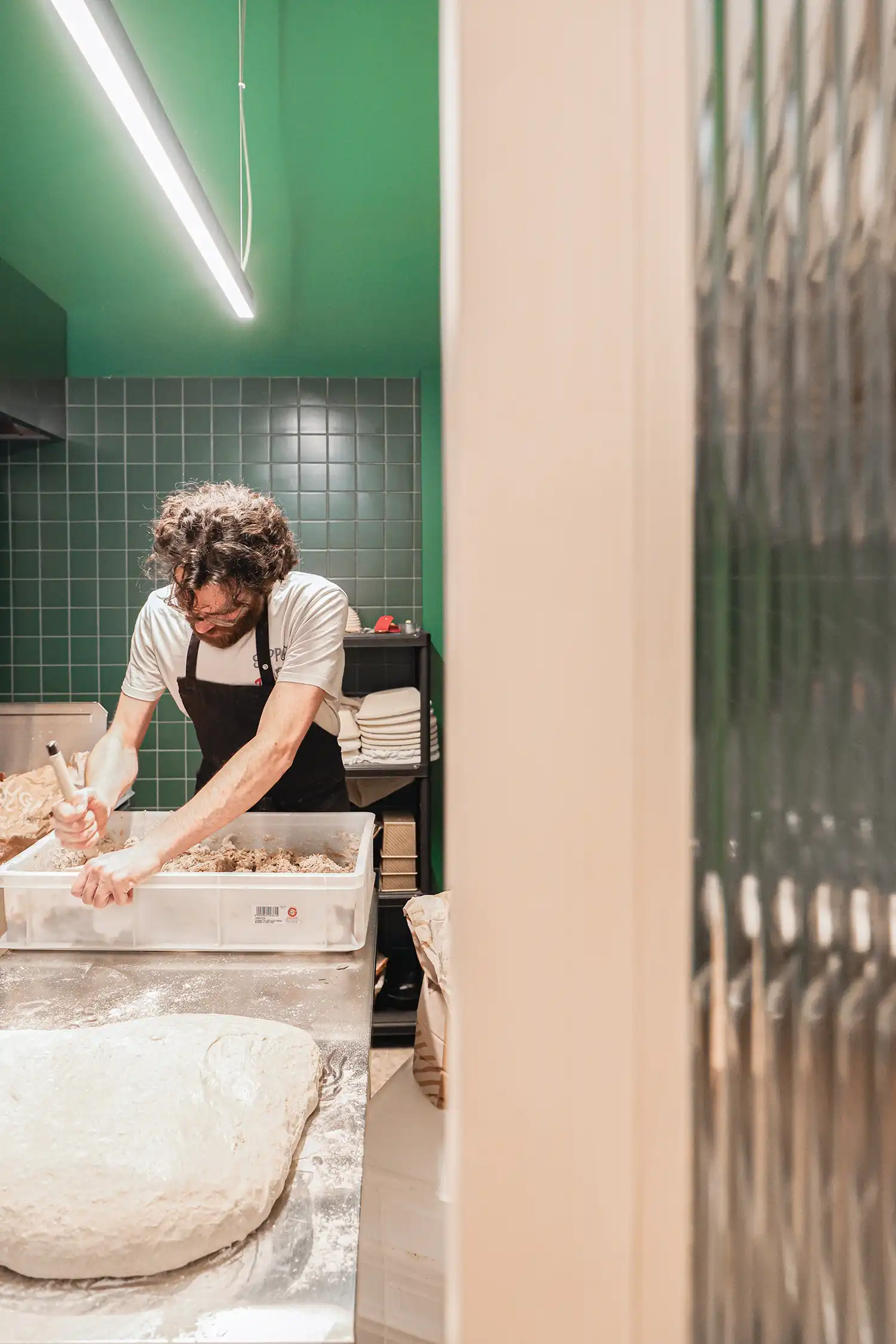
A carefully considered domestic color palette was chosen to evoke a sense of warmth and welcome. The back wall, painted the same hue as the ceramics cladding the laboratory, serves to contrast the wood and Valchromat elements at the front. This strategic use of color also works to accentuate the height of the vaulted ceiling, preventing the small space from feeling cramped and instead lending it an air of vertical grandeur.
Ultimately, the tiny Forno Belfiore in San Salvario stands as a solved puzzle of functional, productive, and regulatory demands. Davide Minervini has crafted more than just a retail space; he has materialized the relationship between a baker, his craft, and the city. It is a compelling example of how sustainable interior design and a respect for artisanal processes can create a rich, layered environment, proving that quality and impact are in no way proportionate to size.